
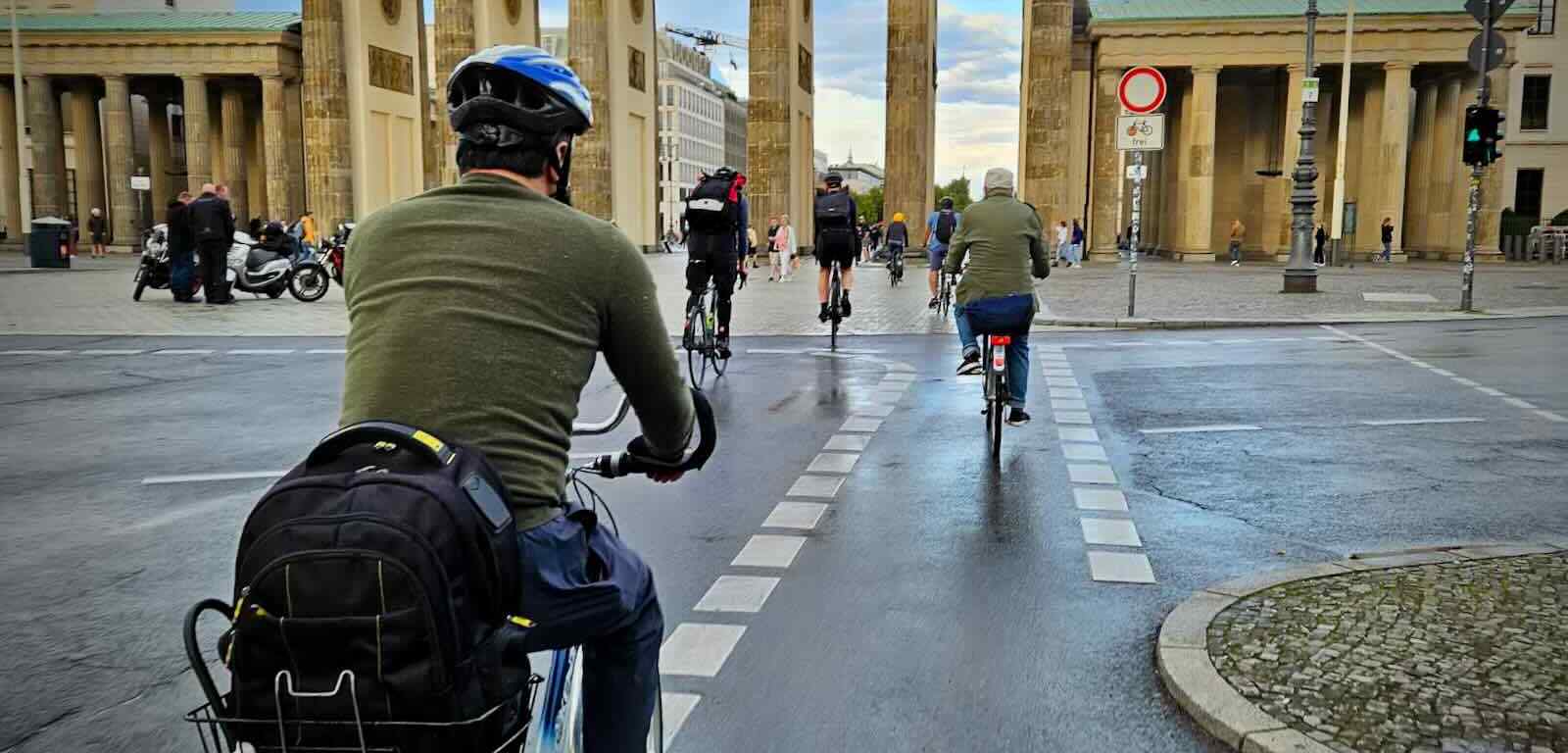
In the summer of 2023, after our week in Helsinki, we arrived in Berlin for the second leg of our trip. Having done a fantastic job of selling Berlin to the rest of the family after my trip to the city in 2022, they were all really keen on going there. I fancied Copenhagen myself, but we’ll save that for another year!
We left Helsinki and flew into Berlin Brandenburg Airport on the Friday, arriving there in the early evening. We’d actually got our dates wrong when booking accomodation, which meant we needed to get an overnight stay for the Friday night, before moving to our Airbnb apartment for the rest of the trip.
So we’d arranged to get a family room at the AMERON Berlin ABION Spreebogen Waterside (bit of a mouthful!). As the name would suggest, this hotel is located on the River Spree, in the Moabit locality in Mitte, just north of the Tiergarten.

This area was new to us, so it was good to stay somewhere we’d not been to before. The location on the river was very attractive in the summer evening sun, and we enjoyed strolling along there as we hunted for somewhere to eat.
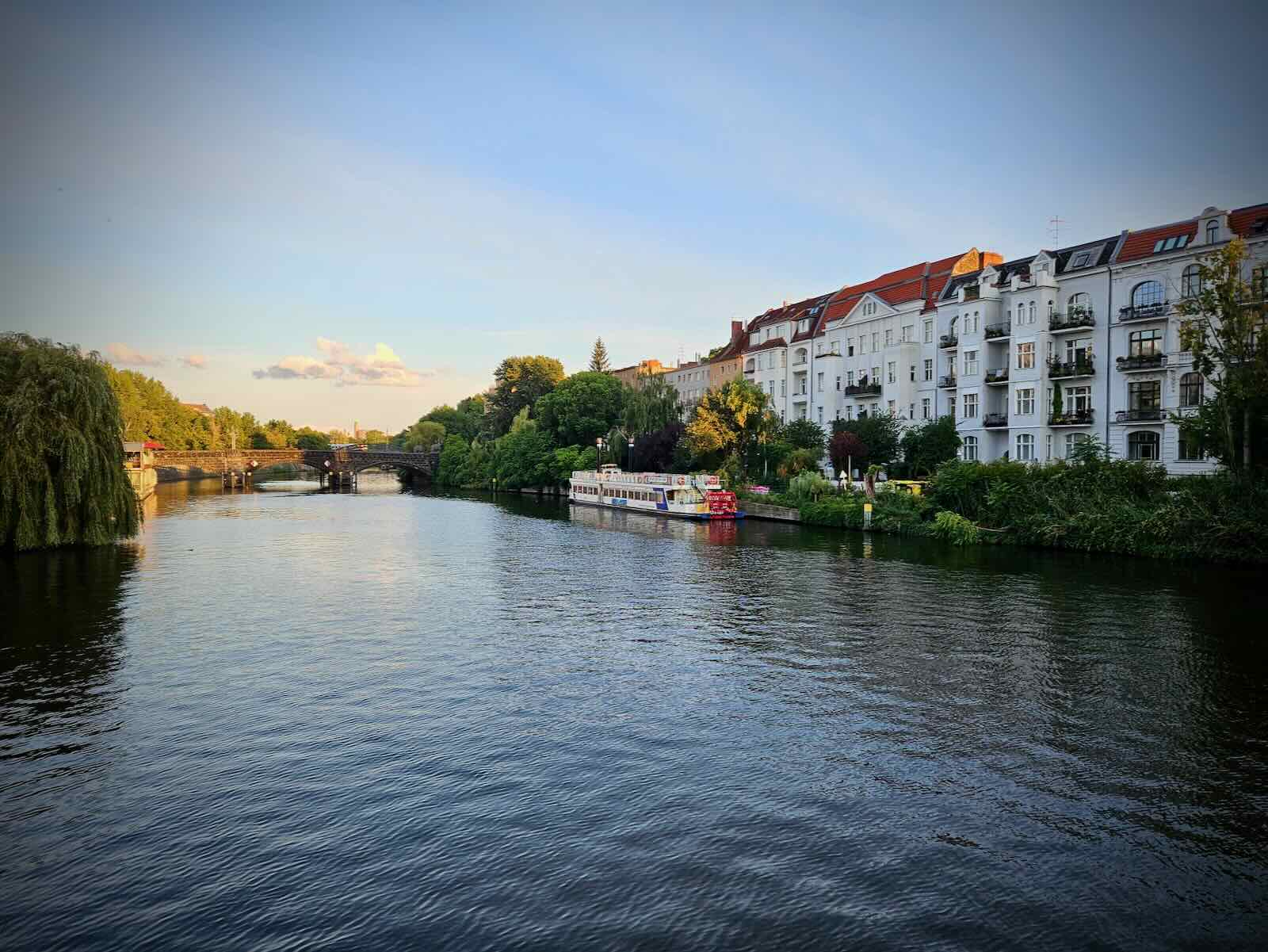
We found a local pizzeria and sat out as the sun set, enjoying our first evening in Berlin. After eating, we went for wander round the local area, which was mostly quiet residential, before heading back to our hotel for the night.

The next day, we were due to transfer to our Airbnb apartment in Mitte, though as we couldn’t check in until the afternoon, we left our bags at the hotel and went for a wander.
First stop was for breakfast, where I suggested somewhere I’d been to in 2022, Café Casero in Kreuzberg. Partly this was because I remember the breakfast being pretty good, but also because it was a short walk from the East Side Gallery, where we were heading next.

So after a very enjoyable breakfast, we headed across the Oberbaum Bridge (Oberbaumbrücke) to check out the artwork along the remaining section of Berlin Wall at the East Side Gallery. This was somewhere I’d visited in 2022, but it was new for the rest of family.
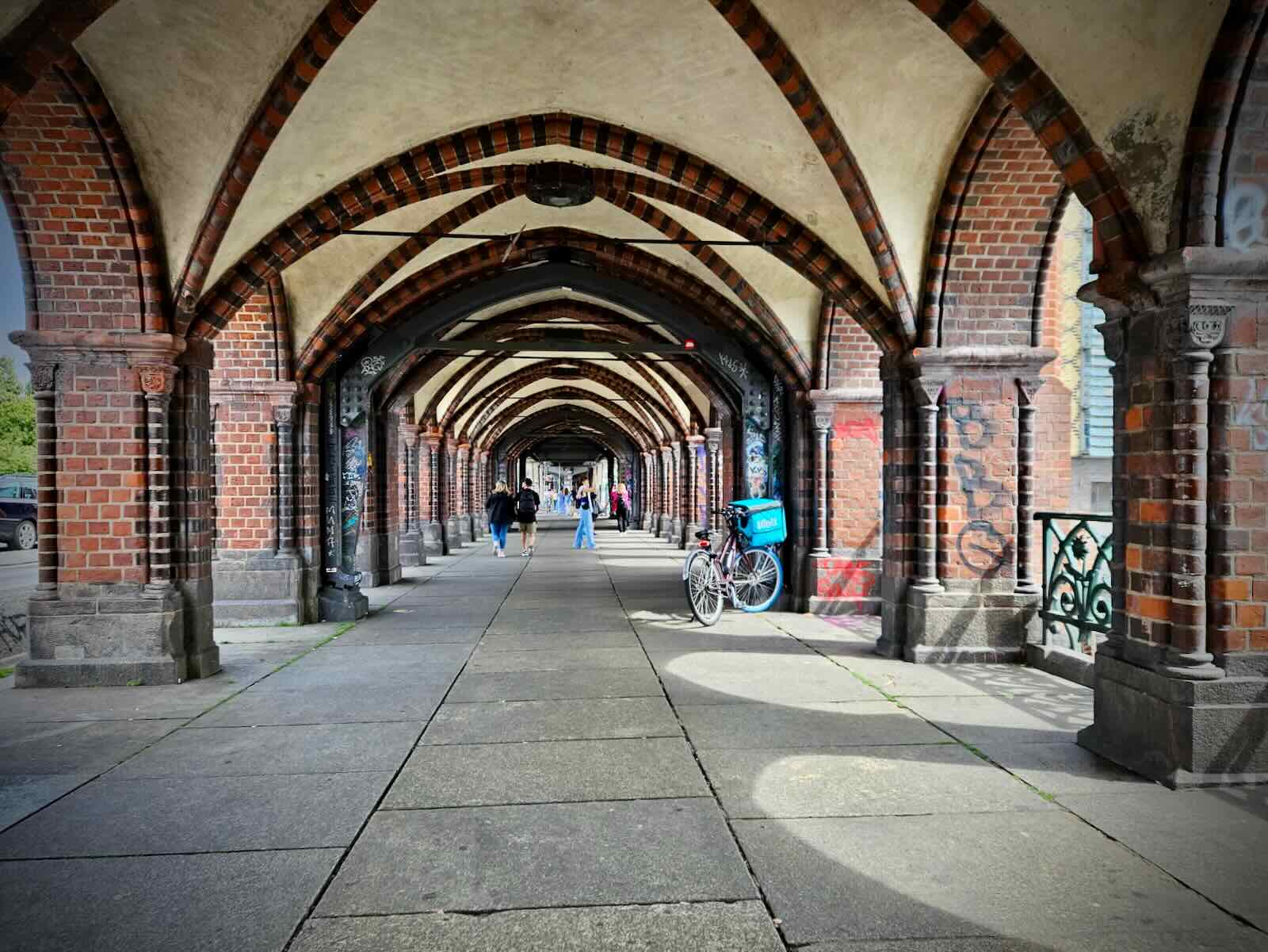
Obviously, it was significantly busier at the start of August than it was at the start of November when I was last there. It was nice to be there in the summer though, even with the additional people about, as it was much more enjoyable in the summer weather.

After wandering along the East Side Gallery, it was time to return to our hotel to collect our luggage and head to our Airbnb apartment. This meant getting back on another S-Bahn train to Moabit, then heading for Alexanderplatz, the closest station to where we were due to be staying.
Our apartment was located in an old apartment block half way down Rosa-Luxemburg-Straße, just short walk from Alexanderplatz. This turned out to be a really good base for our trip and a great location, if a little noisy at night. We were also four floors up, which was a bit of a trek at times, especially with luggage or shopping.
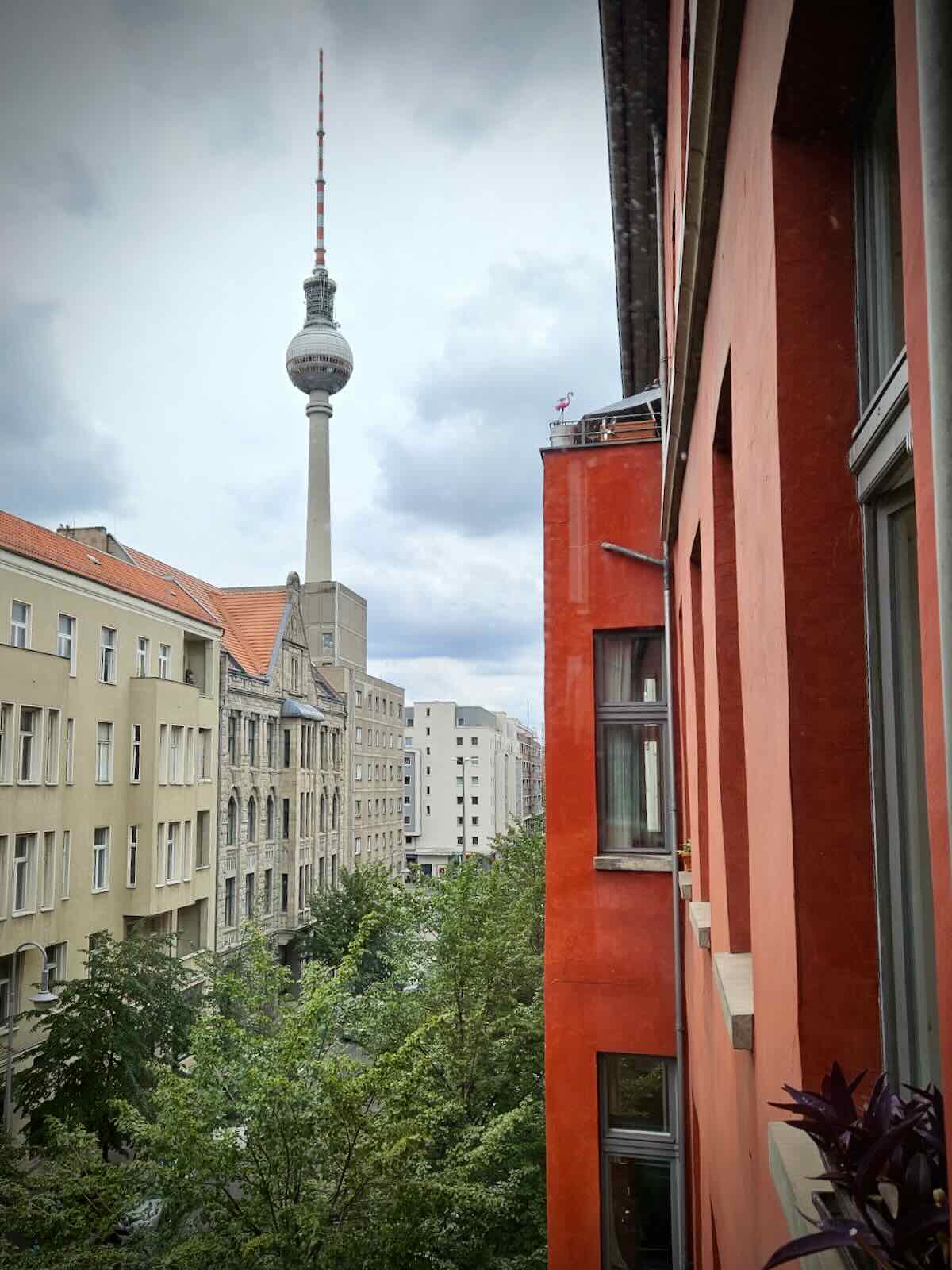
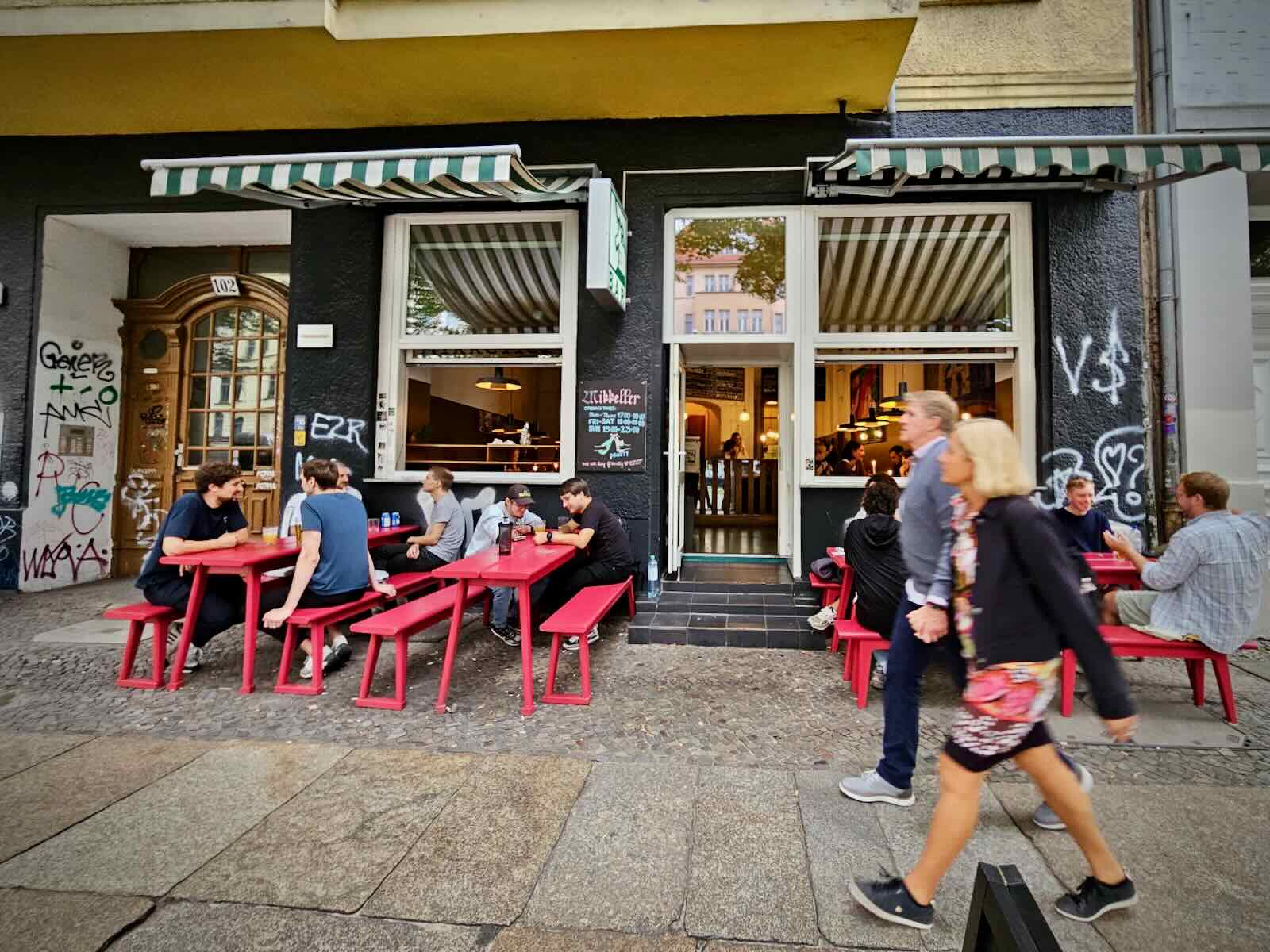
Once settled into our apartment, it was time to head out and explore. Again, as I’d been around here in 2022, I knew exactly where to start, Mikkeller Bar Berlin! So we spent our first evening in Mitte proper enjoying fantastic beer and lovely pizza in one of my favourite bars.
Cycling again in Berlin
When I was last in Berlin, I made extensive use of the bike share bikes available to get around the city. This gave me opportunity to really experience what it’s like to cycle there. Coming back, I was looking forward to do the same, though with it being summer, I was interested to see how different my experience would be this time.
The summer weather certainly made it a more pleasant experience cycling round, plus there were unsurprisingly more people doing the same. Like in Helsinki, the rest of the family would be mostly getting about using the superb public transport Berlin has, while I’d be trying to cycle as much as I could.
Nextbike bike share
For this trip, I would be mostly relying on Nextbike, the most popular bike share in Berlin. Using Nextbike is pretty straightforward, there’s daily, monthly or yearly subscriptions. With each subscription, you can use a bike for 30 minutes, with no charge, with each additional half hour being charged €1.
Unlike the other major bike shares in Berlin TIER and Bolt, Nextbike bikes don’t have e-assist, but Berlin is very flat and I was happy getting the exercise, so this wasn’t a problem for me. Signing up for a subscription in the app was straightforward enough, no issues like I had in Helsinki. Renting a bike was easy too, using the app scan the QR code on the bike.
Interestingly, since I was last in Berlin the year before, new Nextbike docking stations had started appearing around Berlin and the bikes had been retrofitted with attachments to lock them into the docks.
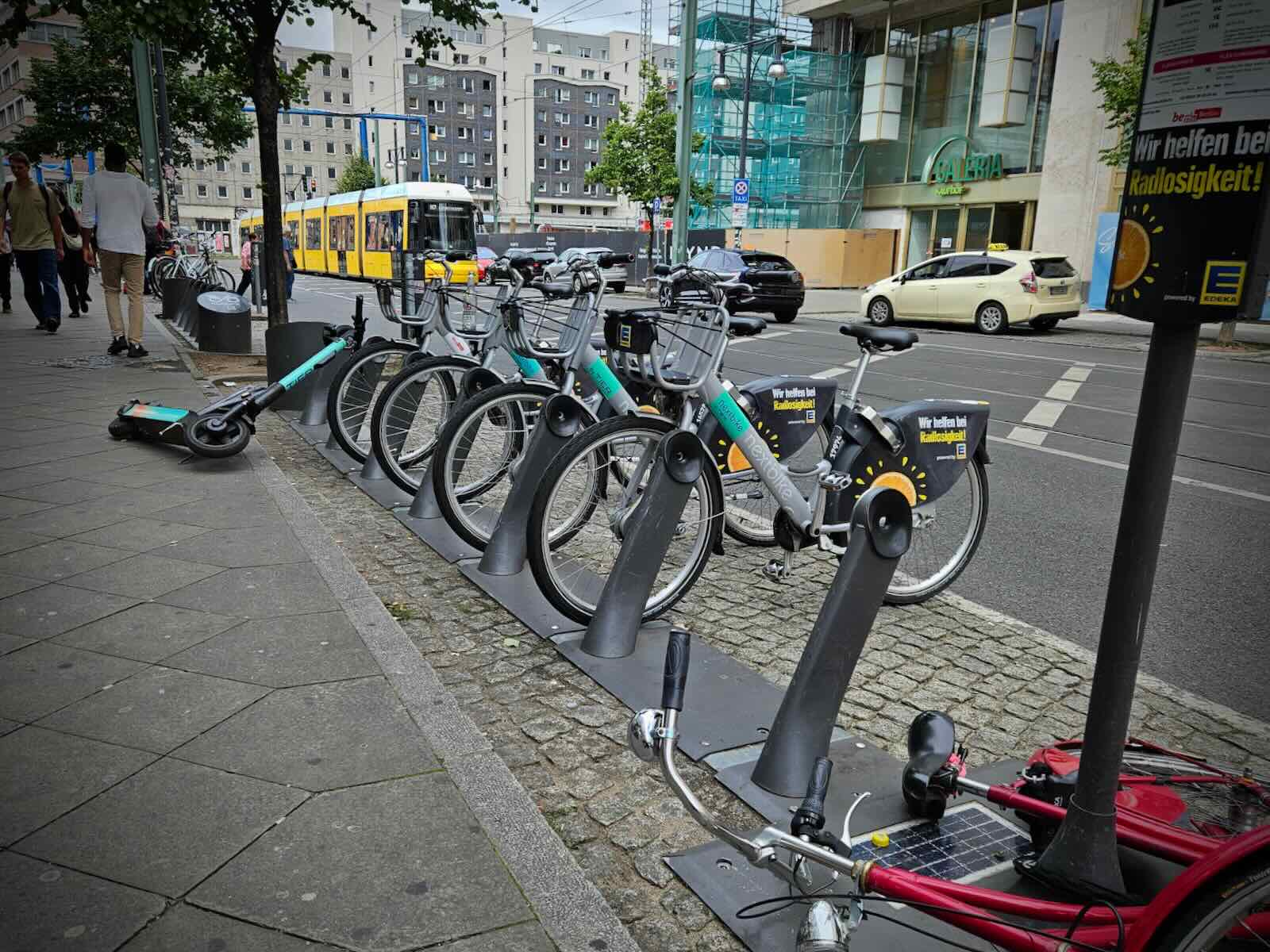
Previously, Nextbike was a dockless scheme, which I assume suffered many of the issues that dockless schemes tend to have, so this move is a positive step. It also appears that many of the bikes had been replaced and were generally in better condition than on my last trip.

The condition of the bikes was definitely an issue when I was last in Berlin. There were numerous times when I was unable to use a bike, because of issues with it.
I would say that the new locking mechanism is far superior to Manchester’s own Starling Bank Bikes. The bikes are easily guided into the docks and there were minimal issues, unlike the woefully unreliable locking system on Starling Bank Bikes. Beryl Bikes who operates the scheme should definitely take note.
What it’s like to cycle in Berlin
Given my last trip in Berlin was just for 4 days, I was hoping our week here would give me opportunity to see more of the city’s cycling infrastructure. That was certainly true, as I was able to cover a far greater area of Berlin and got to experience plenty of what the city does and doesn’t have to offer people cycling.
The good
There’s plenty of good to see in Berlin, when it comes to cycling infrastructure, and certainly far more than what we’re used to in the UK, even London. Though it’s still some way off the likes of The Netherlands.

Riding around, I saw plenty of examples of decent wide protected cycleways. Many of these were footway level cycle tracks. Often, with no physical separation from the footway as such, but the cycle path is indicated by a different surface treatment.

Most of the footway level cycle tracks I saw on my previous visit were old and narrow, usually with rough paved surfaces. It was good to see better examples on this visit, possibly improvements since my last visit, but more likely because I was able to explore further.

Something that’s really impressive in Berlin is the effort made to provide temporary protected cycleways where there’s construction or roadworks. This is something we very rarely see in the UK, outside of London and is major pain. I guess it probably helps that so many streets in Berlin are wide, where it’s perhaps a little easier to accommodate this.

Another thing that blew me away was the number of good quality carriageway-level cycle lanes with light protection. I saw lots of these around the city, many of them were really wide, likely taking up what would have been a whole traffic lane.
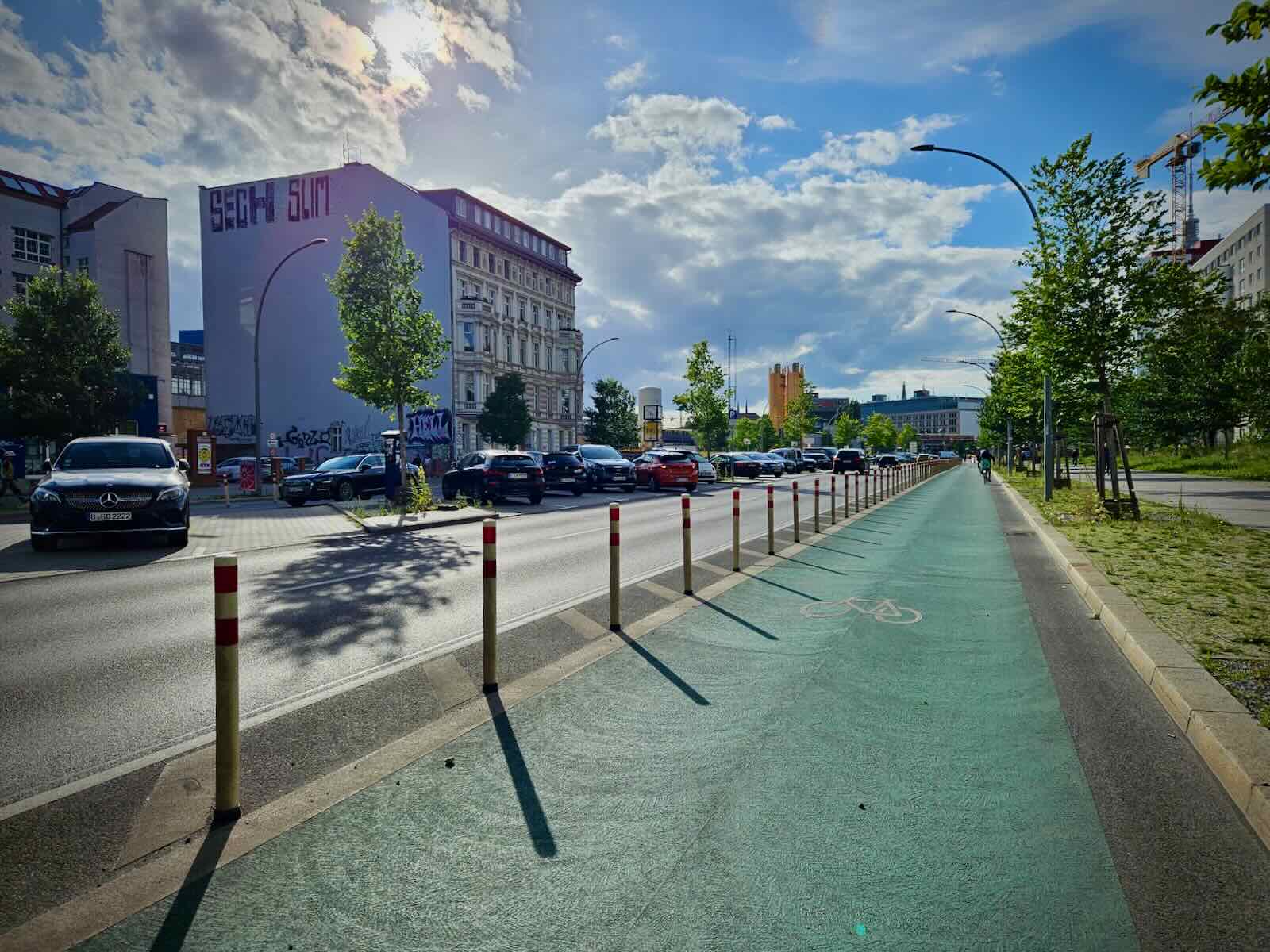
Adding light protection to cycle lanes is a relatively quick and cheap way of adding protection that can be upgraded to something more permanent later. We have a few of these in Manchester, but none to the same standard of the ones I saw in Berlin.
The not so good
Paint, paint and more paint. Yes, there’s quite a few painted lanes in Berlin. Some of these are nice and wide, others narrow. Many would benefit with some light protection, which could be added easily in a lot of cases. Maybe that’s planned for some of them?

There’s then quite a few places where there’s not even paint, often this is on wide roads, where there’s more than enough space to install some protection. On these streets, you have no choice but to mix with the general traffic, and if you’re lucky, share a bus lane.
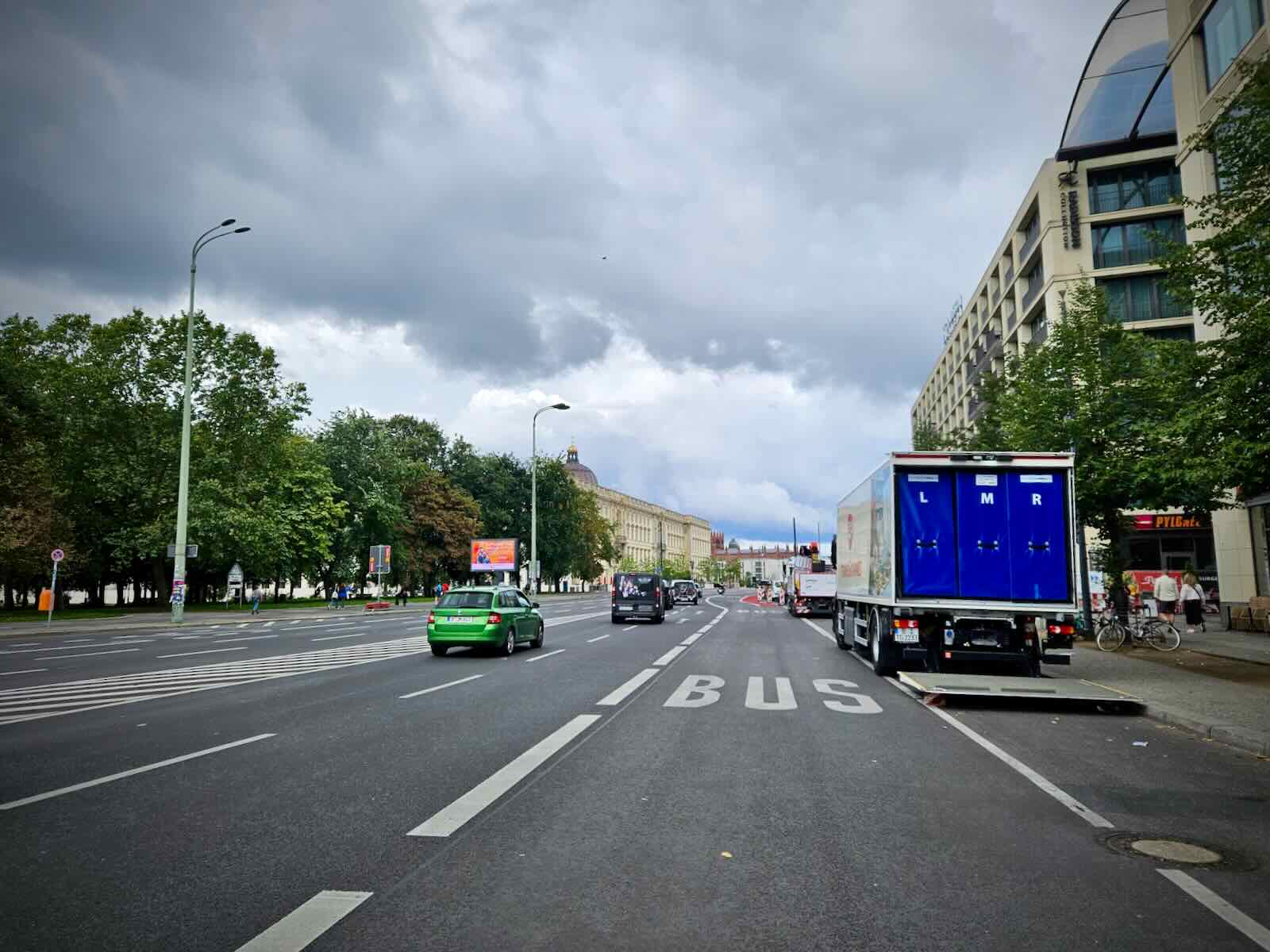
Junctions are often an afterthought, where protection disappears. Yes, don’t expect to see many Dutch style intersections in Berlin, the most you can hope for is Copenhagen style painted junctions and often not even that.
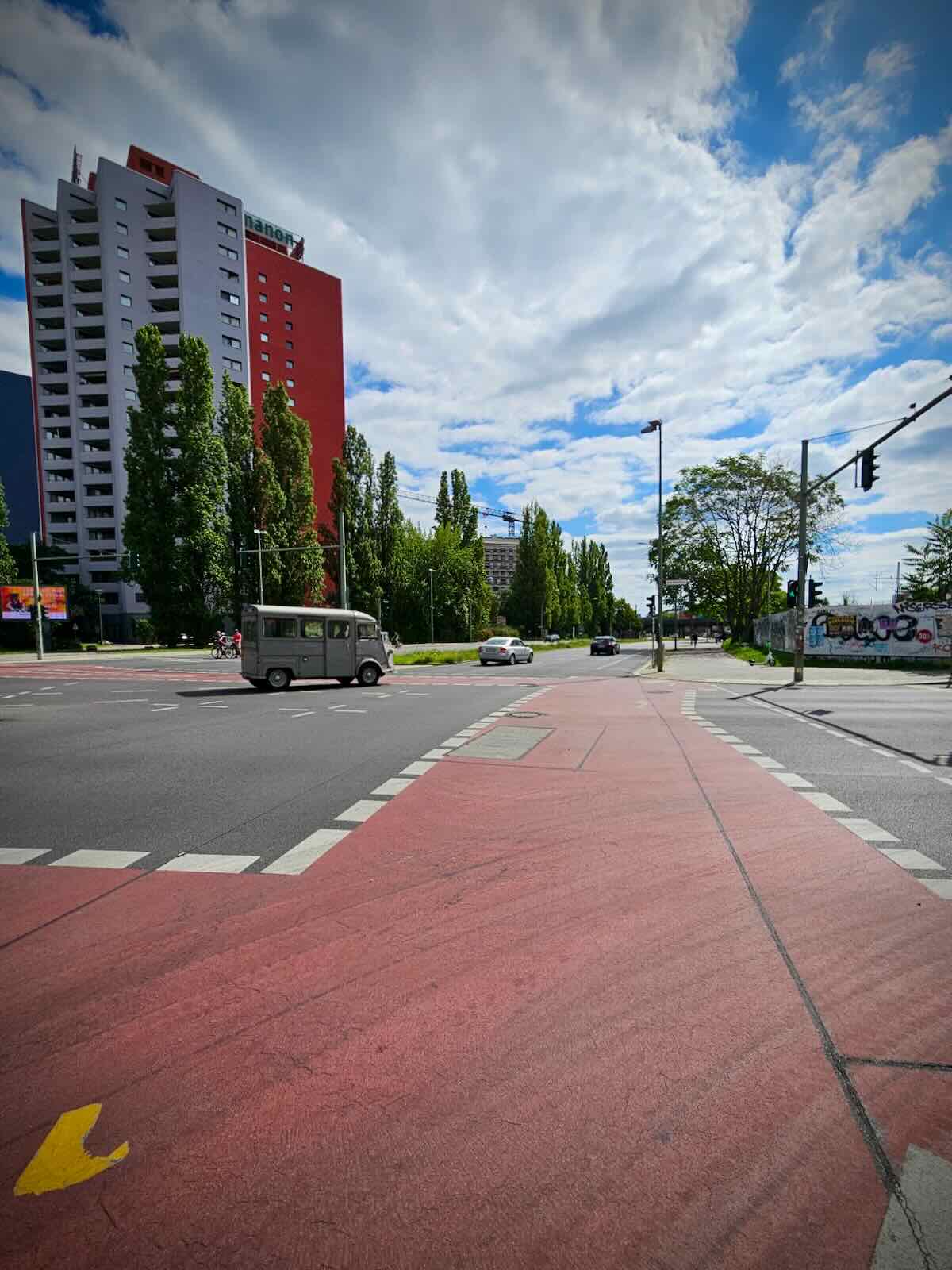
Typically, this happens after you’ve been riding along in a nice protected cycleway, before getting unceremoniously dumped into the main carriageway to ride amongst the general traffic. If you’re unlucky, you might get sandwiched between two general traffic lanes, on a suicide cycle lane.

Cycling culture
When looking at the cycling culture of a city, it’s important to clear about what we’re talking about. We’re not talking about people head to toe in Rapha, riding expensive carbon road bikes.

No, we mean people of all ages, wearing normal clothes and typically riding upright city bikes, e-bikes or cargo bikes. People who wouldn’t necessarily consider themselves a ‘cyclist’. It’s this kind of culture you see in bucket loads in The Netherlands. So much so, that you tend not to notice it after a while.
So does Berlin have that elusive cycling culture and would you describe it as a cycling city? Well, according to official figures from 2018, Berlin had a modal share 18%, which may be nothing by Dutch standards, but it does stand up next to many other European cities.

In terms of who you see cycling, it is mostly people in normal clothes, riding upright city bikes, which is positive. Though to counter that, there is a large number of people wearing helmets.
Whatever your view on helmet use is, there is definitely a correlation between large numbers of people wearing helmets and a lack of safe space for cycling. Unsurprisingly, if people don’t feel safe on the roads, they’re more likely to put a helmet on.

In addition to all those upright city bikes, there’s lots of cargo bikes on the streets of Berlin. Many for carrying kids, but you also see plenty carrying cargo, such as for parcel deliveries or letters.

Unfortunately, since the election of Berlin’s pro-car mayor Kai Wegner, things have taken a turn for the worst on the cycling front. Wegner opposes cycle lanes that supposedly slow down cars and has since halted all cycle lane construction. Not good.
This has led to protests, with people demanding safety improvements for cycling, following recent deaths in the city. There are signs of the local government backing down from their stance, so hopefully not all is lost.
This is the first in the Germany 23 series. I’ll be back with more posts from our trip, covering some of the places we went and rides I did, including various museums and memorials, Holzmarkt 25 creative quarter, the old airport at Tempelhofer Feld and bike tour with Fat Tire Tours.
More Berlin 23 posts
- Back again in Berlin
- Top of Berliner Fernsehturm, Berlin’s TV Tower
- A rainy Sunday in Mauerpark
- Riding around Mitte and Tiergarten
- Stasi Museum
- Holzmarkt 25
- Berlin Wall Memorial on Bernauer Straße
- Fat Tire Tour of Berlin
- A long wait for a kebab and a ride on an old runway at Tempelhofer Feld
- DDR Museum
- Back at Tempelhofer Feld
- Back at Holzmarkt 25 and a wander along the Landwehr Canal
 Dom Cycling