
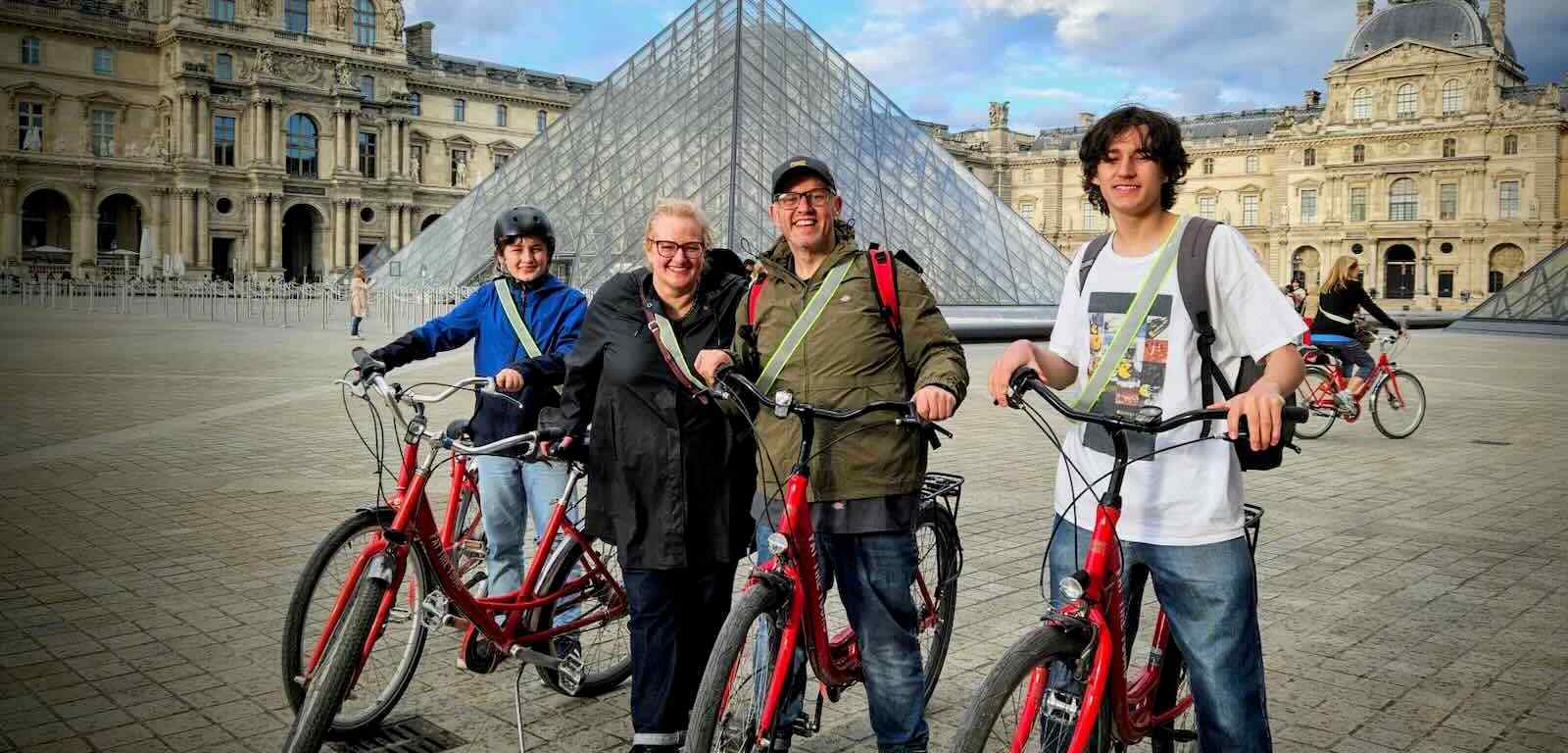
At the end of May 2024, we headed for a week’s trip to Paris, staying in a 5th floor Airbnb apartment in the 17th arrondissement. It had been sixteen years since we were last in Paris, when we went there as part of an interrailing trip, before we had kids, so we were keen to see what’s changed.
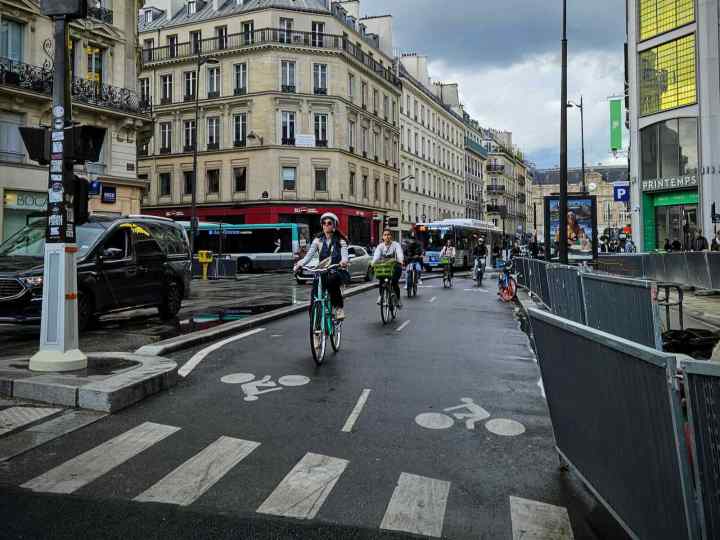
In particular, I was keen to see how cycling has improved in the city, with the well-publicised improvements made by the pro-cycling mayor, Anne Hidalgo. To truly appreciate them, I’d be making use of the Vélib bike share to get about, while the others would be using the Paris’ extensive Métro network.
During our week in Paris, we’d get about a fair bit, checking out the city’s various arrondissements, epecially Montmartre. We also visited various museums and attractions, including Paris’ Catacombs, Centre Pompidou and Cité des Sciences et de l’Industrie, Paris’ museum of science and industry.
With Paris being such a walkable city, we enjoyed wandering round the area surrounding the Canal Saint-Martin and along the Coulée verte René-Dumont, Paris’ High Line. We also got to do Fat Tire Tour of Paris, riding round the main highlights of the city, plus a boat trip along the Seine.
Cycling in Paris
Somewhat understably, Paris has become a poster child for cycling and urbanism in recent years. With mayor Anne Hidalgo’s visionary leadership demonstrating what can be achieved with sufficient political will, she’s transformed the city from a cycling no-go, to a model for other cities to follow.
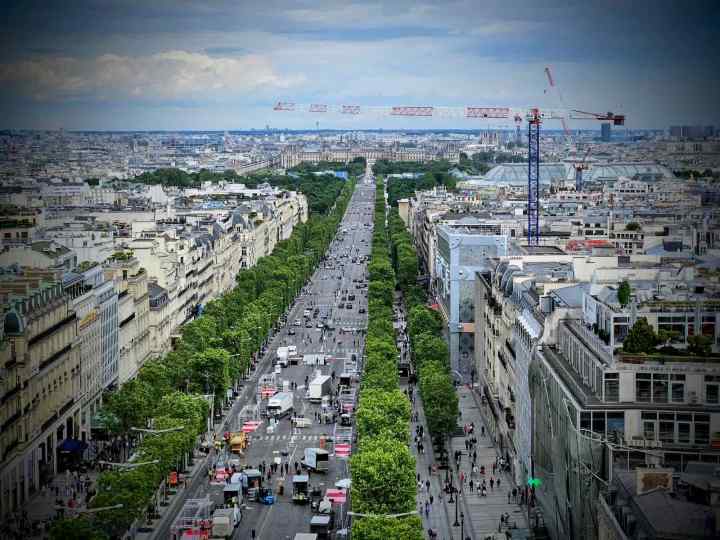
Wandering round Parc Clichy-Batignolles – Martin Luther King and up the Arc de Triomphe
After arriving in Paris and dumping our stuff at our Airbnb apartment, we were keen to get out and explore nearby. As I mentioned in the first of the Paris 24 posts, we were staying in the 17th arrondissement in the north west of the city, in the Porte de Clichy neighbourhood, not far from the Périphérique.

A day in Montmartre
For our first full day in Paris, we decided to go somewhere we’d not managed to on our previous visits to the city, the Montmartre district. Being a large hill with the Basilique du Sacré-Cœur on top of it, it’s a very distinctive district in Paris, visible from many other parts of the city.
Fat Tire Tour of Paris
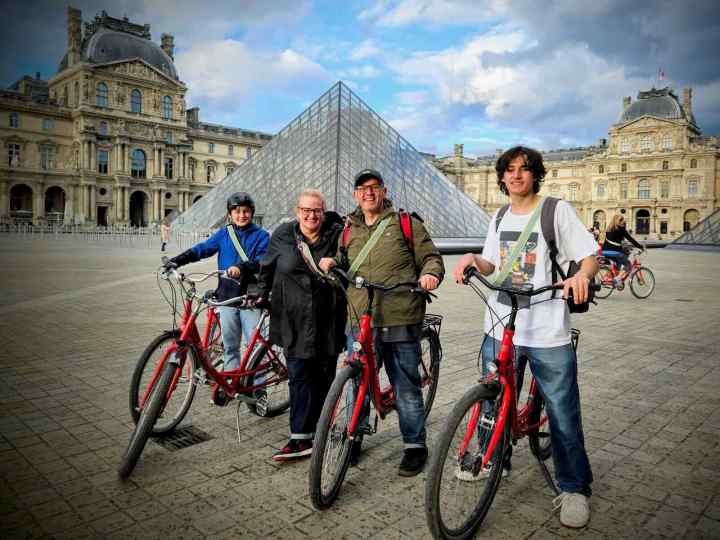
After our wander round Montmartre in the morning, we were booked on a Fat Tire Tours’ night bike tour of Paris that evening, including a boat tour along the Seine part way through.
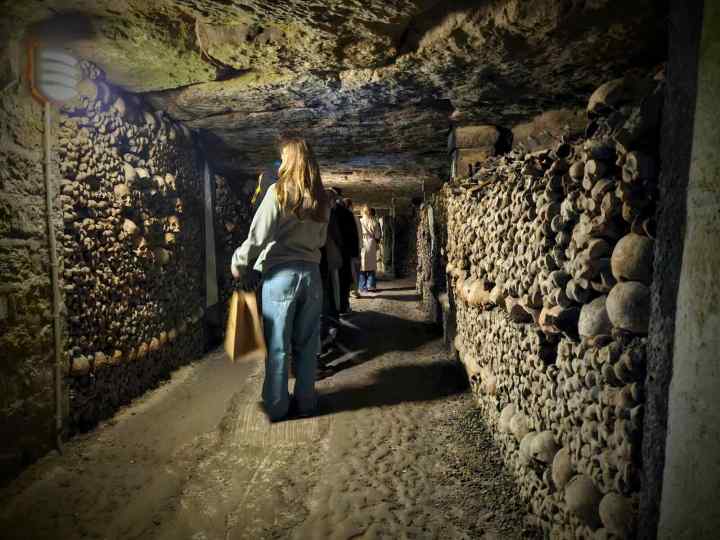
In the Paris Catacombs
Before arriving in Paris, given that the forecast wasn’t looking great, we had a list of rainy day activities planned. Top of that list was a trip The Paris Catacombs, an ossuary containing the remains of more than 6 million people. So as our fourth day in the city was one of those rainy days, we made plans to go there.
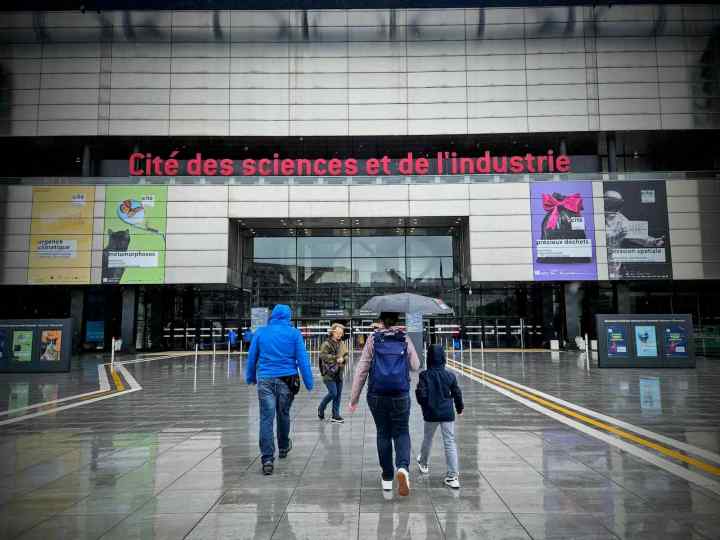
Cité des Sciences et de l’Industrie, Paris’ museum of science and industry
As with the previous day, when we went to The Paris Catacombs, we were in need for another rainy day activity. Fortunately, we weren’t short of those rainy day activities, with our youngest already very keen on visiting Paris’ science and industry museum, Cité des Sciences et de l’Industrie.

A ride to Bastille and a wander round Centre Pompidou
With our fifth day in Paris looking like another museum day, we arranged to visit the next rainy day activity on our list, a trip to the Centre Pompidou, the famous museum of modern art, designed in the high-tech style by the team of Richard Rogers, Su Rogers and Renzo Piano.
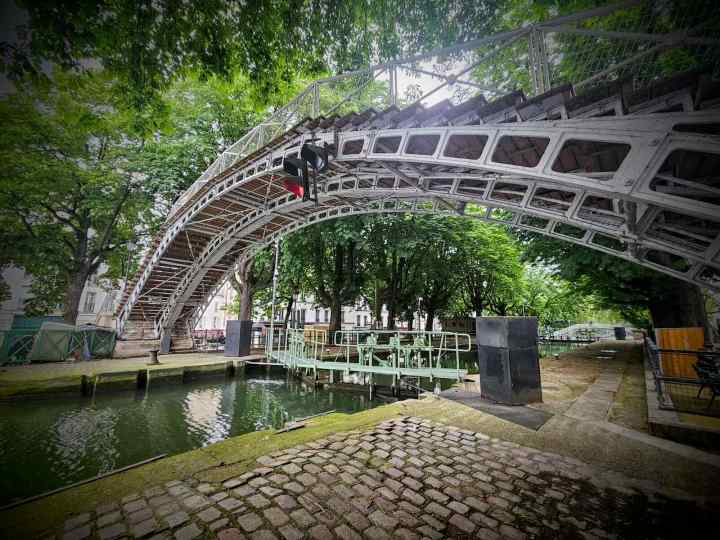
Wandering along Canal Saint-Martin
After a couple of rainy days, we wanted to make the most of a dry day by going for a wander along Paris’ Canal Saint-Martin. Located in the north east of the city, it connects the Canal de l’Ourcq to the Seine, travelling in a tunnel for nearly half its length.
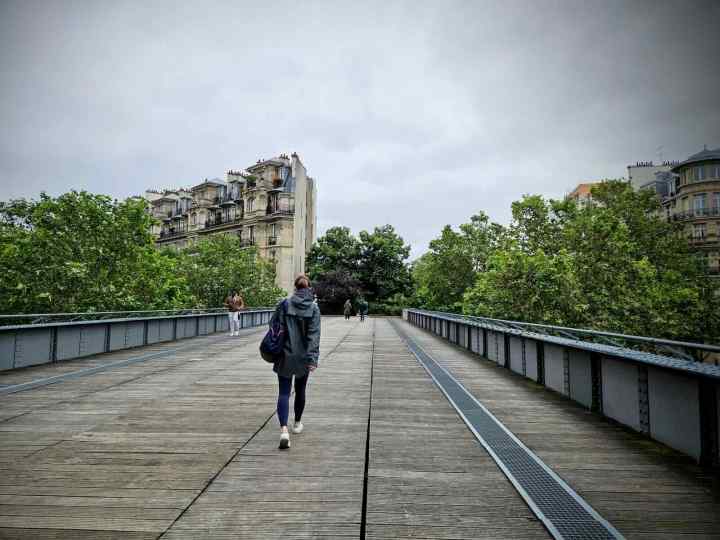
A walk along the Coulée verte René-Dumont, Paris’ High Line
For our final day in Paris, we planned to take it easy with a stroll along the Coulée verte René-Dumont, otherwise known as the Promenade Plantée. Running along an old railway viaduct in the 12th arrondissement, in recent years this has been dubbed Paris’ High Line, but it predates New York’s High Line by 16 years.
 Dom Cycling