
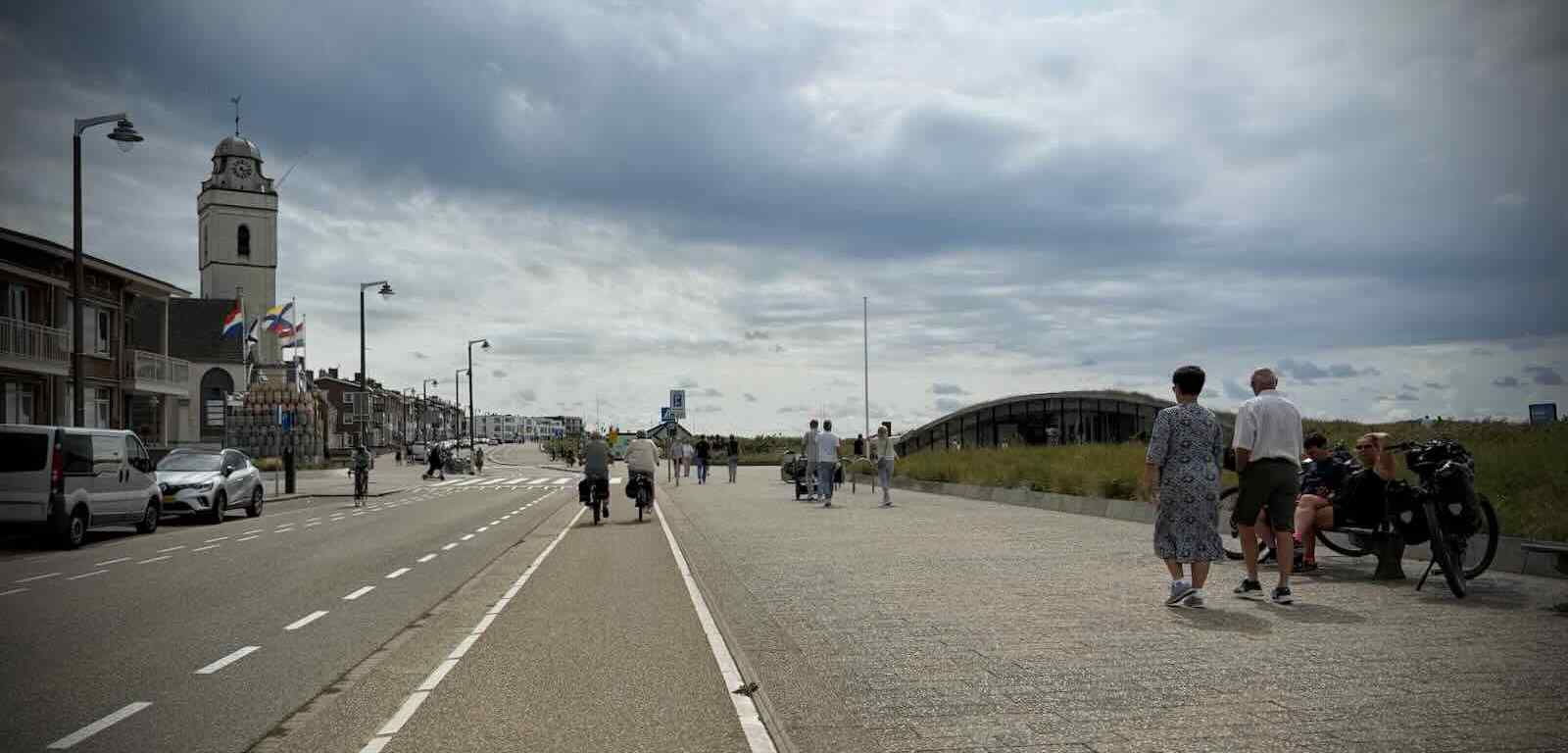
With a birthday in the group to celebrate, we arranged for lunch out at Strandpaviljoen De Watering in Katwijk aan Zee, overlooking the beach. Getting there would obviously involve getting on the bikes and enjoying the very pleasant ride across the dunes.
Like most places near to Duinrell, Katwijk aan Zee is somewhere we’ve been a few times before, starting in 2016 and then again in 2022 and 2024. With Katwijk aan Zee being a little further away, we’ve definitely not been there as often as we have been to Wassenaarse Slag.
Also, while Katwijk aan Zee is nowhere near as built-up as Scheveningen, it’s definitely a lot bigger and busier than Wassenaarse Slag. I’d also say we prefer the beach and beachfront bars at Wassenaarse Slag too.
As half of our group had never been to Katwijk aan Zee and my lot hadn’t been there since 2016, it was something of a novelty going there, even if it wasn’t our preferred beach and with it not being amazing weather.
Riding to Katwijk aan Zee
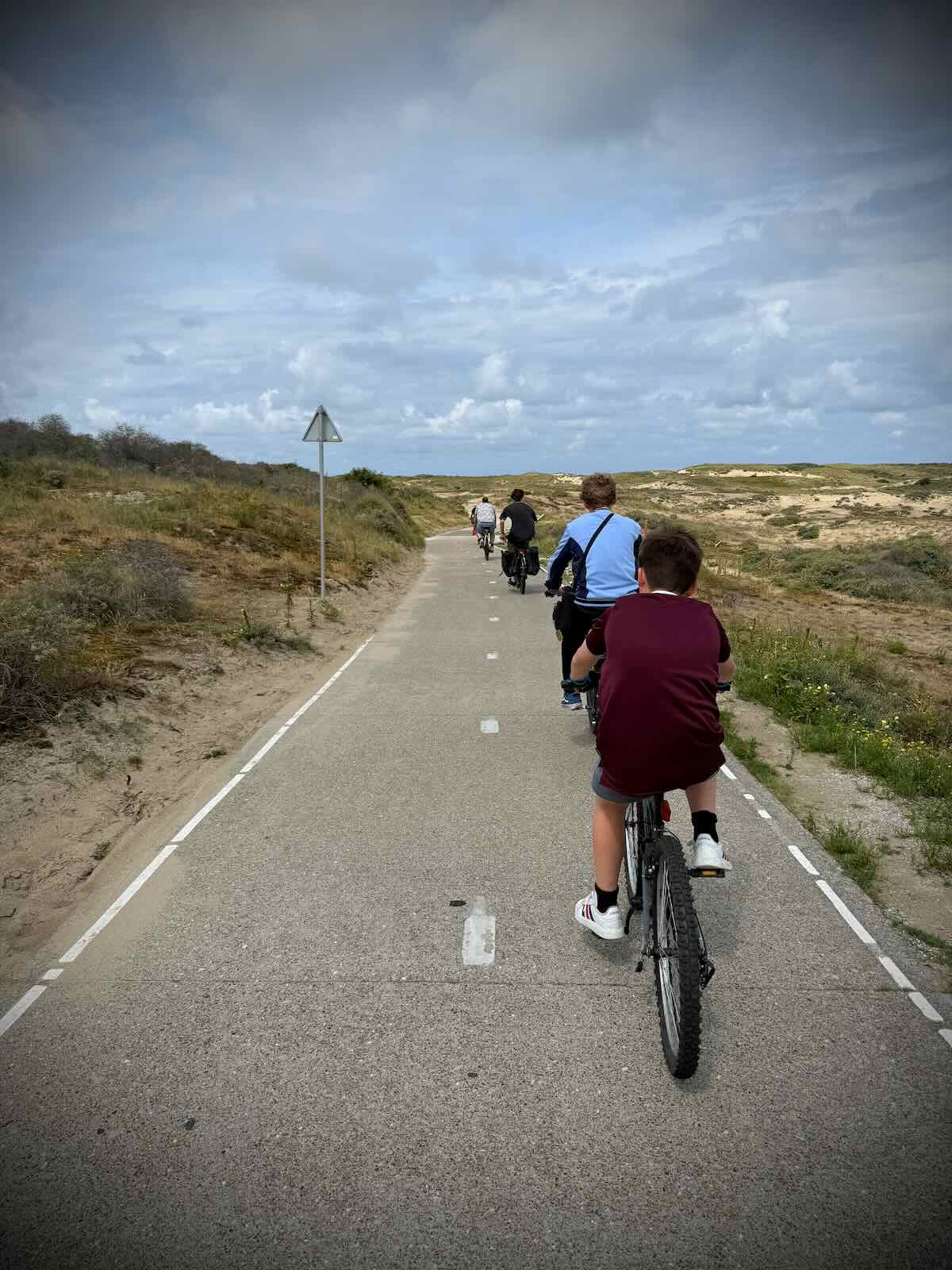
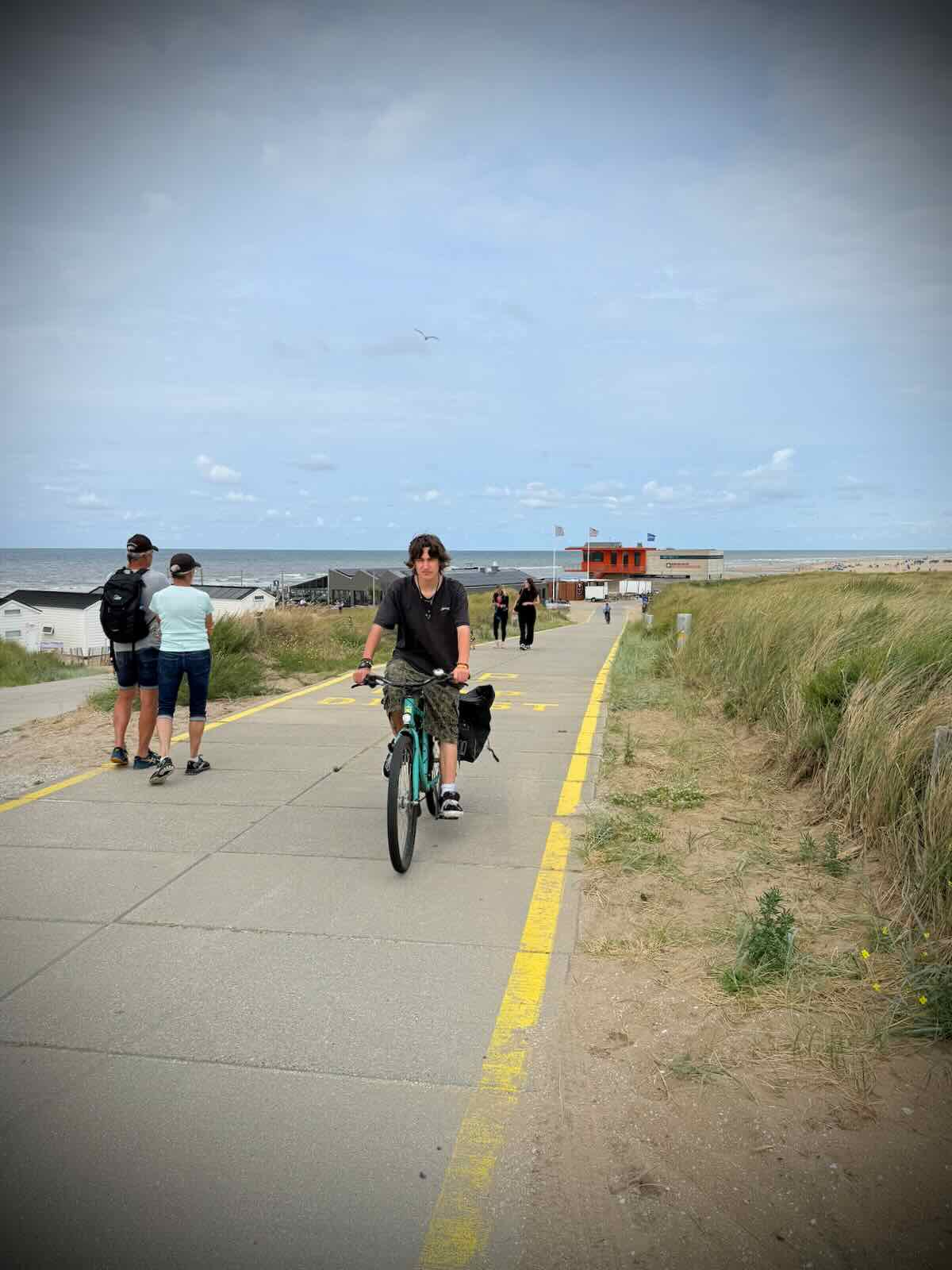
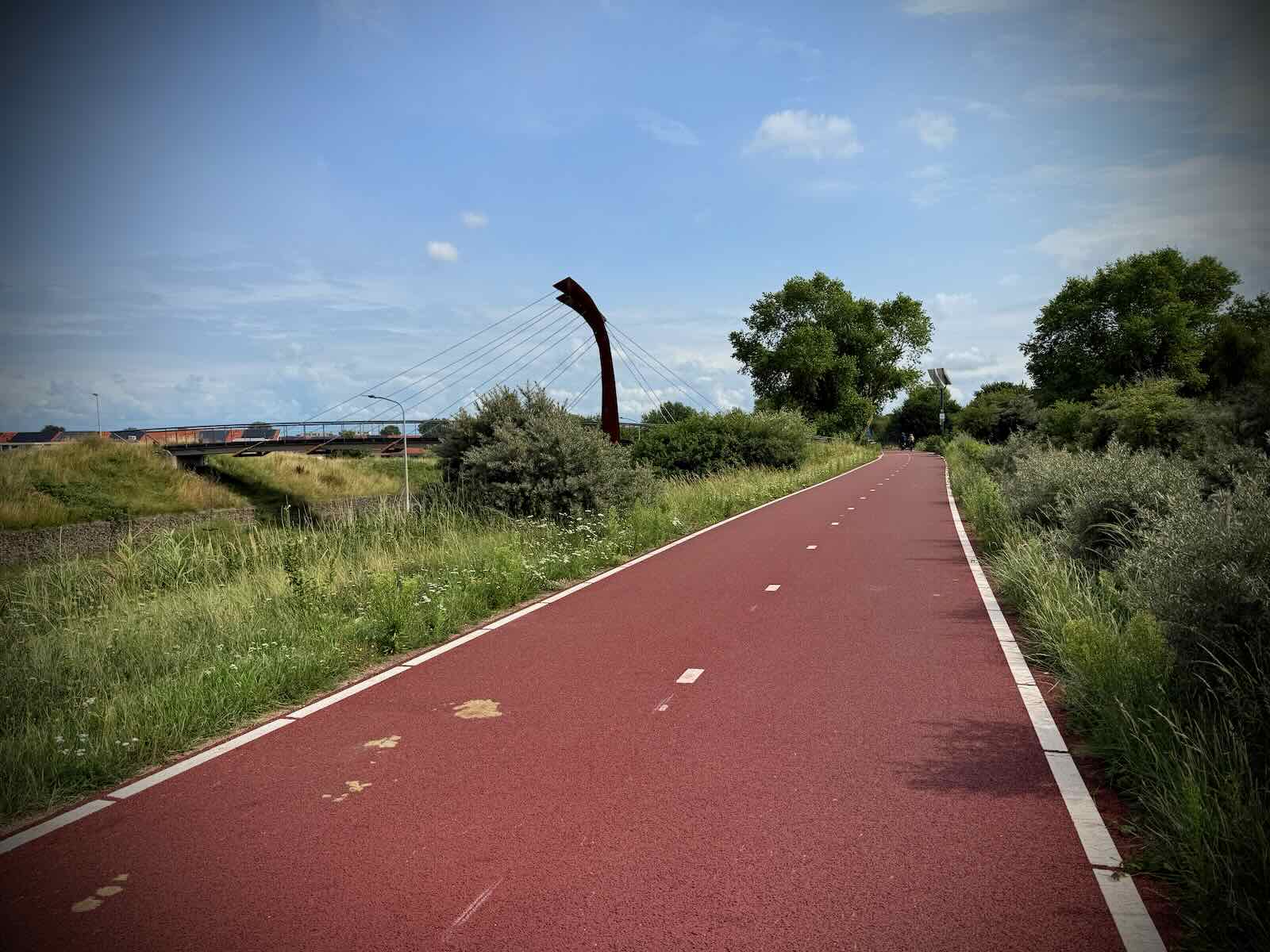
Setting off from Duinrell, we initially followed the dune route towards Wassenaarse Slag, then at the Fletcher Boutique Hotel Duinoord, we took a right turn made our way across the dunes to Katwijk.

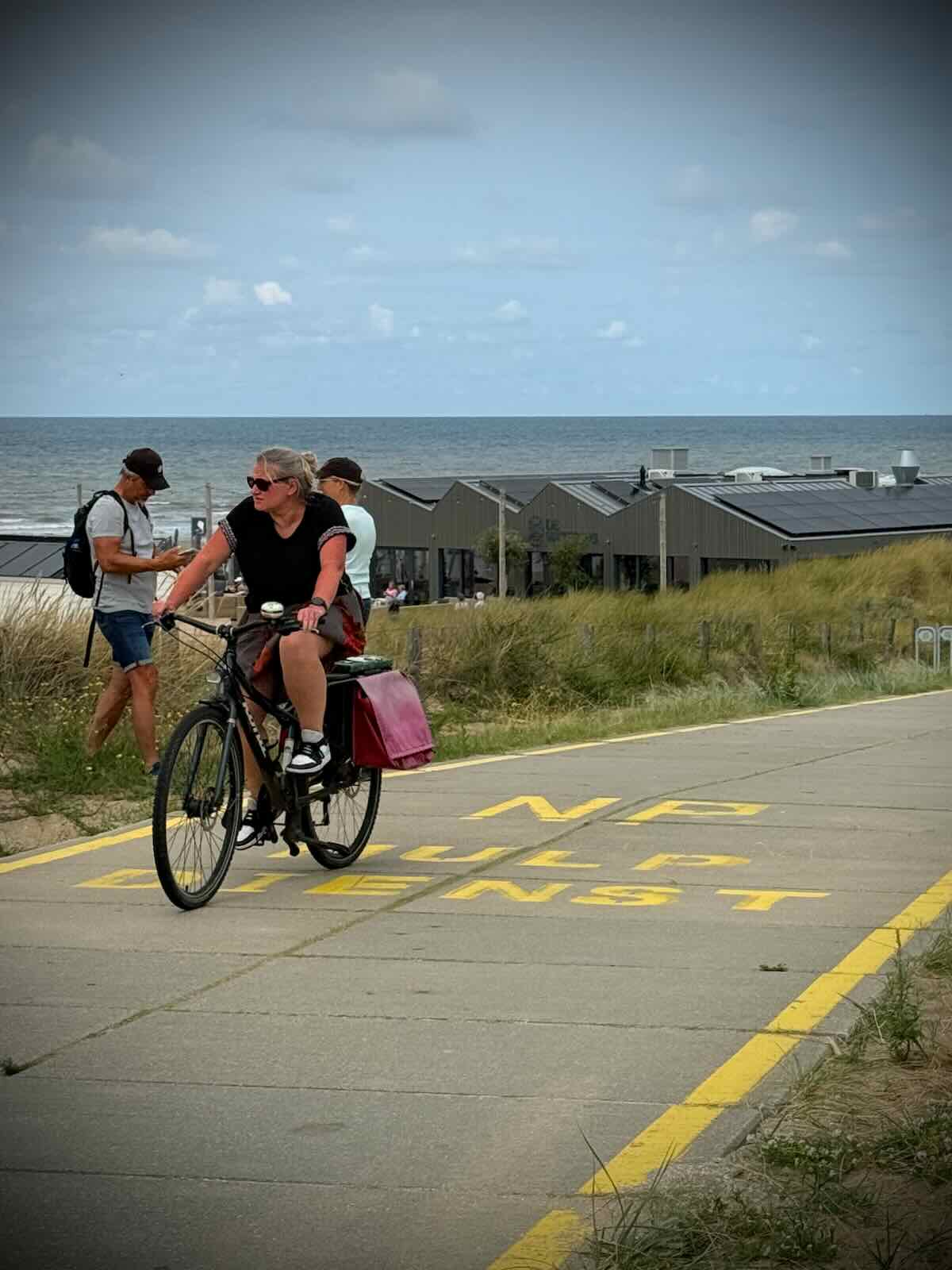
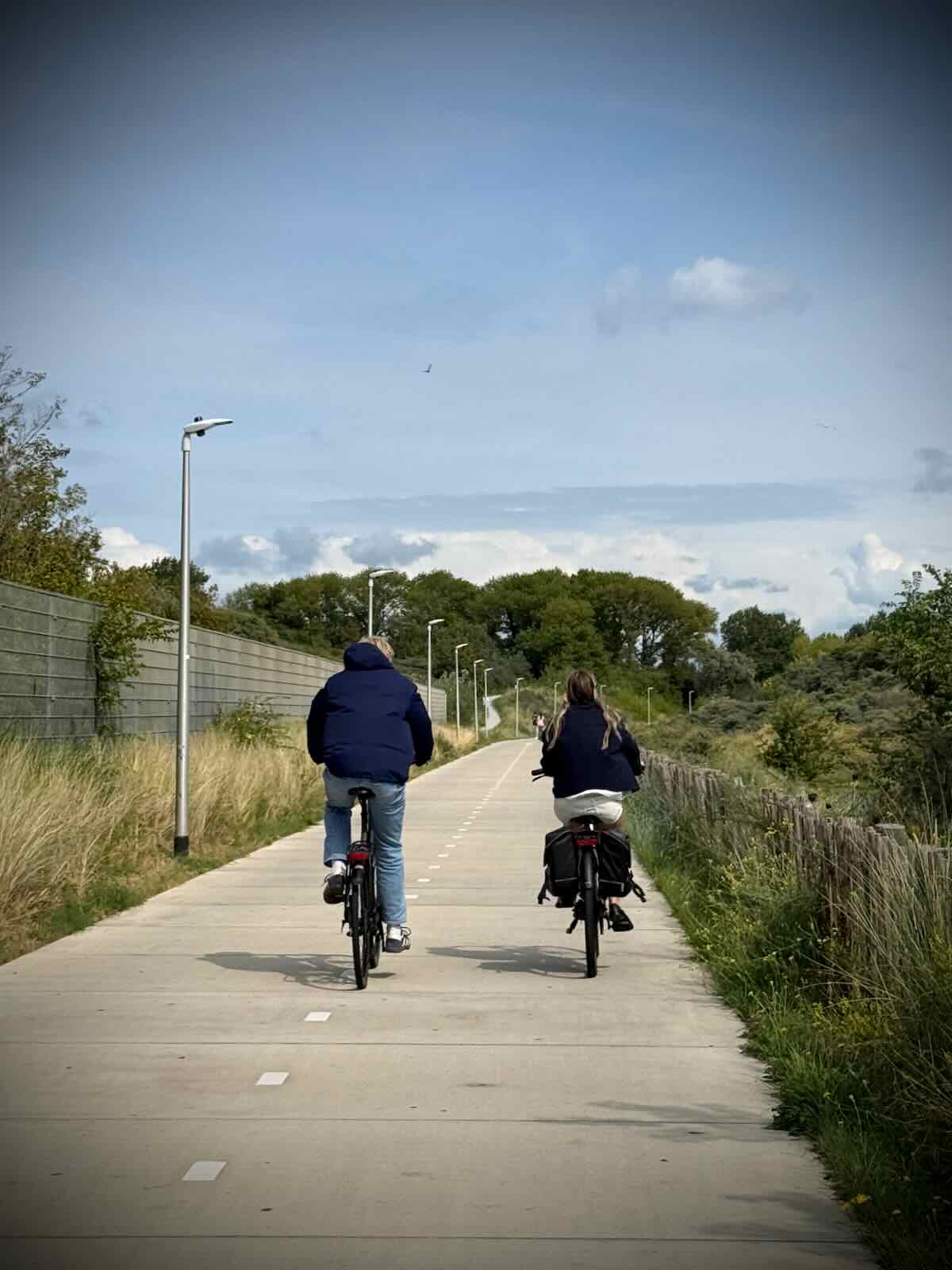
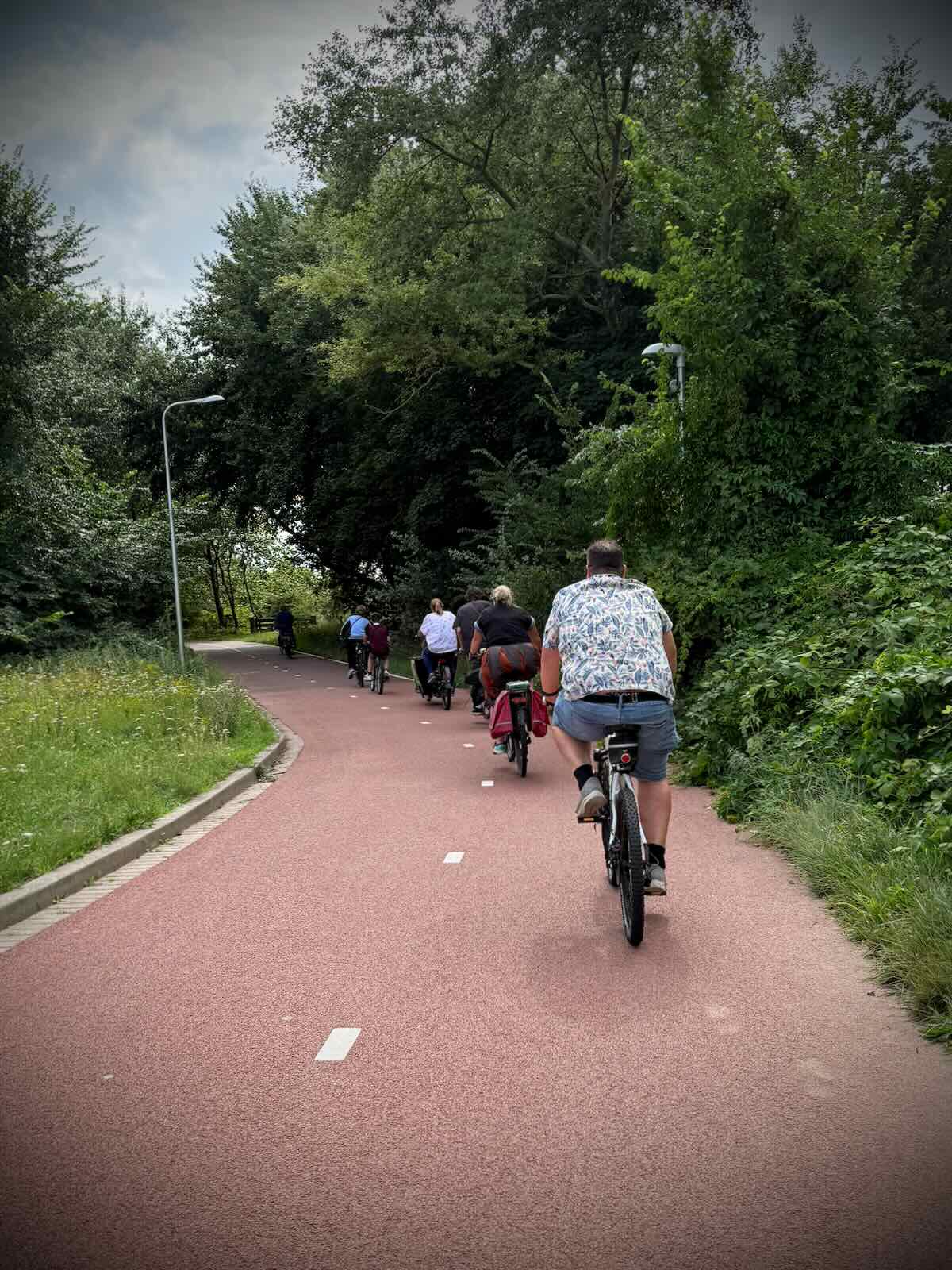
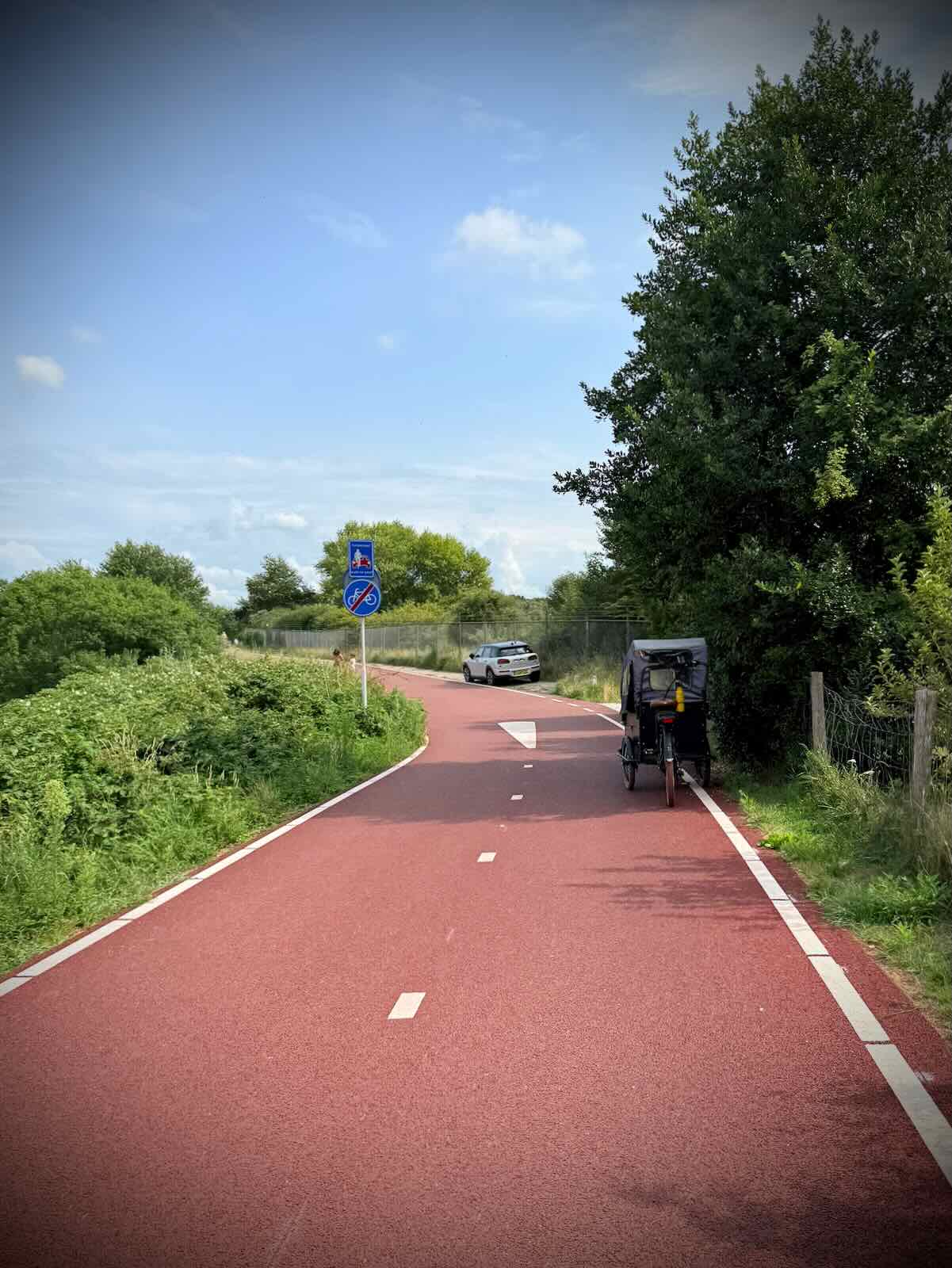
The route then continues as a bidirectional cycle path, which is narrower and doesn’t feature a walking lane like the path to Wassenaarse Slag. As you’d expect crossing the dunes, the path undulates up and down hills, but nothing too serious.
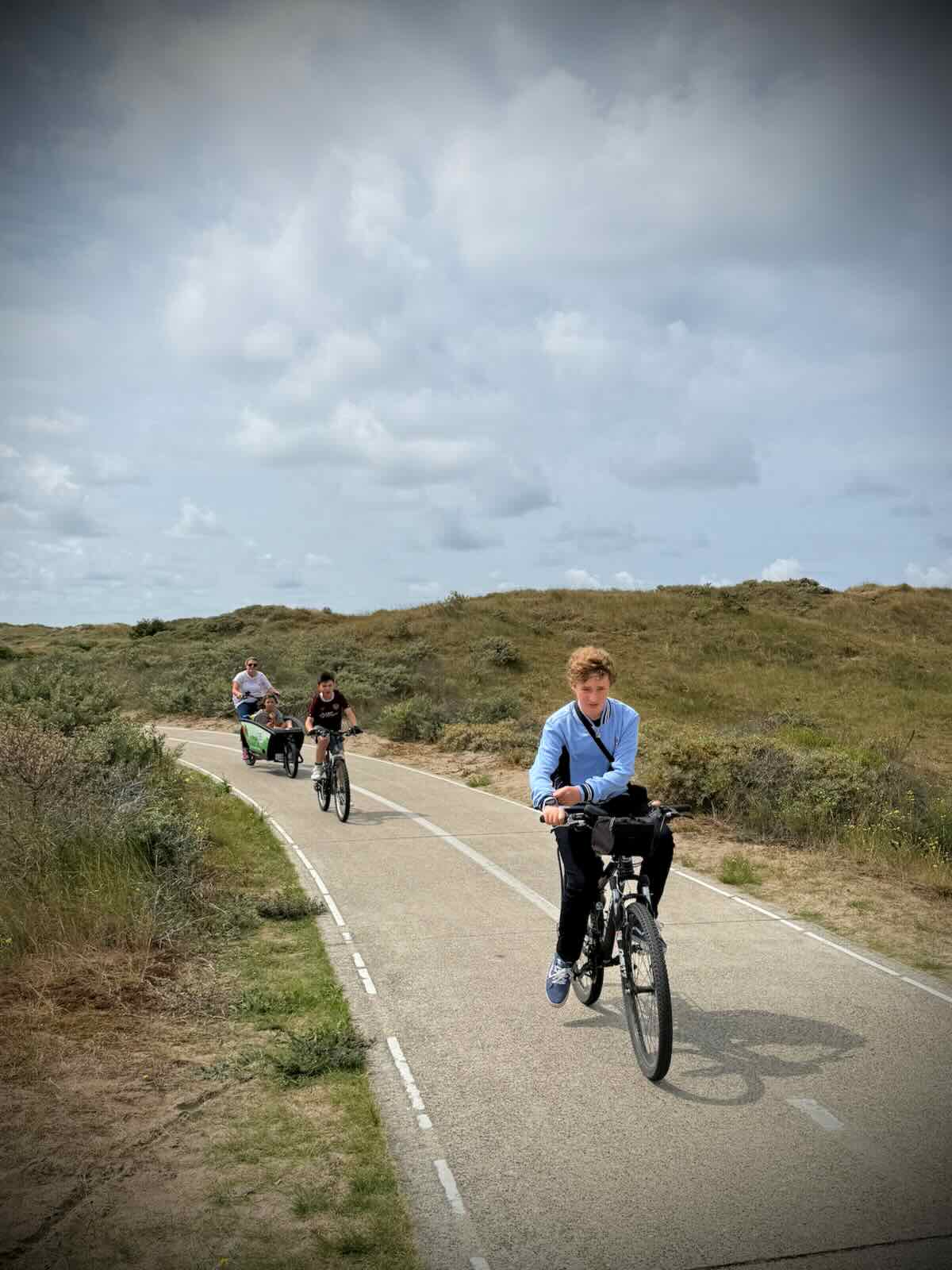
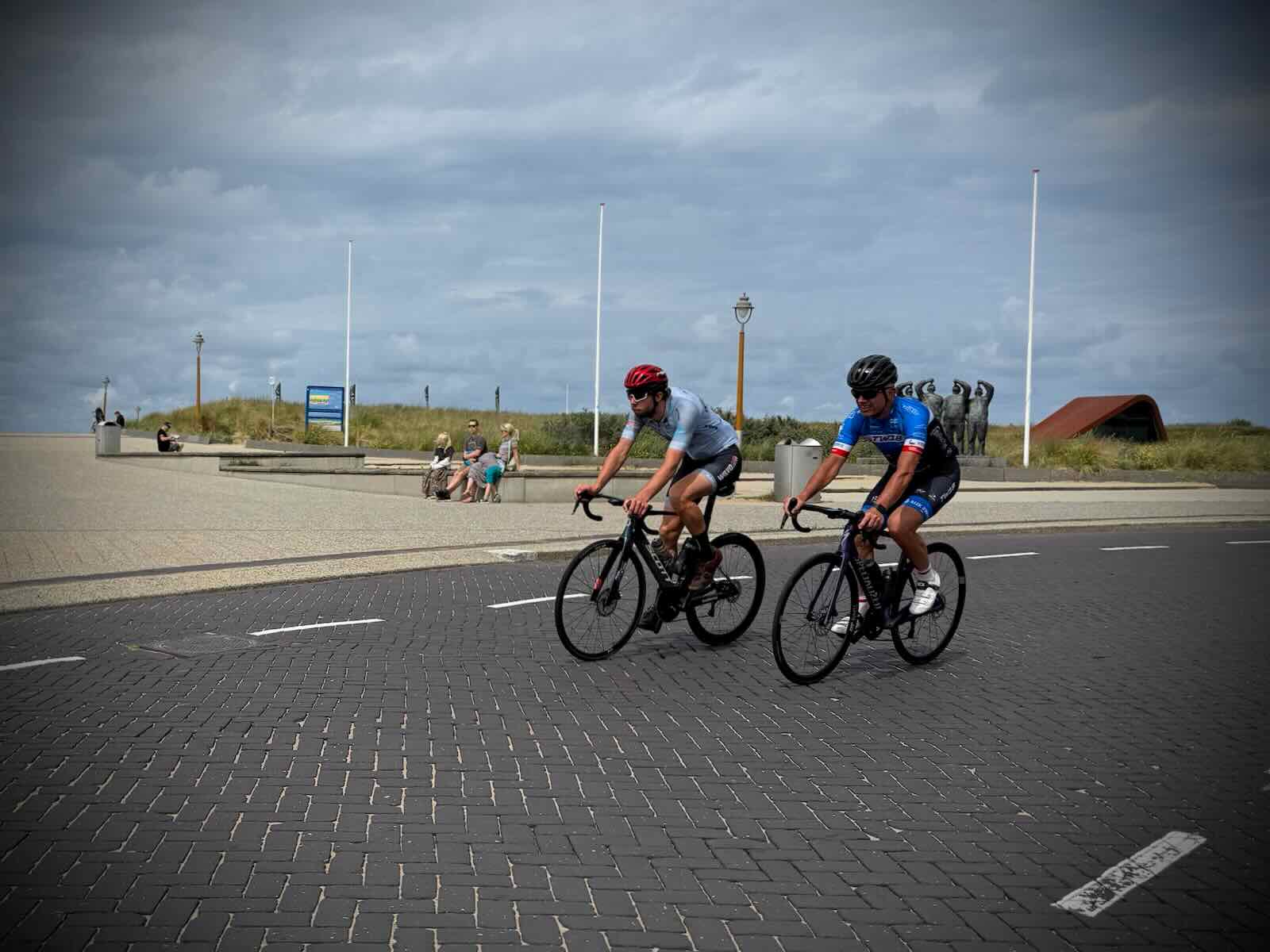
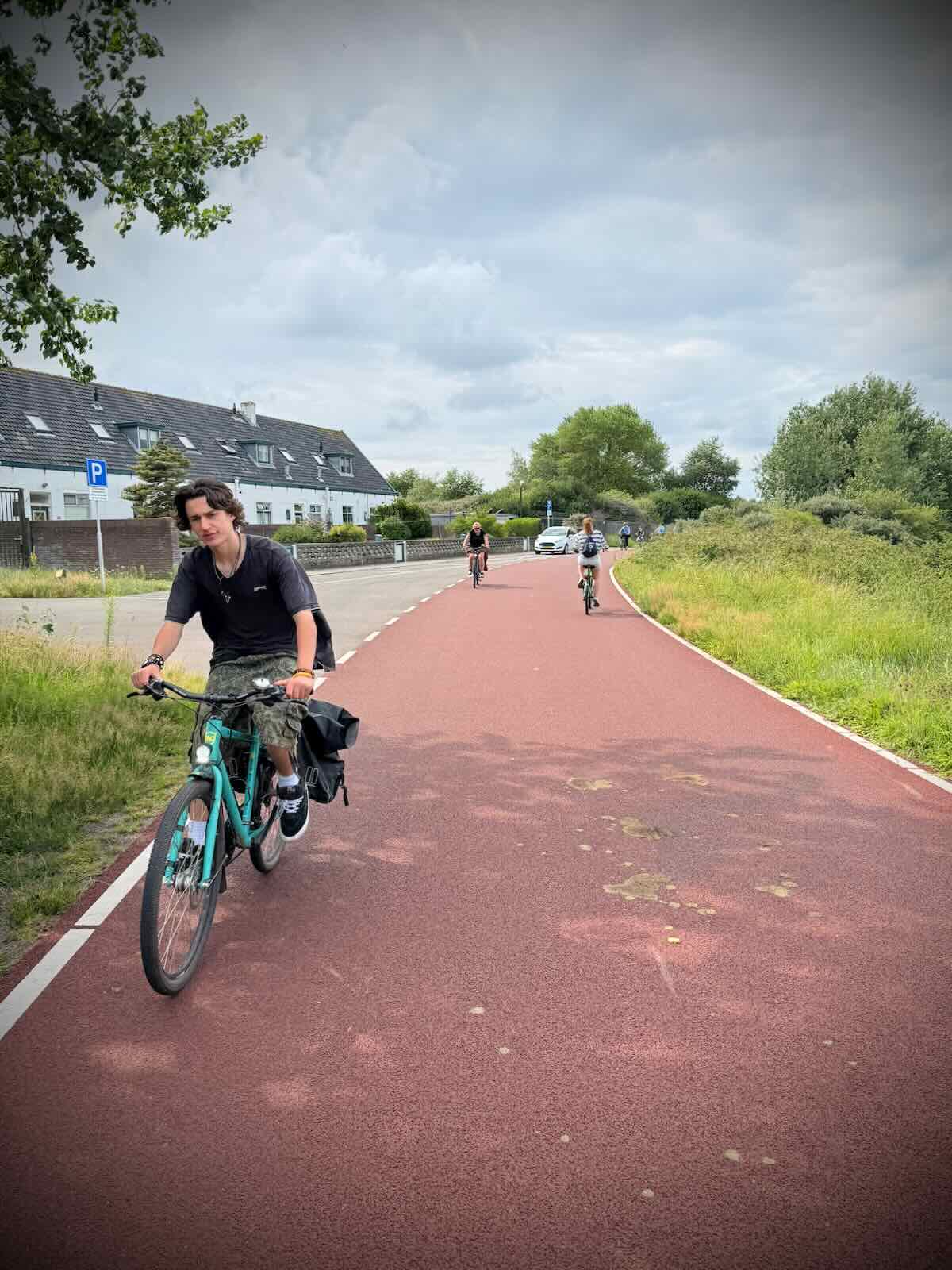
Being a Sunday, the dunes were pretty busy with people riding, with a quite a lot of those being sport cyclists. While there’s a typical stereotype of a Dutch cyclist, riding an upright bicycle in normal clothes and no helmet, it’s not unusual to see people in full Lycra and helmets, especially at the weekend.

Many of the sport cyclists in the Netherlands tend to ride drop-bar road bikes, but it’s not unusual to also see people riding flat-bar hybrid and mountain bikes, especially on some of the more rural routes. In all cases, they’re happily sharing the same cycling infrastructure as the rest of us.
It’s interesting that many of the advocates for vehicular cycling that typically come from more of a sport cycling background such as the infamous John Forester, would object to the kind of cycling infrastructure seen in the Netherlands.
Clearly, Dutch sport cyclists don’t have issues with riding on dedicated, safe and pleasant cycling infrastructure, rather than mixing with dangerous motor vehicles. Who’d have guessed? 🤷
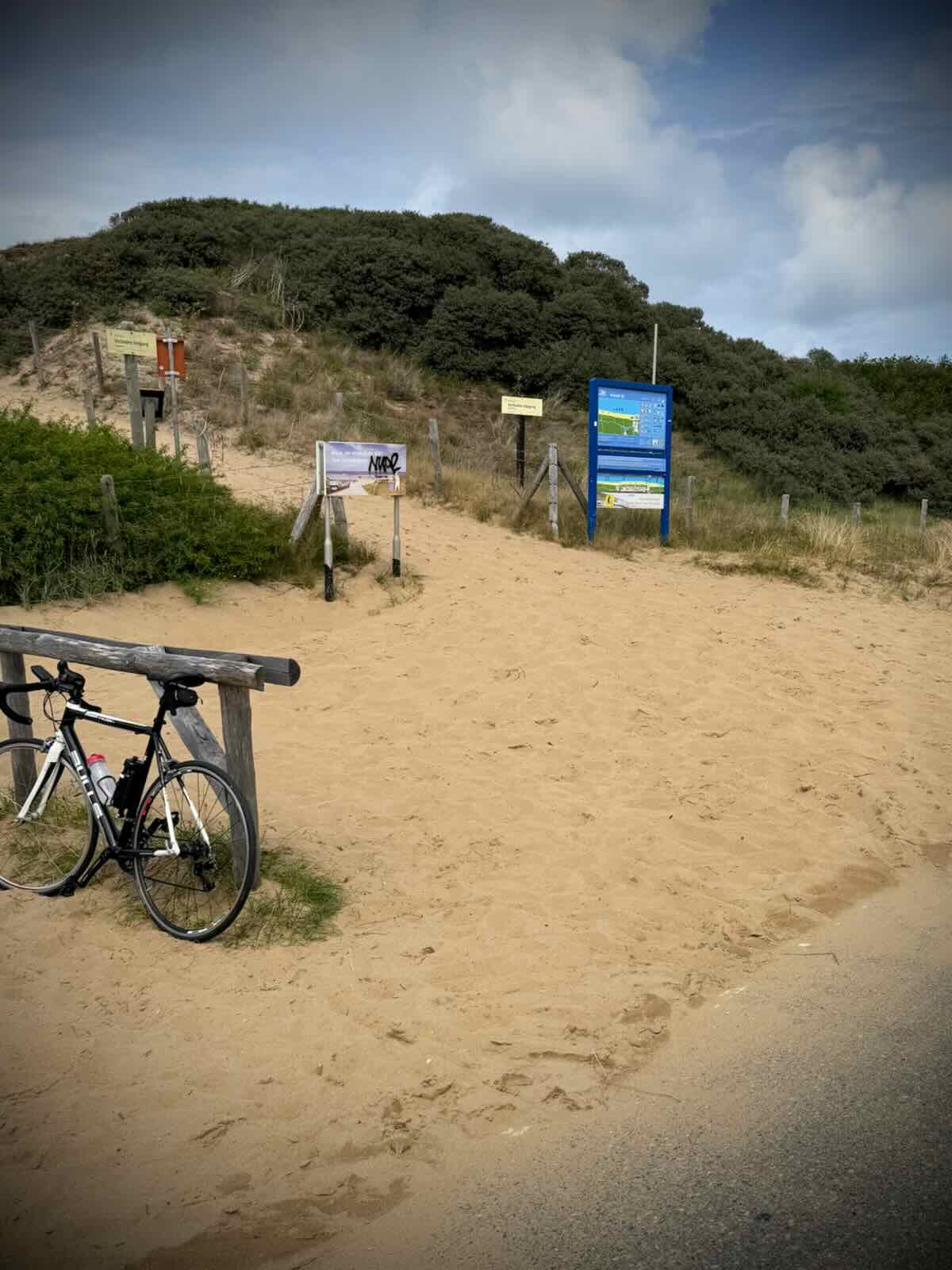
Along the way, we passed one of the beaches along the North Sea coast that’s only accessible by foot or bike. We’ve seen a few like this along the coast, all the way up to North Holland and beyond. With high quality cycle paths getting there, being able to ride to a beach, with no cars is fantastic.

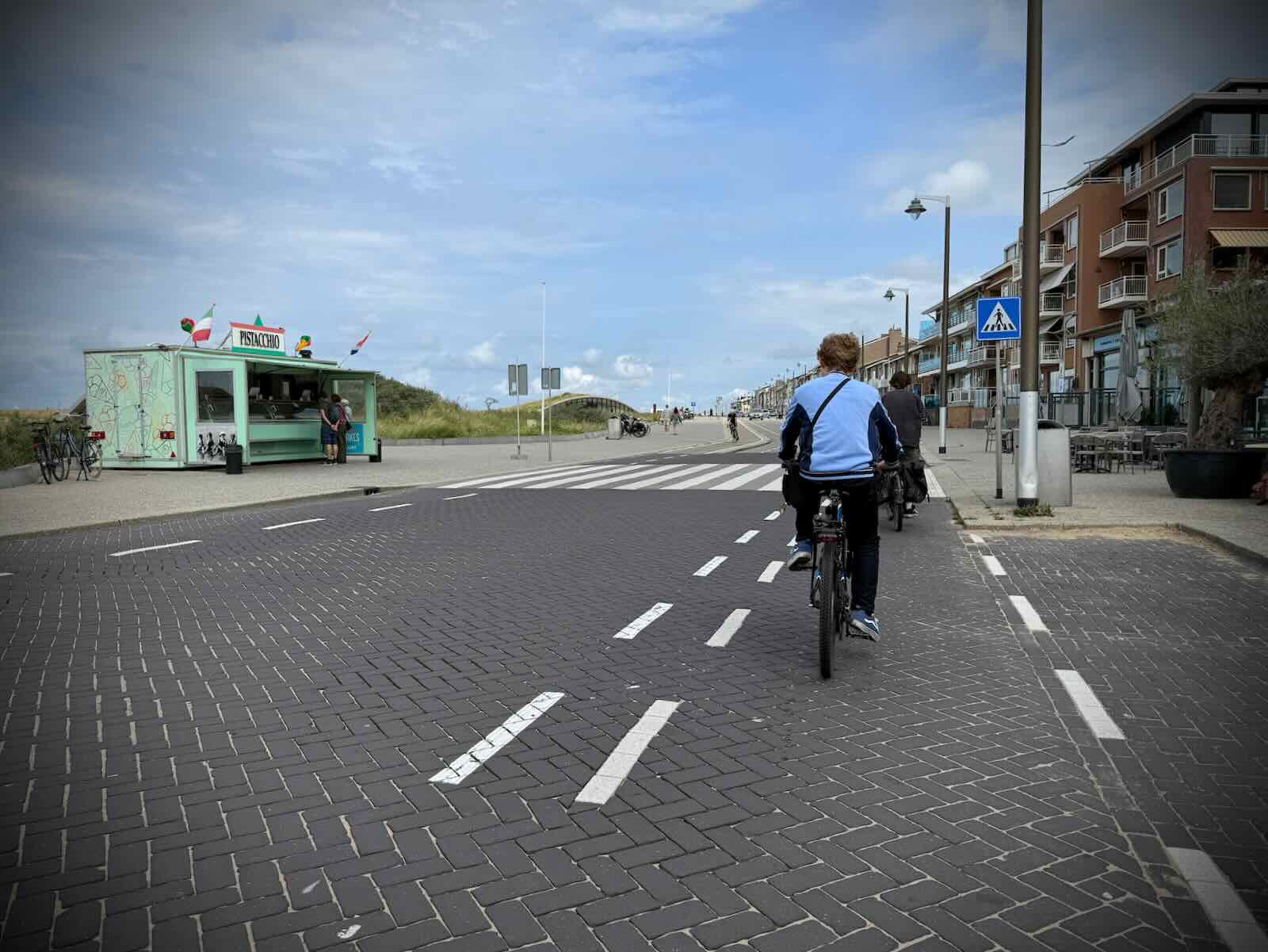
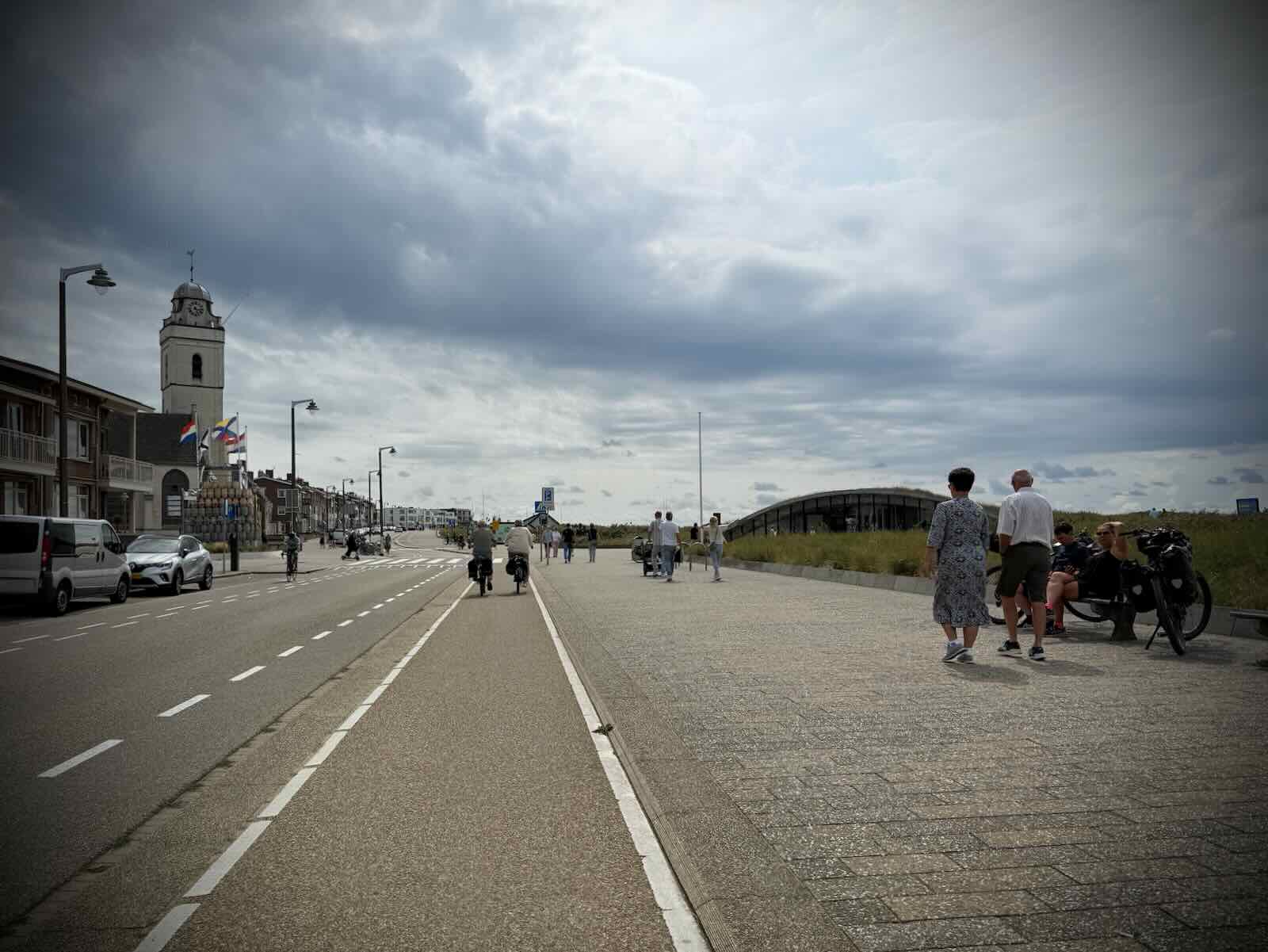
It wasn’t long before we made it through the dunes and arrived at Katwijk aan Zee. At that point, we left the path and continued onto Boulevard, the road along the seafront. Now I’ve mentioned this before, but it’s disappointing how poor Boulevard is.
On Boulevard, you could be forgiven for thinking you’re in the UK. There’s fairly high levels of motor traffic on seafront, on-street parking and just a door-zone cycle on the northbound side.

It’s surprising, given the amount of work that’s been done as part of the sea defences, that more wasn’t done to improve cycling facilities. This has included the building of an underground car park under the dike, with space for 663 cars.
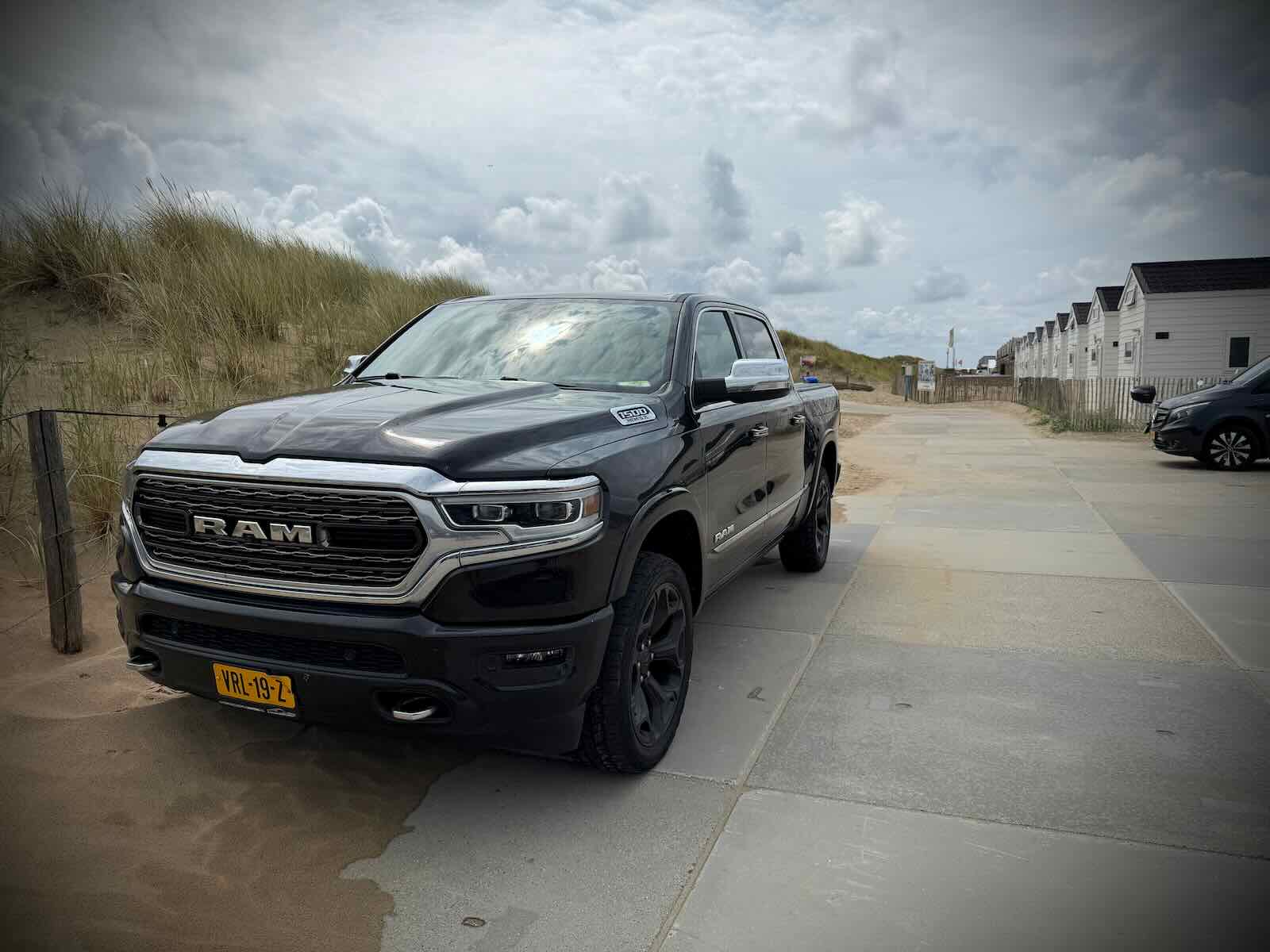
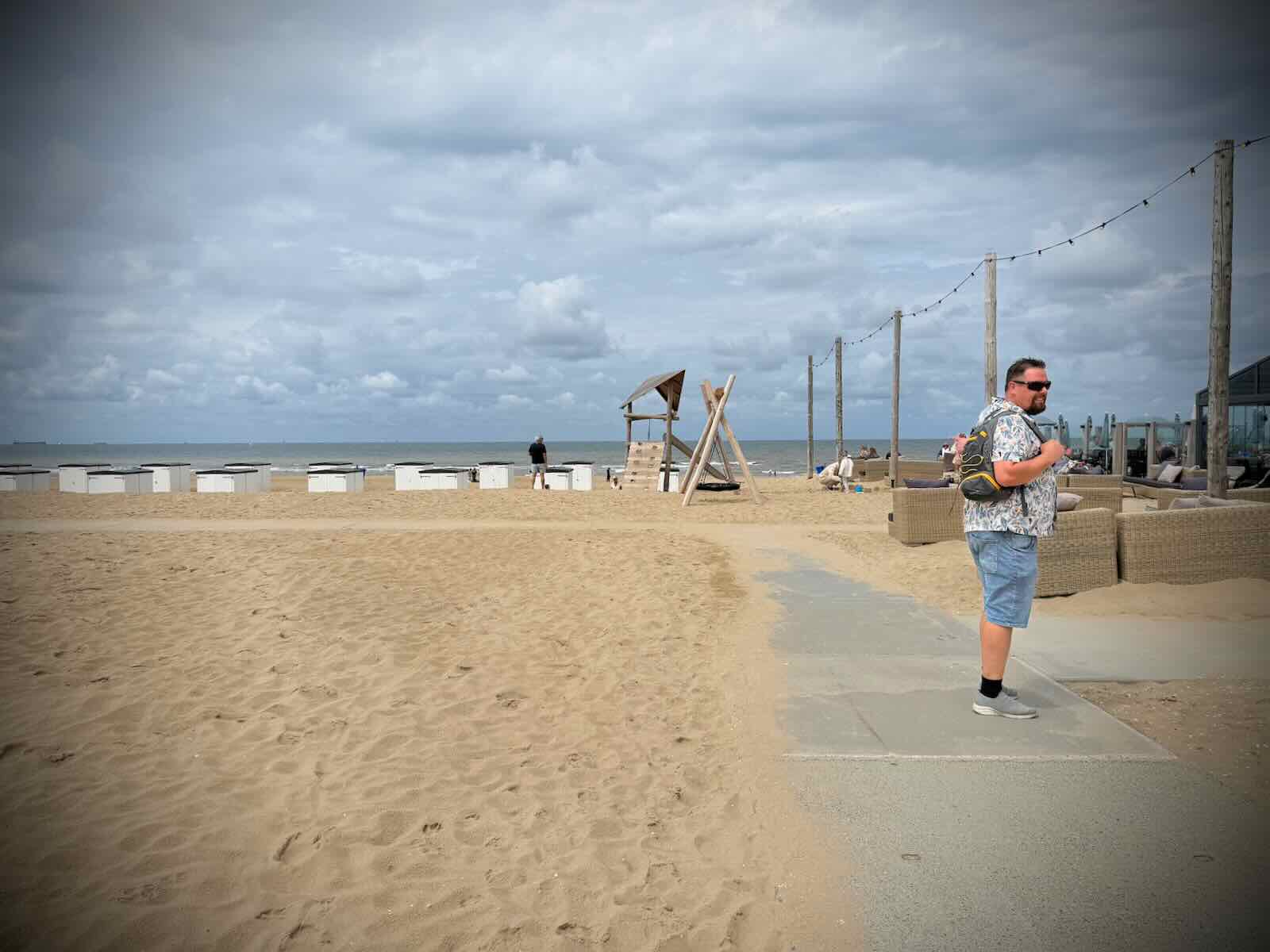
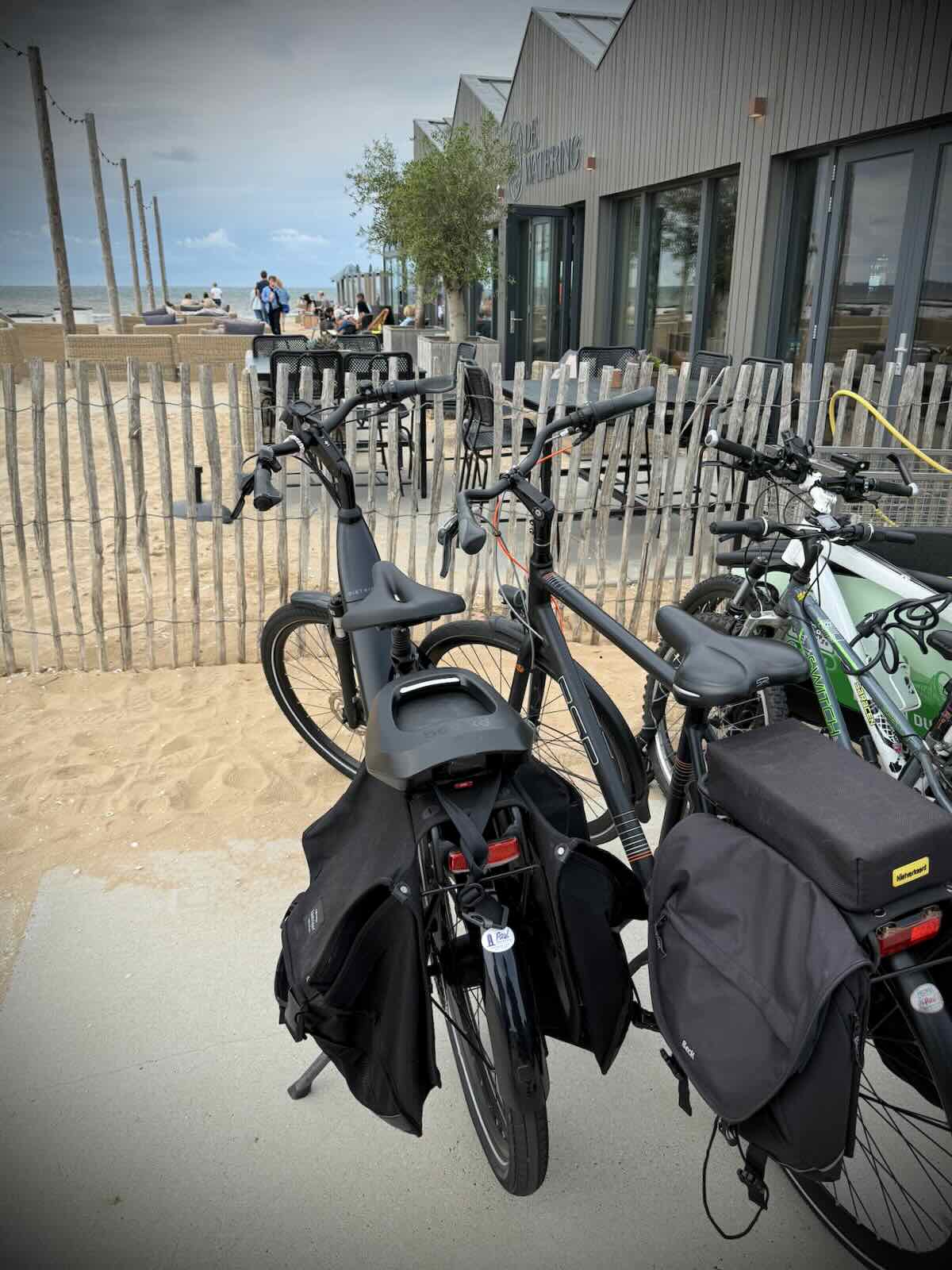
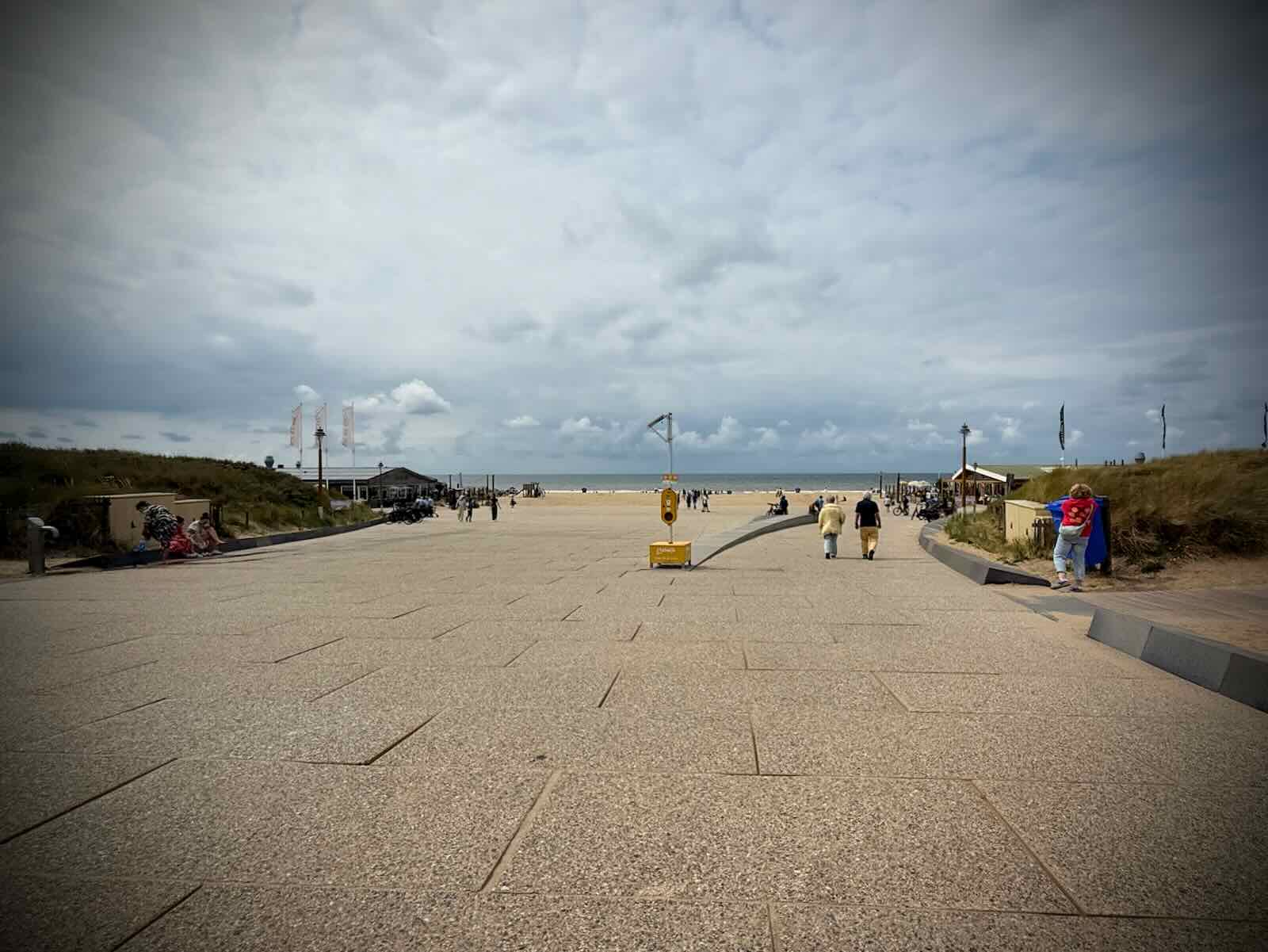
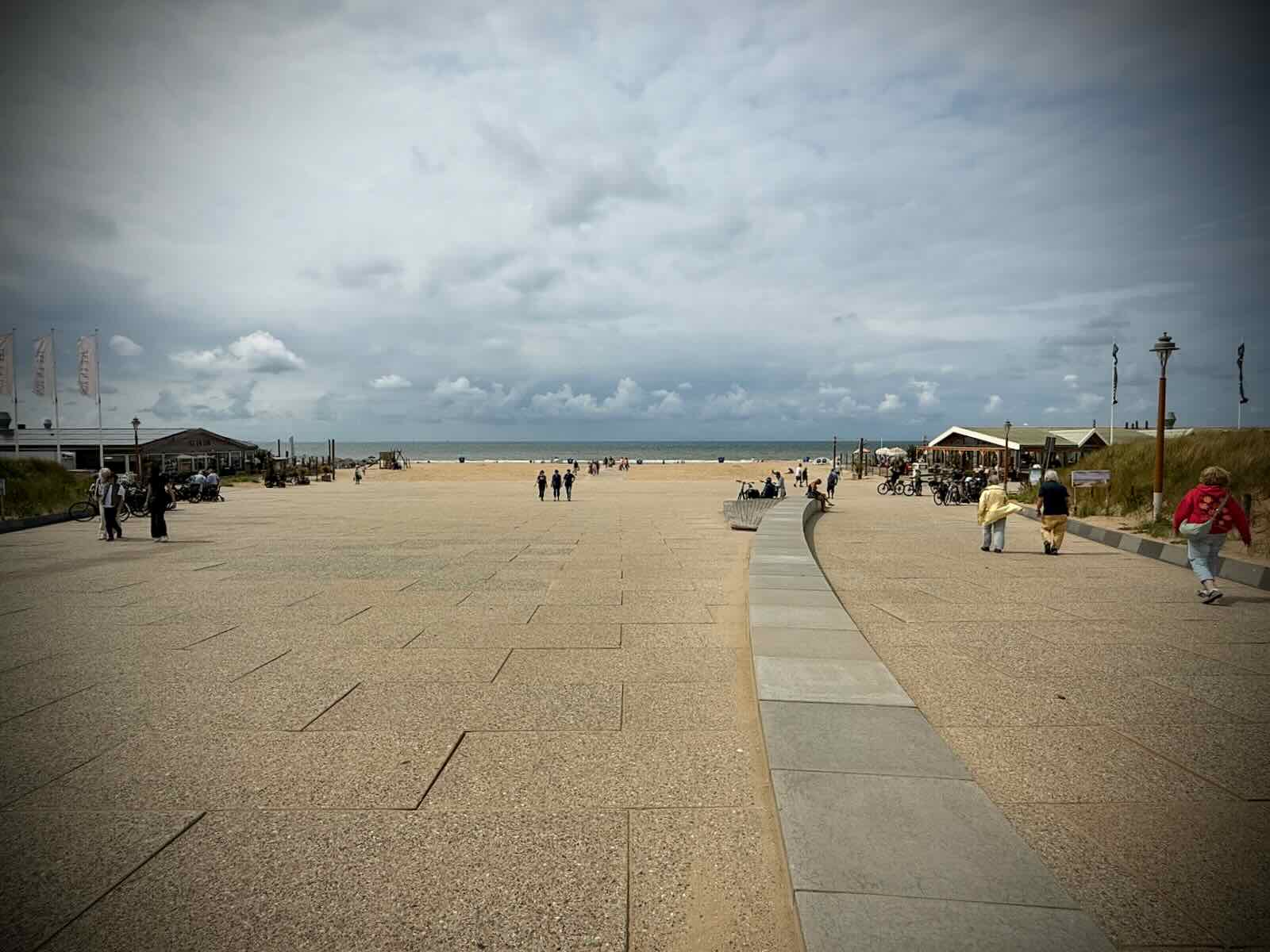
We made our way along the seafront, then turned off onto the beach and down to Strandpaviljoen De Watering, where we had a table booked for lunch.



Lunch at Katwijk aan Zee
Sitting outside at Strandpaviljoen De Watering, we enjoyed a very pleasant lunch. Similar to many of the beachfront restaurants we’ve been to, the food there was a combination of Dutch and international dishes, which all went down well.
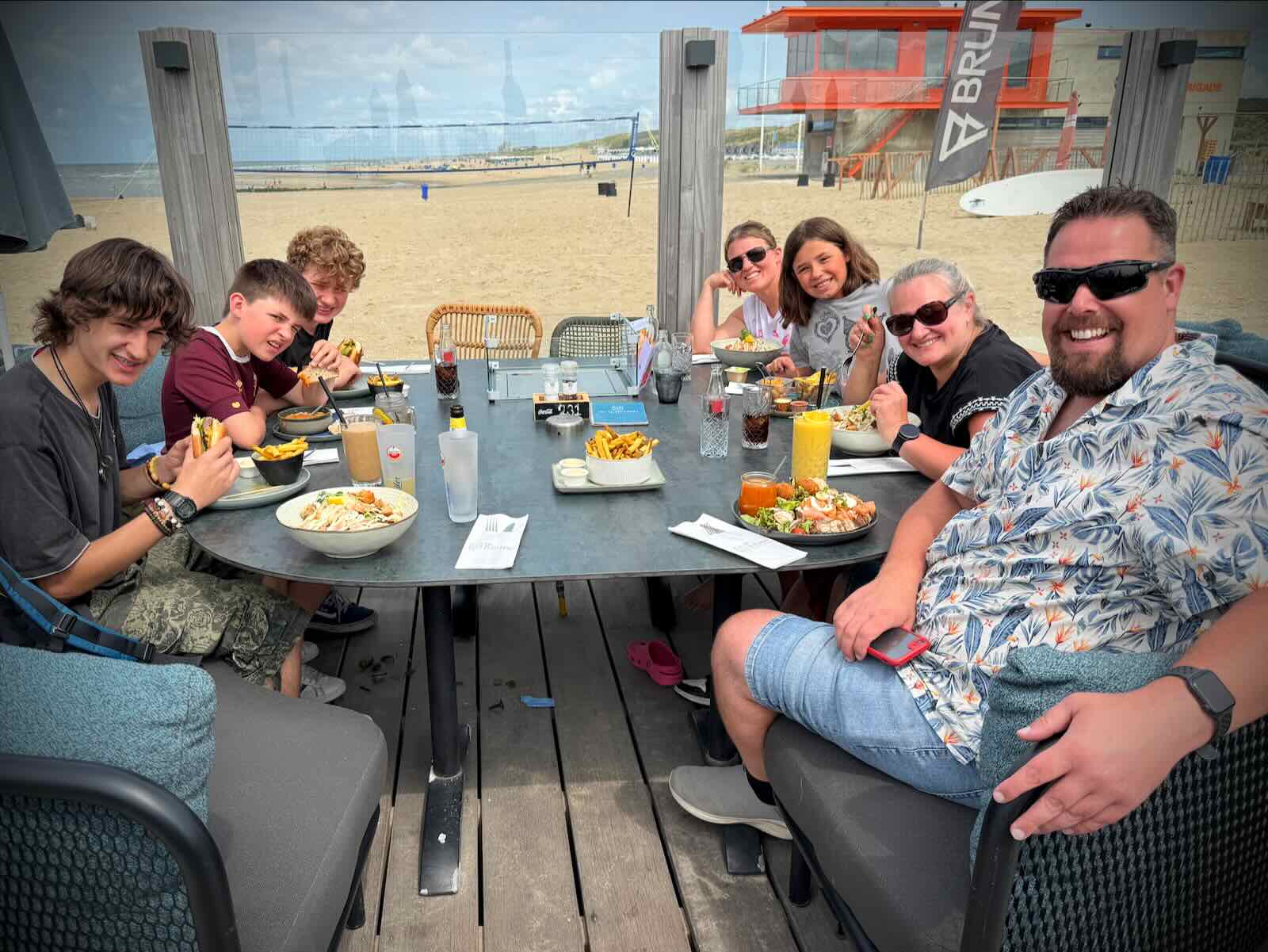
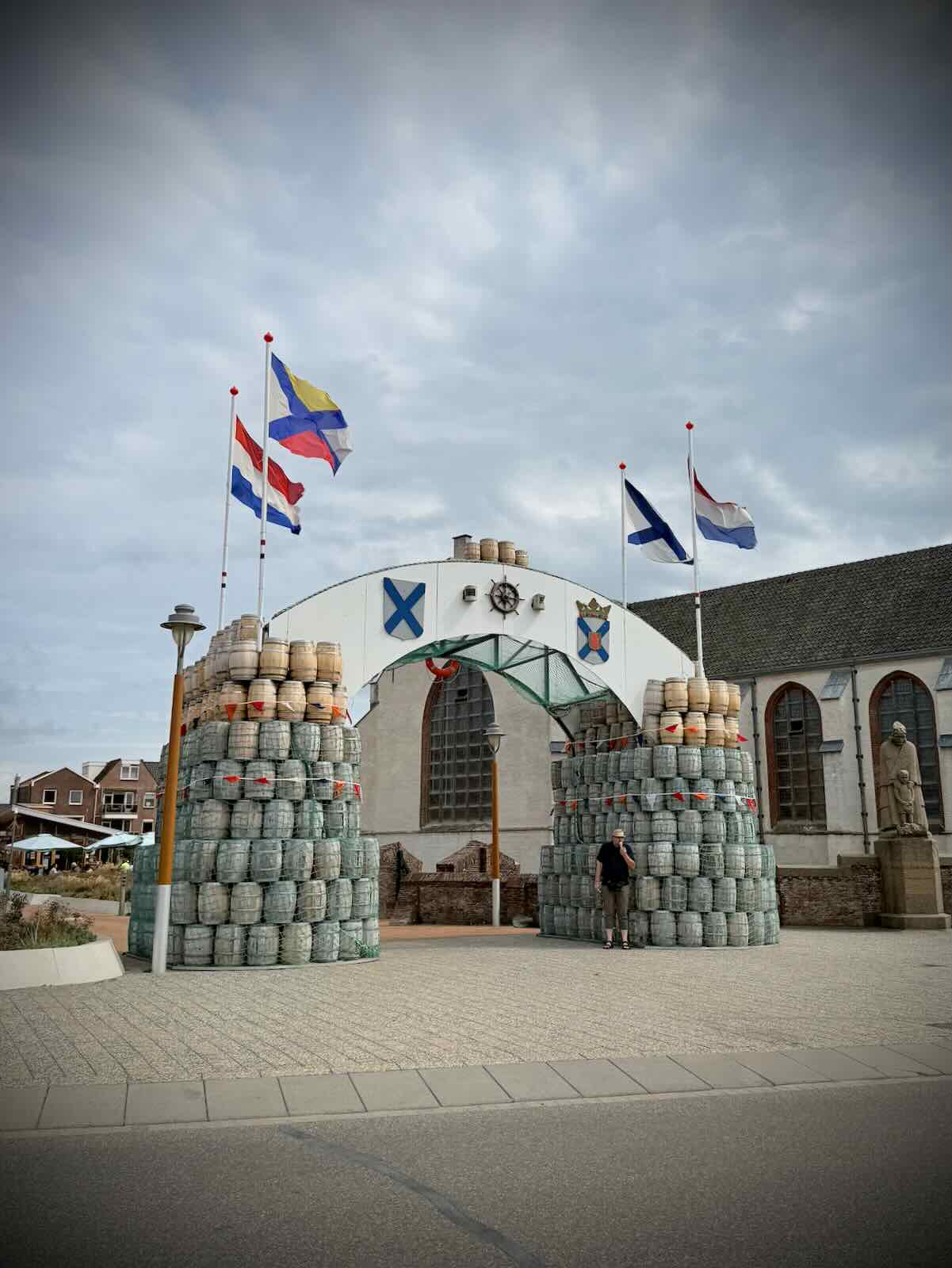
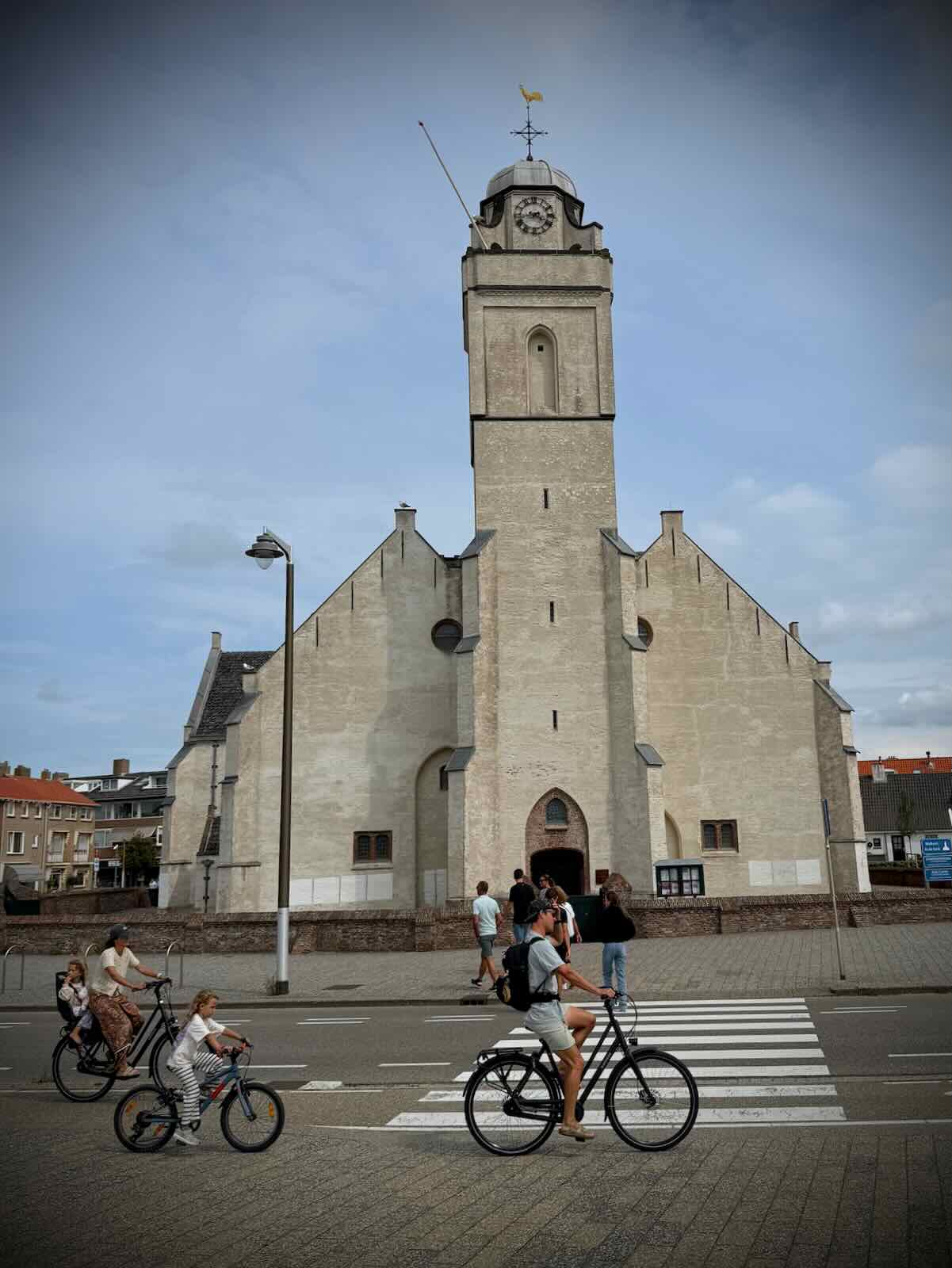
After a lovely time at Strandpaviljoen De Watering, we made our way back along the seafront, stopping for ice cream at an ice cream stand on Boulevard. We then headed into the town for a wander.

We we got to the town, were surprised to see most places were actually shut. We hadn’t realised Katwijk is a relatively religious town and is one of the few remaining in the region that still observes Sunday closing by local law.
With not much else to do and with it not being beach weather particularly, we decided to not stick around and head back to Duinrell.






Riding back
As I’ve mentioned before, I prefer not to repeat myself in terms of cycle routes, given the option. So setting off from Katwijk aan Zee, we headed inland along a different route back to Duinrell, that skirts the edge of the town and edge of the dunes.
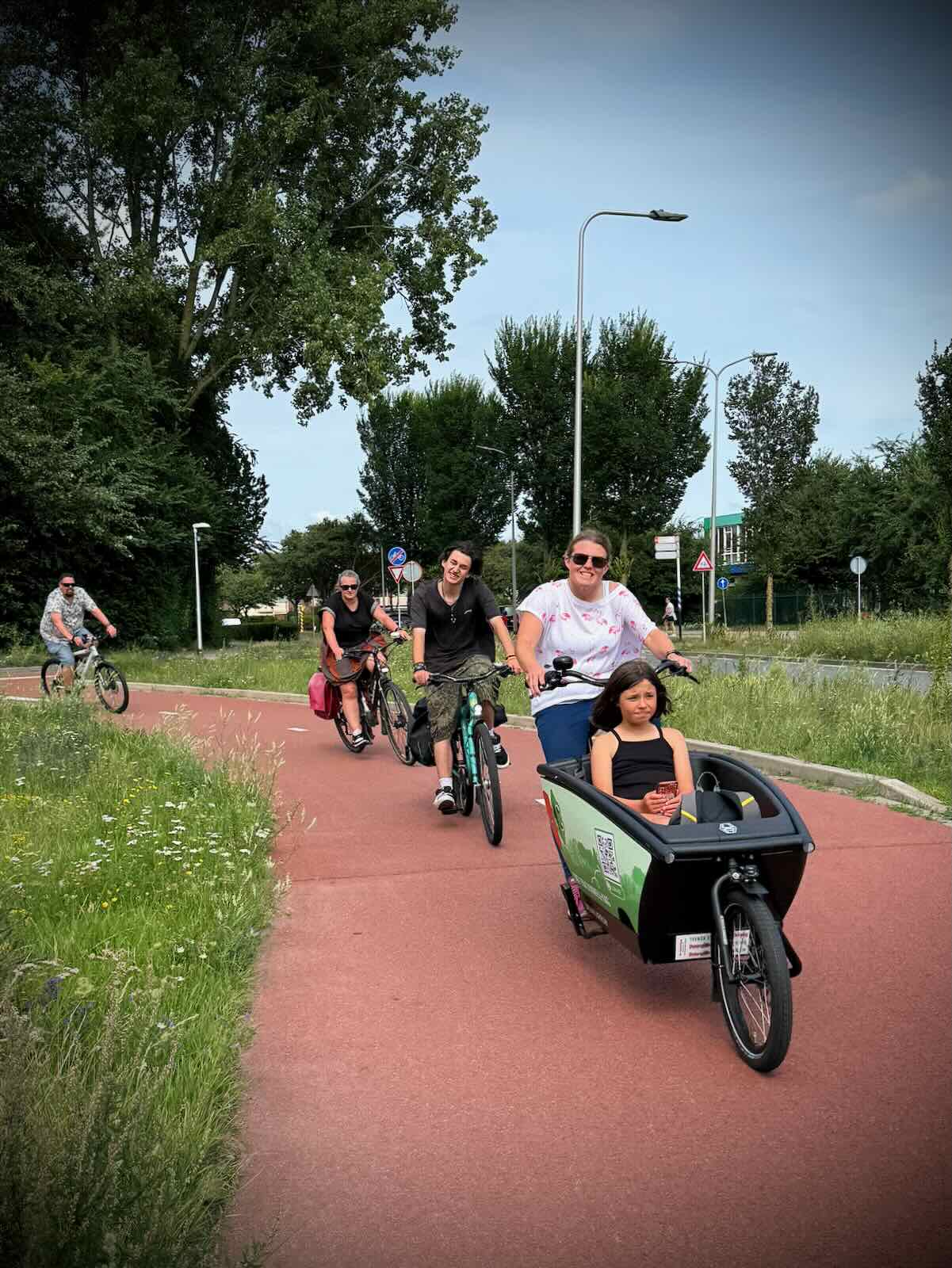
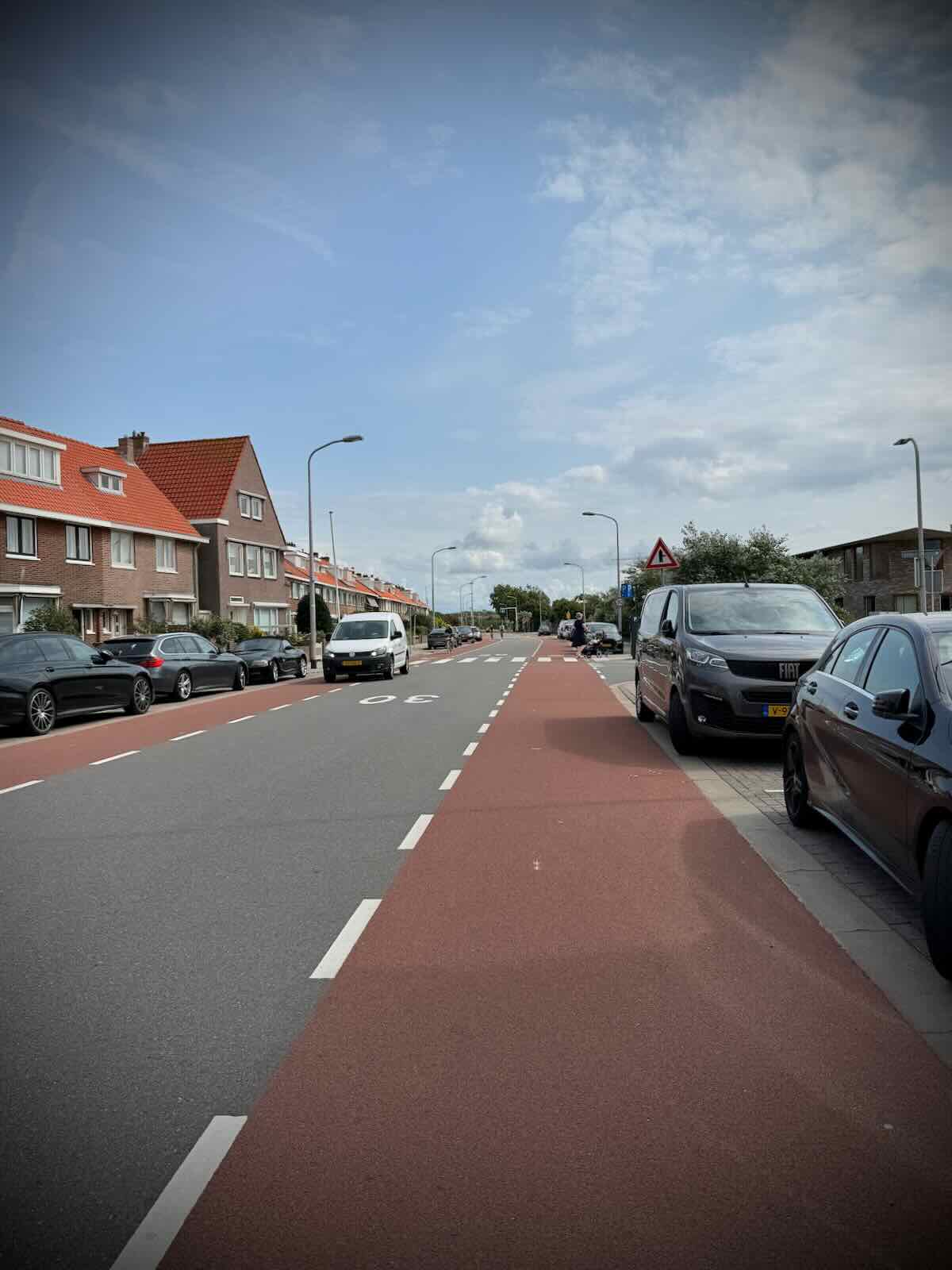
After initially starting in painted lanes on Drieplassenweg, we continued onto a fairly new concrete cycle path that runs between the town and dunes. This is a really high quality, wide and smooth path, which was really pleasant to ride on.

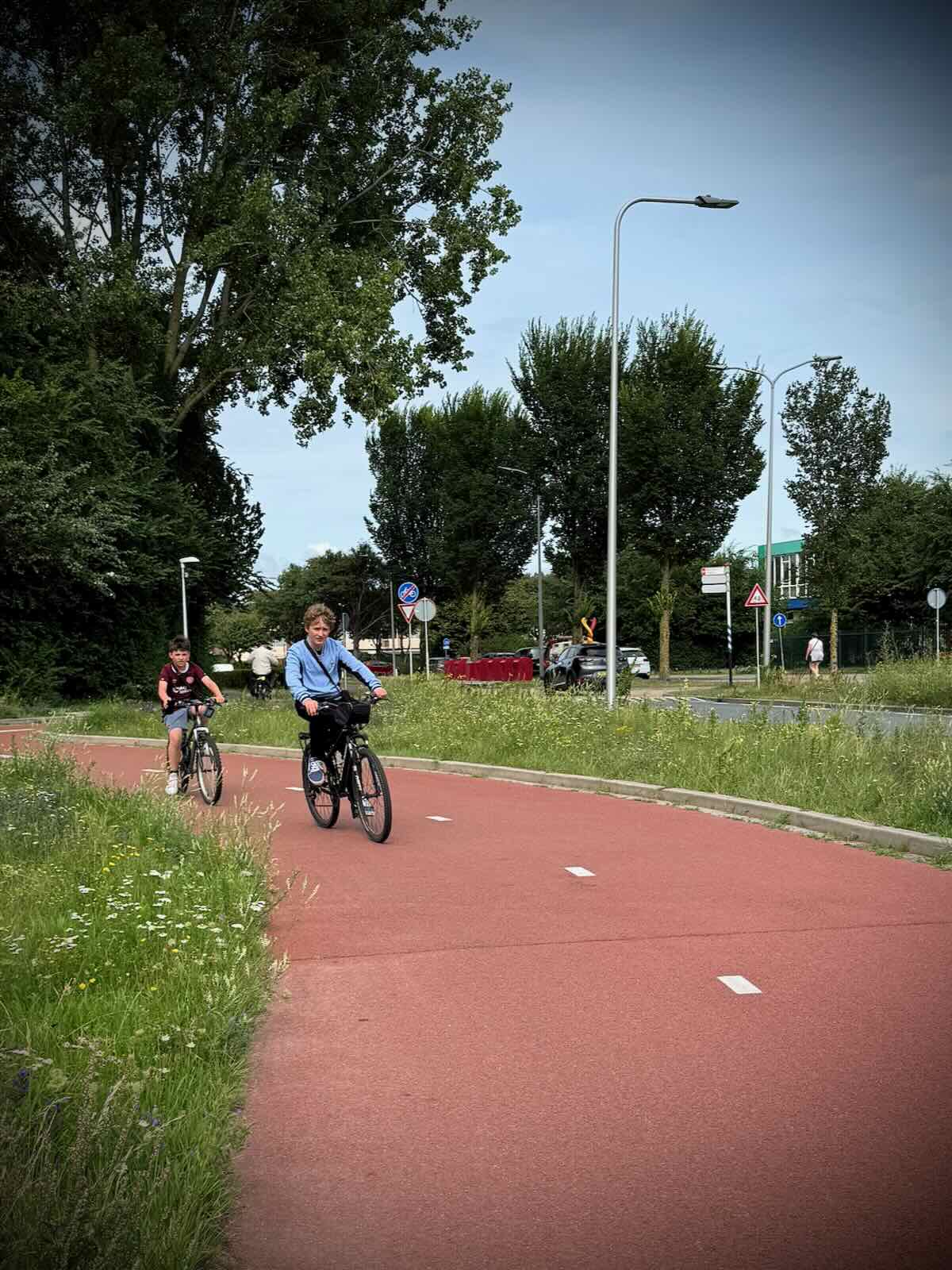
The quality continues onto Cantineweg, which is a newly resurfaced asphalt cycle path, with a Fietsstraat (cycle street) section to enable local access. Again, this is really fantastic to ride on.
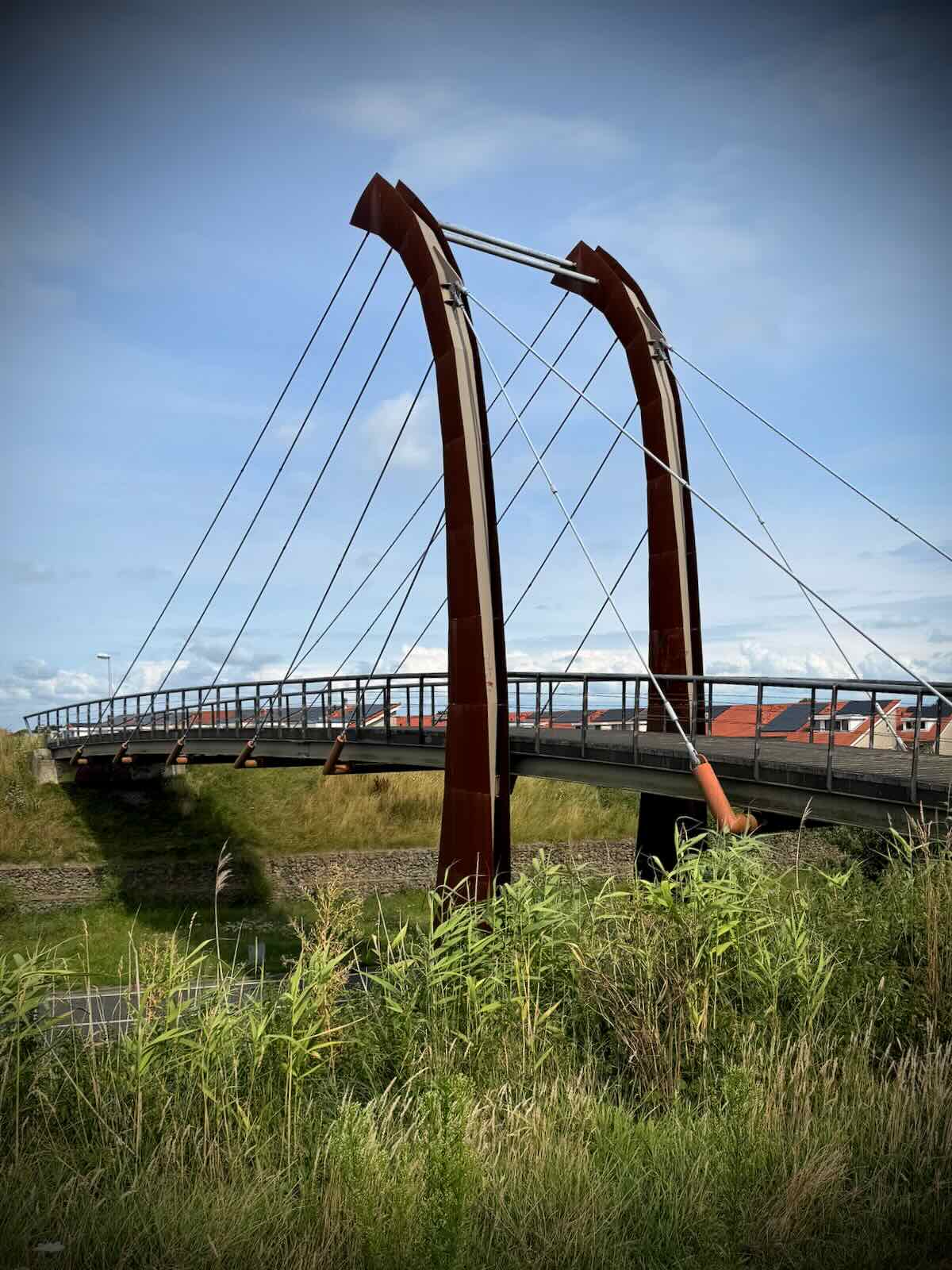
On Cantineweg, we passed the bridge at Westerbaan, which connects the town to the dunes. This provides a traffic-free access to the dunes, bypassing the Westerbaan ring road.
We continued on Cantineweg until we reached the N441 Wassenaarseweg, where we crossed the road at the busy roundabout that connects to the new N206, part of the RijnlandRoute, connecting Katwijk and Leiden.
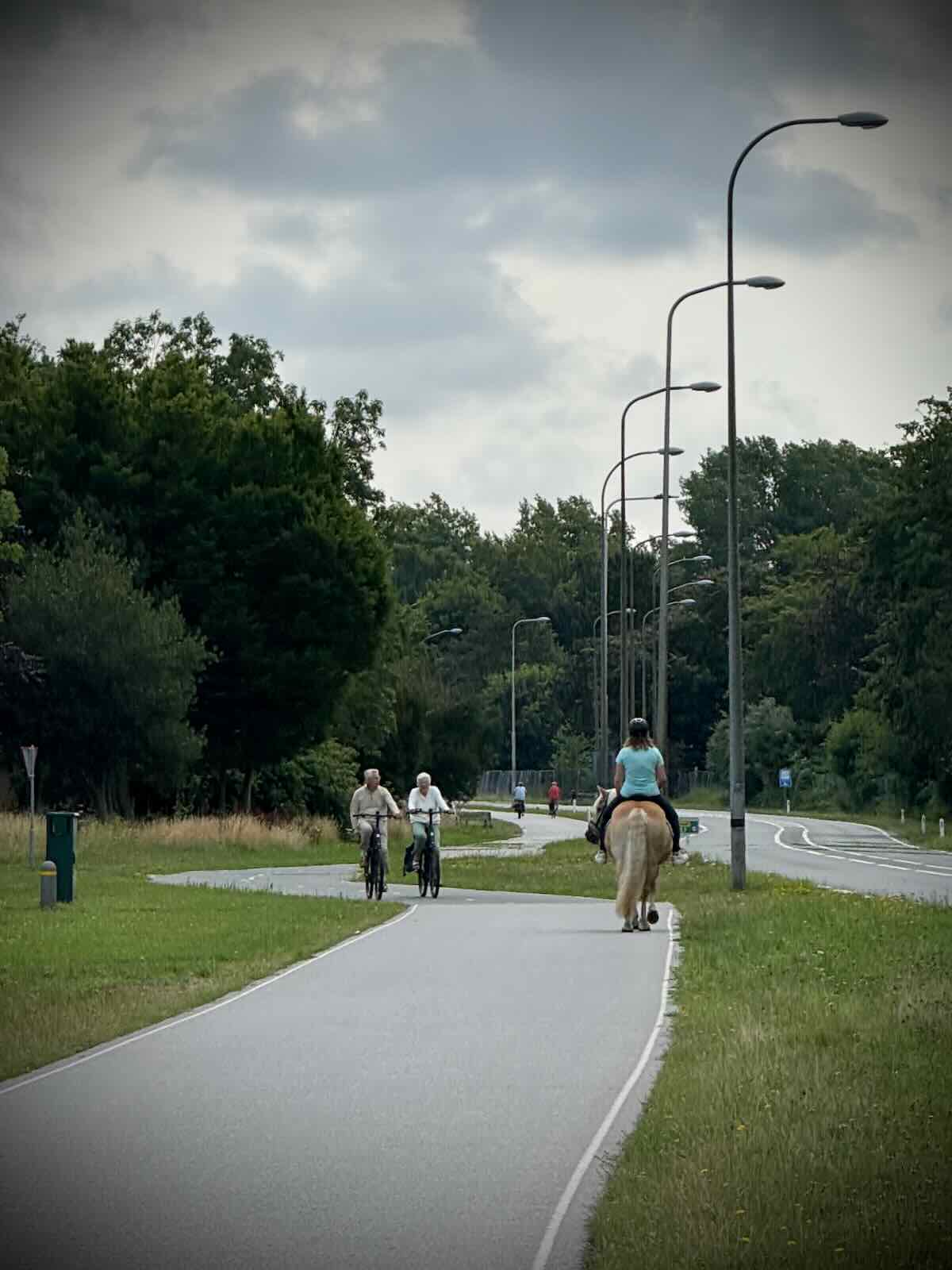
We then made our way along Wassenaarseweg, which is somewhere we’ve ridden along many times. This is popular route in the area, on a decent path with great views, so is a very pleasant place to ride.

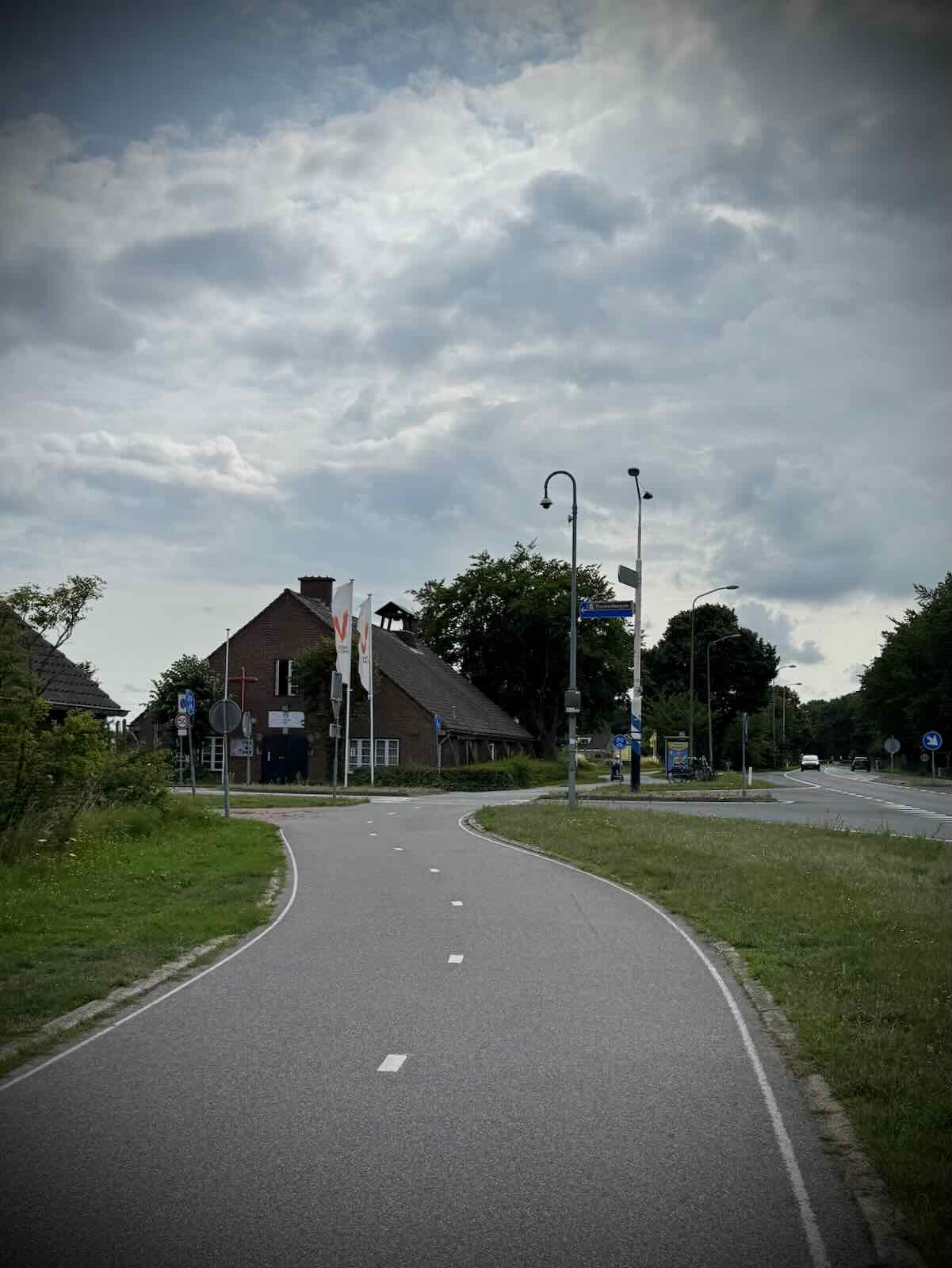
Further along, Wassenaarseweg turns into Katwijksweg, then reaches the roundabout that we pass on the way to the beach at Wassenaarse Slag. We crossed the roundabout and continued along, then turned onto Storm van ‘s-Gravesandeweg. From there, it was a short ride to the Duinrell entrance.




More Netherlands 25 posts
Further posts from our trip to the Netherlands in 2025
- Two weeks at Duinrell
- Riding the Velostrada from Leiden to Den Haag
- Evening ride to the beach at Wassenaarse Slag
- Riding from Duinrell to Rotterdam
- Loop ride around Vlietland
- Riding from Duinrell to Delft
- Riding to Katwijk aan Zee for lunch
- Riding from Duinrell to Leiden
- A day trip to Amsterdam
- More wandering in Leiden
- Loop ride from Duinrell to Scheveningen
- Riding from Duinrell to Den Haag
- Riding to Kunstmuseum Den Haag
- One final ride to Leiden
- Visiting the Tij Observatory
 Dom Cycling