

After commencing work in April this year, the walking and cycling improvements on Chapel Street have been completed ahead of schedule, at the end of November 2025. The work was originally due to be completed in early 2026.
The roadworks have filled many column inches and provided clickbait fodder for the local press, with the usual claims of traffic chaos. Though now that the work is finished, I’m surprised to see that even the Manchester Evening News has shared some positive comments on the scheme.
While it’s a fairly short section of Chapel Street, its location near the Manchester border means it is in a fairly prominent position within Salford. While Salford sees itself as an equal to Manchester, in reality, much of the city around the centre feels like it’s nothing more than a traffic route for people travelling into Manchester.
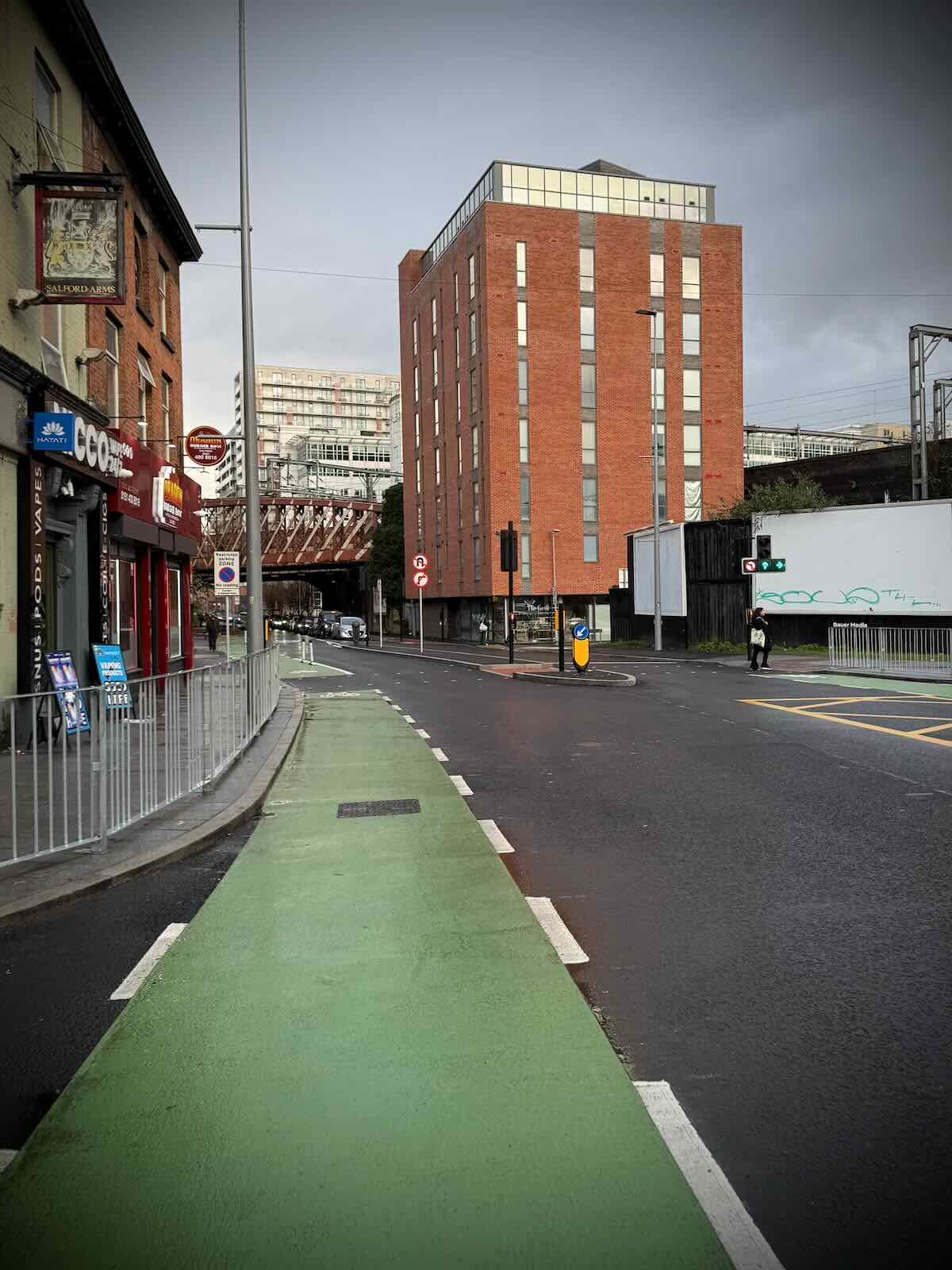
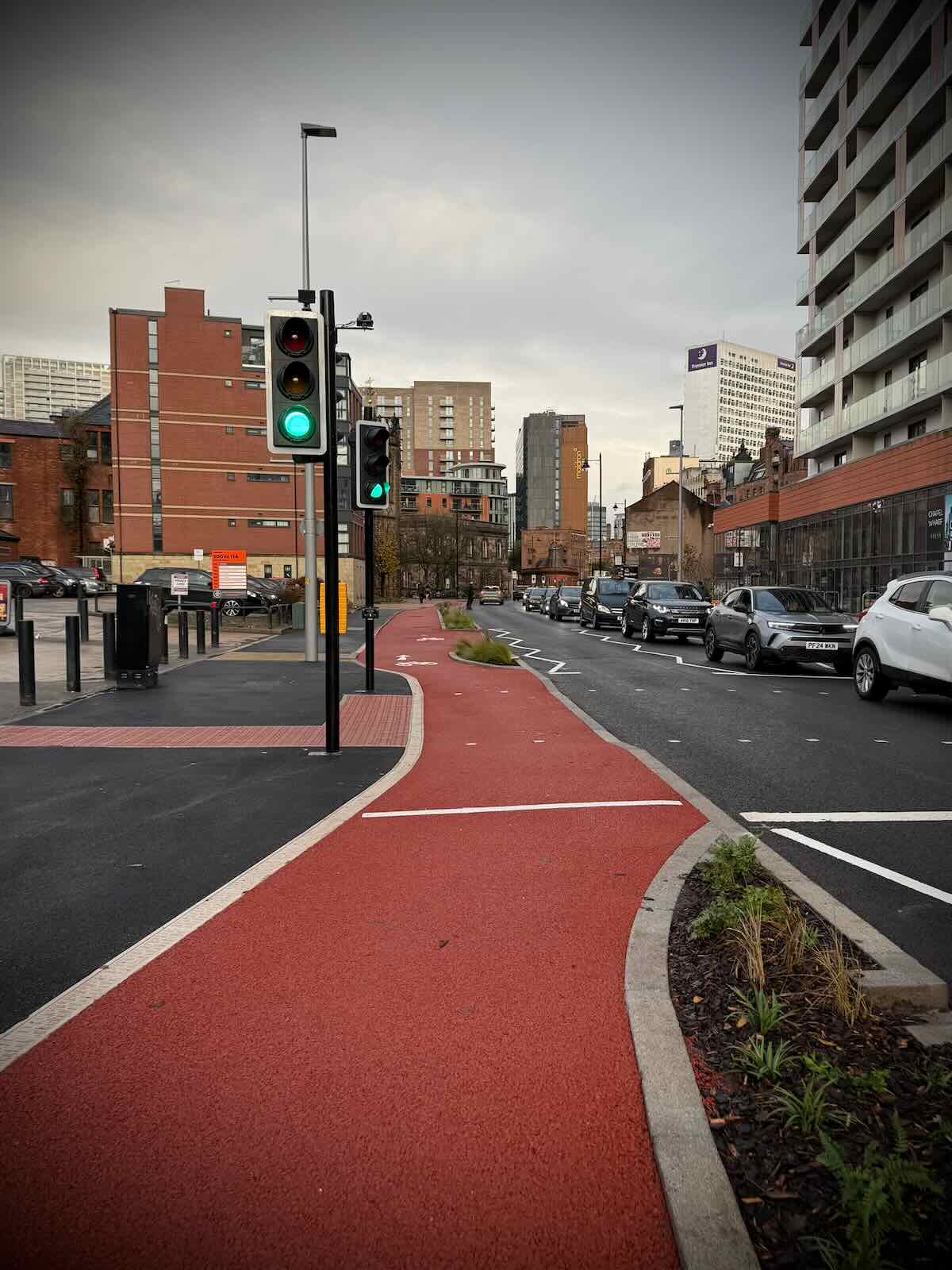
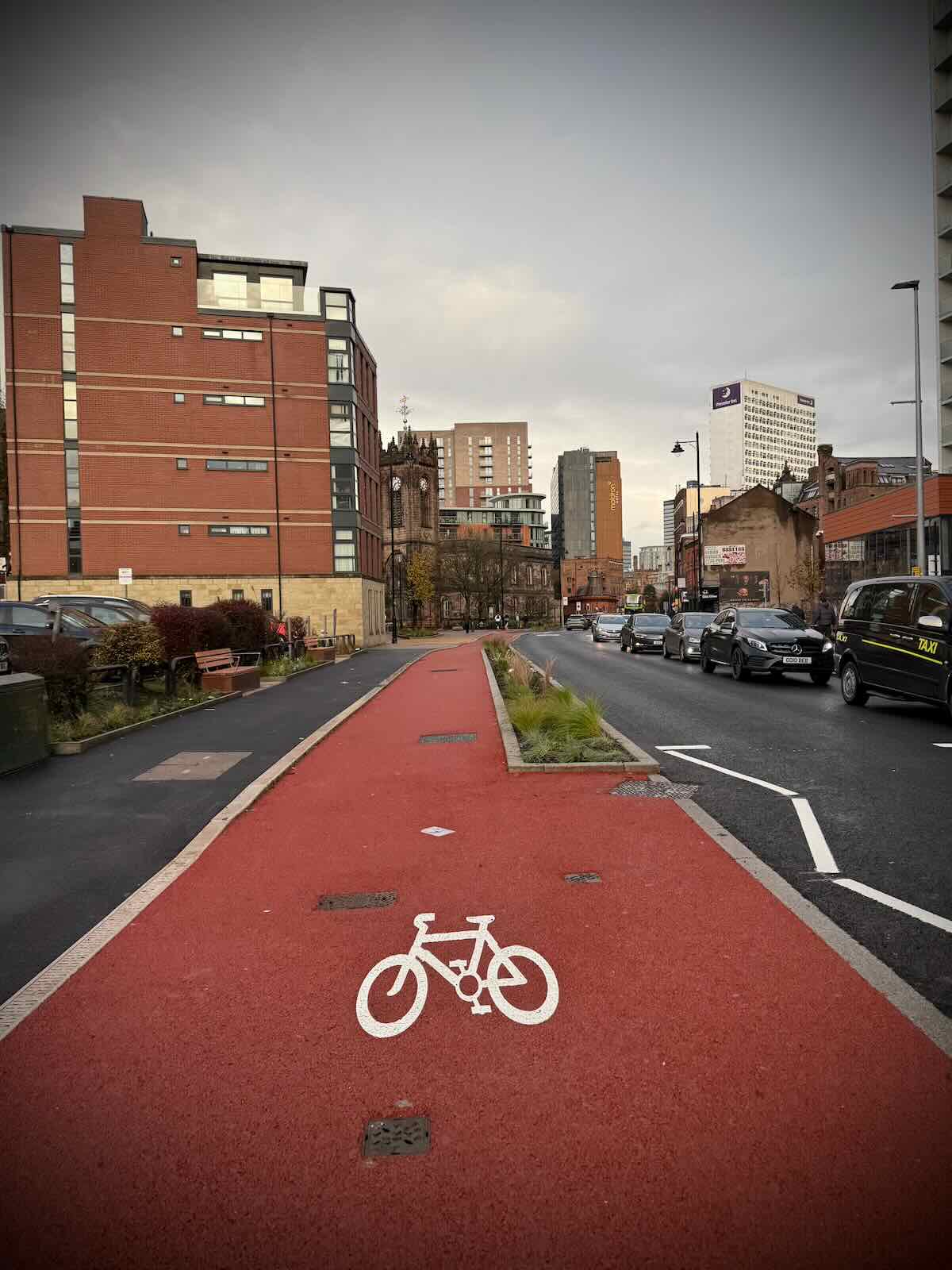
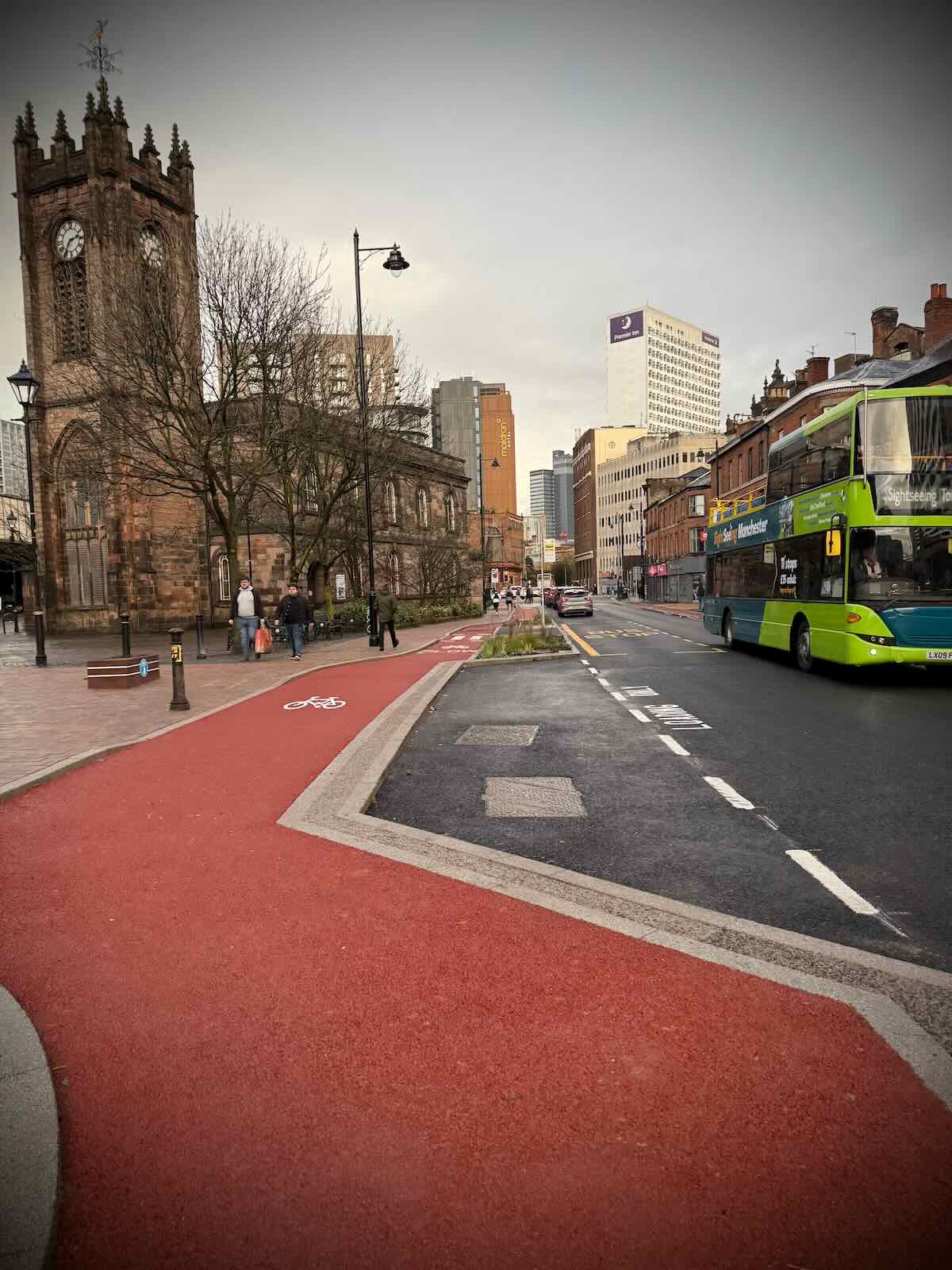
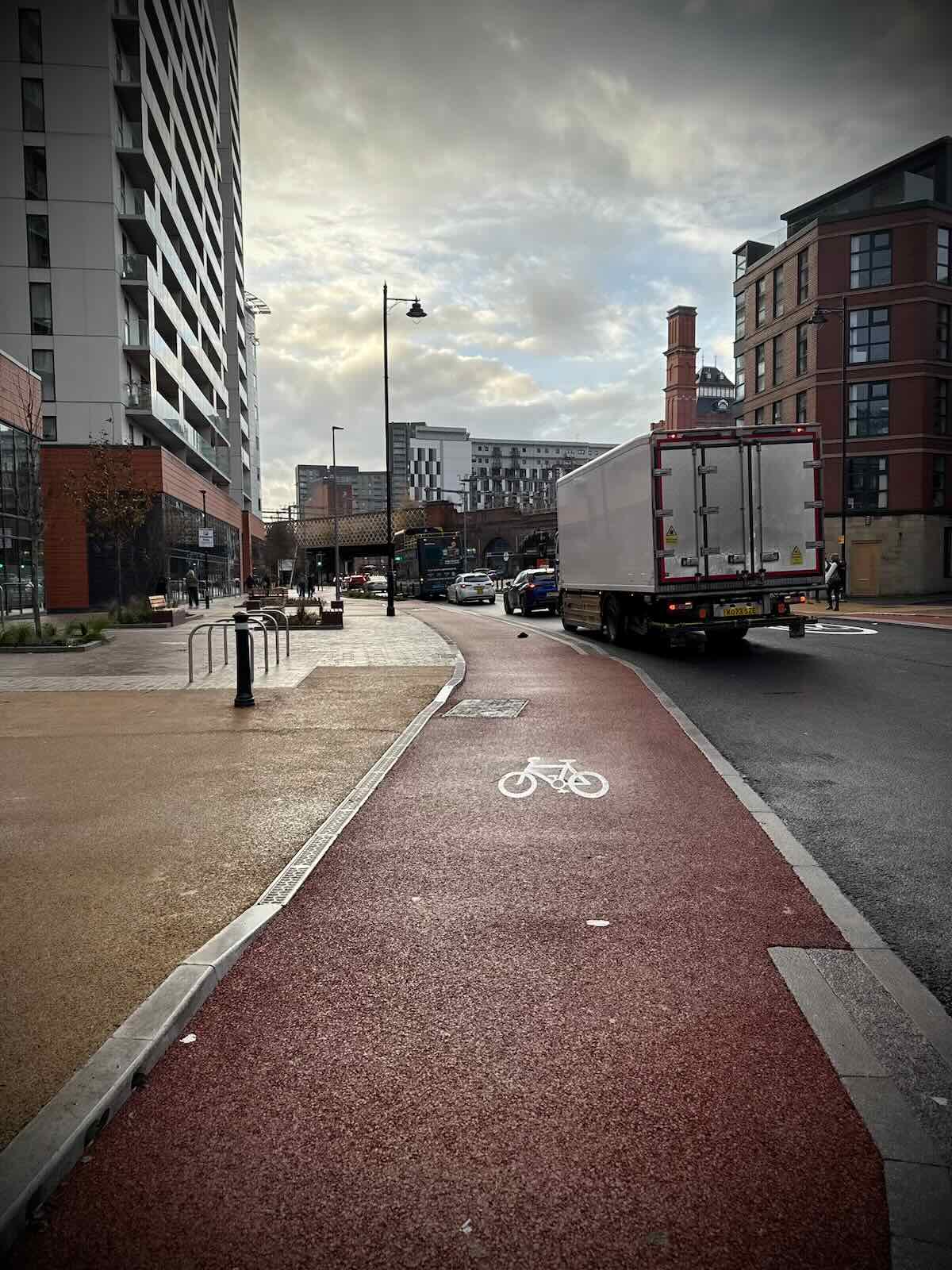
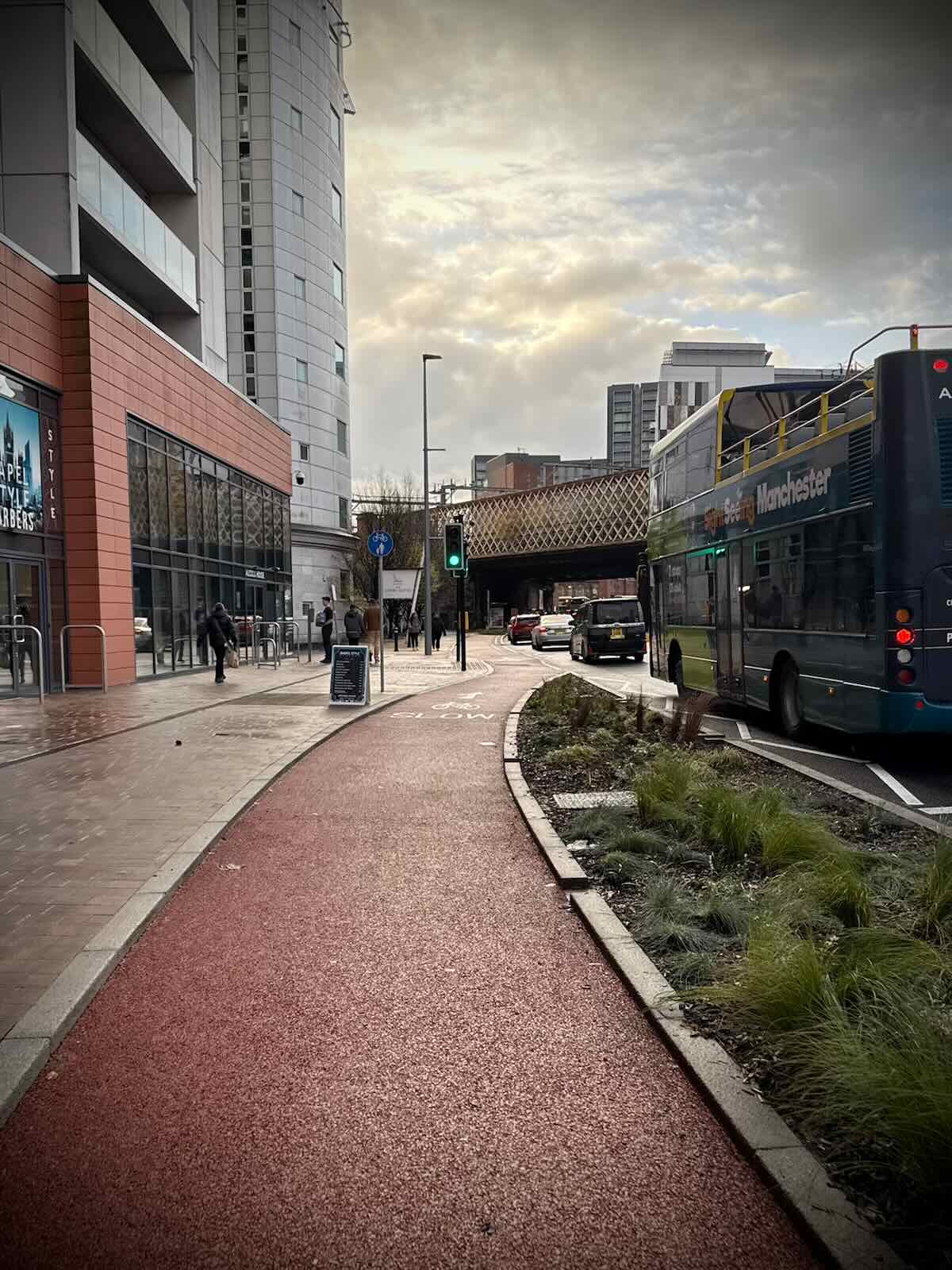
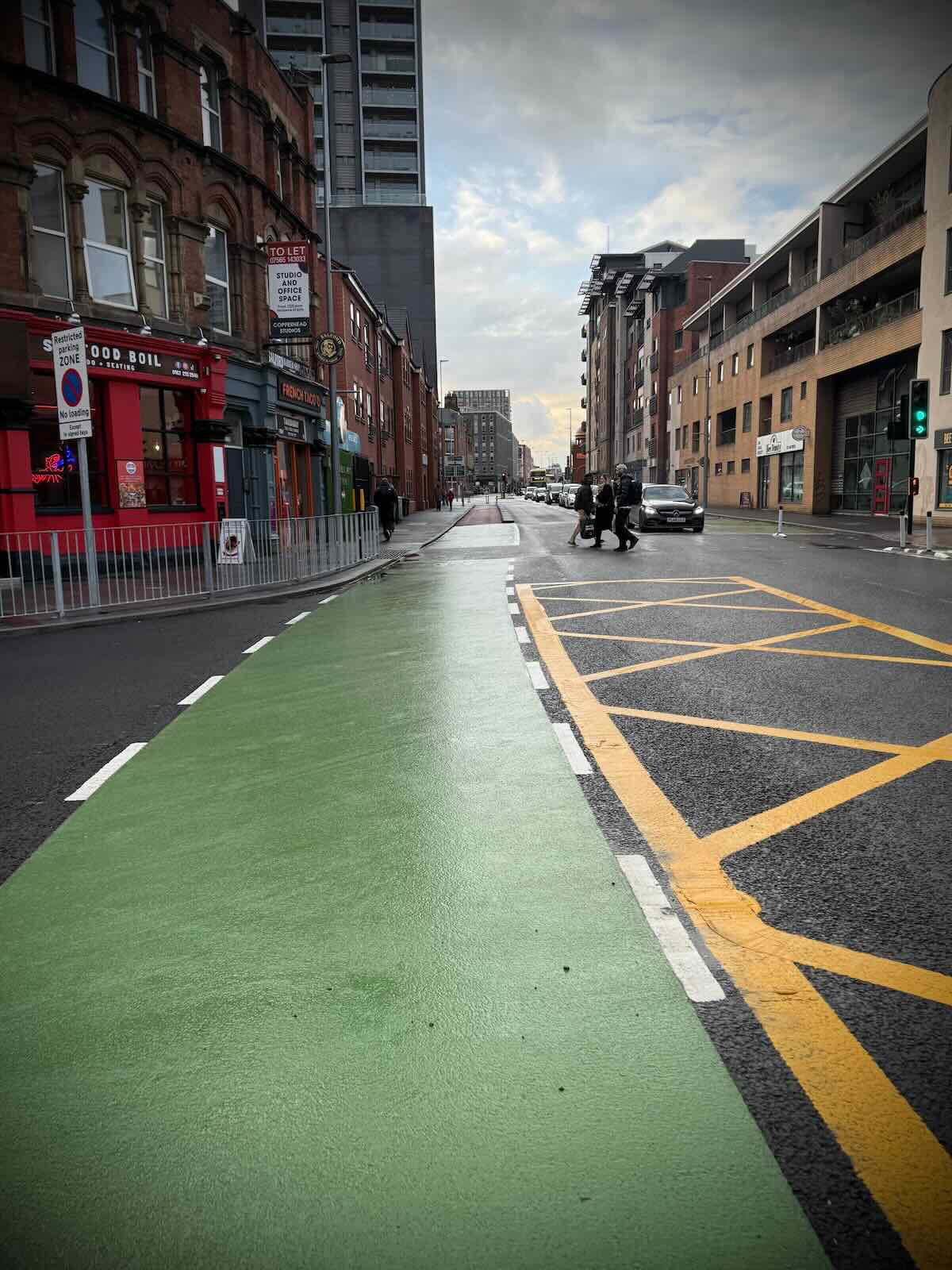
So although the focus is on providing a safe cycle route, the scheme also aims to make a place of this section of Chapel Street, partly by reducing the space for motor vehicles, but also by improving the public realm with seating and greenery.
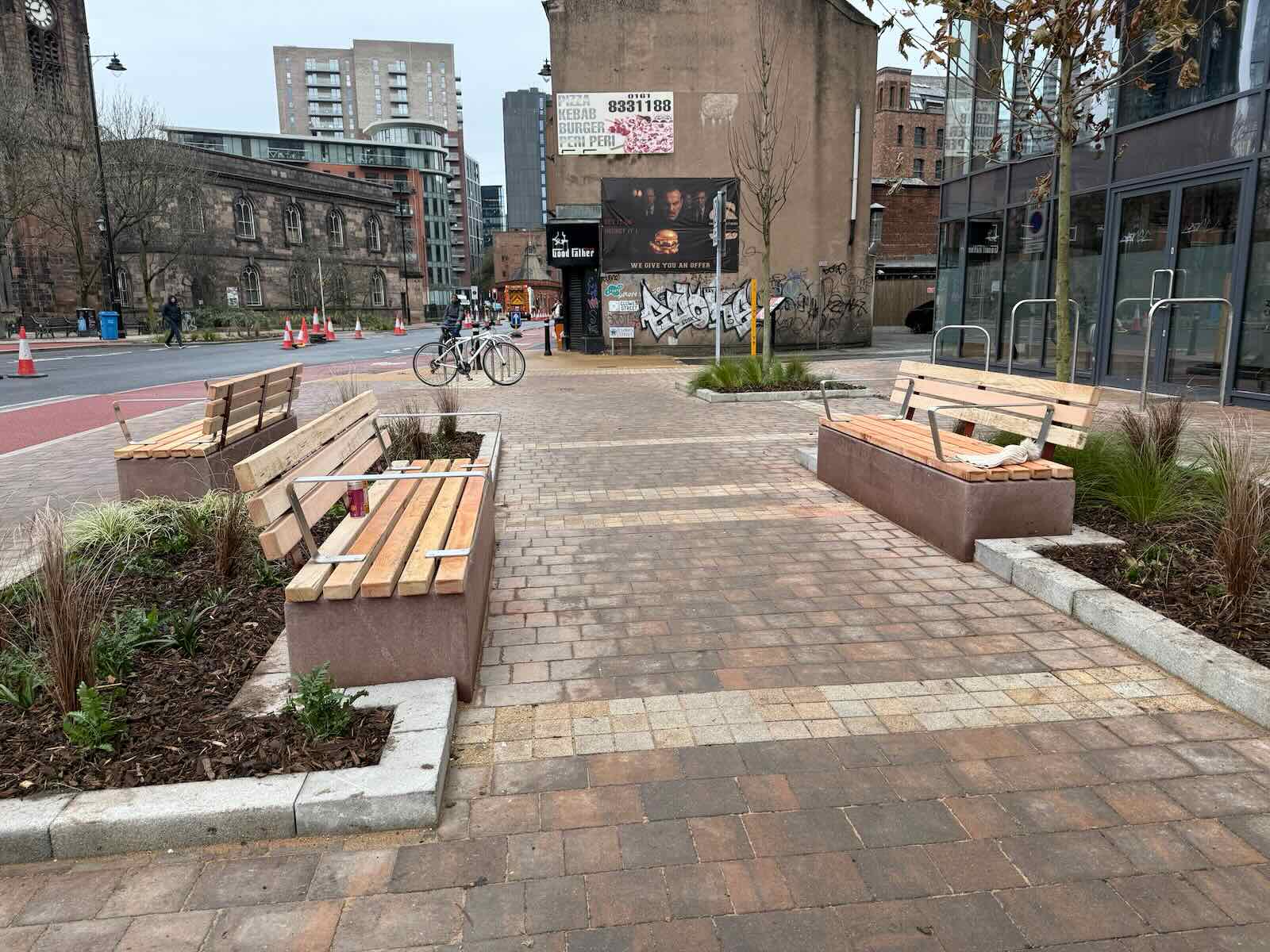
While there’s still compromises, it’s clear that Salford have delivered something more refined than their previous schemes on Trafford Road and Liverpool Street. Both of those previous schemes are still seen as some of the best in Greater Manchester, so it’s good to see the council strive to improve.
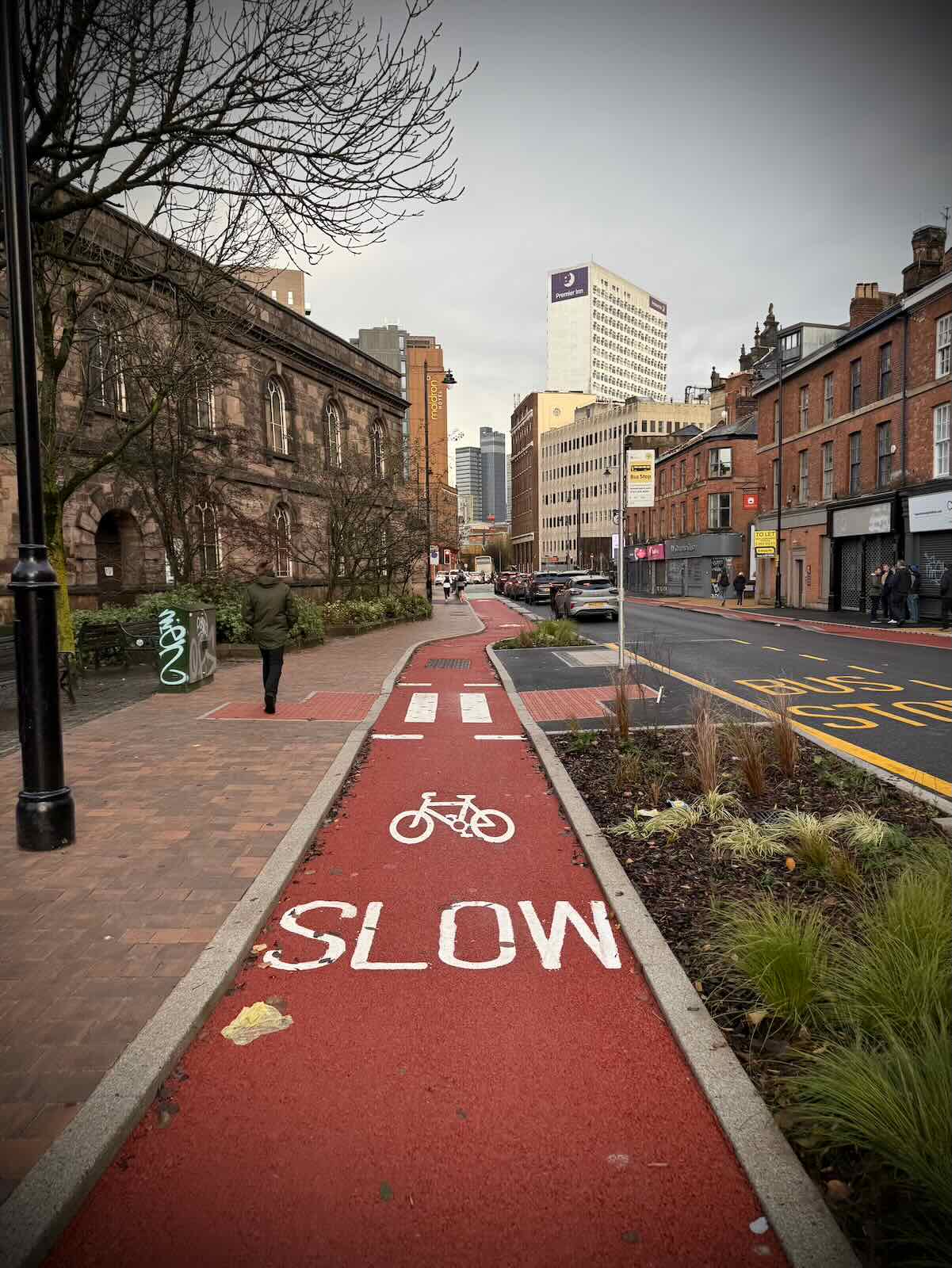
For example, while the cycle path on Liverpool Street undulates as it passes the many driveways along there, Chapel Street remains largely at the same level as it crosses driveways and side roads.
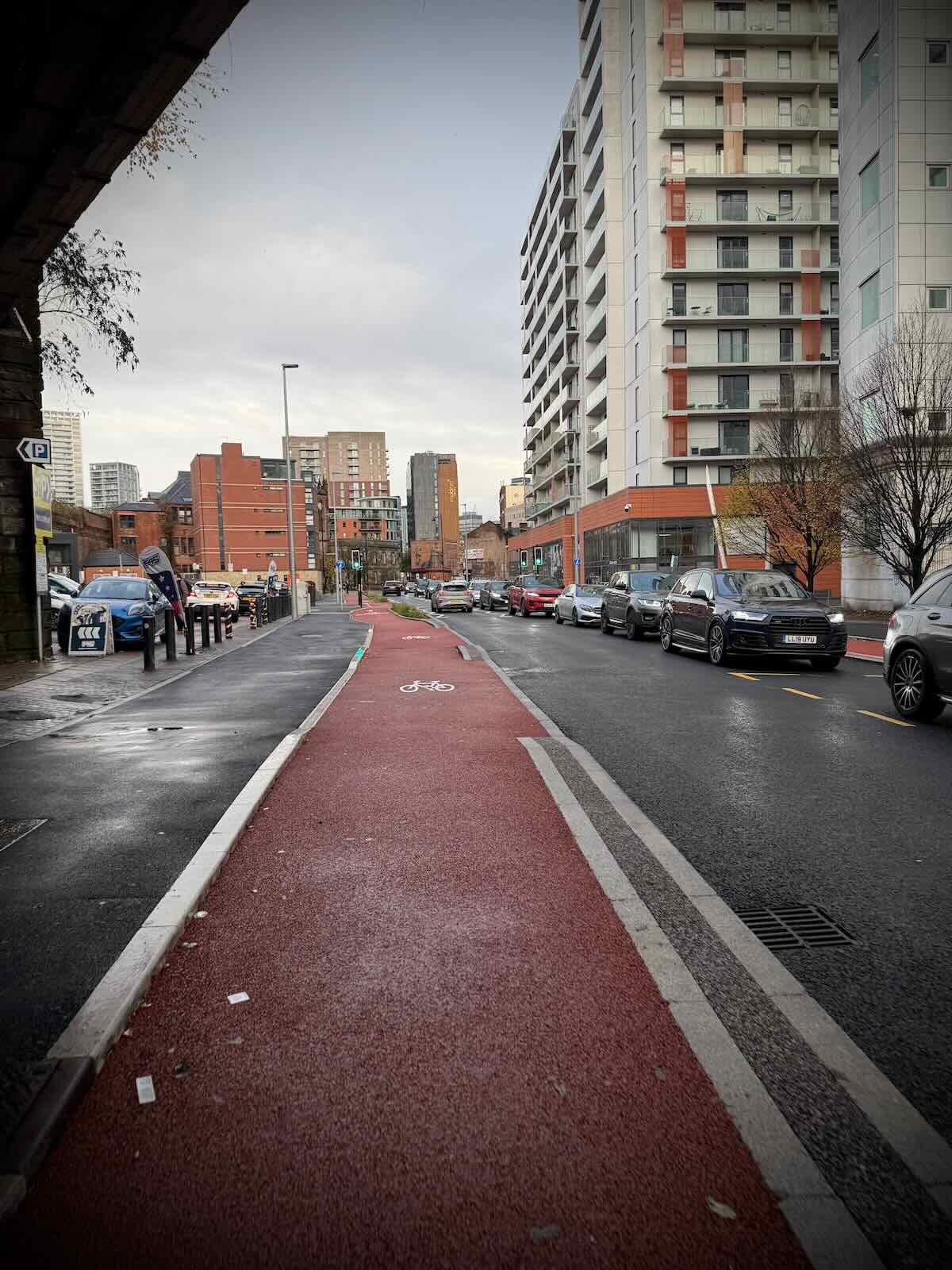
Another improvement on recent schemes and something of a novelty in the city, is the inclusion of continuous footways across those side roads. The aim of these is to give visual priority to people walking and cycling, so drivers turn slowly and give way to people crossing.
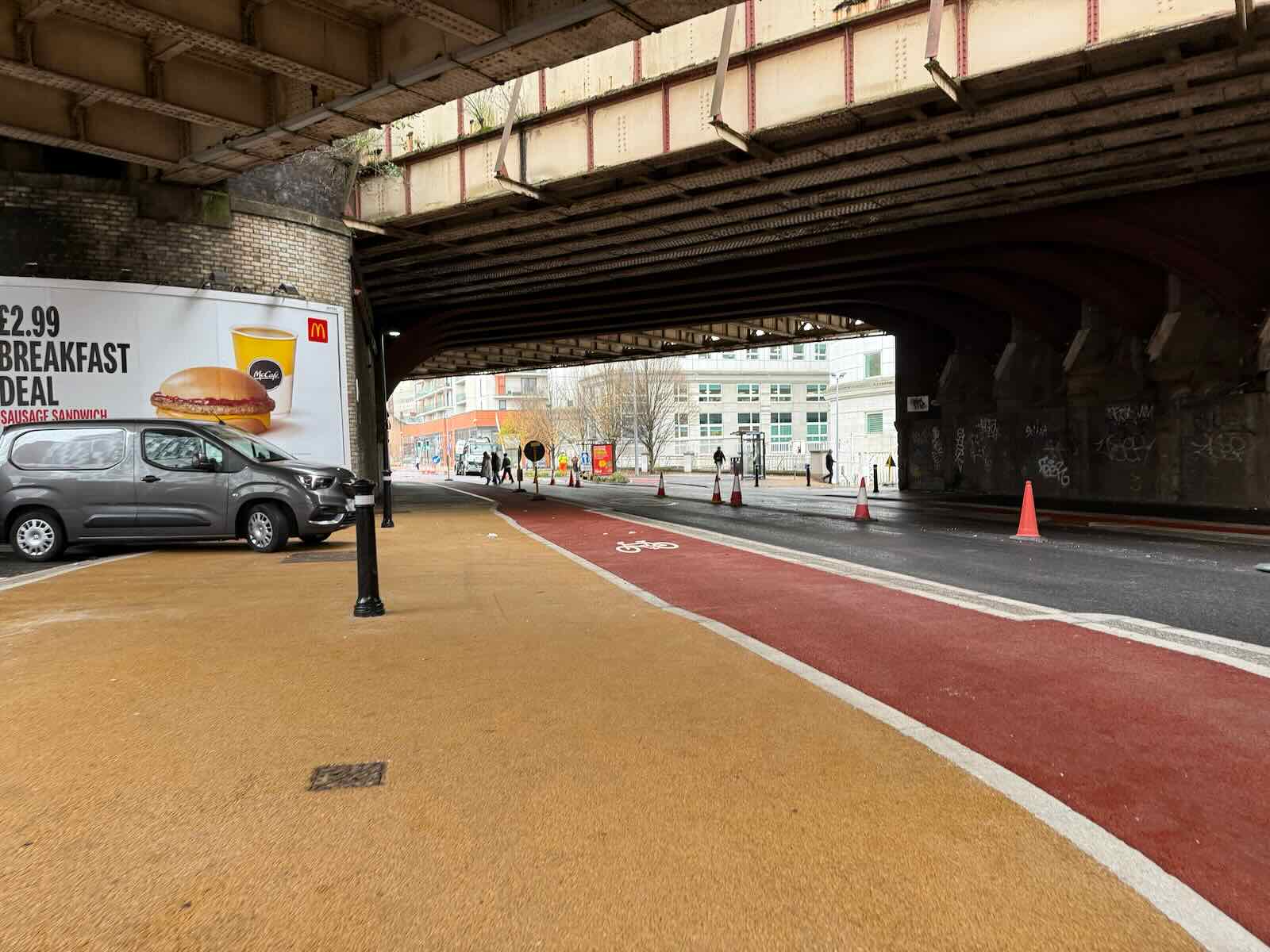
While it’s great to see these, I would say they’re not quite up to Dutch standards. In the Netherlands, the height of the footway remains the same across the junction, with the carriageway rising up to the level of the footway.
The purpose of this is to slow cars down, while also showing that the footway has priority. Unfortunately, the examples on Chapel Street lower to the height of the carriageway, which let’s them down a little.
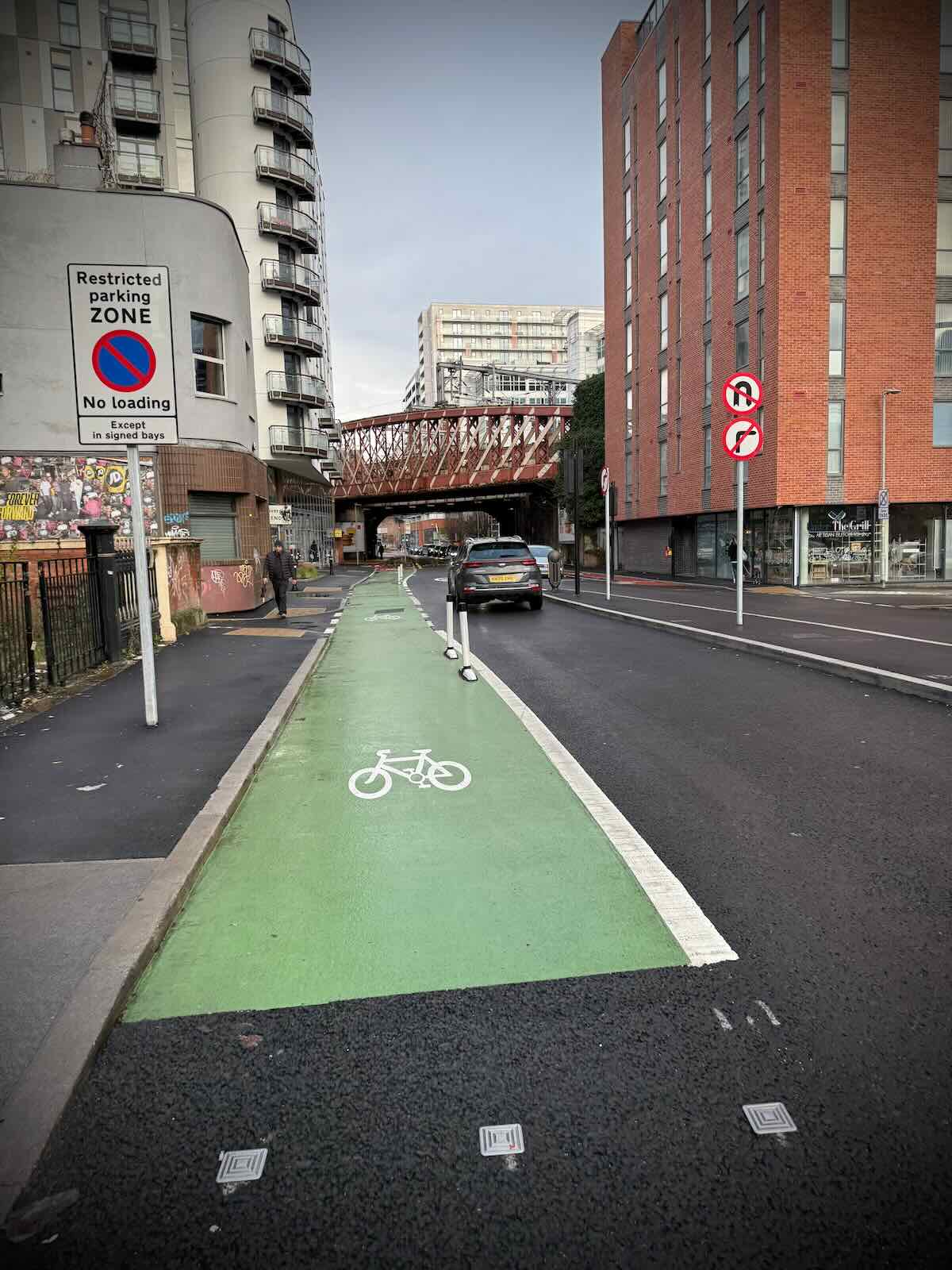
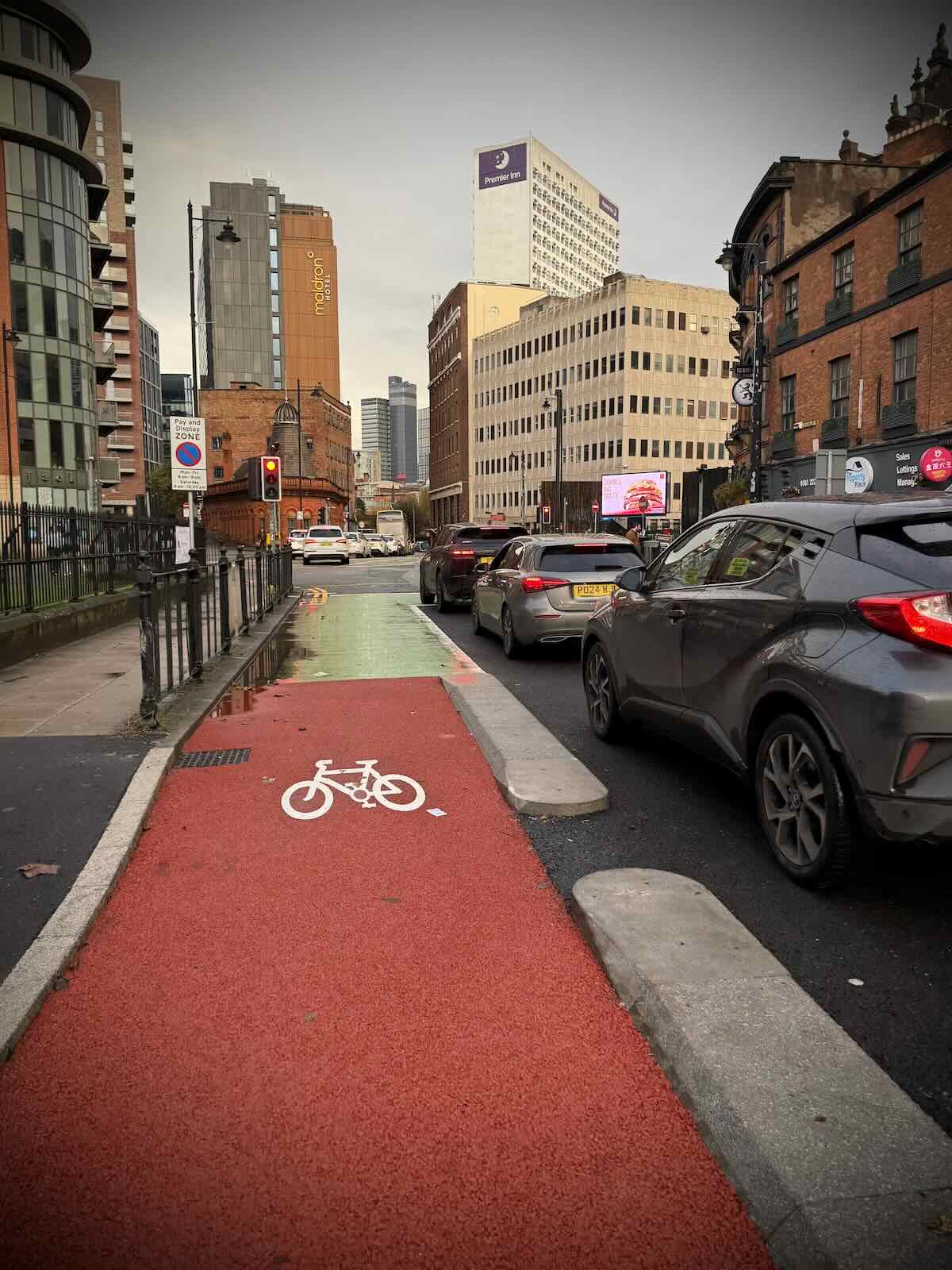
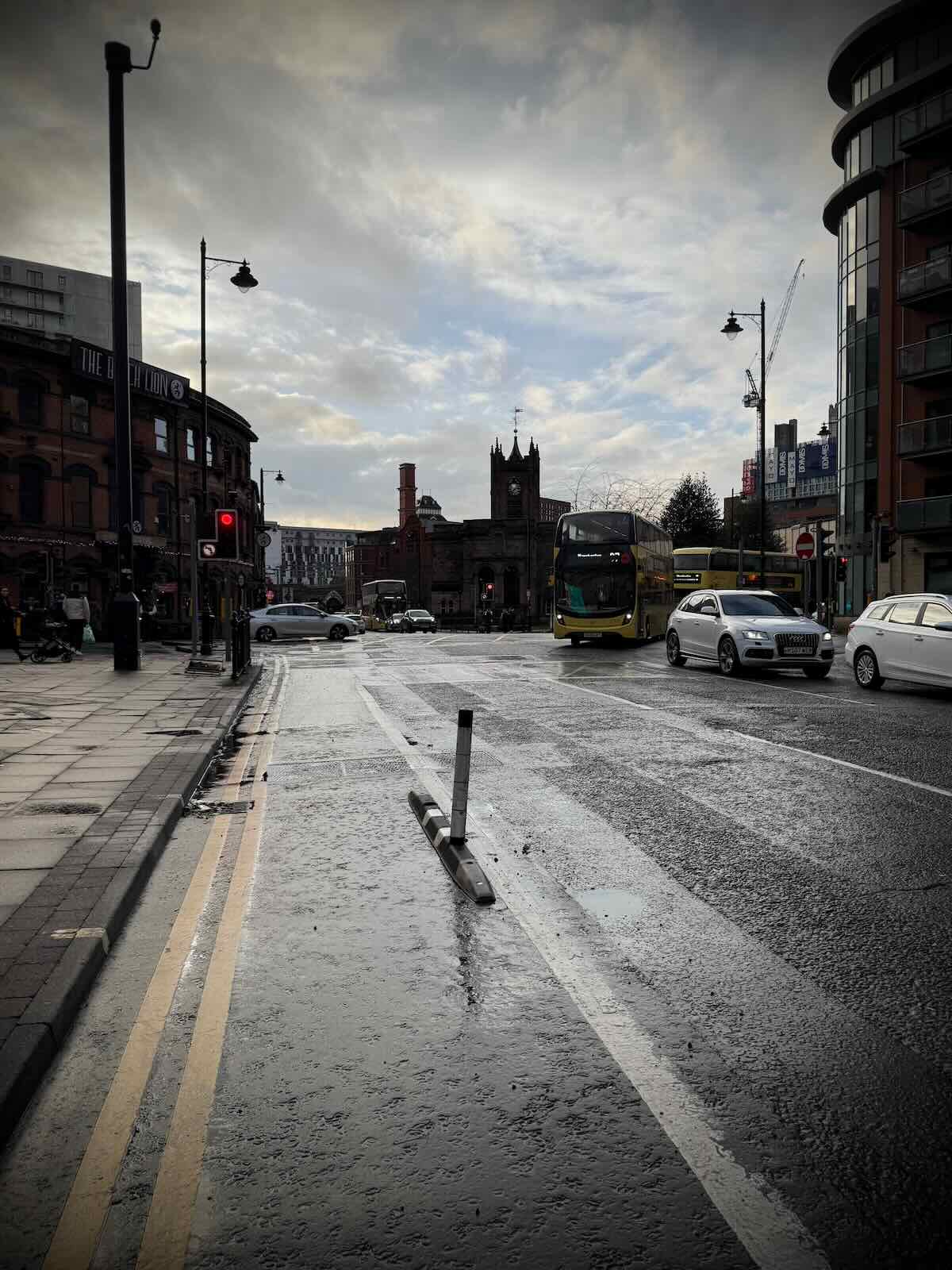
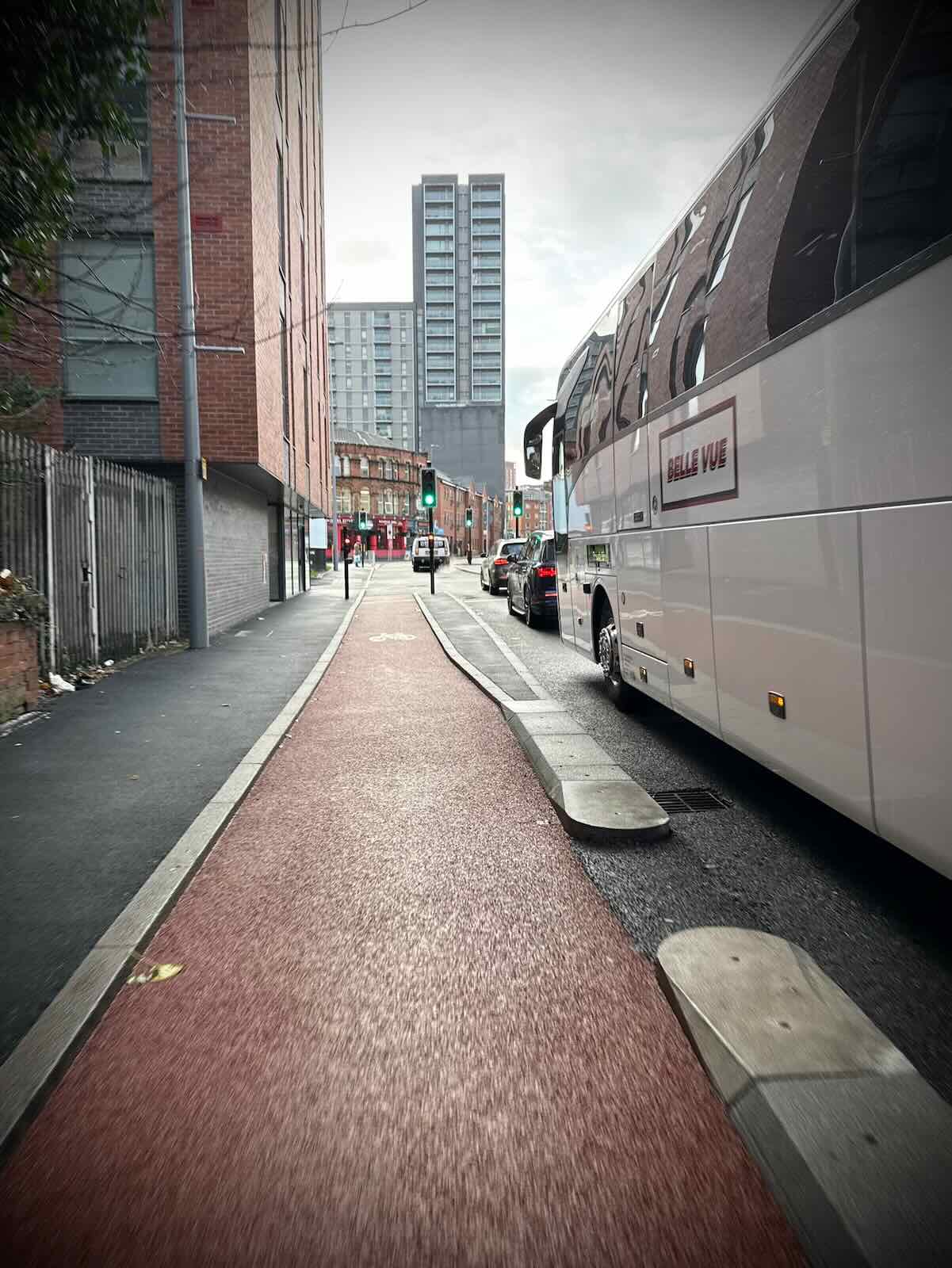
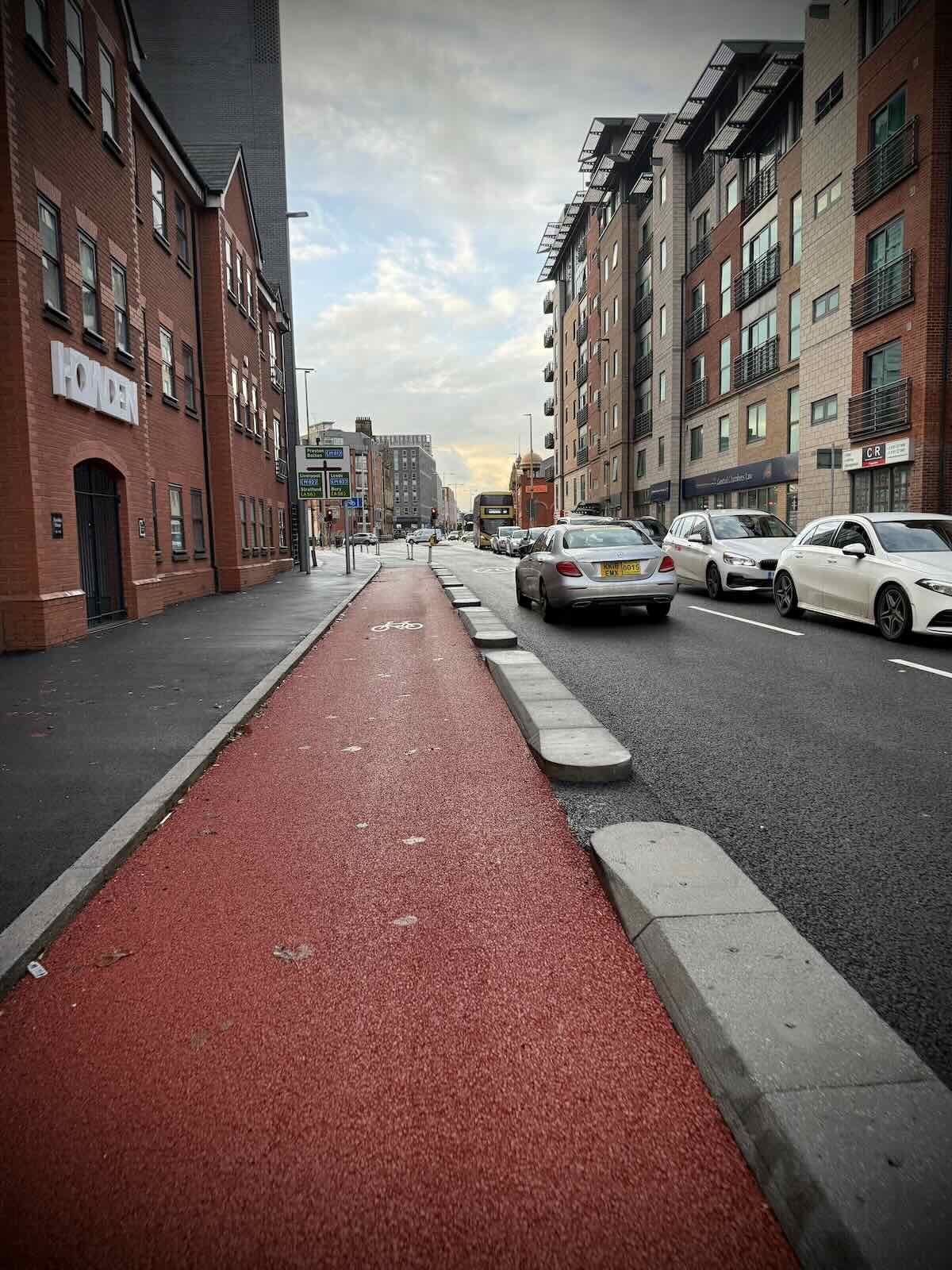
The majority of the protection is provided by kerbs, which are broken into small sections, with gaps in between. The purpose of the gaps appears to be to provide a way for pedestrians to cross easily, which seems to work.

I do think the kerbs look a little too low to provide a significant deterrent to vehicles driving over them. So while some loading bays have been provided, I fully expect to see the cycle path driven on, unless there’s enforcement, which I’m doubtful of.
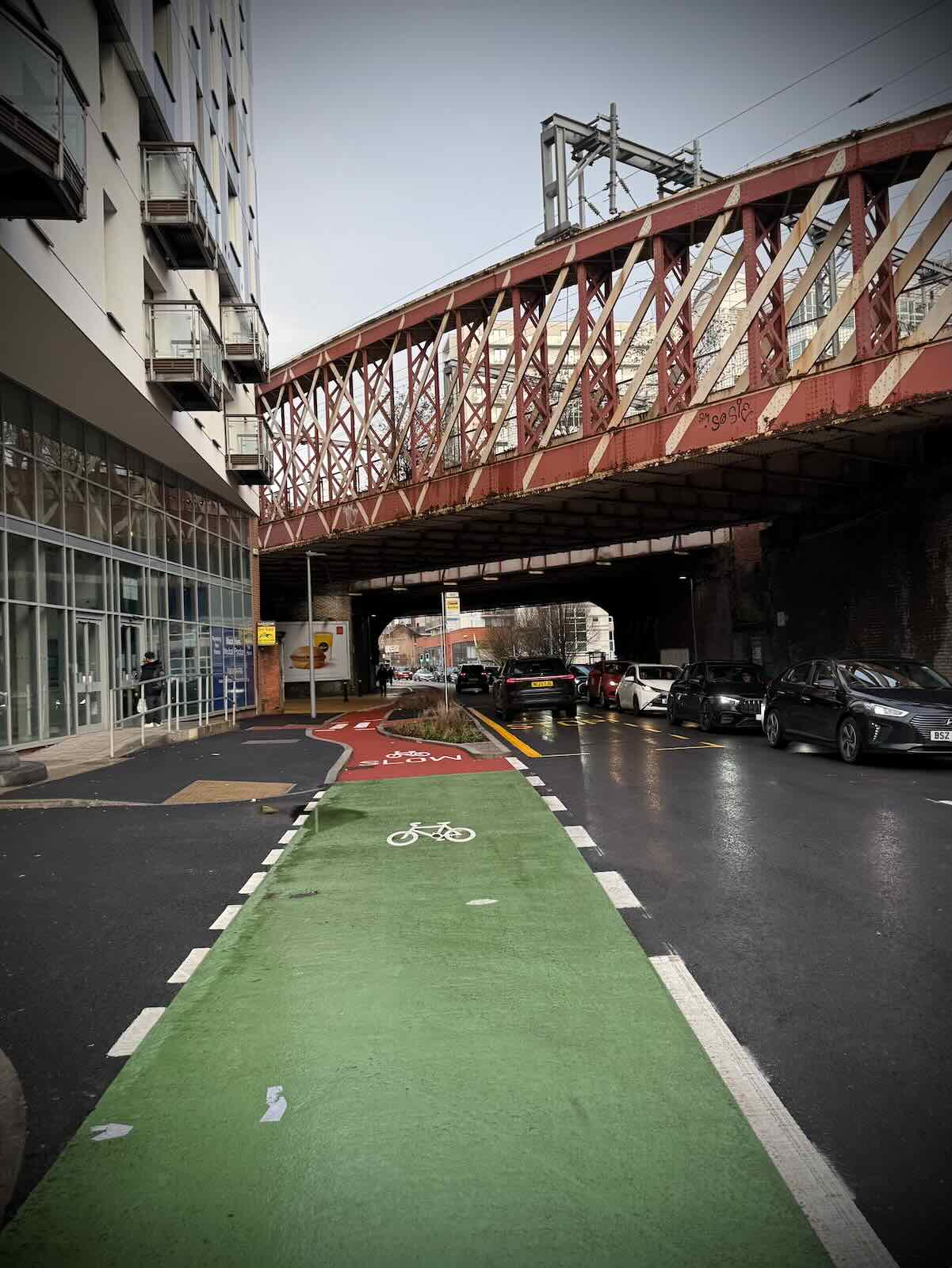
The scheme also features sections of planting, which at times acts as protection and is included around the multiple bus stop bypasses along the route. The overall impression is reminiscent of the better sections of the Oxford Road scheme in Manchester.
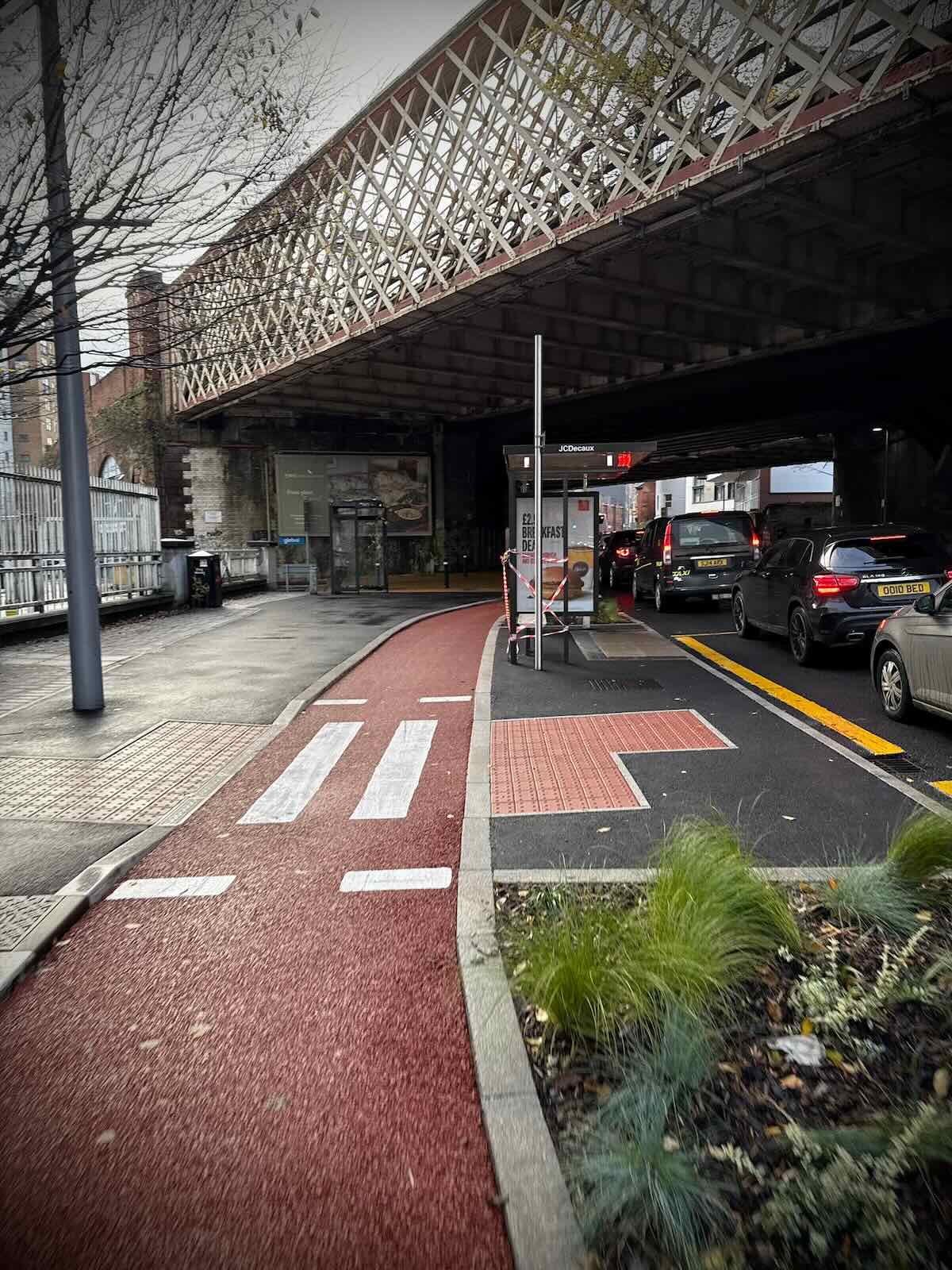
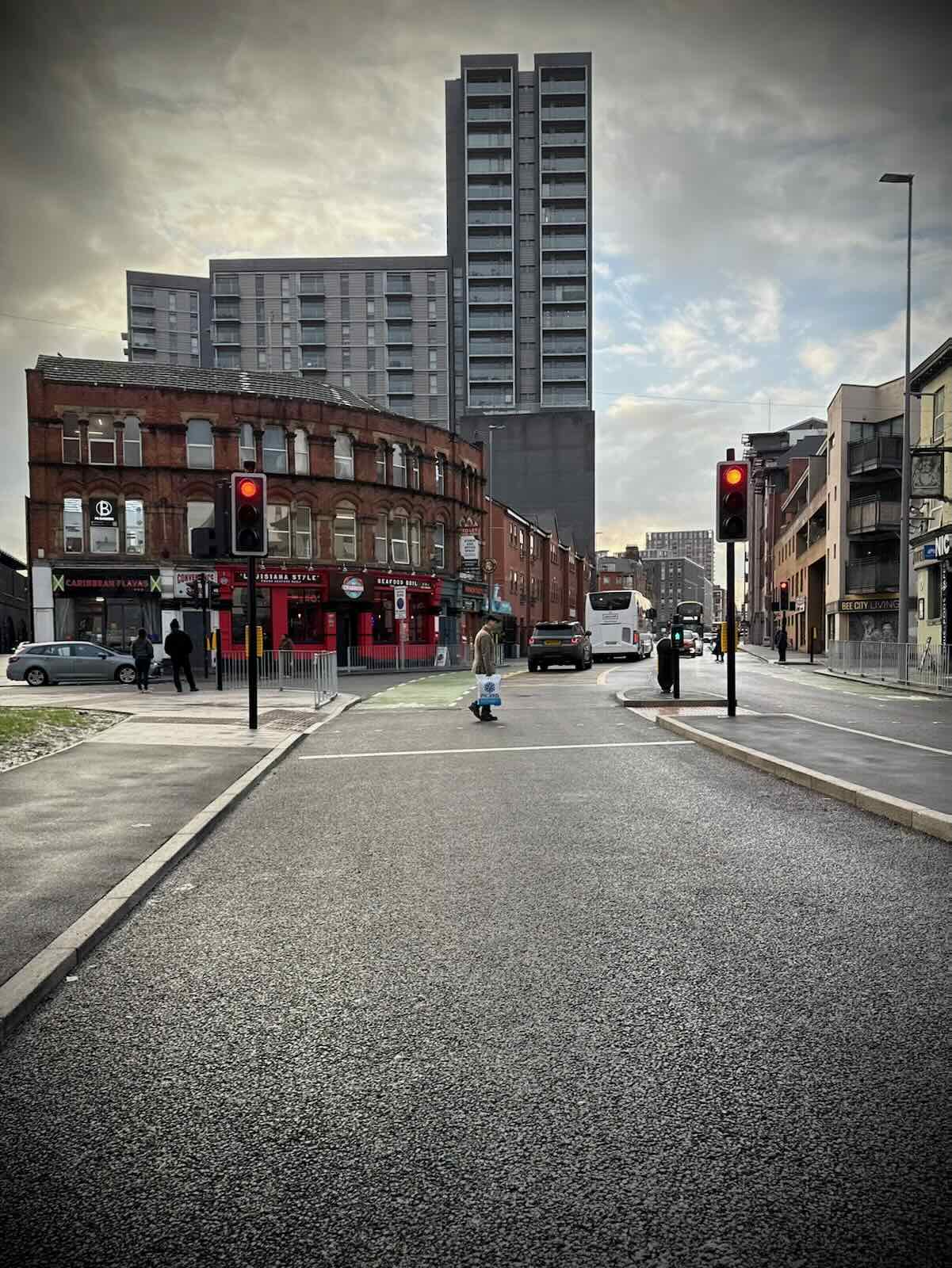
Given the amount of work done, it’s surprising that no CYCLOPS junctions have been included in the scheme, with the junctions largely remaining unchanged and quite poor for anyone walking or cycling.
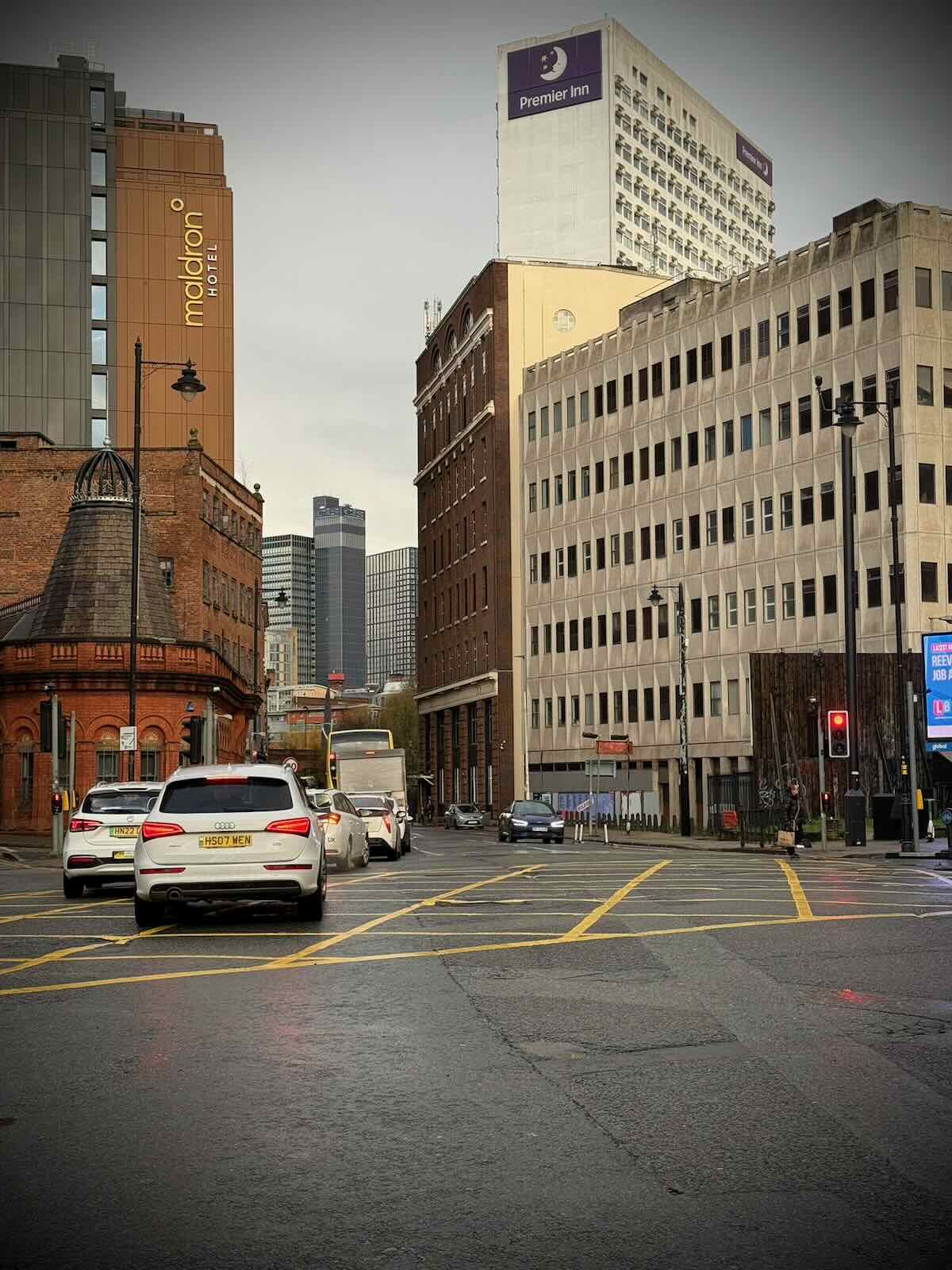
There’s also a slight odd setup on the westbound approach to the New Bailey Street junction, where the cycle path ends before the junction, with a set traffic lights. You then have to press the beg button to proceed further, which isn’t great.

Some of the commentary around the scheme has been around whether it will change the habits of people and get them out of their cars and onto bikes. If you take this scheme in isolation, I would say it’s very unlikely, but that’s not really the point.
This is a fairly small, isolated scheme, so shouldn’t expect it to achieve much by itself, other than improve a small area of Salford, close to the city centre. To see real shift, this scheme needs to be accompanied by others, to form a whole network.
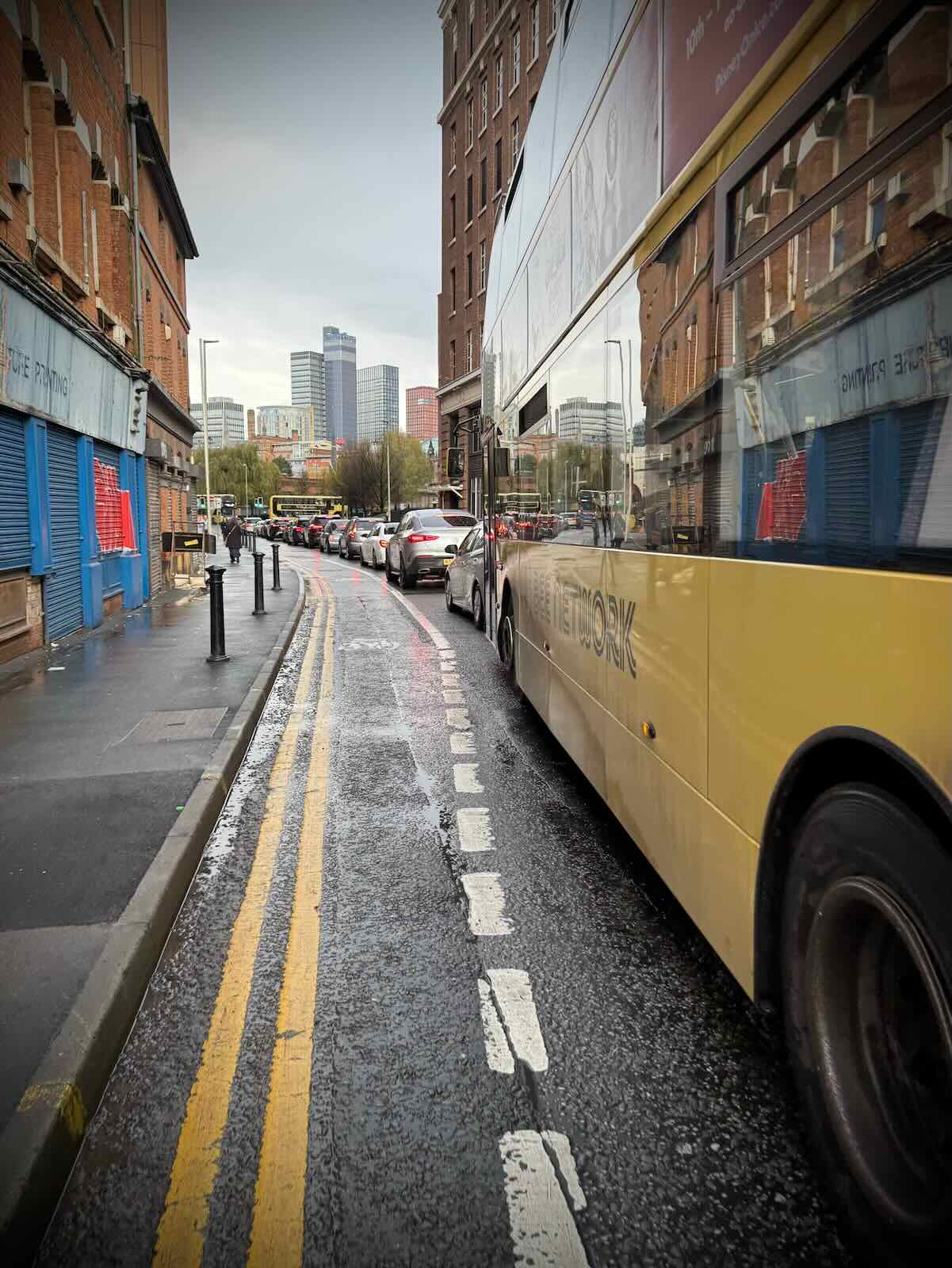
While riding along this section of Chapel Street is pretty pleasant, as soon as you reach Trinity Way, things get pretty bad and I wouldn’t expect anyone but the most determined to be riding through there and further along Chapel Street.

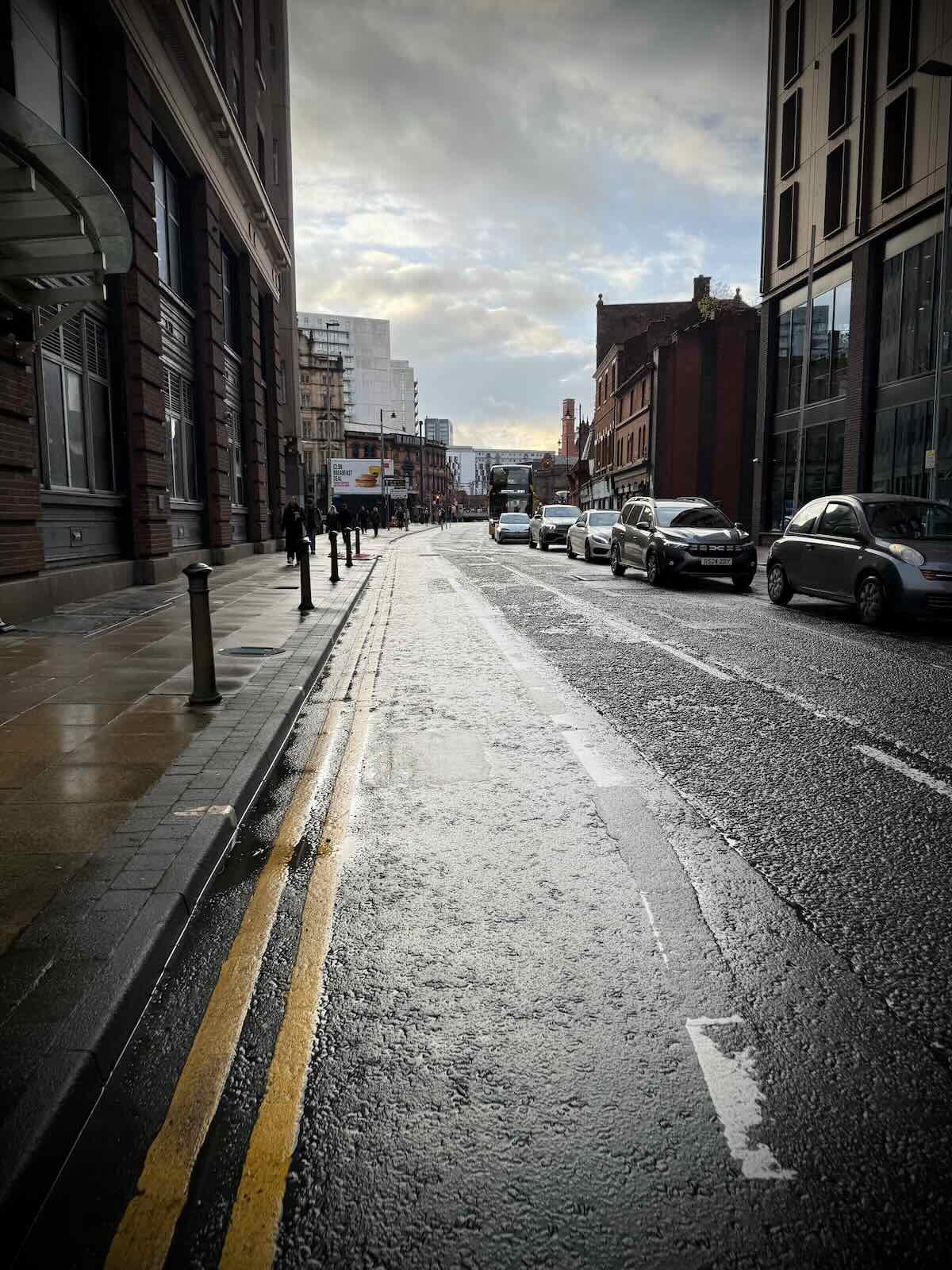
It’s a similar story at the other end, once you cross Blackfriars Road and the protection ends. This is made worse by the huge amounts of traffic still passing through this area, which is way too close as you continue in the painted lane.
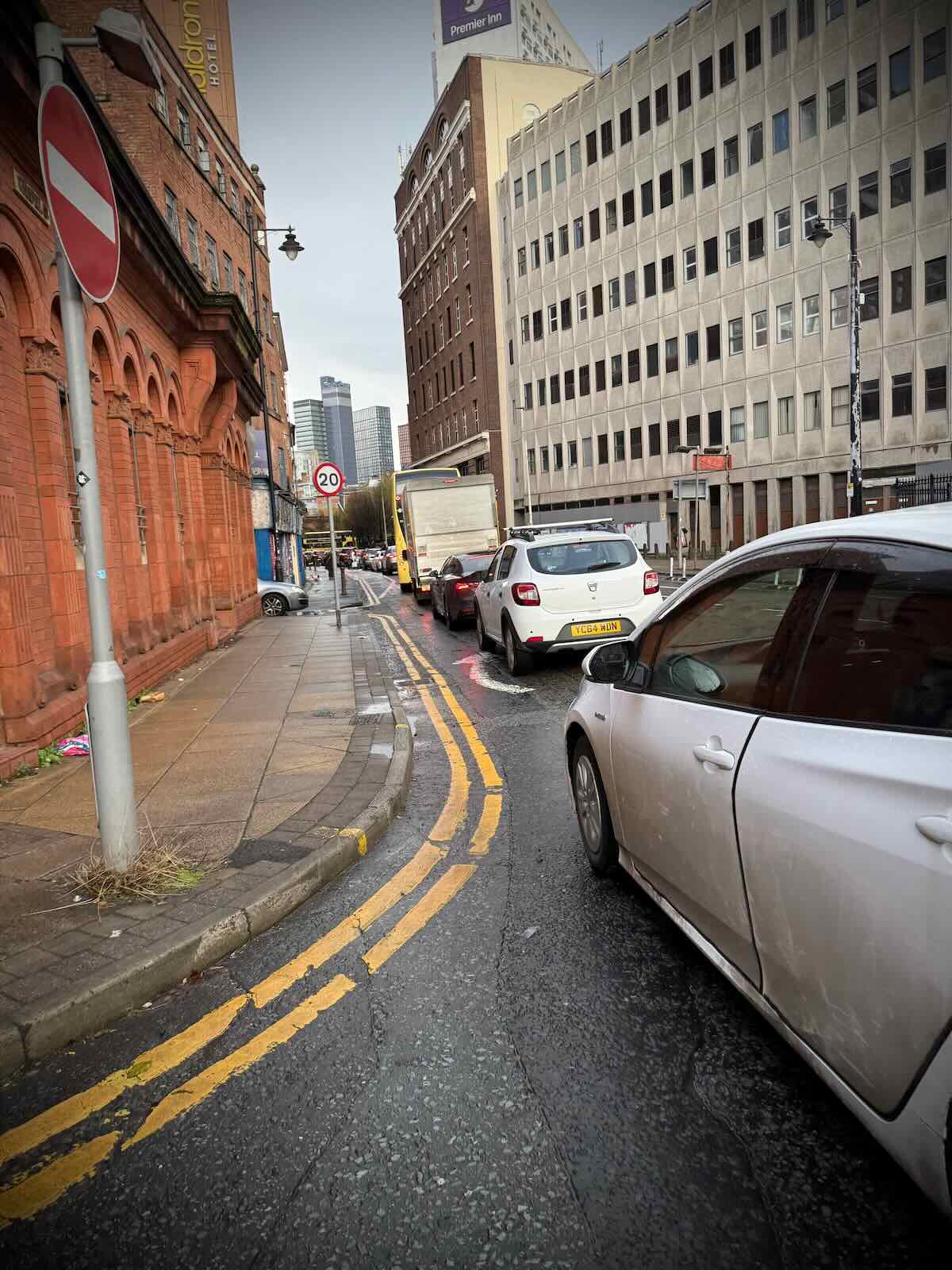
Ultimately, we need to see these improvements to continue further along Chapel Street, ideally linking up with Salford University and beyond. We also need to see a real plan to deal with the amount of through traffic passing along the street, ideally as part of a join approach with Manchester City Council.
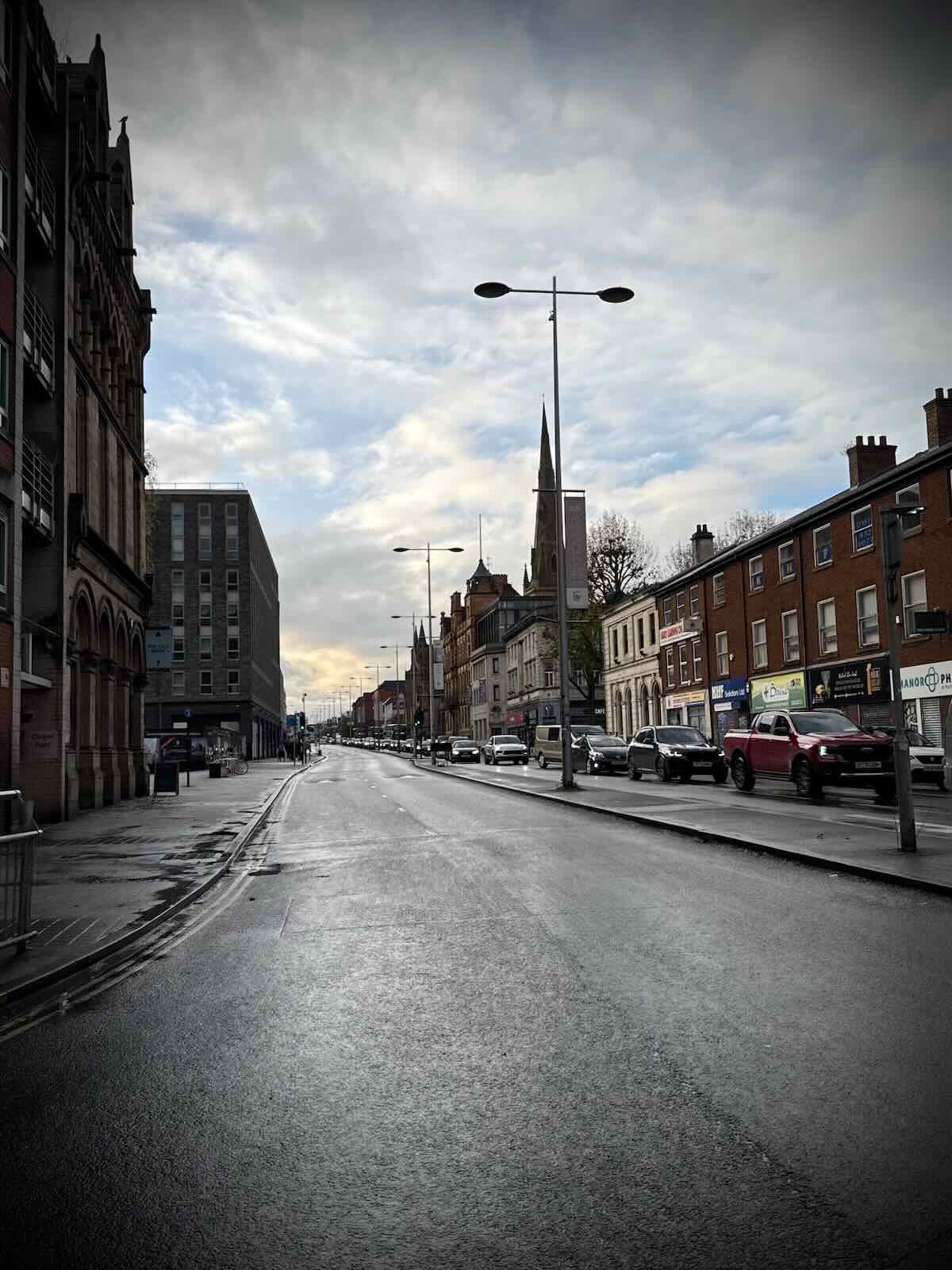
Though to be fair on Salford City Council, this is just the start, and as that, it’s been executed well. The materials are decent quality, the cycle path is pretty smooth and there’s fewer of those tight angles like on Trafford Road and Liverpool Street.
Compared to the latest city centre schemes in Manchester, on Deansgate and in the Northern Quarter, it’s far superior. It’s also at a higher standard than most of the Trafford schemes, with the exception of Kingsway.
Overall, it’s great to see this completed, and completed ahead of schedule. Hopefully just the start of more improvements we’ll be seeing to this part of Salford.



















 Dom Cycling