
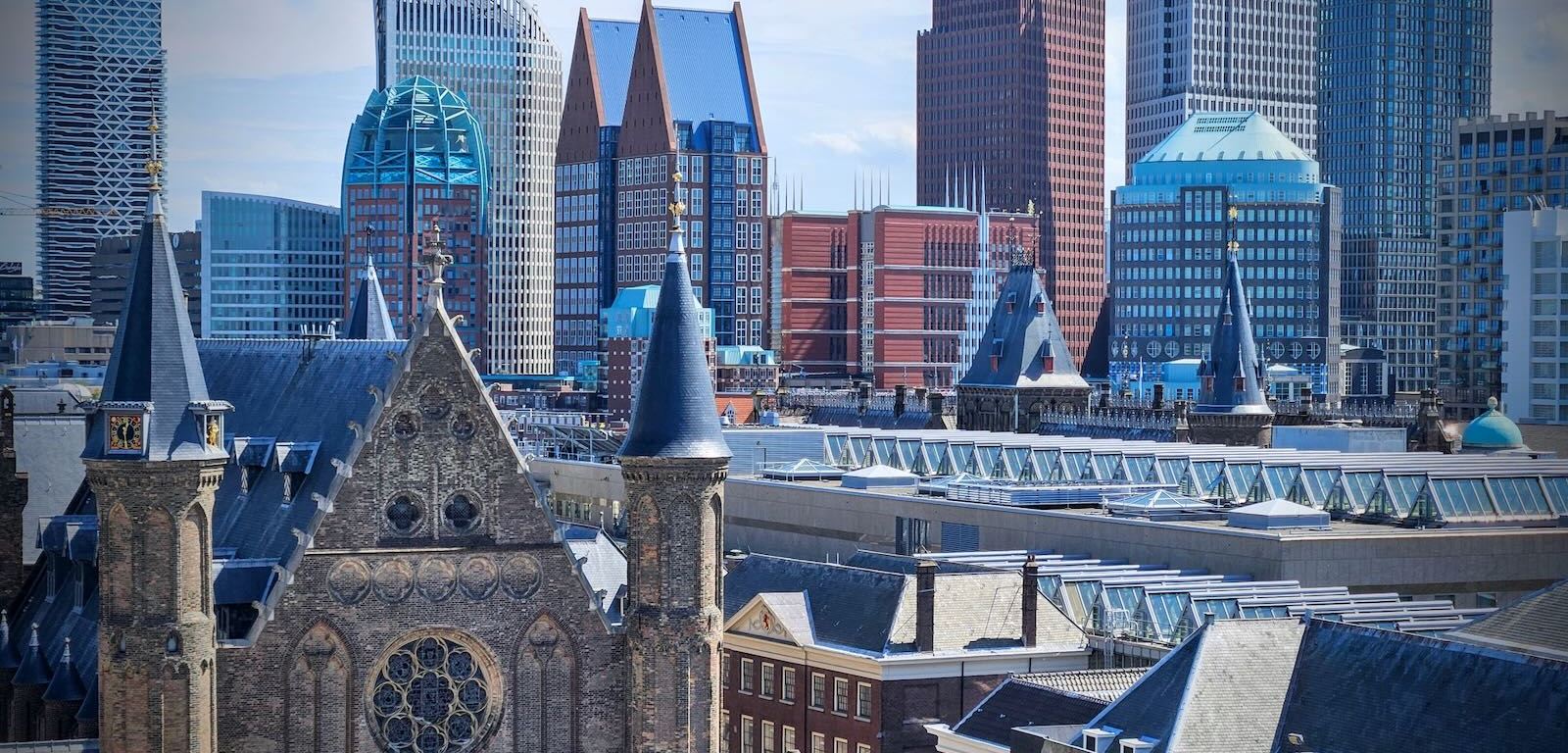
Among the regular places we visit while we’re at Duinrell is the fantastic miniature park Madurodam. It’s somewhere we’ve been going since our first stay at Duinrell in 2012, with good reason, as there’s so much to see and do there.
While it is superb, our kids are getting a little old for it now. So a bit like what I did in 2022, when I went to Delft, I came up with a plan to drop some of our group at Madurodam, while the rest of us carry on to Den Haag.
Den Haag (The Hague) is the third-largest city in the Netherlands and the country’s administrative centre and its seat of government. The formal name of the city is s-Gravenhage, which means “the count’s enclosure”, referring to the hunting grounds that once made up the area.
While some of the old hunting grounds still exist in Haagse Bos, the city is now part of a larger conurbation, which includes Rotterdam and Delft, as well as the seaside town of Scheveningen.
Den Haag is home to many different international judicial bodies, such as the International Criminal Court (ICC), which makes use of the nearby Scheveningen Prison. It also has many embassies, giving the city a very international feel.
Like Rotterdam, it doesn’t feel like a typical Dutch city, such as the likes of Amsterdam, Utrecht or Delft. Those cities are compact, with lots of canals and narrow streets. While Den Haag does have some canals, the city sprawls, with many wide roads and large towers.
Riding to Madurodam
Setting off from Duinrell, we made our way towards Madurodam, starting by heading towards Wassenaarse Slag on the path to the beach, like we did previously during the week.
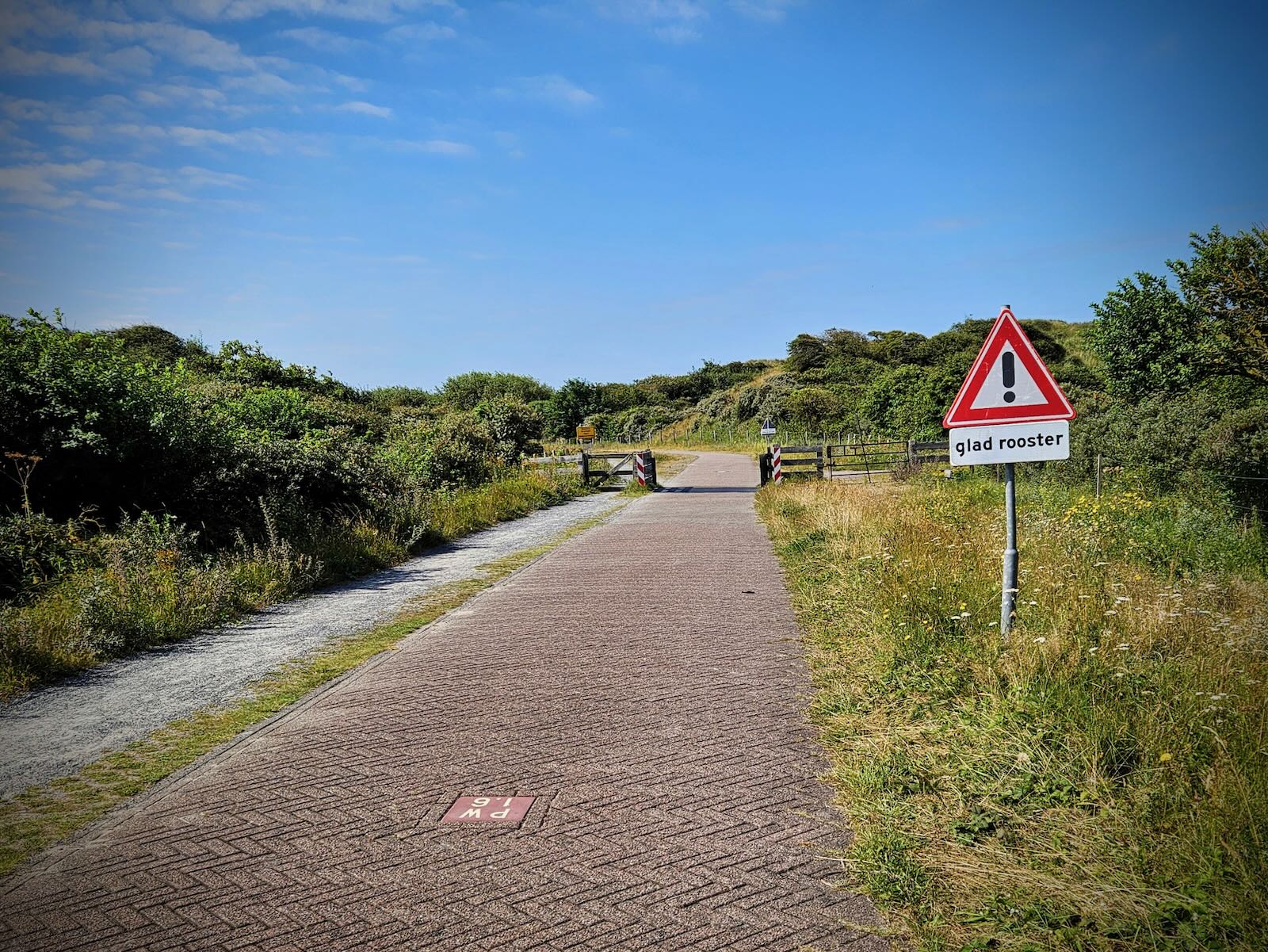
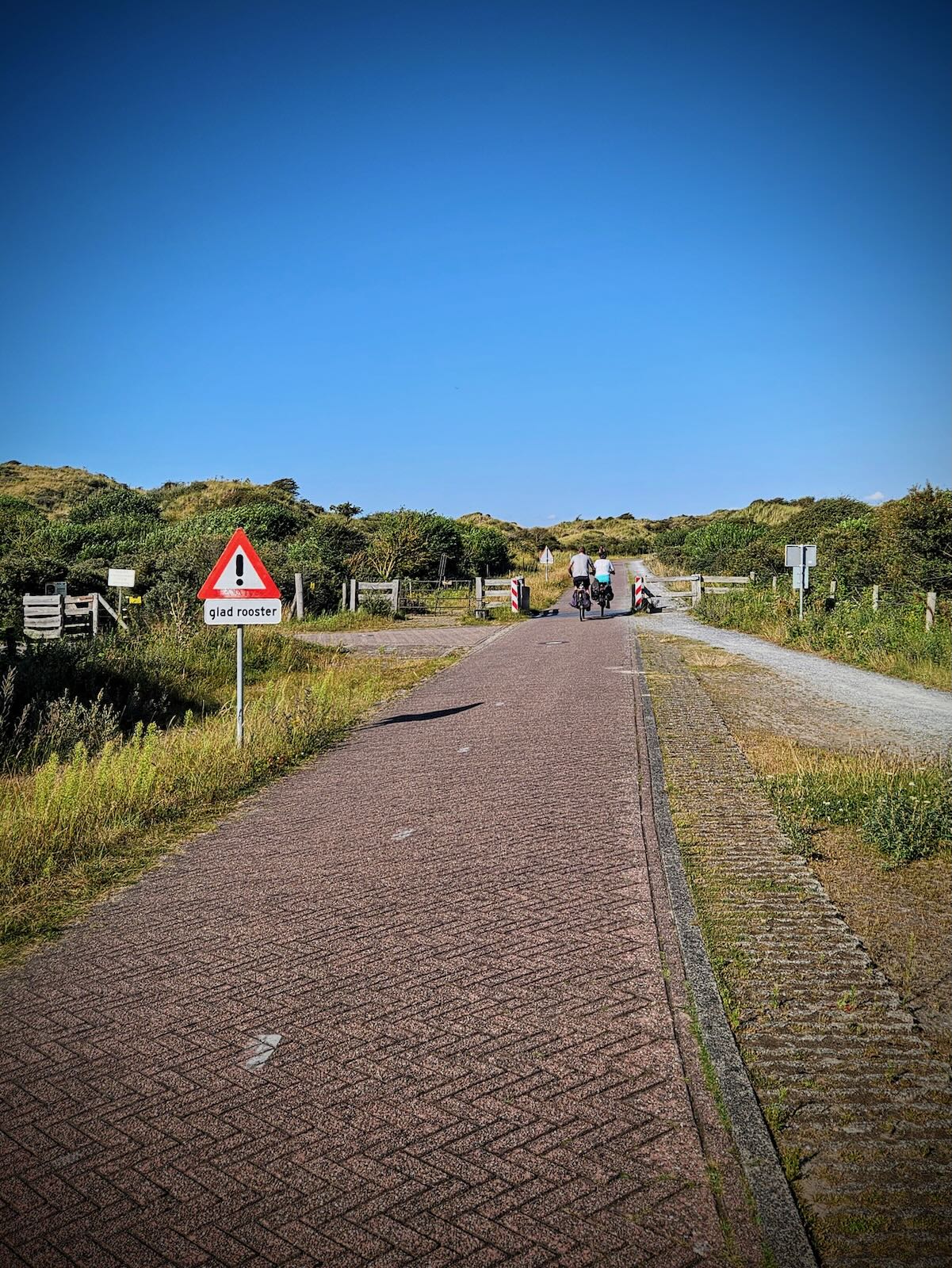
Before going all the way to Wassenaarse Slag, we turned left onto Ganzenhoekweg, which passes through the Ganzenhoek nature reserve. Riding along Ganzenhoekweg, we were largely going parallel to coast, but inland.

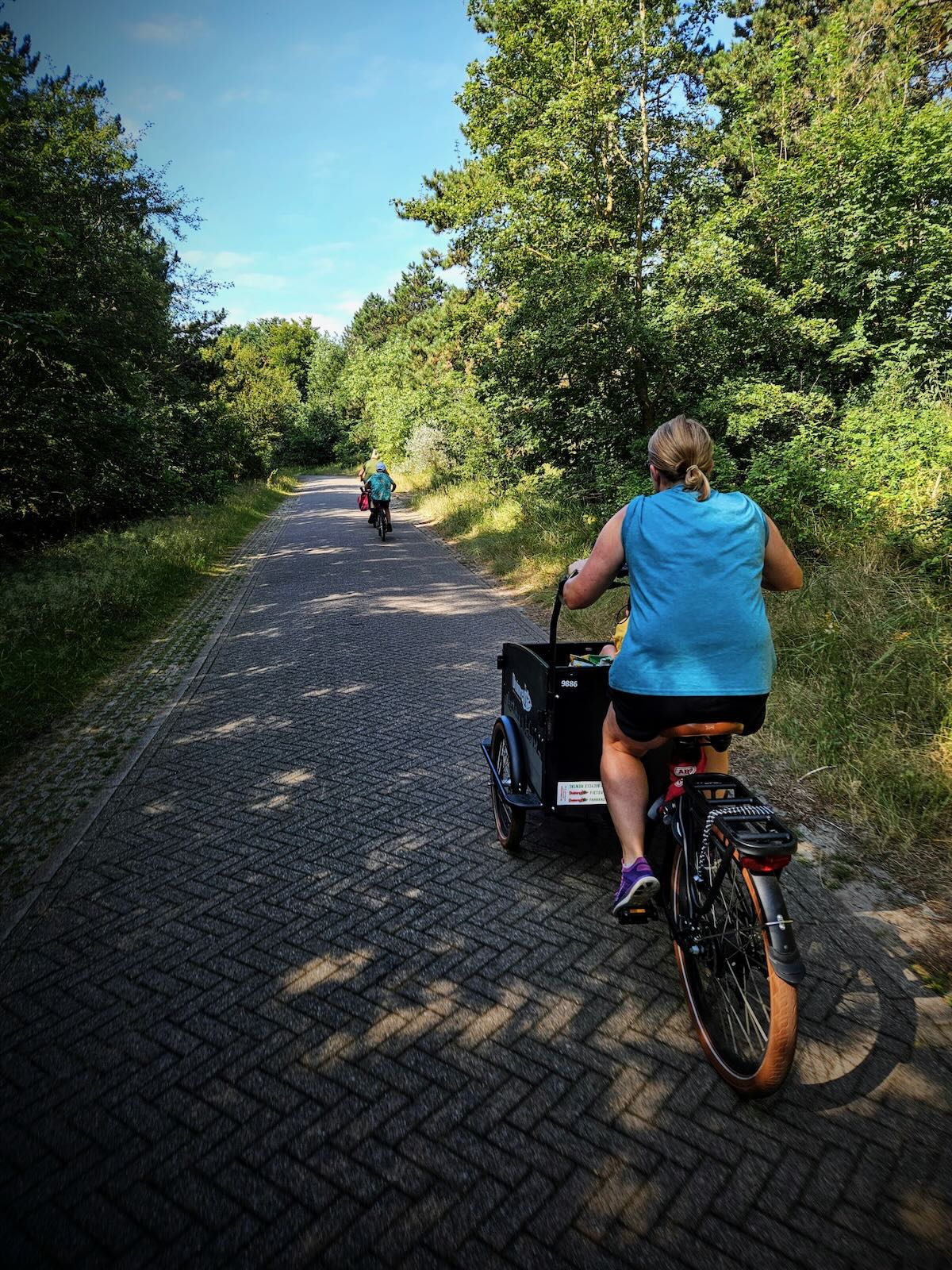
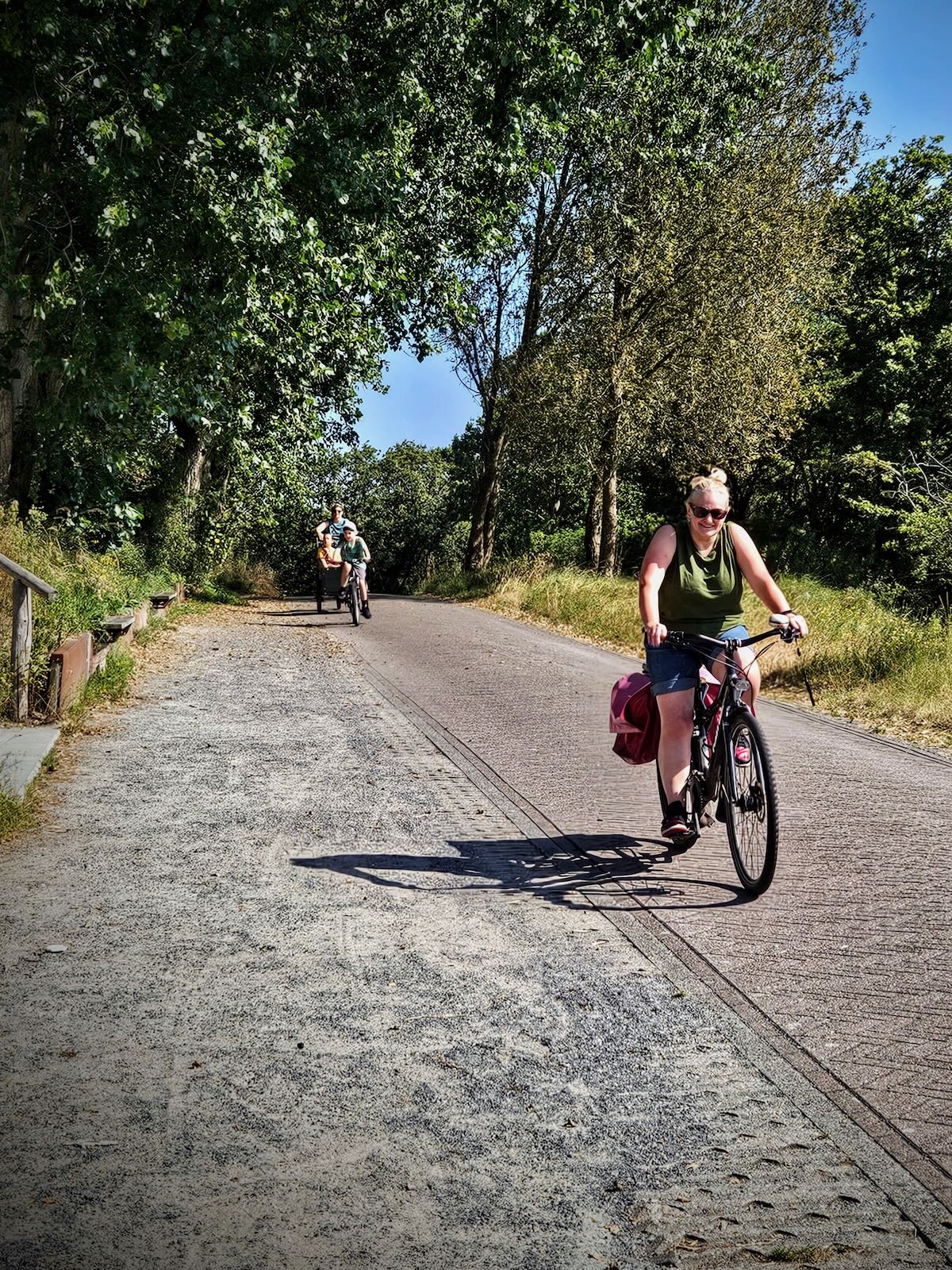
The path along here is paved, which is good quality and well maintained. There’s also a parallel loose gravel path for walking. It undulates as it crosses the dunes, which means there’s a few hills along the way, but nothing too serious.

I really enjoy riding across the dunes on the North Sea coast and the route to Den Haag is one of my favourites. This is particularly true on a lovely sunny day as it was that day.

Making our way along, there’s a few stopping points on the way. You’ll see various shelters with seating and information boards on the route, plus there’s access to beaches that you can only get to walking or cycling.

This includes Naaktstrand Scheveningen beach, which we passed on our way. We didn’t stop, which is probably best, as I’ve since found it’s a naturist beach, which is pretty obvious with that name, even for those that don’t speak Dutch!
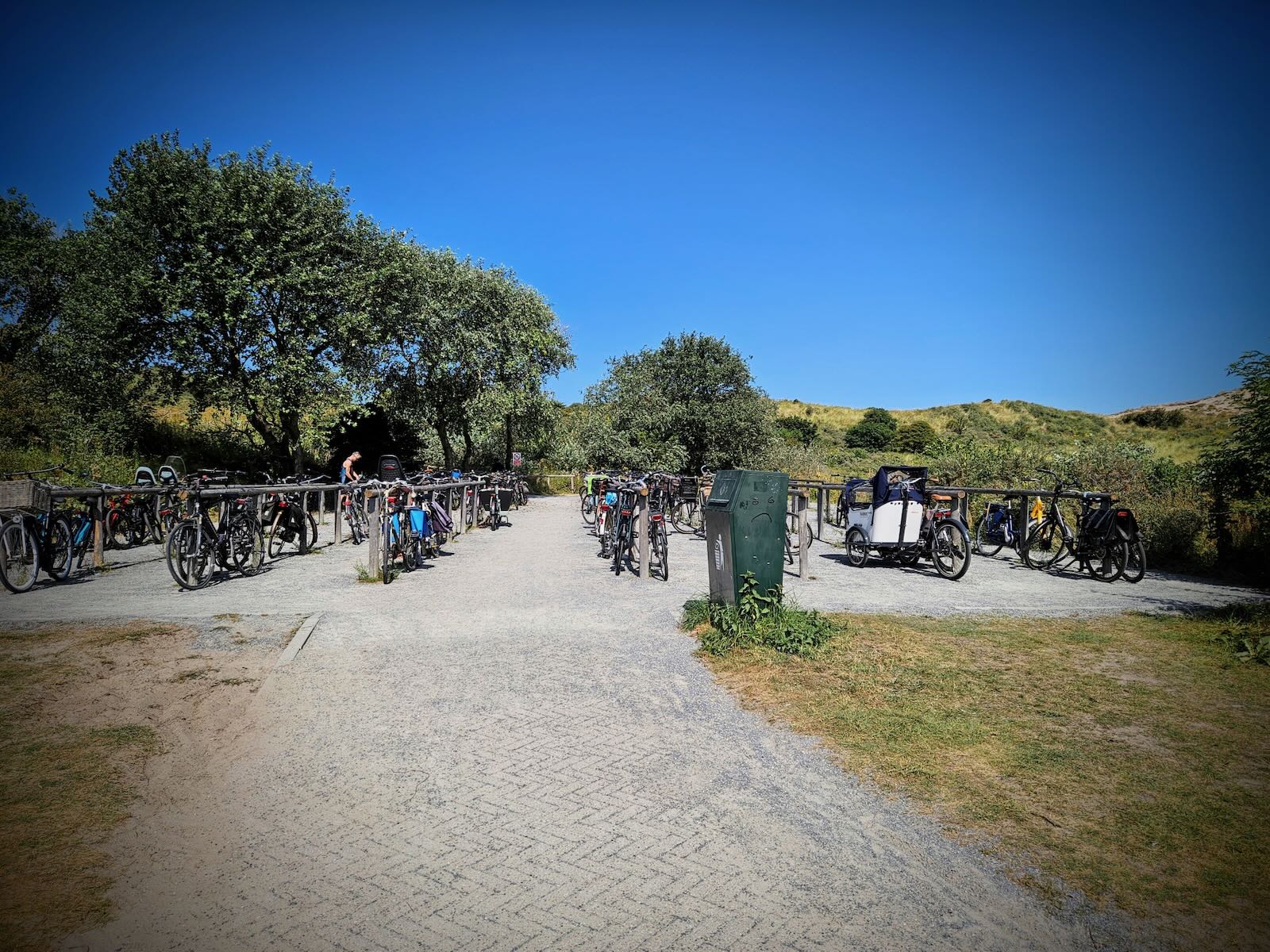
It wasn’t long before we reached the water tower at water tower and pumping station at Watertoren and Pompstation Scheveningen. Built in 1874, the pumping station and water tower are still very much in use and along with the lakes in the dunes, supply water to the area around Den Haag.

The area around the water tower is a popular spot. In addition to the crossroads on the path, there’s a café selling ice cream, outdoor seating and cycle parking. On a sunny day like this day, it was very popular.
We didn’t have time to stop for long at the water tower, so we set off on the last part of the route to Madurodam. This meant leaving the dune path, then continuing along a cycle path on Pompstationsweg, as we passed Scheveningen Prison.

At the end of Pompstationsweg, we turned onto Badhuisweg, which doesn’t have any cycling infrastructure, but has loads of parked cars, very much like a road you’d see in the UK and not very Dutch.

This led to a very typical Dutch roundabout with protection for cycling, where the road then turns into Doctor Aletta Jacobsweg. It was then just a short ride under the S200, before we arrived at Madurodam, which was somewhat obscured by coaches.




Riding to Den Haag
After dropping off part of our group at Madurodam, we set off on our way to the centre of Den Haag. The route there meant navigating some of Den Haag’s less than brilliant roads.
As I mentioned above about Den Haag not feeling typically Dutch. This also applies to the city’s cycling infrastructure, or lack of in many cases.
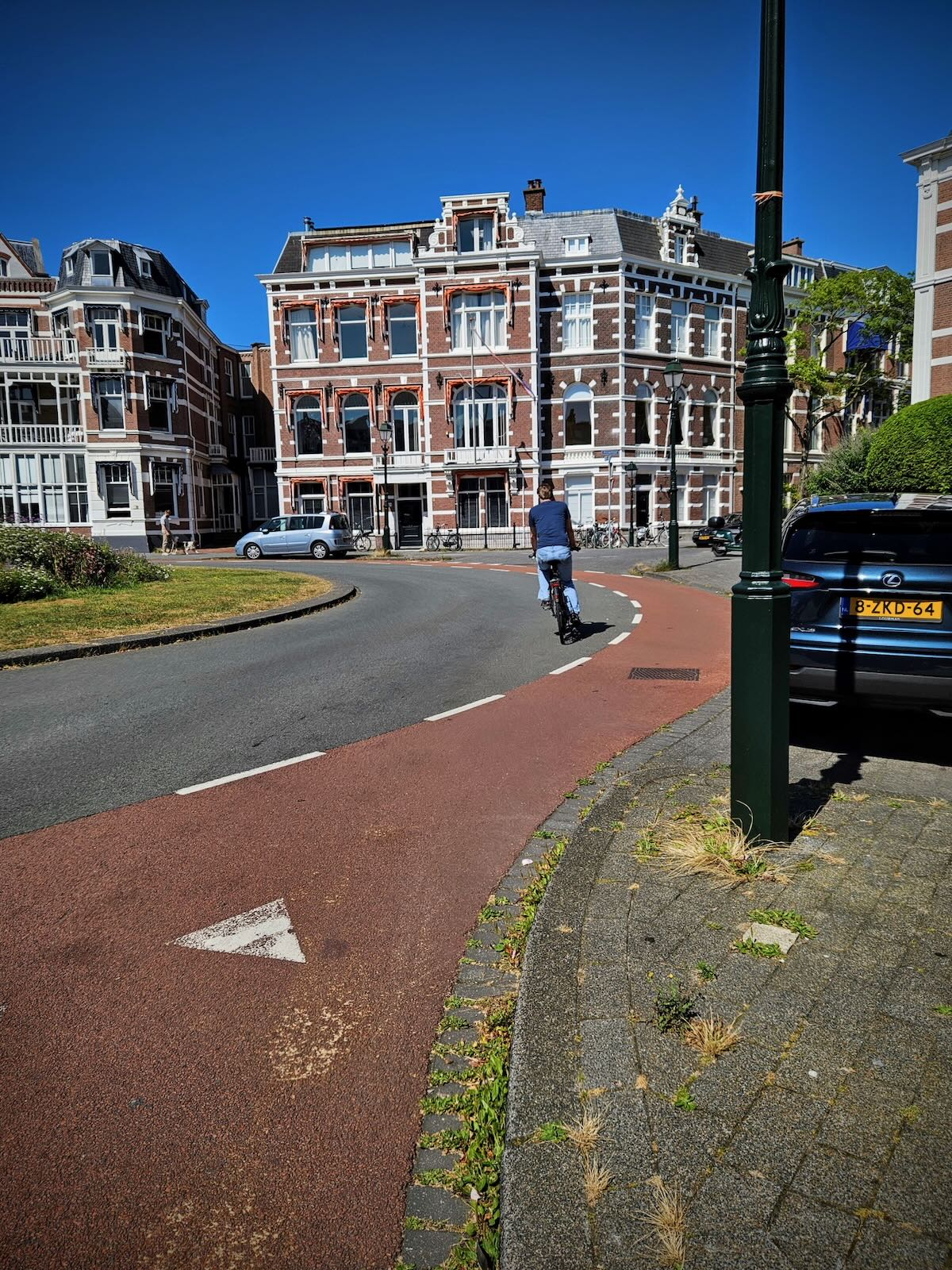
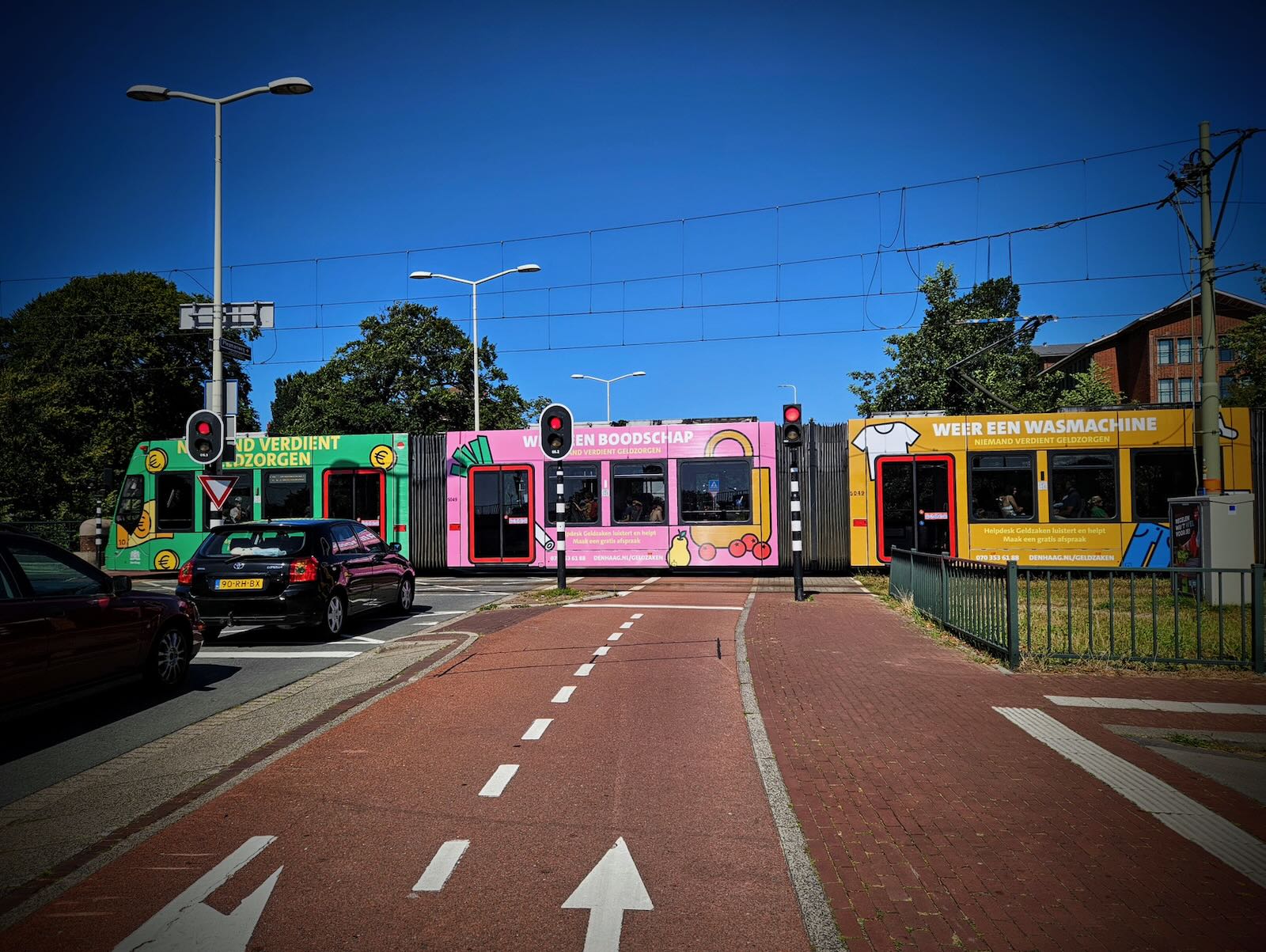
Our ride into Den Haag involved mixing traffic, on roads with little or no cycling infrastructure, parked cars and tram tracks. Not the best combination when cycling.

I’ve mentioned the gaps in Den Haag’s cycling infrastructure and the city being quite car-centric for the Netherlands on Bluesky previously and got a rather defensive message from a local, complaining about cycleways taking space away from cars. That sounds familiar!

It wasn’t long until we arrived in the centre of Den Haag, where we made our way to Buitenhof and parked up. From there, I left the others to go round the shops while I went for a wander.
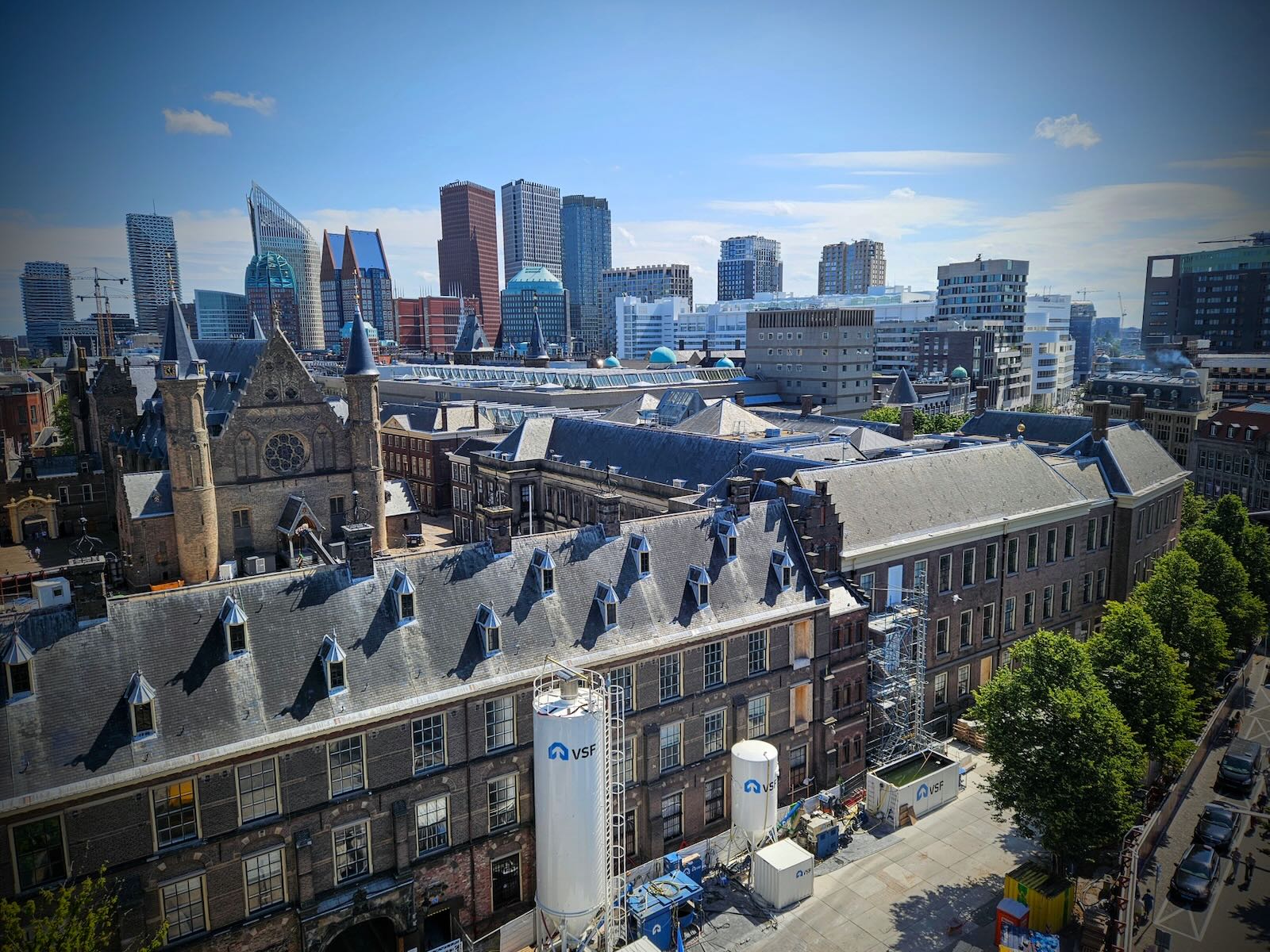
I didn’t wander far before I found my first place to stop, the Uitzichtpunt Binnenhof observation tower, across the road from where I was Buitenhof.

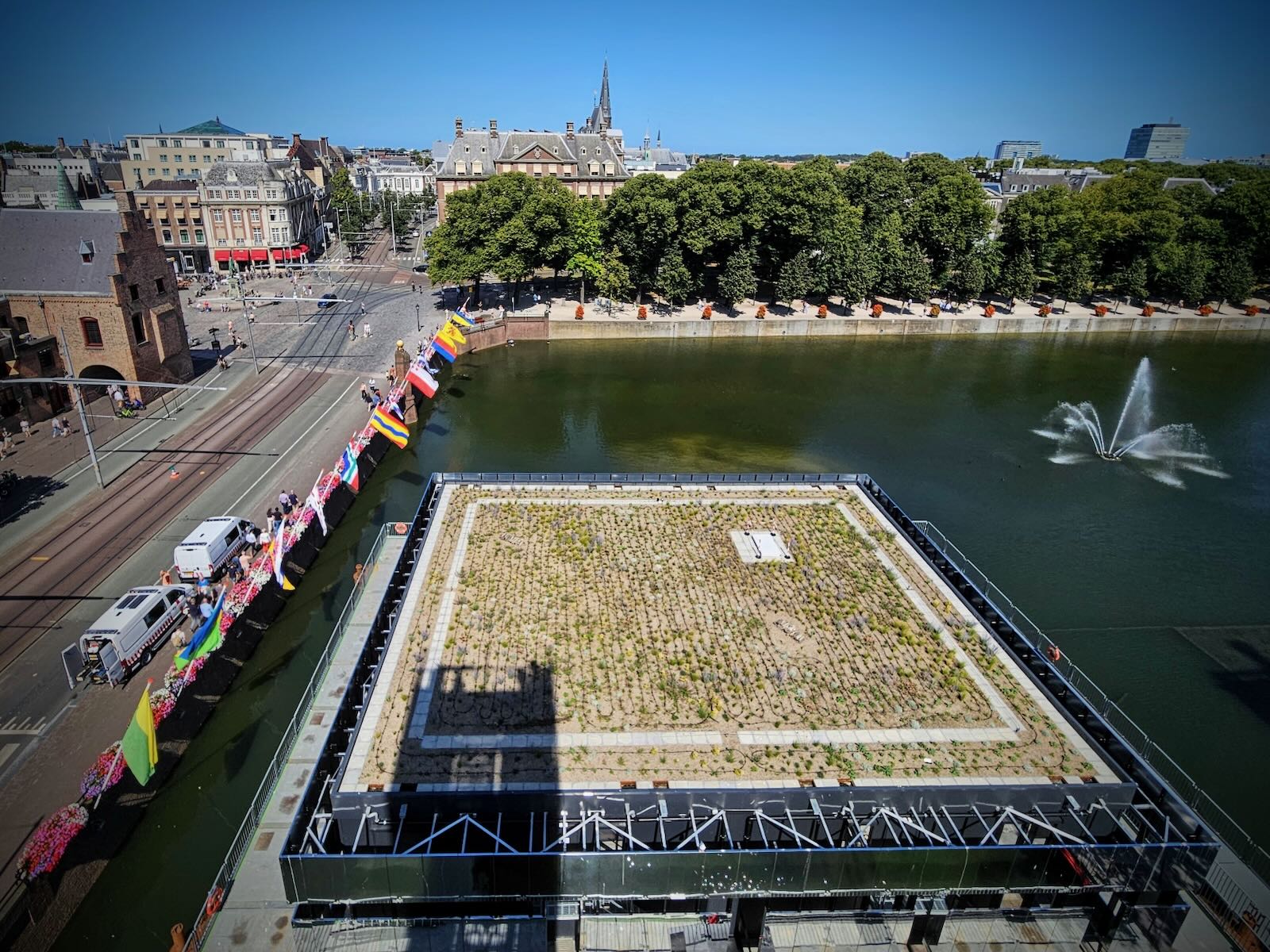
Uitzichtpunt Binnenhof is a temporary structure that been installed while the Binnenhof (home of the Dutch parliament) is being renovated. Once the renovation is complete, the plan is to move the viewing tower to another location in the country.
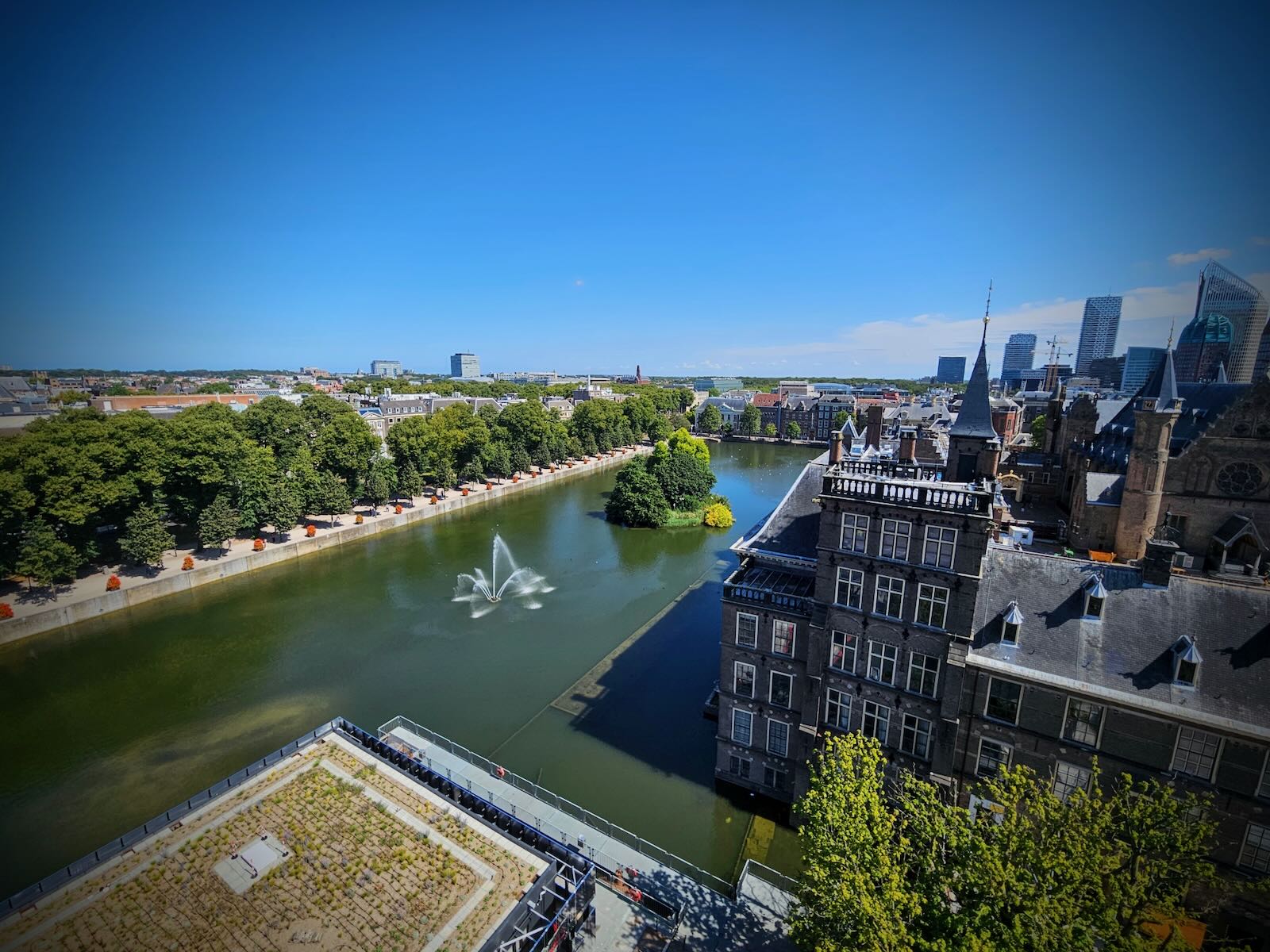
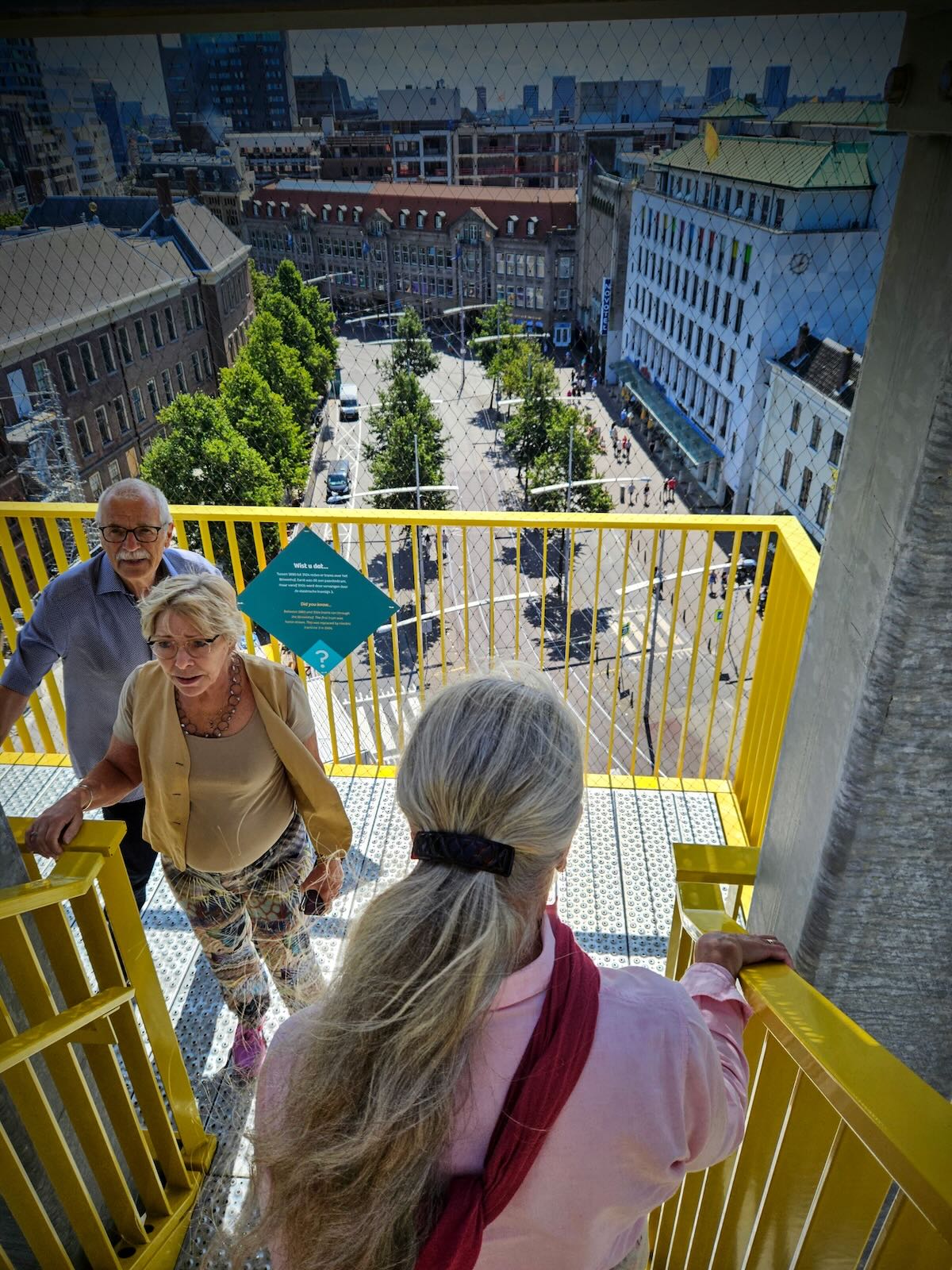
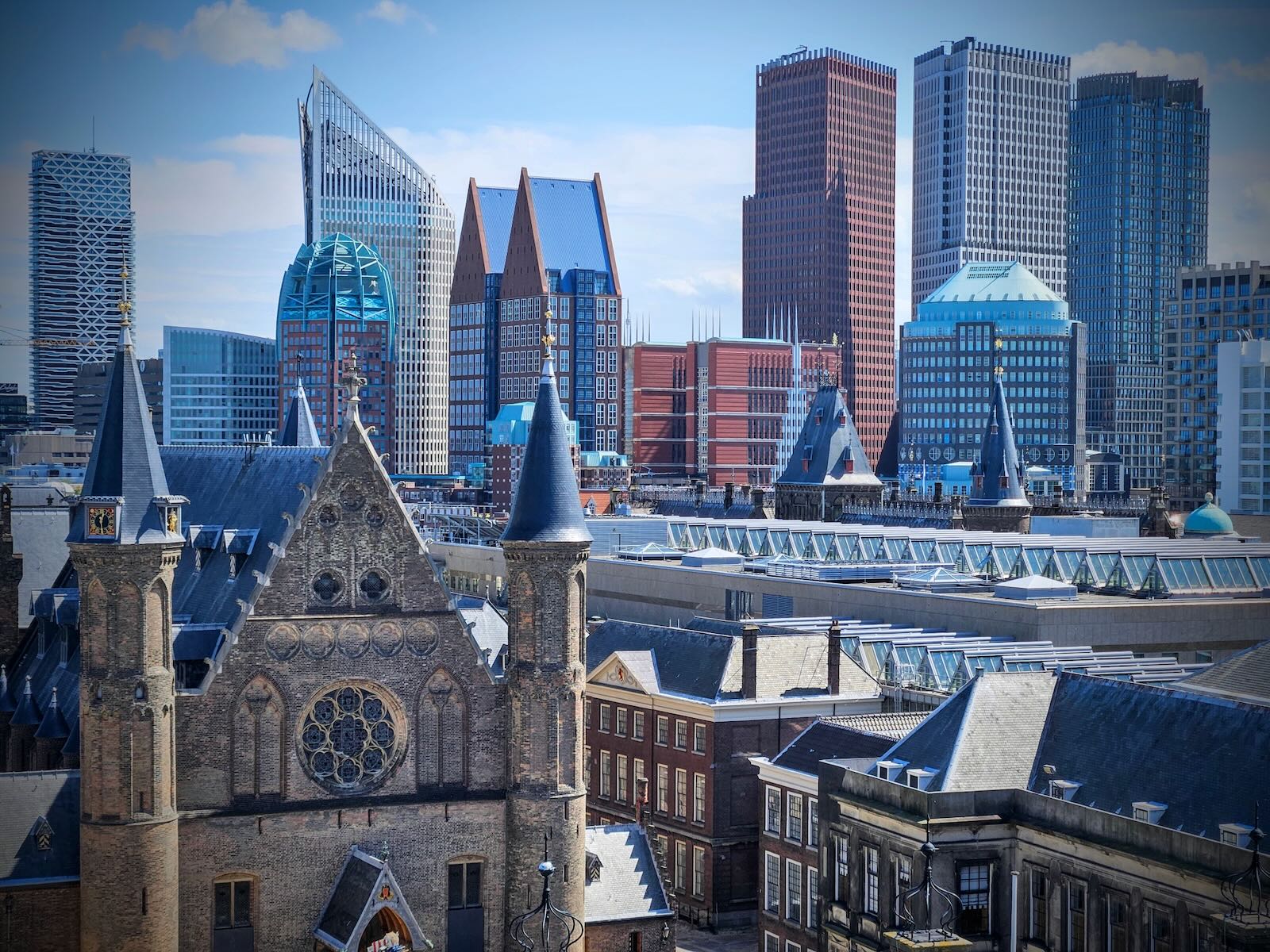
Uitzichtpunt Binnenhof is completely free and offers fantastic views of the Binnenhof and the rest of Den Haag. It takes a little while to walk up and it gets a little wobbly at the top, so might not be for everyone, but I really enjoyed looking out across Den Haag.
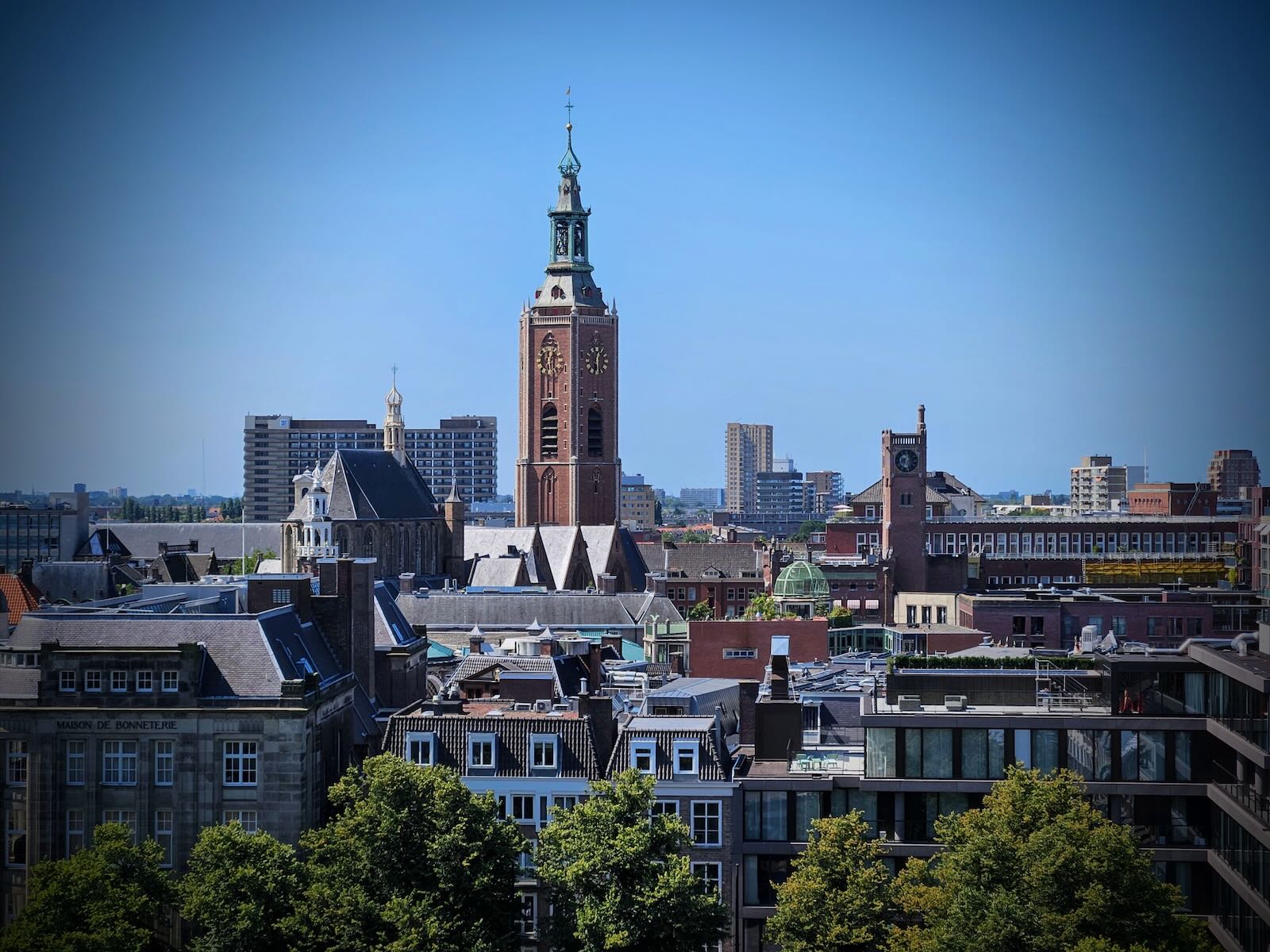
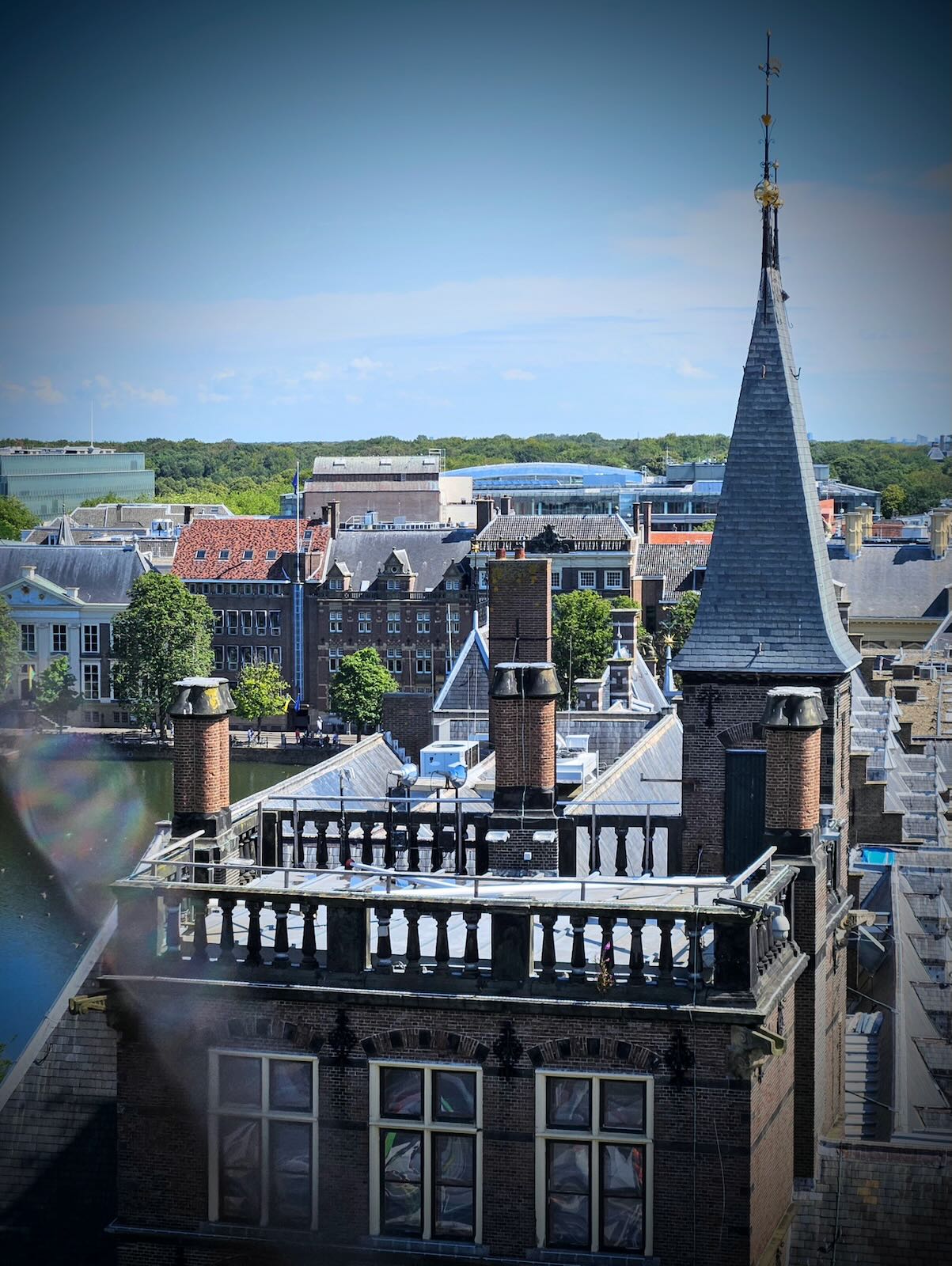
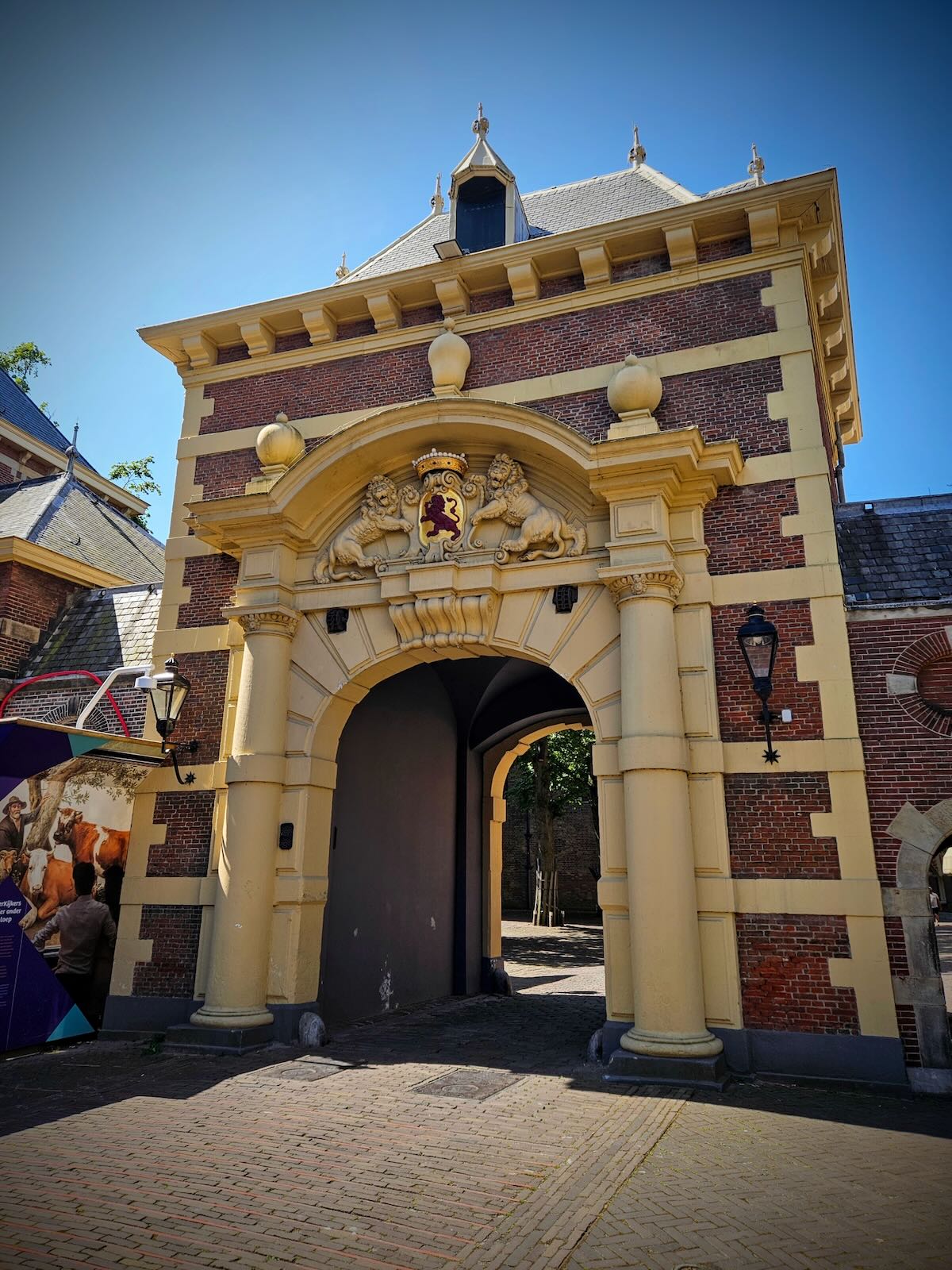
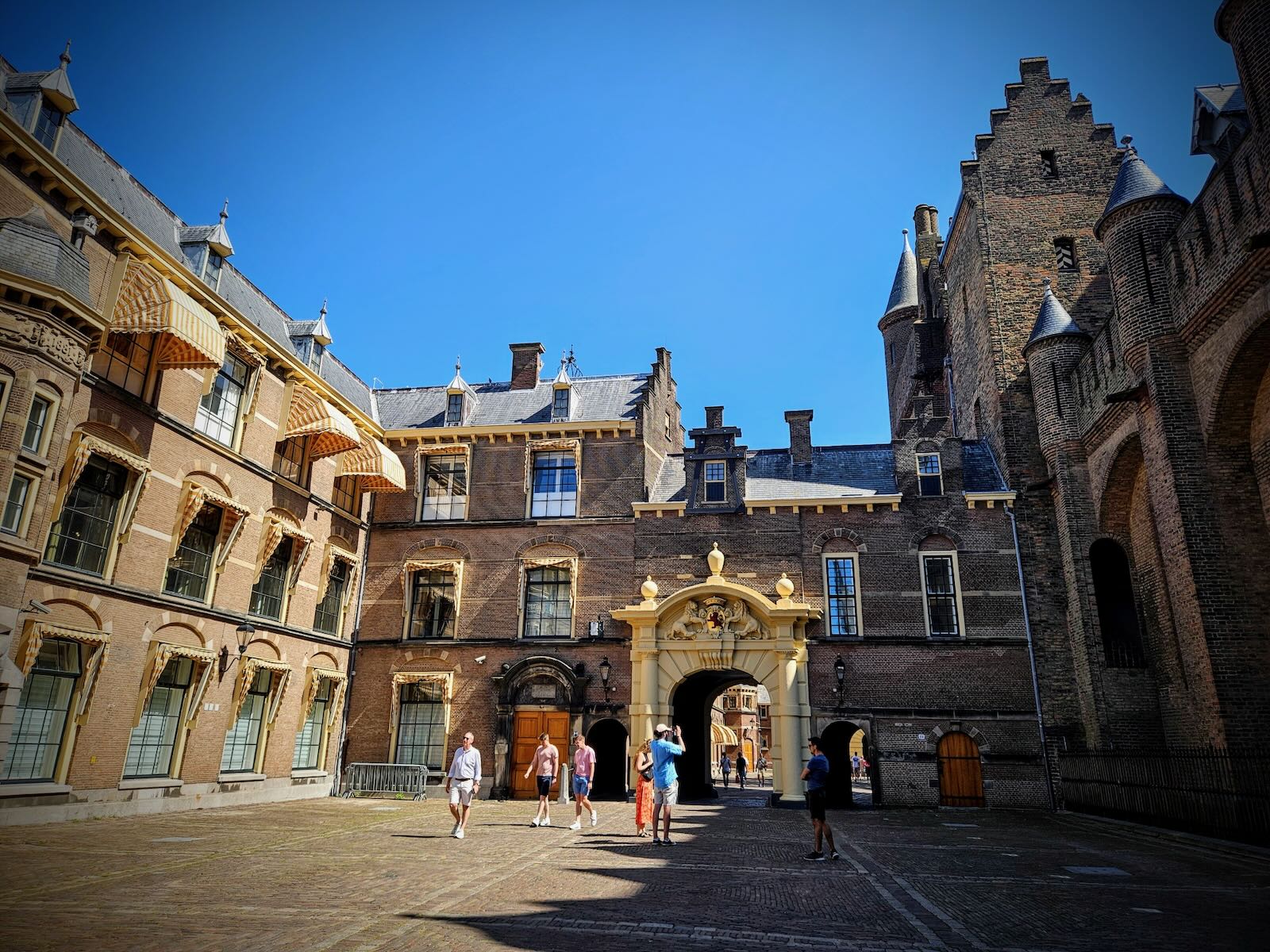
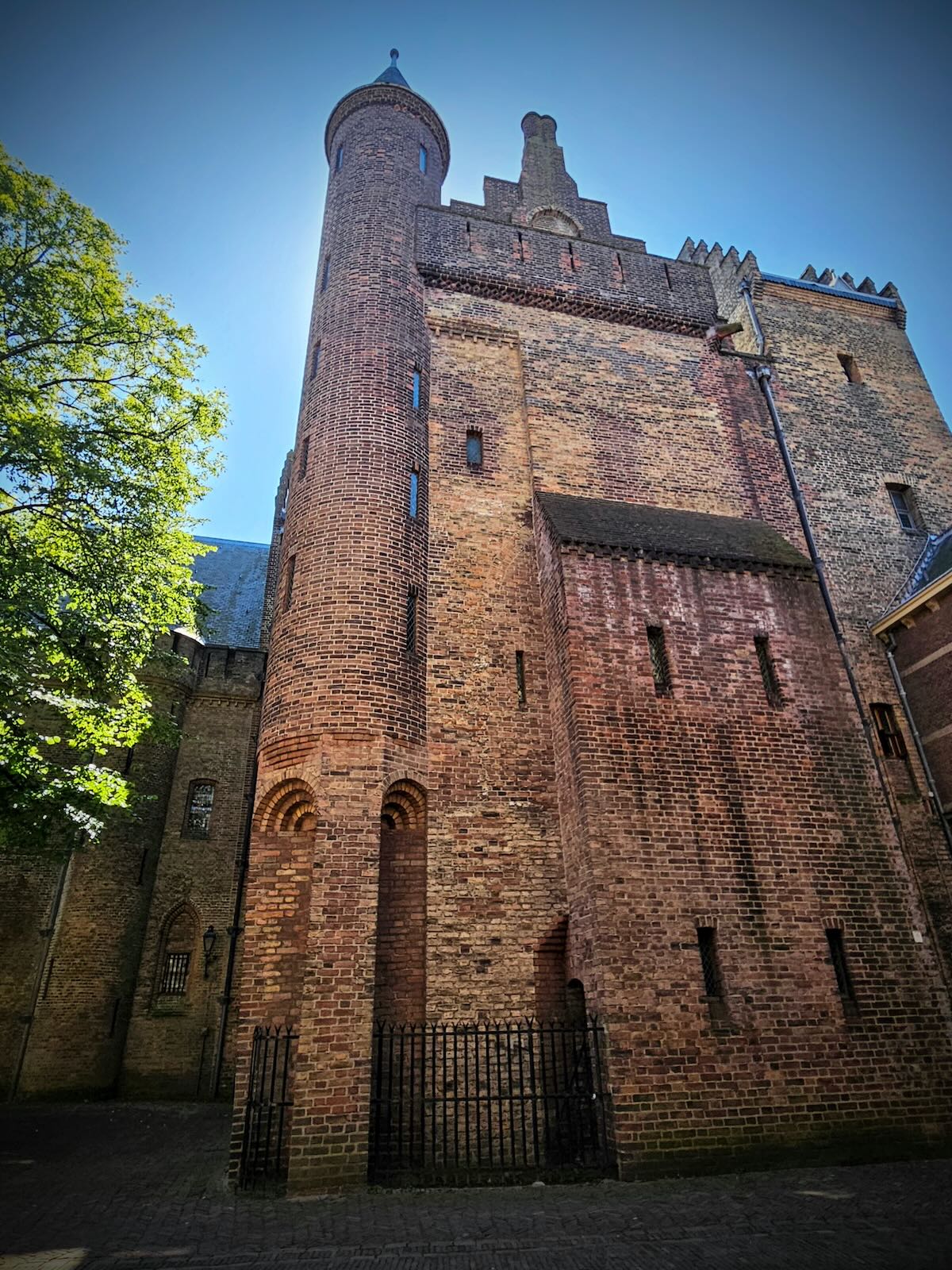
Next stop was the Binnenhof itself, or the sections that are accessible. Wandering round, it feels surprisingly small, considering what it is. Despite staying in the city previously, we’ve not had a proper look round, so it’d be good to return once the renovation is complete.
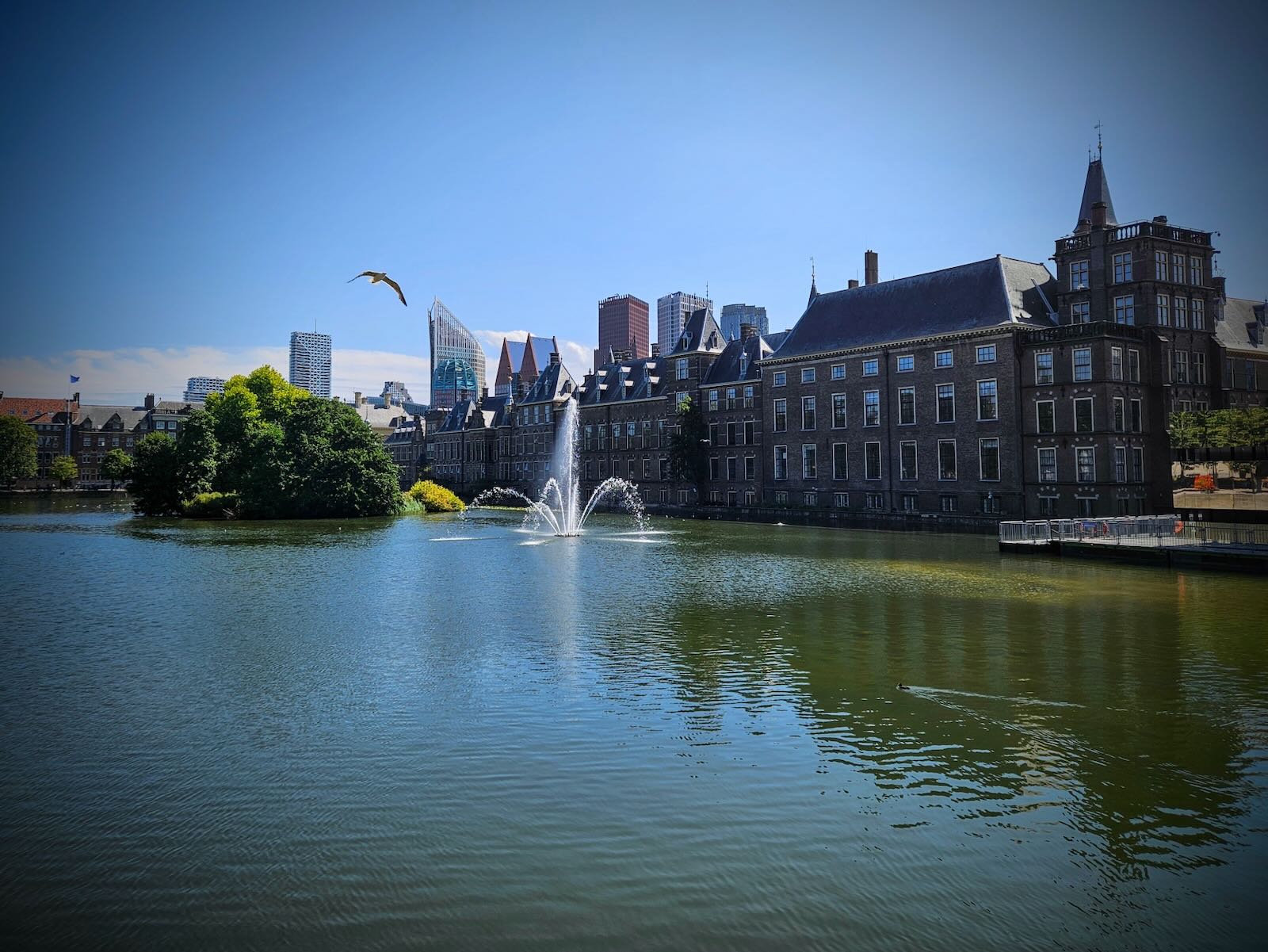
After the Binnenhof, I went off to find a spot to eat my packed lunch, overlooking the nearby Hofvijver lake. This started nicely enough until a seagull snatched my lunch! Oh well, opportunity to grab something local to eat I guess.
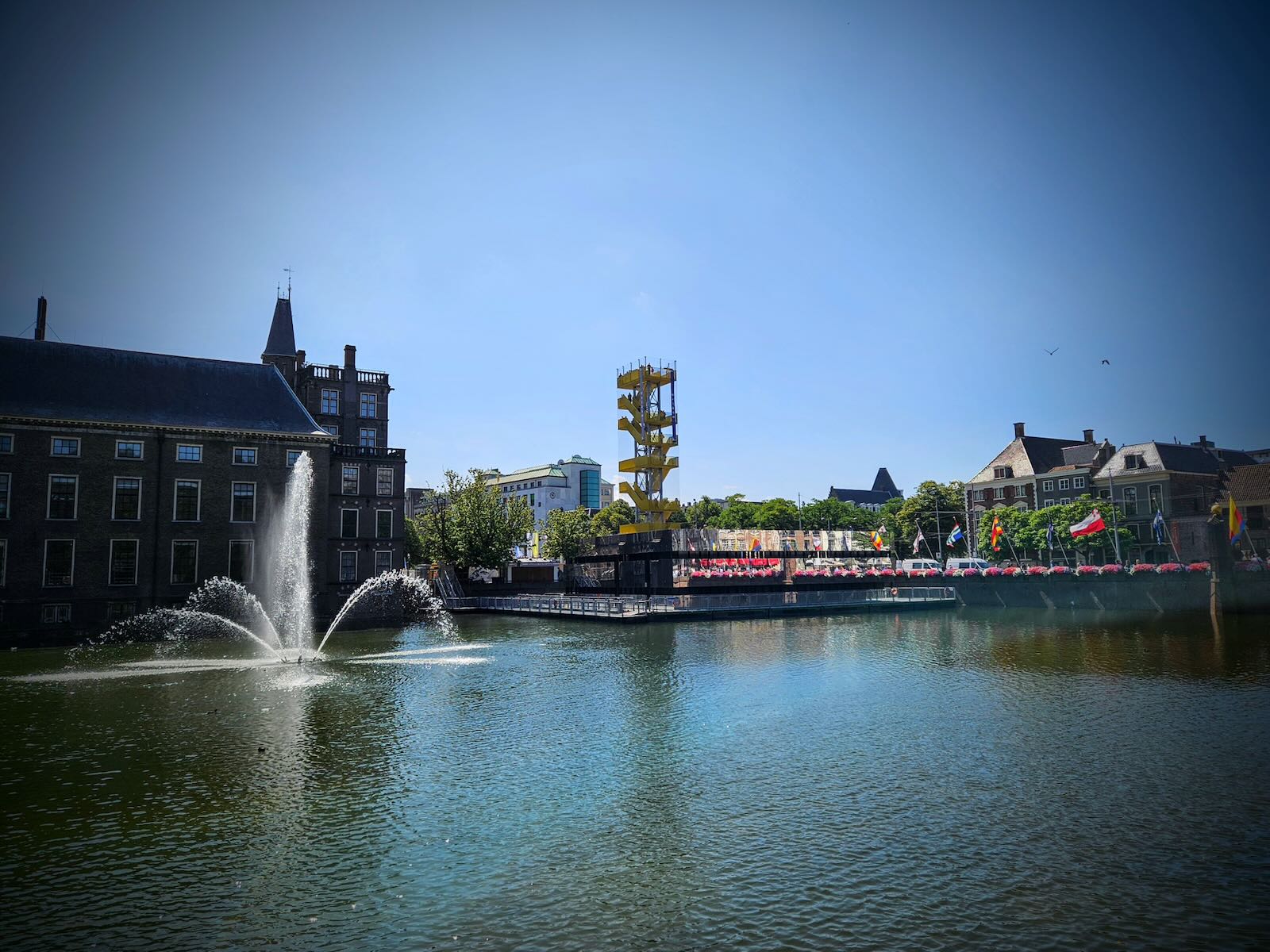
So I headed off to find some lunch, starting at Happy Tosti, where it seemed no one could be bothered serving me, so I left there and found myself a very nice kebab from a nearby street food establishment.
After enjoying my second lunch, seagull-free in Koekamp, I took a quick look at the construction in front of Den Haag Centraal, which is being built over underground cycle parking that opened in 2020.

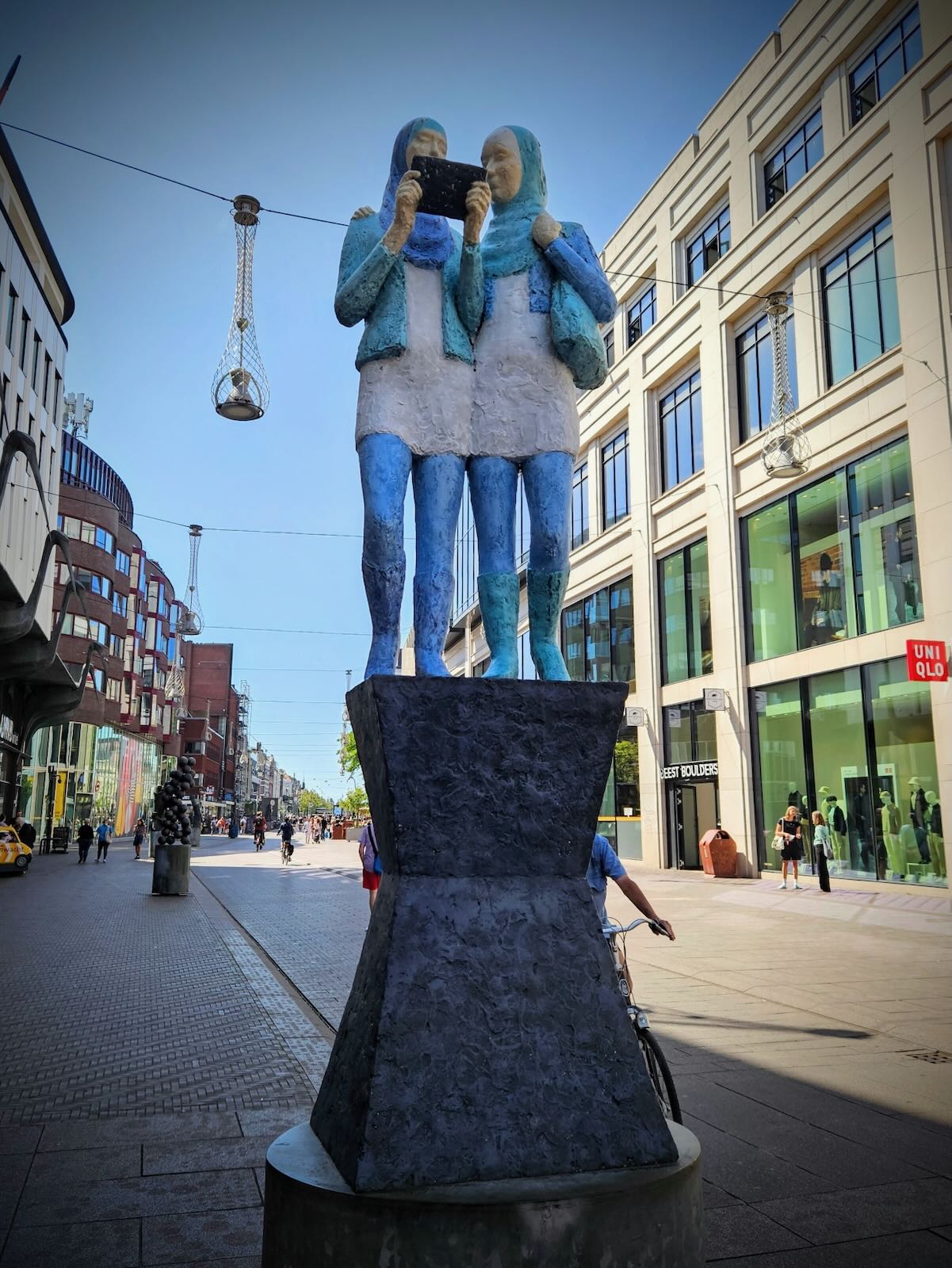
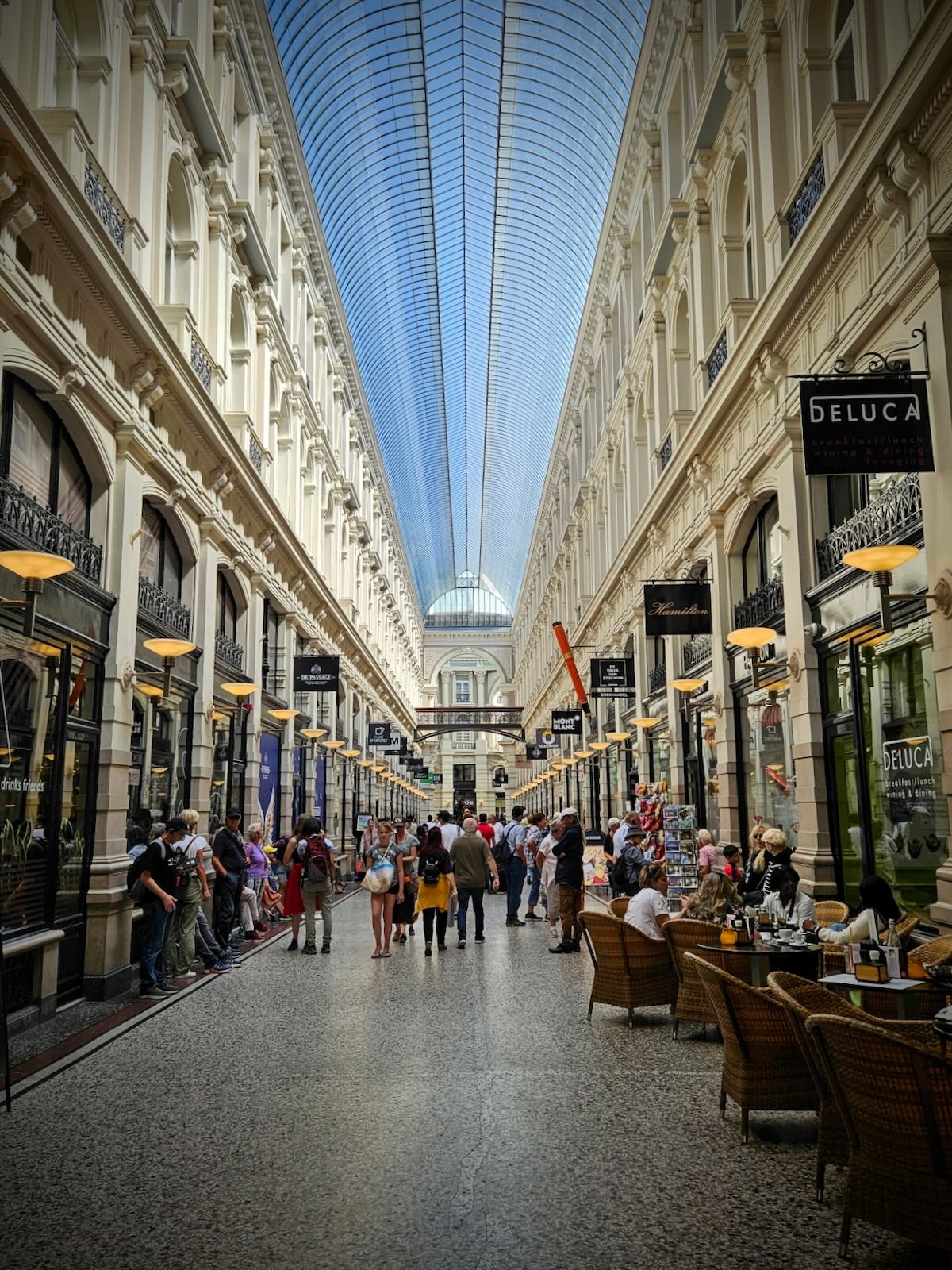
I then made my way along Grote Marktstraat, the main shopping street in Den Haag, which is reserved for walking and cycling, while having trams running underneath and features sculptures along it. Streets like this can often be pretty unpleasant spaces to be in, but Grote Marktstraat is pretty nice.

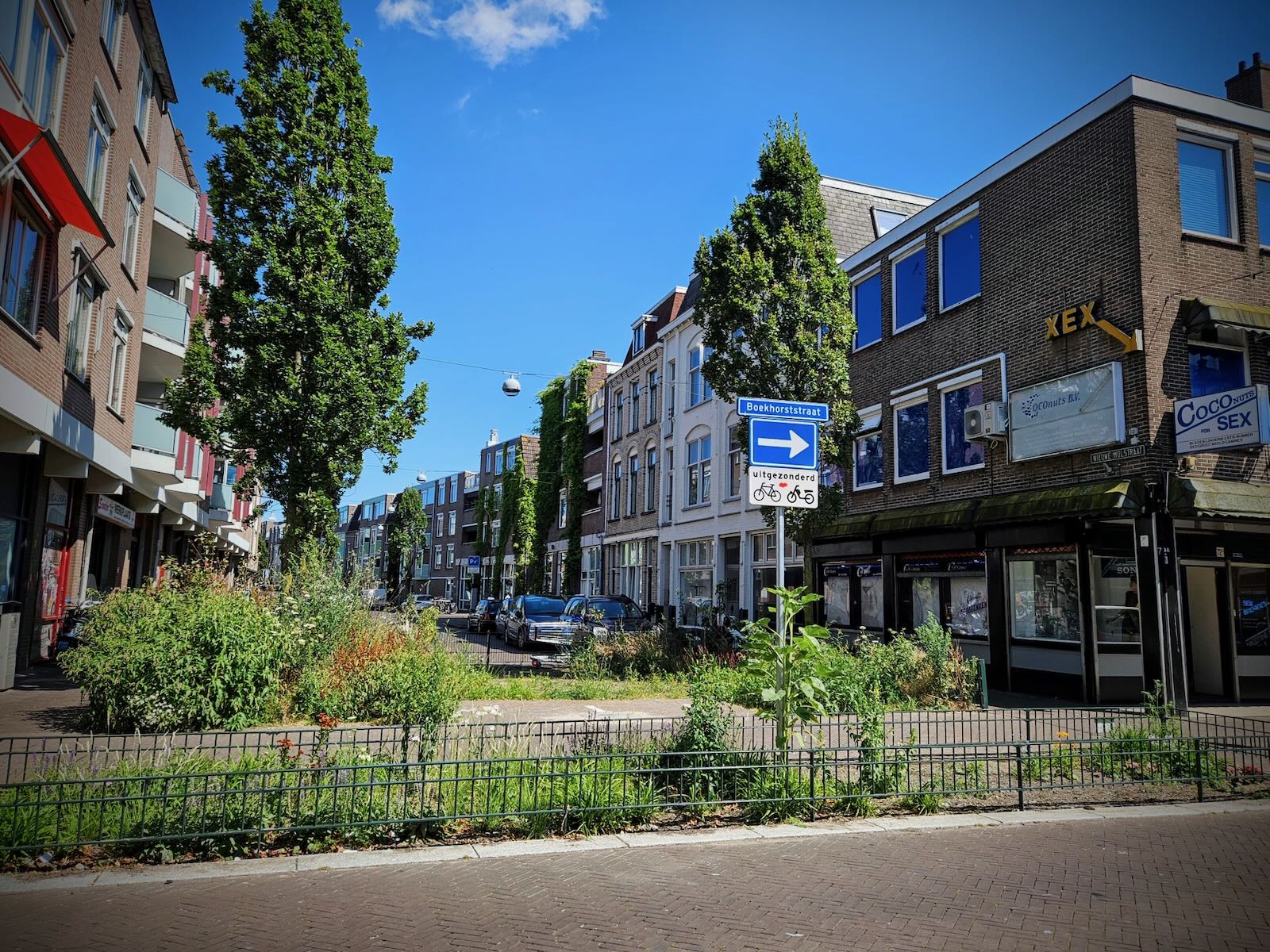
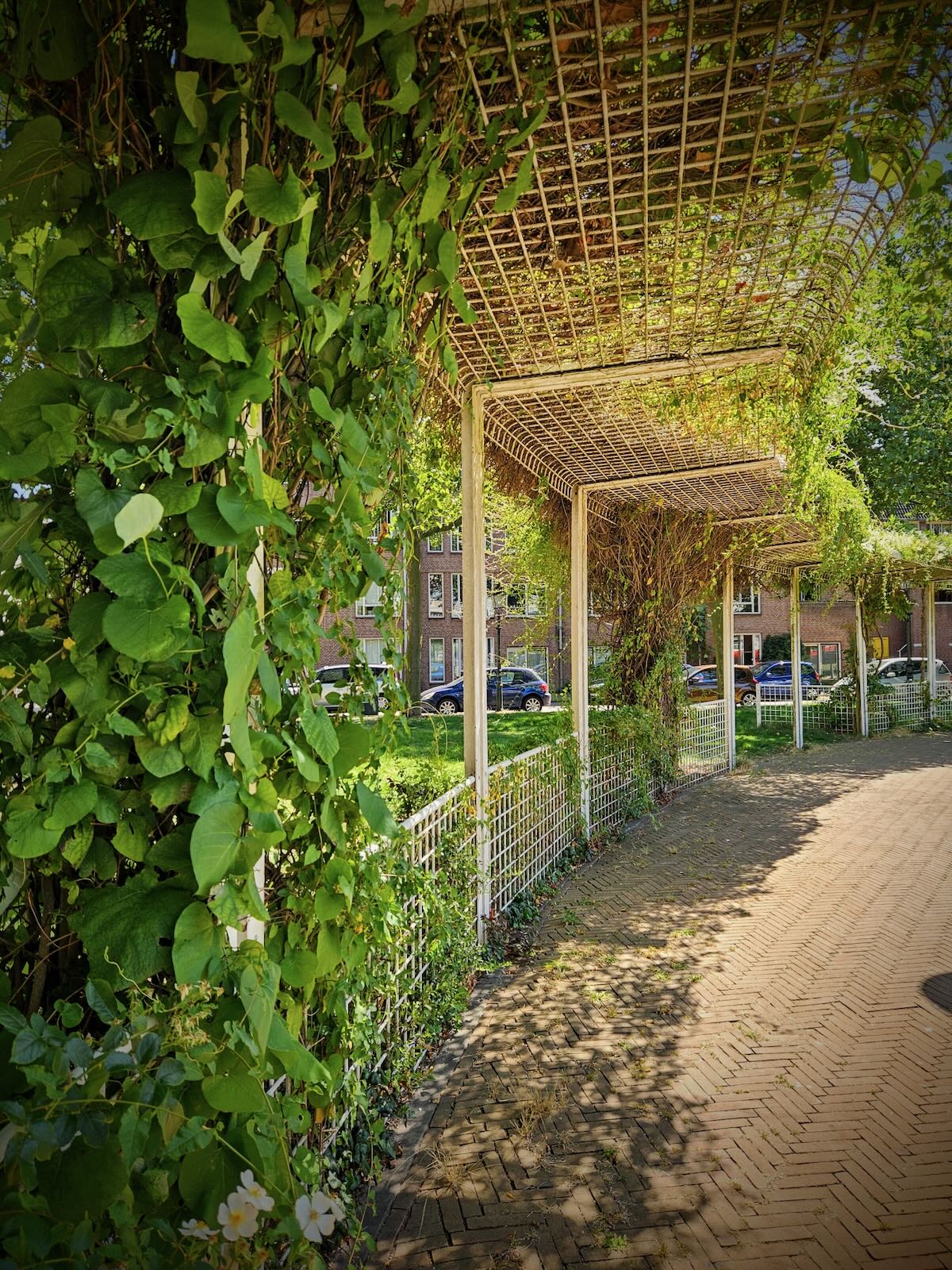
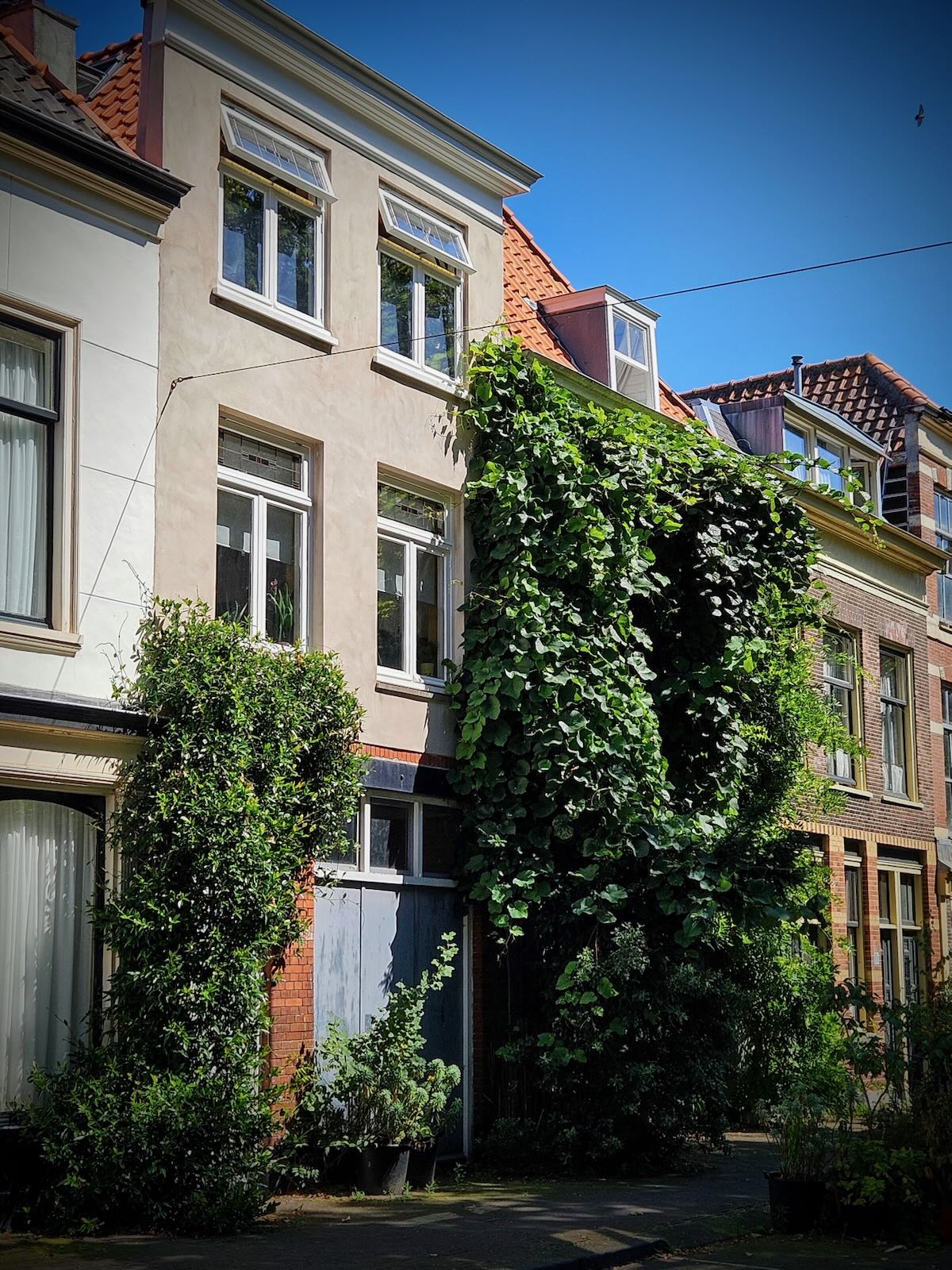
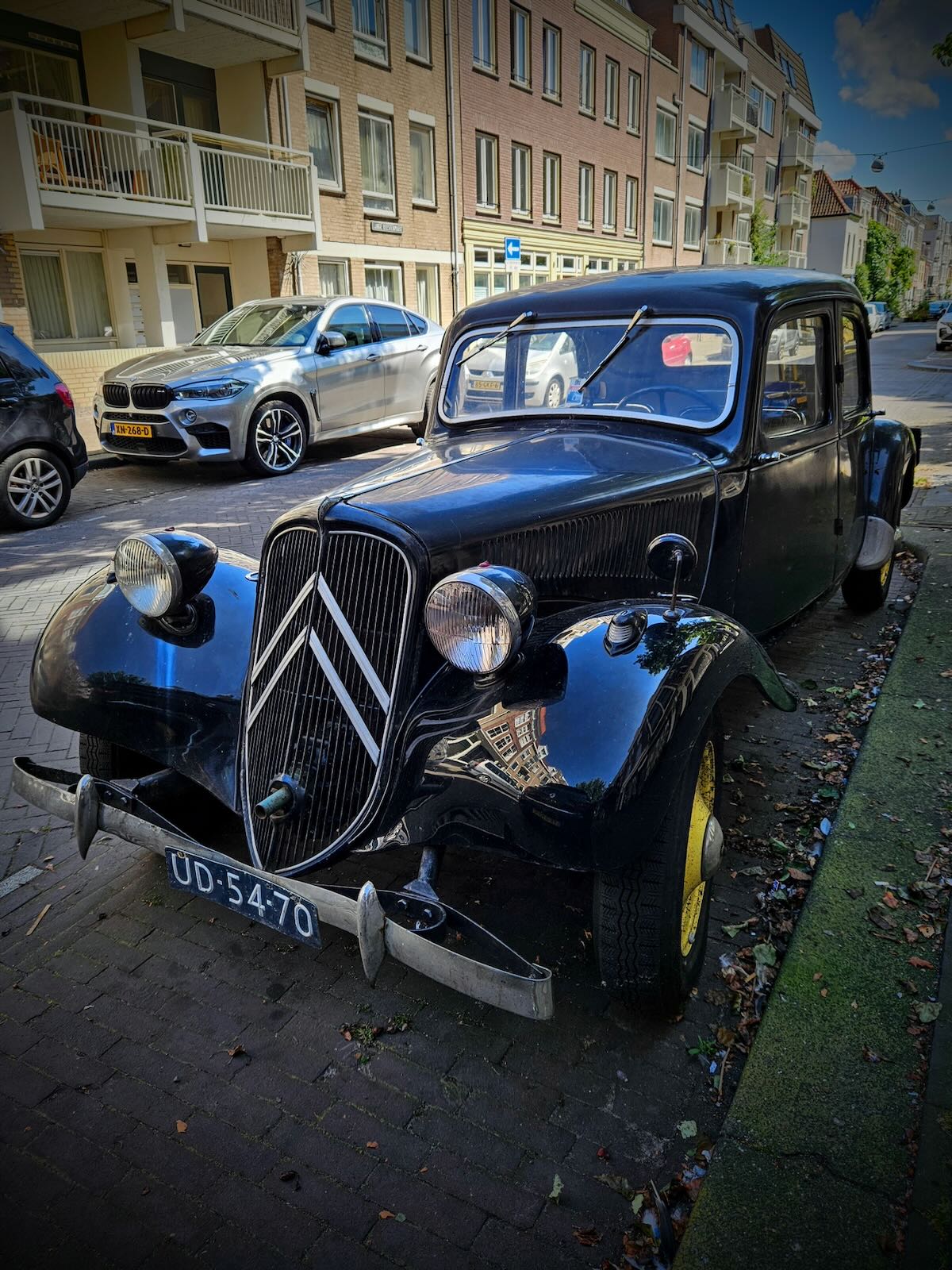
At the end of Grote Marktstraat, I took a stroll down the some of the local residential streets nearby, as I made my way to Helena Park. There were some really pleasant little streets, that are human scale, with very little traffic.
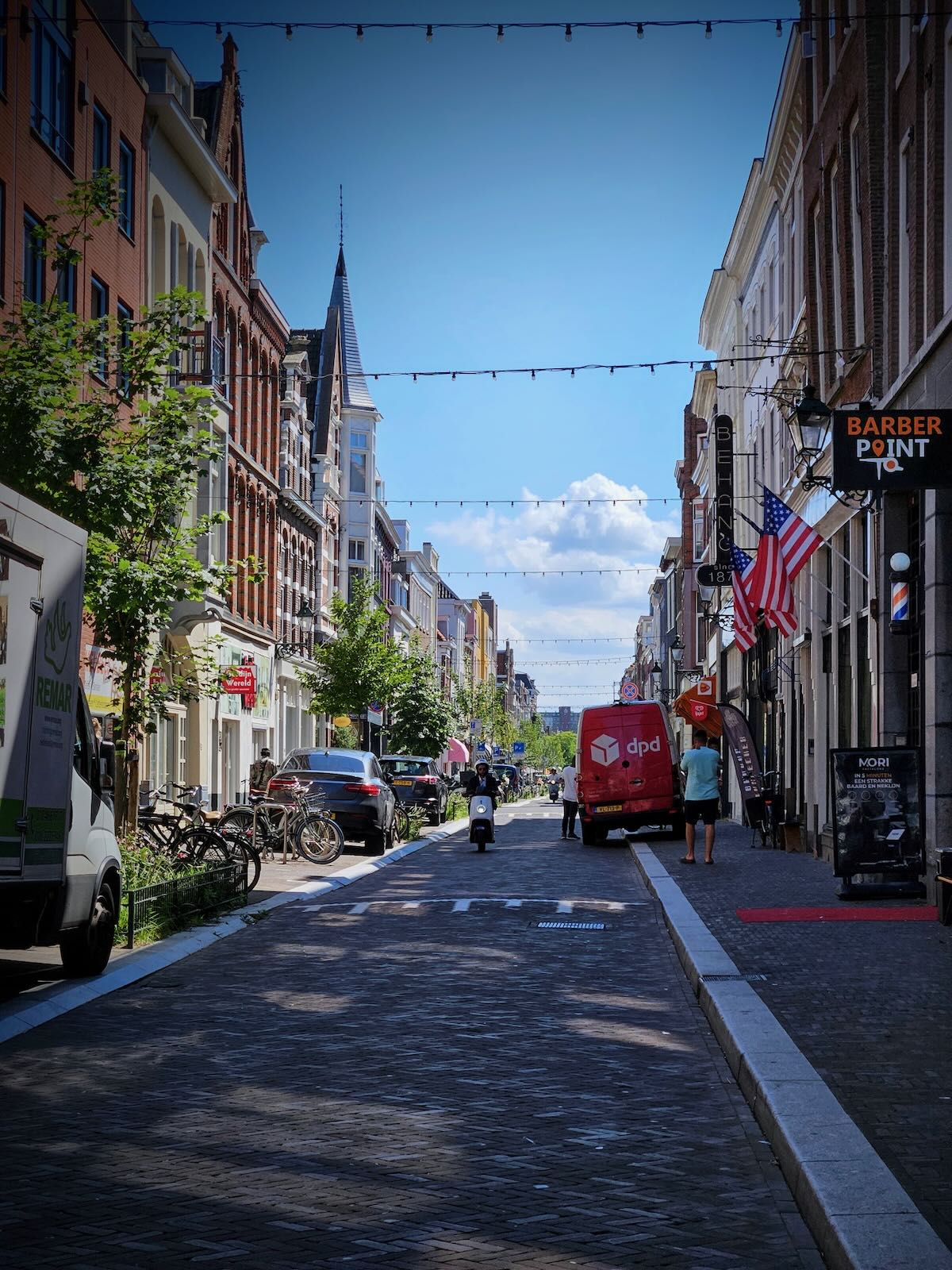
The streets also featured little green areas, such as planted tree pits and pocket parks, and many of the buildings had lots of greenery growing up them. This is something you see a lot in the Netherlands, with many people taking pride in the front of their buildings.

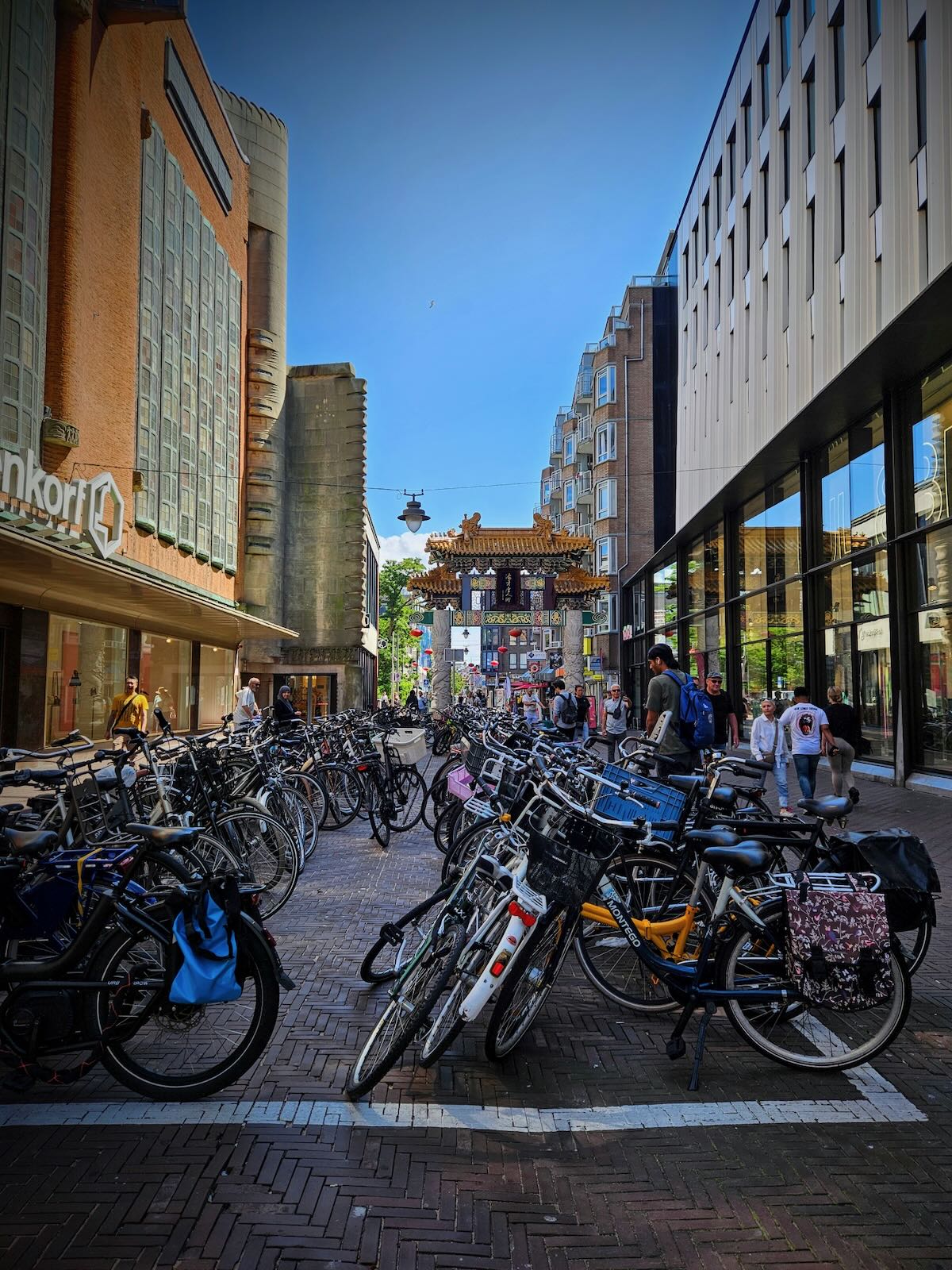
After sitting under the shade in Helena Park for a while, I made my way back to the centre, having a little wander round the shopping district, before meeting up with the others.















Route to Den Haag
Riding to Scheveningen and back to Duinrell
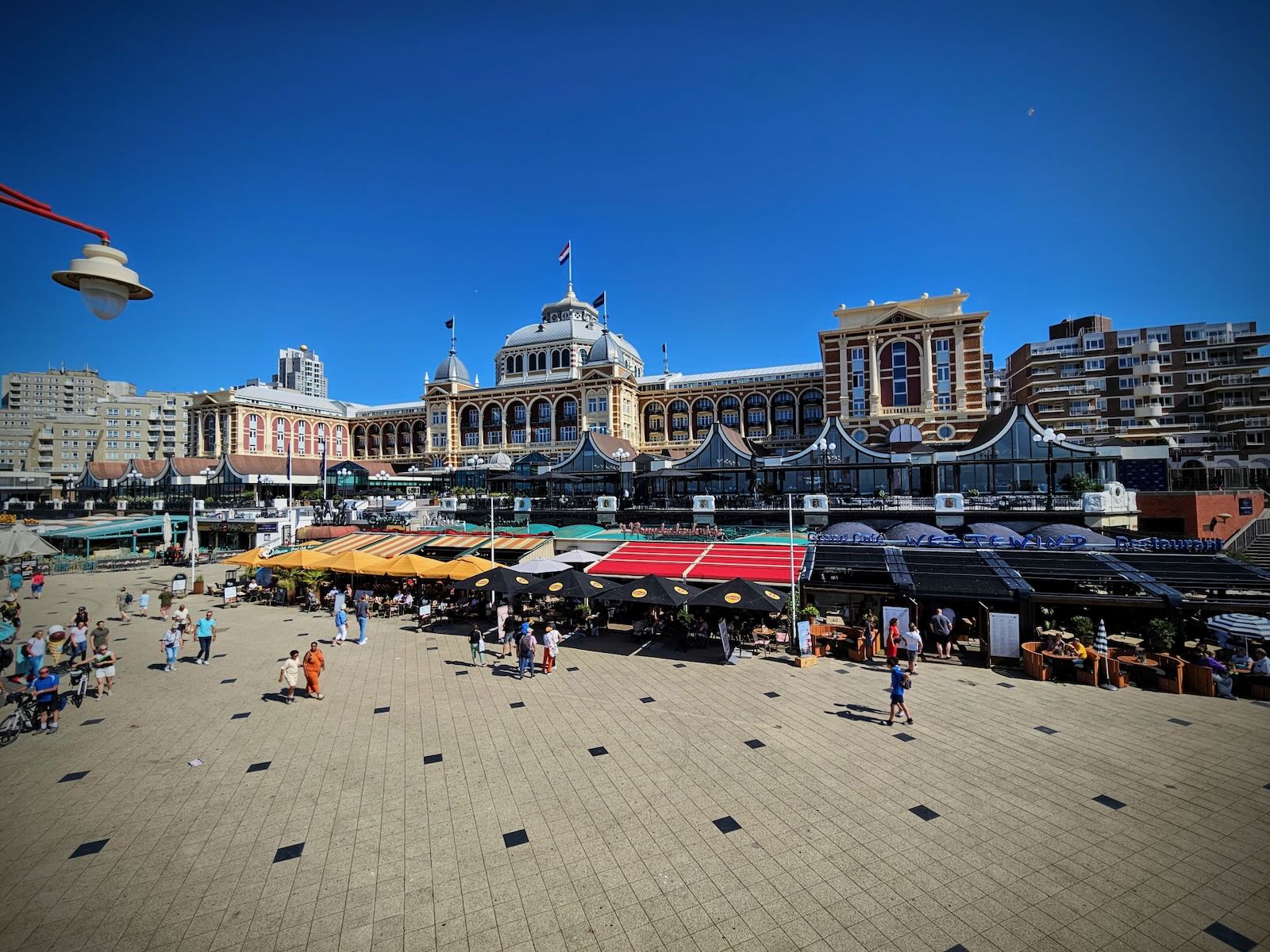
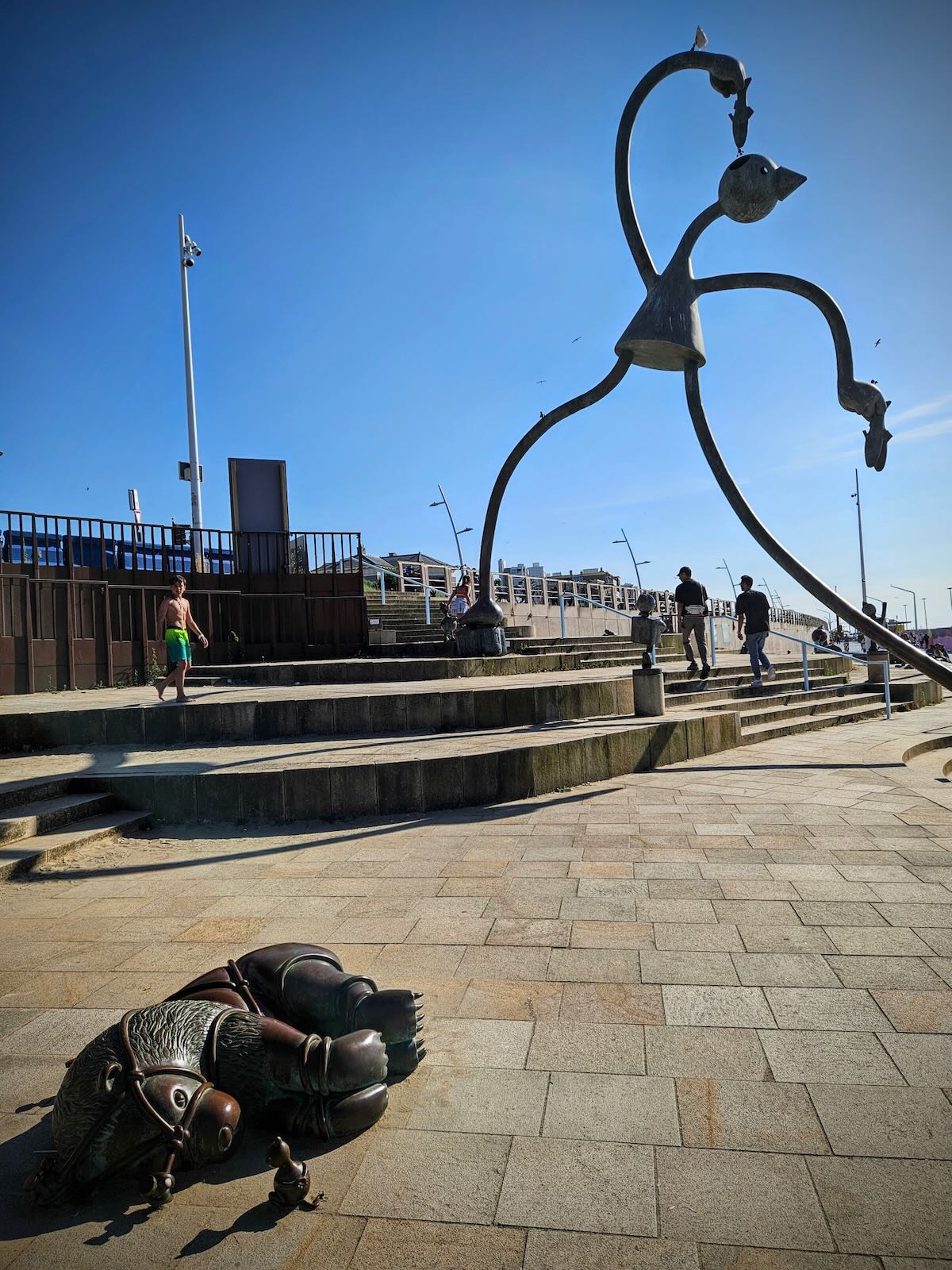
After the afternoon in Den Haag, we arranged to meet the others at the seaside in the nearby Scheveningen. One of Den Haag’s districts, Scheveningen is a large, busy seaside resort, with a seafront filled with bars, a pier, casino and attractions. It’s very different to Wassenaarse Slag.
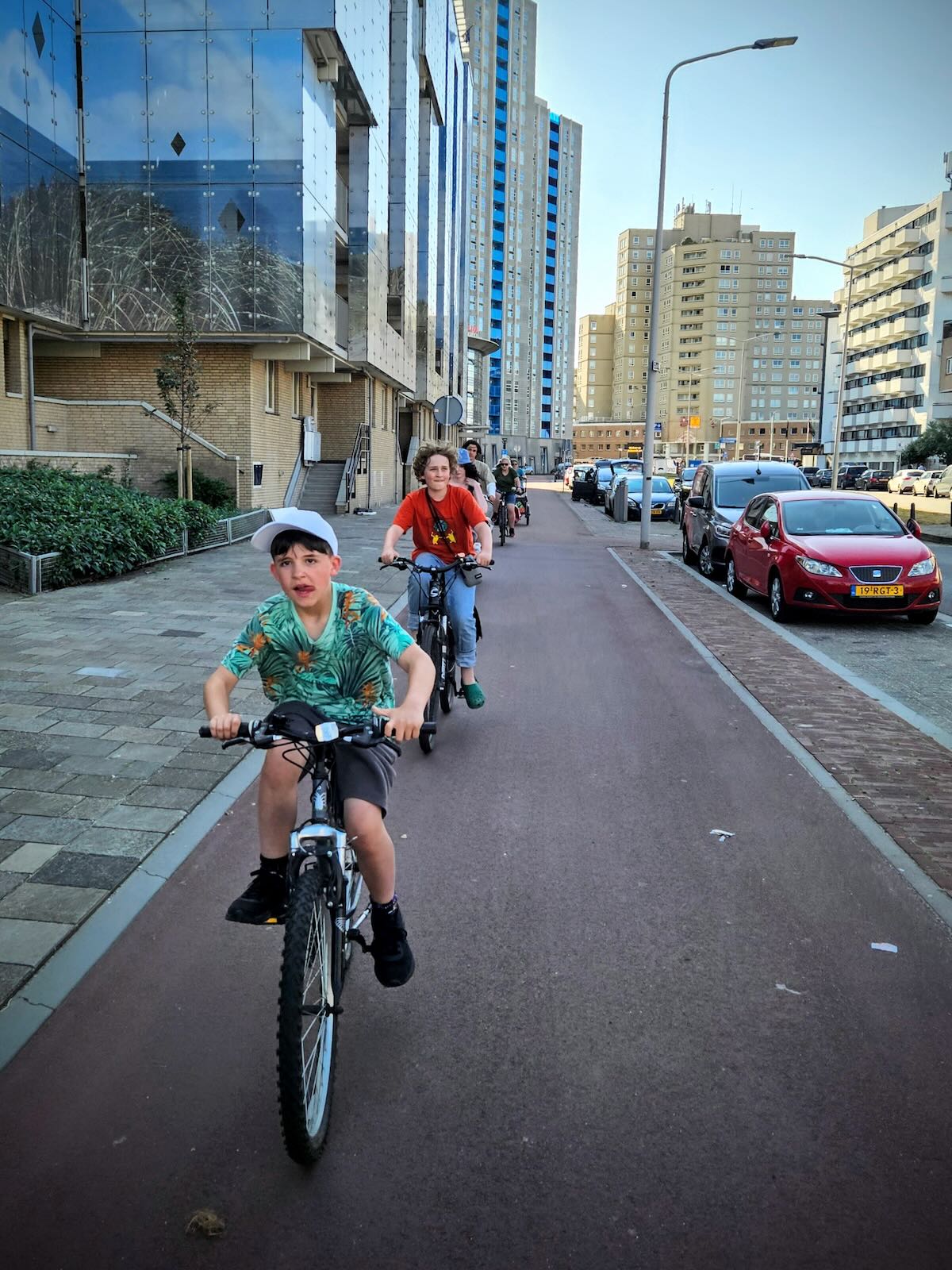
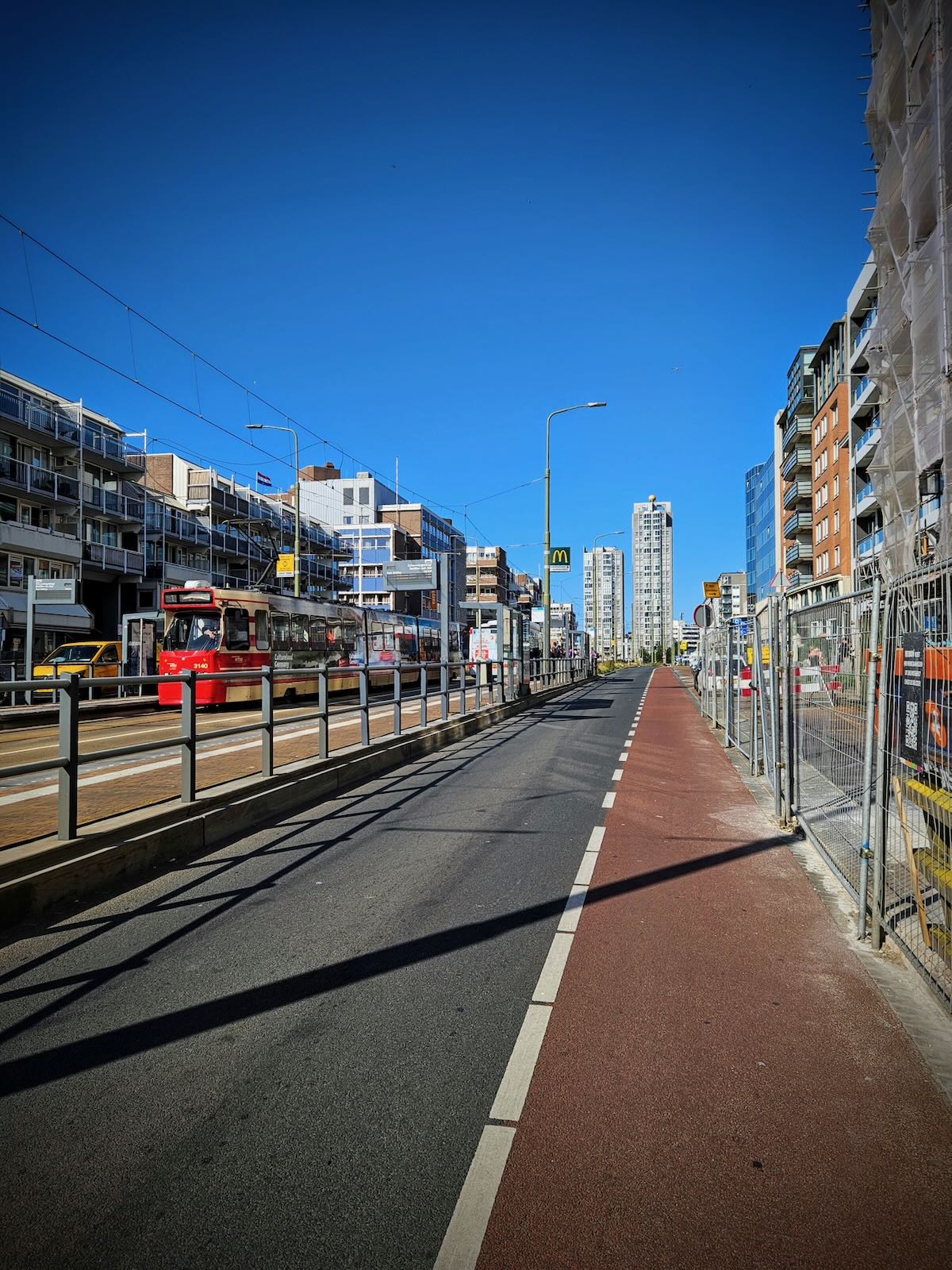
In addition to the attractive promenade, Scheveningen also features fantastic cycle paths, making it a pleasure to ride along the seafront. There’s also lots of cycle parking, meaning there’s somewhere to park your bike, wherever you choose to stop.
At the time of our visit, there was a significant amount of construction work under way on the building of a new dike. The dike has been built into the new promenade and provides with multiple layers of defence against storms, with beach itself being raised and extended.

The reason for building of the new dike is partly economic, providing a means of extending the seafront with the new promenade, linking it to Scheveningen’s historic centre. By providing separate lanes for walking, cycling and motor traffic, they have made it easy to get along there.
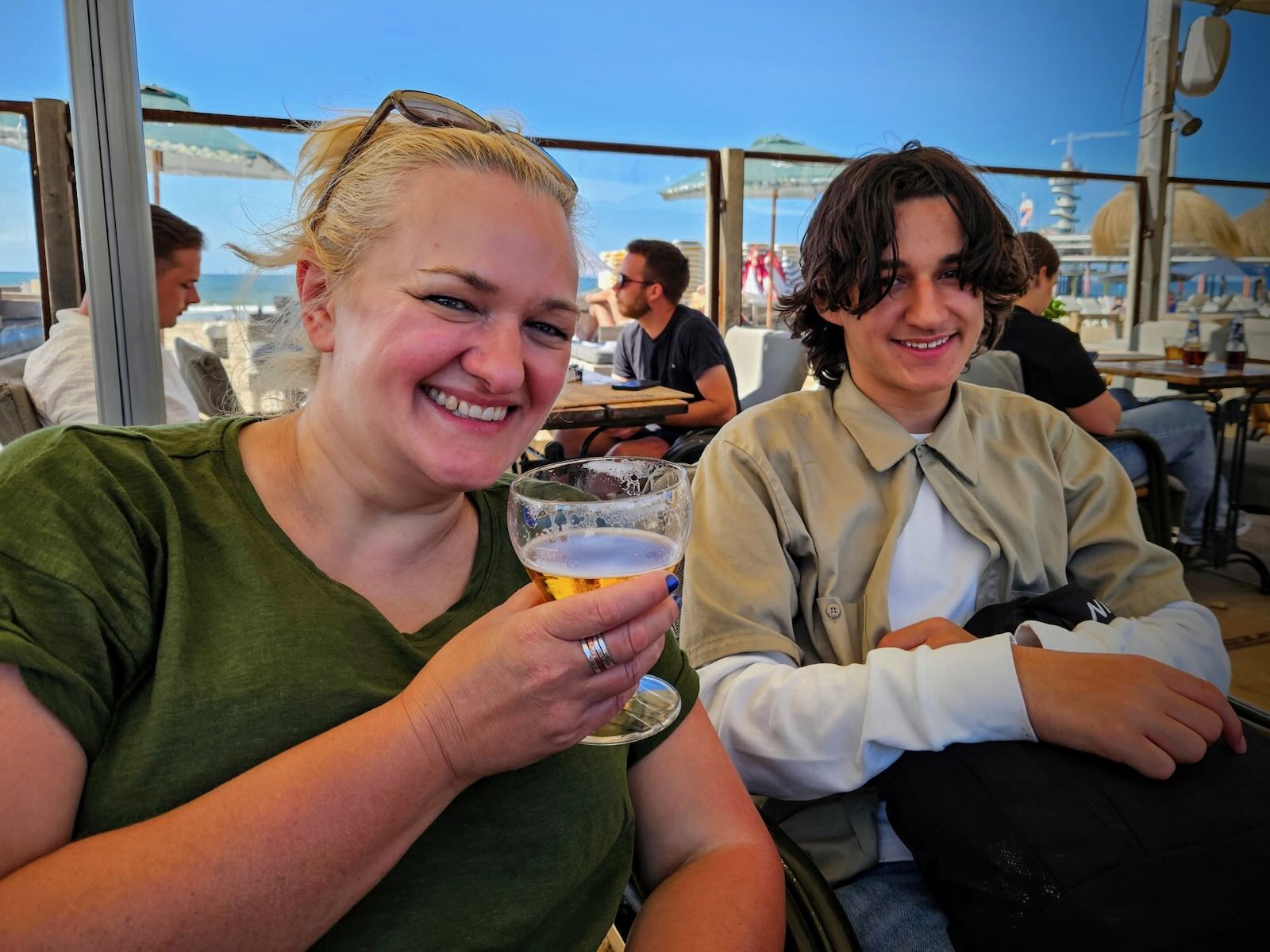
After meeting the others, we headed down onto the beach to one of the bars for a drink. With a lively atmosphere and lots of bars, it feels quite different to Wassenaarse Slag and we had a pleasant time enjoying a drink in the sun.
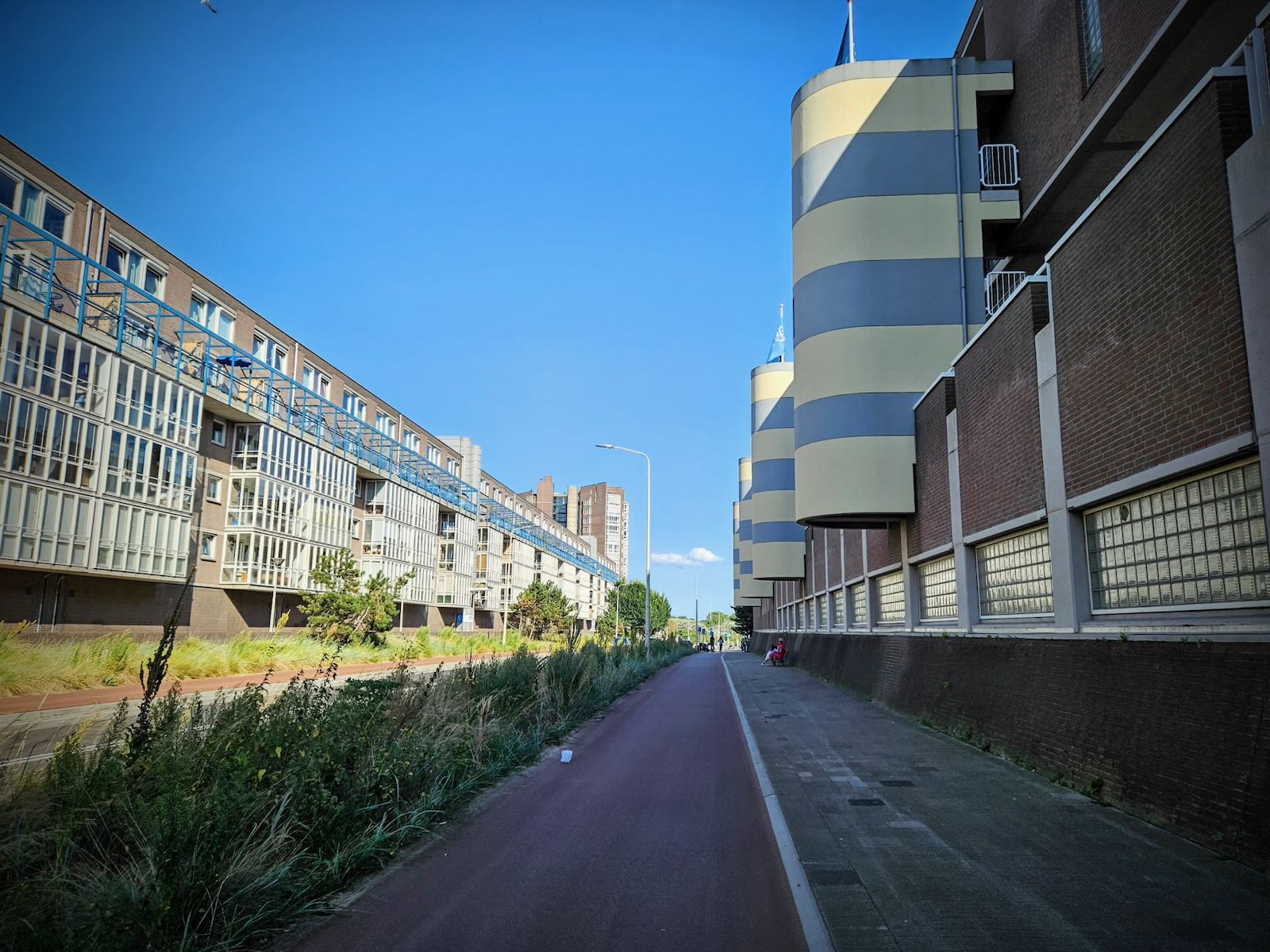
As the afternoon carried on, it became time to ride back to Duinrell. We set off into Scheveningen, making our way back to the dunes along the cycle paths on Gevers Deynootweg and Zwolsestraat.
We turned off onto Harstenhoekweg, which was a quiet rural road with lots of people enjoying cycling along it. This took us back to Watertoren and Pompstation Scheveningen, where we’d been earlier in the day.

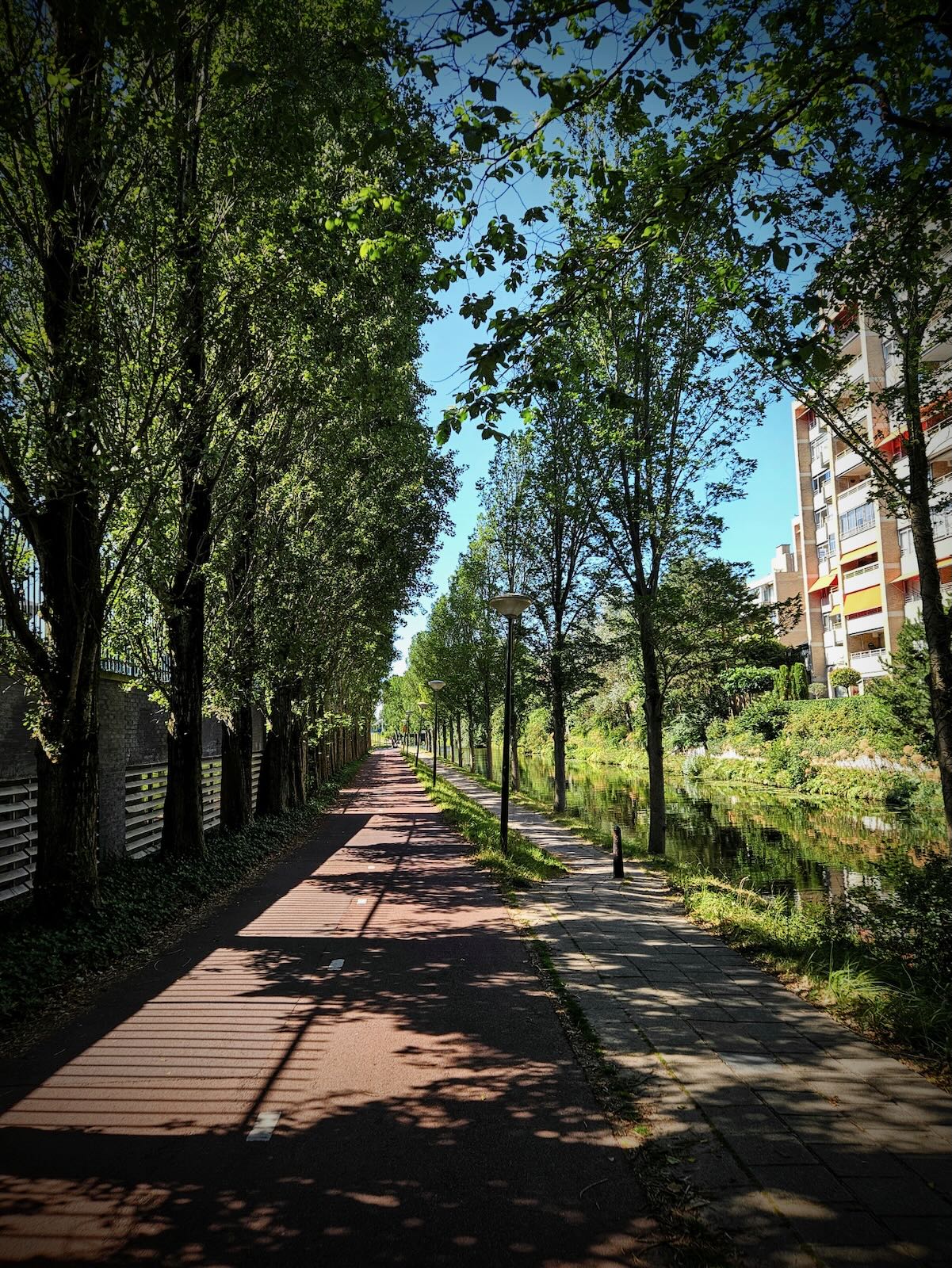
We then made our way along a section of the dunes on Prinsenweg, largely going back the way we came, with the lakes to the right of us. As I’m not a massive fan of just repeating the same route we’d already done, I took the opportunity to deviate from this a little.
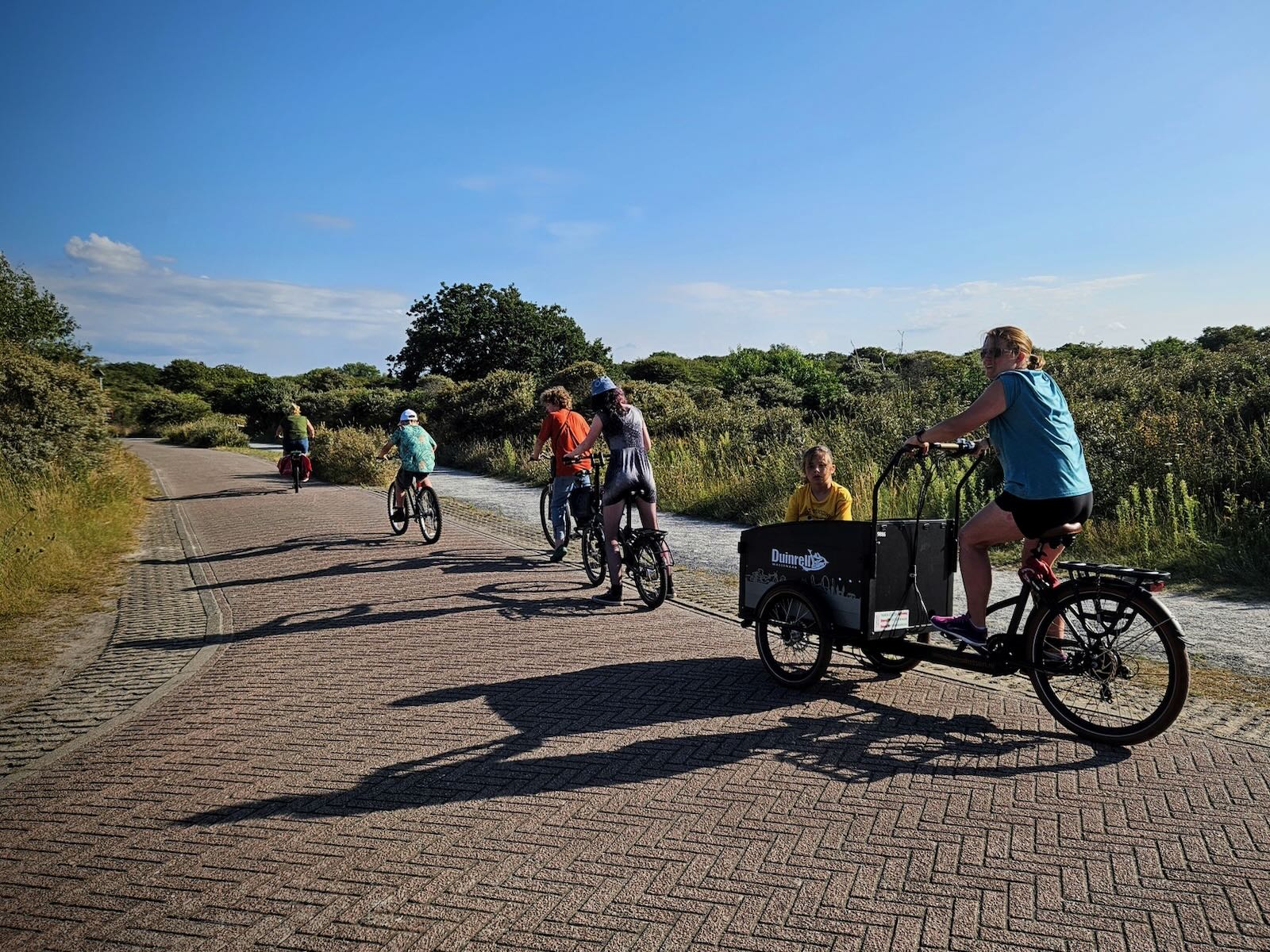
We turned right onto Golfzandweg, which took us on a more sheltered route, with trees and a little welcome shade. It was along this route that be passed Monkeybos play forest, which is something we didn’t know about and hadn’t been to before.

We soon left the dunes as we made our way to Wassenaar on Meijendelseweg, eventually turning left onto Groot Haesebroekseweg and onto Jagerslaan. At the end of Jagerslaan, we crossed over onto Storm van ‘s-Gravesandeweg.
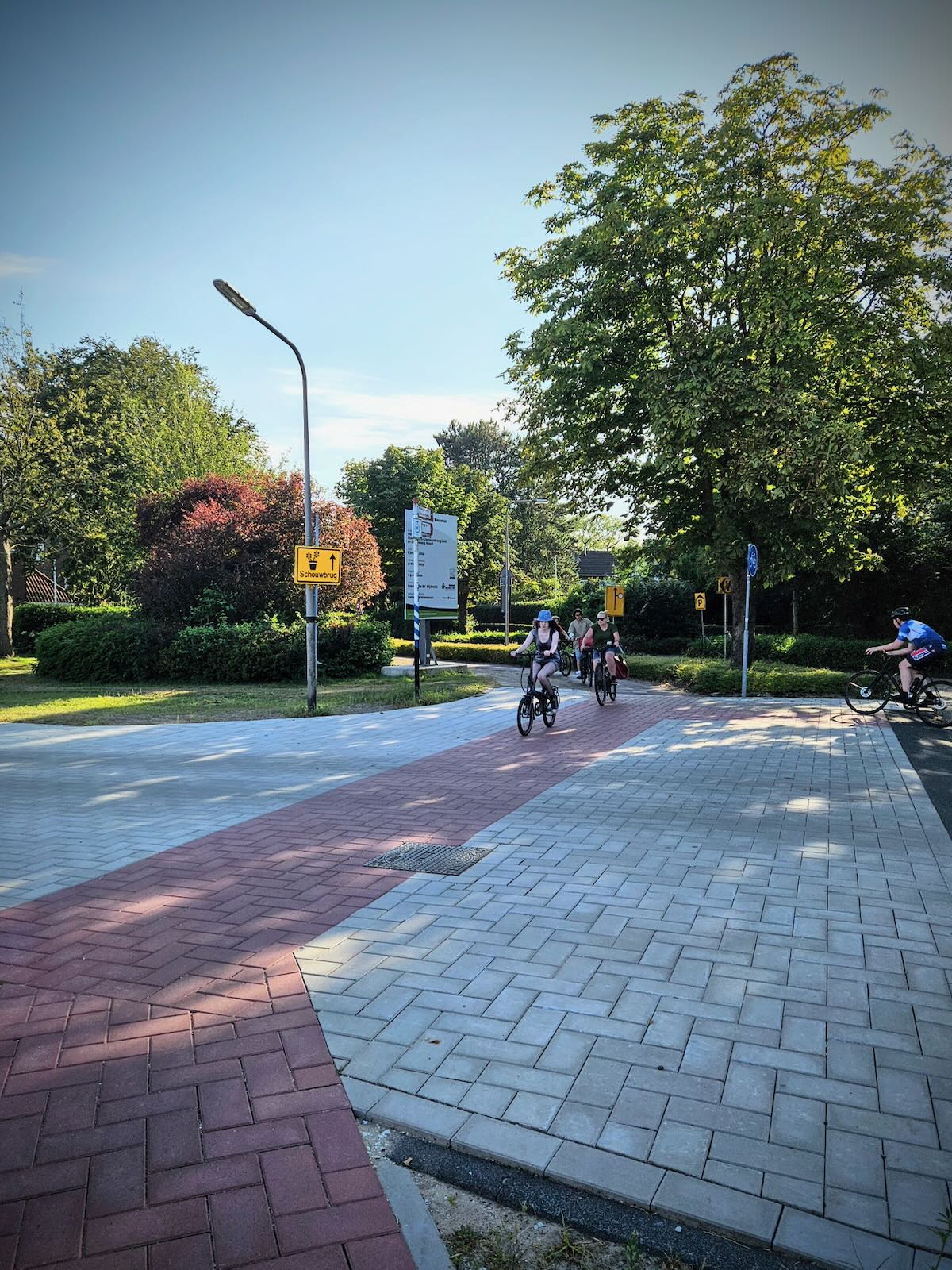
Interestingly, the section of Storm van ‘s-Gravesandeweg where we crossed has changed significantly in recent years. As the section to the right of this crossing has been downgraded and the cycleways have been removed.
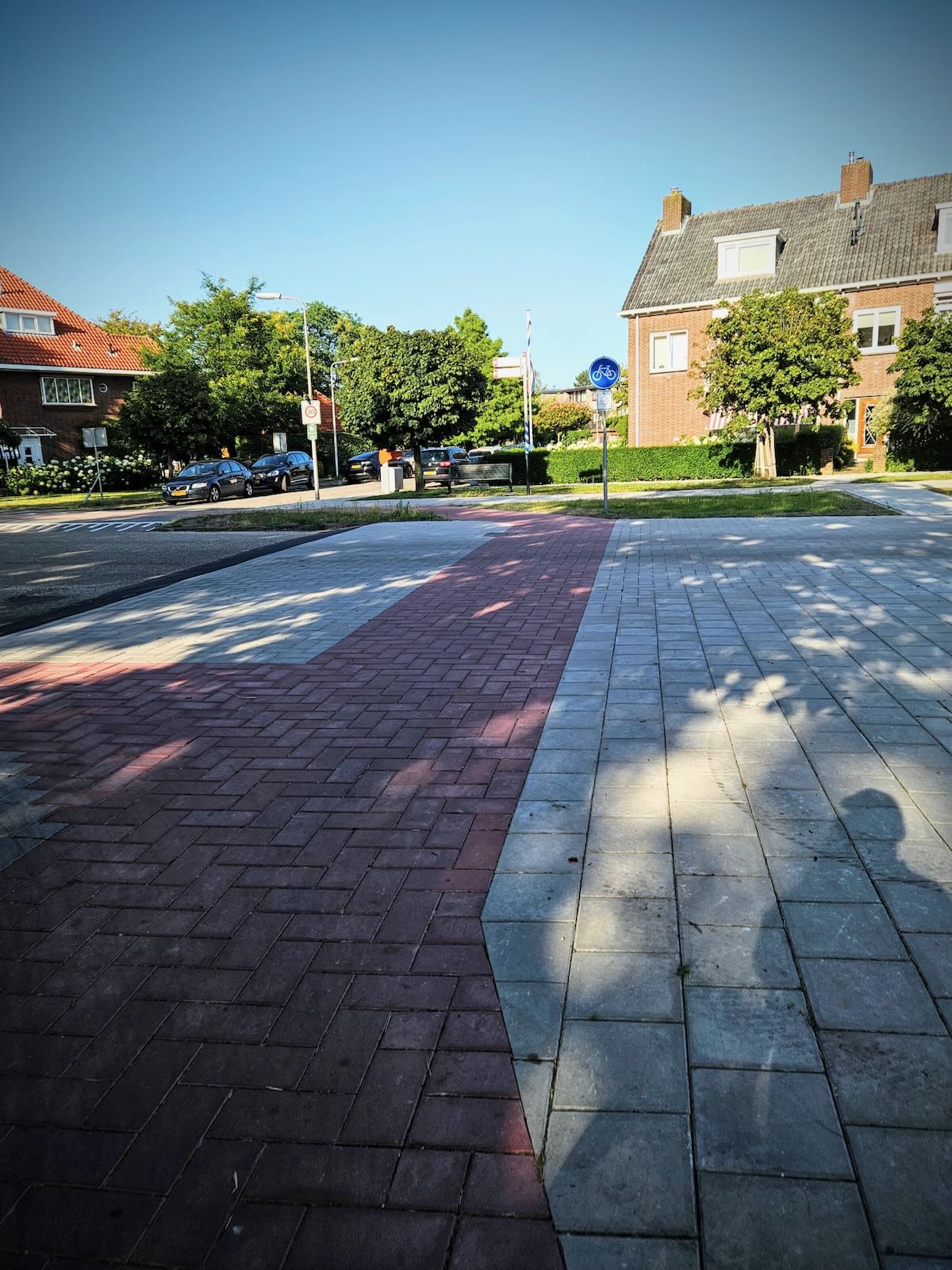
To direct people to continue onto Jagerslaan, instead of going straight onto Storm van ‘s-Gravesandeweg, a continuous footway and cycleway has been installed across the road. This is a slightly unusual setup and not one I’ve seen before.
Carrying on along Storm van ‘s-Gravesandeweg, we arrived back at Duinrell, where we headed to our cabin for a well-deserved barbecue and drinks.











Route back to Duinrell
More Netherlands 24 posts
Further posts from our trip to the Netherlands in 2024
- Cycling in Amersfoort
- Riding the F28 fast route to Utrecht
- Bosbad Amersfoort, an outdoor swimming pool in the forest
- In Utrecht again, visiting DOMunder and back via the Dafne Schippers Bridge
- A wander along the Eem to Koppelpoort and a visit to the Mondriaanhuis
- Riding to the Nationaal Militair Museum
- Back at Duinrell
- Riding around Wassenaar
- Riding from Duinrell to Leiden
- Riding to the Burgemeester Waaijerbrug bridge
- Riding to Den Haag and Scheveningen via Madurodam
- Loop ride from Duinrell to Katwijk
- Loop ride from Duinrell to Voorburg via Huis ten Bosch
 Dom Cycling