
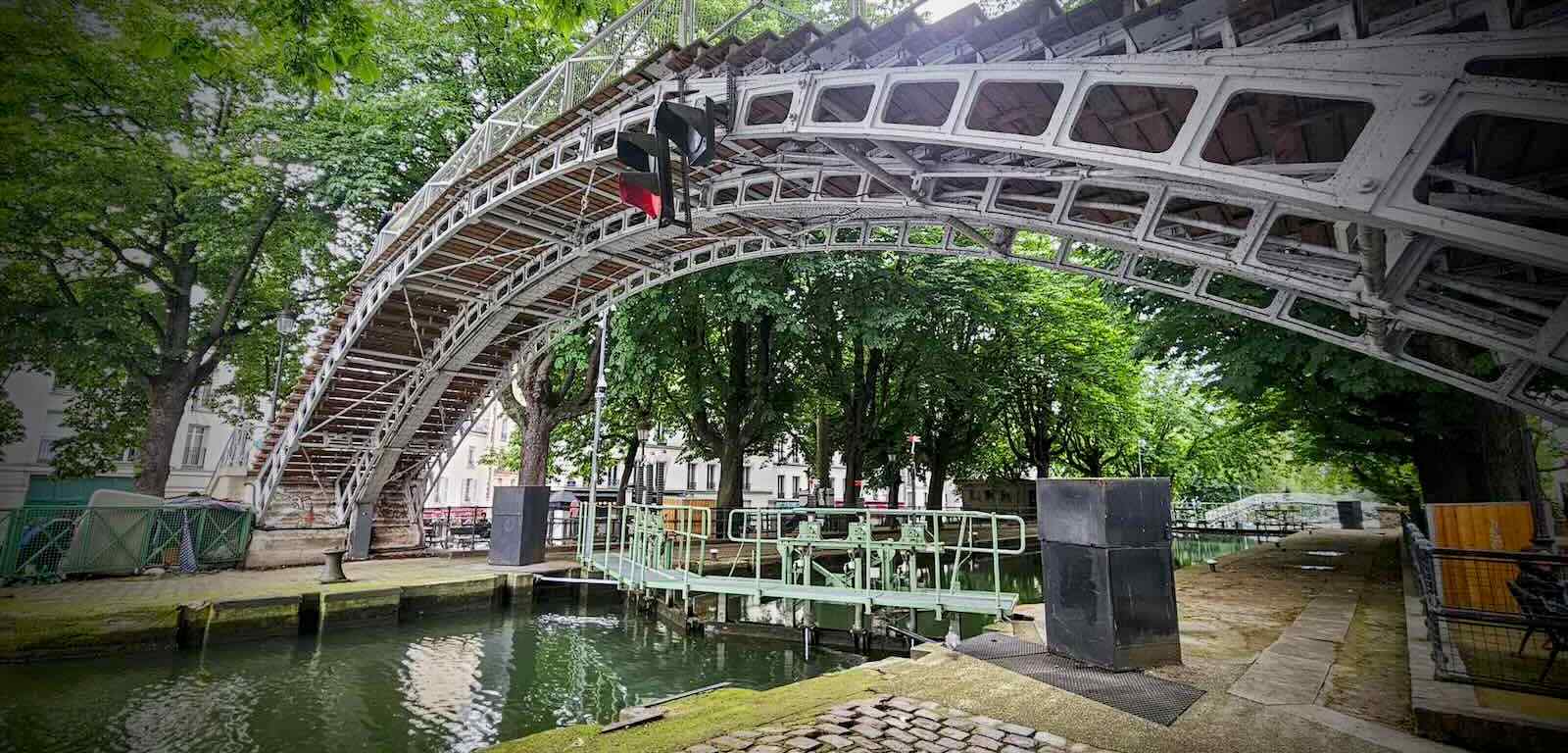
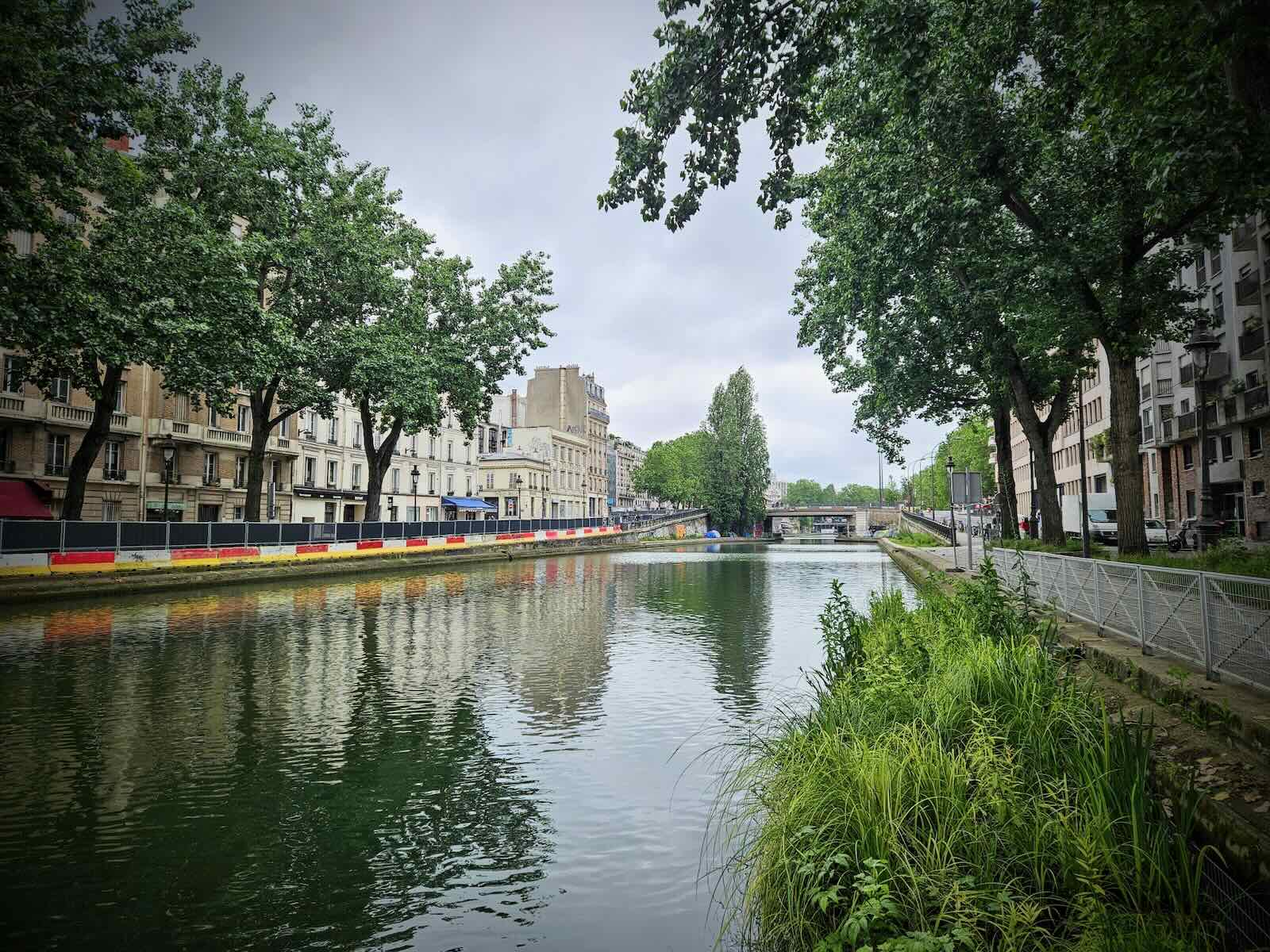
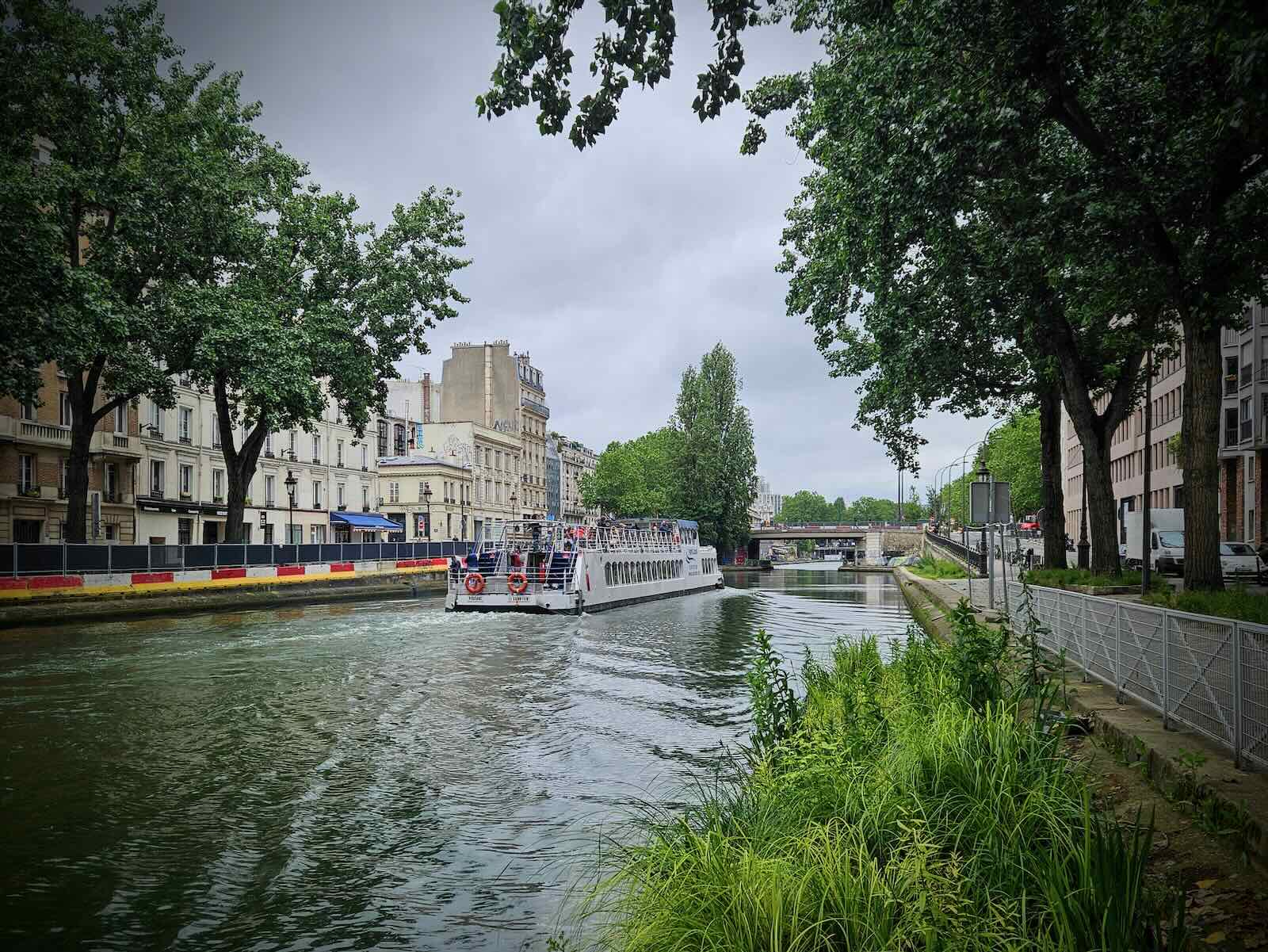
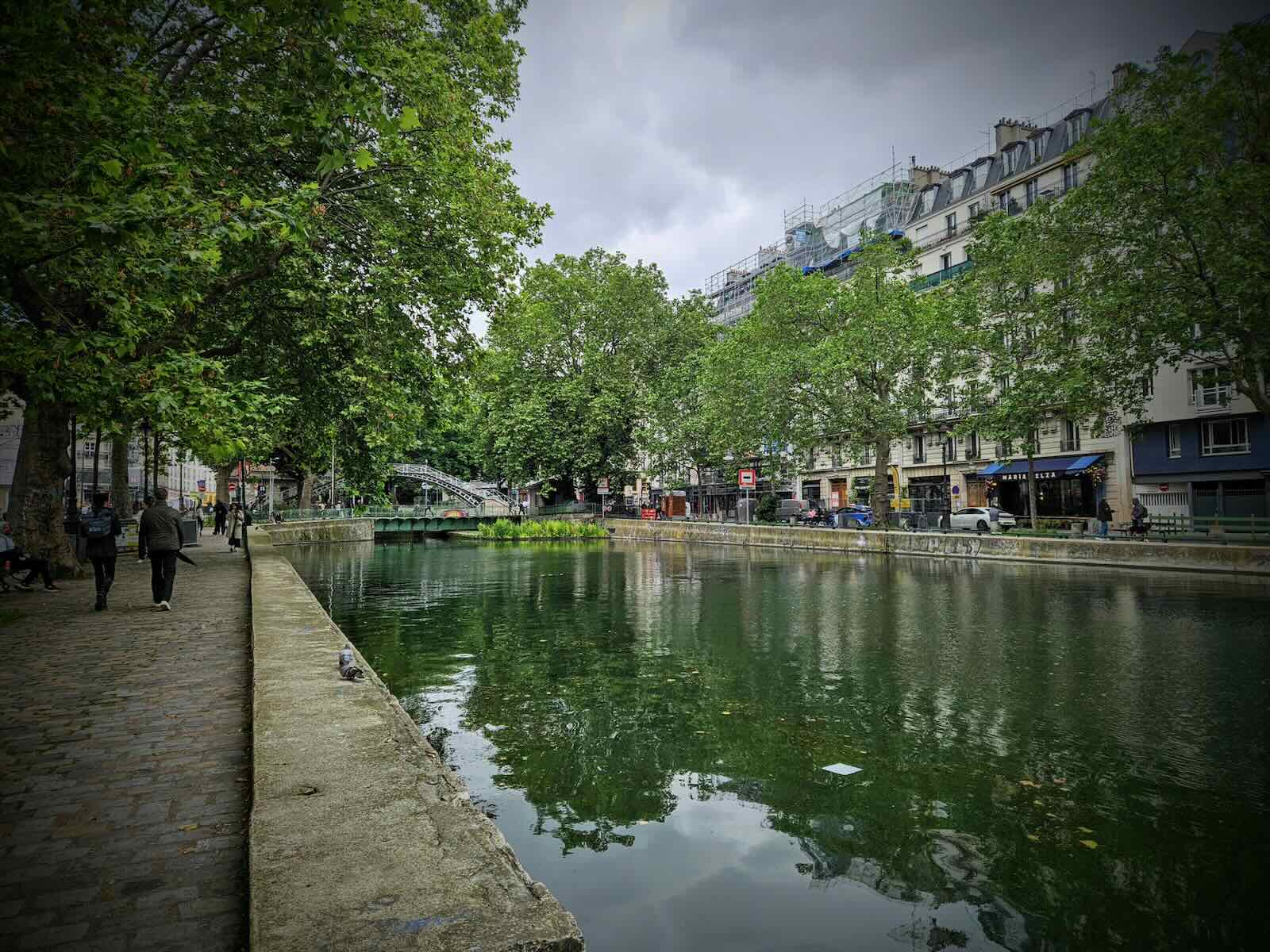
After a couple of rainy days, we wanted to make the most of a dry day by going for a wander along Paris’ Canal Saint-Martin. Located in the north east of the city, it connects the Canal de l’Ourcq to the Seine, travelling in a tunnel for nearly half its length.
The canal was constructed between 1802 and 1825 as ordered by Napoleon I to provide fresh water to the city and prevent disease, as well as carry grain, building materials and other goods. The canal has two ports at either end, Bassin de la Villette in the north and Port de l’Arsenal located between Bastille and the Seine.
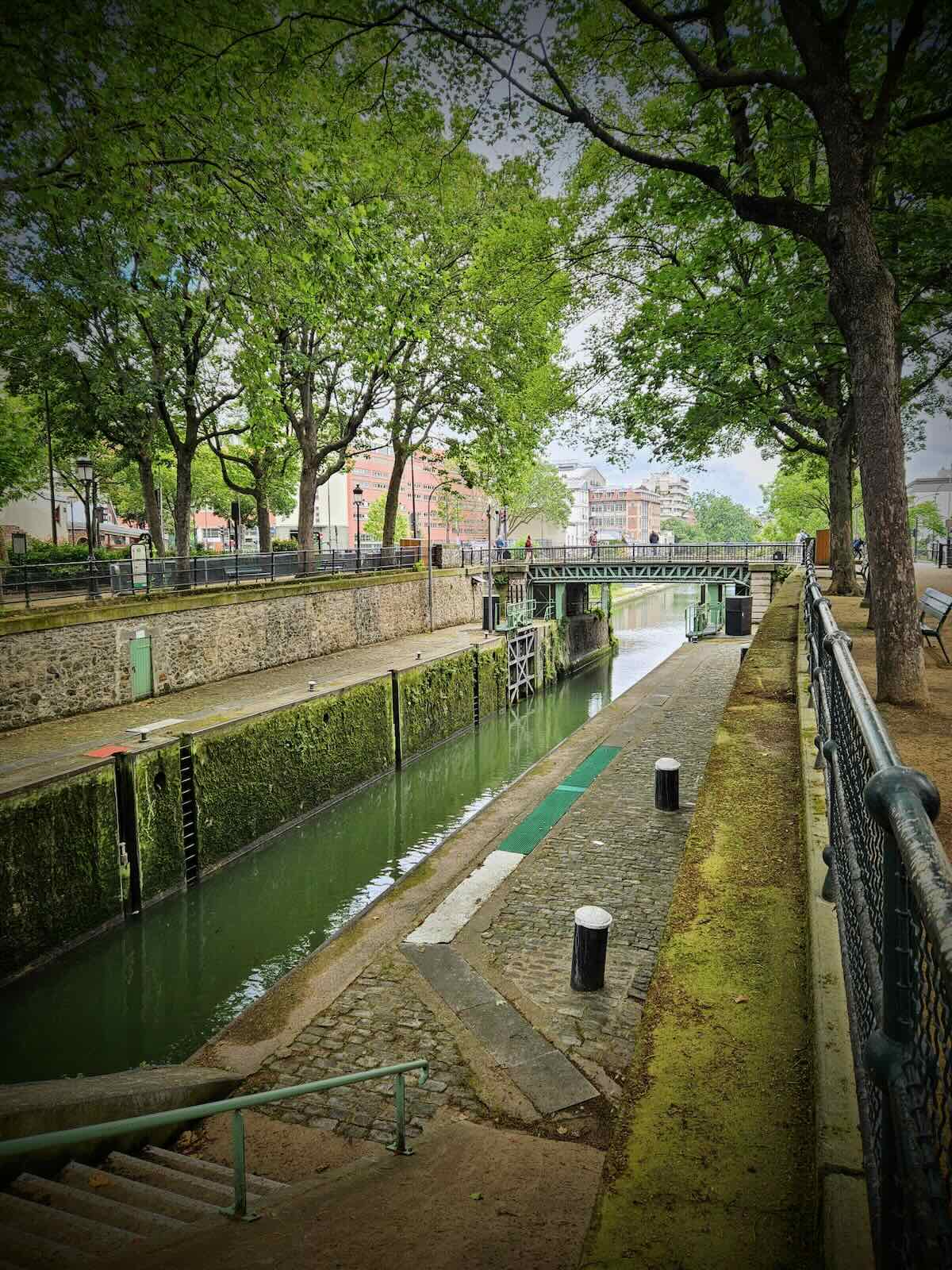
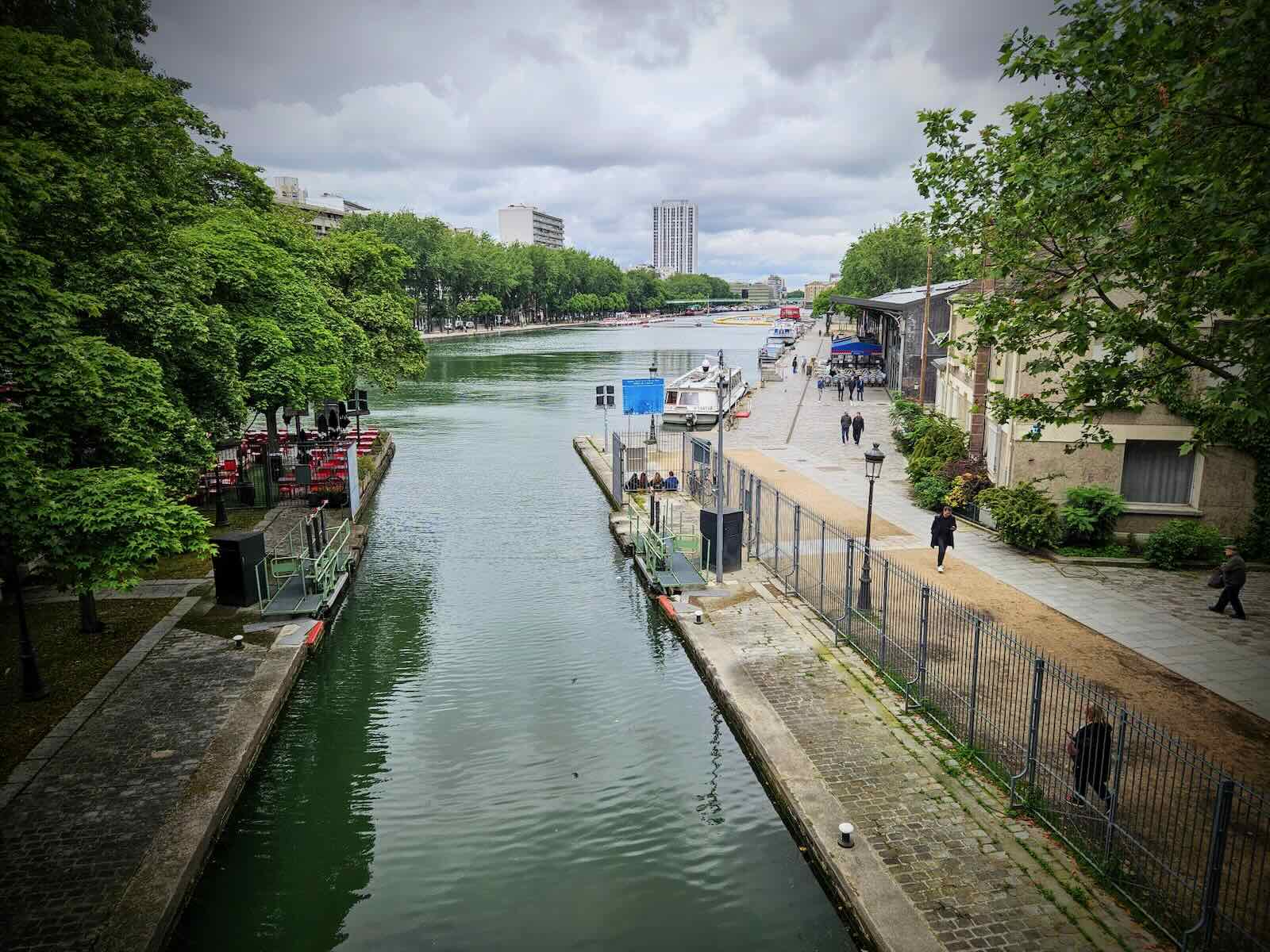
While the northern section of the canal is at ground level, it drops down to below ground via a series of locks, then passes in a tunnel between Avenue de la République and Bastille, where it appears above ground, before it enters the Seine.
Above the tunnel is the tree-lined Boulevard Richard-Lenoir, with the central section above the tunnel a walkway that’s used for the Marché Bastille market, which we featured in the last post A ride to Bastille and a wander round Centre Pompidou.
Riding to Canal Saint-Martin
As will be familiar to anyone who’s read any of the Paris 24 posts, I arranged to meet the others at the canal, with me using the Vélib bike share bike to get there, while they took the Métro.

Setting off from our Airbnb apartment in the 17th arrondissement, I picked up a Vélib bike and made my way along Boulevard Bessières and Boulevard Ney, where I’d ridden previously, along a combination of protected and unprotected cycle lanes.
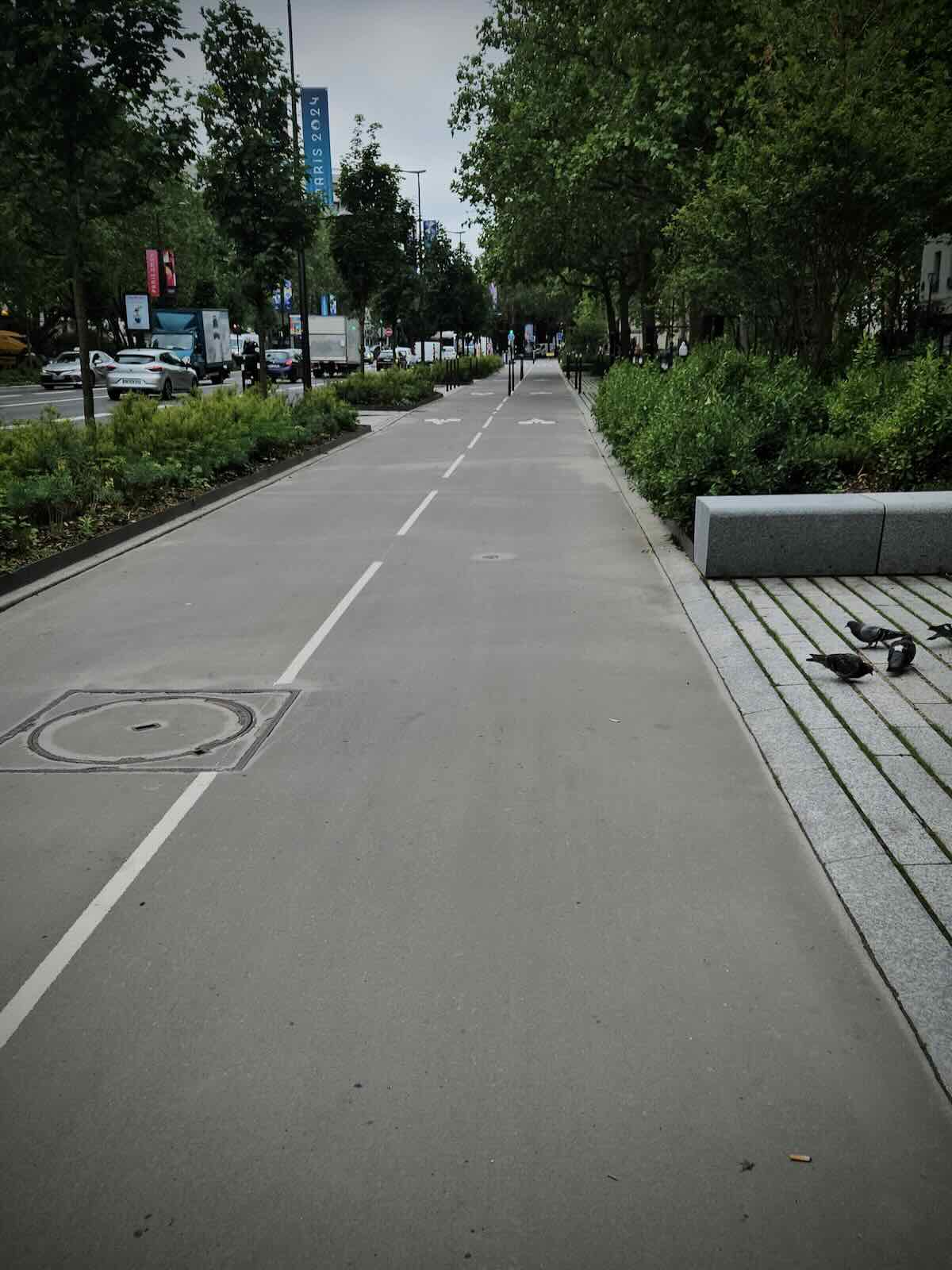
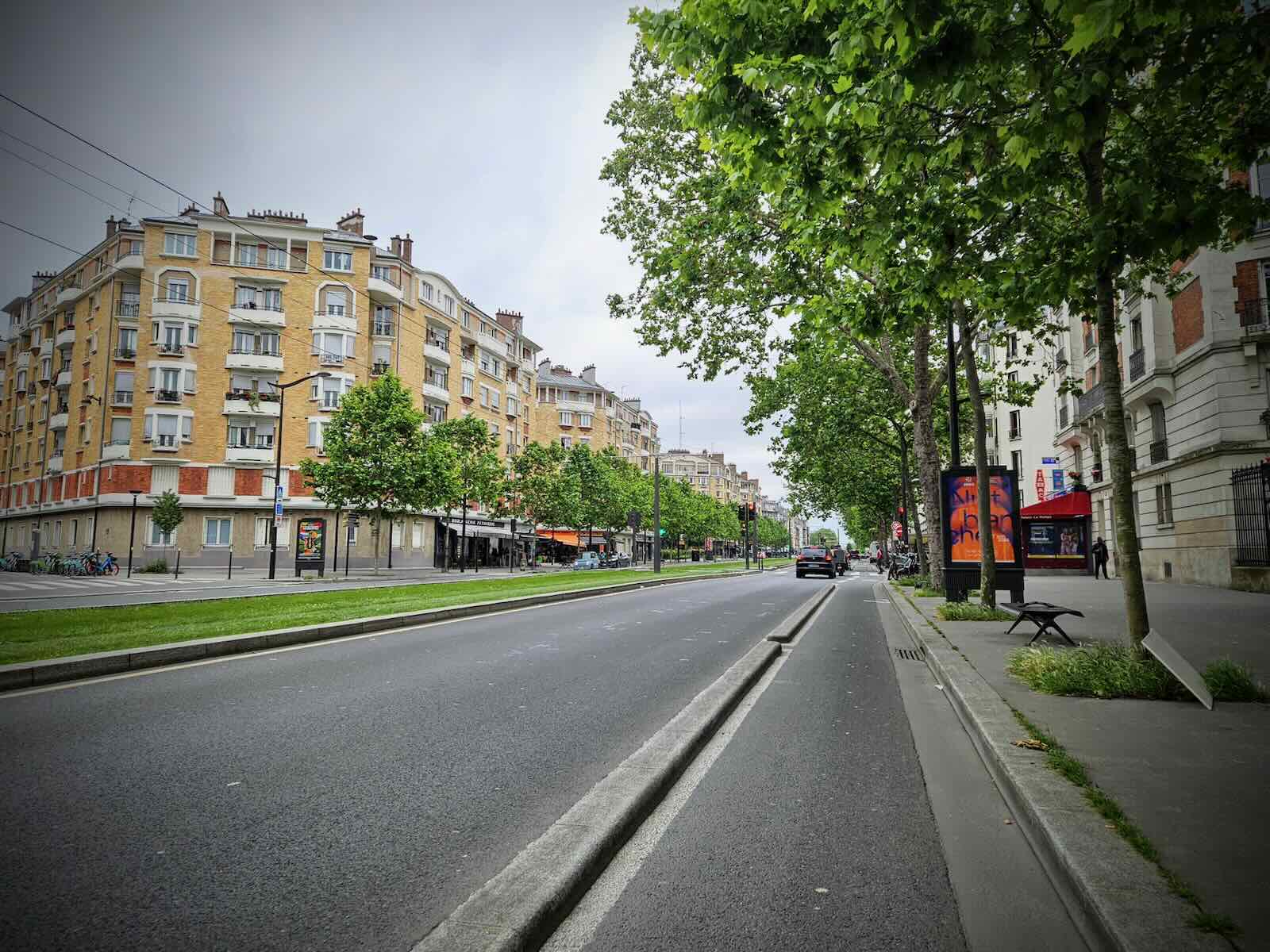
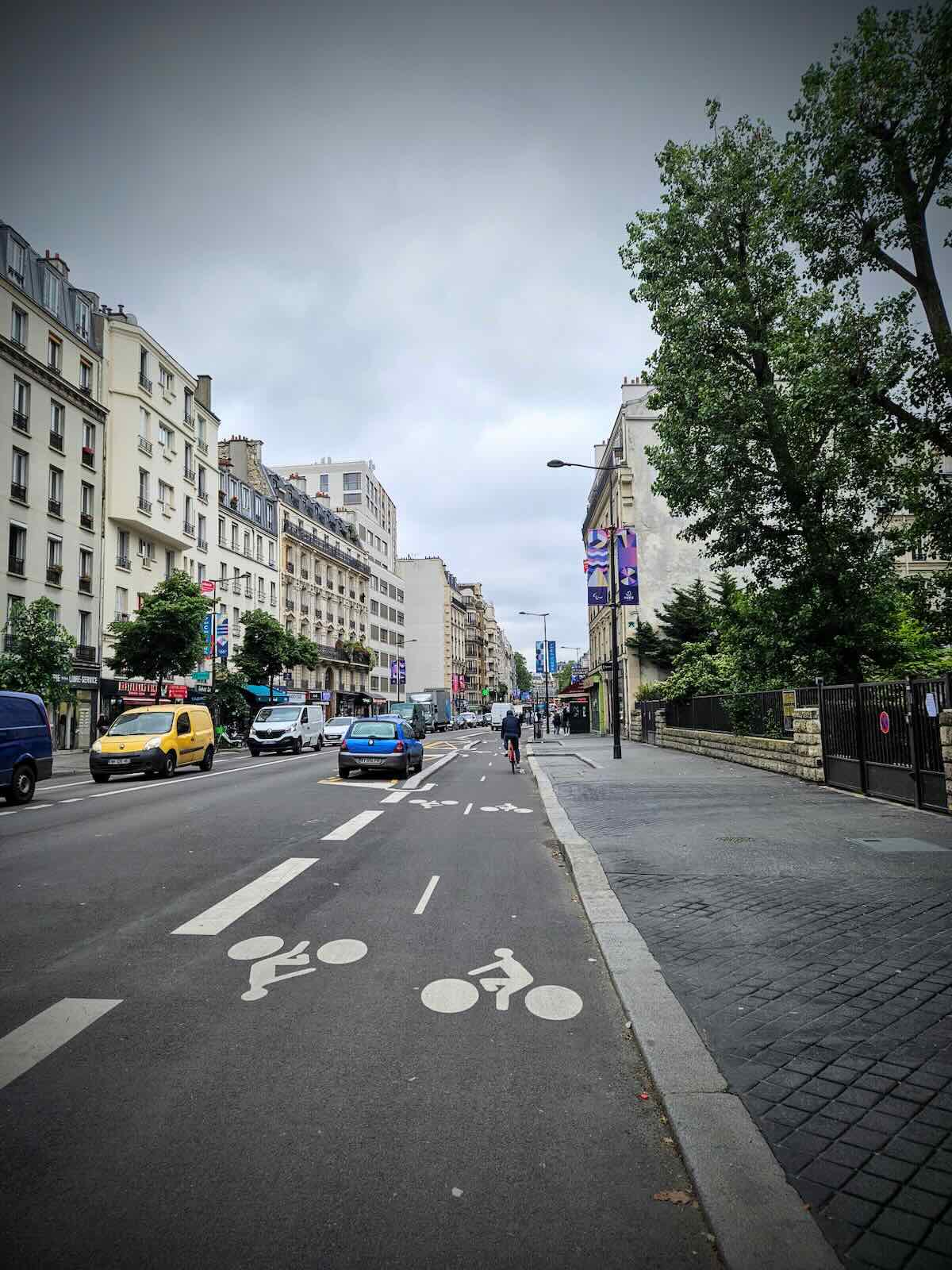
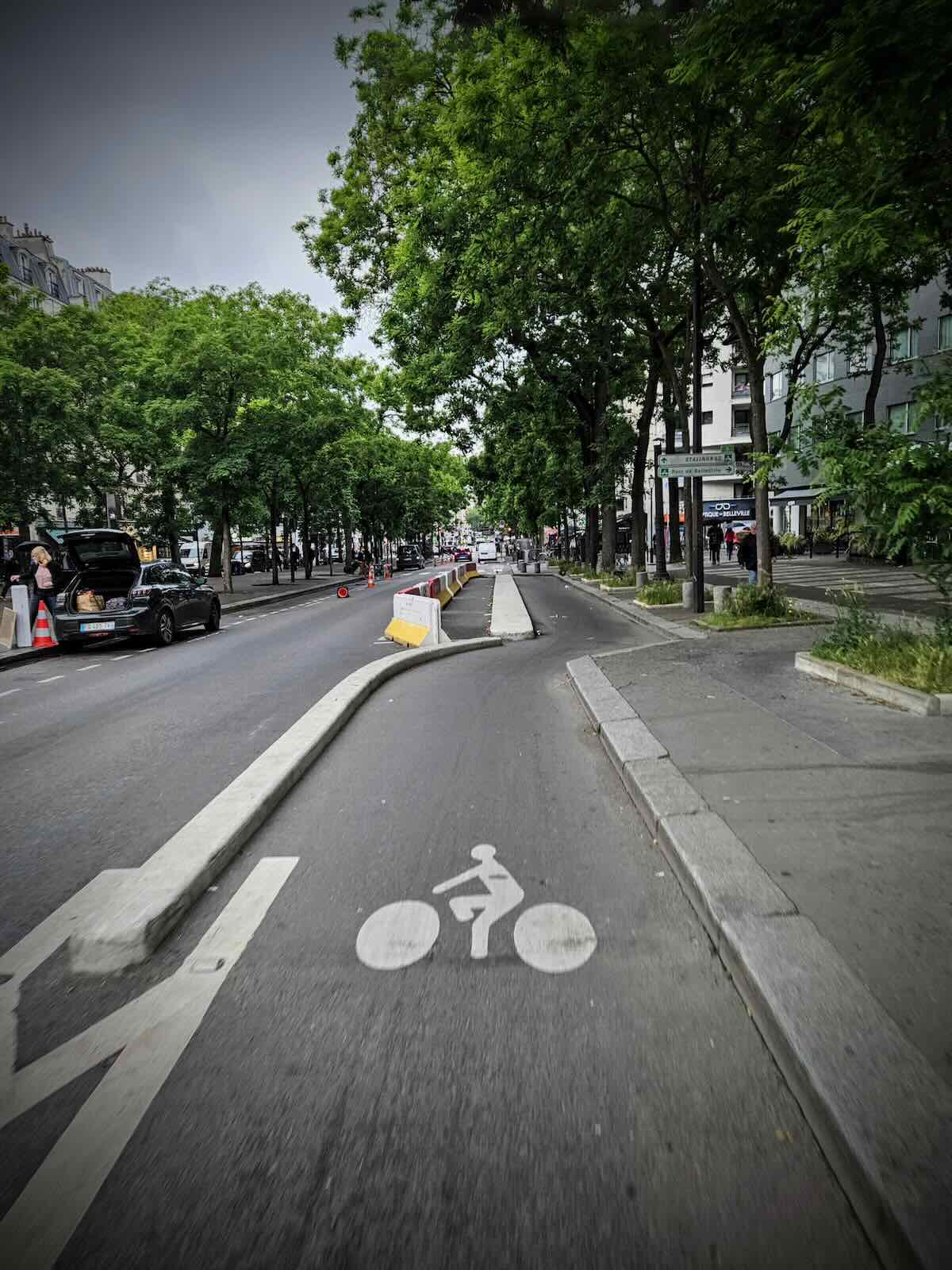
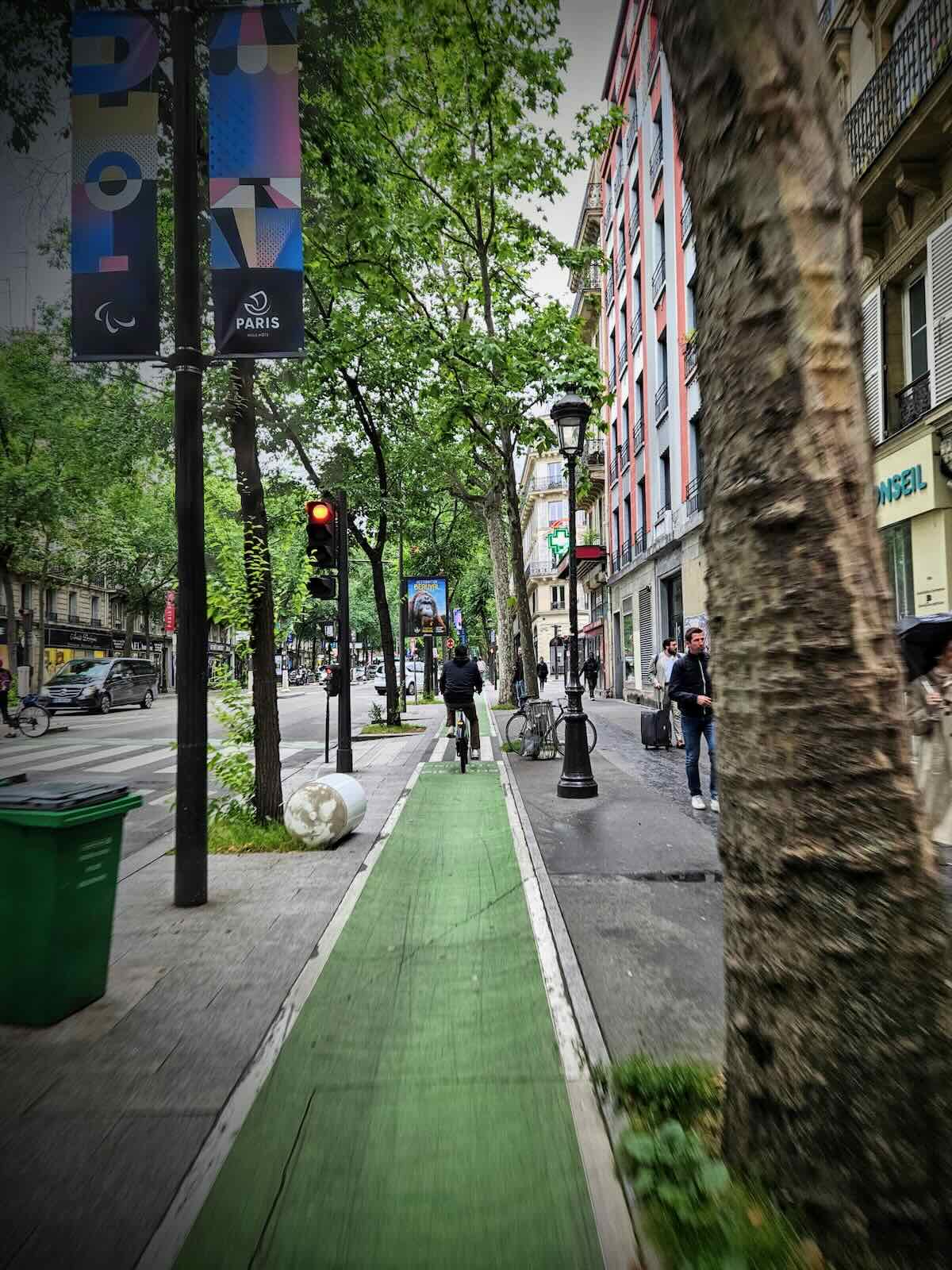
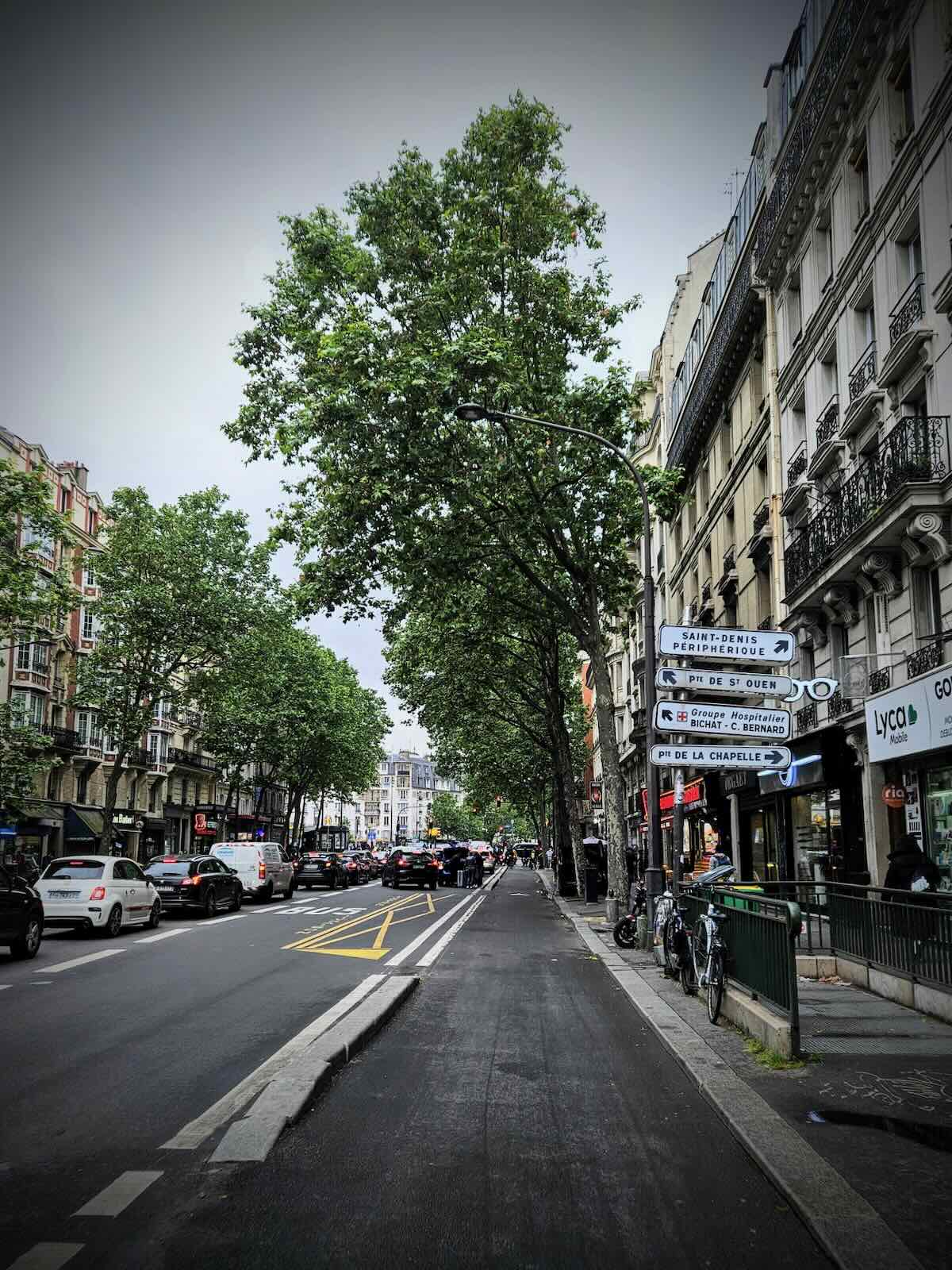
I then turned right onto Rue de la Chapelle and headed south along a new and very nice wide bidirectional cycle path, featuring some interesting planting that provided a green buffer from the general traffic lanes.
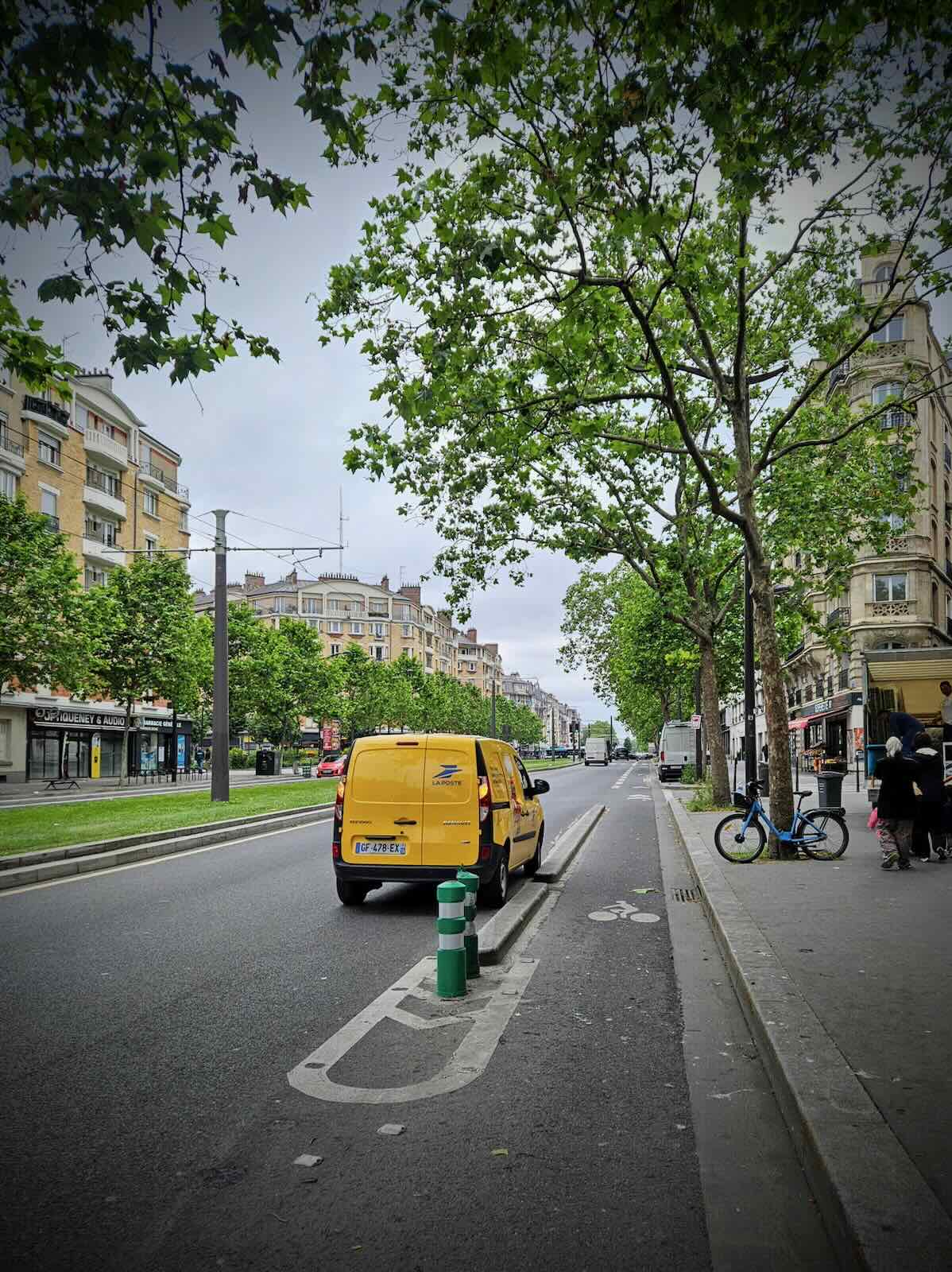
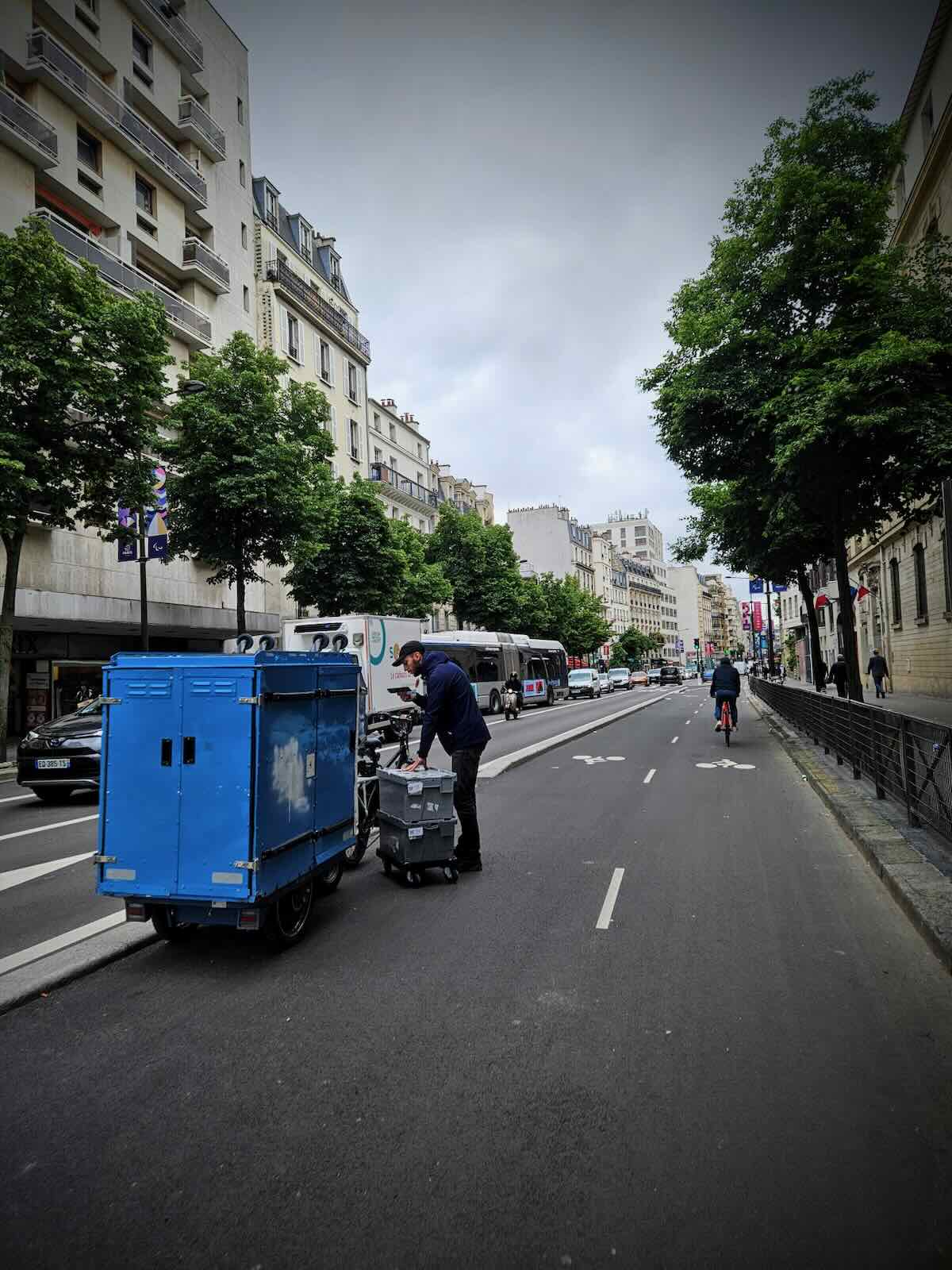
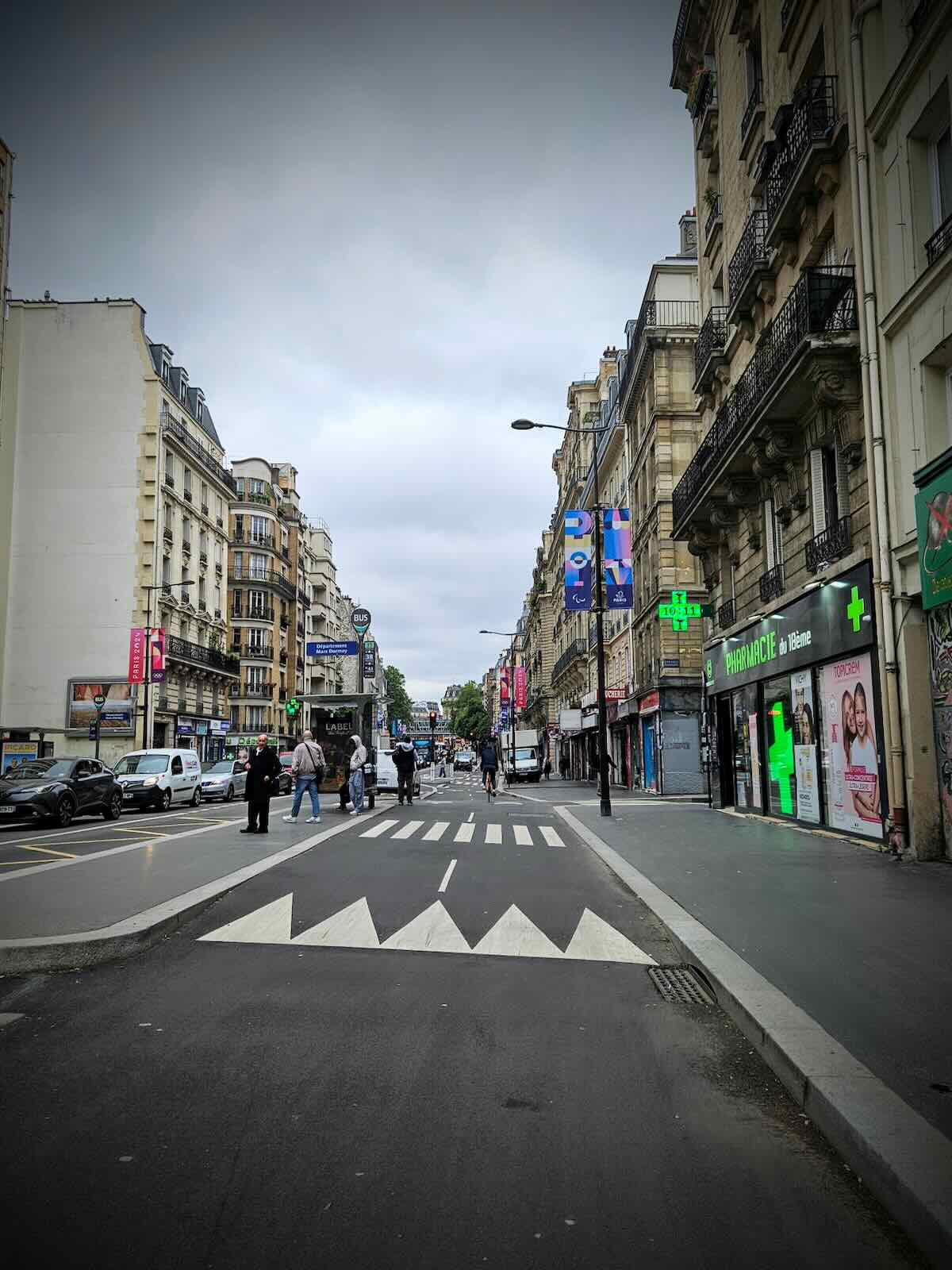
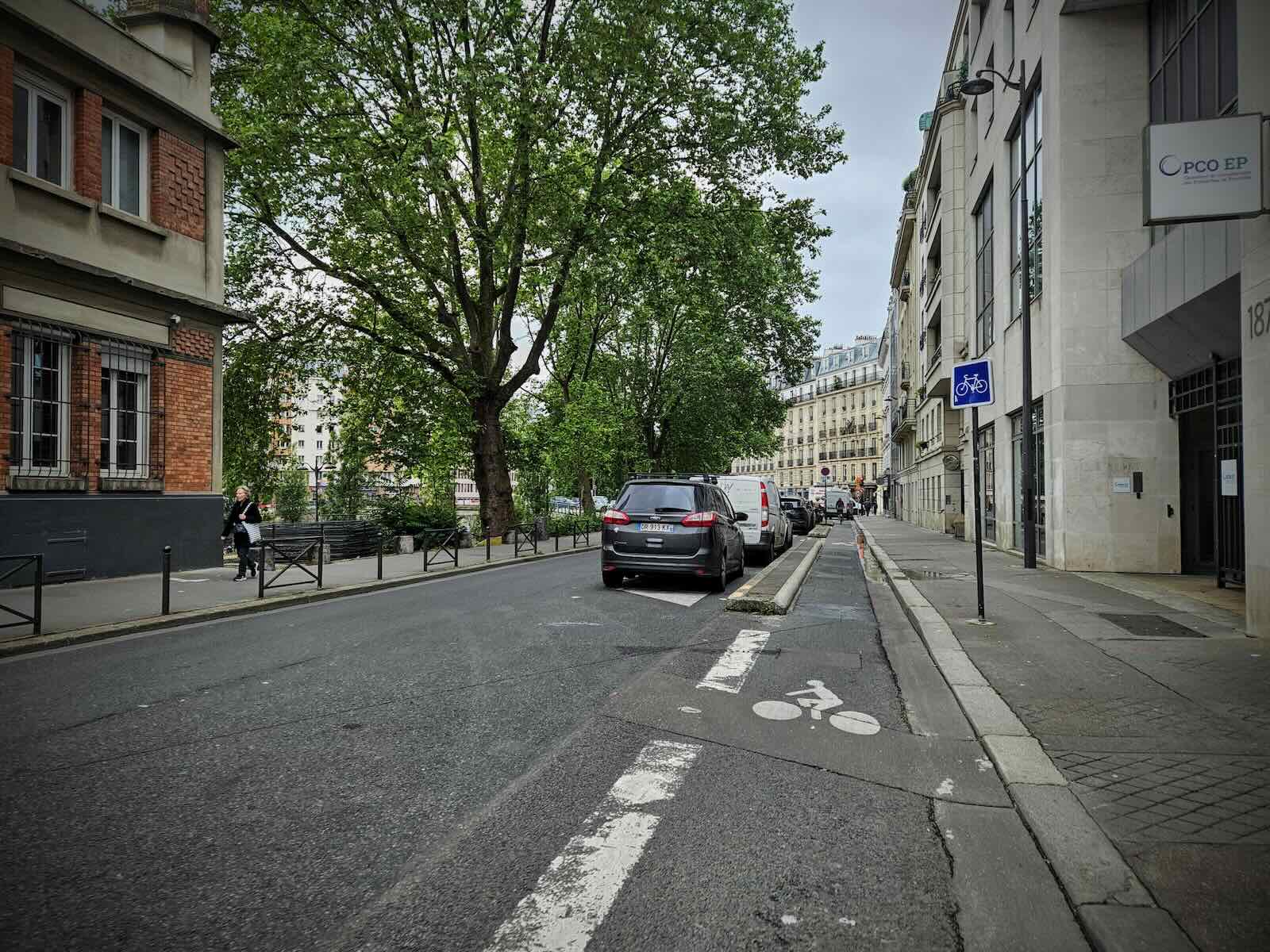
Carrying onto Rue Marx Dormoy, things continued well with a wide bidirectional kerb-protected cycle lane, as I passed a cargo bike being unloaded. I then turned left onto Boulevard de la Chapelle and made my way towards Place de la Bataille de Stalingrad.
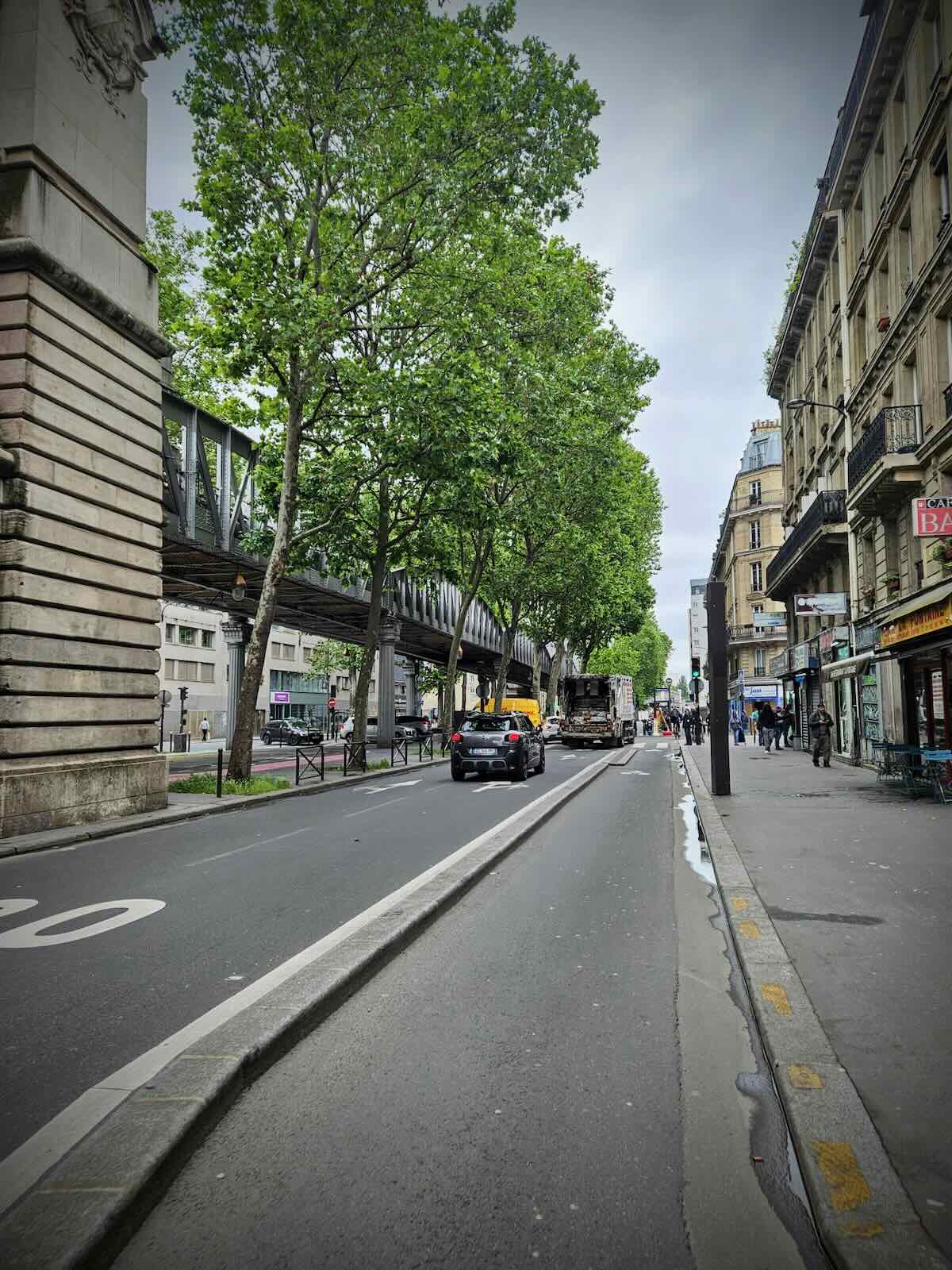
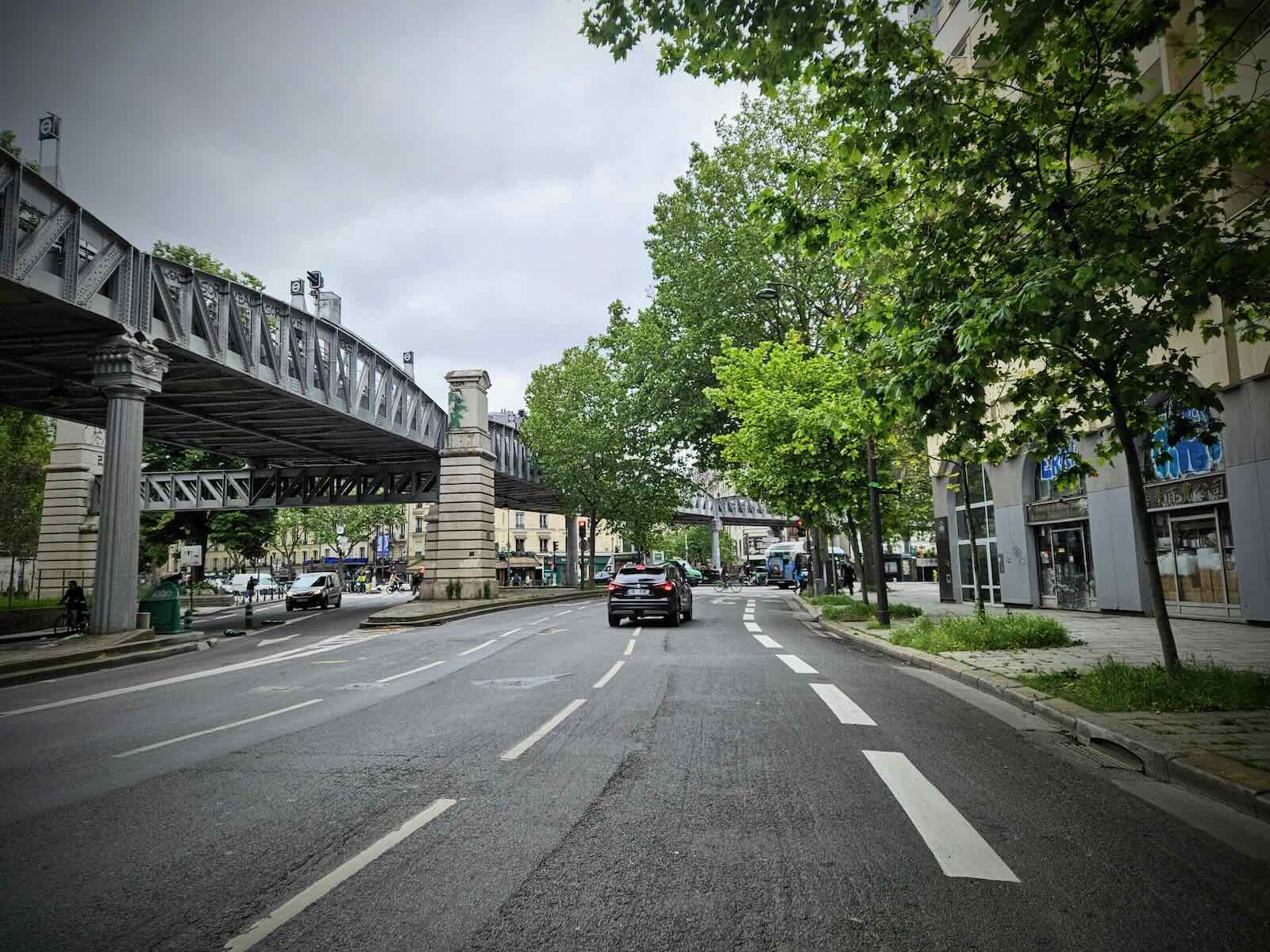
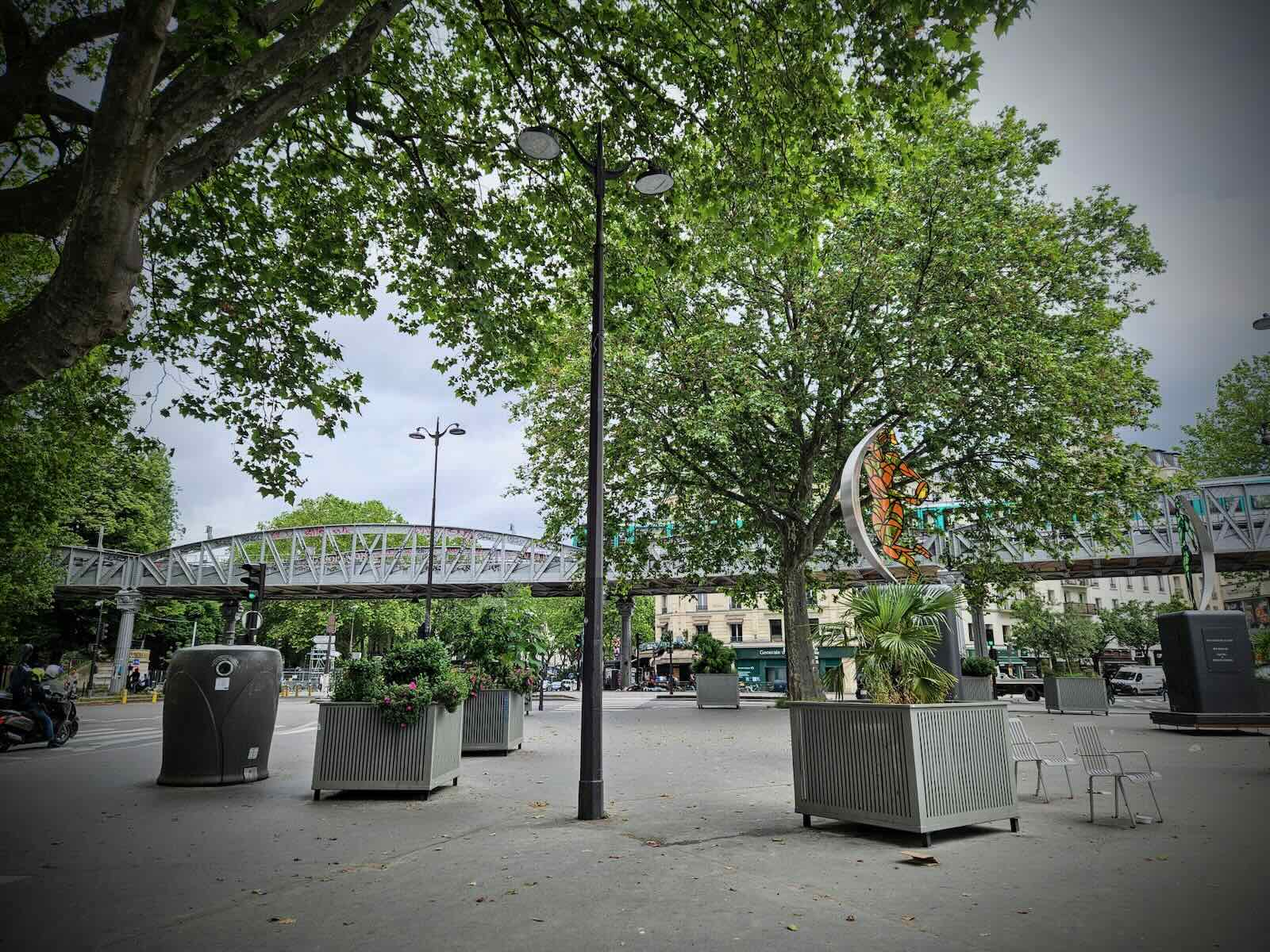
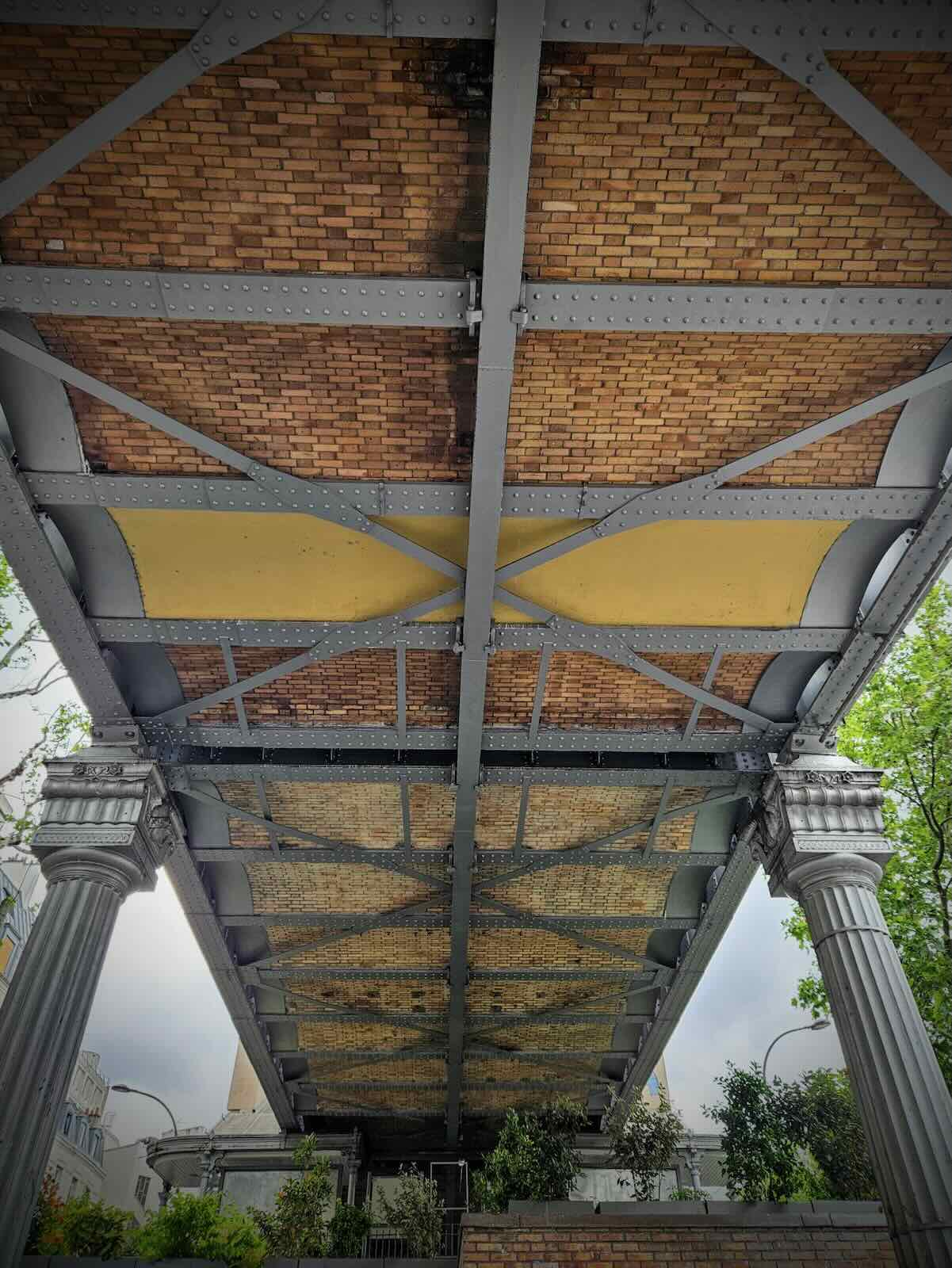
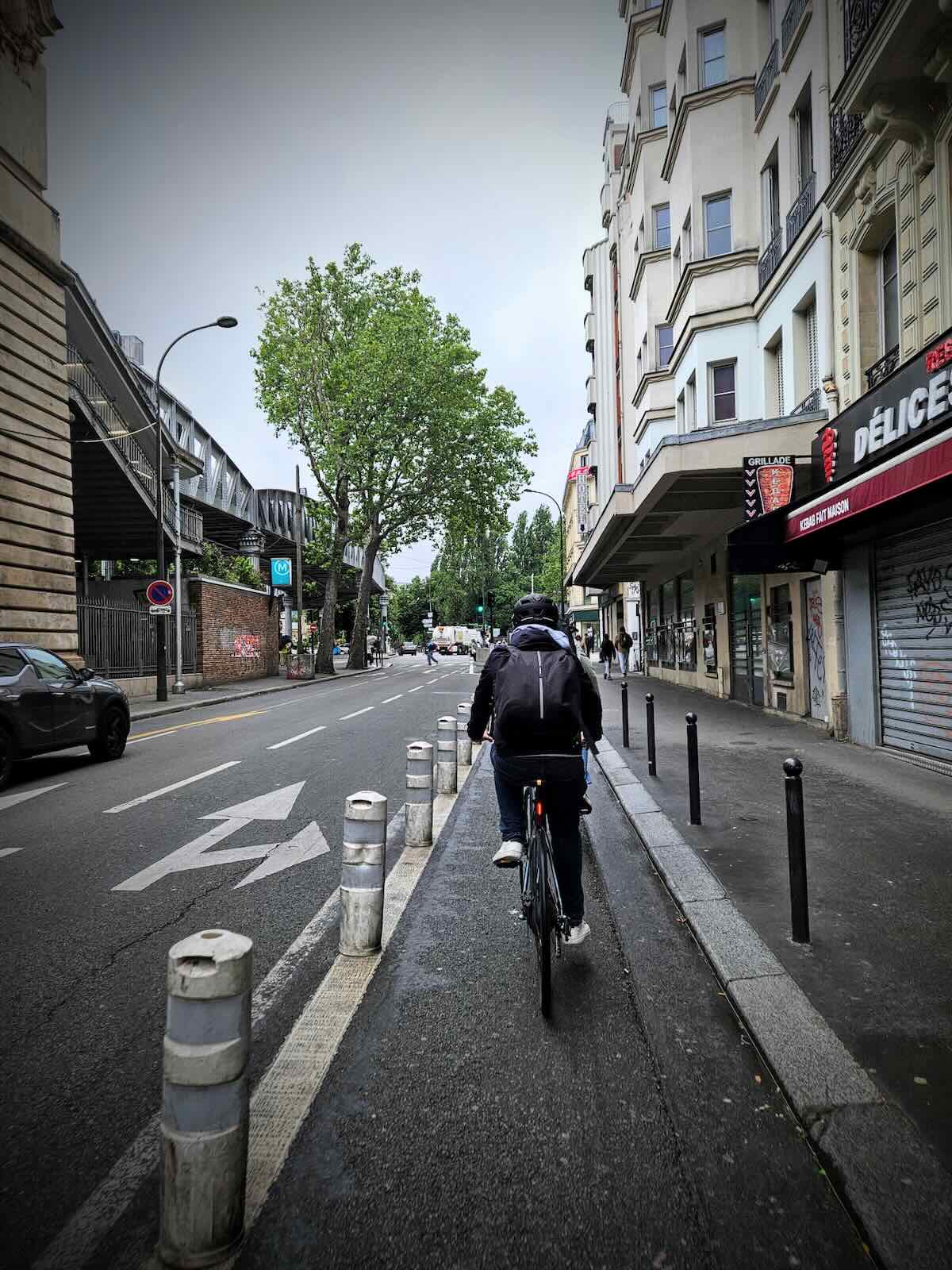
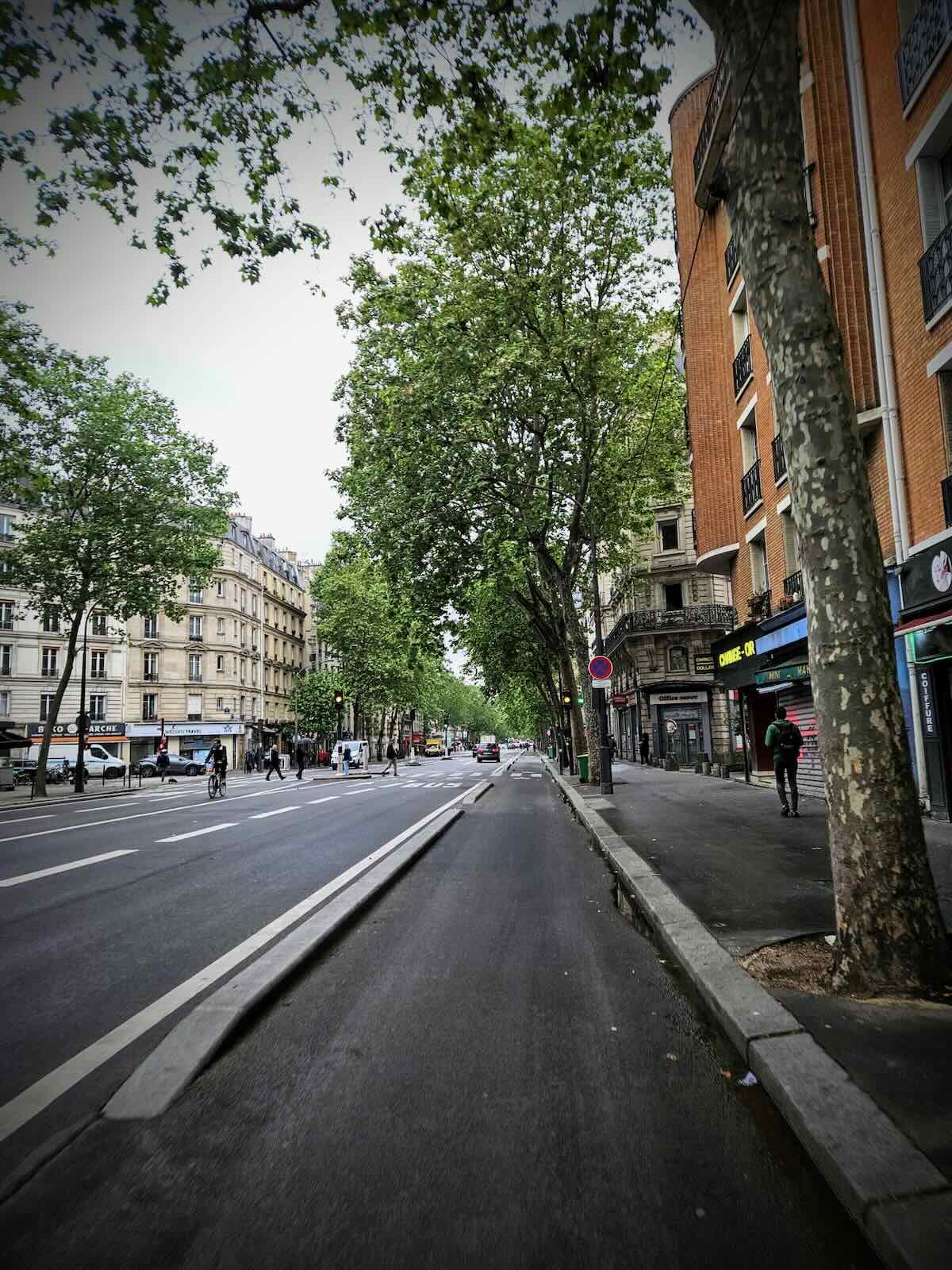
Following the route of the Métro line 2 viaduct, I made my way along more kerb-protected cycle lanes which ended at Place de la Bataille de Stalingrad, where I reached Canal Saint-Martin.

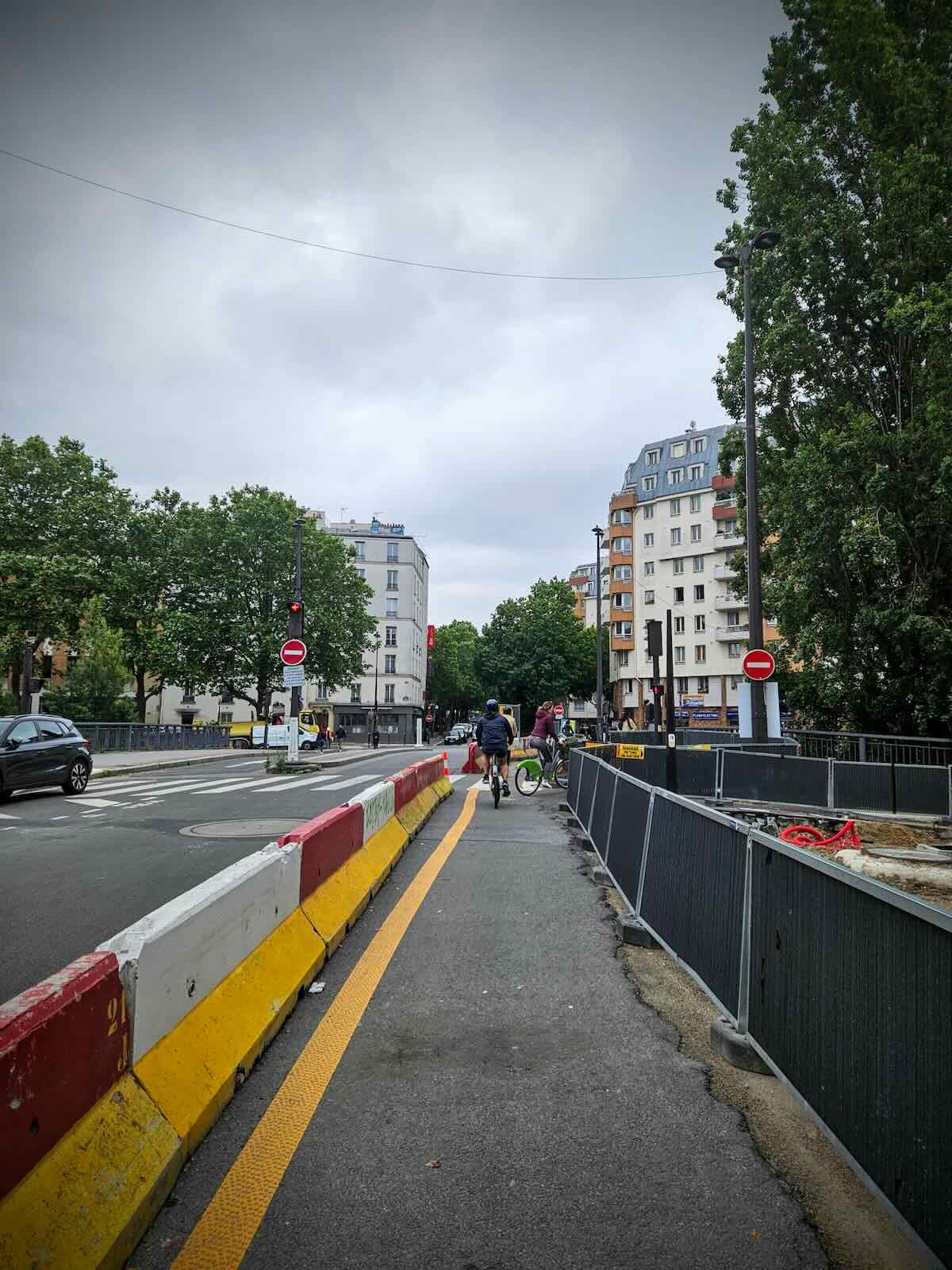
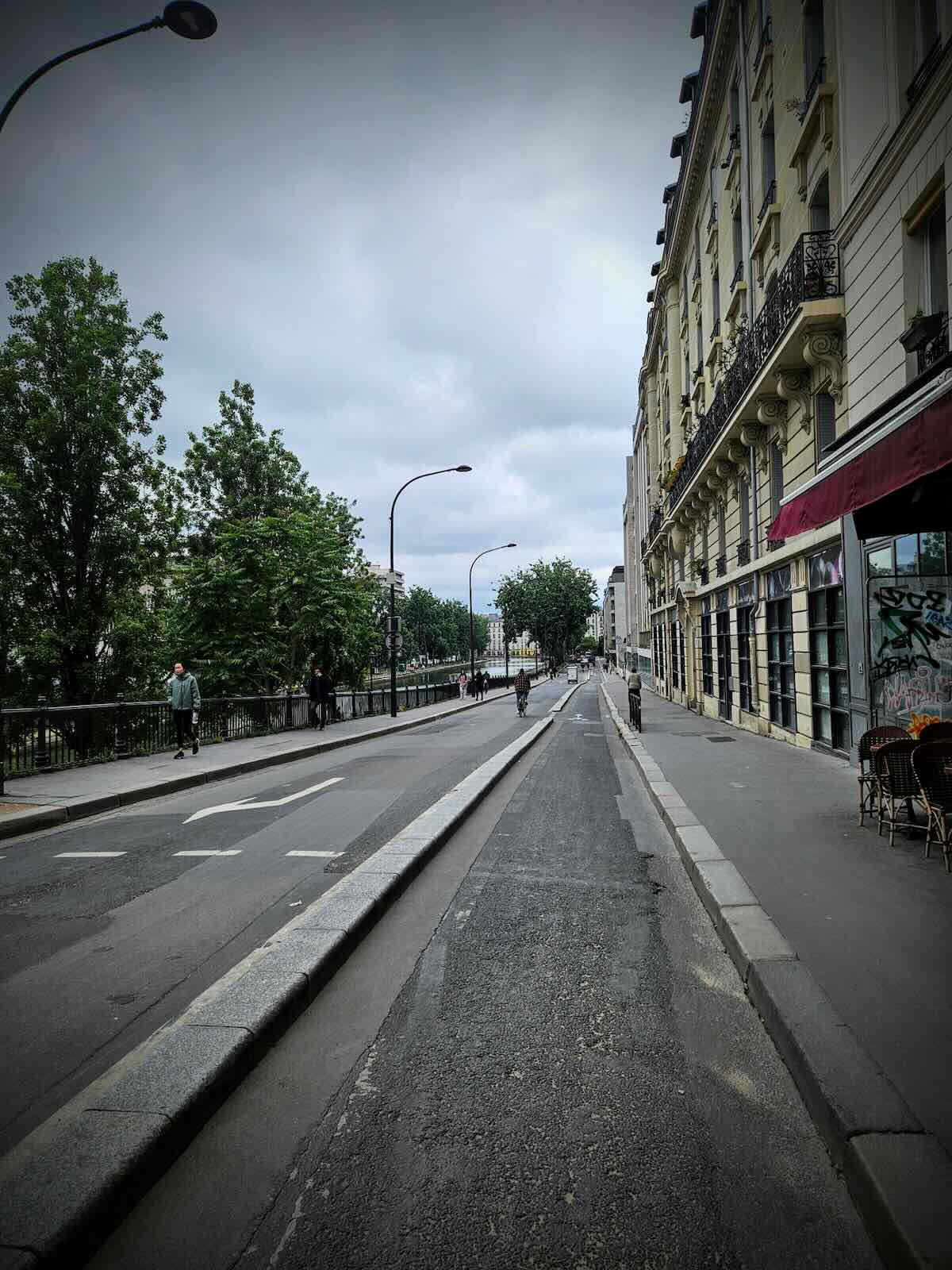
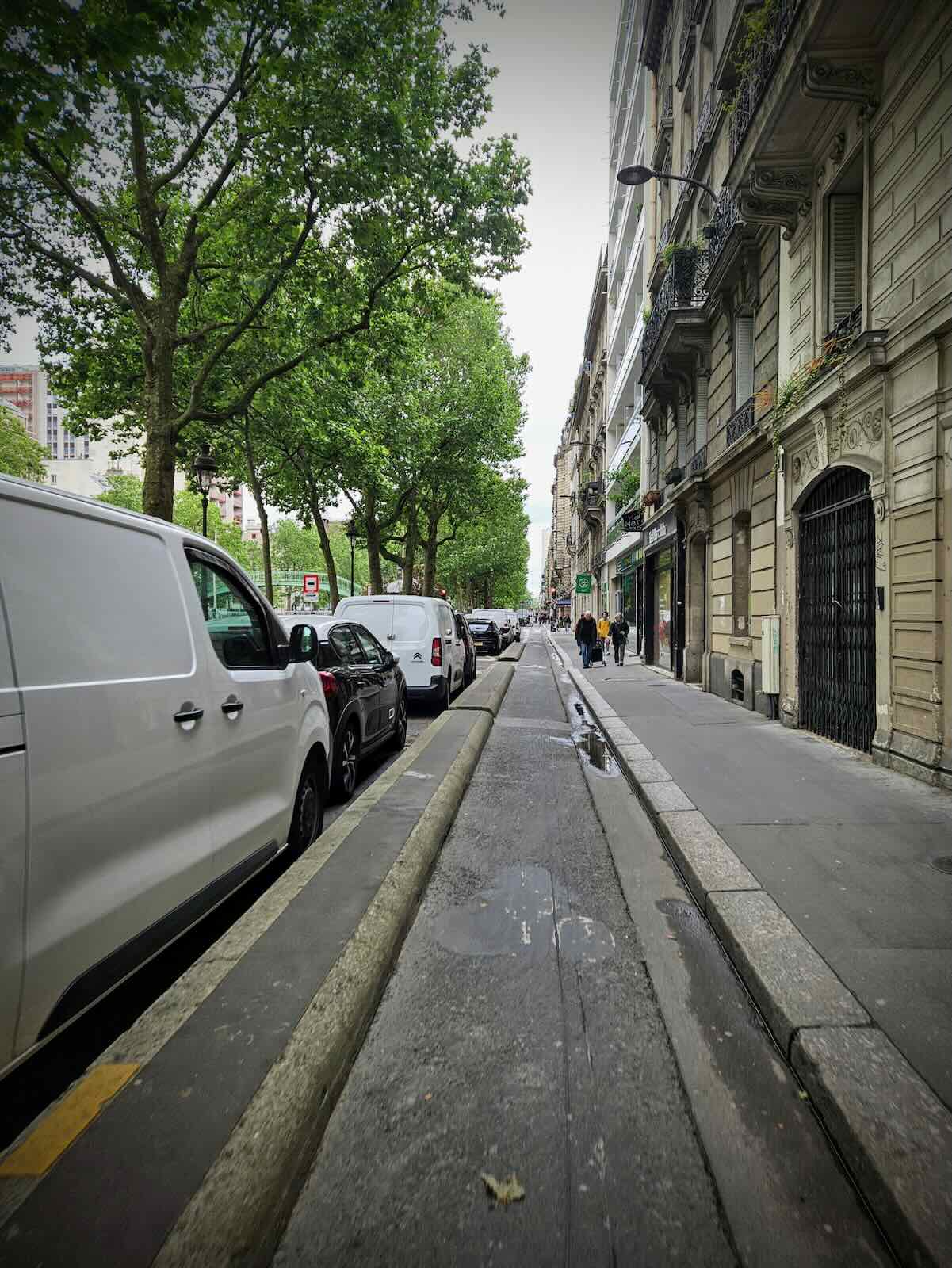
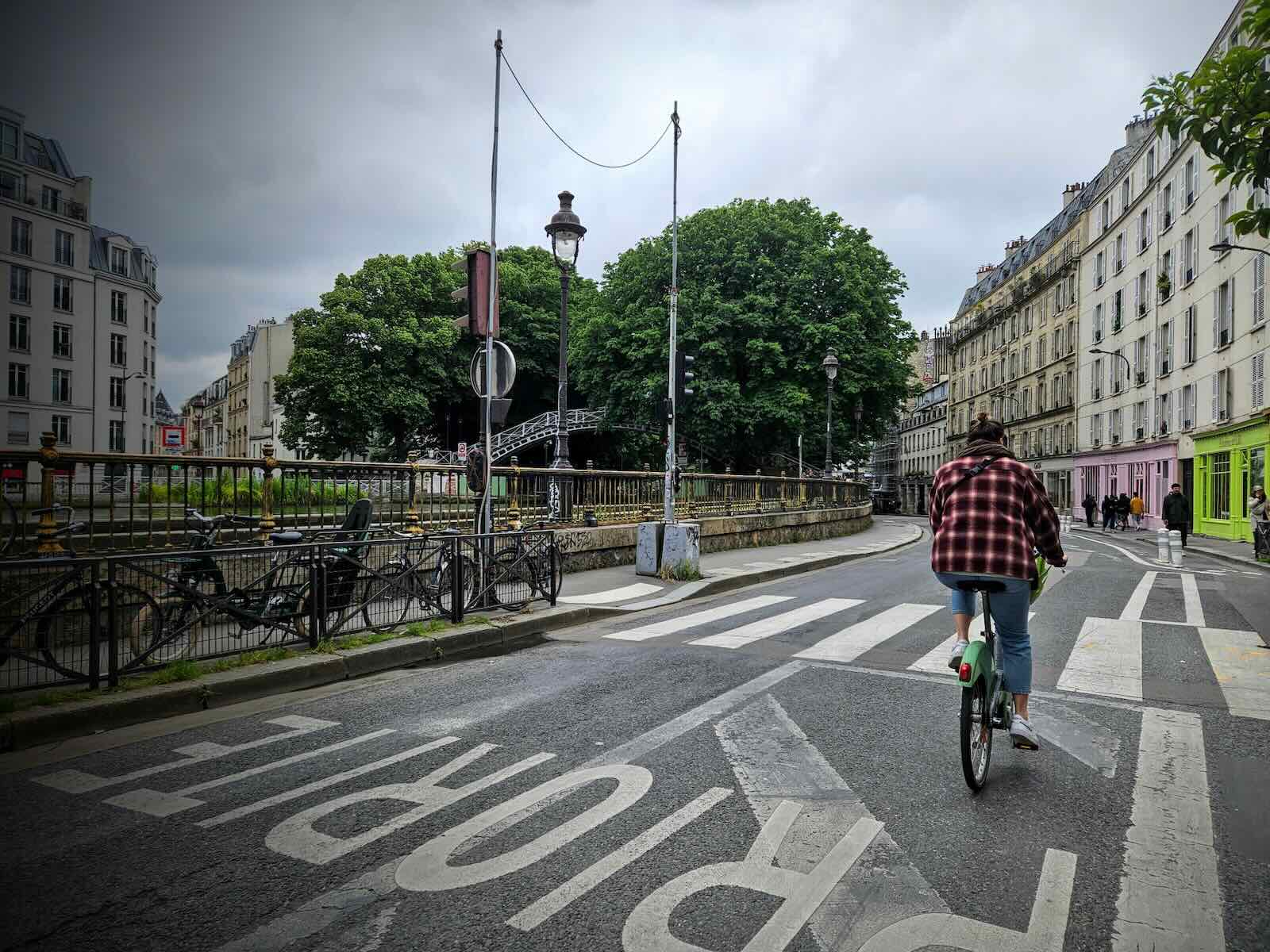
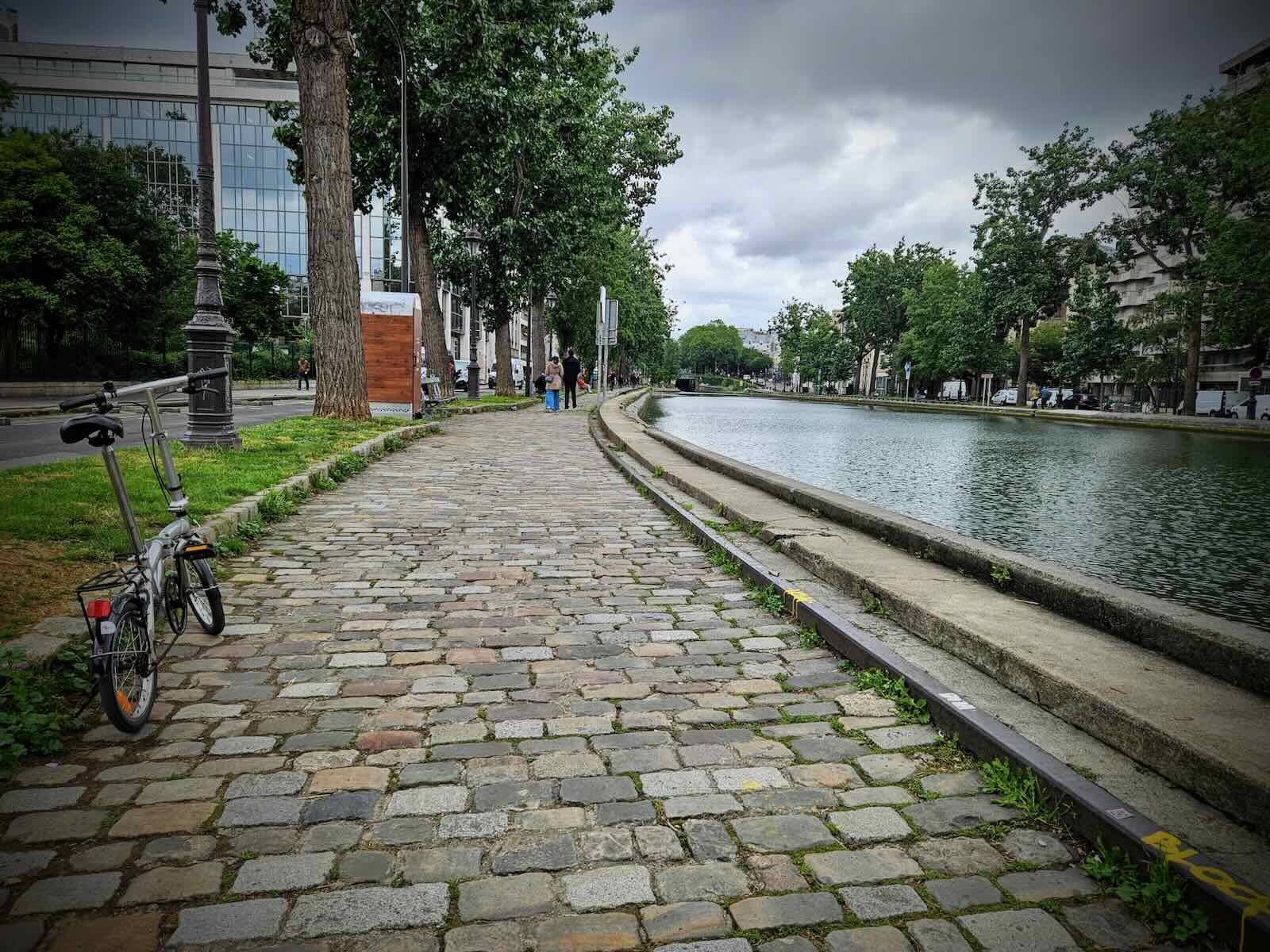
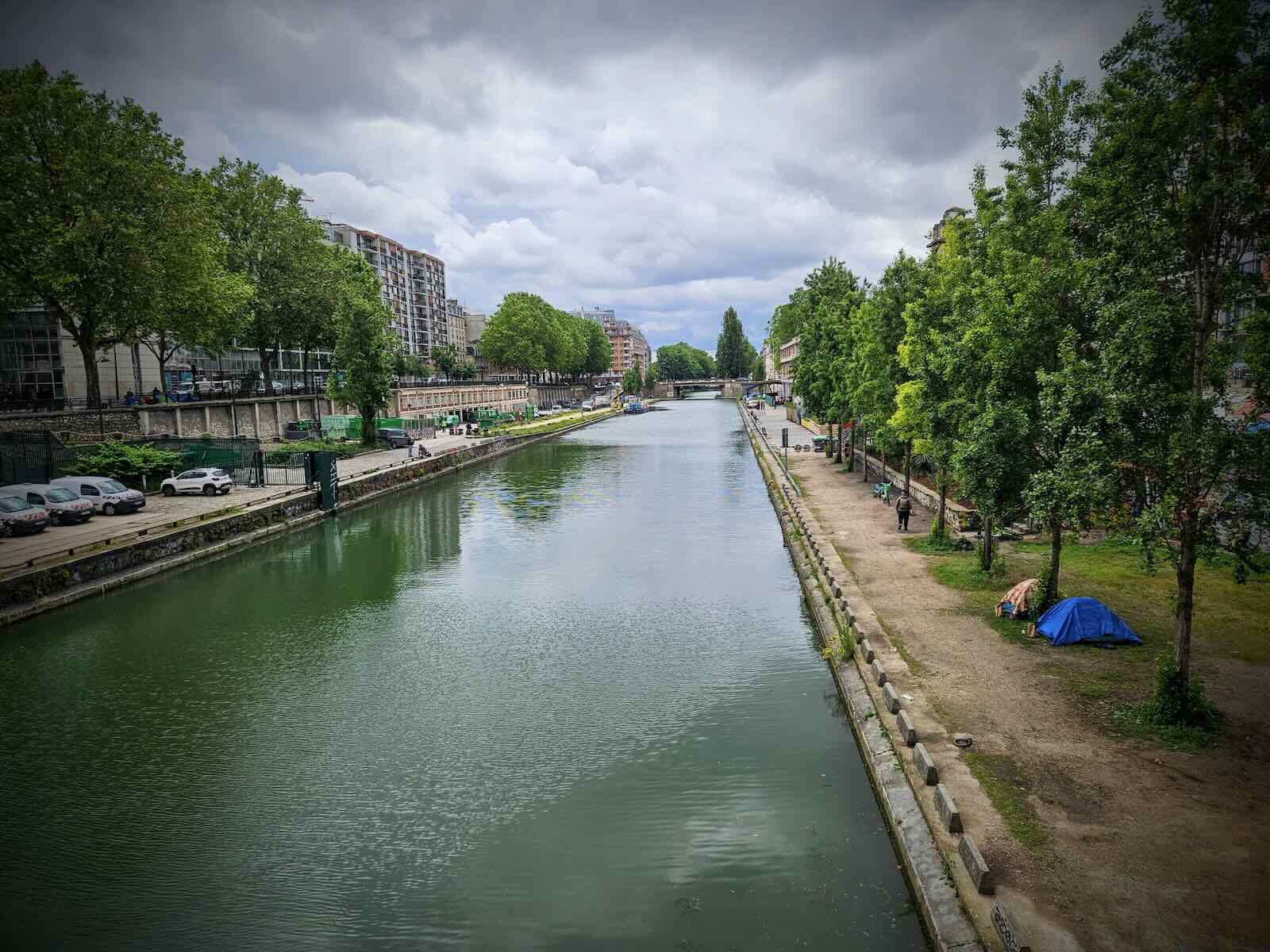
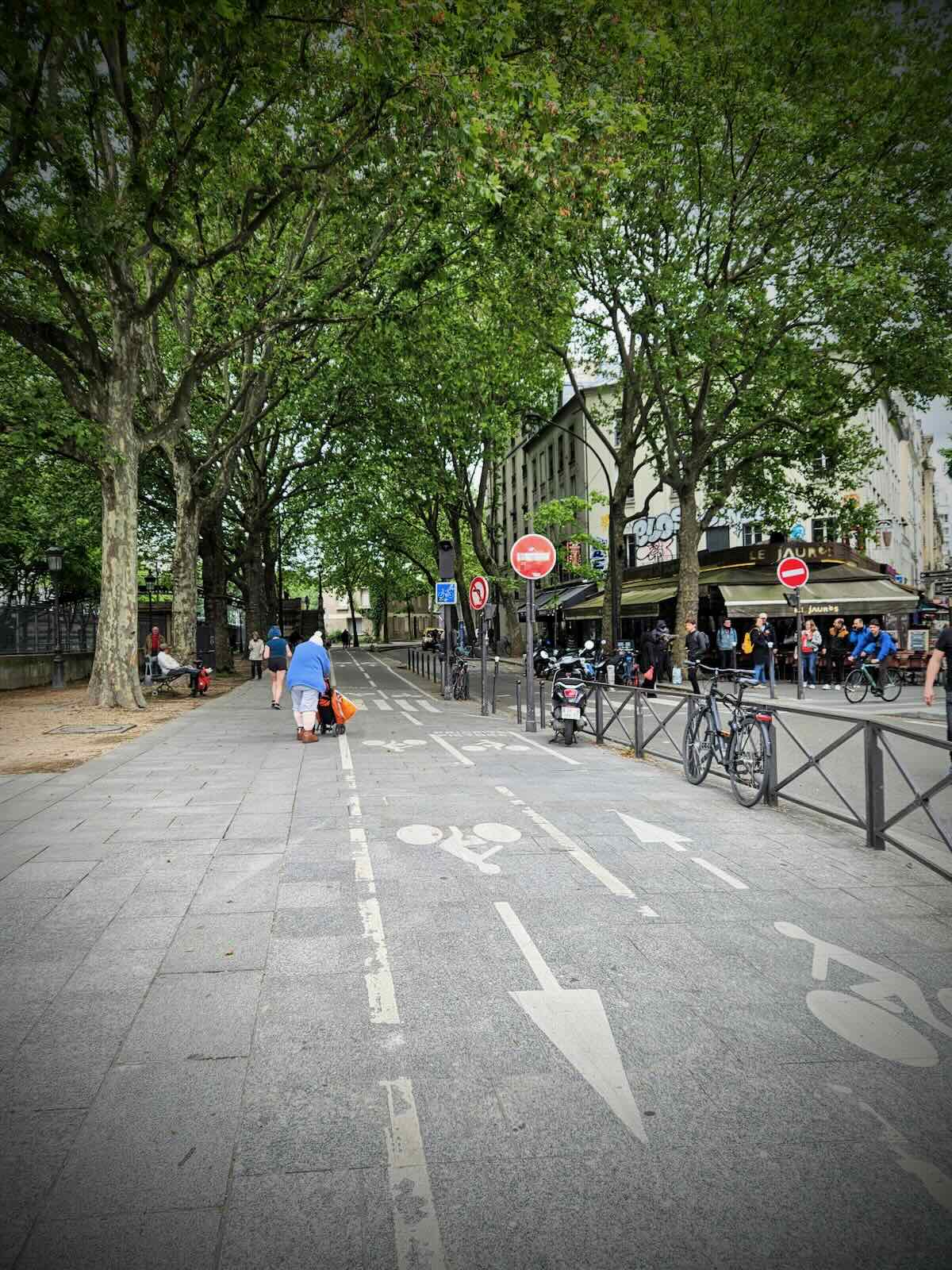
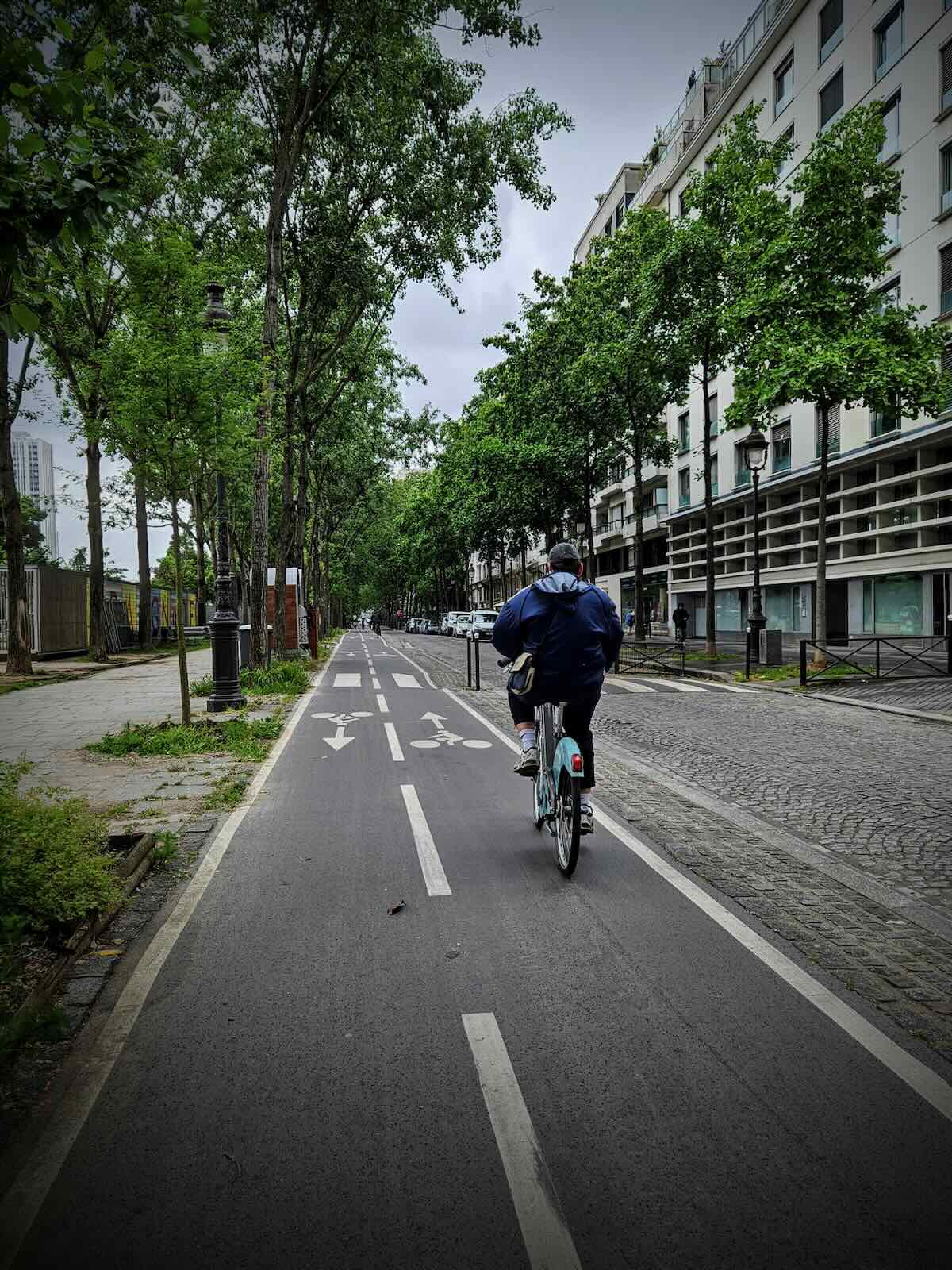
At that point, I cycled down Quai de Valmy, which follows the route of the canal. This featured large sections of kerb-protected cycle lanes and some great views of the canal. Not long after, I met the others and parked up my Vélib bike.




Wandering along Canal Saint-Martin
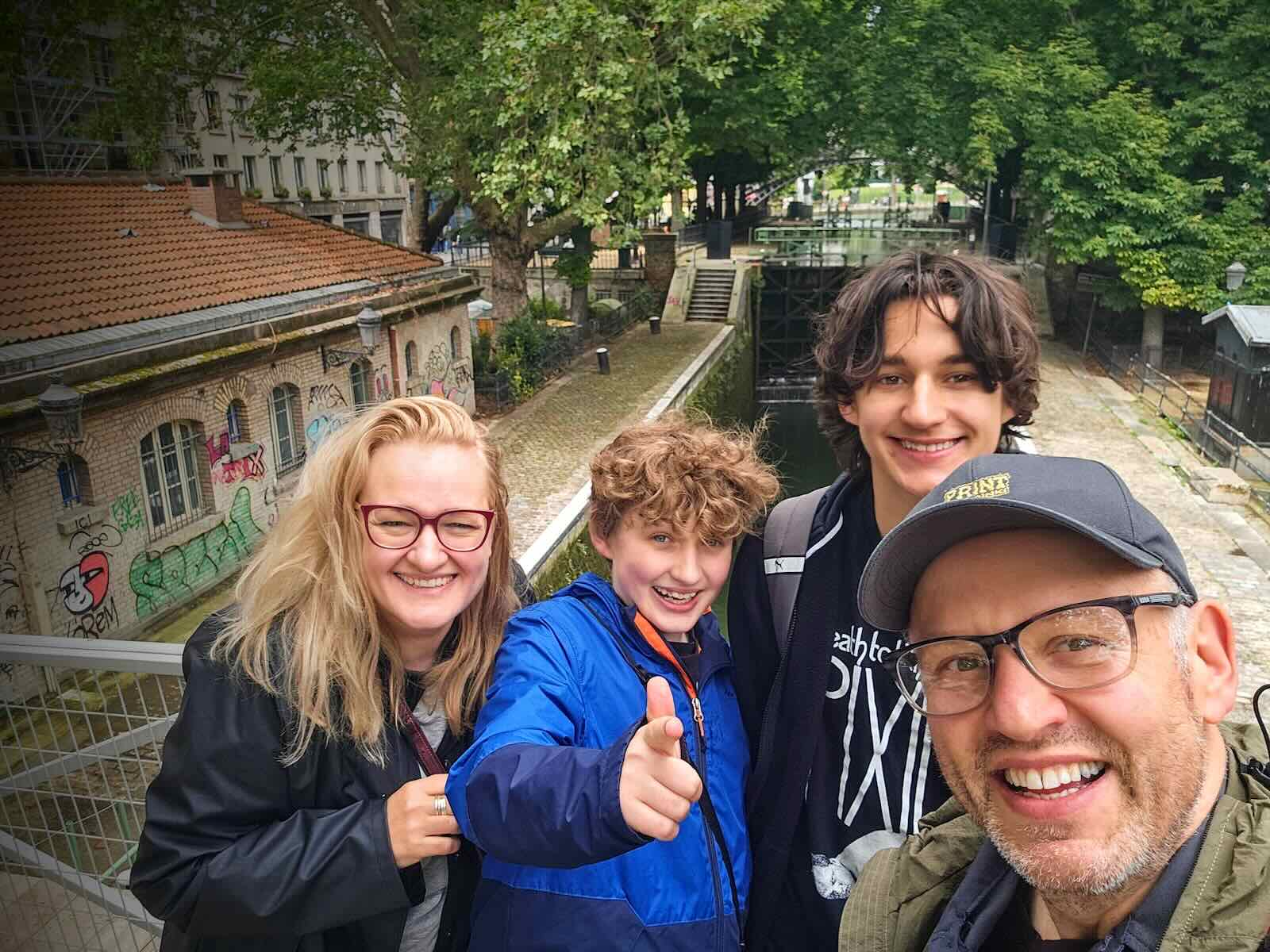
After meeting up with the others, we set out for a wander along the canal. We wouldn’t be just sticking to the street the canal is on, we’d also be exploring some of the streets nearby, including finding some lunch.
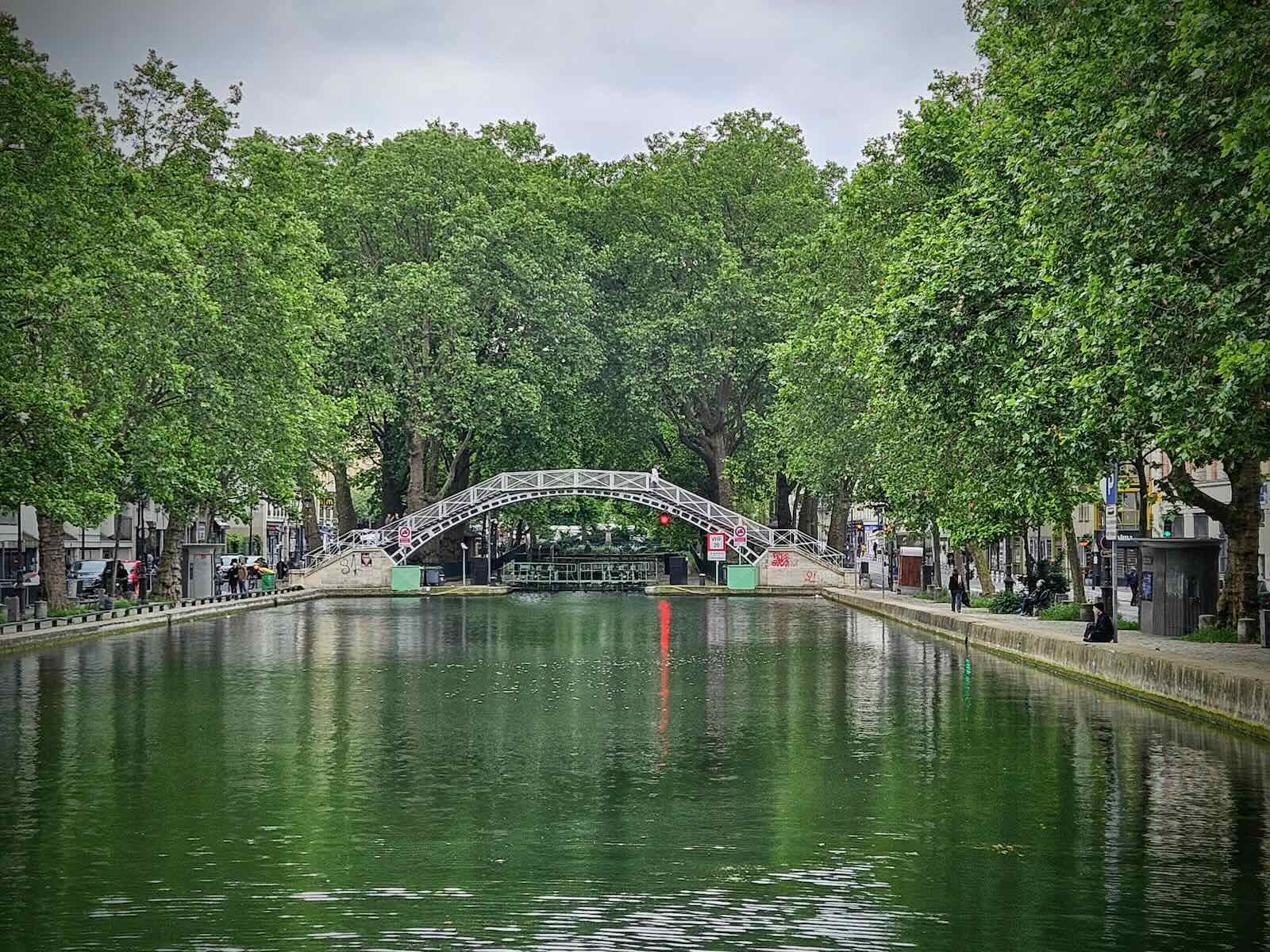
Having done some research beforehand, we’d already decided where to get some lunch from, Boulangerie Du Pain et Des Idées. I can’t remember where we saw it recommended, but this traditional bakery seemed like a popular choice, so we headed there.
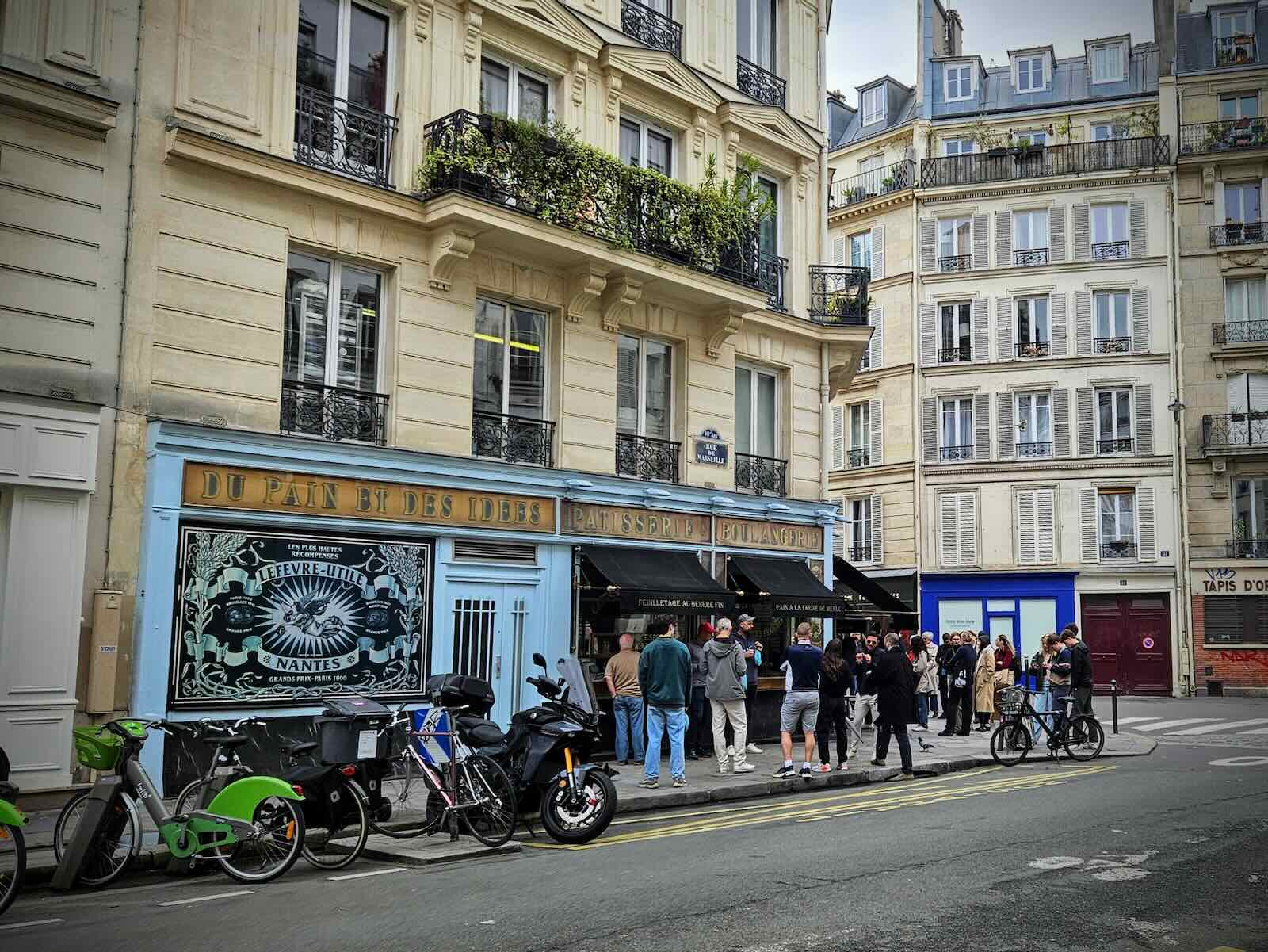
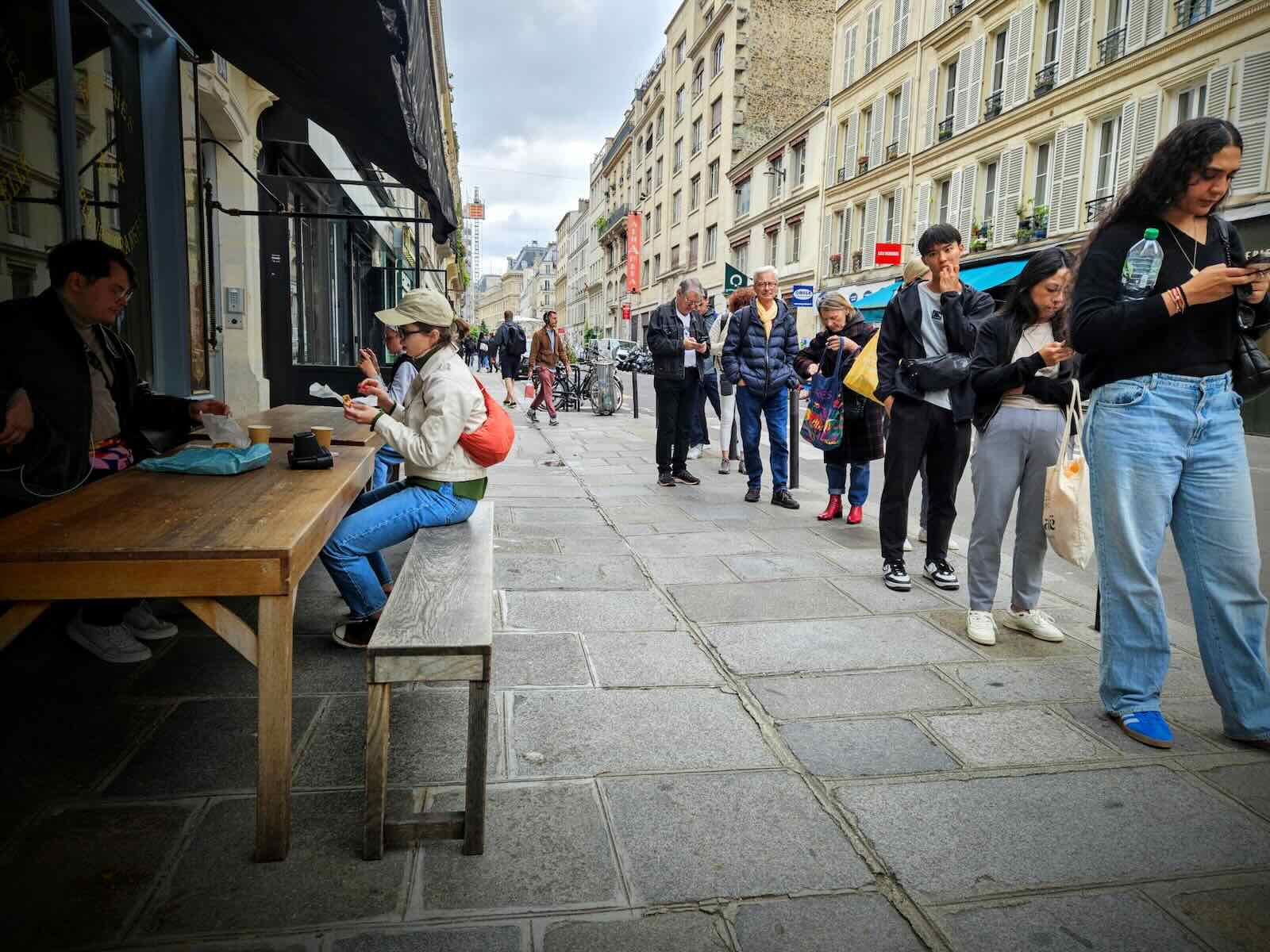
The queue outside the bakery was definitely a promising sign, though it did mean a little wait before we could get our lunch, but thankfully nothing like queueing at Berlin’s famous kebab stand!
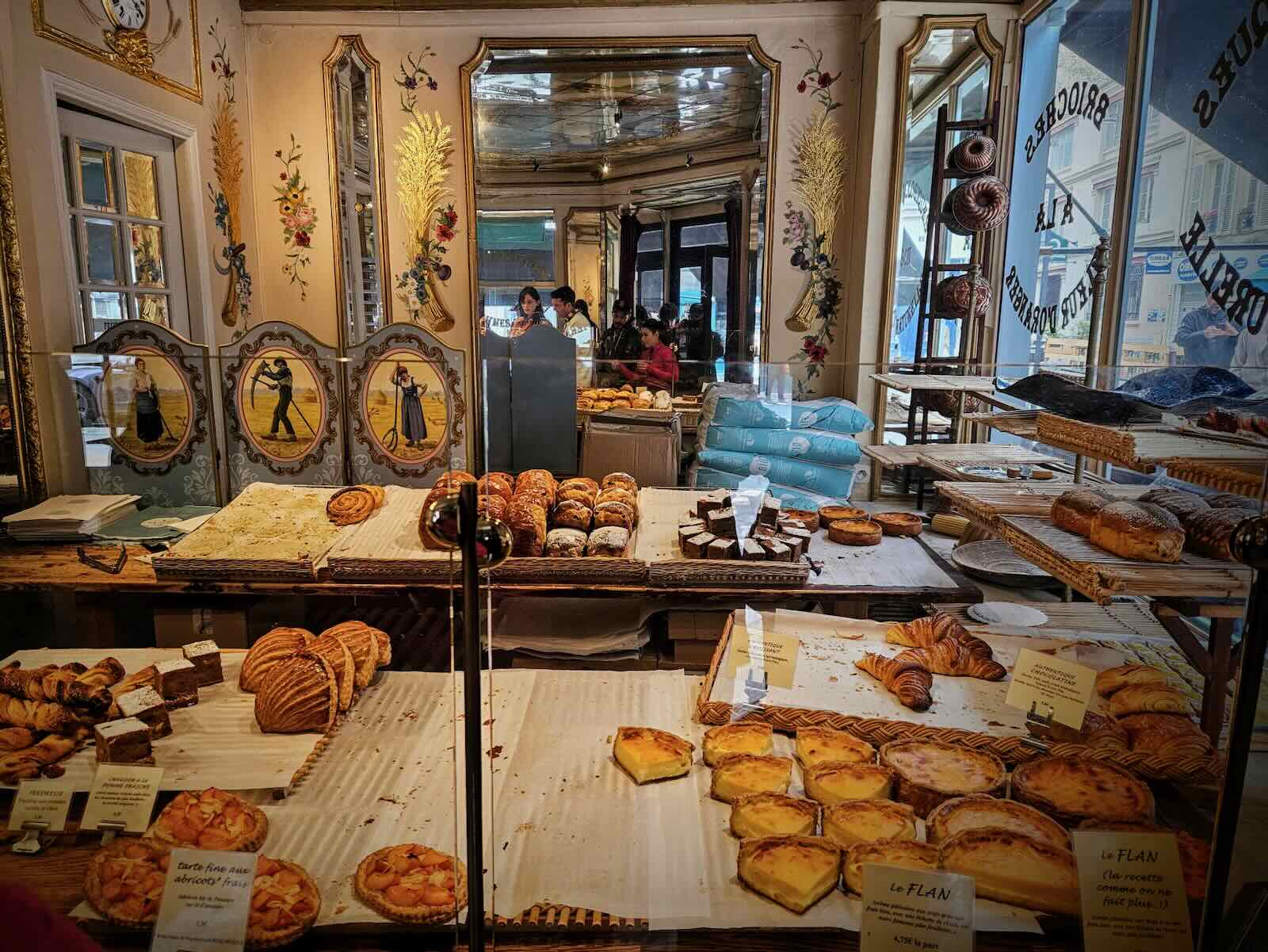
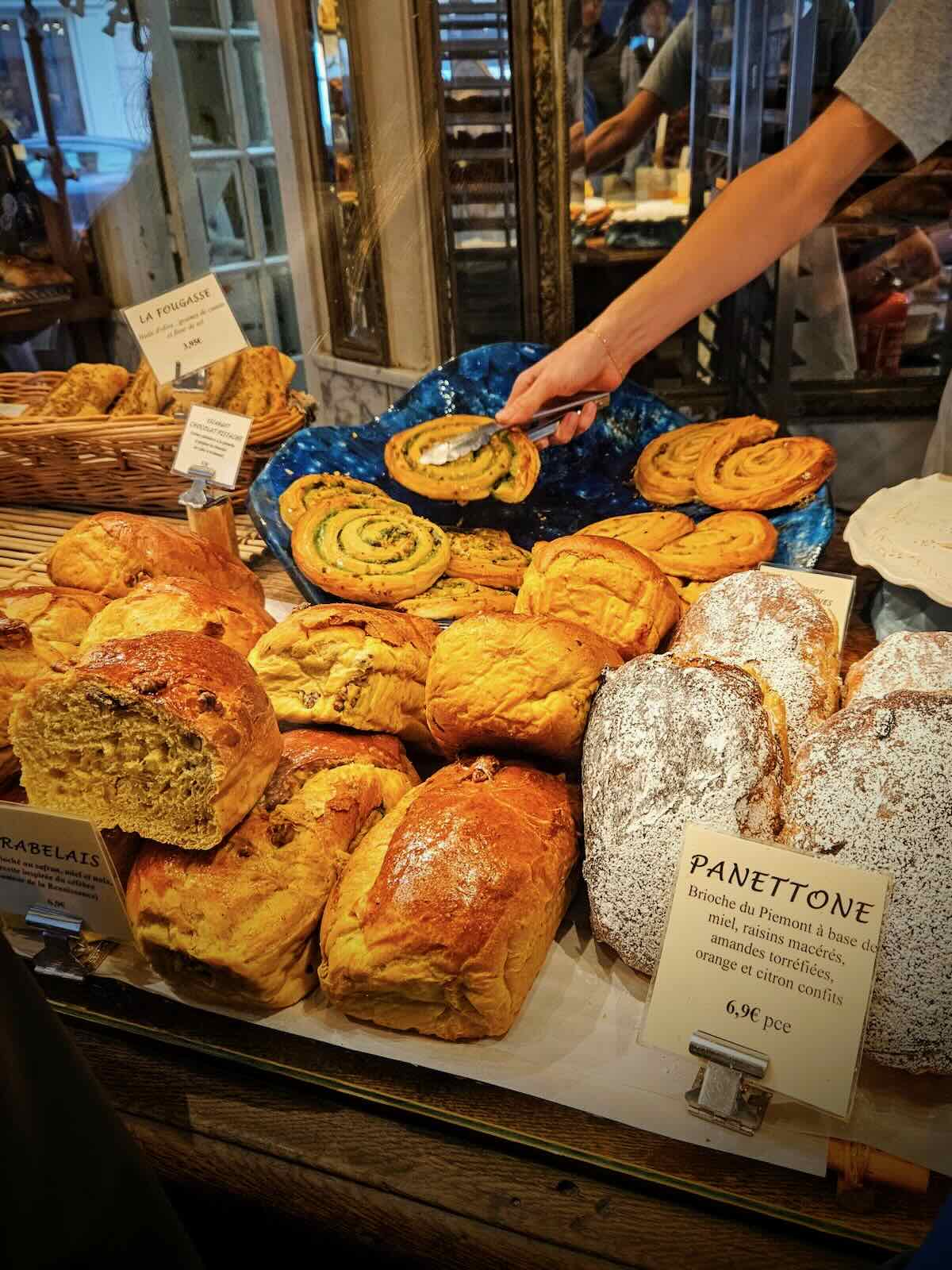
Dating back to 1875, Boulangerie Du Pain et Des Idées looks stunning, both inside and out. Getting inside the bakery, we were overwhelmed with choice from the amazing selection of pastries on offer, which almost threaten to outshow the exquisite interior decor.
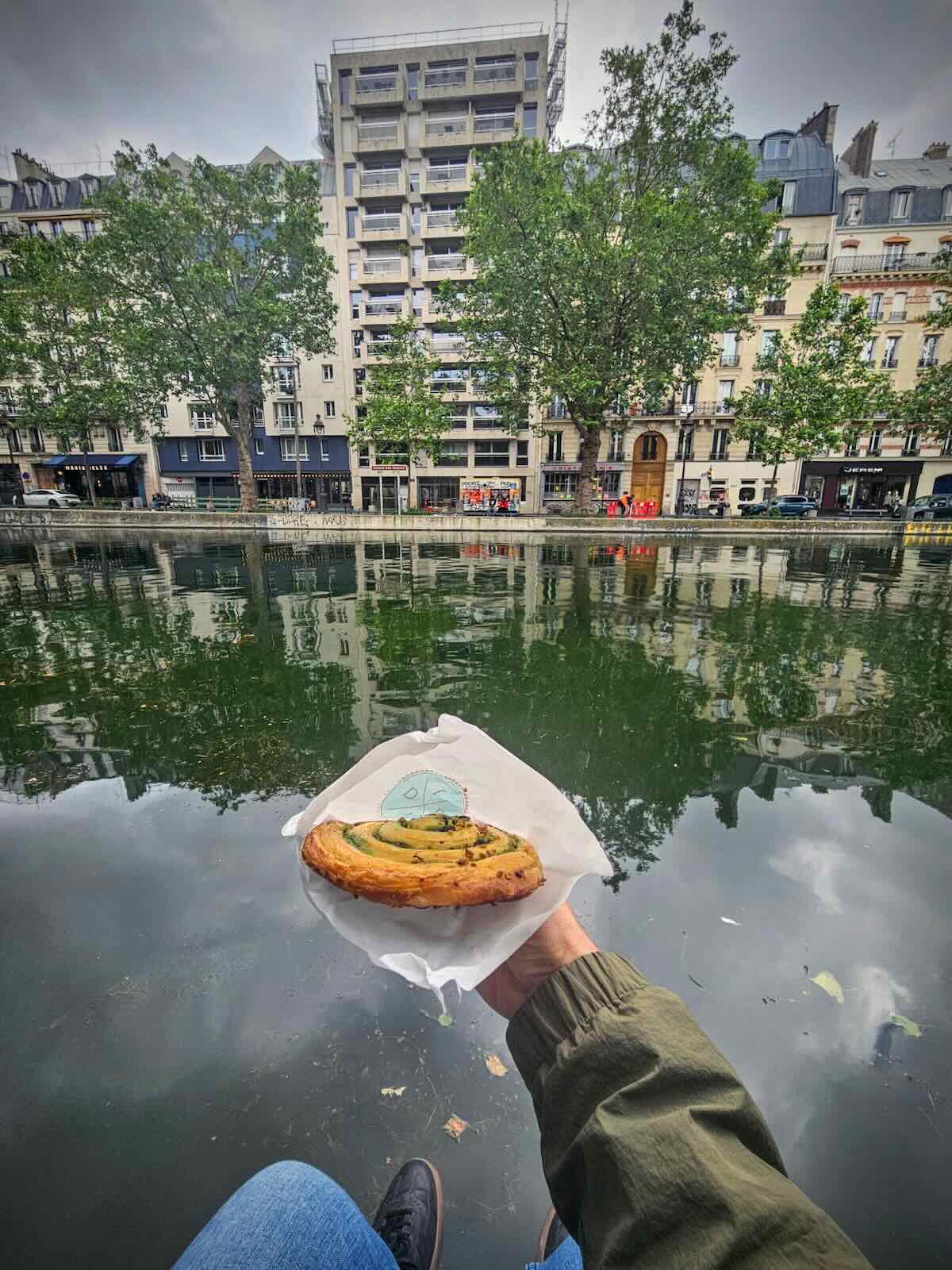
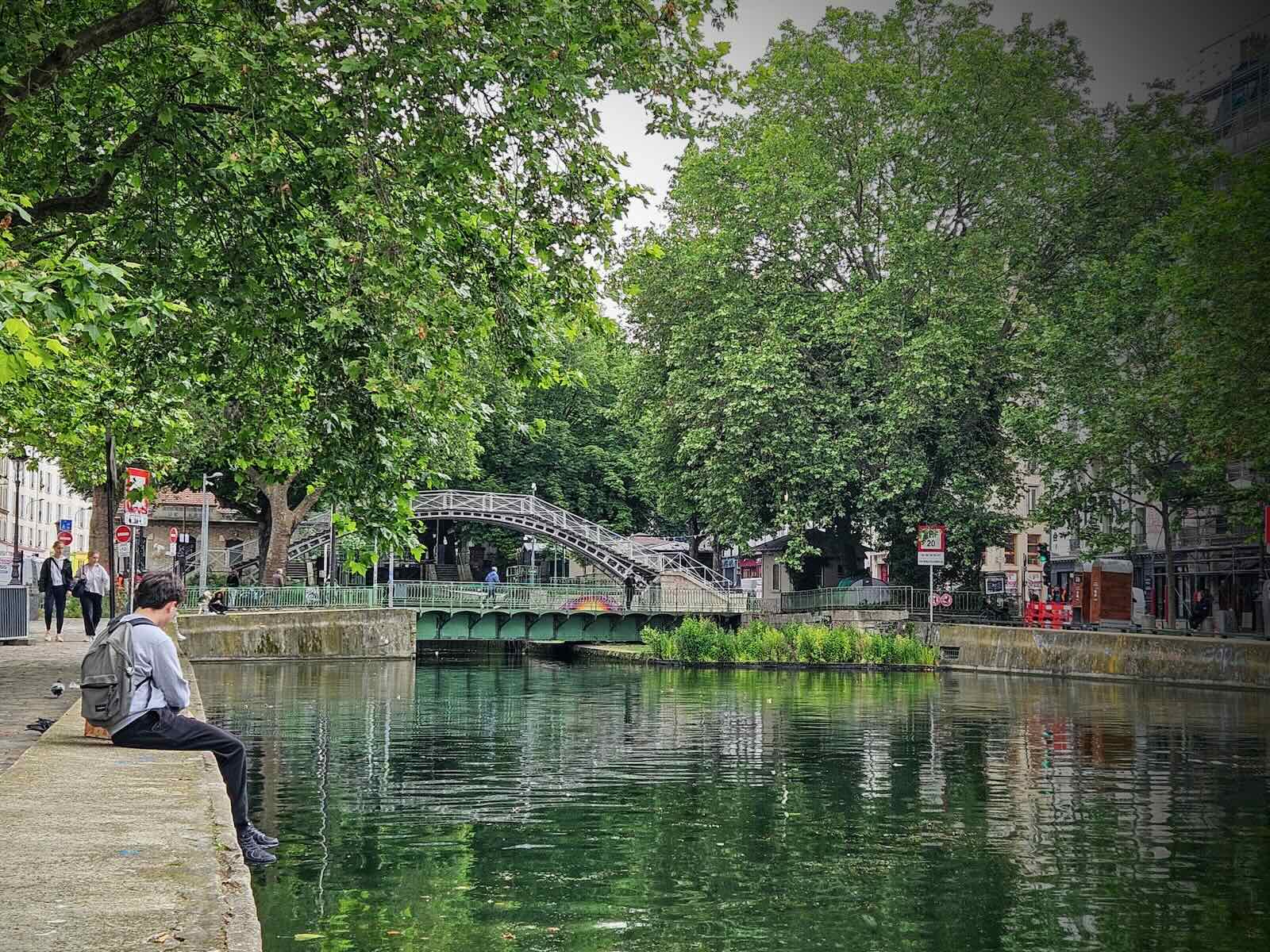
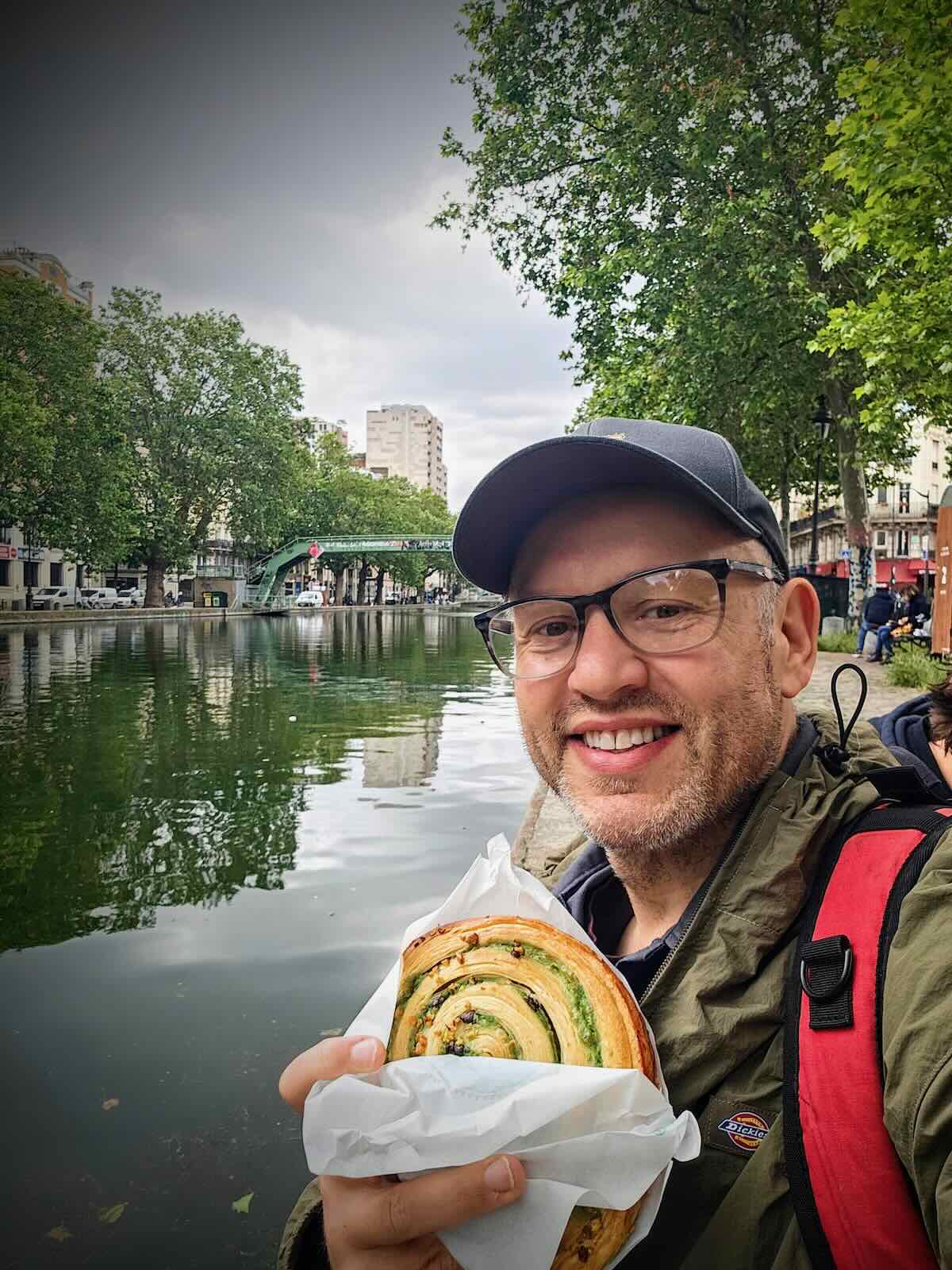
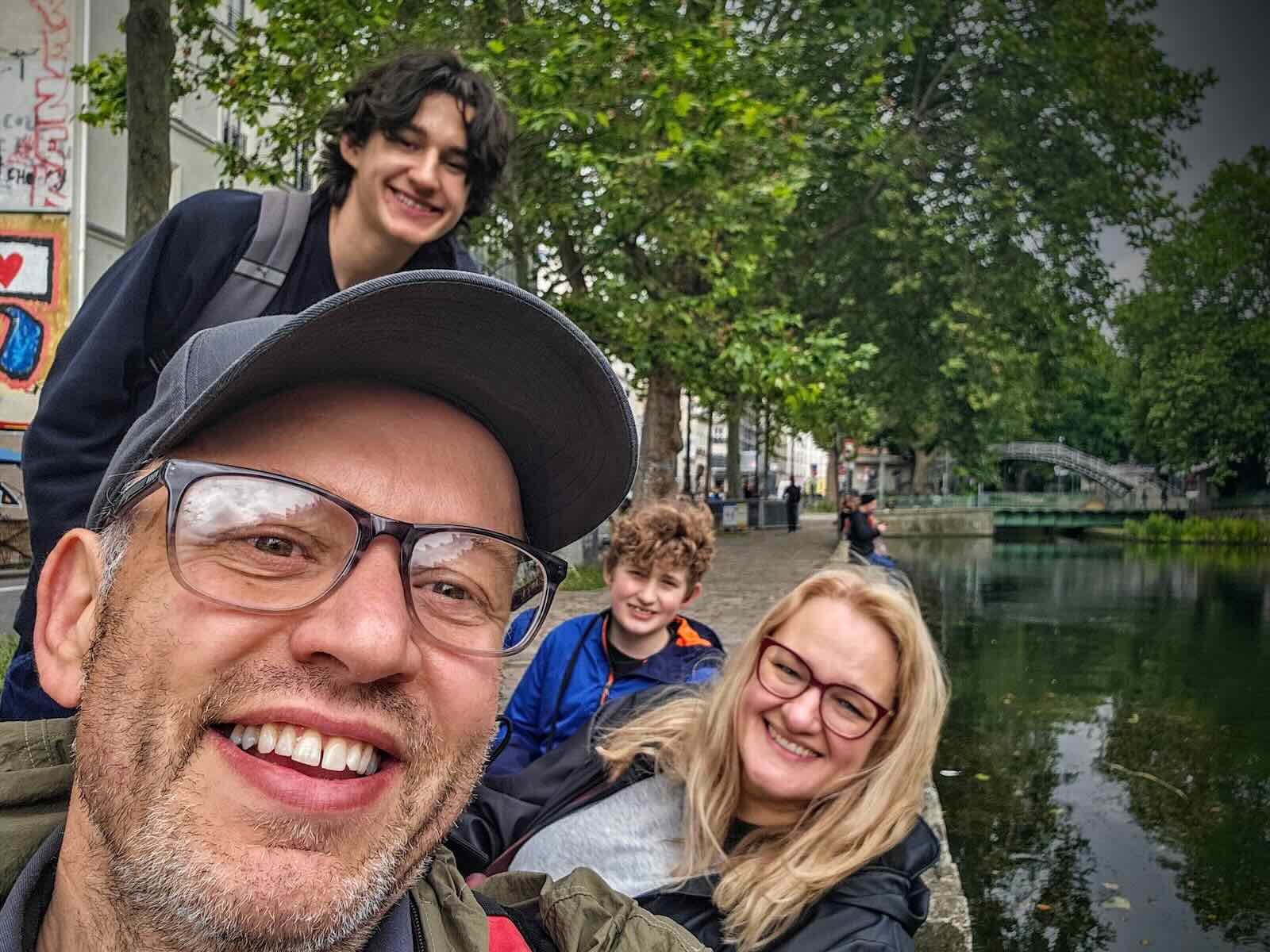
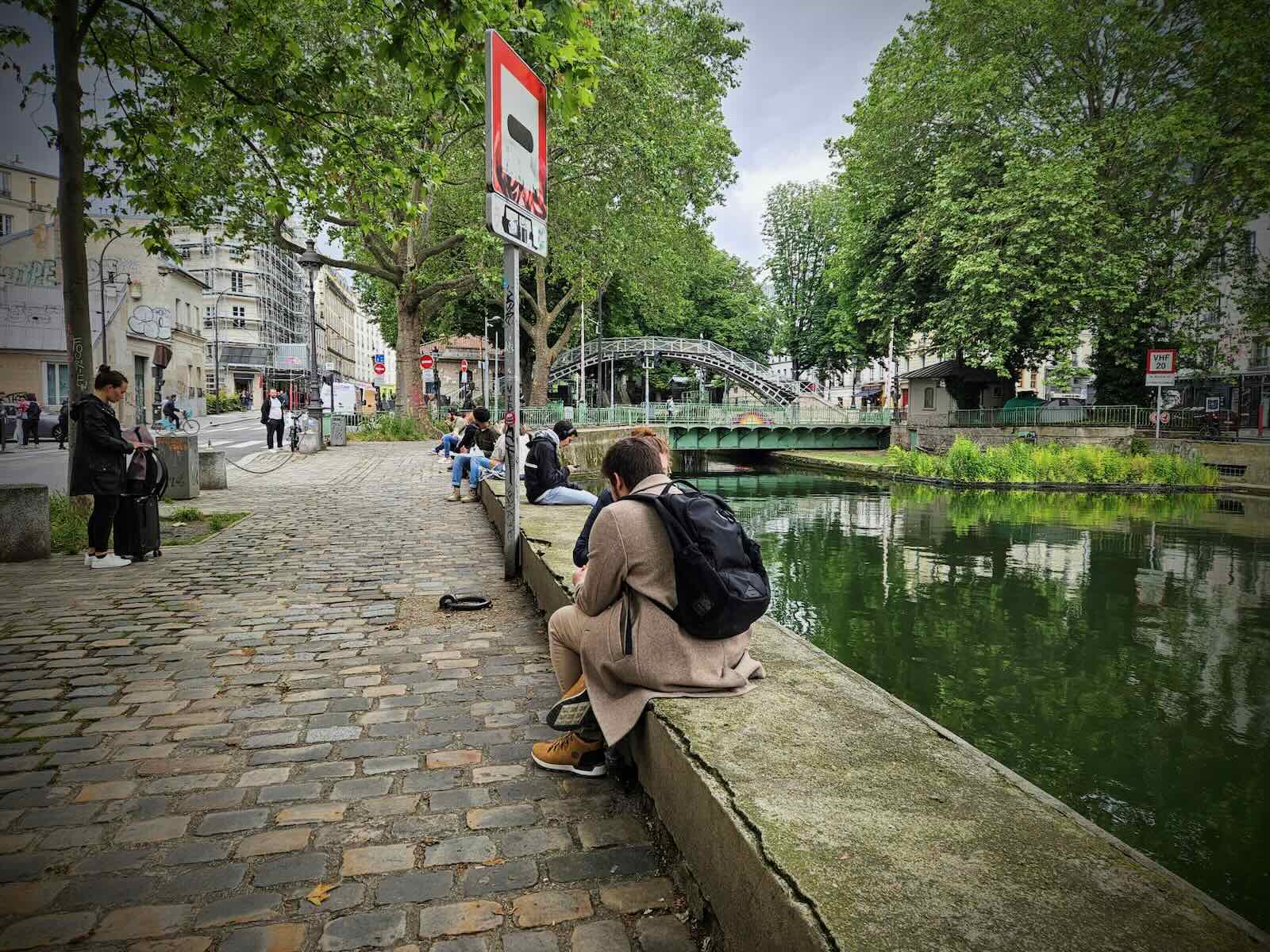
Ordering our lunch, we made our way back to the canal with a bag full of delicious pastries and coffee to enjoy. Seeing as it’s the done thing, we parked ourselves on the banks of the canal and enjoyed our lunch, overlooking the water. The only thing that was missing was a bit of sunshine and maybe a glass or two of wine.
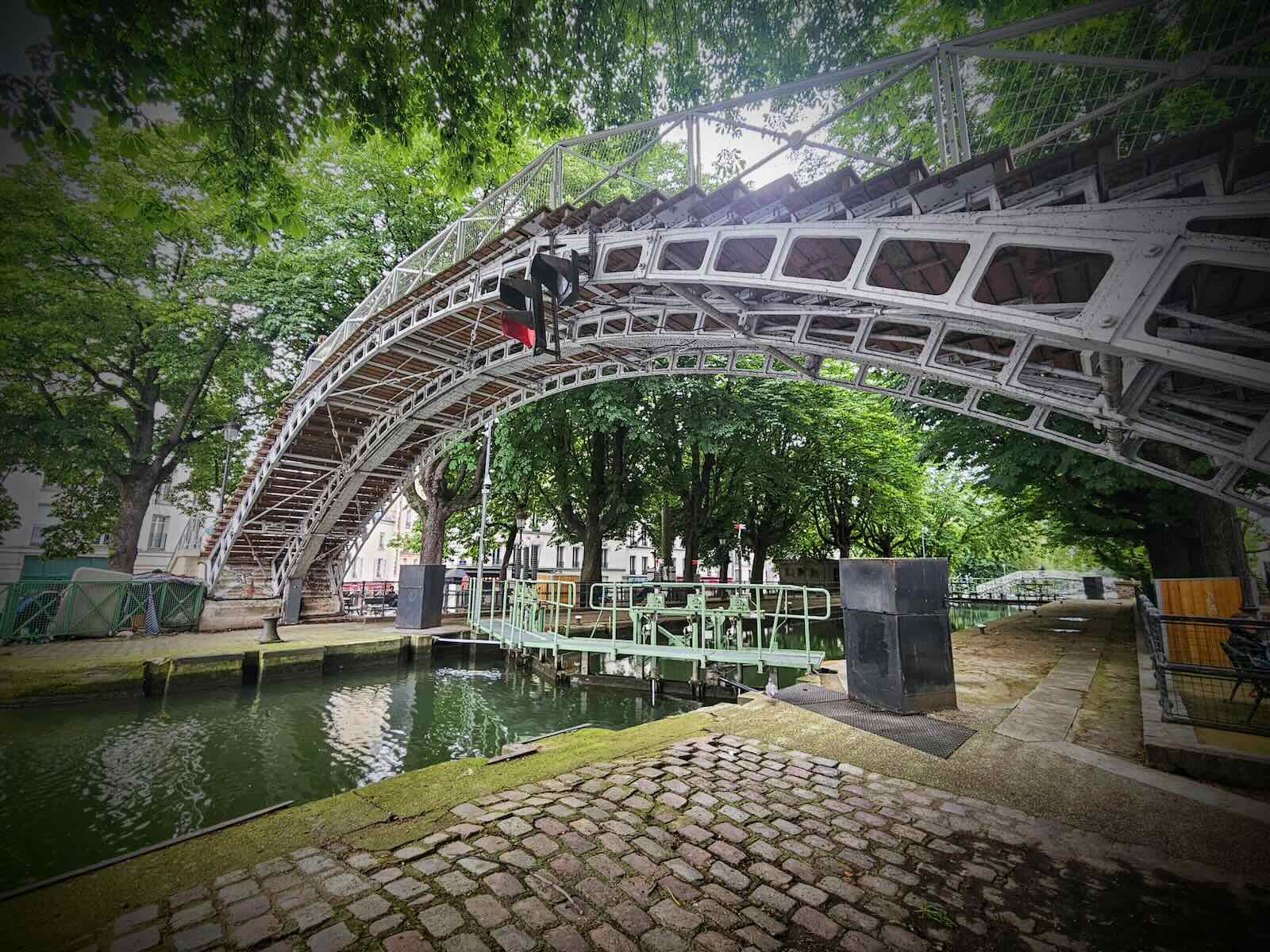
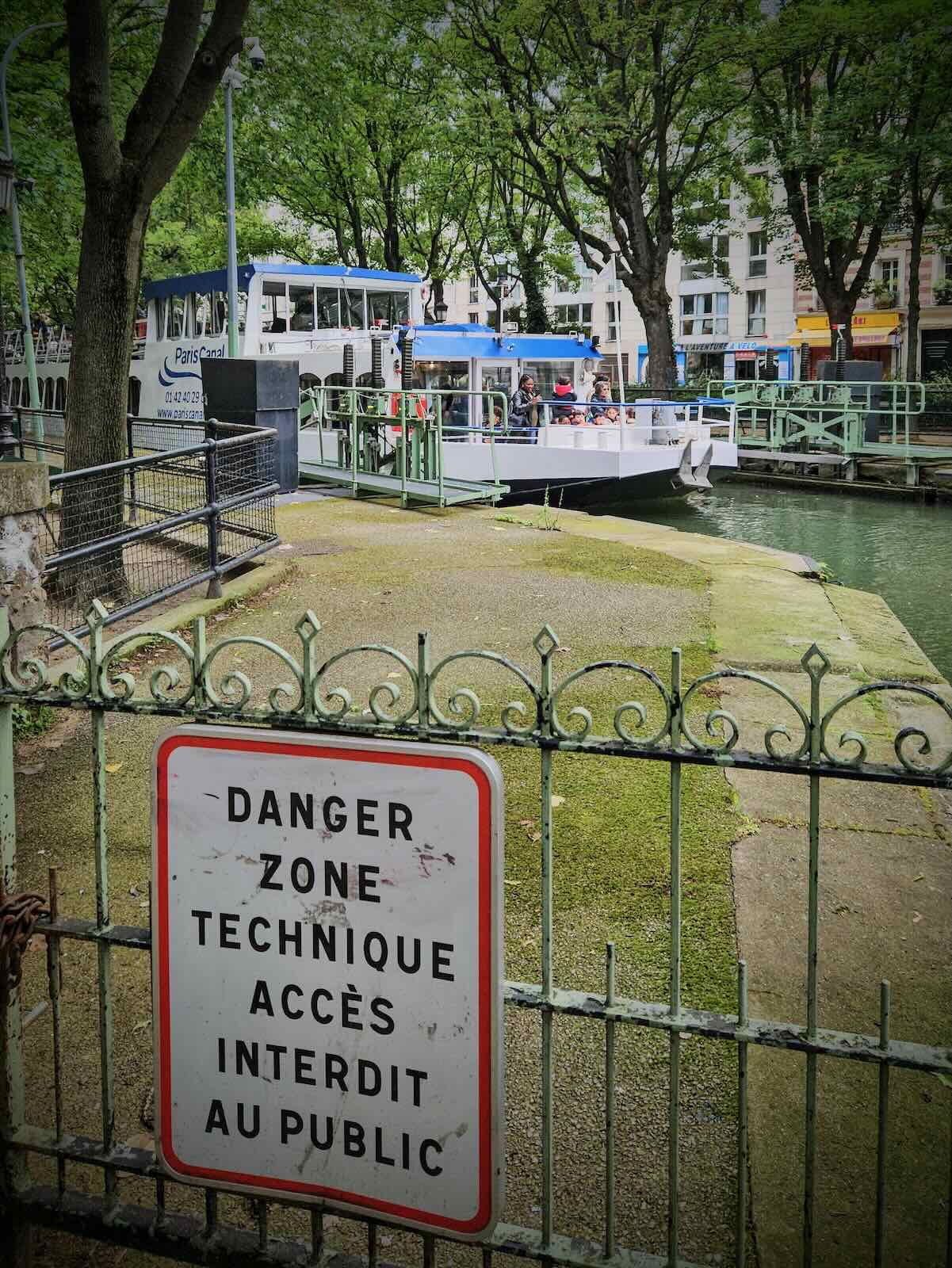
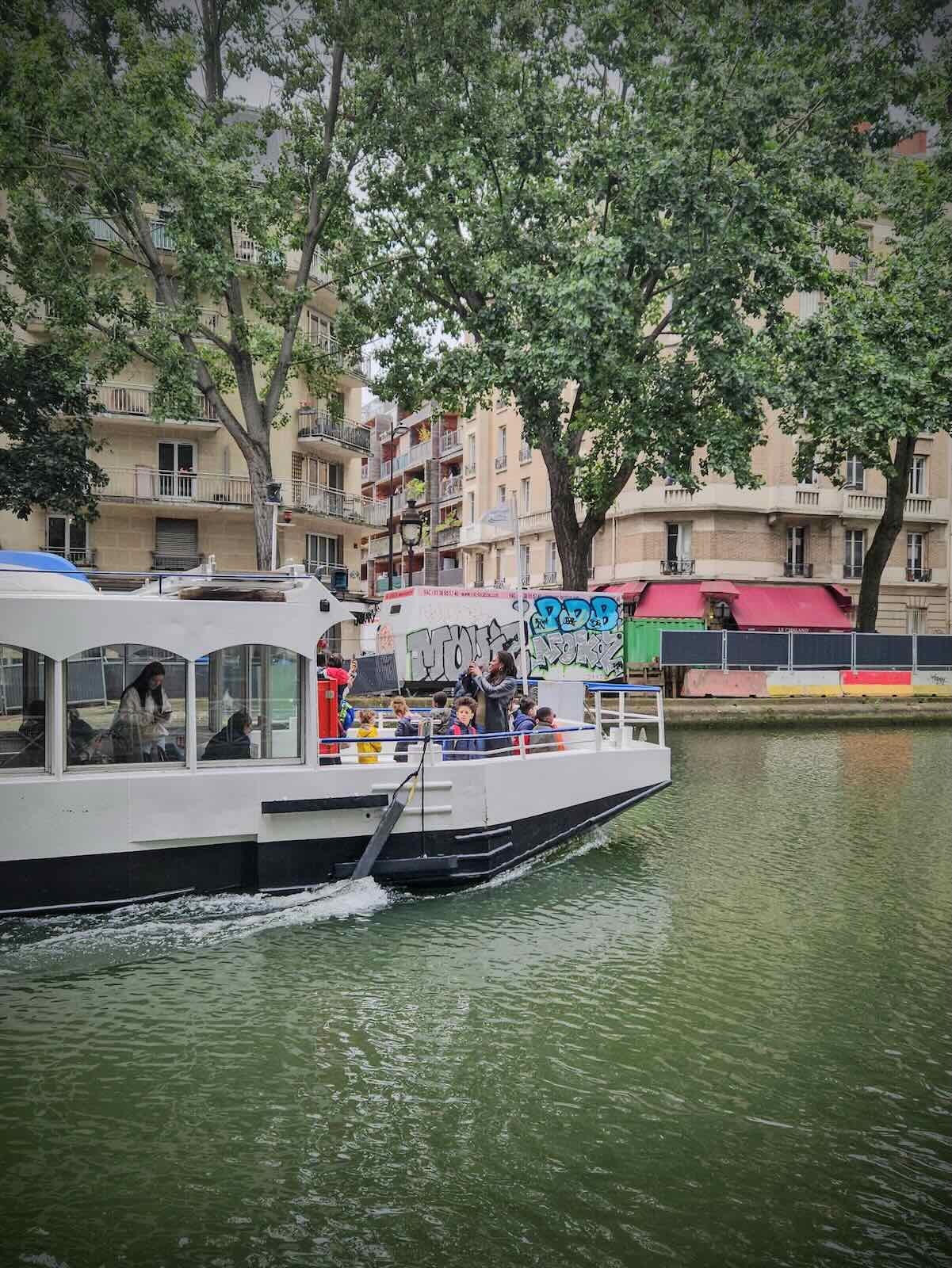
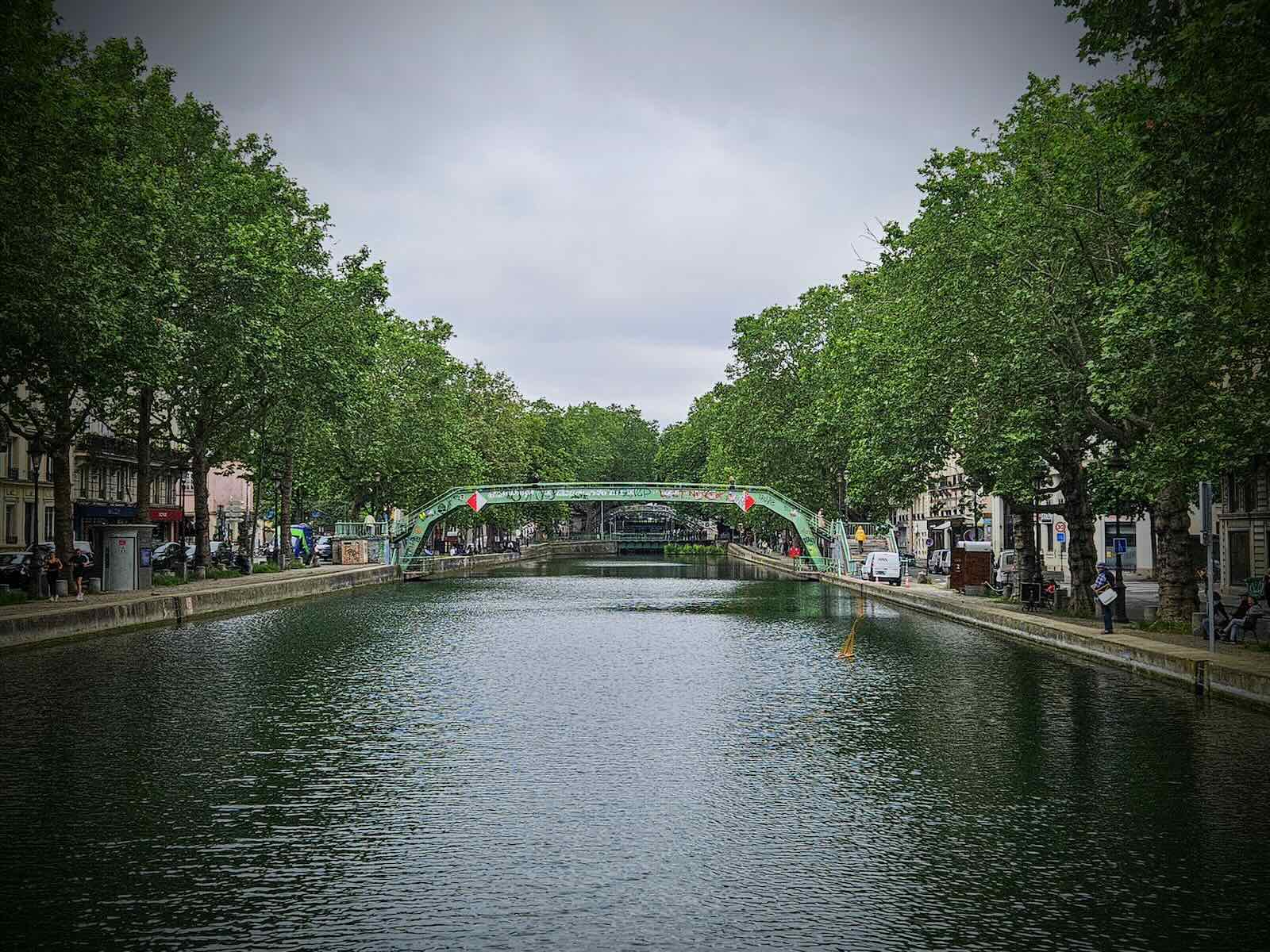
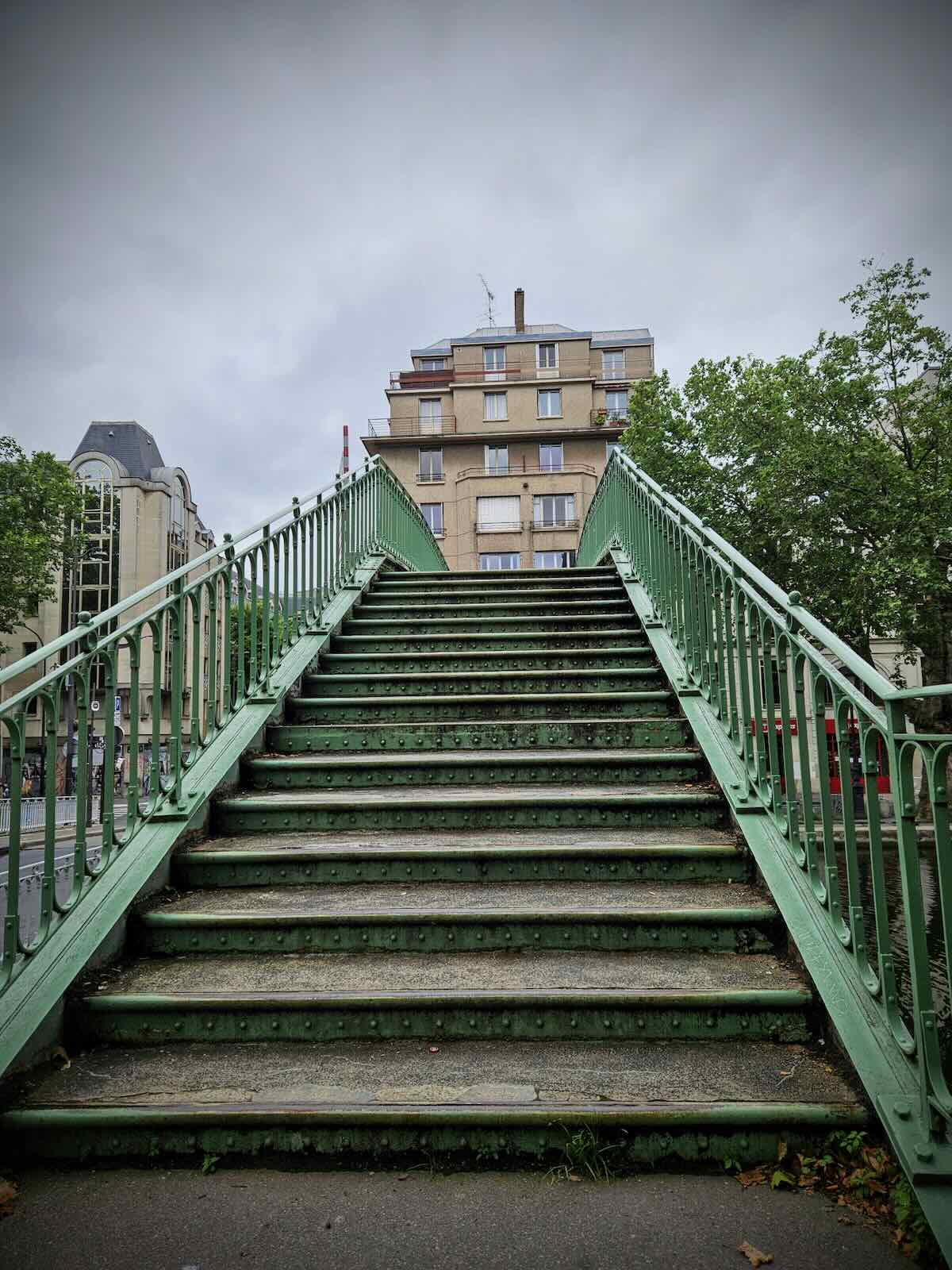
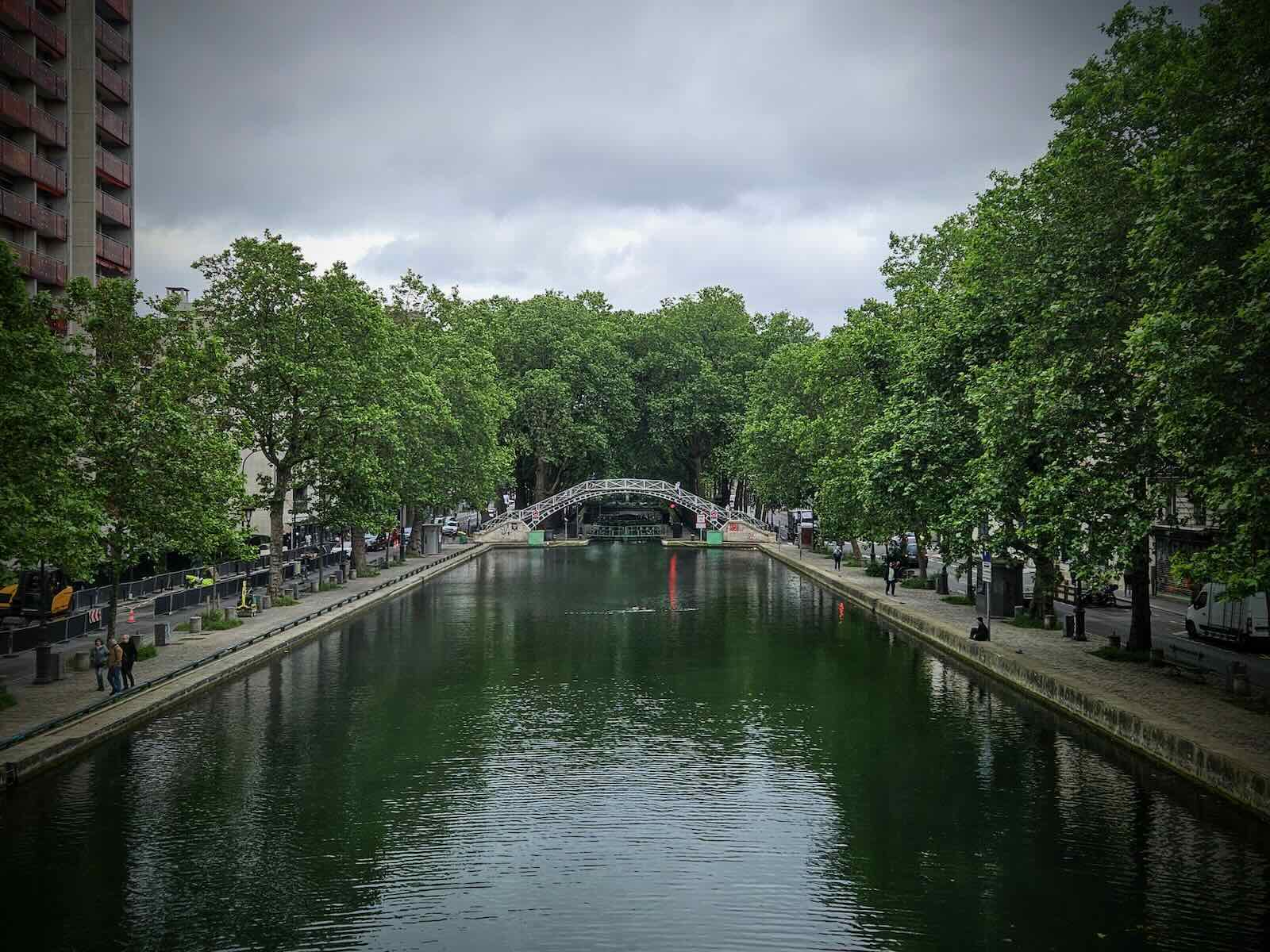
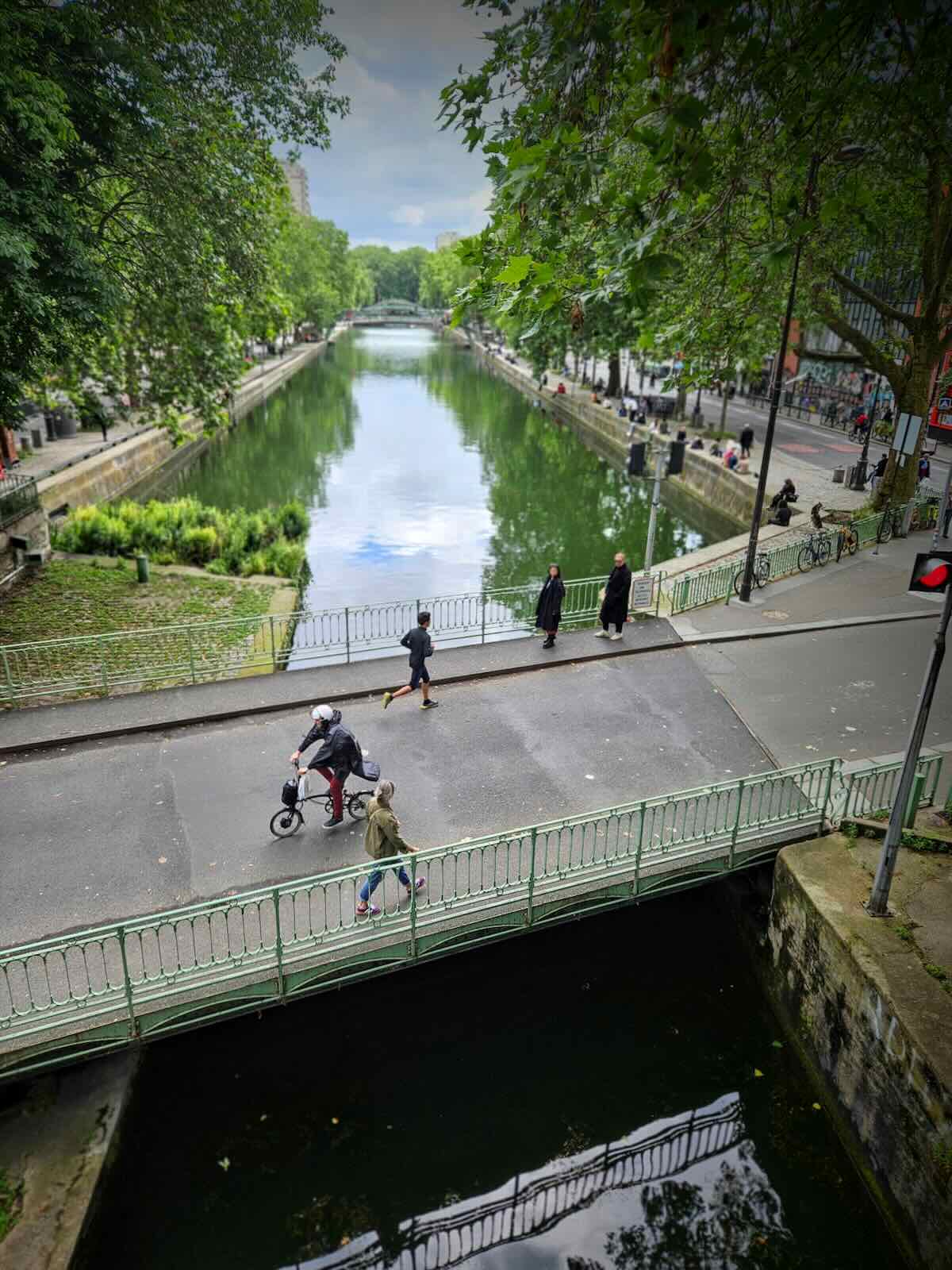
Having thoroughly enjoyed our lunch, we set off again along the canal. Walking along, we stopped to admire some of the beautiful features, such as the pretty locks and bridges that punctuate the canal.
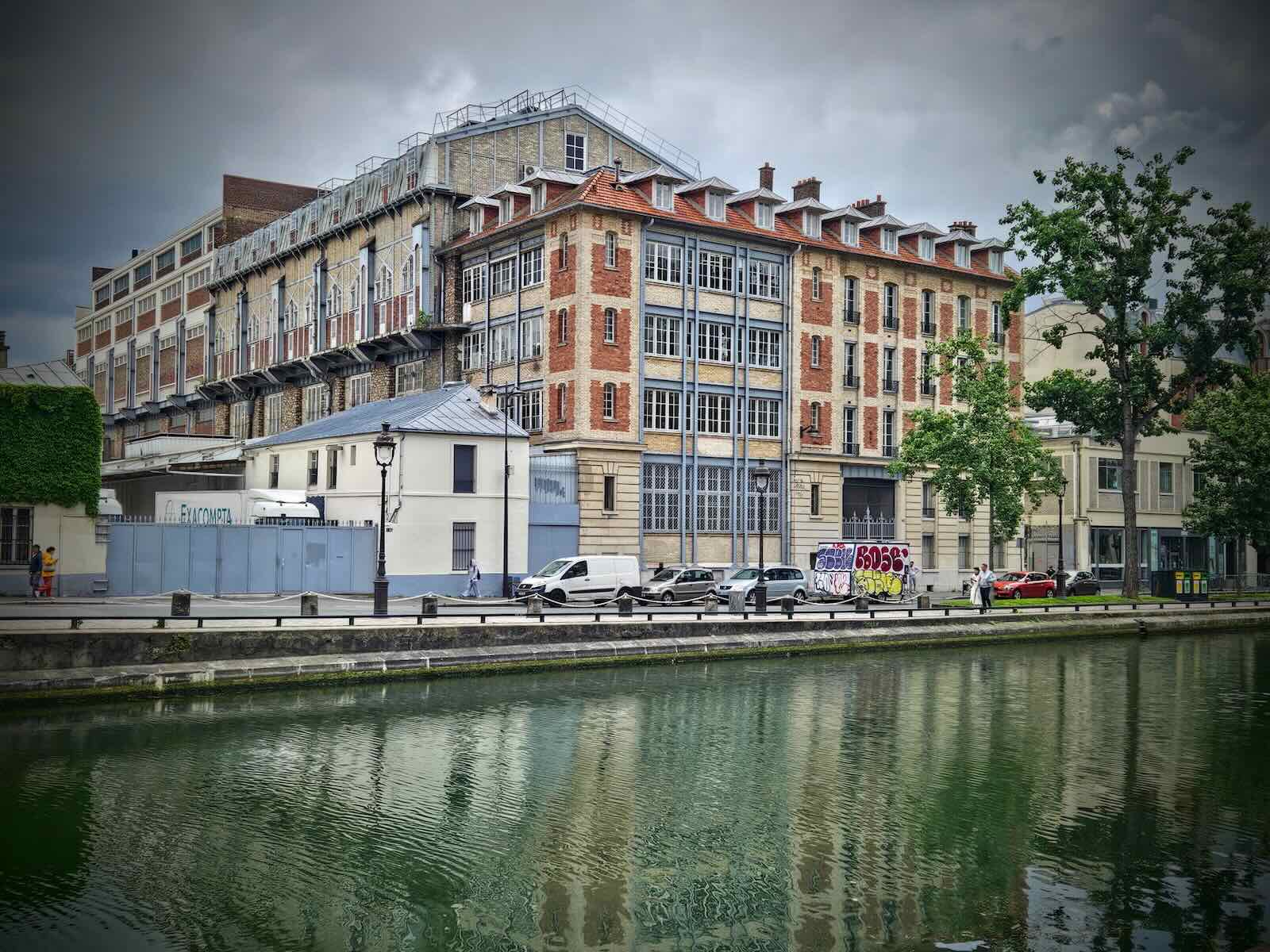
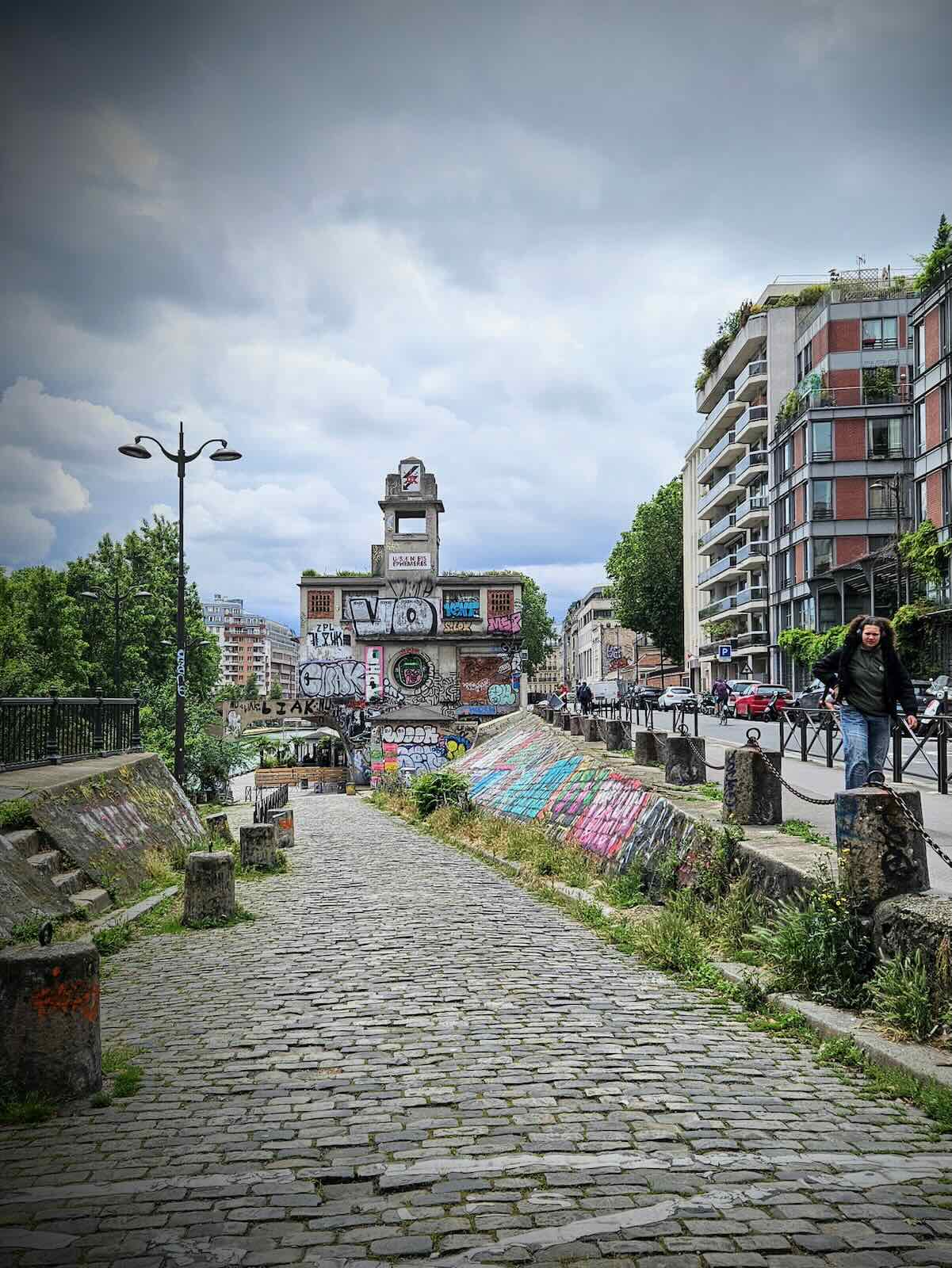
This led to many photo opportunities, of both features of the canal and surrounding buildings, such as the distinctive former power station, Usine électrique du quai de Jemmapes. We also took some further detours, mostly to shops nearby. With our eldest being into his skateboarding, this included the VEGA Skateshop.
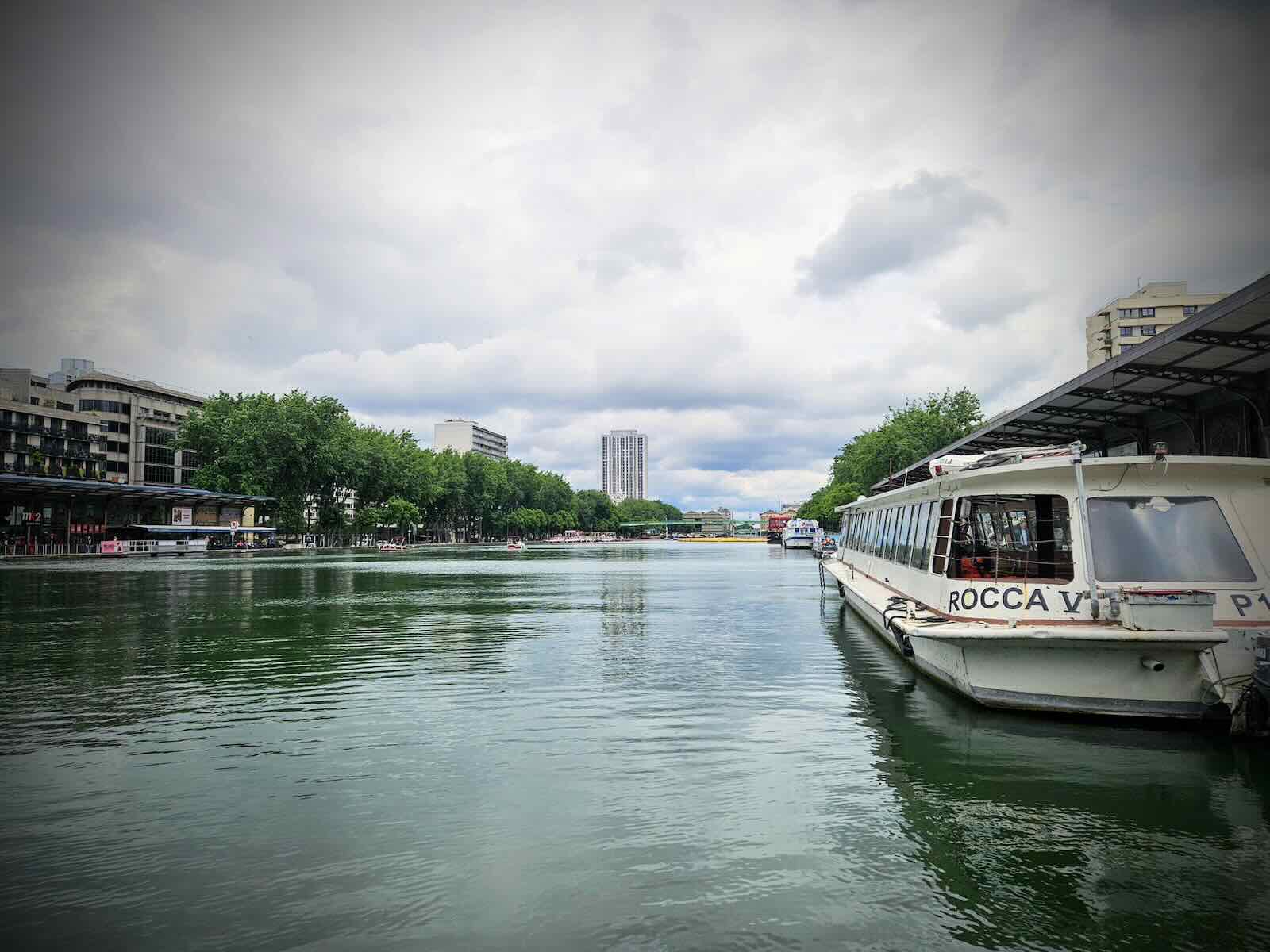
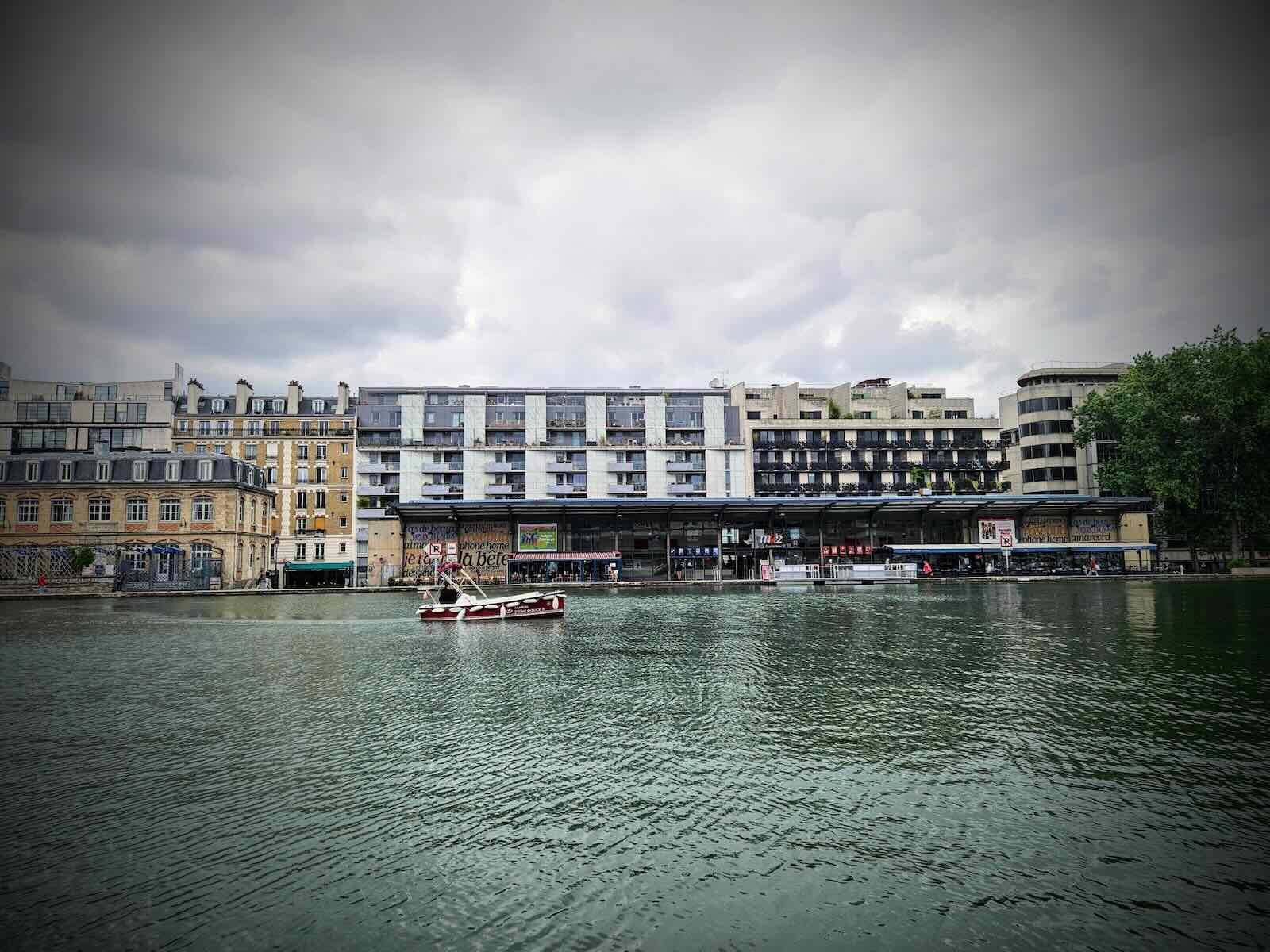
It wasn’t long before we arrived at Place de la Bataille de Stalingrad, which I passed earlier, while I was riding there. We carried on under the viaduct and made our way to Bassin de la Villette.
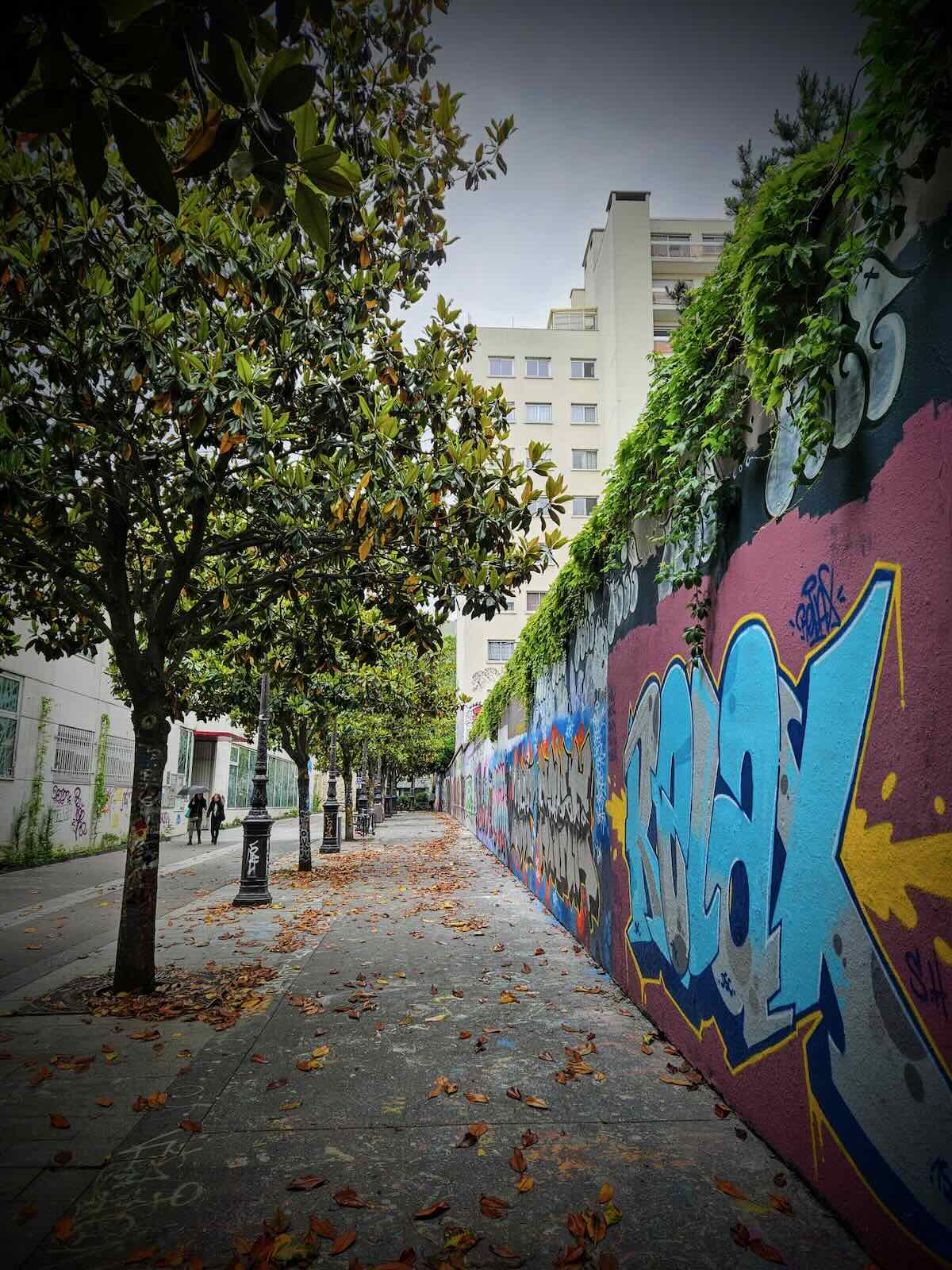
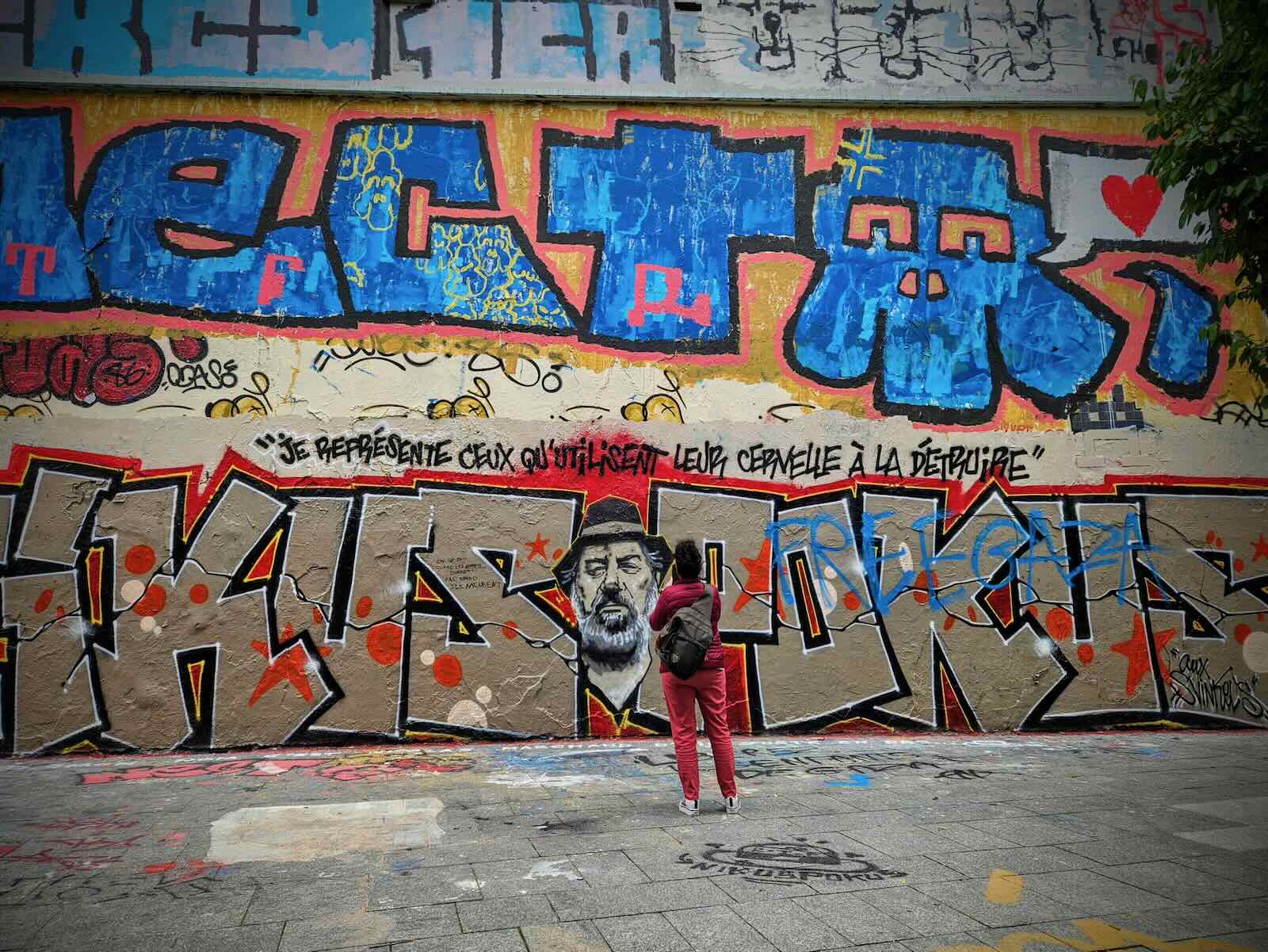
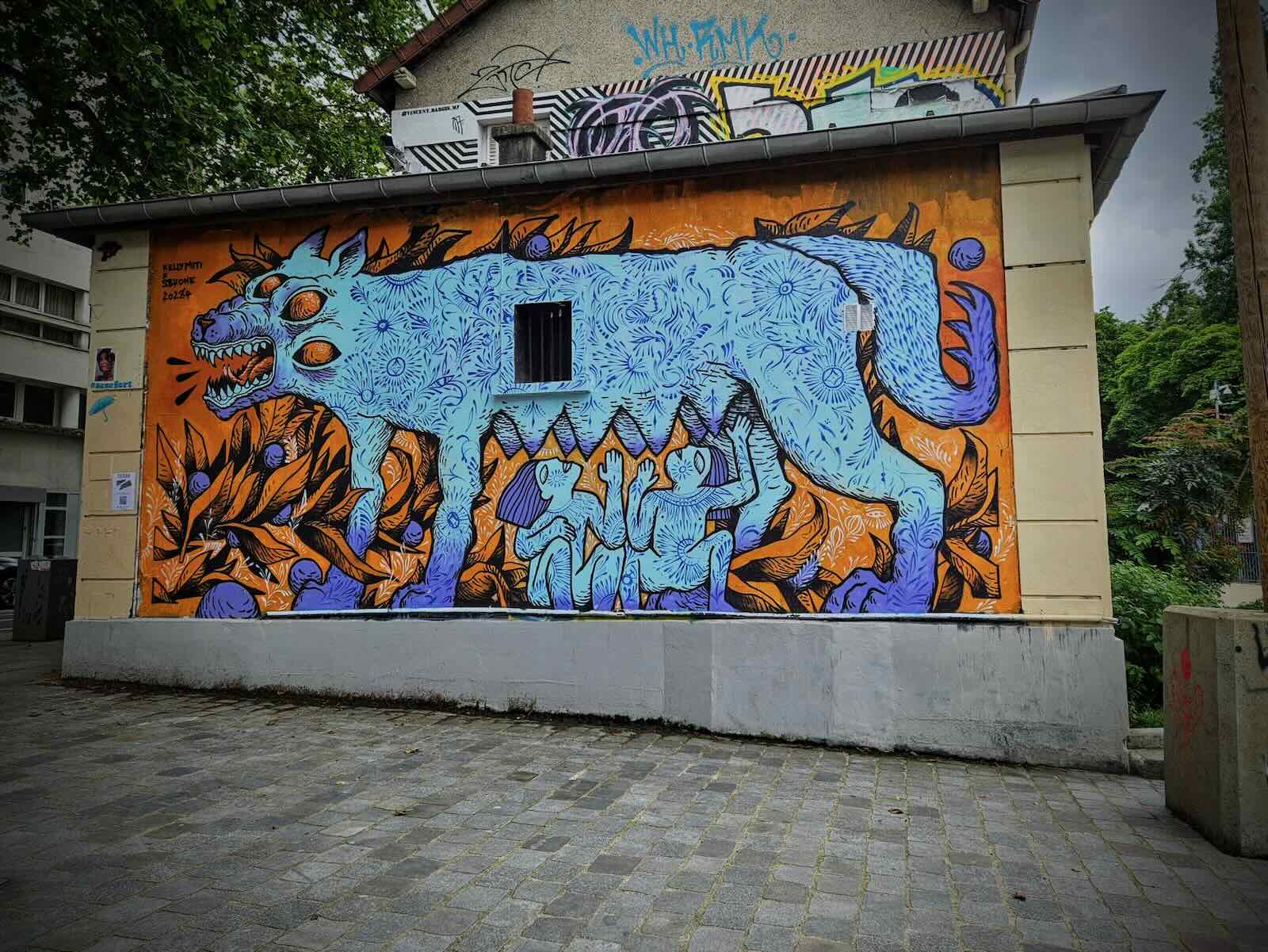
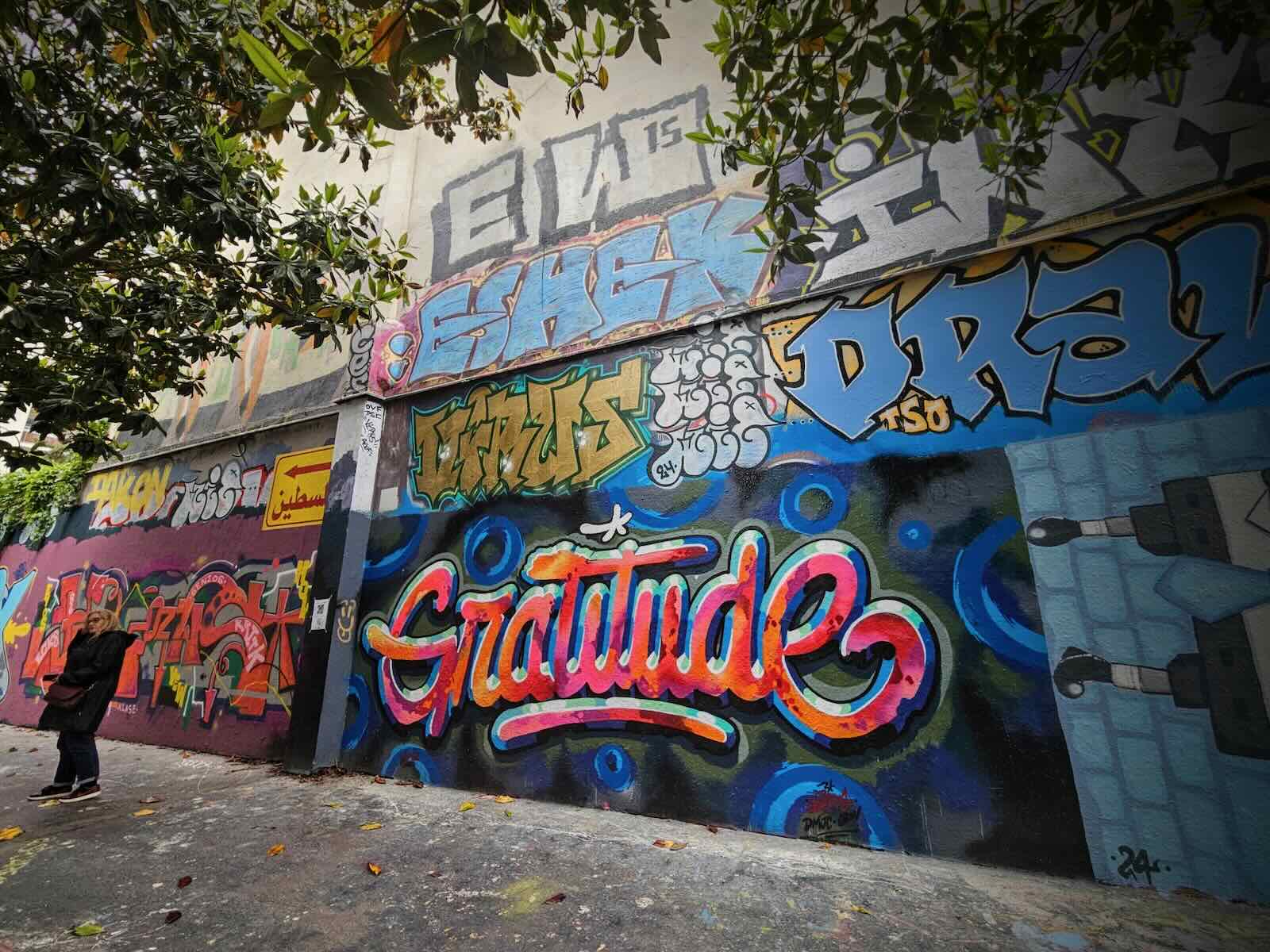
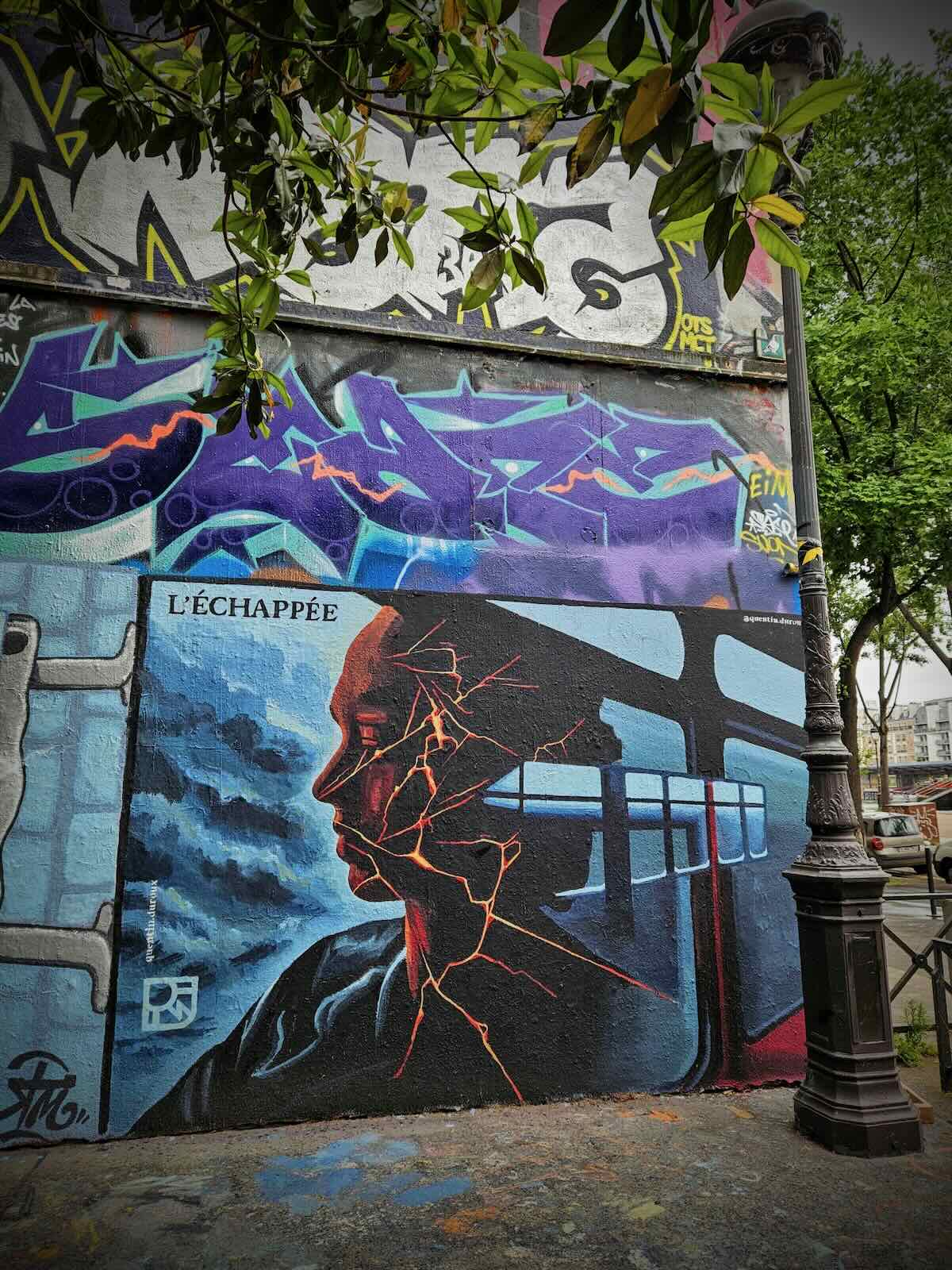
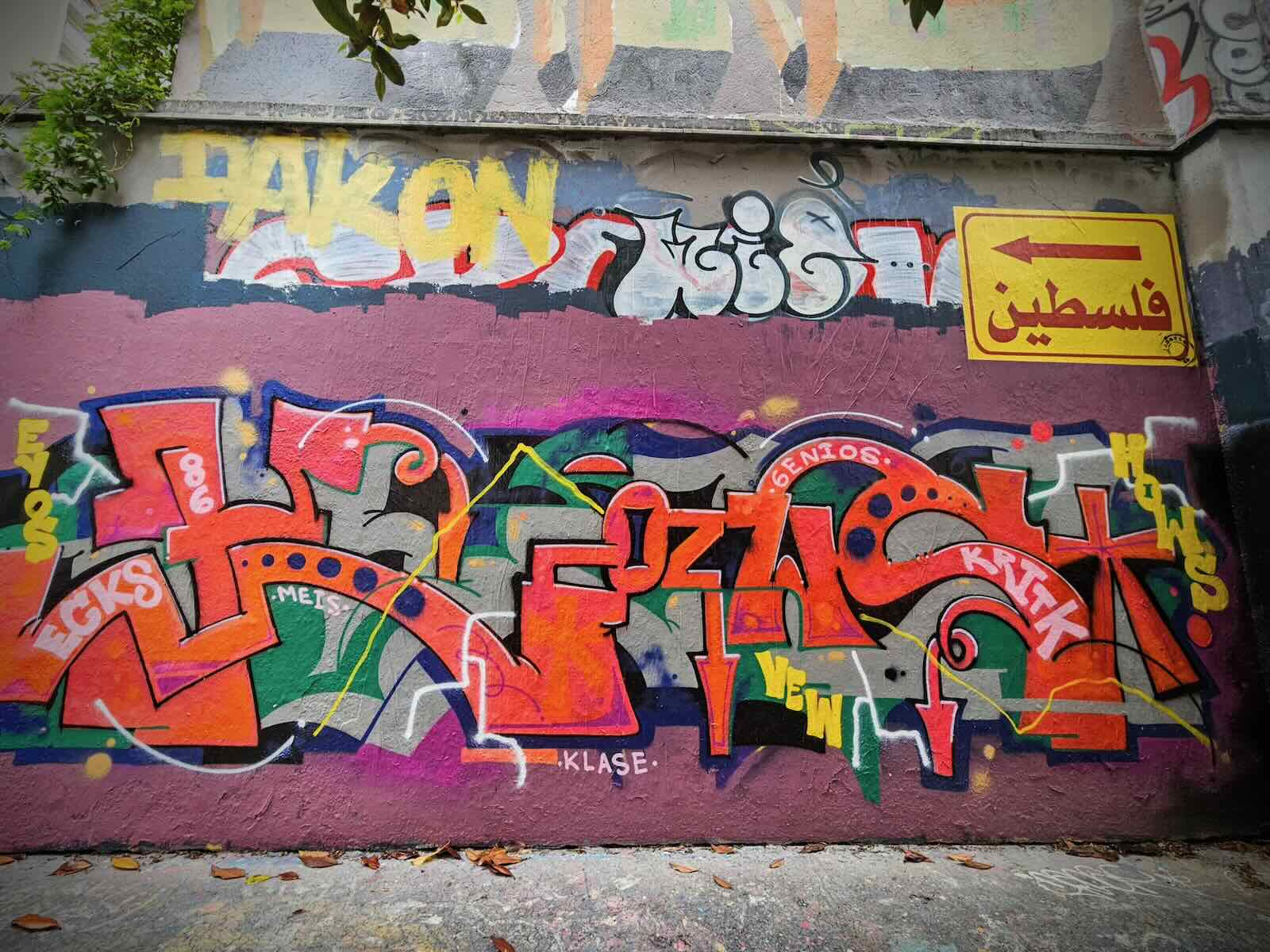
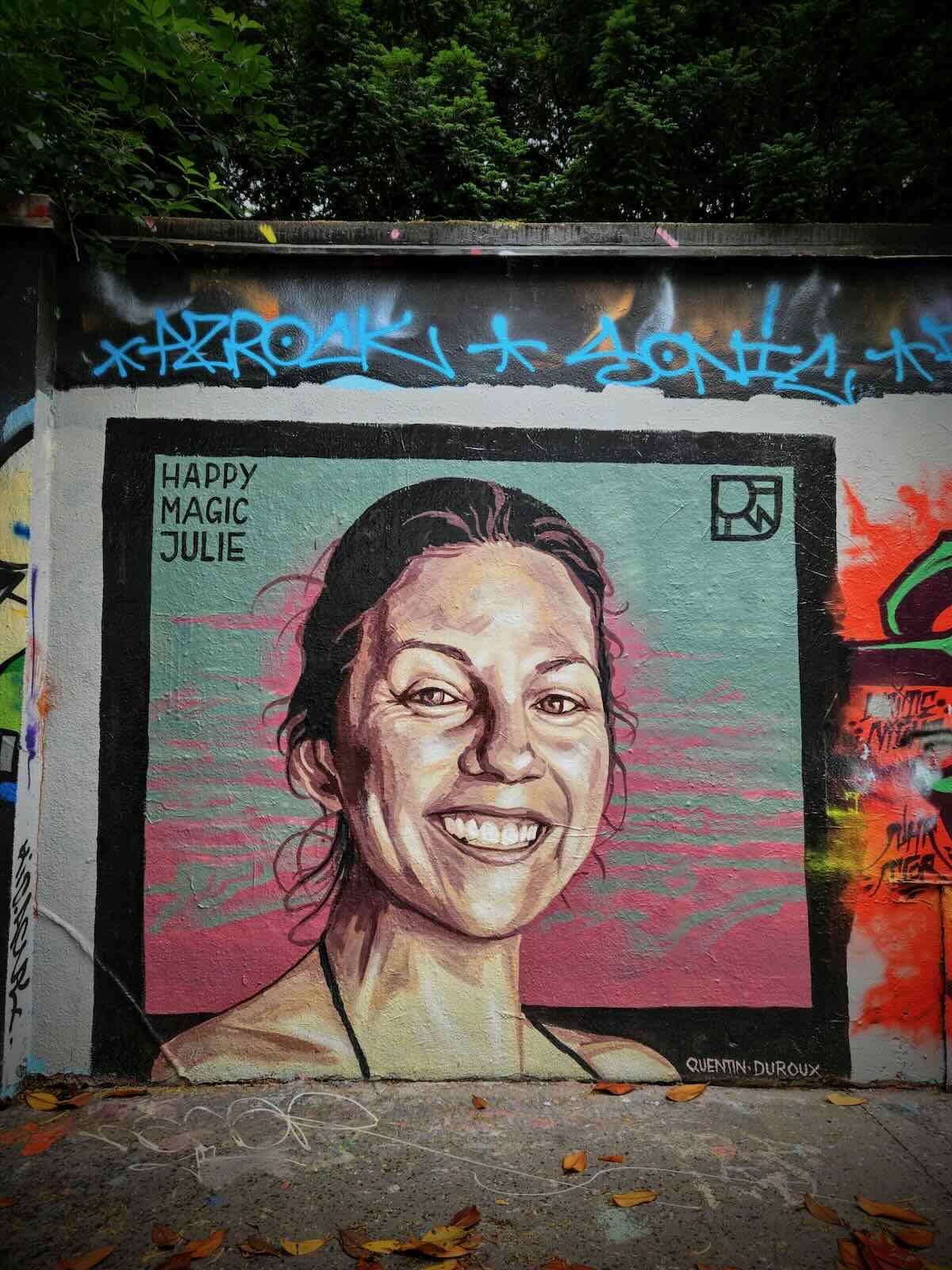
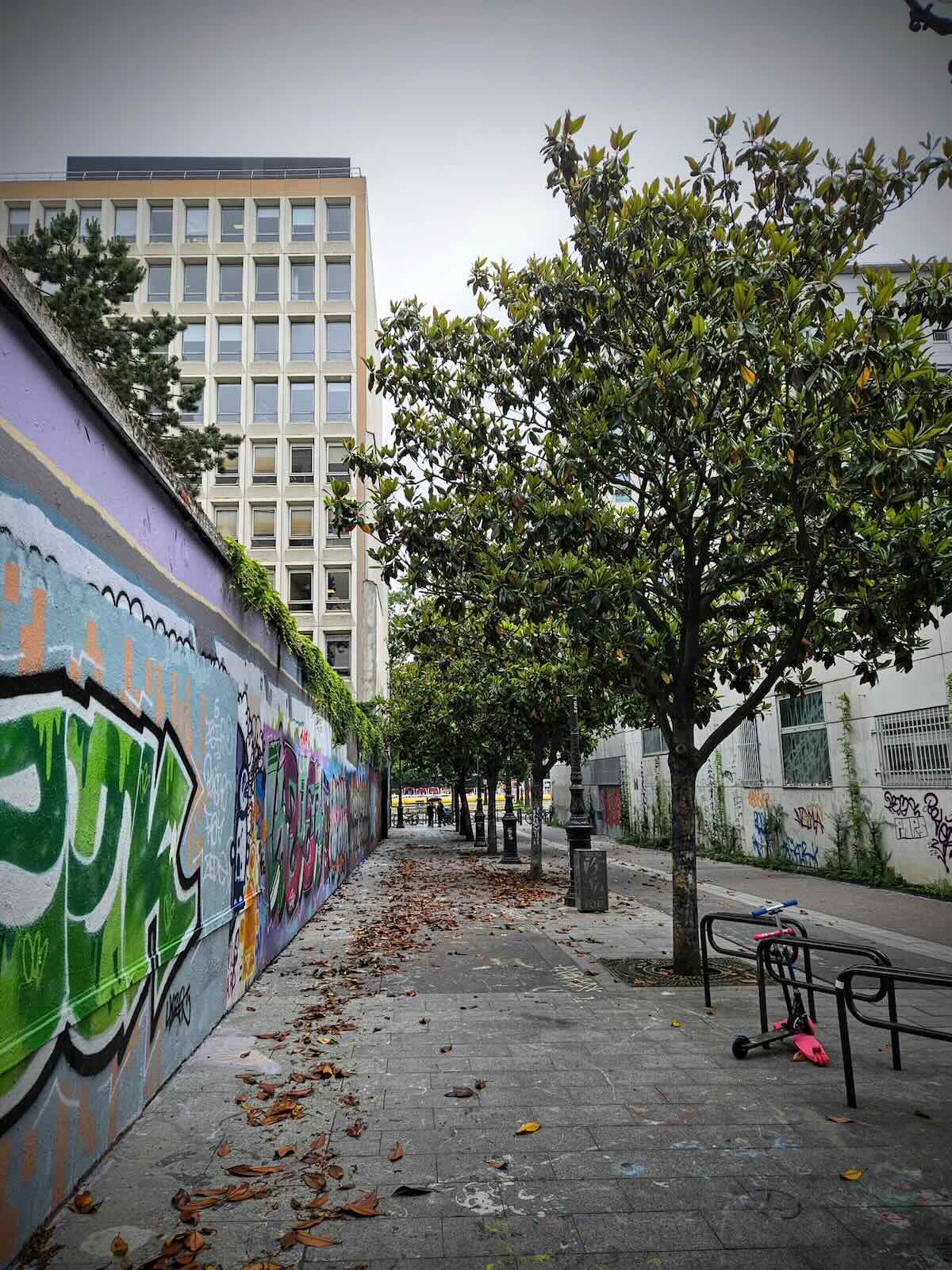
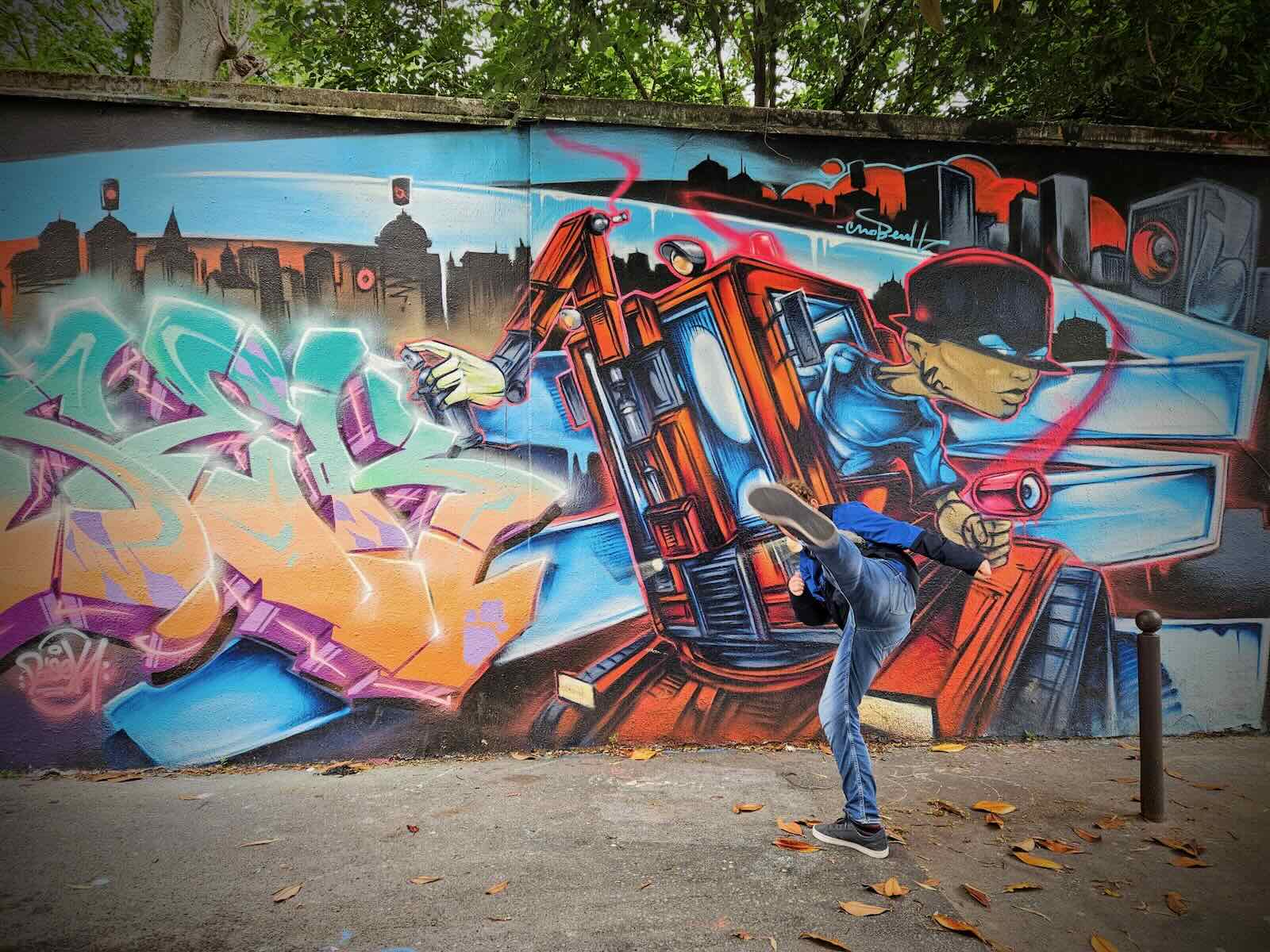
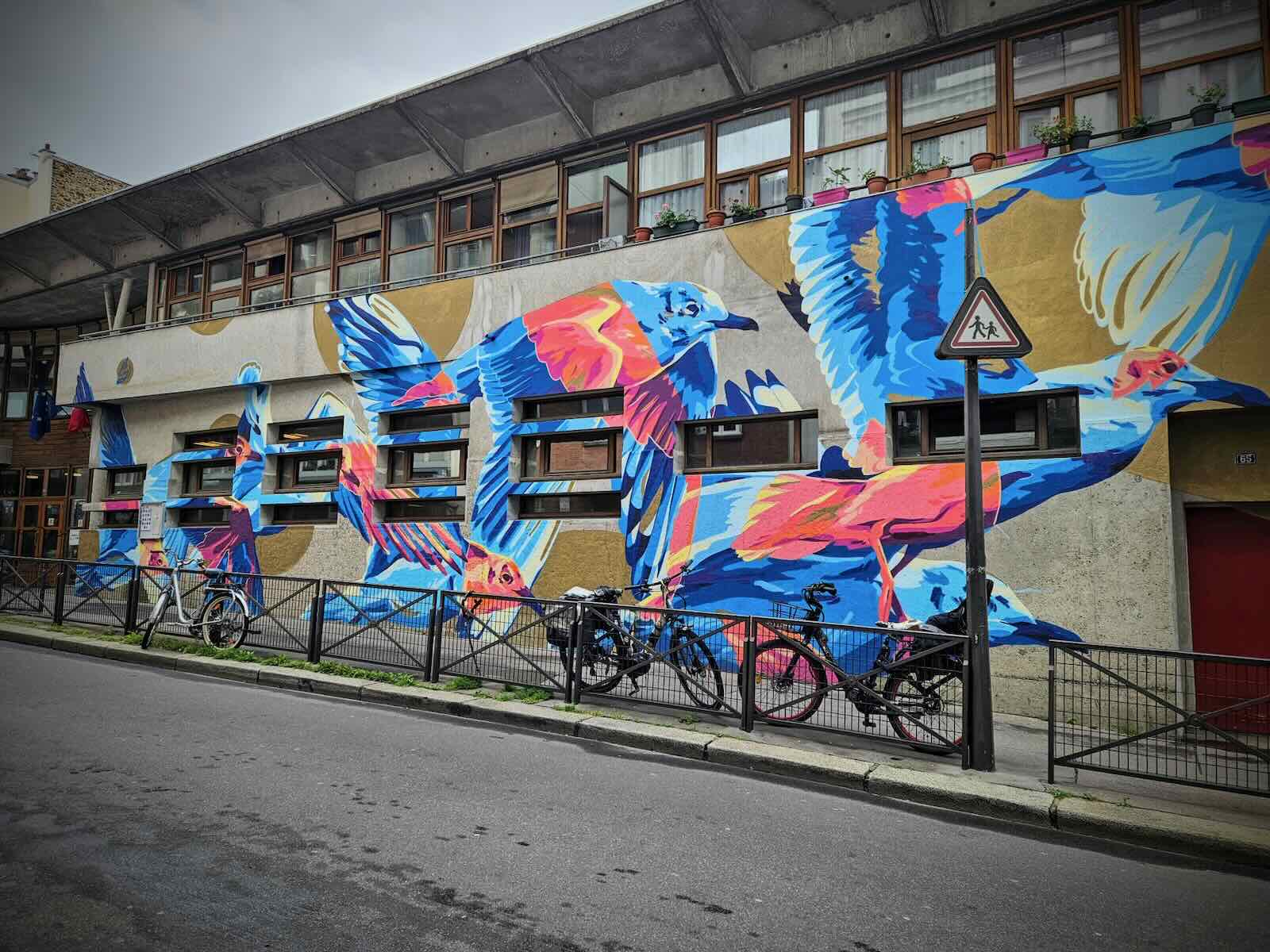
At this point, we had a wander round, admiring the views and taking in the street art along Quai de la Loire.






Wandering over to Parc des Buttes-Chaumont
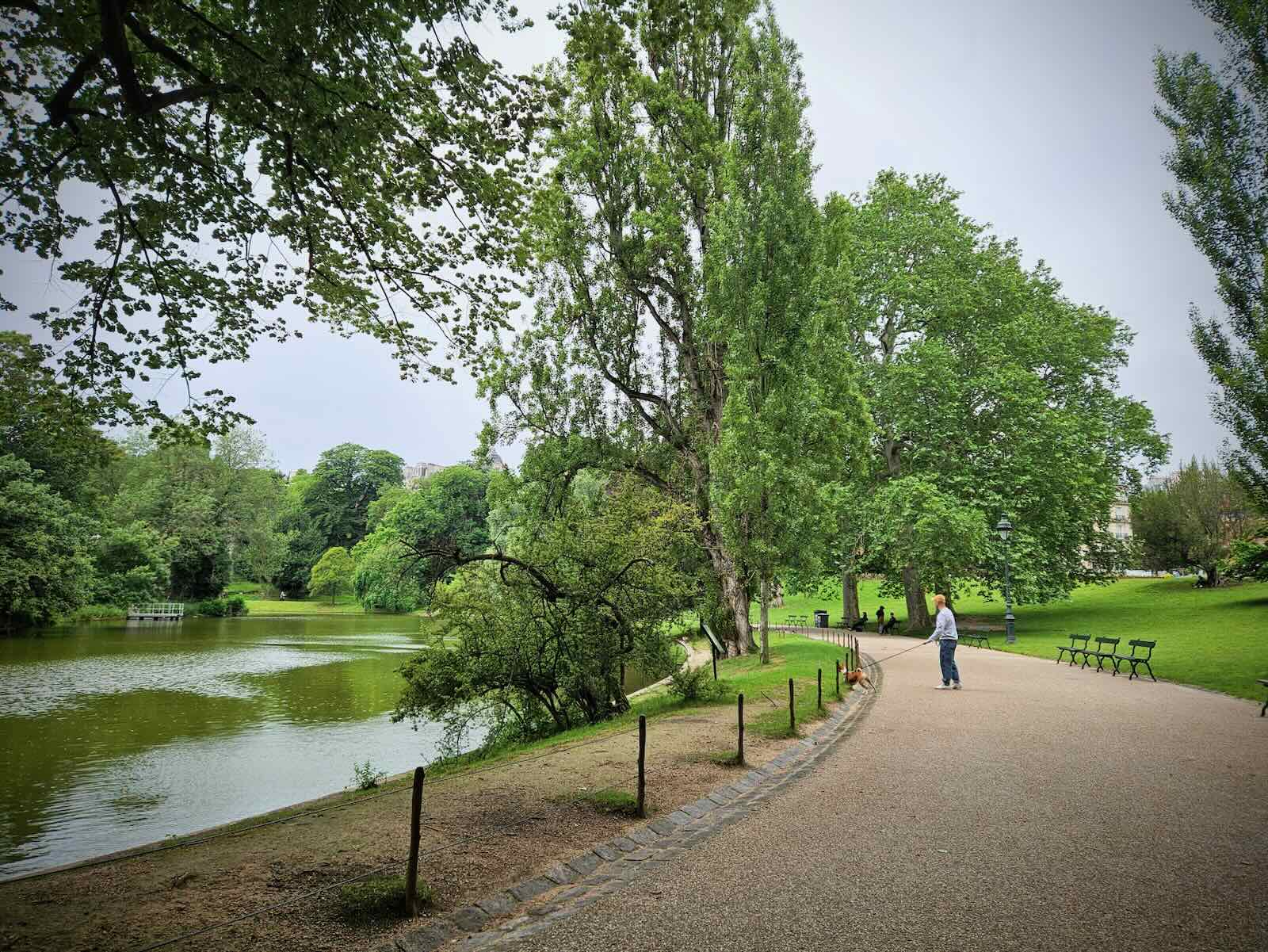
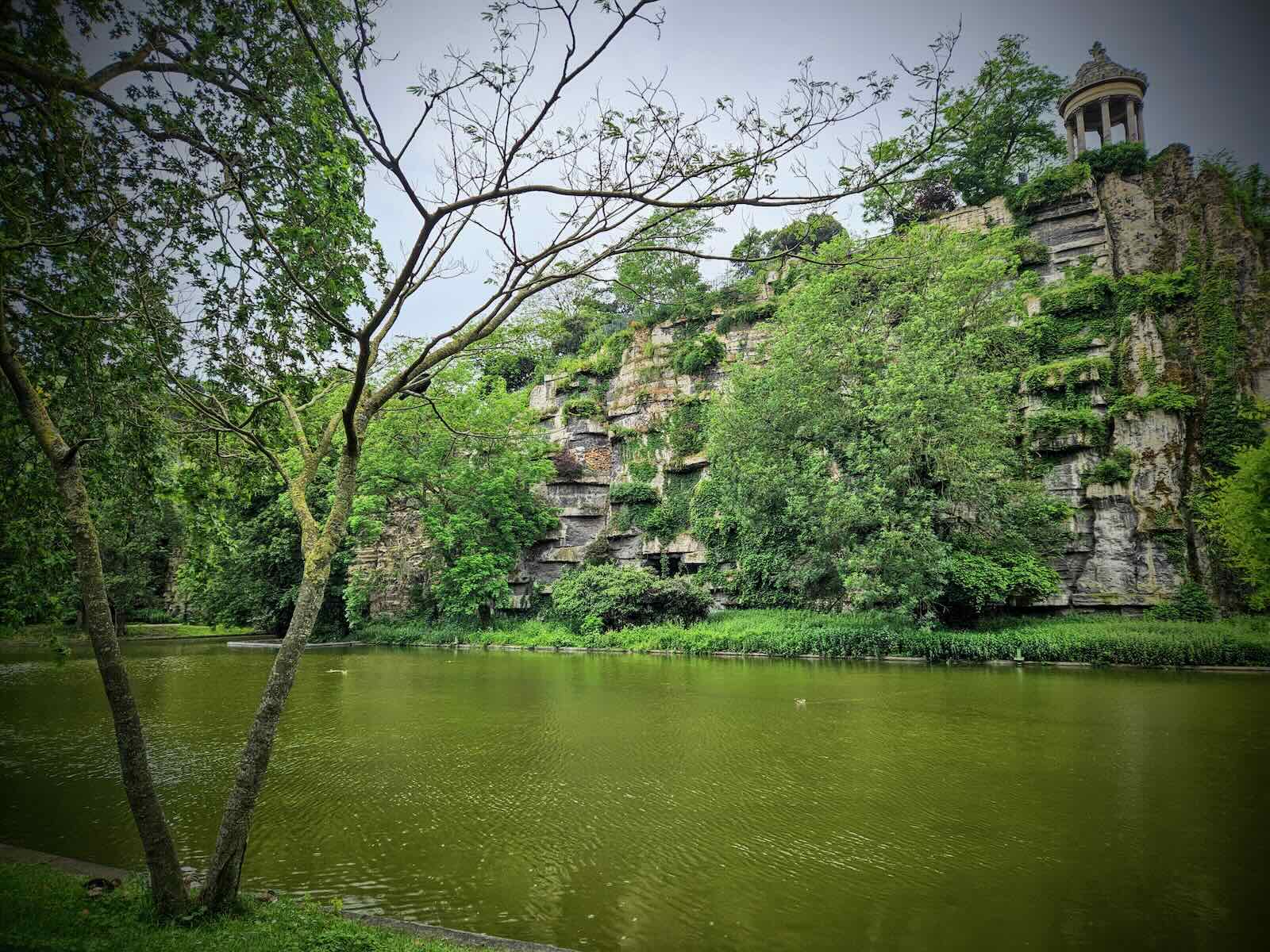
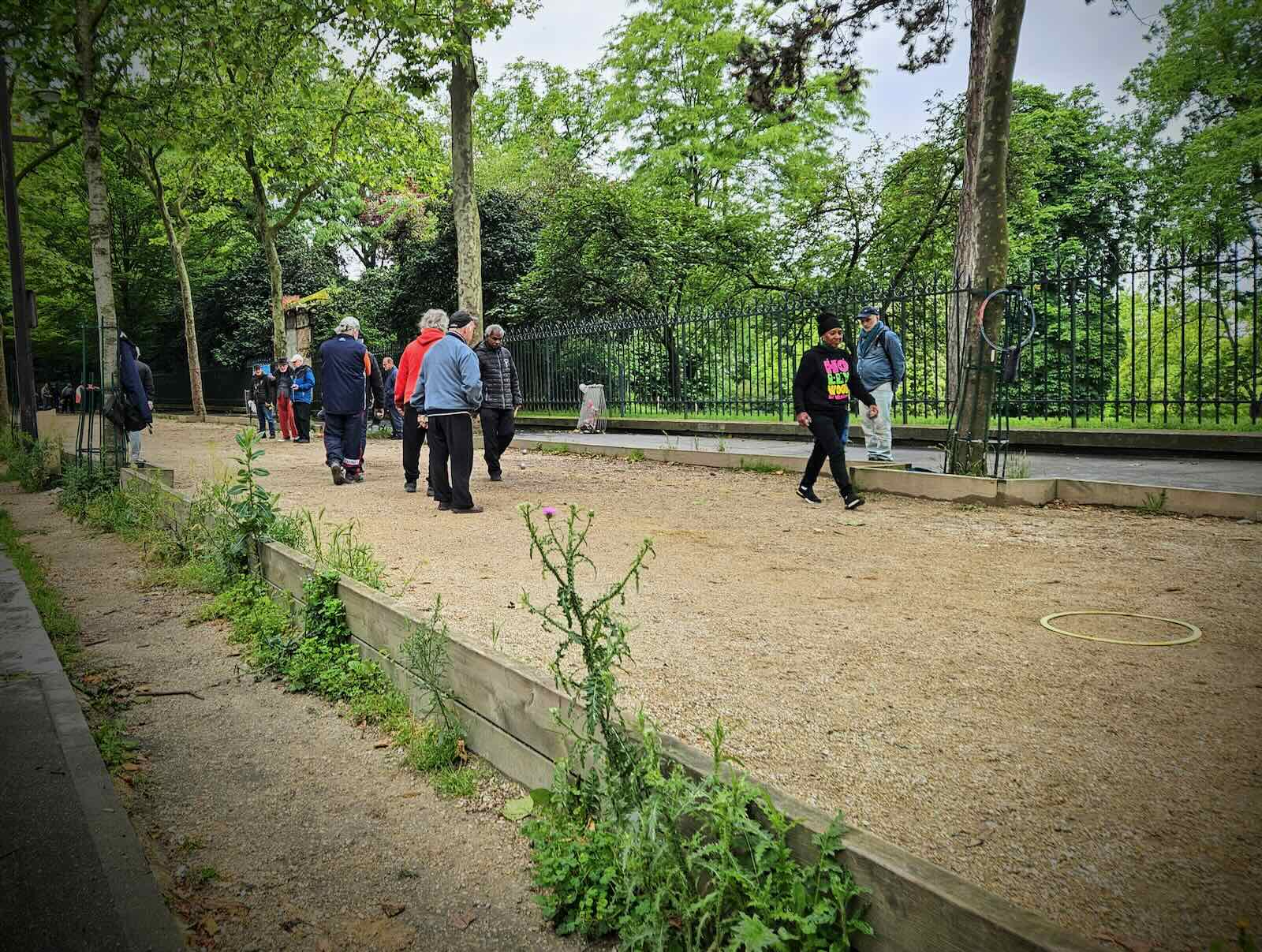
After our walk along the canal, we decided to continue along to Parc des Buttes-Chaumont, another recommendation we’d seen about. Located in the 19th arrondissement, this park isn’t a tourist hotspot, like some of the other parks in Paris, despite being the fifth biggest.
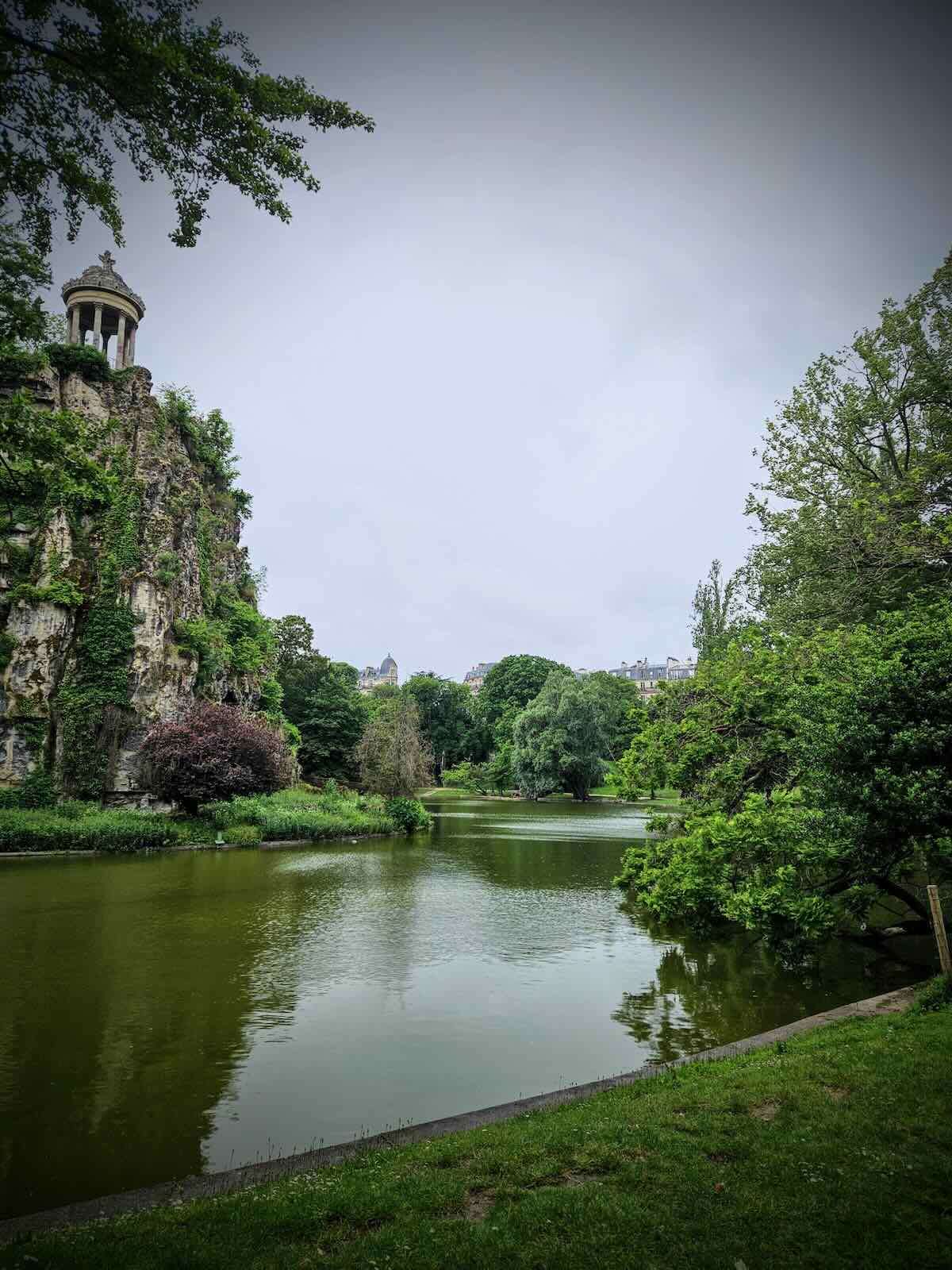
The park also has a less than attractive history, having previously being the location where hanged bodies of criminals were displayed, a refuse dump and depository for sewage as well as a place for for cutting up horse carcasses.
Things improved somewhat when the renowned Jean-Charles Adolphe Alphand came up with the park’s landscape design and extensive work was carried out, including the use explosives and installation of a lake.
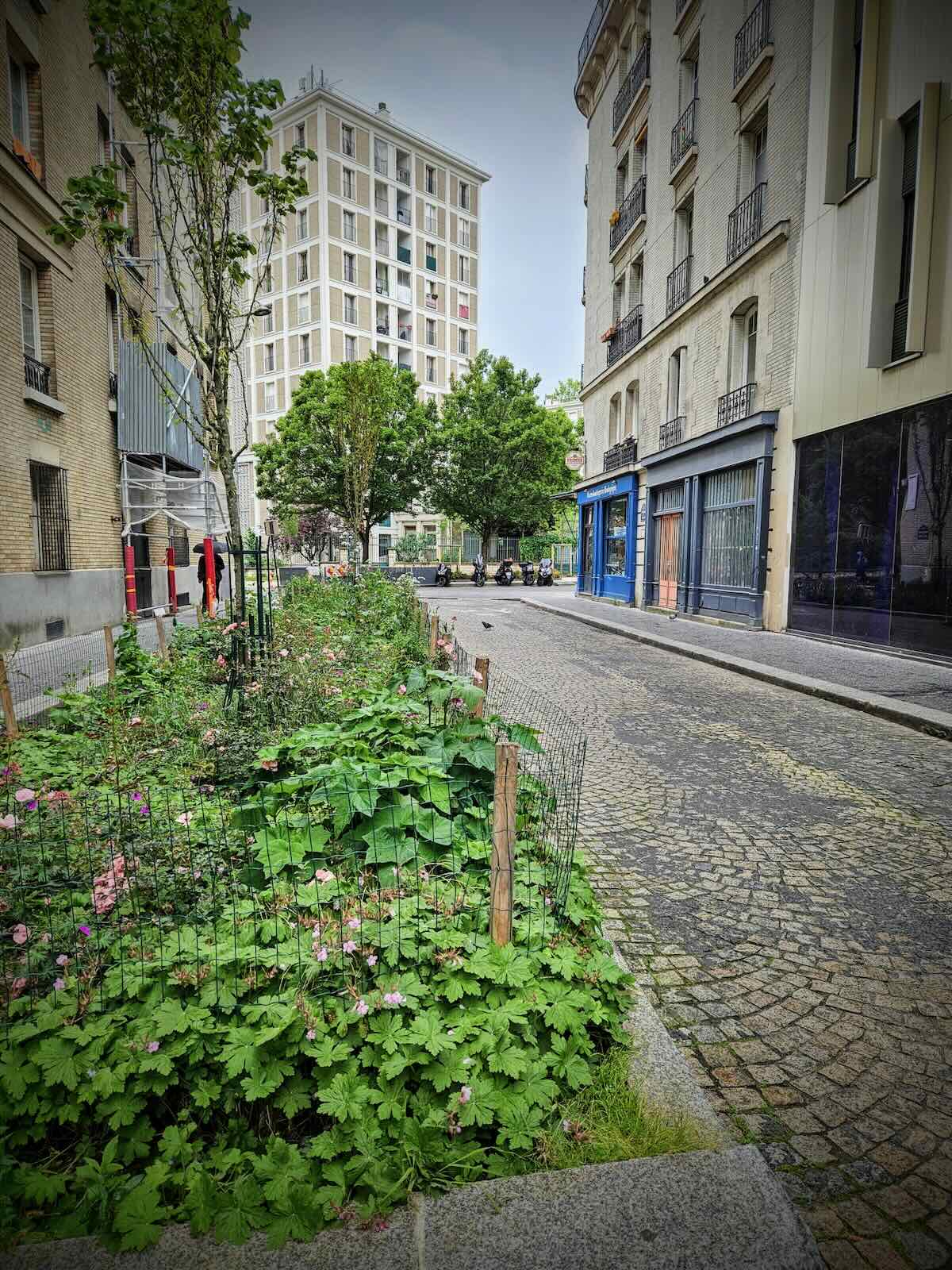
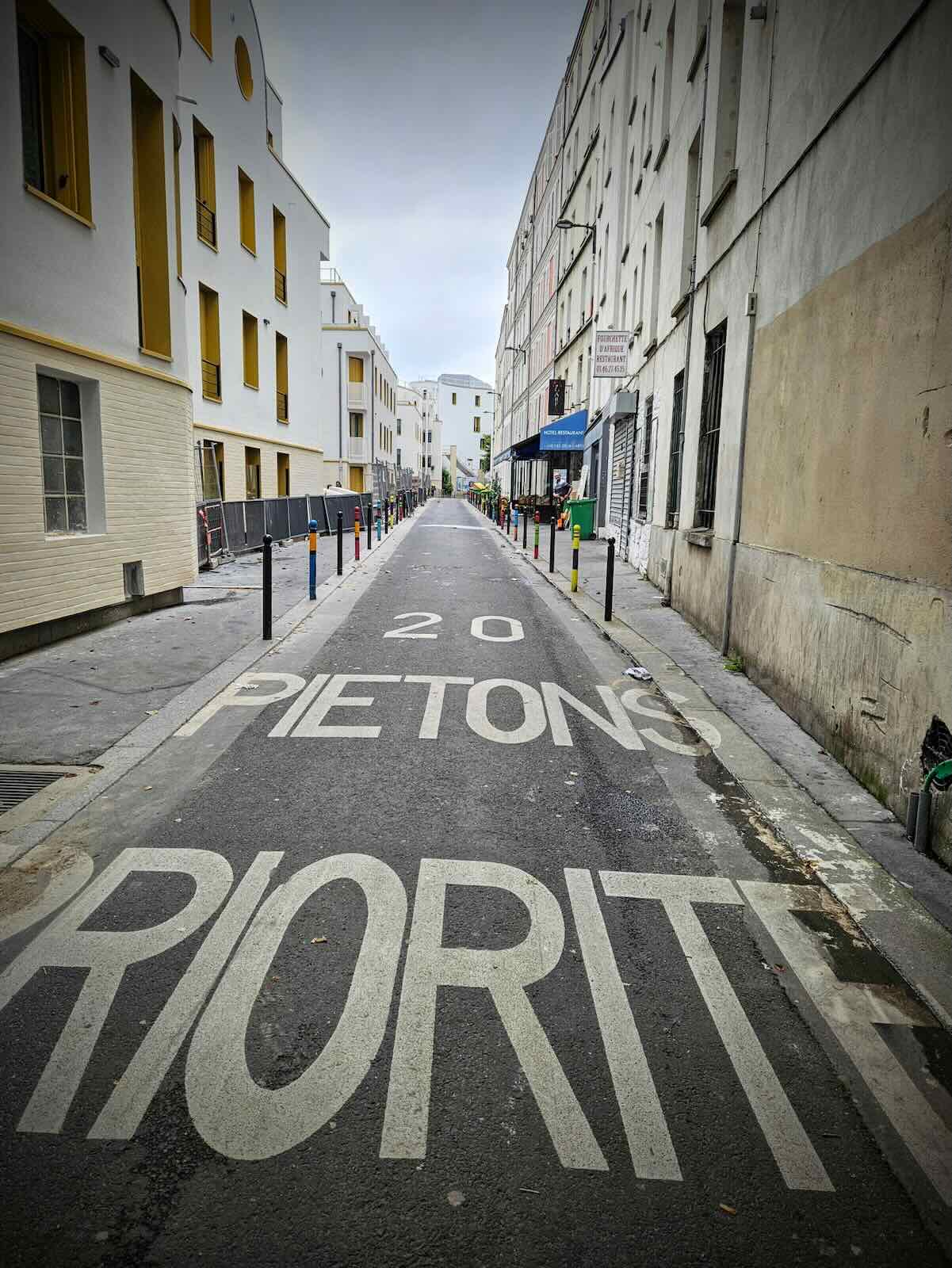
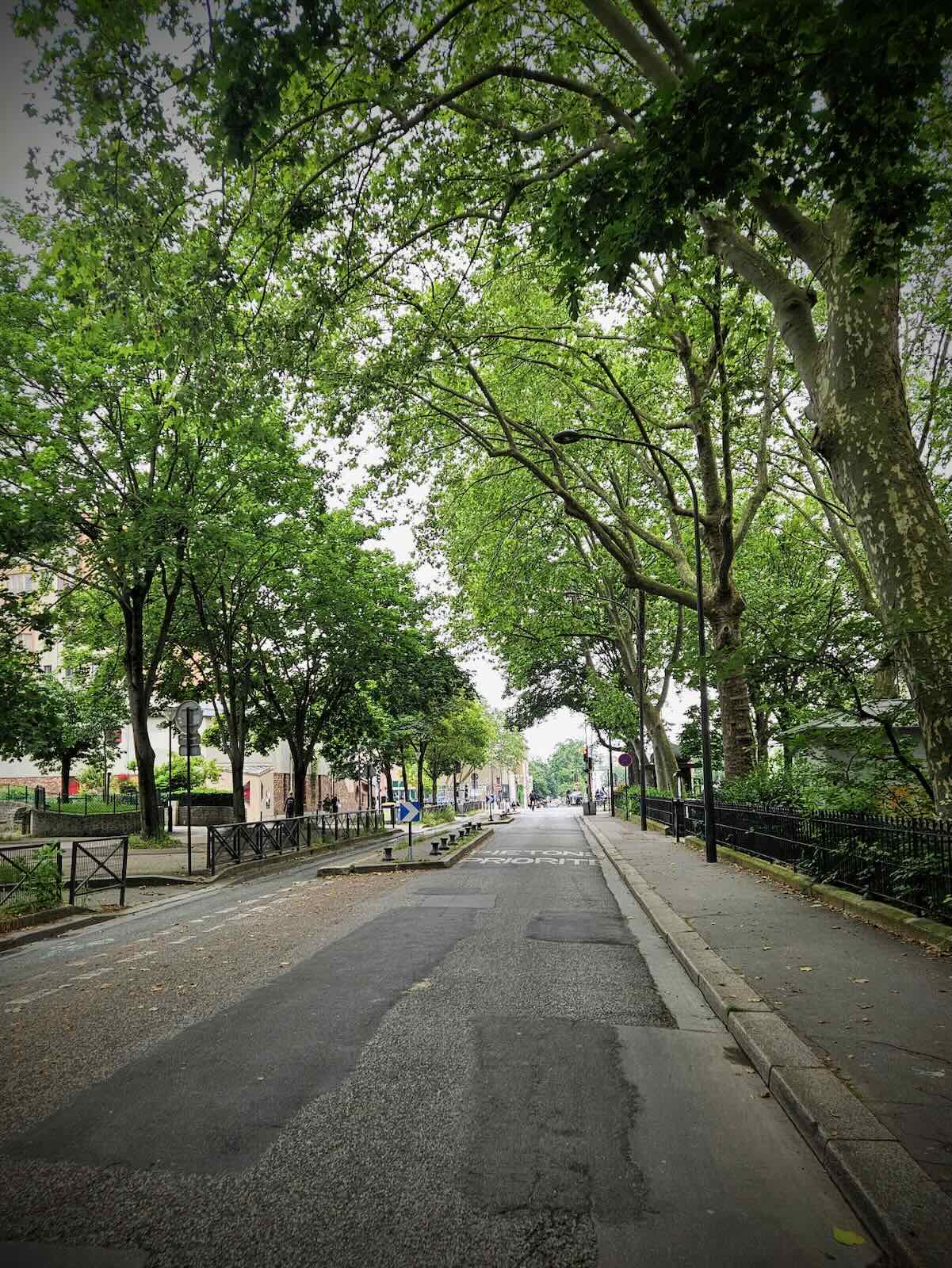
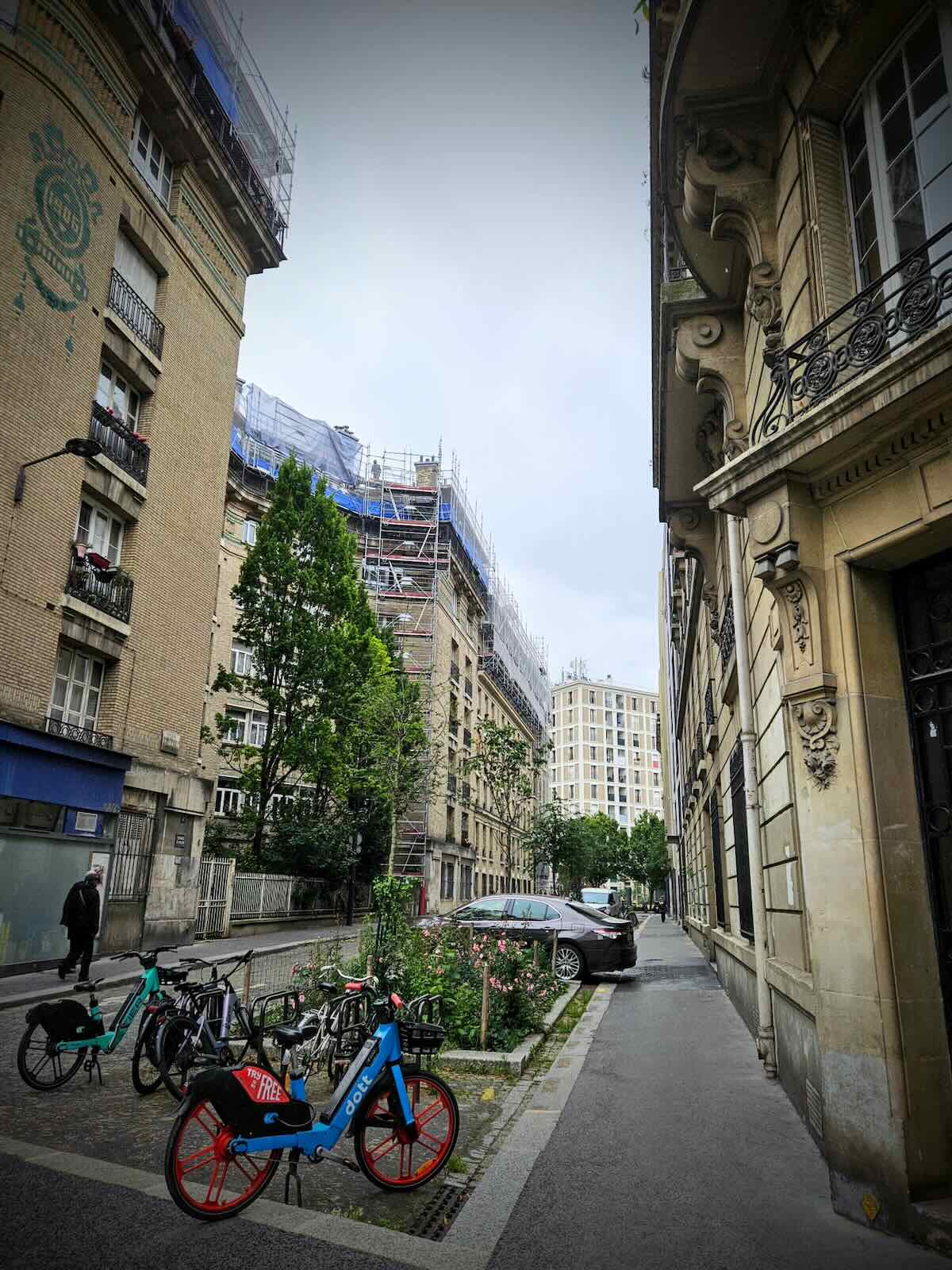
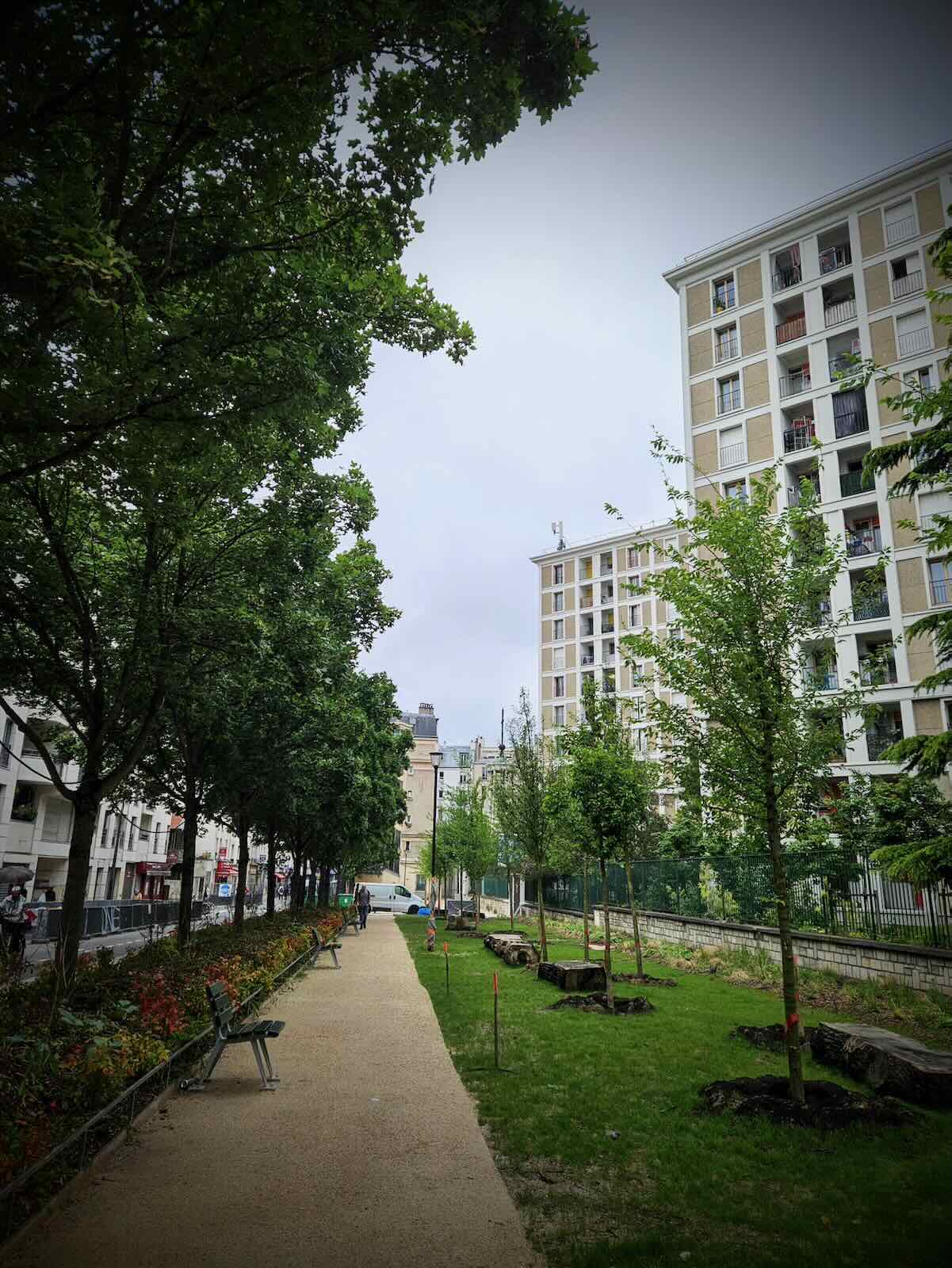
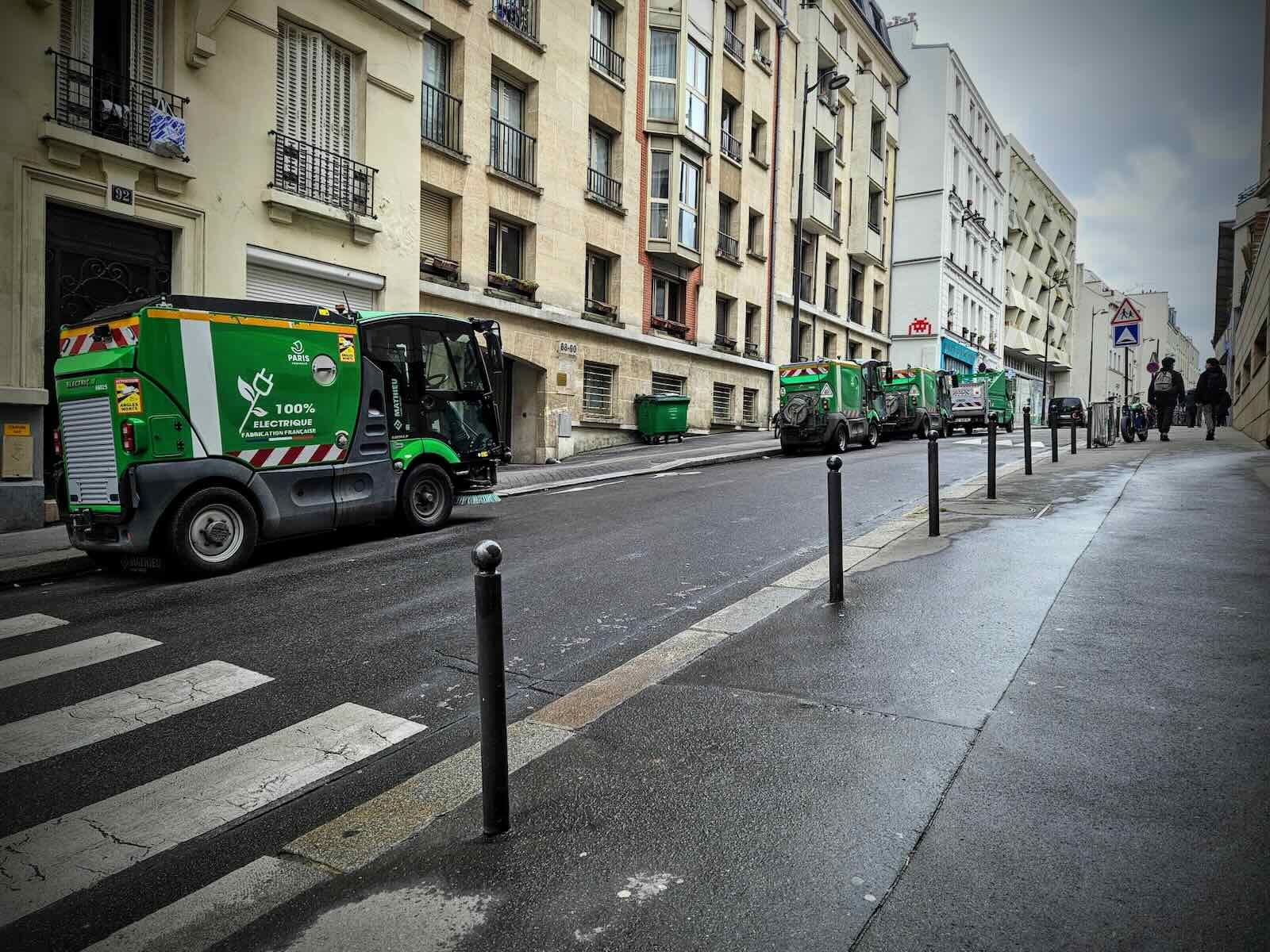
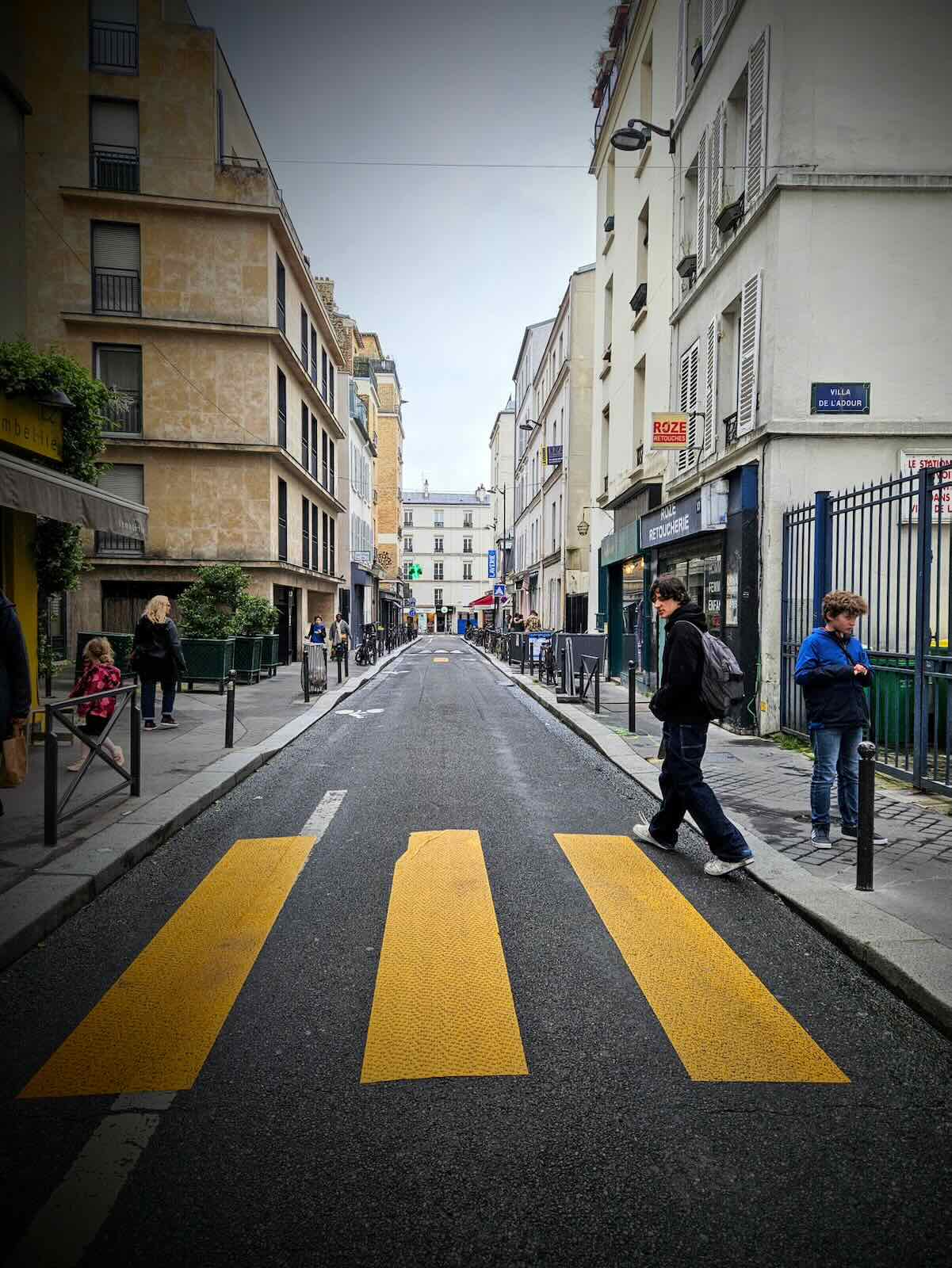
On the way to the park, we did get opportunity to wander along some pleasant streets that have recently been calmed, with the addition of some very attractive green space and planting.
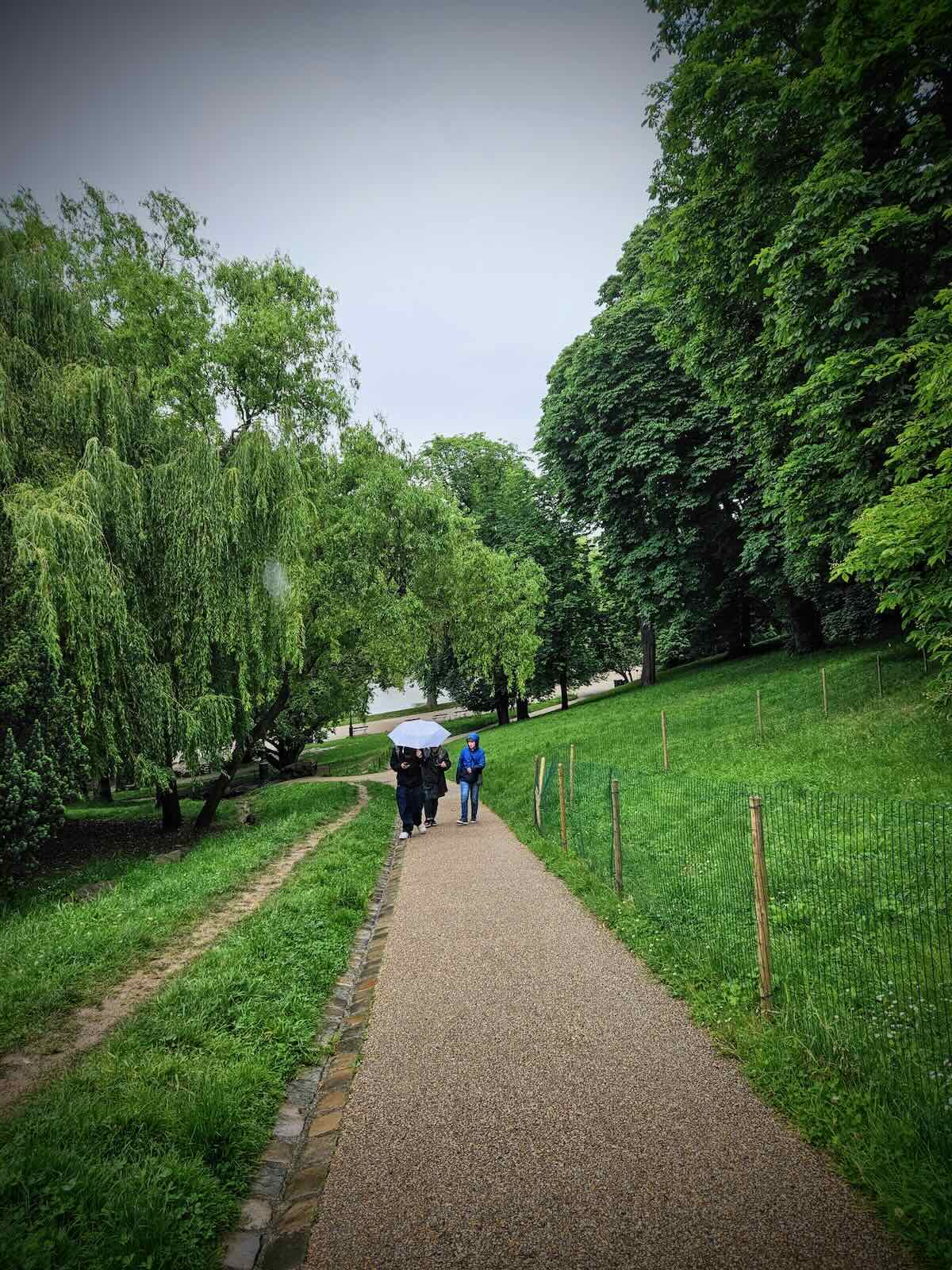
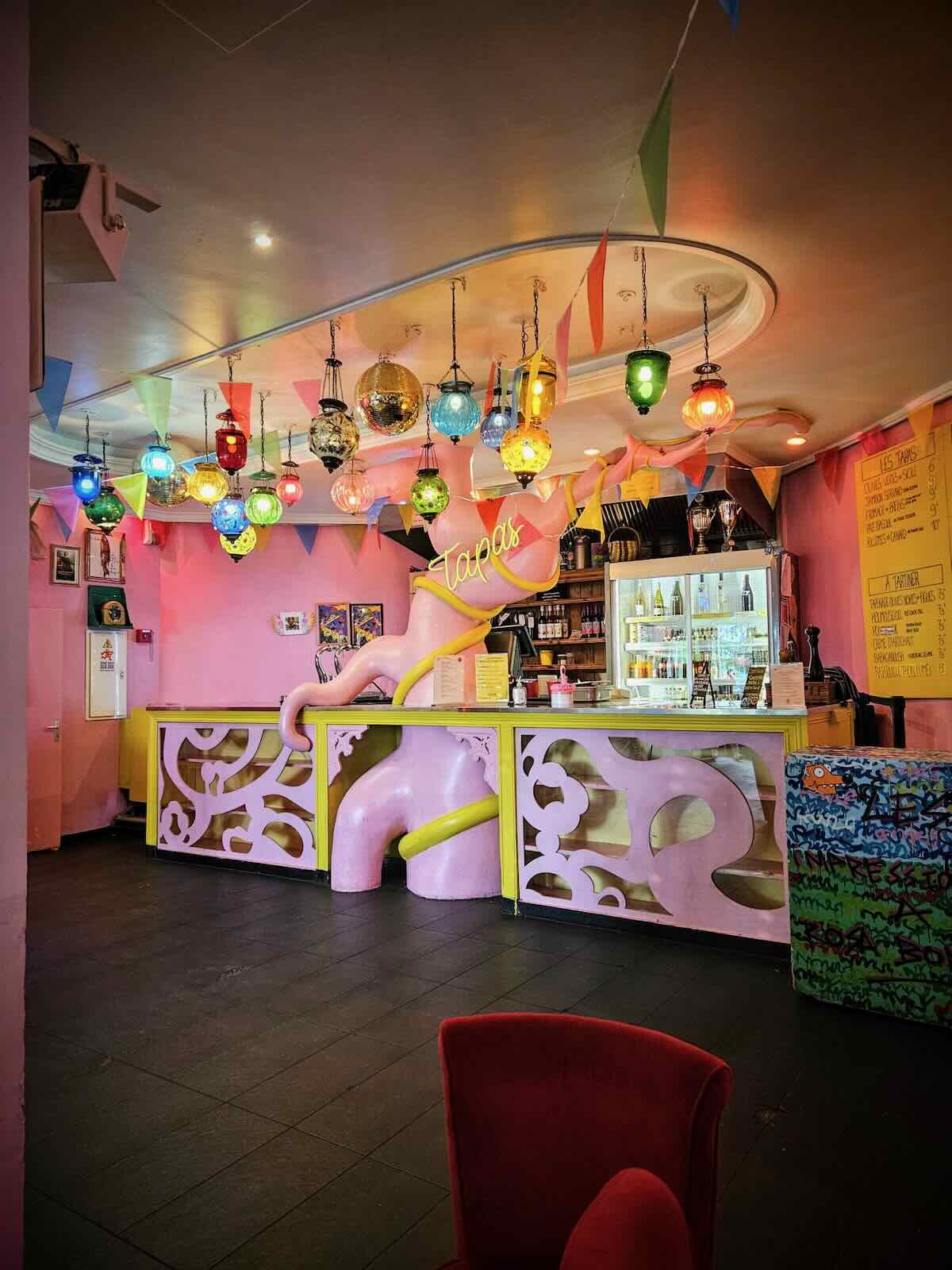
By the time we got to the park, the rain had returned as we began exploring. With the rain coming down, it didn’t take long before we made our way up the hill to the pavilion, location of the Rosa Bonheur Buttes Chaumont, a fabulous bar in the park.
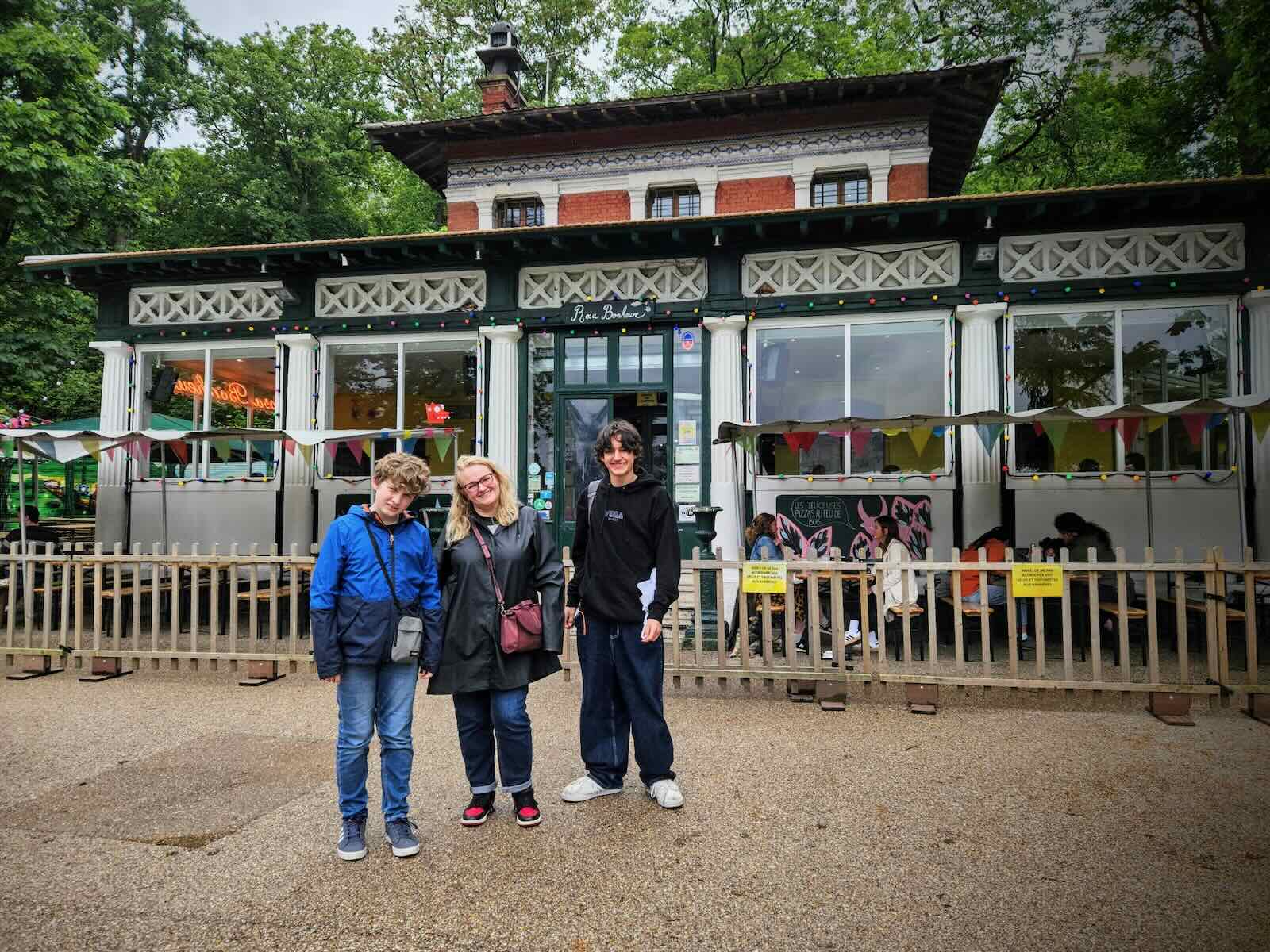
Named after probably the most successful female artist of the 19th century, Rosa Bonheur, it certainly has a very distinctive and bright interior. Finding a comfy stop, it seemed rude not to stop for a drink or two, which we were more than happy to do!
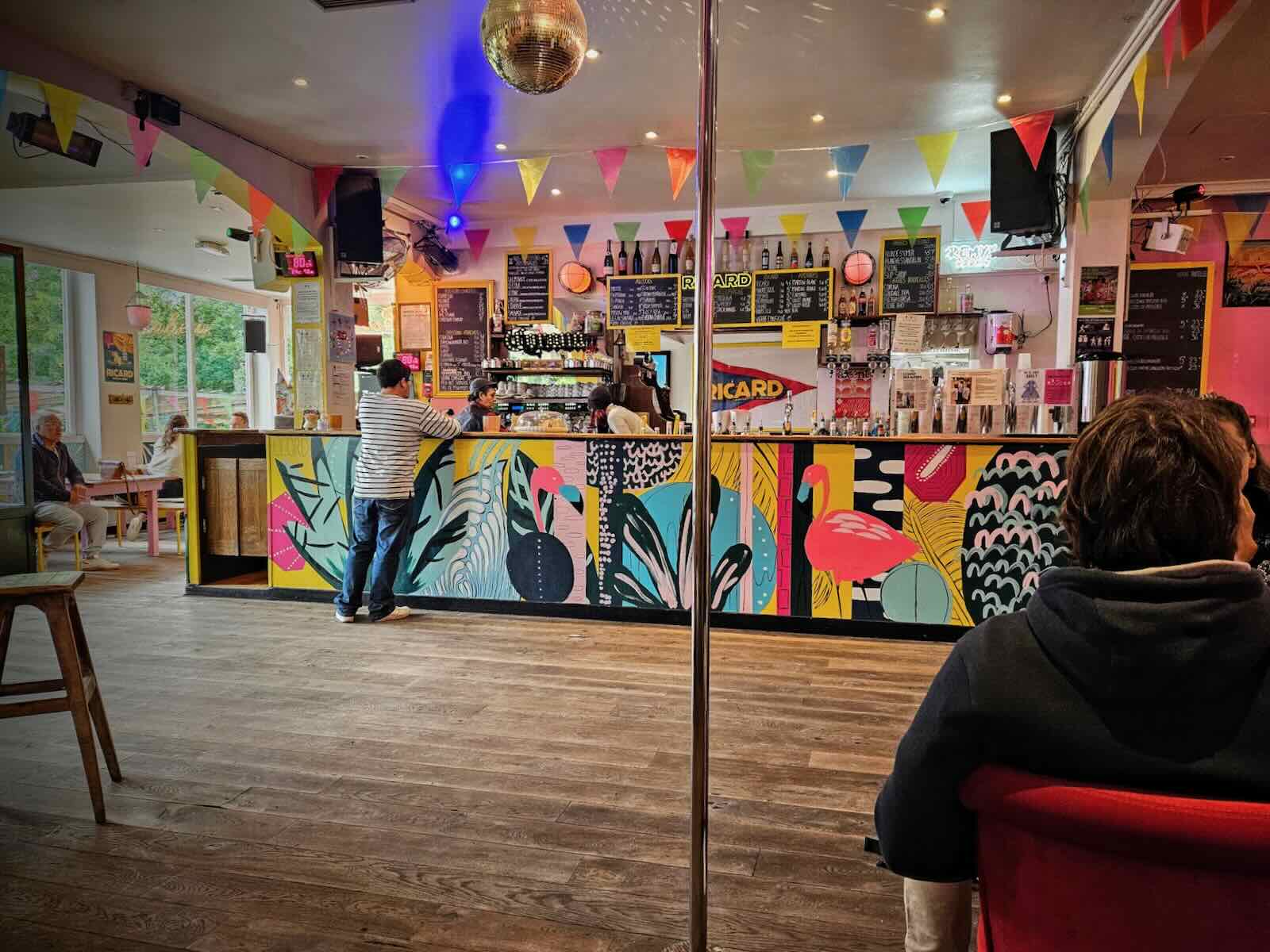
We could have spent all afternoon at the bar in the park, but we decided to be sensible and not go overboard. So we left there and carried on our walk towards the Belleville neighbourhood.
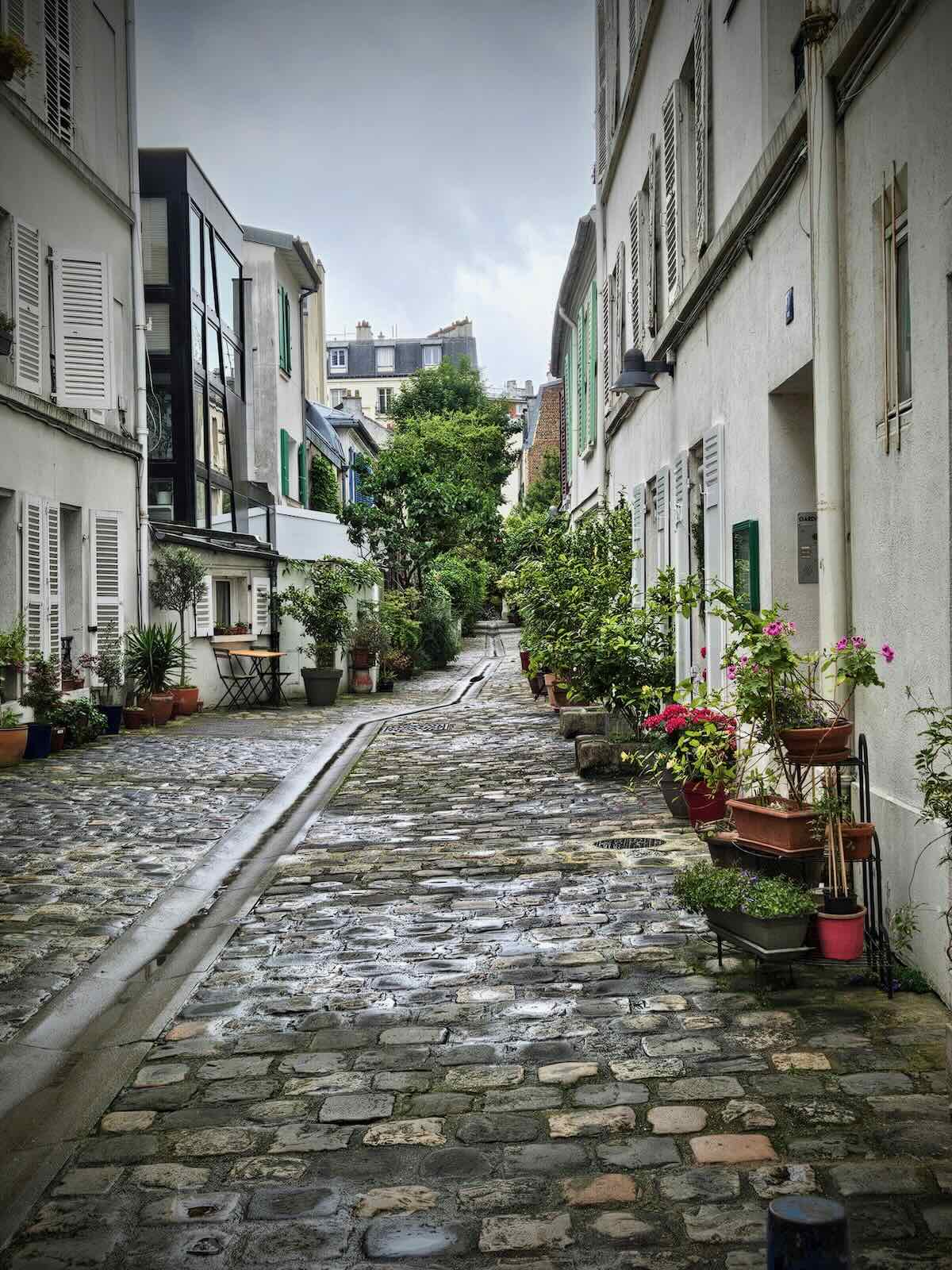
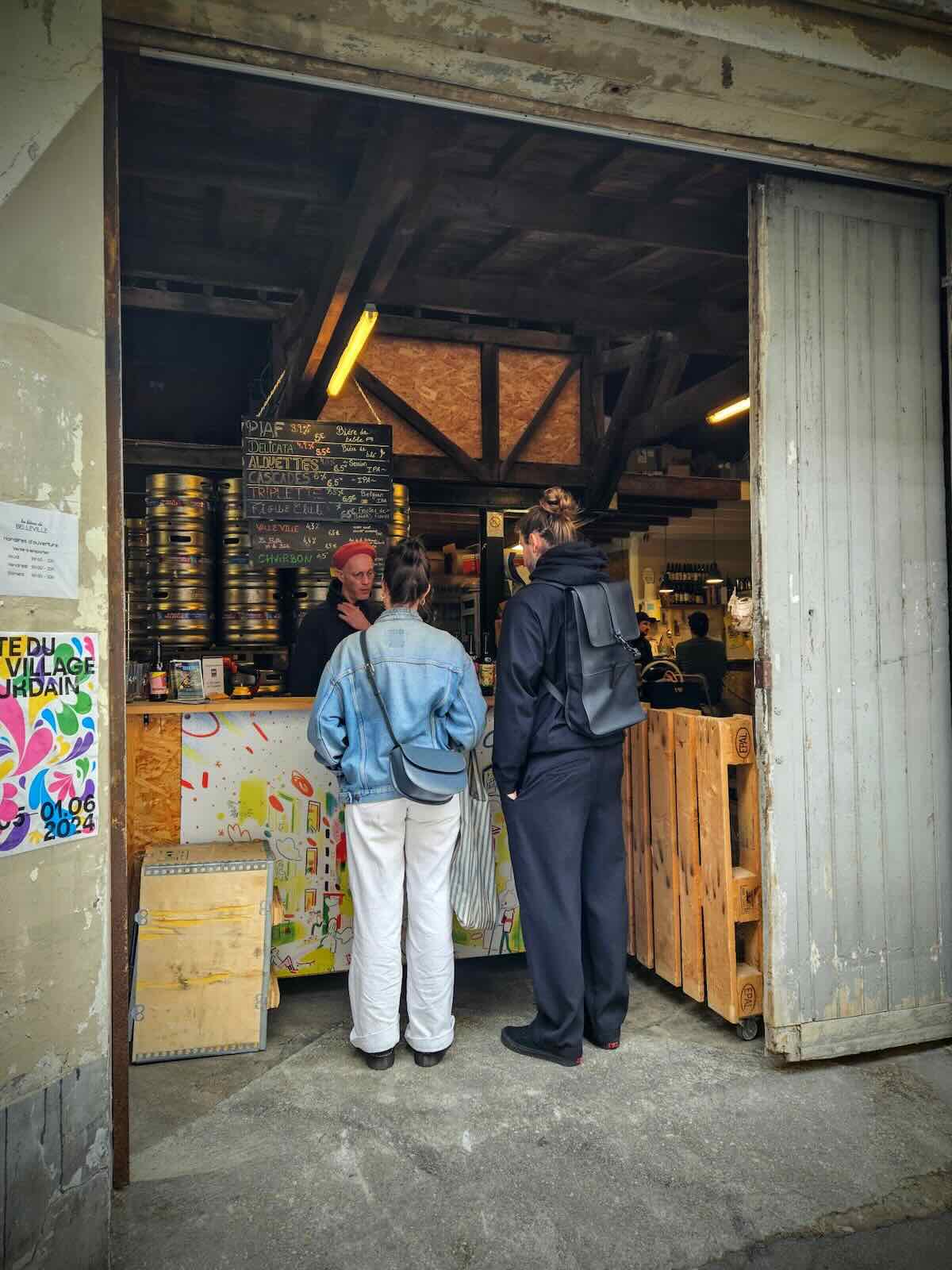
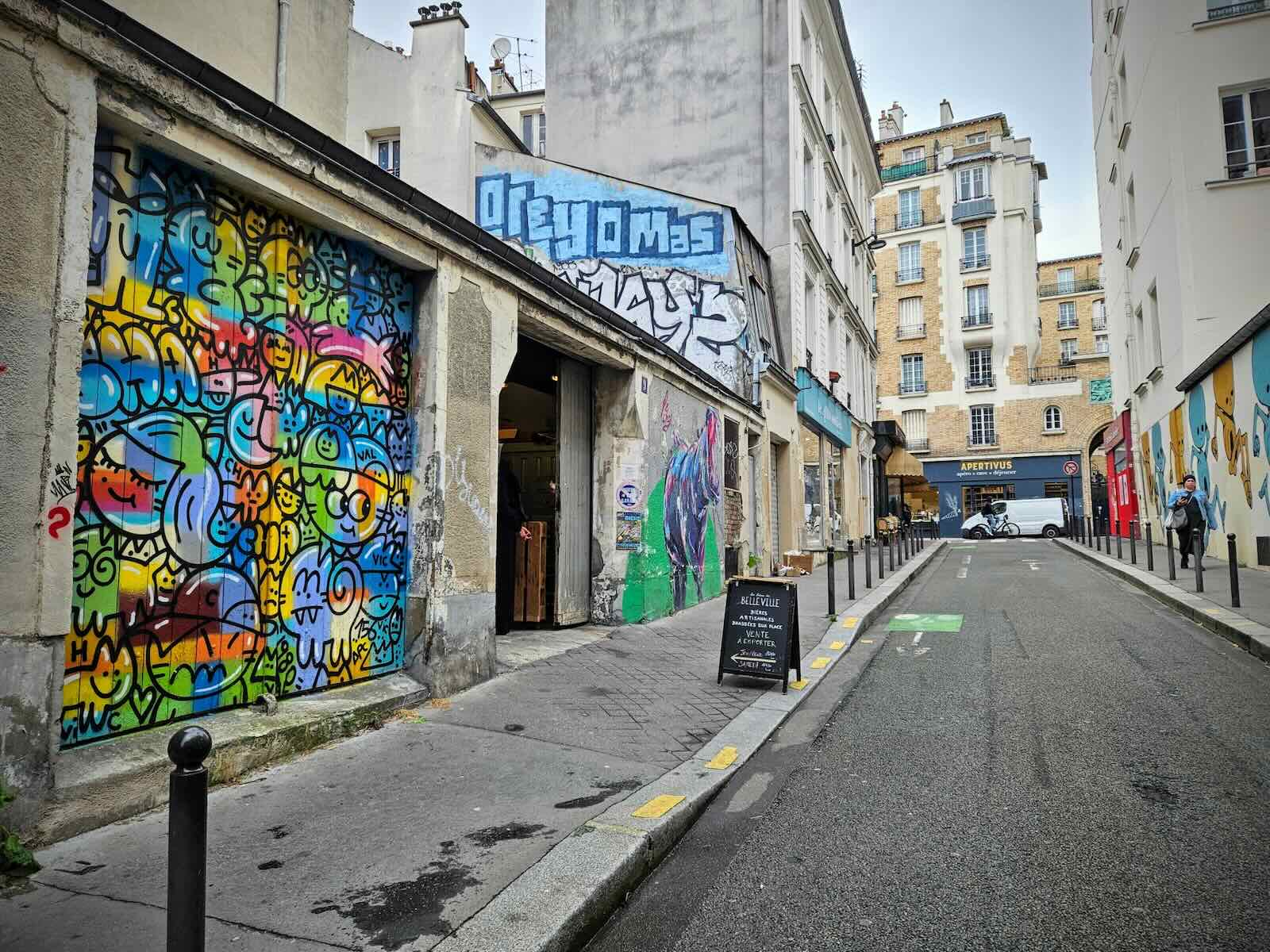
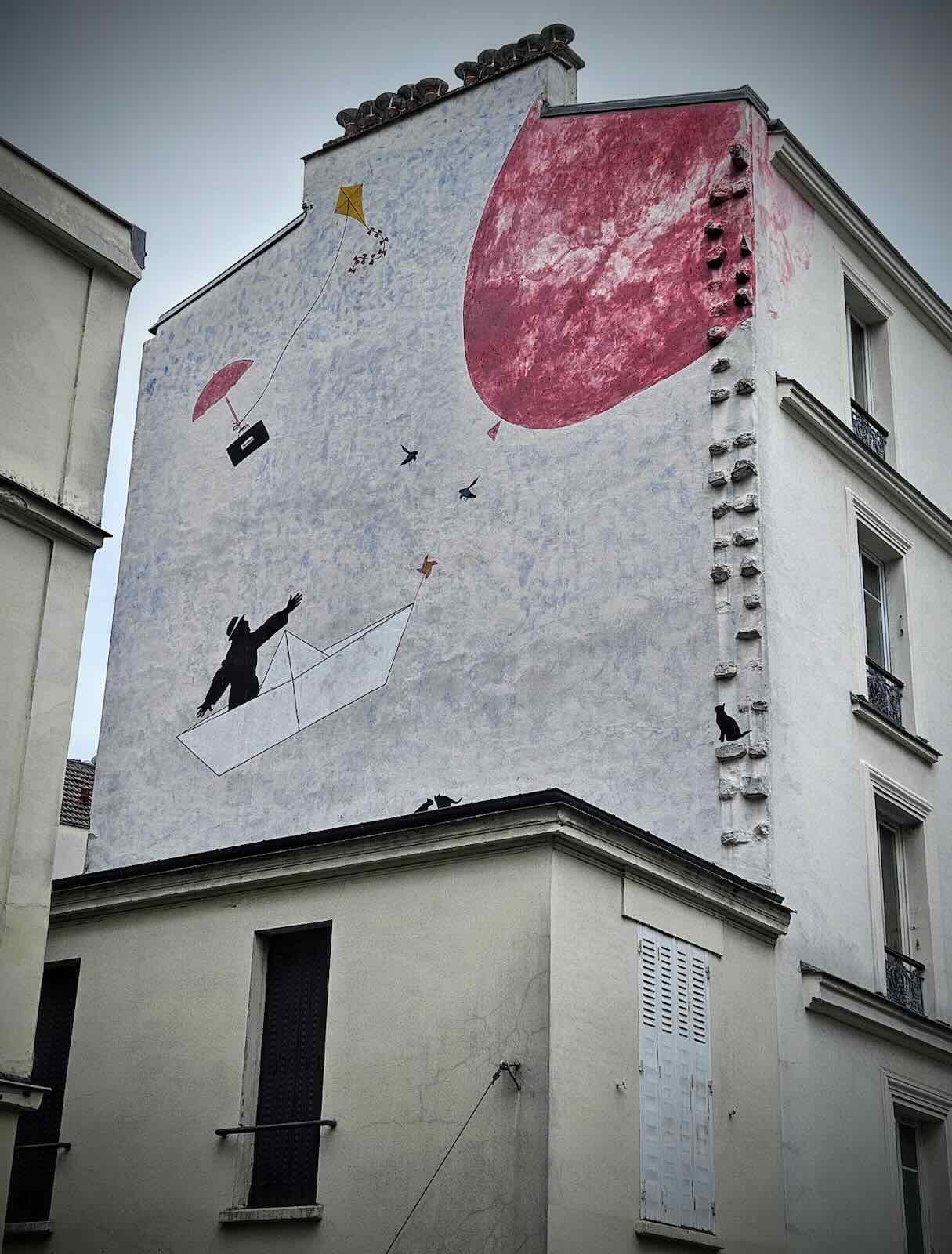
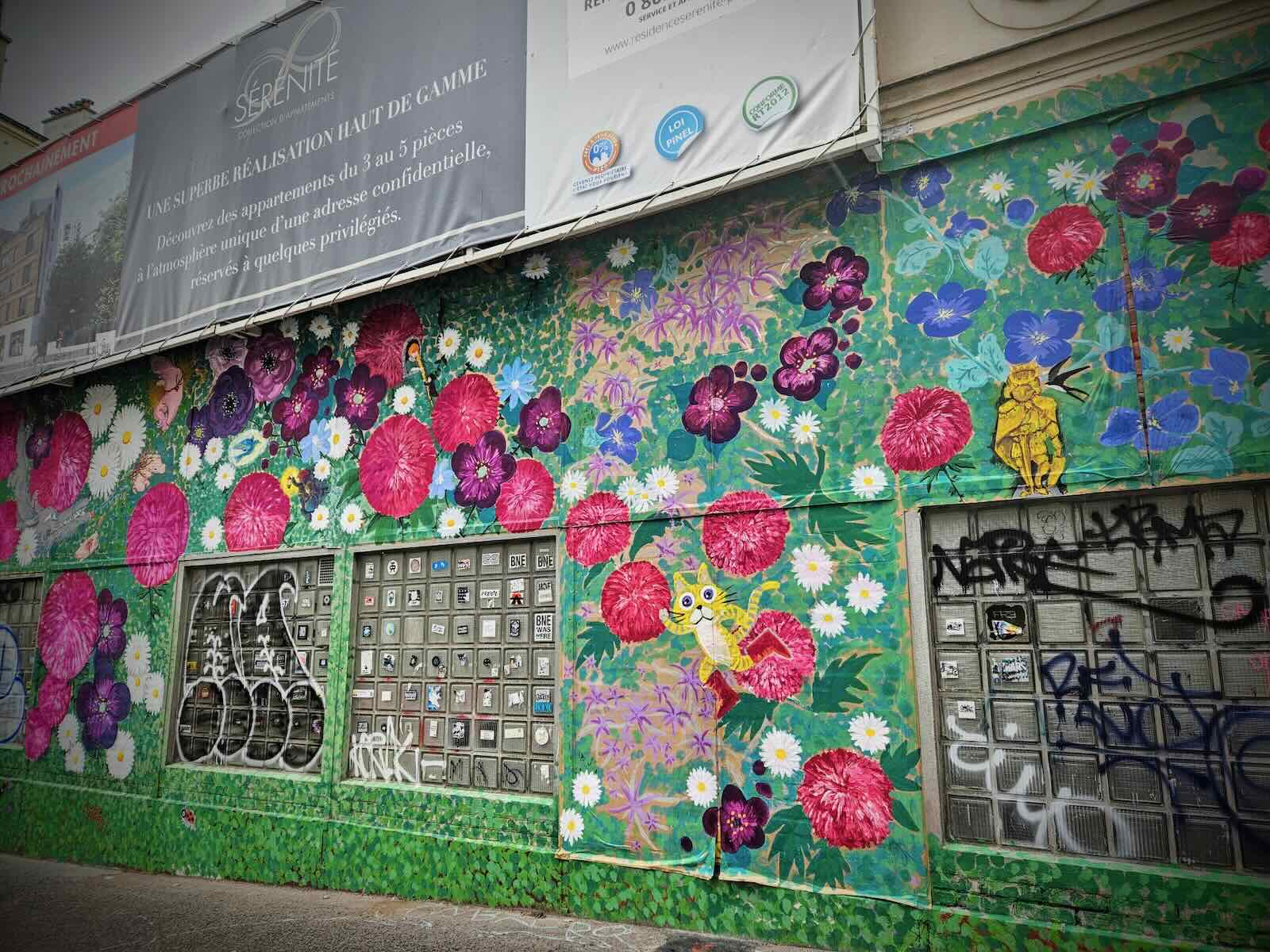
Around here, we browsed the local streets in the area, nosing around some of the shops, taking in street art and picking up a few beers from the micro brewery les bières de Belleville.
We also spotted some of Paris’ old abandoned railway, La Petite Ceinture that was built on the old Thiers wall, the old fortification which used to encircle the city. This is now being progressively turned into an urban green space for people to enjoy, one section at a time.
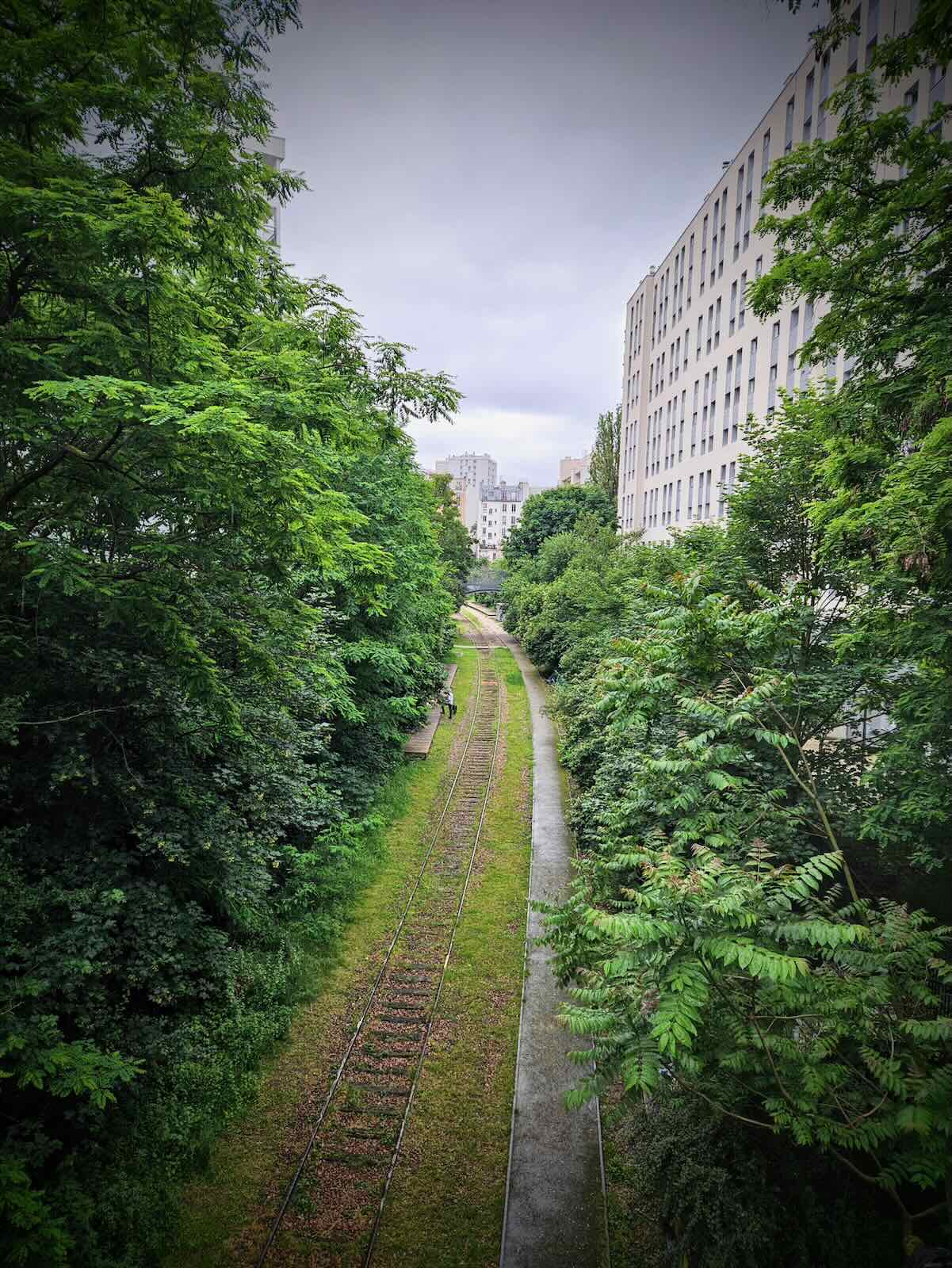
While we didn’t go down to explore La Petite Ceinture that day, we did visit the elevated section Promenade Plantée, which is sometimes referred to as Paris’ High Line, but actually came before New York’s. I’ll be covering this in my next post.




Riding back
After our day of wandering, I found myself another Vélib bike and made my way back to our Airbnb apartment. As I was setting off from Belleville, the route was a little different to the one I arrived on.
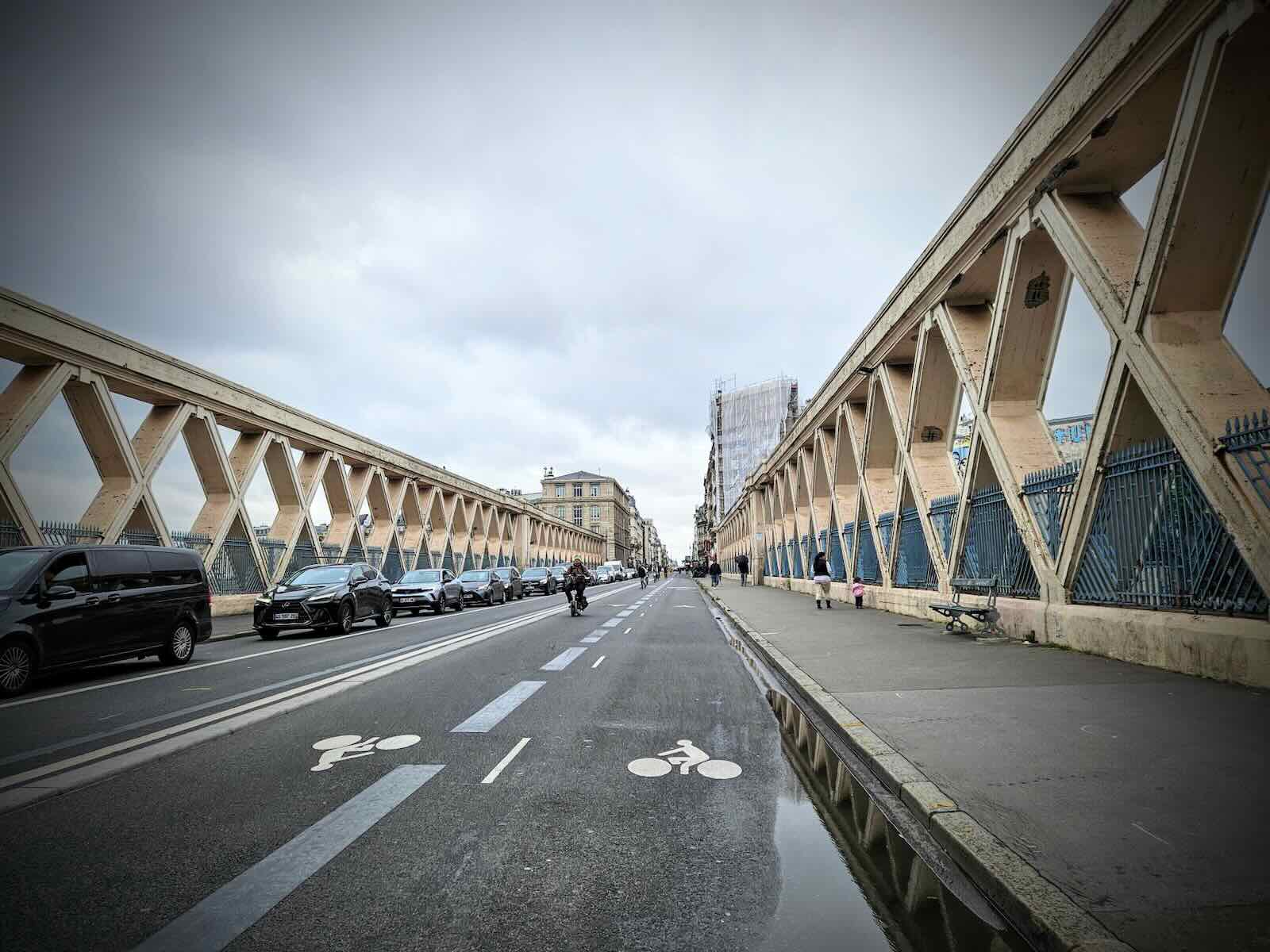
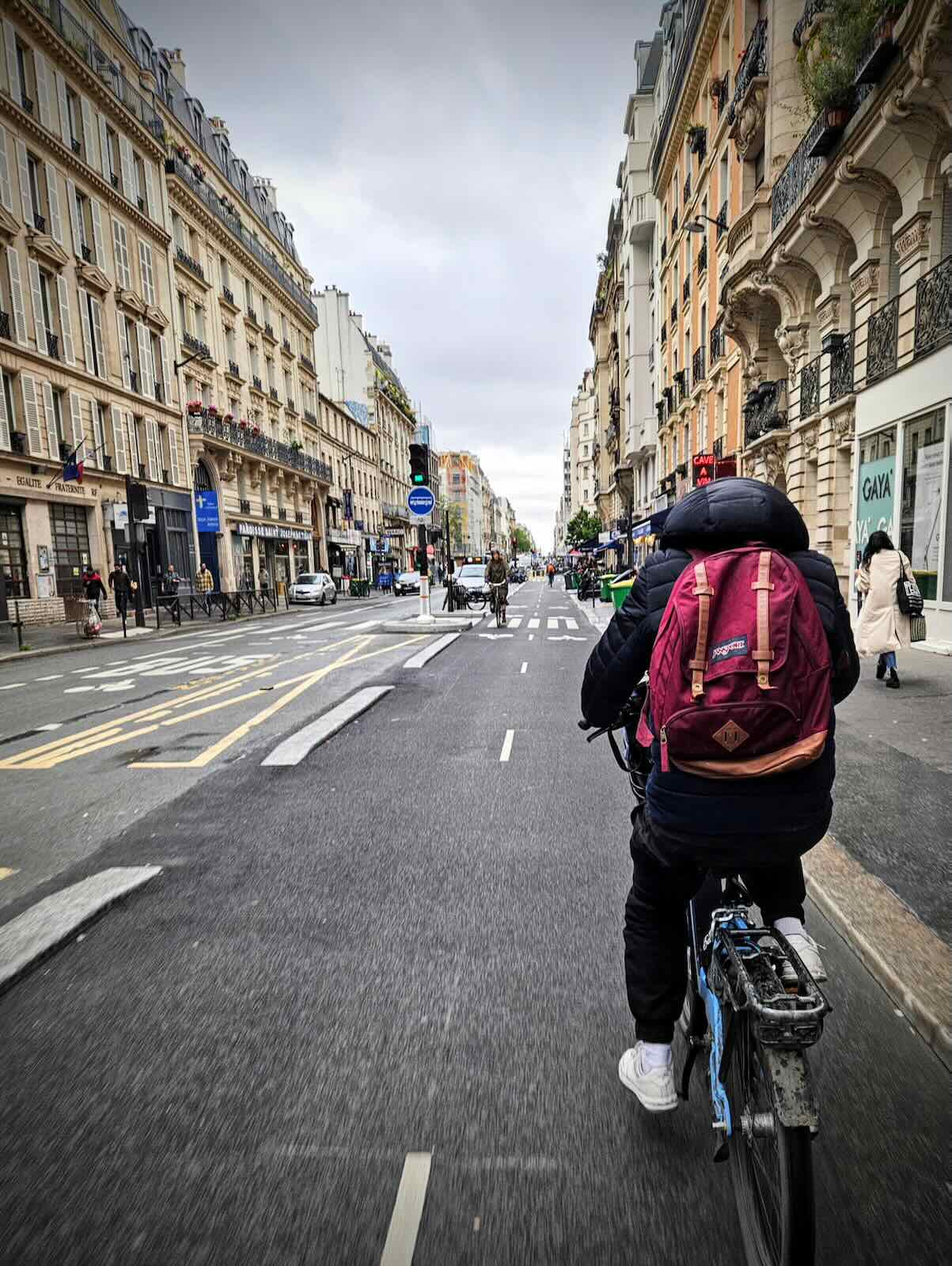
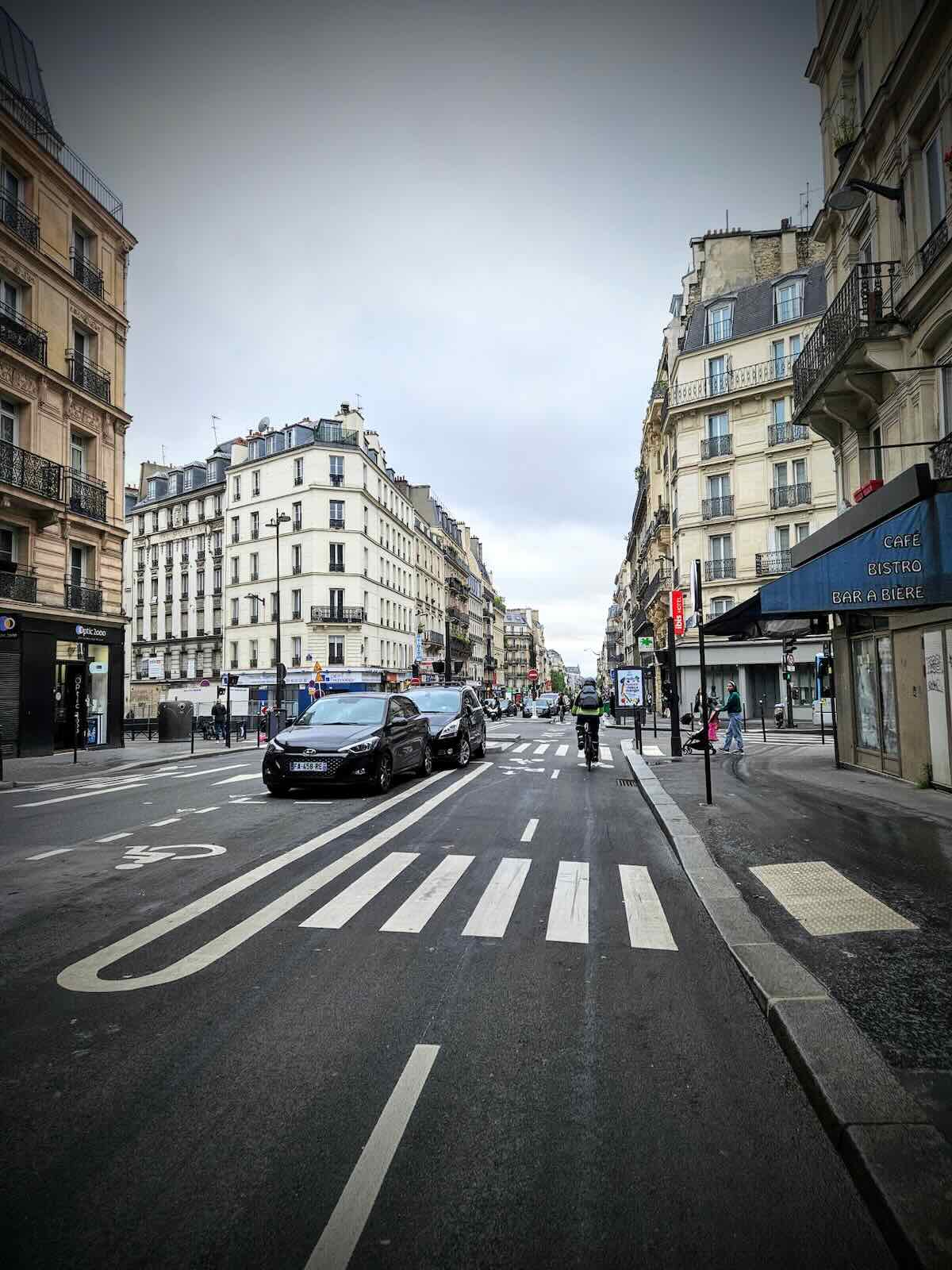
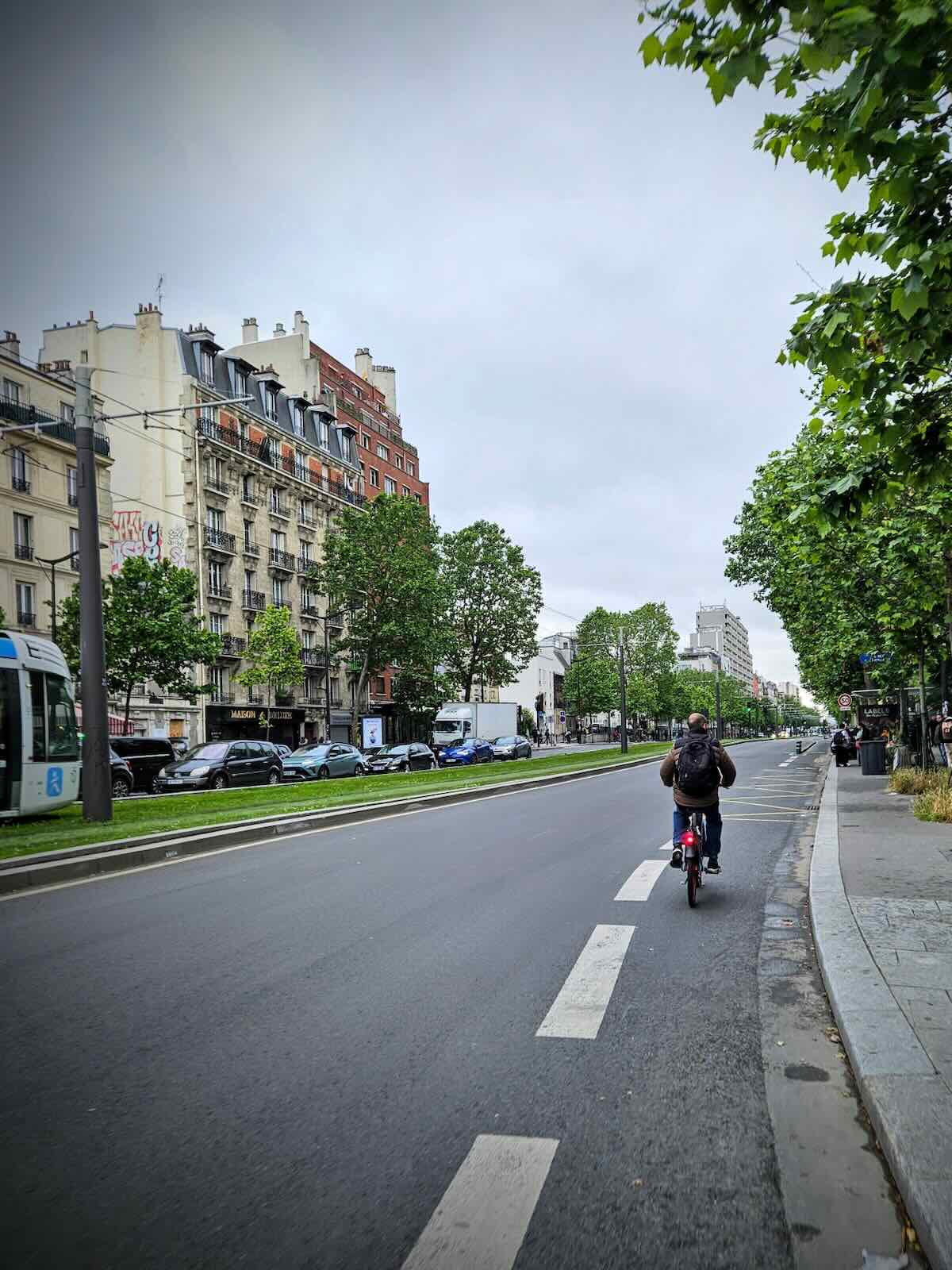
Starting off in the kerb-protected lanes on Boulevard de Belleville, I carried on onto Boulevard de la Villette, before turning left onto Rue La Fayette. I was now riding in a nice wide bidirectional kerb-protected cycle lane, which continued on the bridge over the railway tracks to Gare de l’Est.
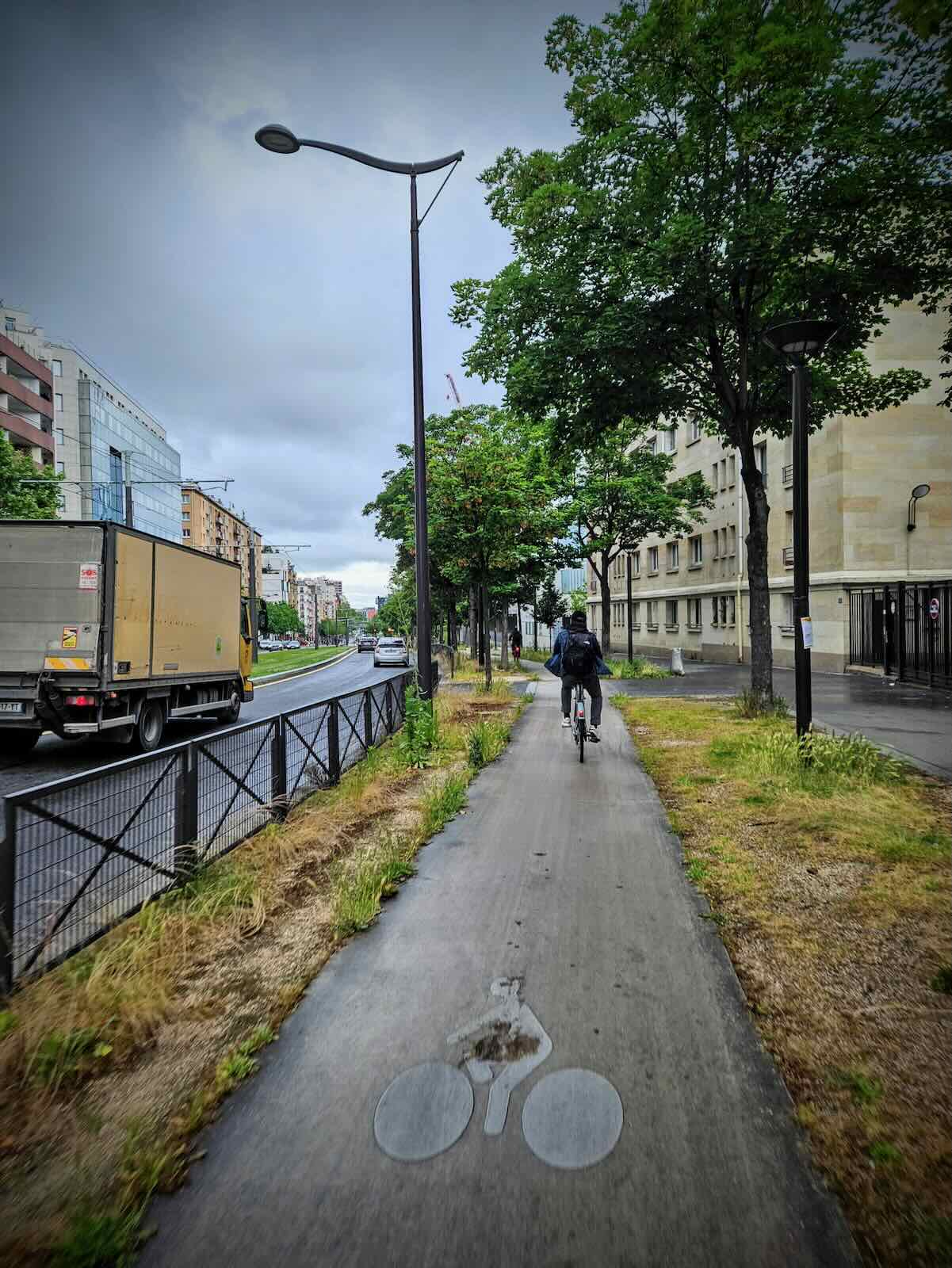
I continued onto Boulevard de Magenta with its narrow green cycle paths. This turned into Boulevard Ornano with a more modern and wider kerb-protected cycle lanes. From there, it was back along the way I came, on Boulevard Ney, before arriving back at our Airbnb apartment.

More Paris 24 posts
Further posts from our trip to Paris in 2024
- Cycling in Paris
- Wandering round Parc Clichy-Batignolles – Martin Luther King and up the Arc de Triomphe
- A day in Montmartre
- Fat Tire Tour of Paris
- In the Paris Catacombs
- Cité des Sciences et de l’Industrie, Paris’ museum of science and industry
- A ride to Bastille and a wander round Centre Pompidou
- Wandering along Canal Saint-Martin
- A walk along the Coulée verte René-Dumont, Paris’ High Line
 Dom Cycling