

Somewhat understably, Paris has become a poster child for cycling and urbanism in recent years. With mayor Anne Hidalgo’s visionary leadership demonstrating what can be achieved with sufficient political will, she’s transformed the city from a cycling no-go, to a model for other cities to follow.
The last time we were in Paris back in 2008, it was a very different place. While by that time, the city had already established its successful Vélib bike share, it wasn’t somewhere you’d want to cycle. The city was still very heavily dominated by motor traffic, with little safe space for cycling.
Having seen about the amazing improvements for cycling that Mayor Hidalgo has implemented, it was somewhere I was keen to visit. So when looking at options for a summer half term break in 2024, I persuaded the family to spend a week in the city of light.
For our trip to the city, we found a 5th floor Airbnb apartment in the 17th arrondissement, in the north west of Paris. This was located close to the Périphérique, the Boulevard that surrounds Paris, which was originally the location of a defensive wall and now features a dual carriageway, tramway and cycling provision.
Our apartment was also located near to the 13 and 14 Metro lines, so with the T3b tramway on the Périphérique as well, there was no shortage of public transport options. Though as you can probably guess, I was more interested to know what the links for cycling were like, which I’m pleased to say were pretty good.
As with our other recent trips, I’d end up getting about largely on bike share bikes, while the others used public transport. This meant I got to really sample what Paris now has to offer for cycling, both the good and bad. While I’ll go into more detail on future posts, here I’ll cover my overall impressions of cycling in Paris and whether what’s been achieved is a model for other cities to copy.
Infrastructure
As part of the 2021-2026 cycling plan, Paris has recently been extending its existing 1,000 km of cycle paths with 120 km of new cycle paths, while making the 52 km of temporary routes built during the pandemic permanent. In addition to this, Paris had been preparing for the upcoming Olympics, by providing a set of cycle routes linking up the venues.
During our stay, I had opportunity to experience the best and worst of what Paris has to offer. In many ways, this reflects what you typically see in most cities outside of The Netherlands. It becomes a case of whether the good outweighs the bad sufficiently, to create a coherent cycle network.
The good
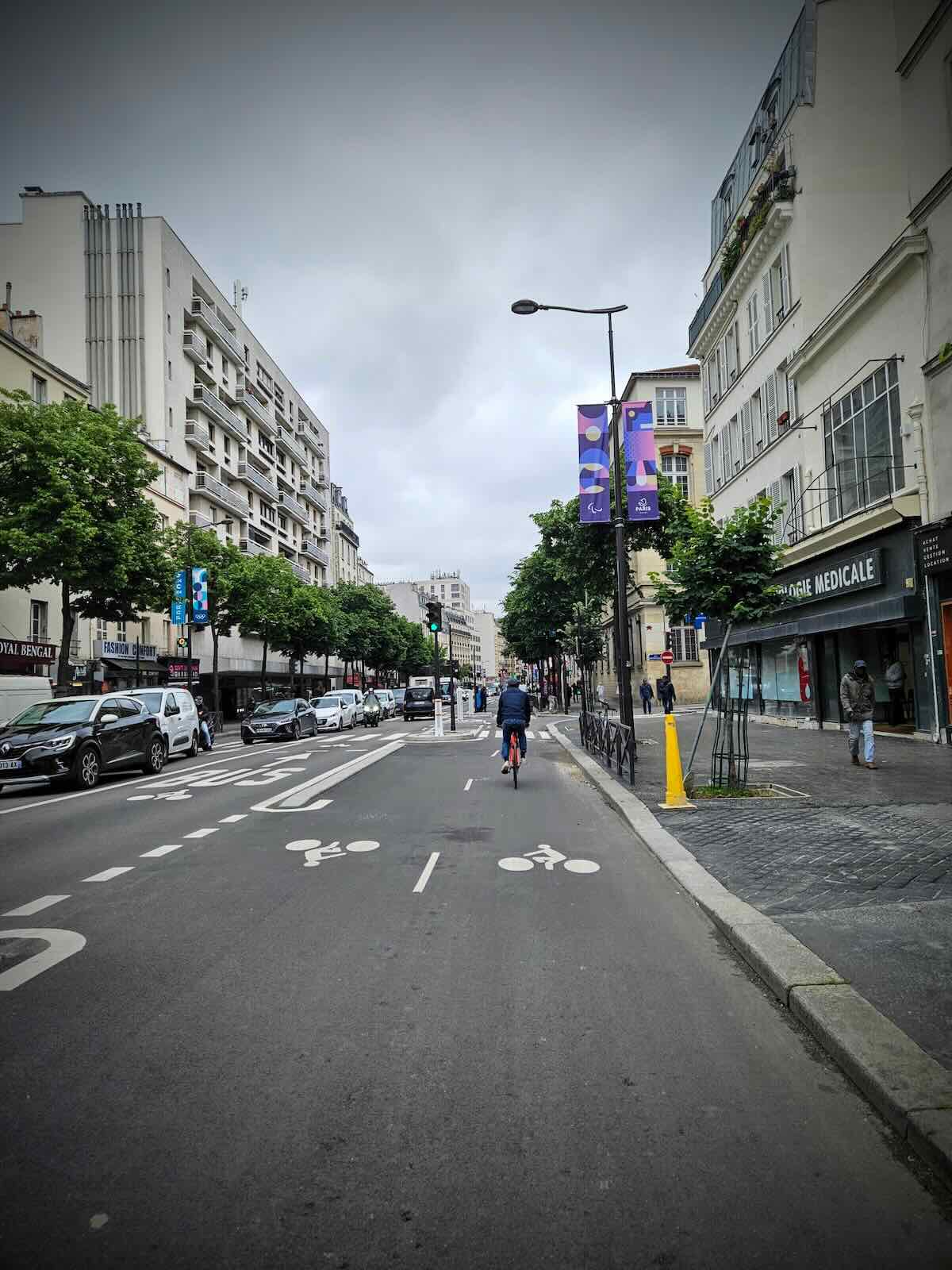
Most noticeable in Paris is the number of decent quality protected cycleways now available, something that definitely wasn’t evident during our last stay in the city. Typically, many of these are carriageway-level lanes, where space has been taken away from the general traffic lanes, with the use of kerbs.

Protected lanes like this are typically quicker and cheaper to install, as often you just need to install the kerb and potentially repaint the lanes. With the speed Paris has been installing new cycling infrastructure, this approach will have definitely helped.

While not as common, there’s also footway-level cycle paths. Typically, these have a visual separation from the footway, though the better ones have some kind of physical separation, such as planting, with less potential conflict between people walking and cycling.
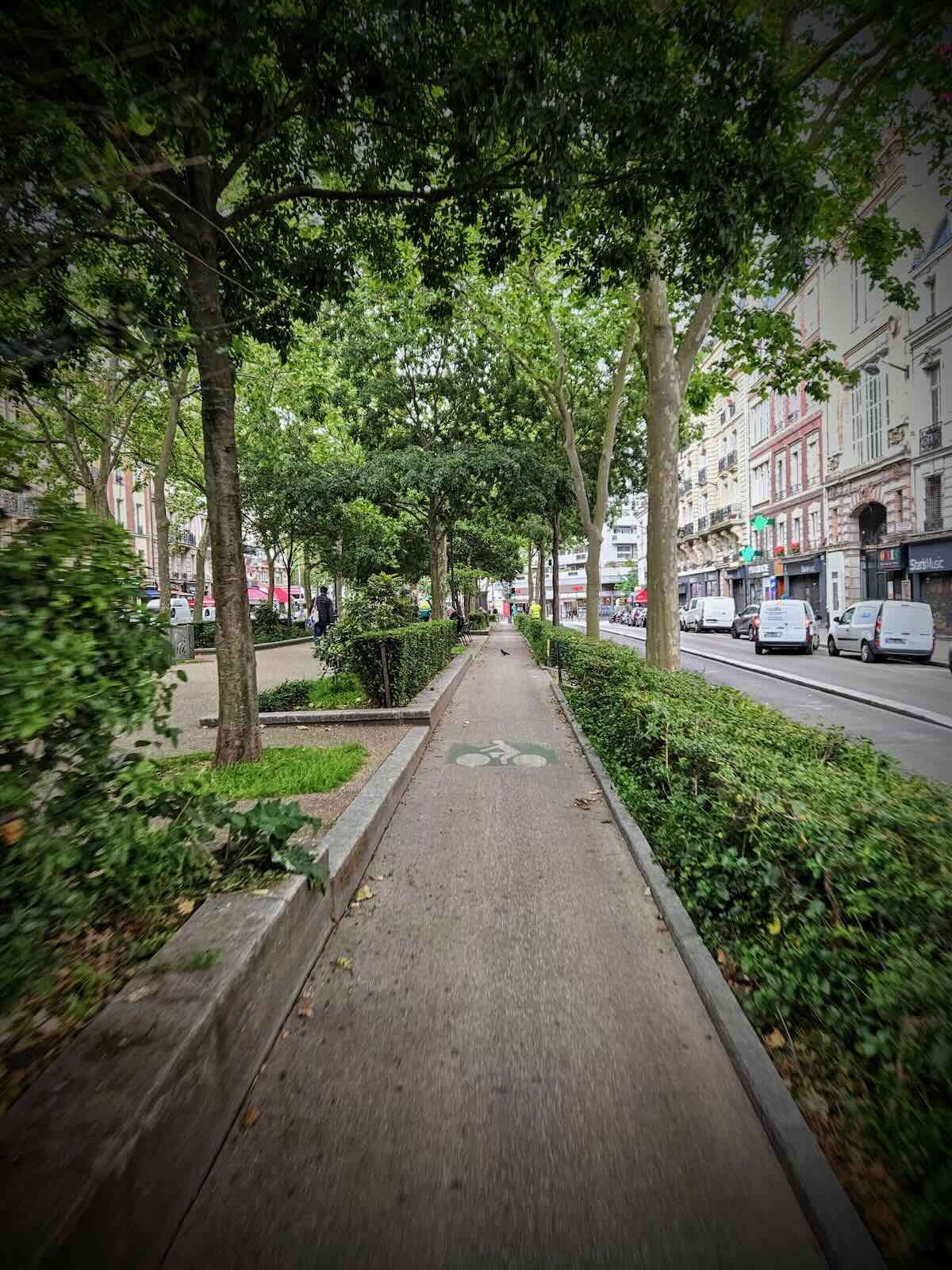
While there are plenty of examples of single direction protected cycleways, there’s a huge number of bidirectional cycleways in Paris too. While I don’t know how they compare, in terms of number and length, but it did seem that bidirectional cycleways were more common.

As with the single direction cycleways, these are generally either carriageway-level, kerb-protected lanes of footway-level cycle paths. Though the carriageway-level lanes definitely seem to be the most popular.

I suspect the reason for the popularity of the bidirectional cycle lanes, is that it’s generally the easiest way to add protected cycling infrastructure to a street, by converting one of the existing general traffic lanes to a bidirectional kerb-protected cycle lane. With the speed that Paris has been adding cycling infrastructure, this would make sense.
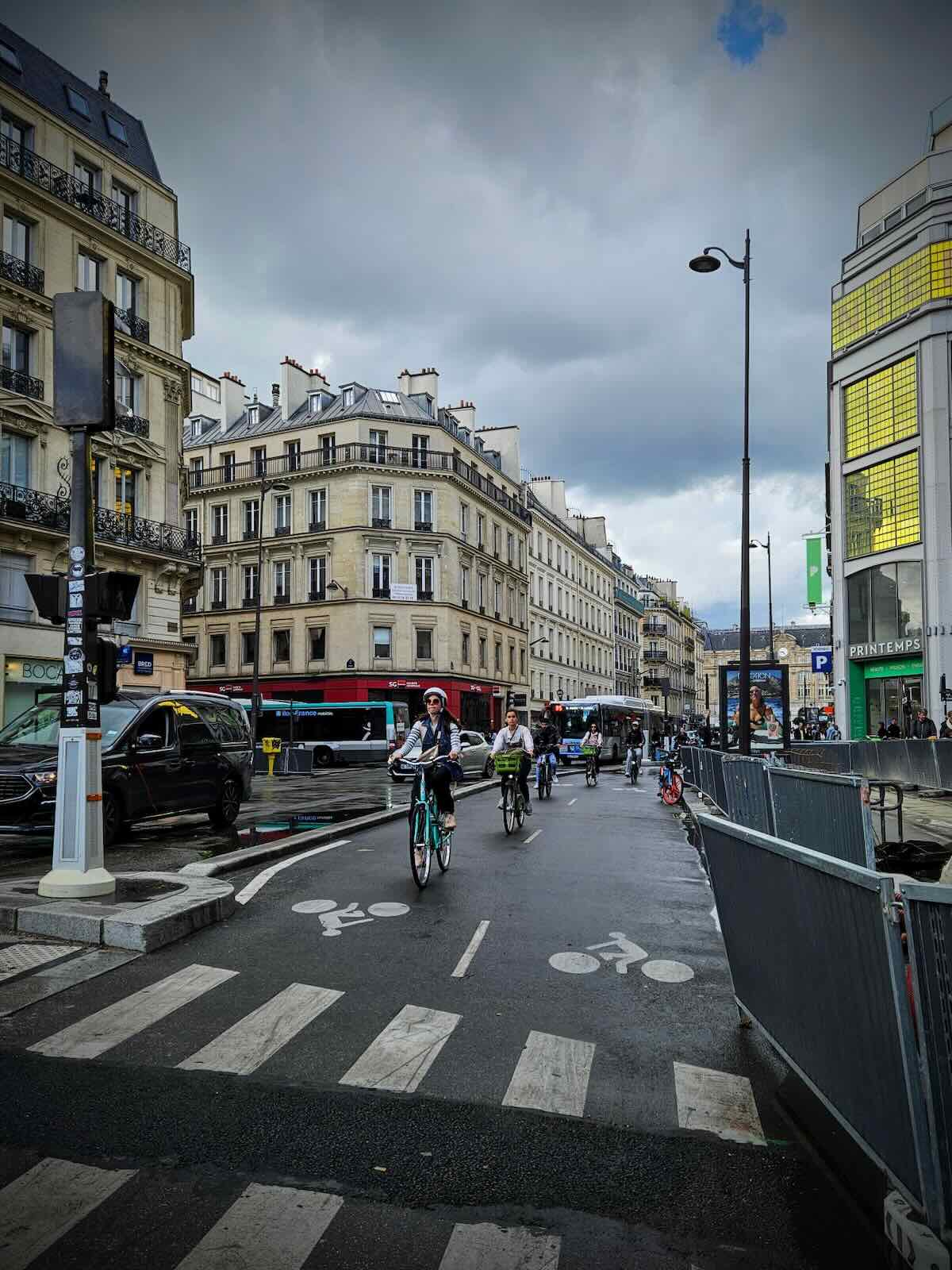


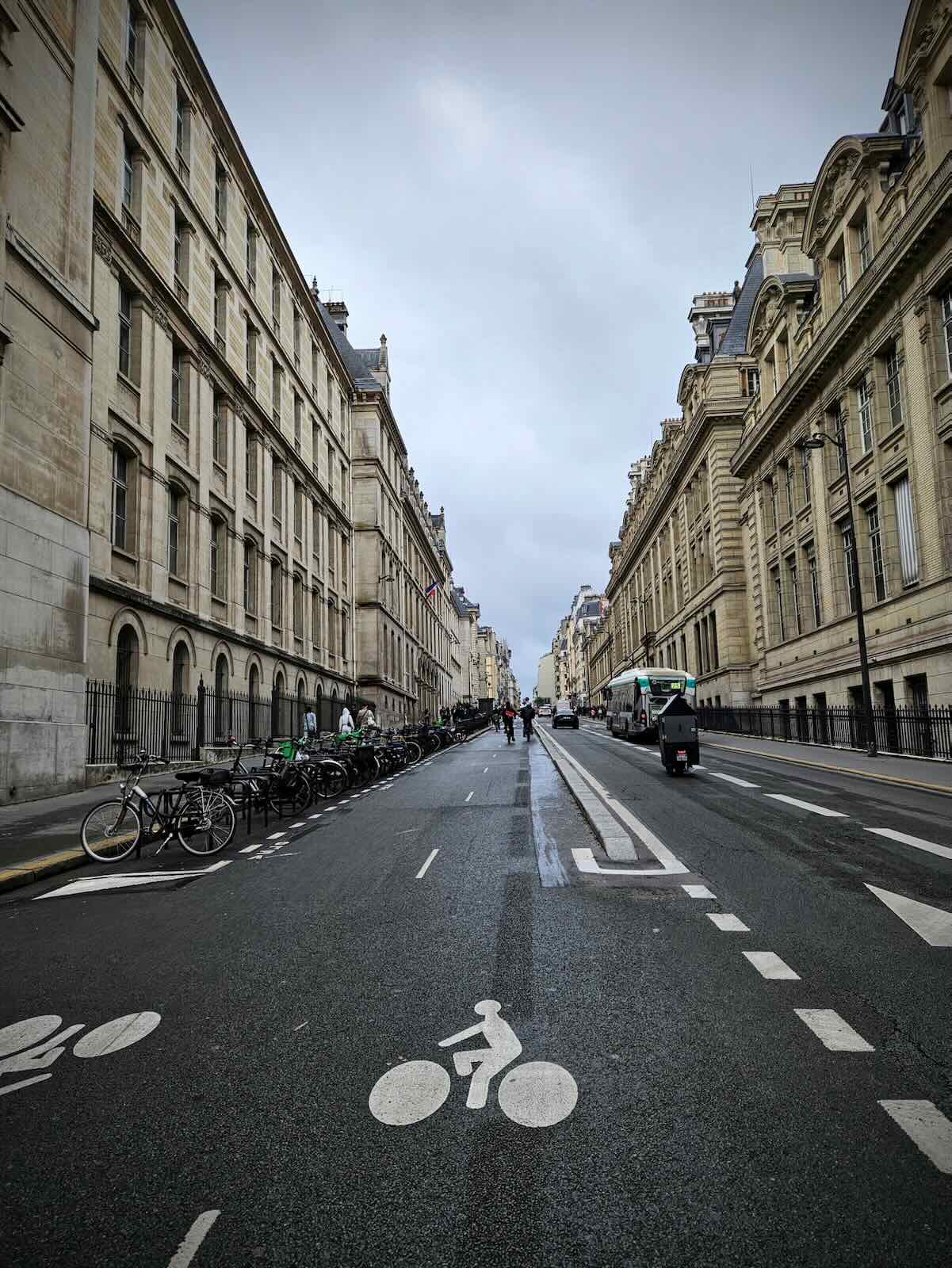

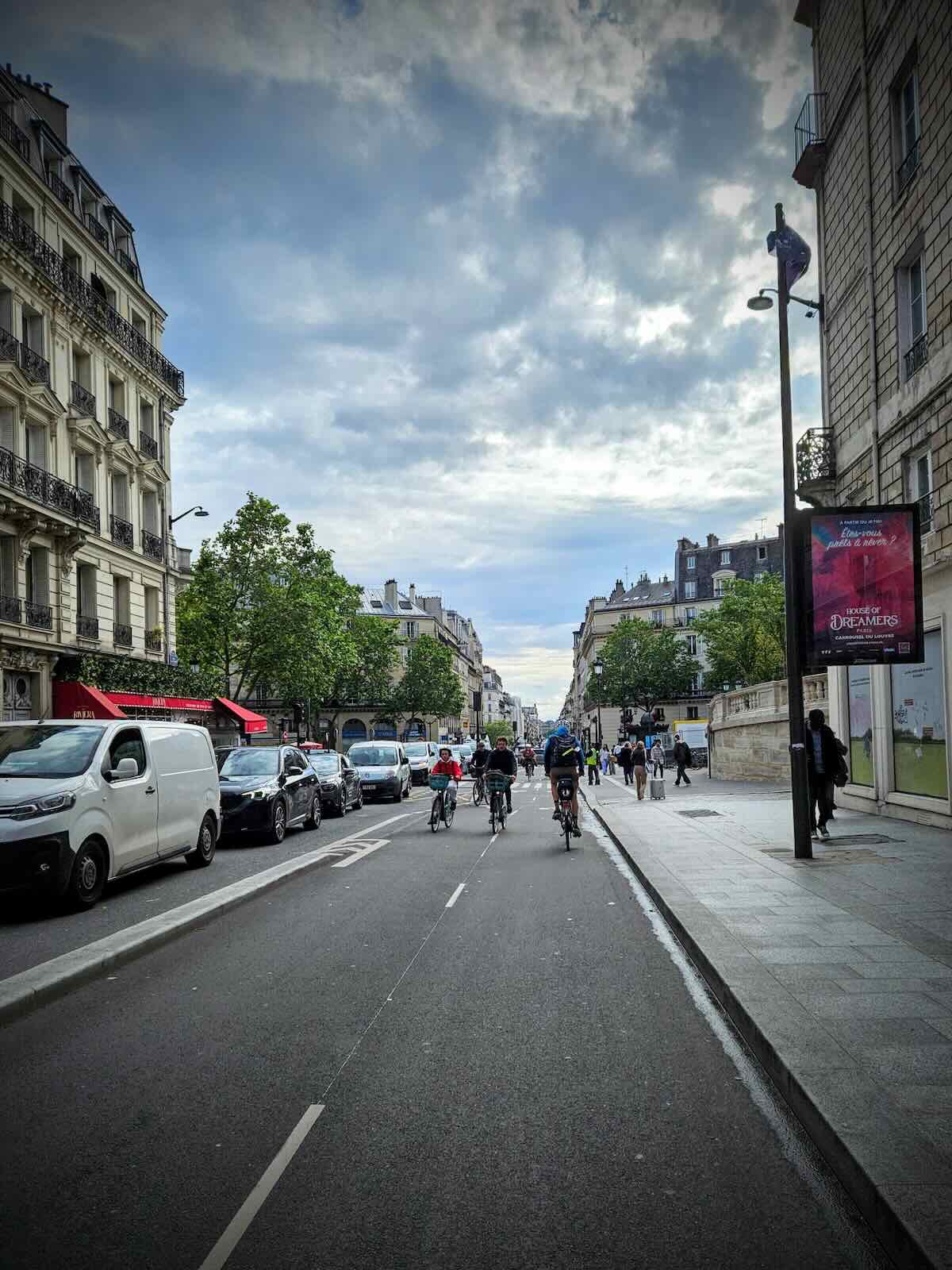
on Rue La Fayette

What’s also impressive are the spaces in Paris where motor vehicles have been removed completely. Doing this creates space for walking and cycling, without the need of any infrastructure.
This has been done as part of the Mayor’s 2017 plan to remove half of the private cars in the city and has included traffic restrictions along Rue de Rivoli and the full removal of traffic from the right bank of the Seine, from Tuileries to Bastille.
Rue de Rivoli has become a very public advert for the fantastic work that has been done to create space for cycling, with tons of photos and videos shared of large numbers of people riding there, far outweighing the number of motor vehicles.

Unfortunately, whenever I was around Rue de Rivoli, it was at quiet times, so I never got to see it at capacity. It was still very impressive to see such a significant amount of space given over to cycling, in such a central location.
The removal of the Georges-Pompidou expressway from the right bank of the Seine is equally as impressive, completely transforming the riverfront. Initially, this way done as part of a six month trial, but has now become permanent.
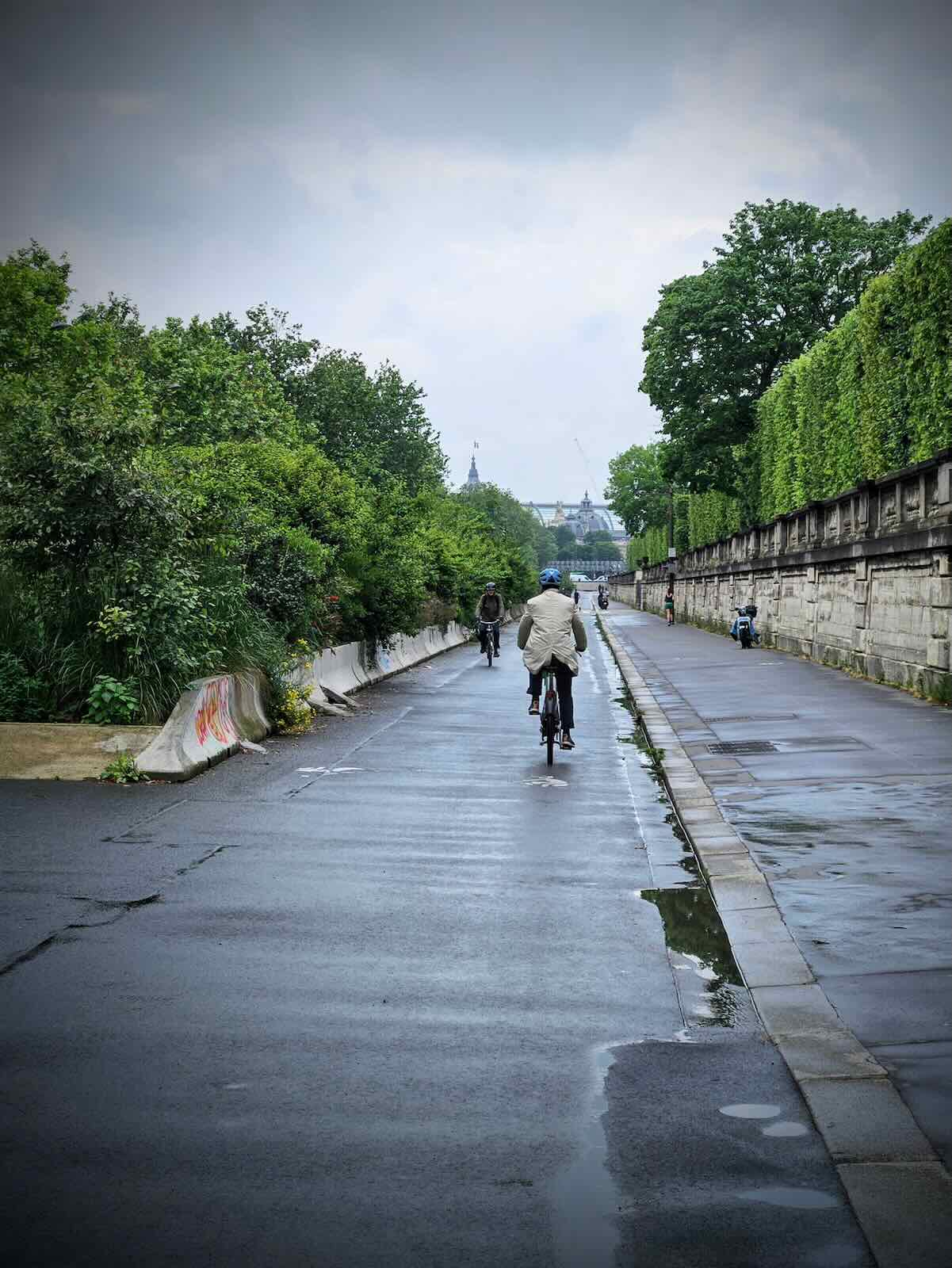
Both the Tuileries tunnel and Henri IV tunnel near Bastille have been included in the removal of motor traffic, meaning the whole of these tunnels are now open just for walking and cycling.

I had opportunity to cycle along the length of the right bank, and while it was quite a drab day, it was lovely being able to ride next to the river in a peaceful, traffic-free environment. Riding through the colourful tunnels was lots of fun too.
In addition to these impressive examples of traffic removal, there’s plenty of other examples of where traffic has been reduced or completely eliminated from streets with simple filtering.


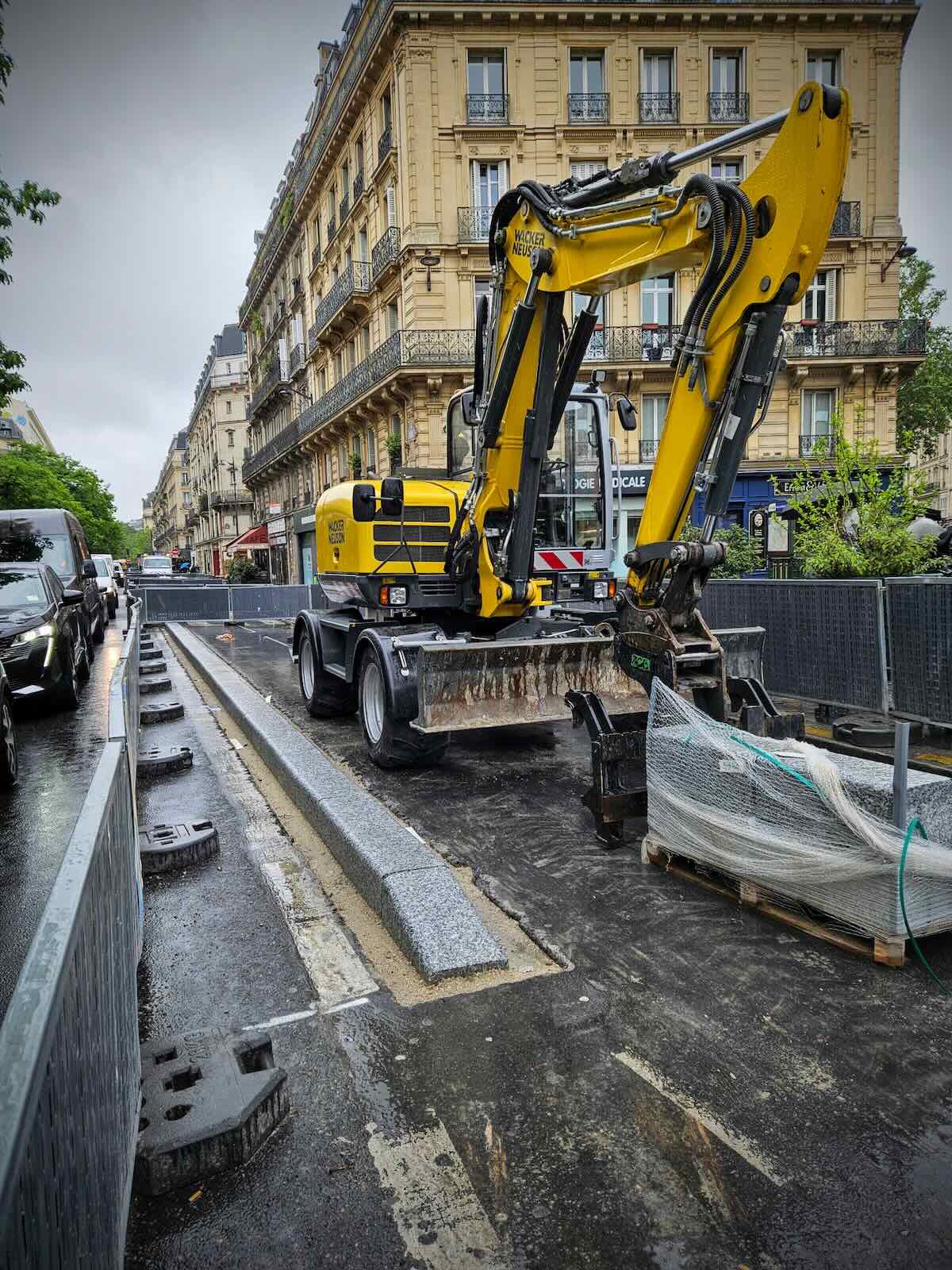
While it’s impressive to see what’s been achieved up to now, it’s great to see Paris isn’t stopping there. During our trip, I saw multiple examples of schemes under development, which will deliver even more safe space for cycling.

The not so good
While there’s definitely been a rush to install cycle lanes, I think it’s fair to say the same attention isn’t always shown on junctions, as it’s common to find protection disappears when you arrive at a junction.
Where an attempt has been made to provide protection, it can often appear not particularly well thought through or coherent. There were times when I was riding, particularly at roundabouts, where it felt like neither the people cycling or driving knew what they should be doing.

While a lot of what’s been built recently is generally of a high standard, with the cycleways mostly a decent width and well separated from motor traffic and pedestrians, that’s not always the case for some of the older examples.
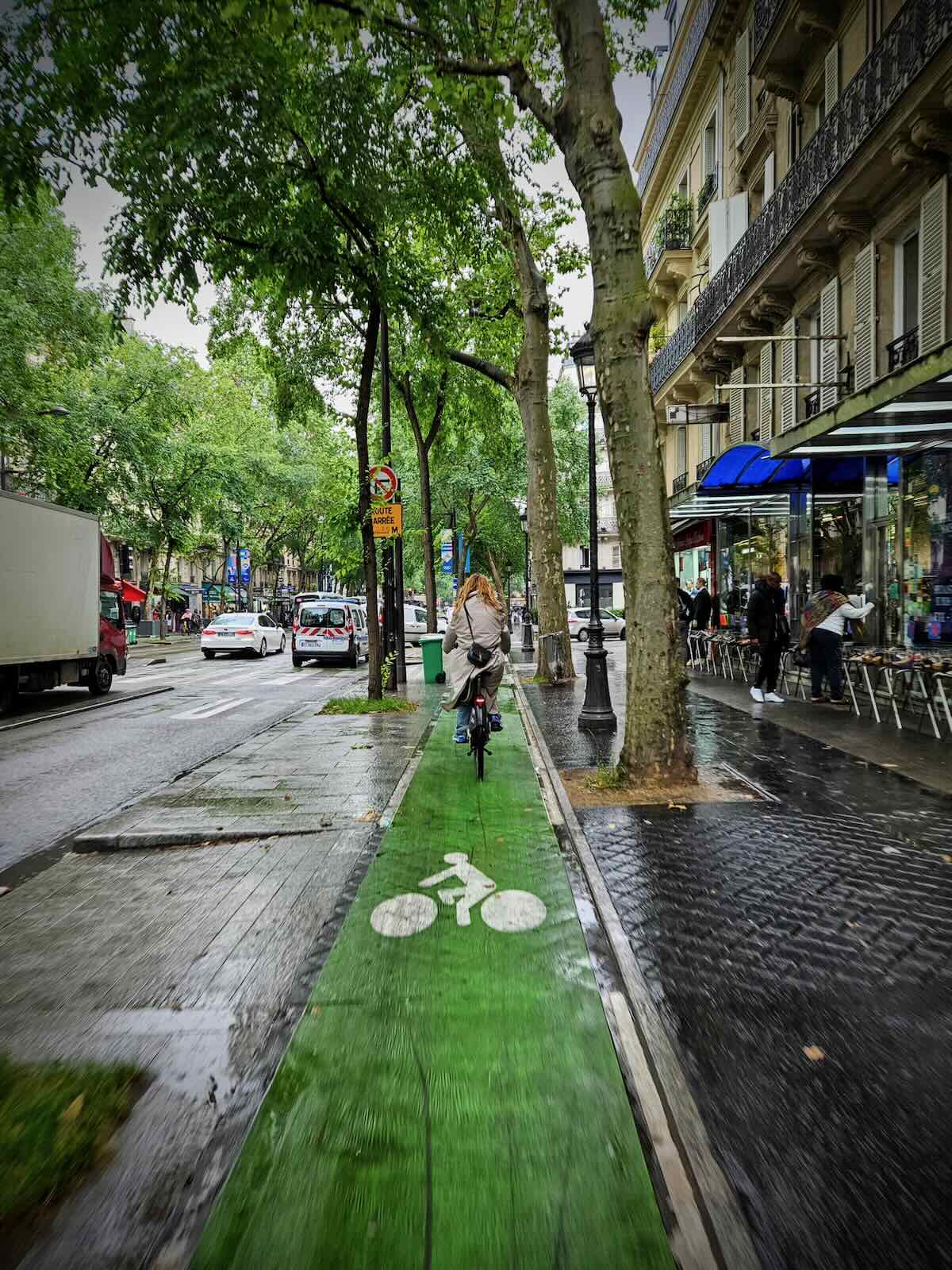
Many of the older cycleways tend to be narrow footway-level cycle paths, with nothing to separate them from the footway, so conflict can be quite an issue. These remind me of some of the older cycle paths in Berlin. Many have a green painted surface as well, which can be a bit slippy in the wet.
Somewhat unsurprisingly, it’s not uncommon to see Paris’ cycle lanes blocked with motor vehicles. There were even times when I had large vehicles such as coaches get dangerously close, as they attempted to straddle the kerb protection.

It’s fair to say this isn’t exactly a problem that’s unique to Paris, drivers in every city will try to park where they shouldn’t, if they think they can get away with it. I would say the kerbs Paris is installing are quite low and easily driven over, and so don’t act as much of a barrier.
The bad
While there’s a significant number of protected cycleways, there’s still many busy streets with either no protection or just painted lanes. As you may expect, where there is just paint, there’s motor vehicles parked where they shouldn’t be.

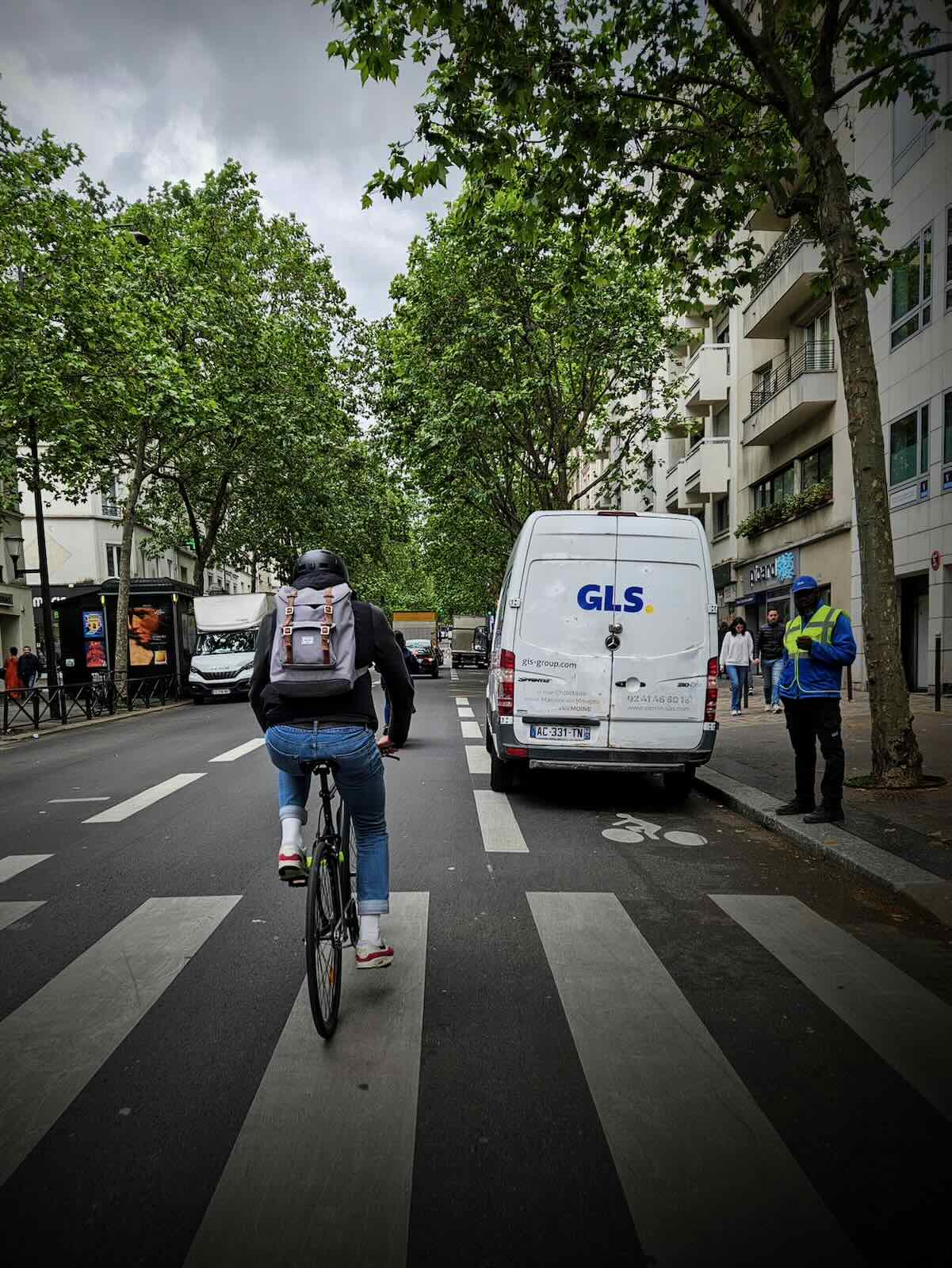
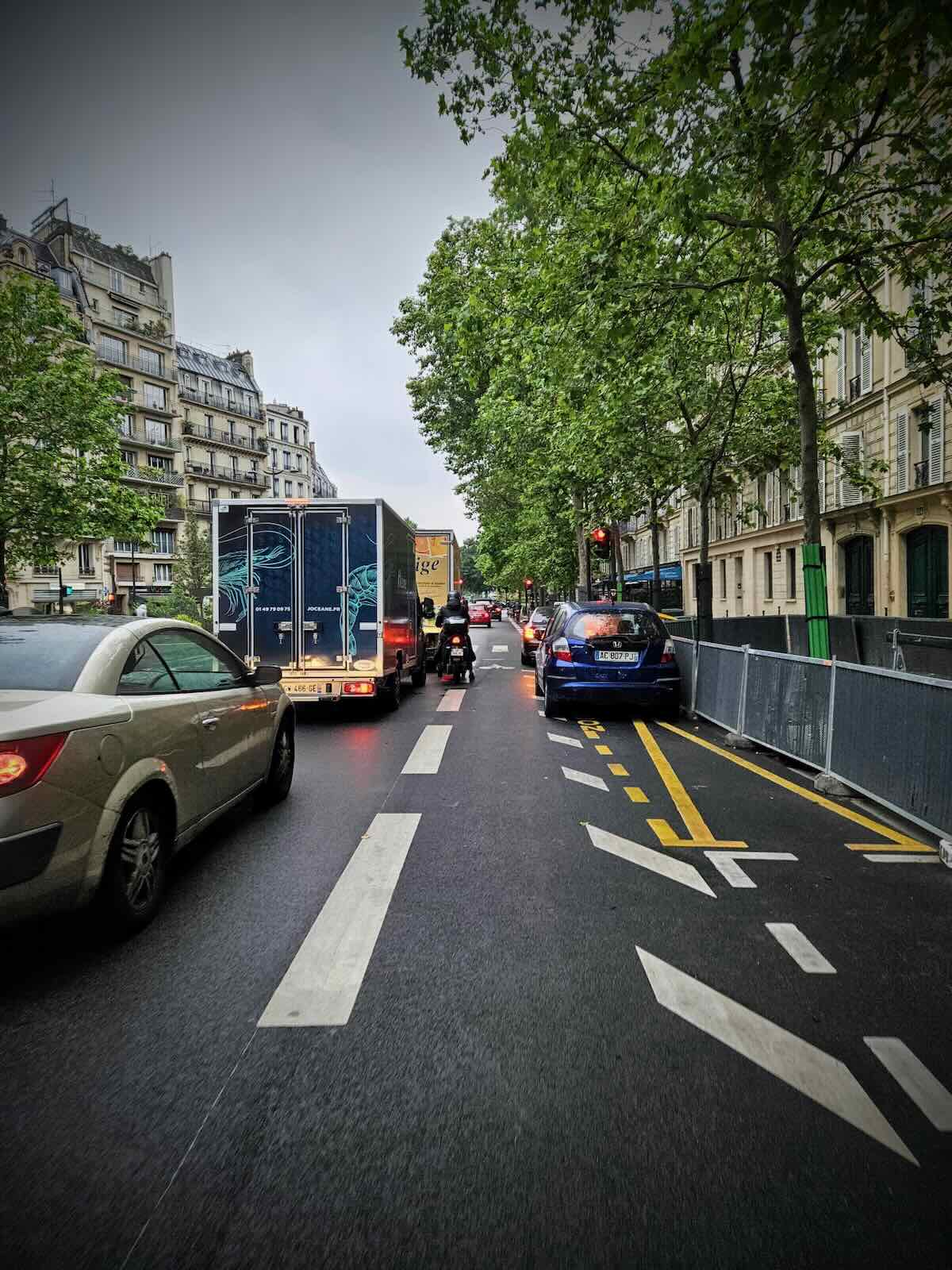

In addition to, it’s not uncommon to find that protection just disappears as you’re riding along, leaving you mixing with busy traffic, when you weren’t expecting it.

I also had some less than pleasant experiences riding on busy streets with bus lanes. While in theory bus lanes can mean you can get away from most of the motor traffic, that doesn’t account for the number of crazy taxi drivers in Paris, who didn’t think twice about doing some seriously unpleasant close passes.
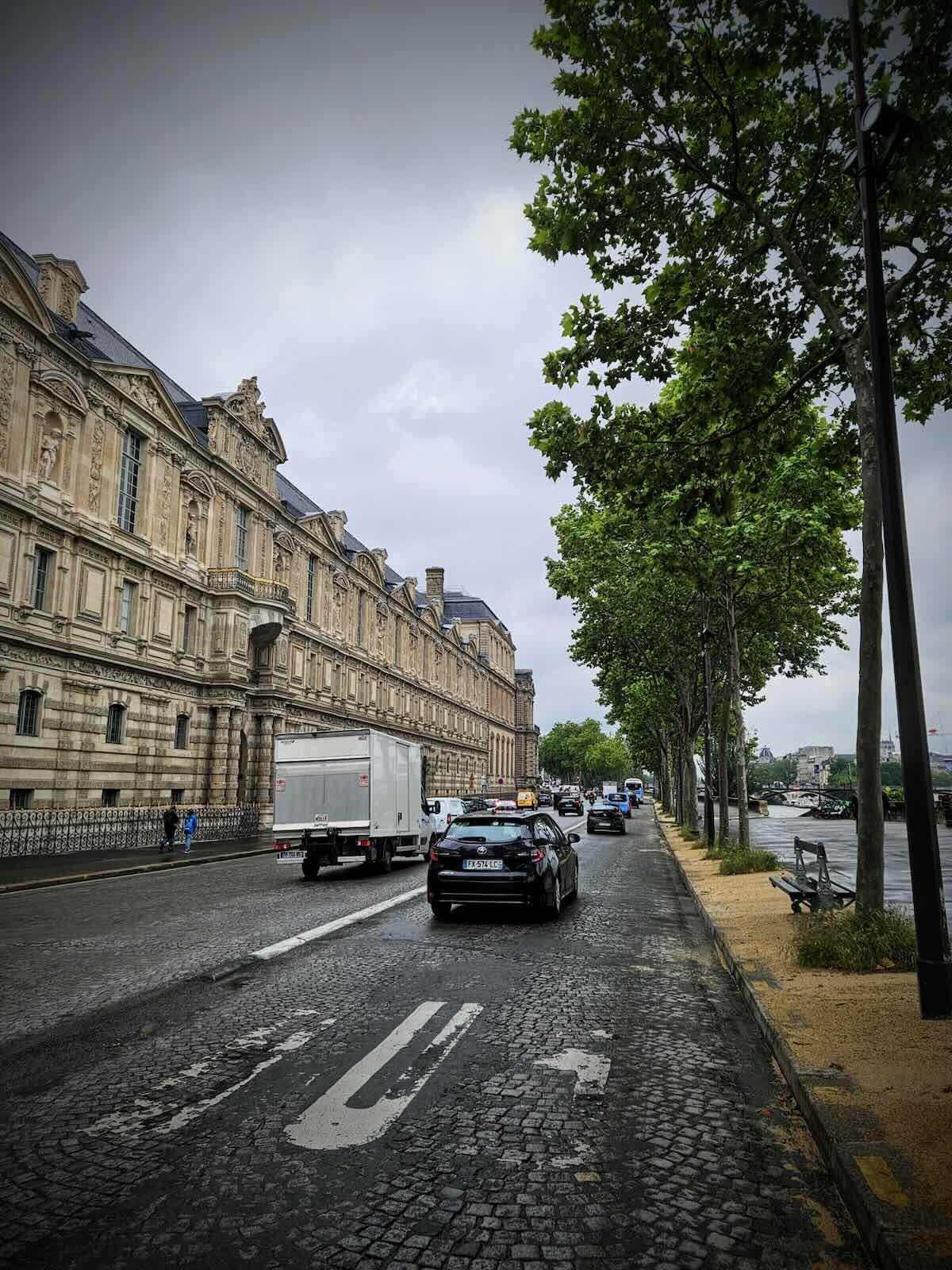
And then there’s the good old cyclists dismount sign, which are no better in French!

Cycling culture
Being the home of the world’s most famous cycle race, the Tour de France, it would be easy to equate cycling culture with sport cycling. But how does Paris fare when it comes to everyday transport cycling and how normalised is cycling?

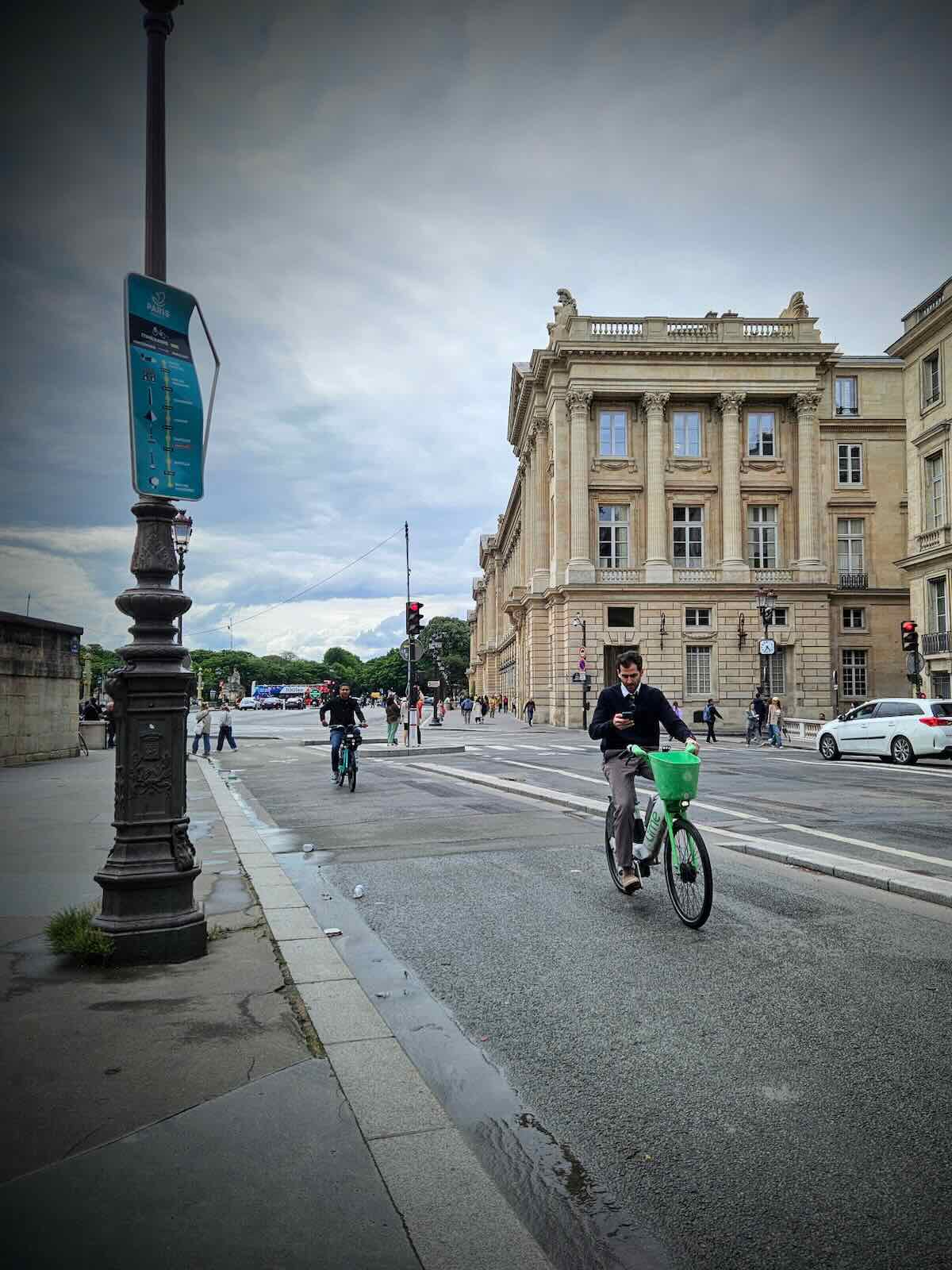
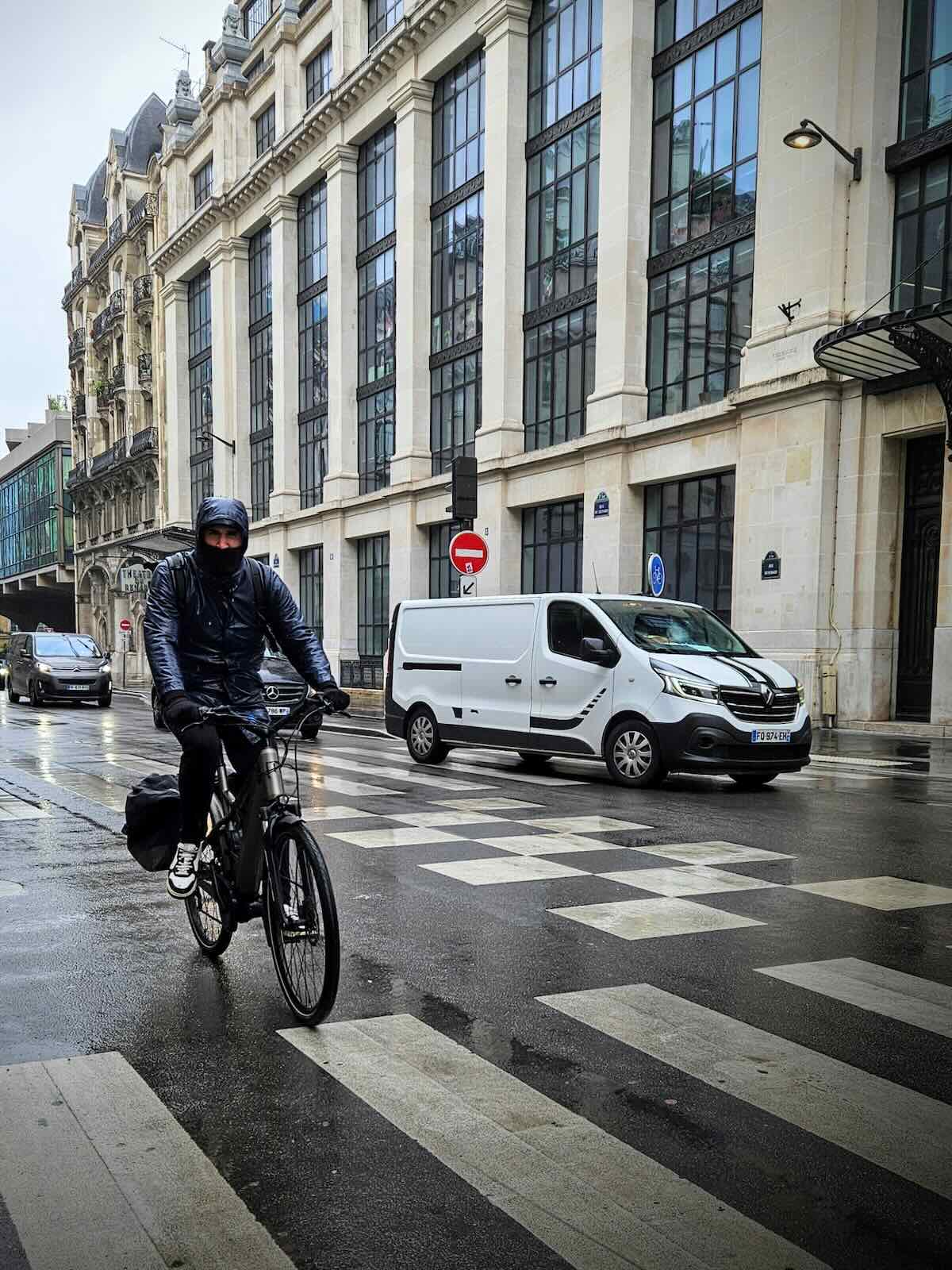
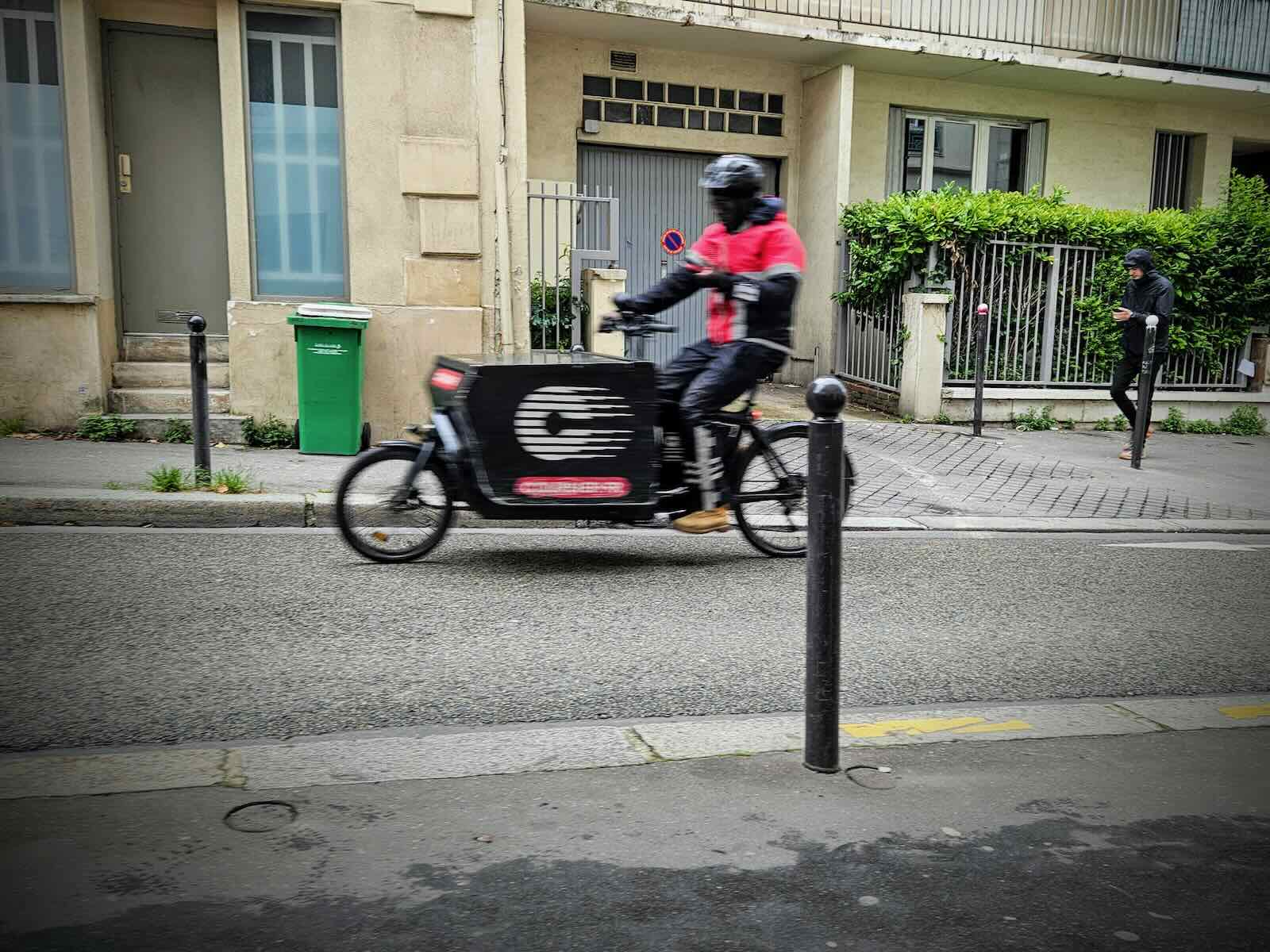
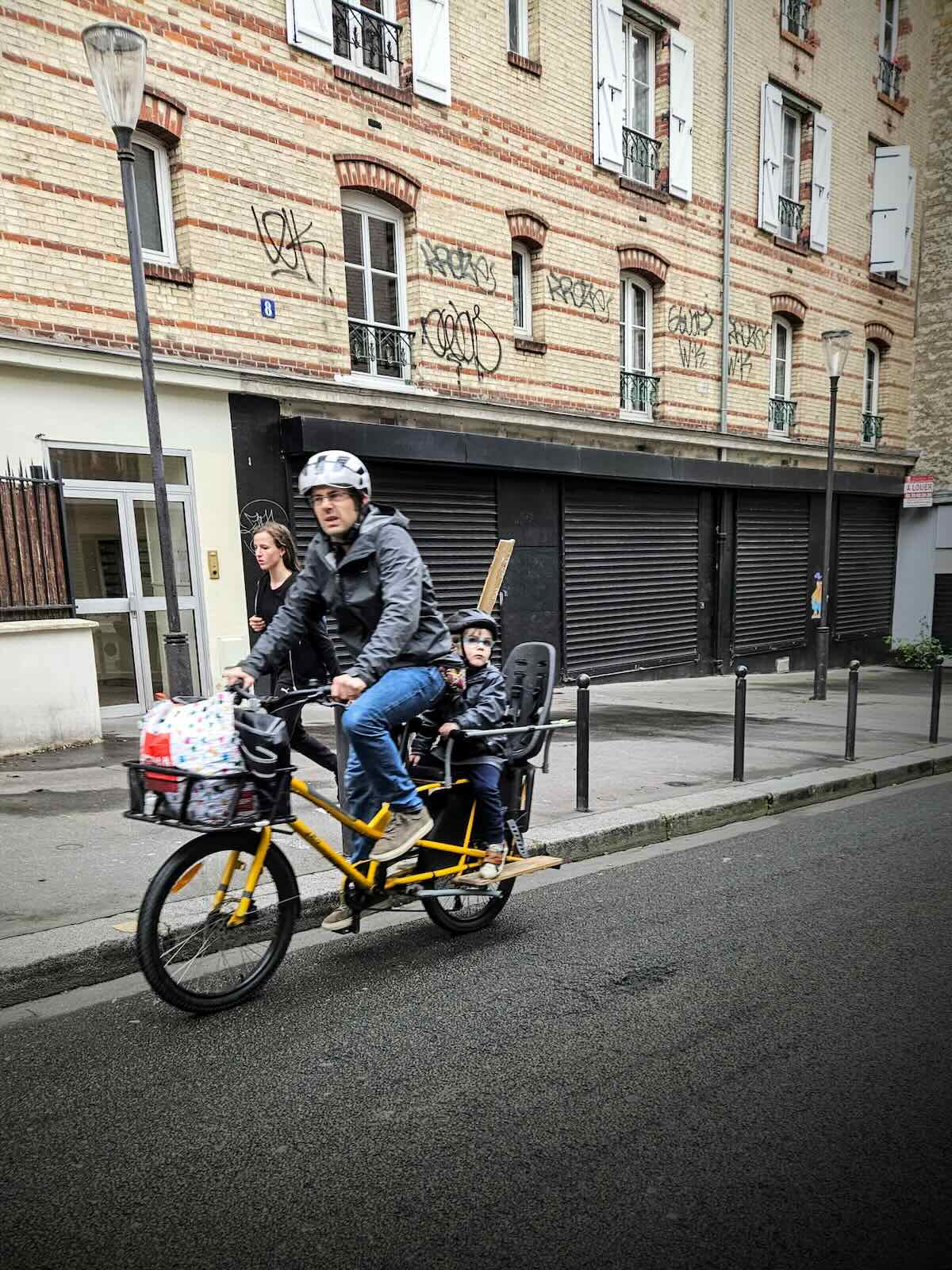
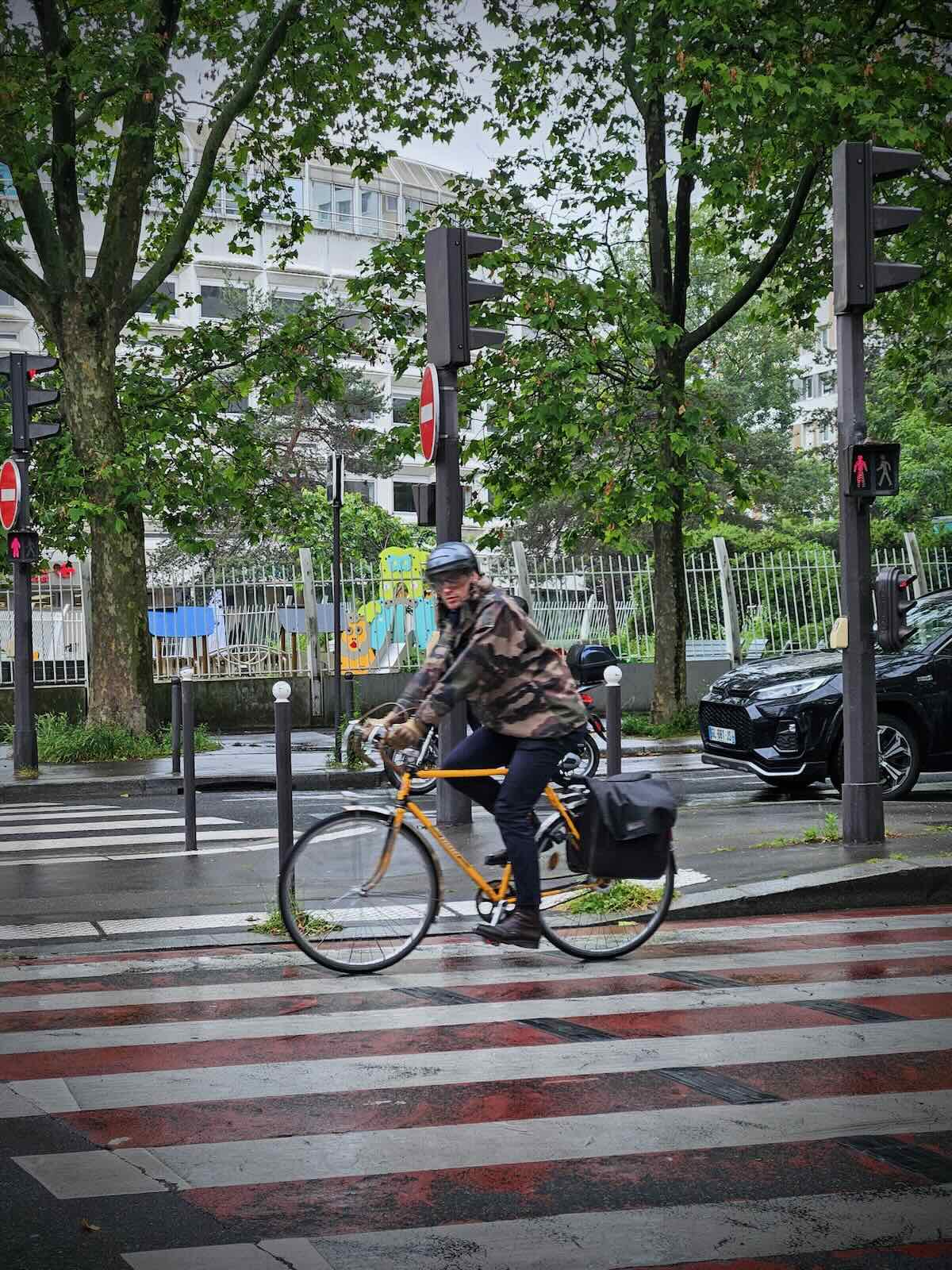
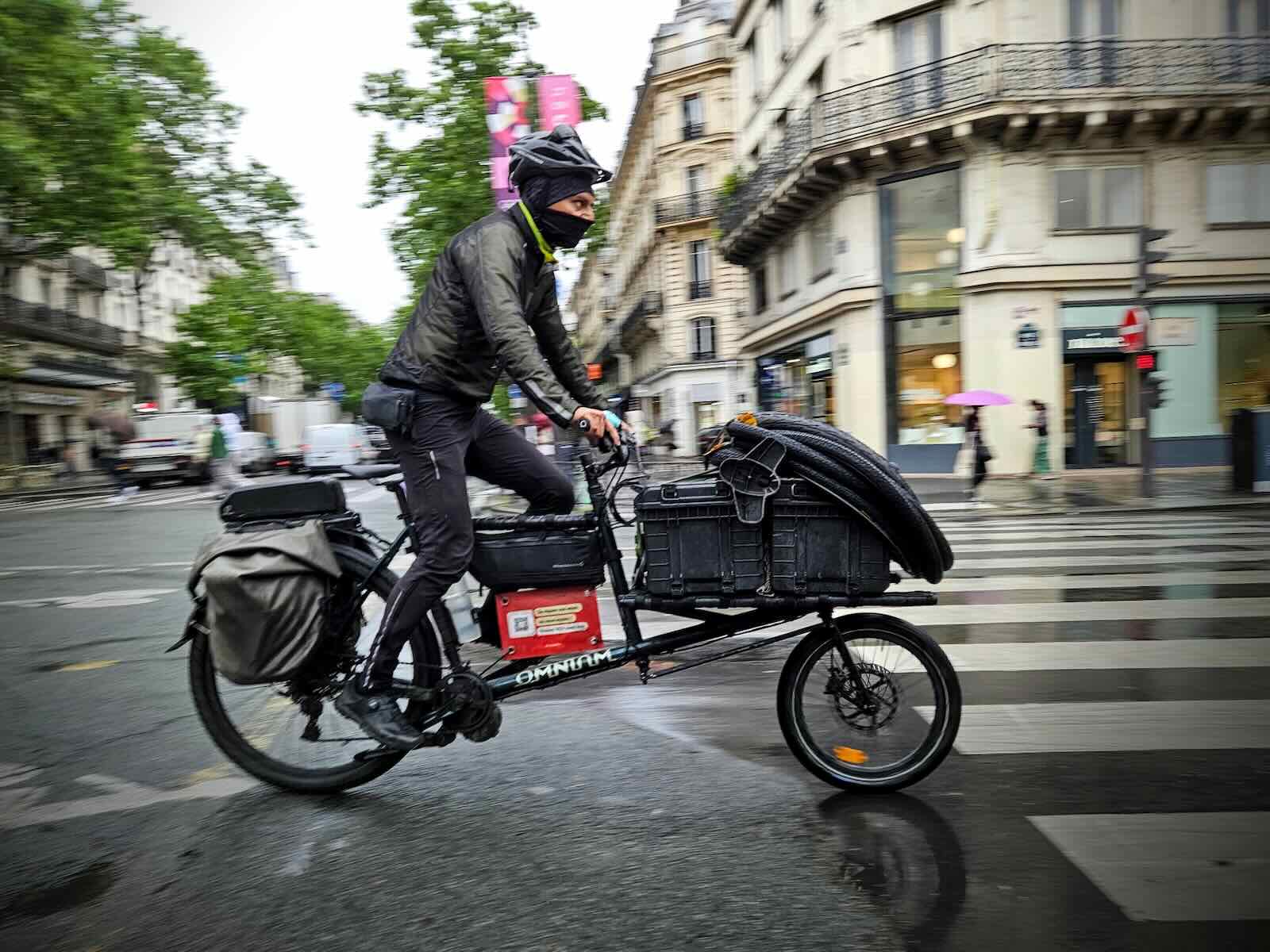
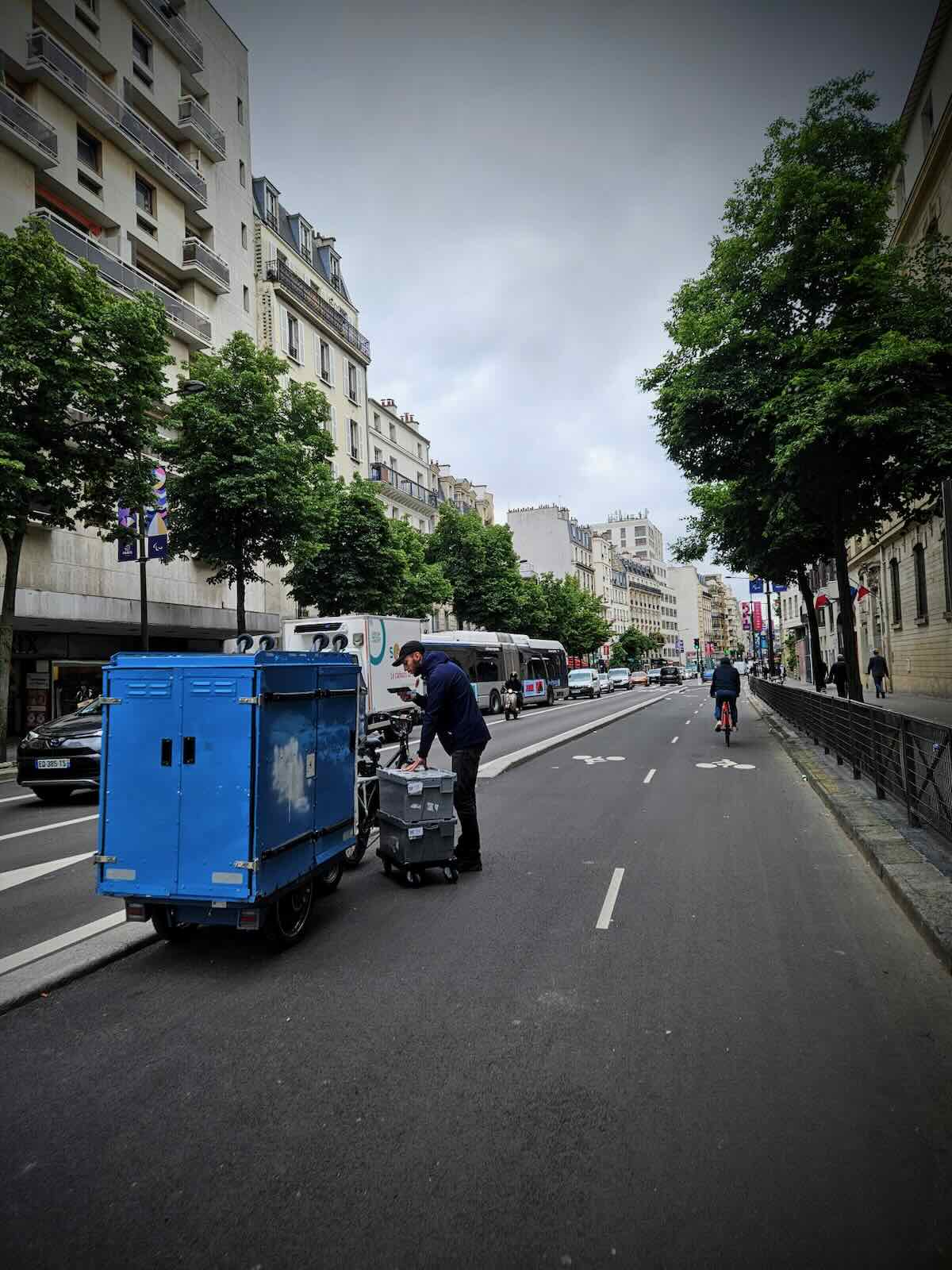
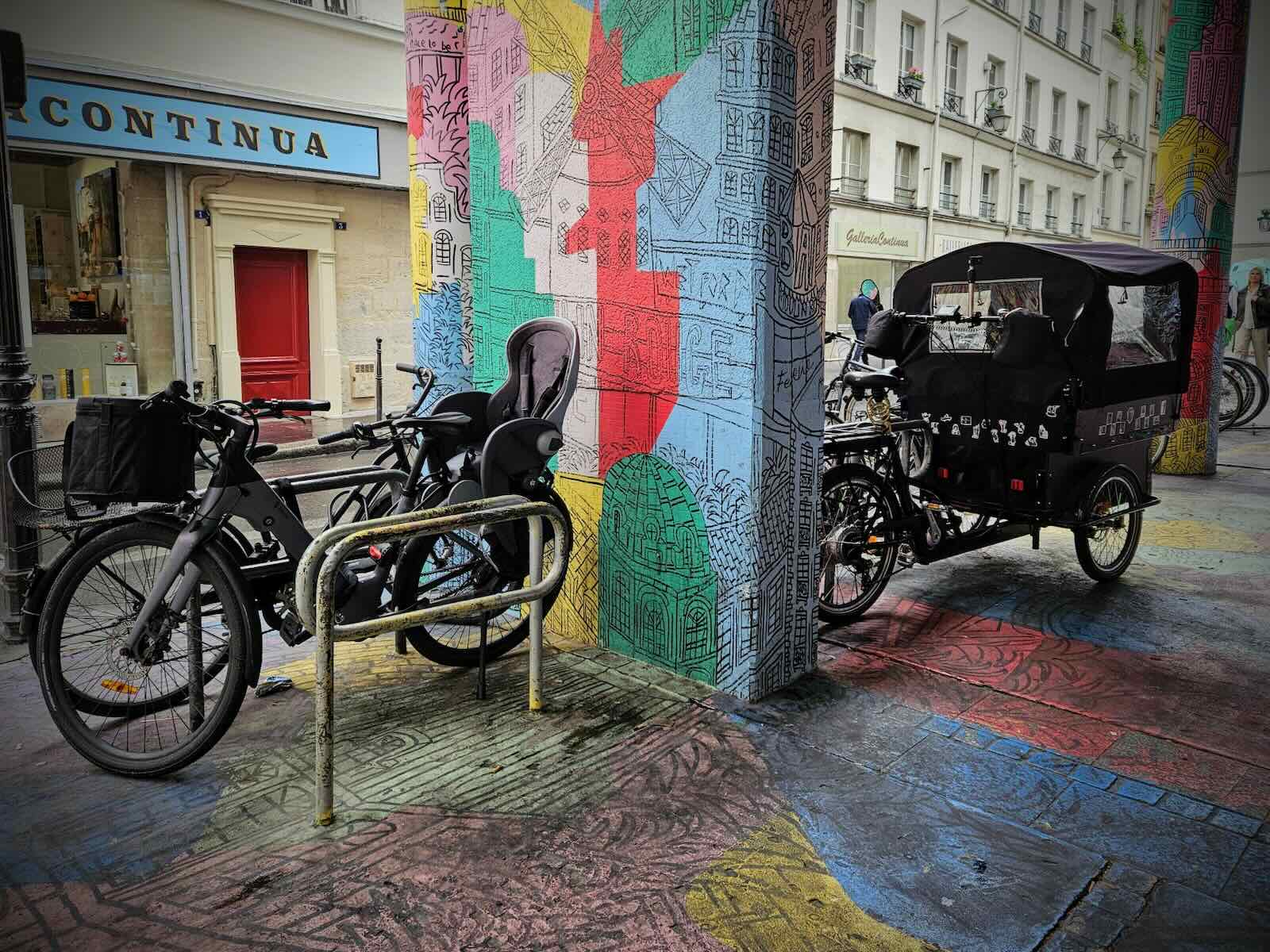
Going by the typical measures, such as the kinds of people who cycle, the types of bikes they use and what clothing they wear, the signs are positive. There’s a good mix of ages and genders, plus lots of families on cargo bikes.
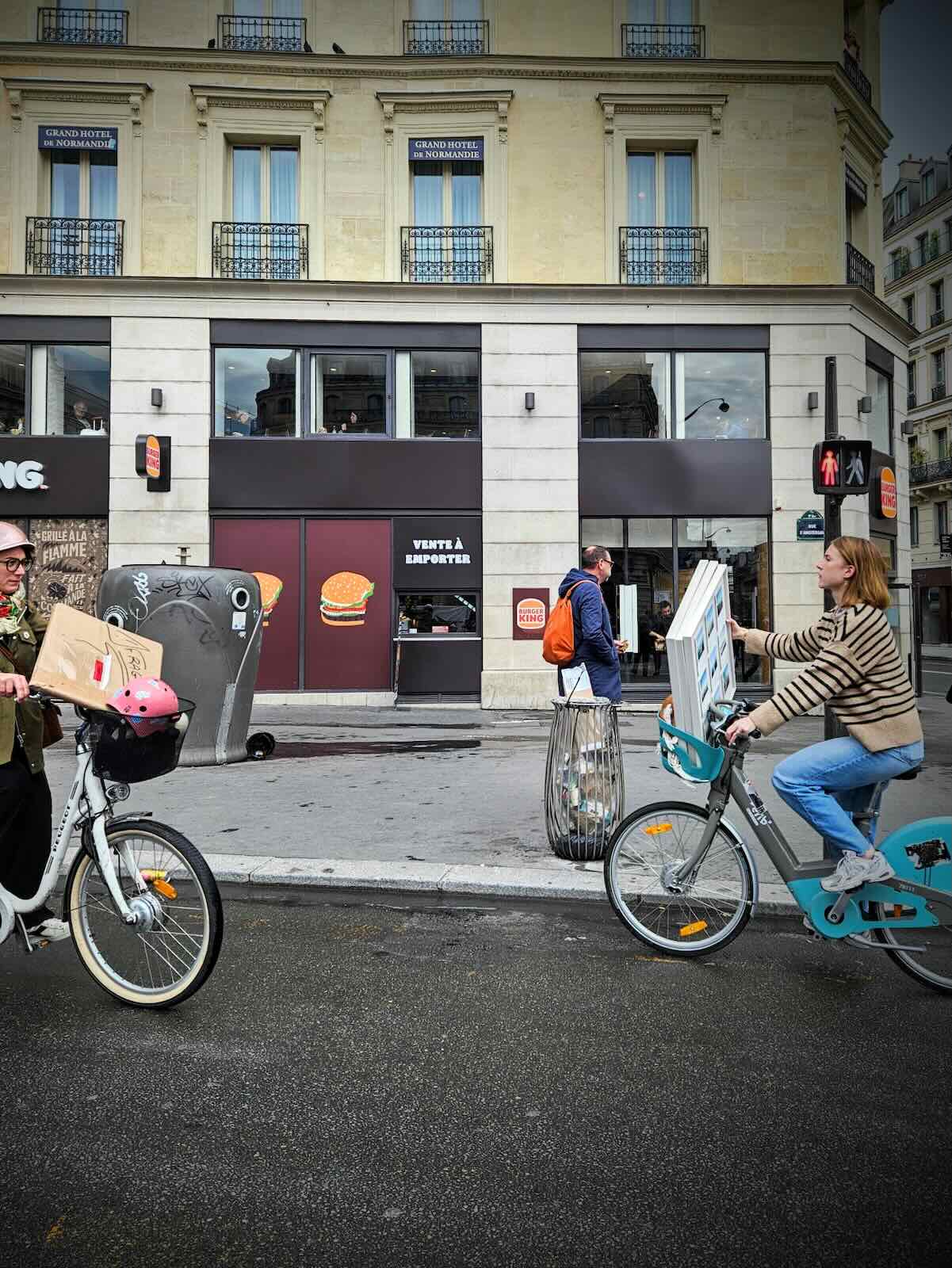
There’s lots of upright transport/city bikes around and people wearing normal clothes riding, not Lycra, which are good signs. Though there’s a large number of people wearing helmets, which is usually a sign that cycling isn’t always a completely comfortable experience.




Vélib bike share
During our stay in Paris, I made use of the city’s Vélib bike share to get about. Paris was one of the earliest cities to get a bike share scheme, and for many years, it was the most successful. Vélib is still very popular in the city, but it’s not without its issues.
As a visitor, there’s multiple options for using Vélib, whether paying for a single ride, single day pass or 3 day pass. I ended up using two 2 day passes while we were there, for €20 each. This enabled me to ride on their standard bikes for up to 60 minutes at a day, plus 5 trips of up to 45 minutes on their electric bikes.

Using the bikes was pretty straightforward, you unlock them by inputting an access code and secret code on the keypad on the bike. Though if you have an Android phone with NFC, you can use the app to unlock them. Docking the bikes after use was also pretty simple, unlike the Starling Bank Bikes we have in Manchester.
I found the Vélib bikes to be pretty good and convenient way to get around Paris. There’s lots of docking stations across the city, usually with bikes available and having 60 minutes on each ride meant there was usually plenty of time to get around.
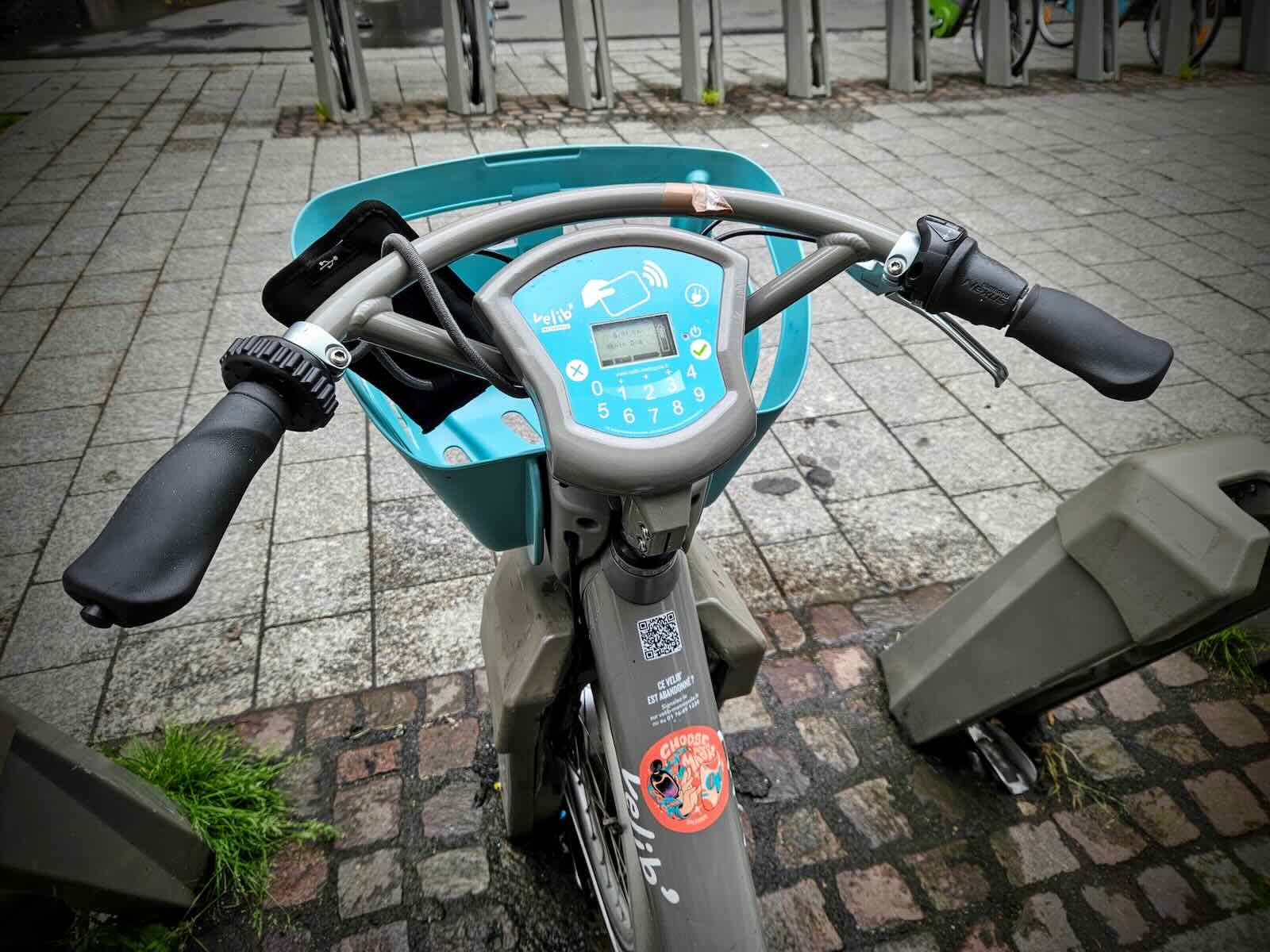
There were one or two issues. Sometimes, I’d arrive at a docking station and there’d be no bikes available, or all the bikes there were broken (people turn the seat backwards if there’s an issue with the bike). Or I’d unlock a bike and find out there’s an issue with it and have to return it and get another.
Also, while unlocking the bikes was generally straightforward. There were times when I was completely unable to unlock a bike, either using my phone or the code, which was incredibly frustrating.
While ideally it’d be nice to hire a bike for the full trip, using the Vélib bike share was a convenient way of getting a bike to ride, with minimum commitment and fuss.
Bikes of Paris
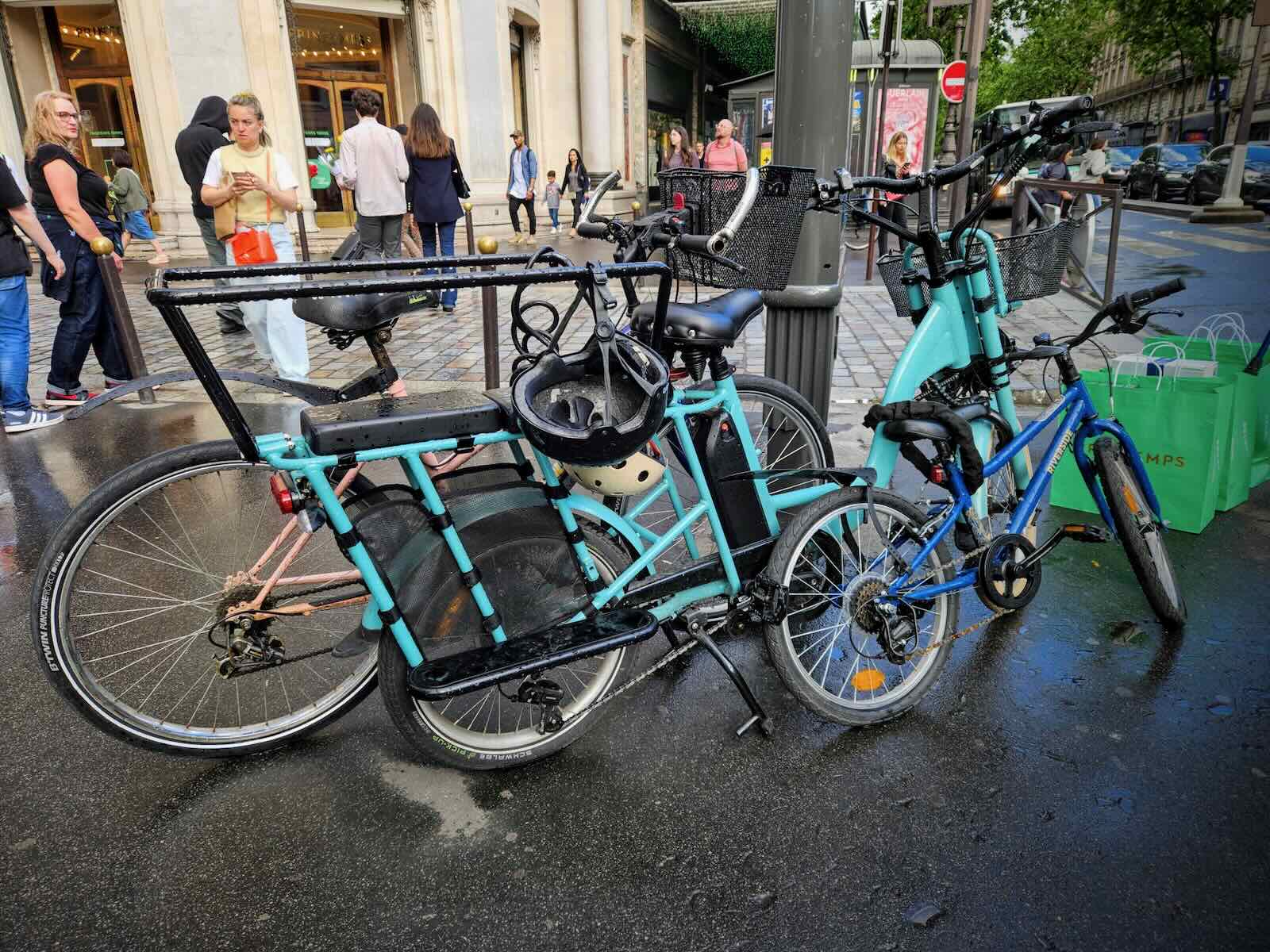
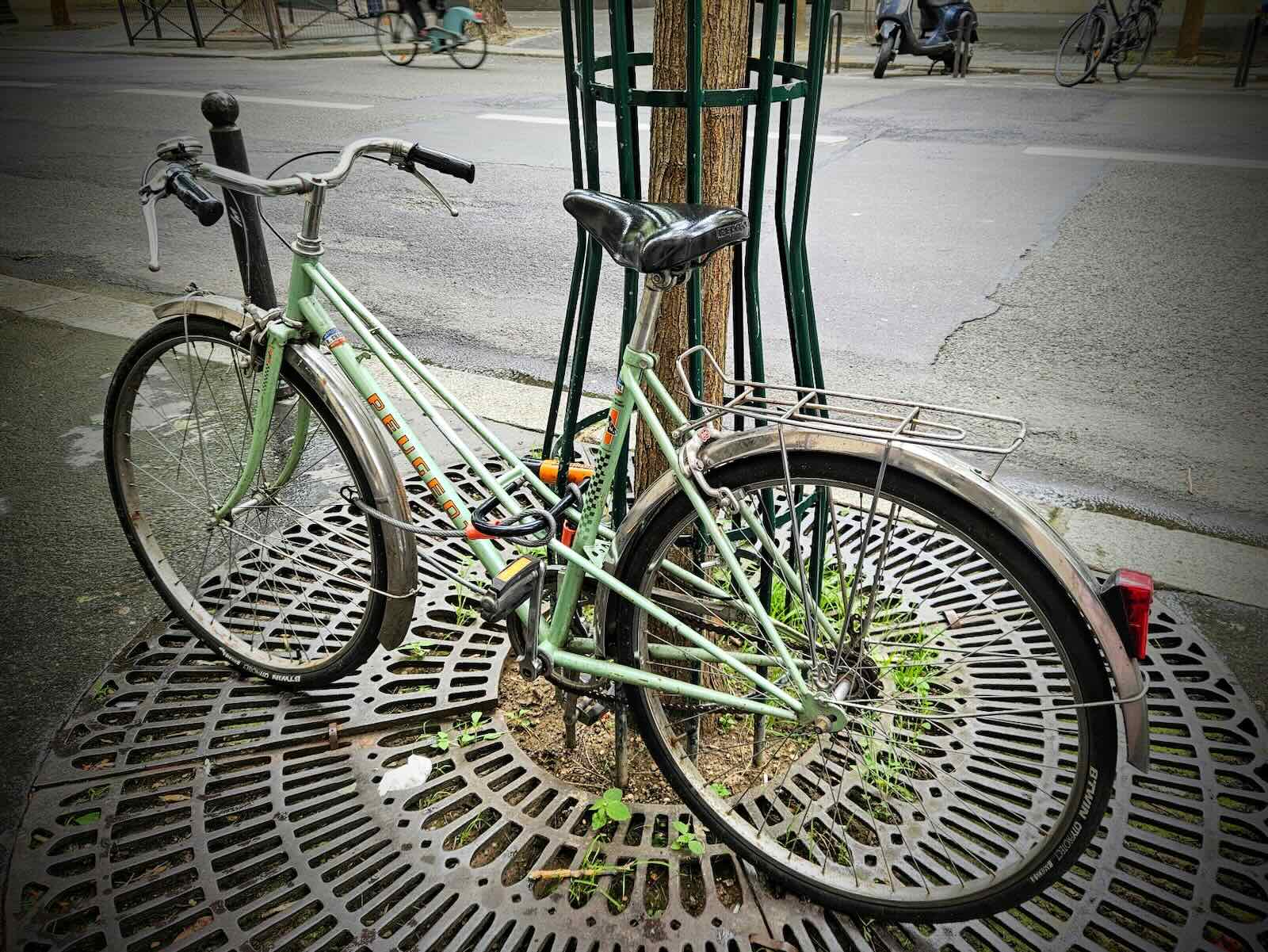
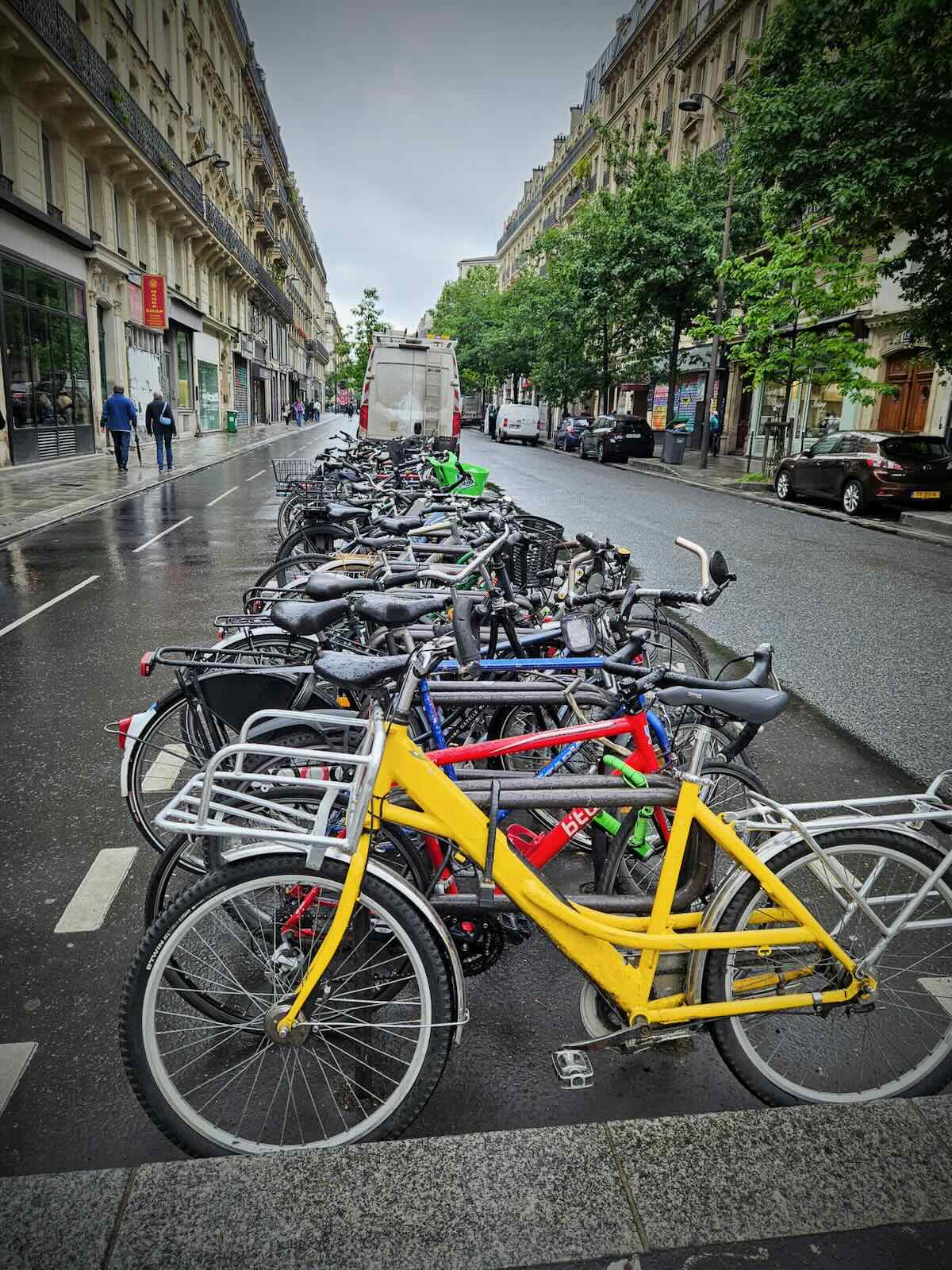
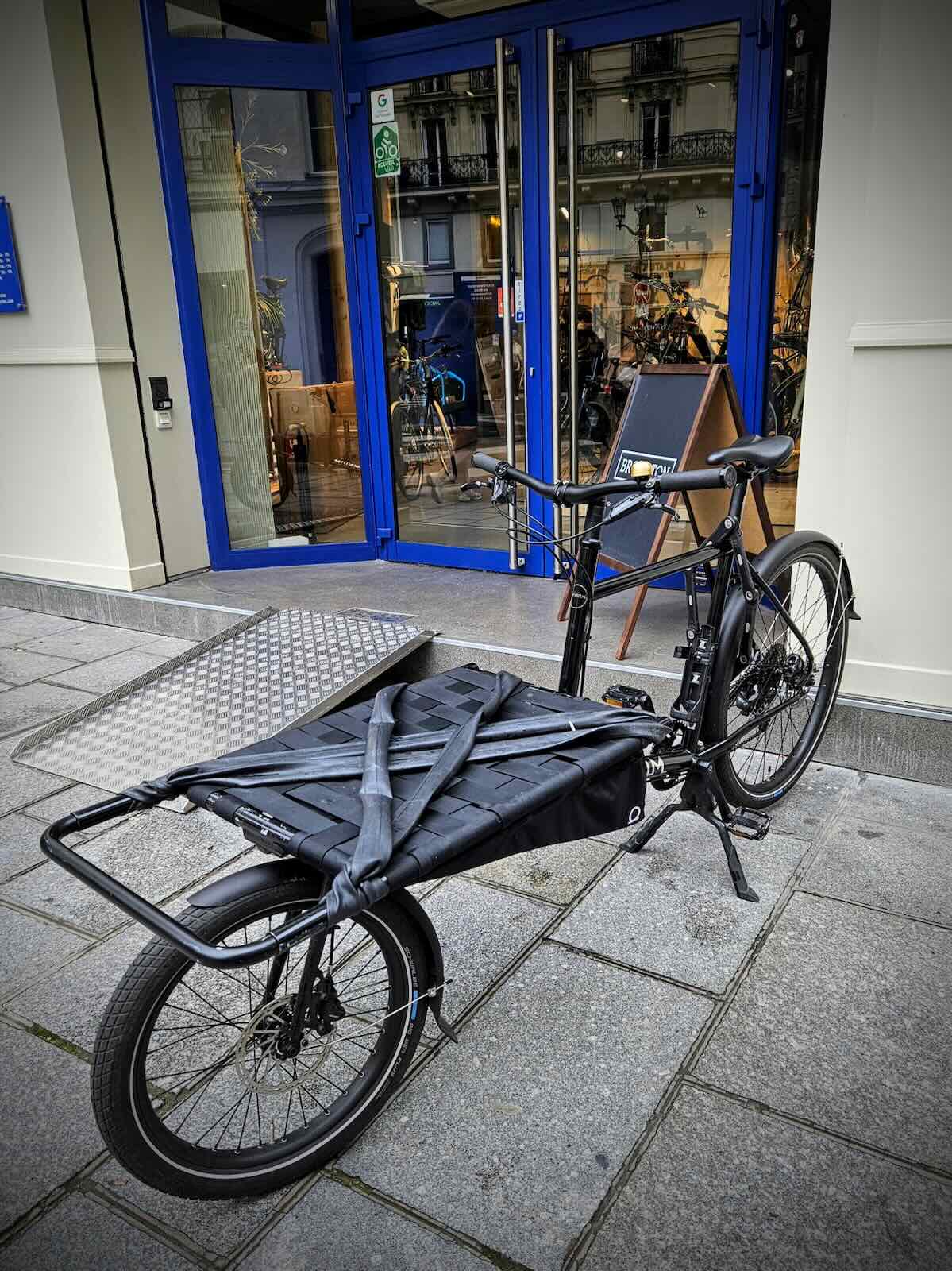
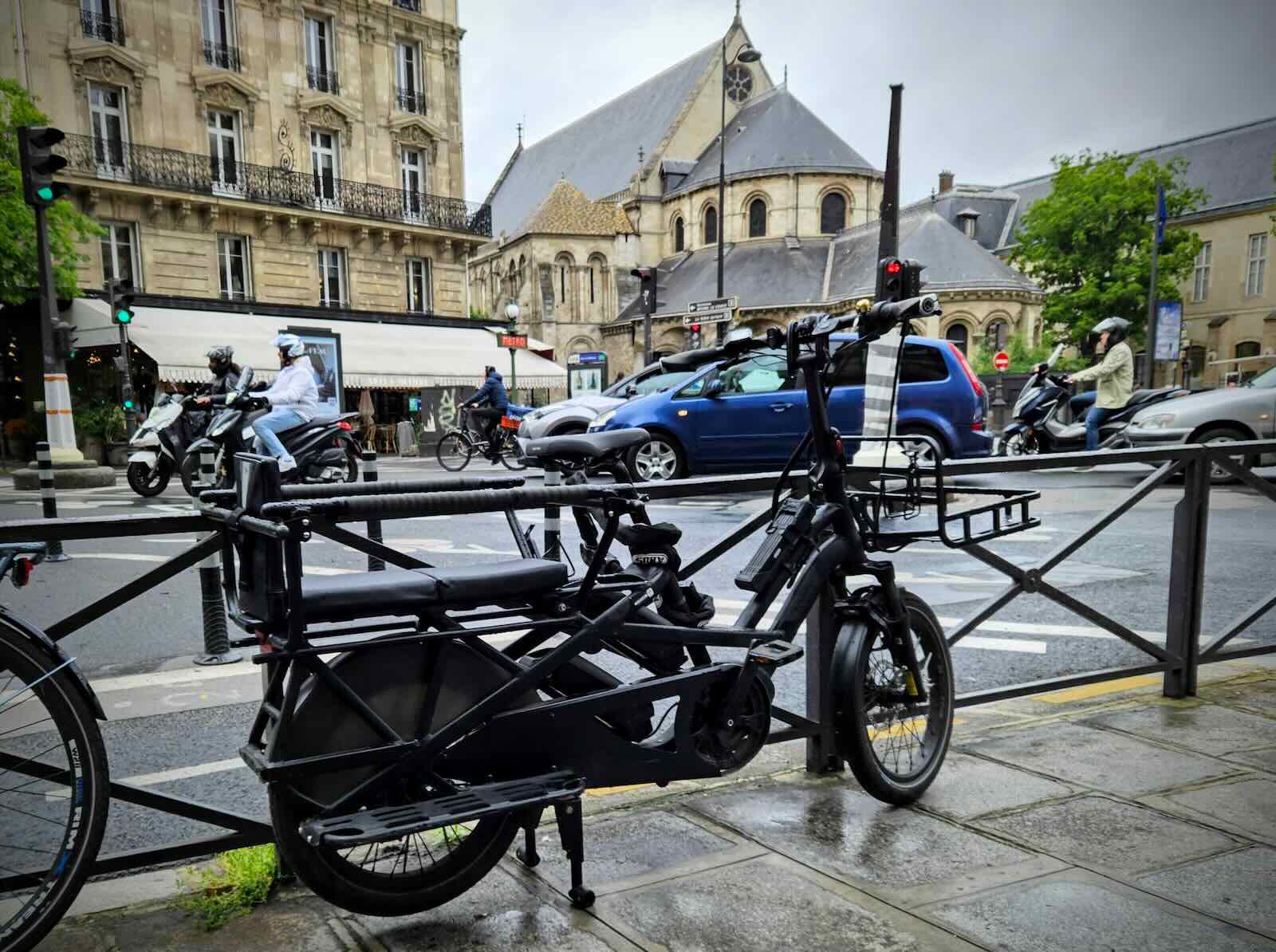
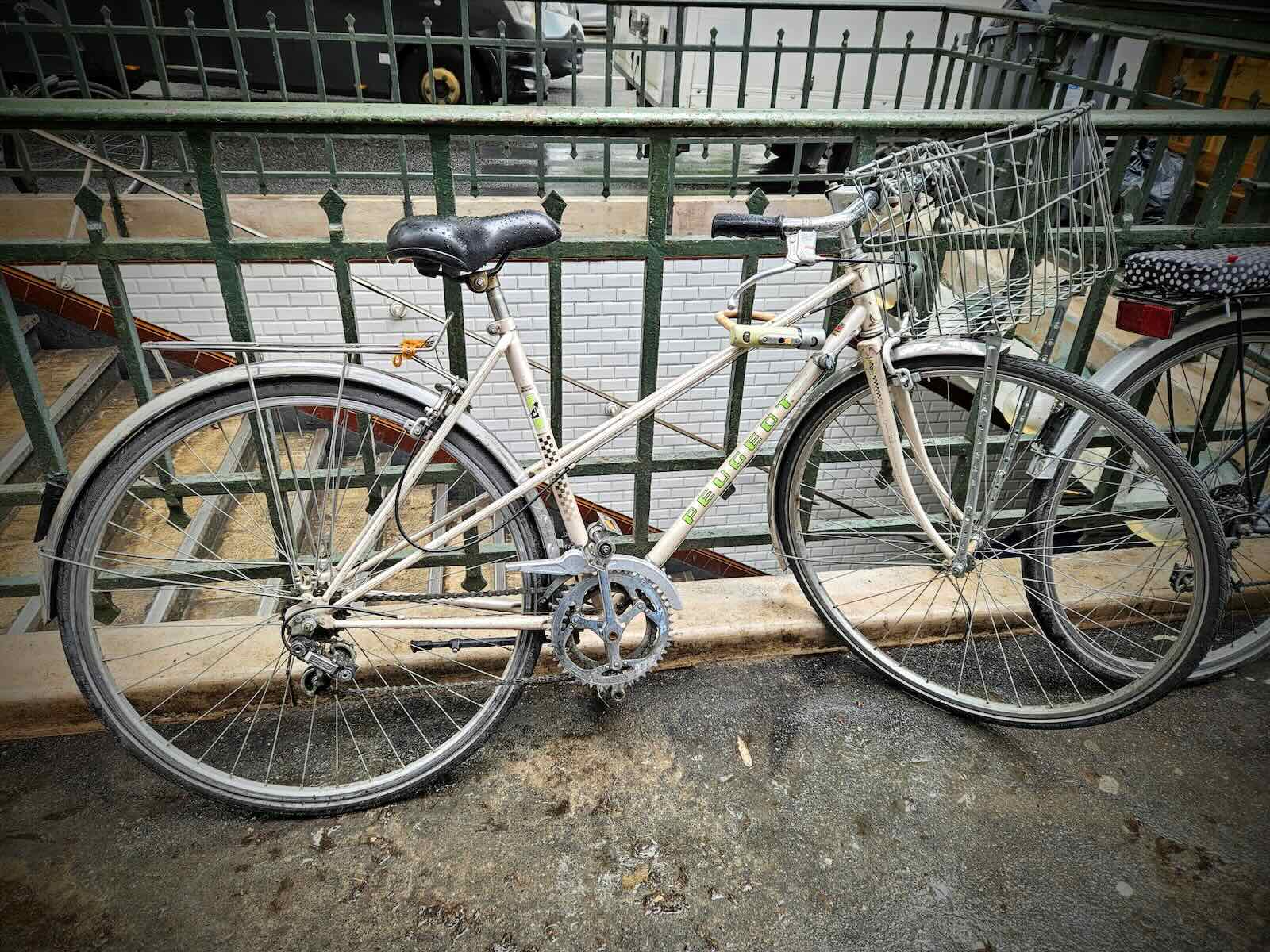
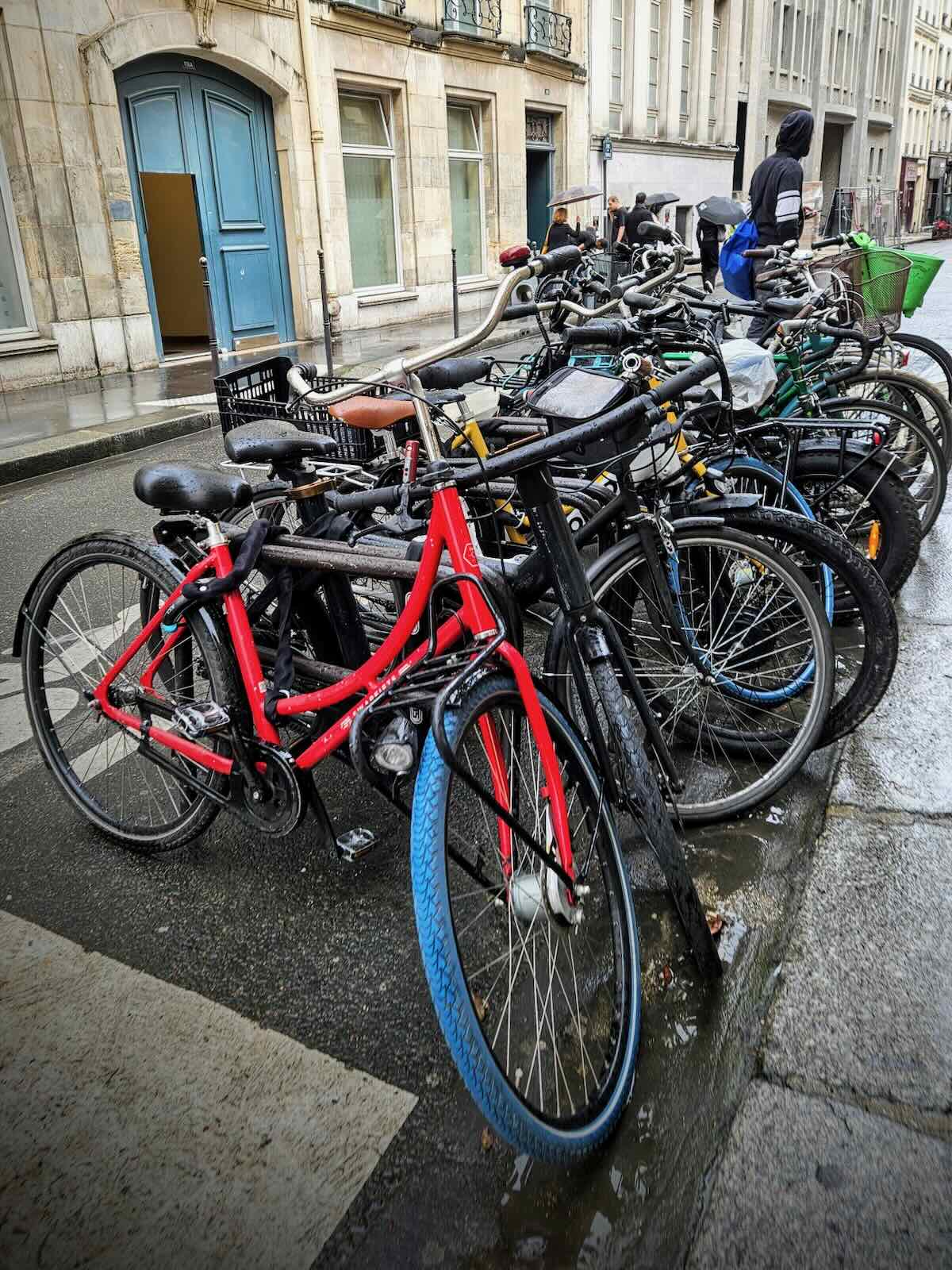
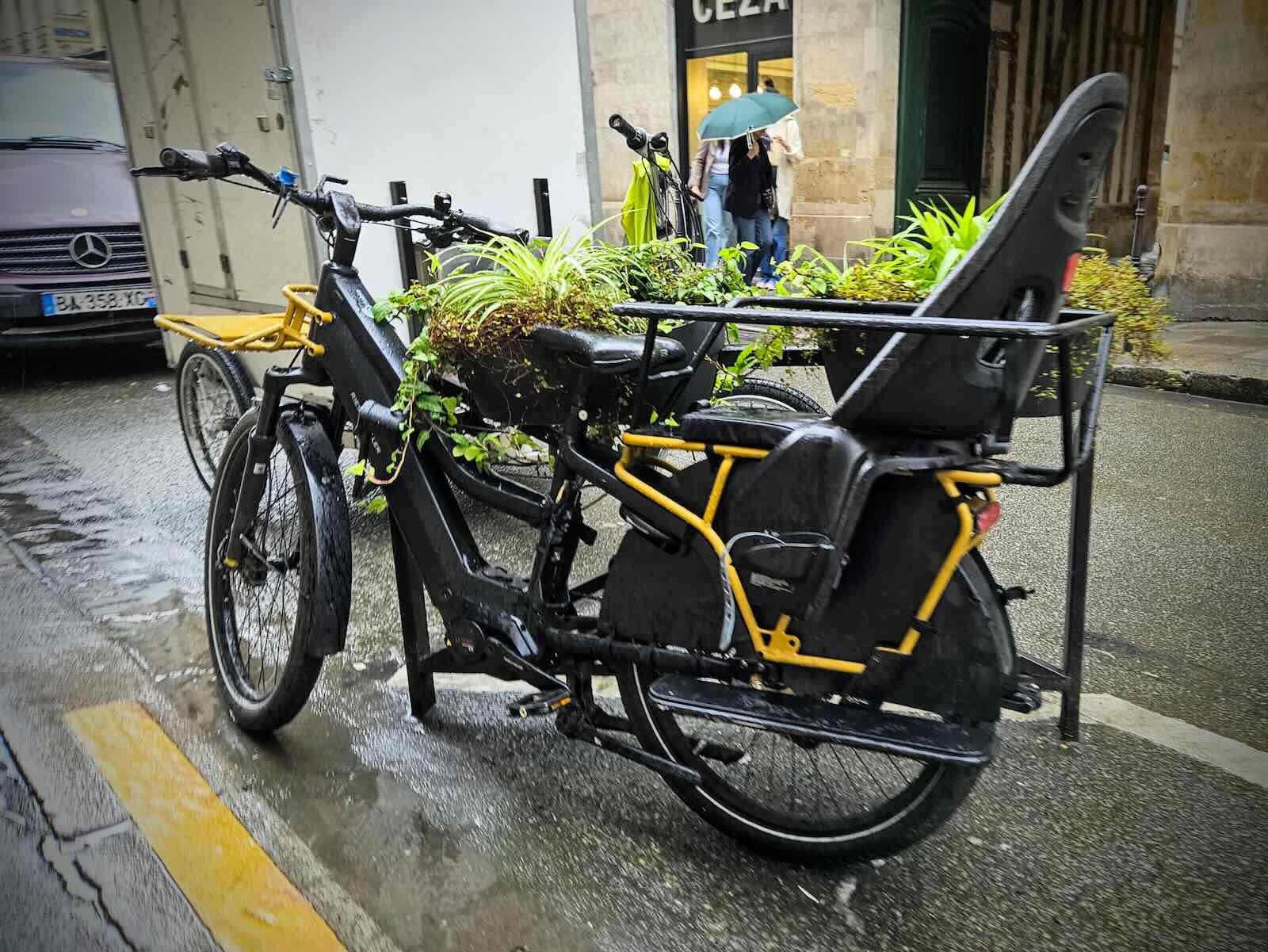
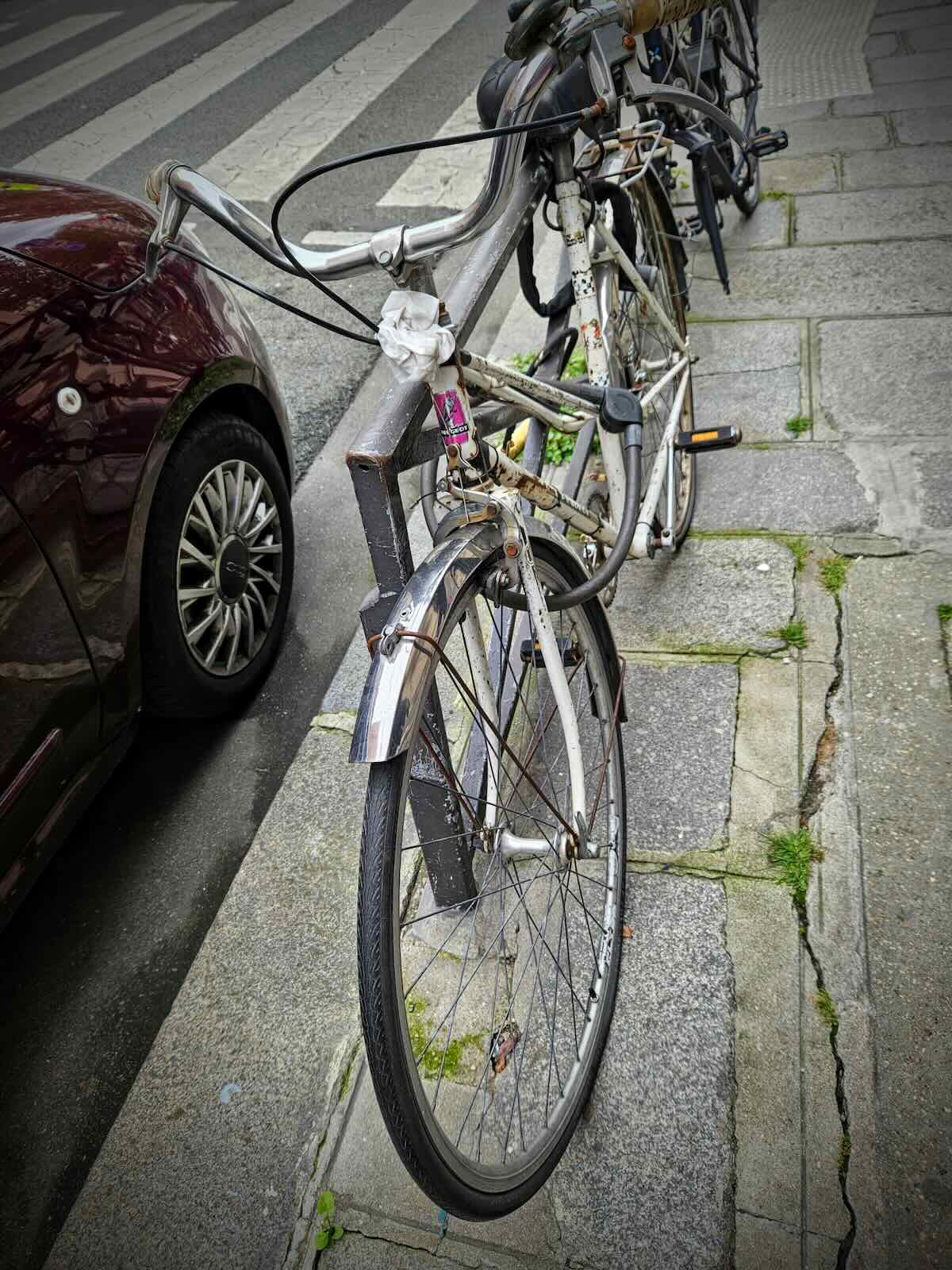
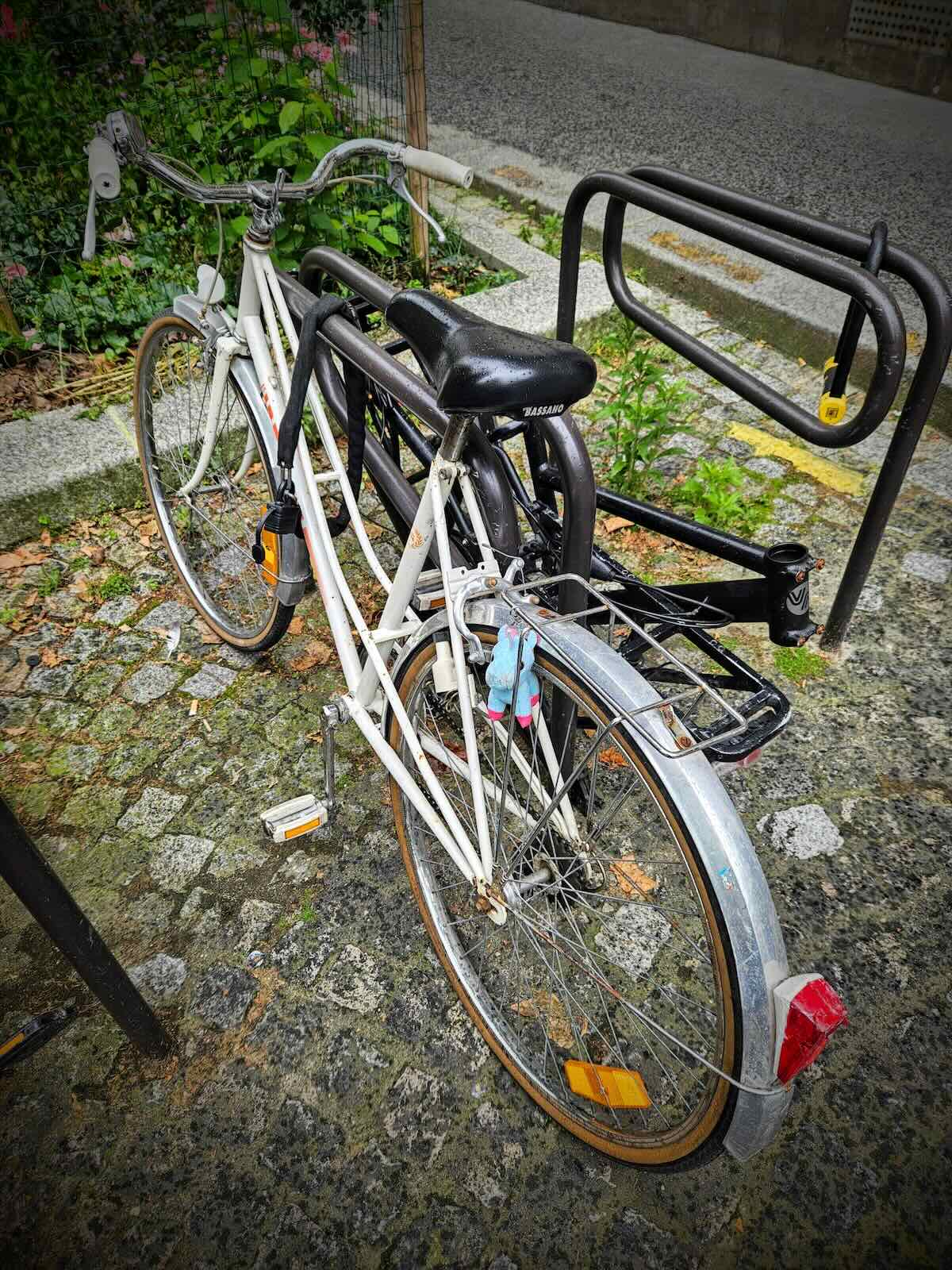
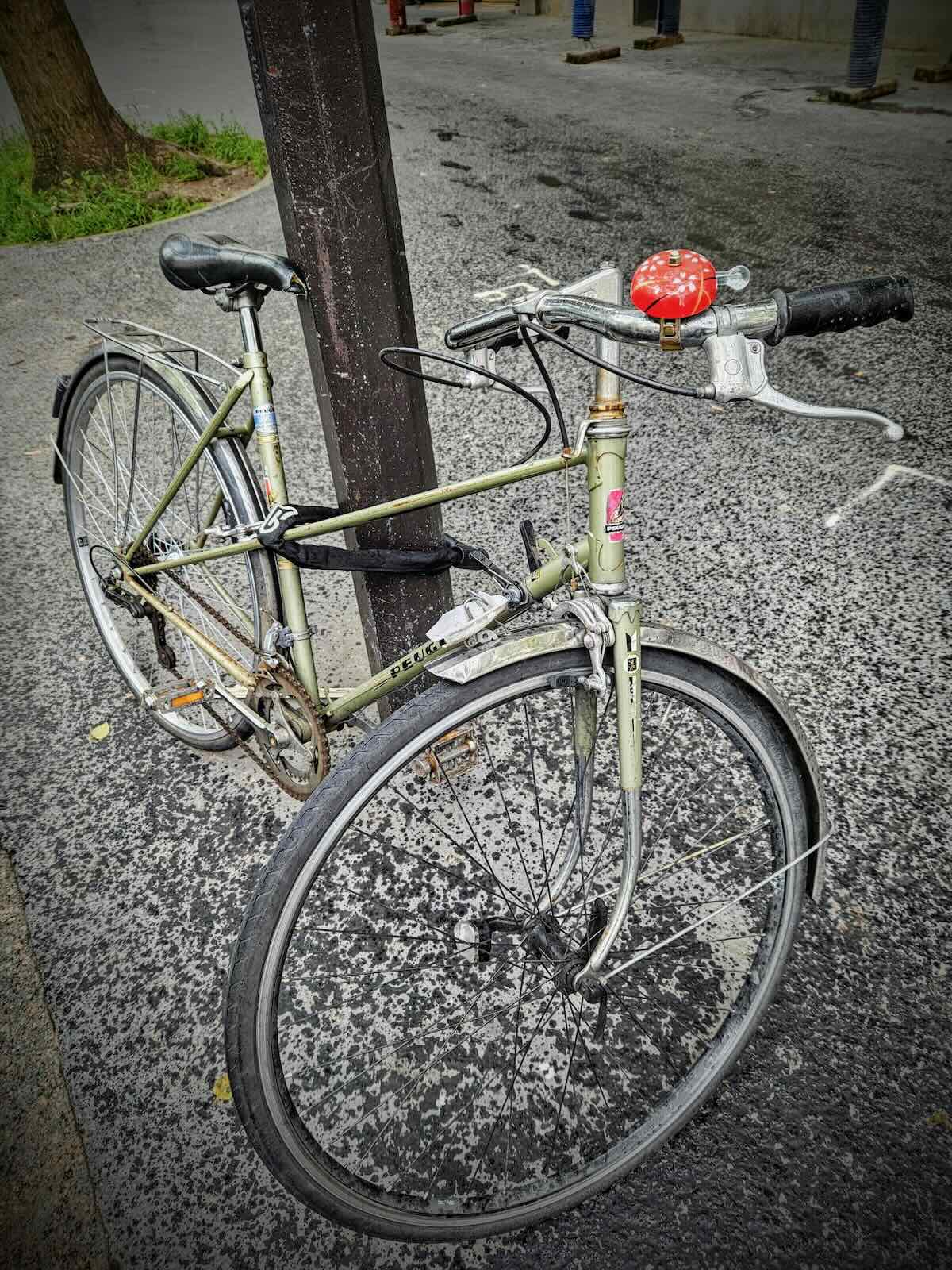
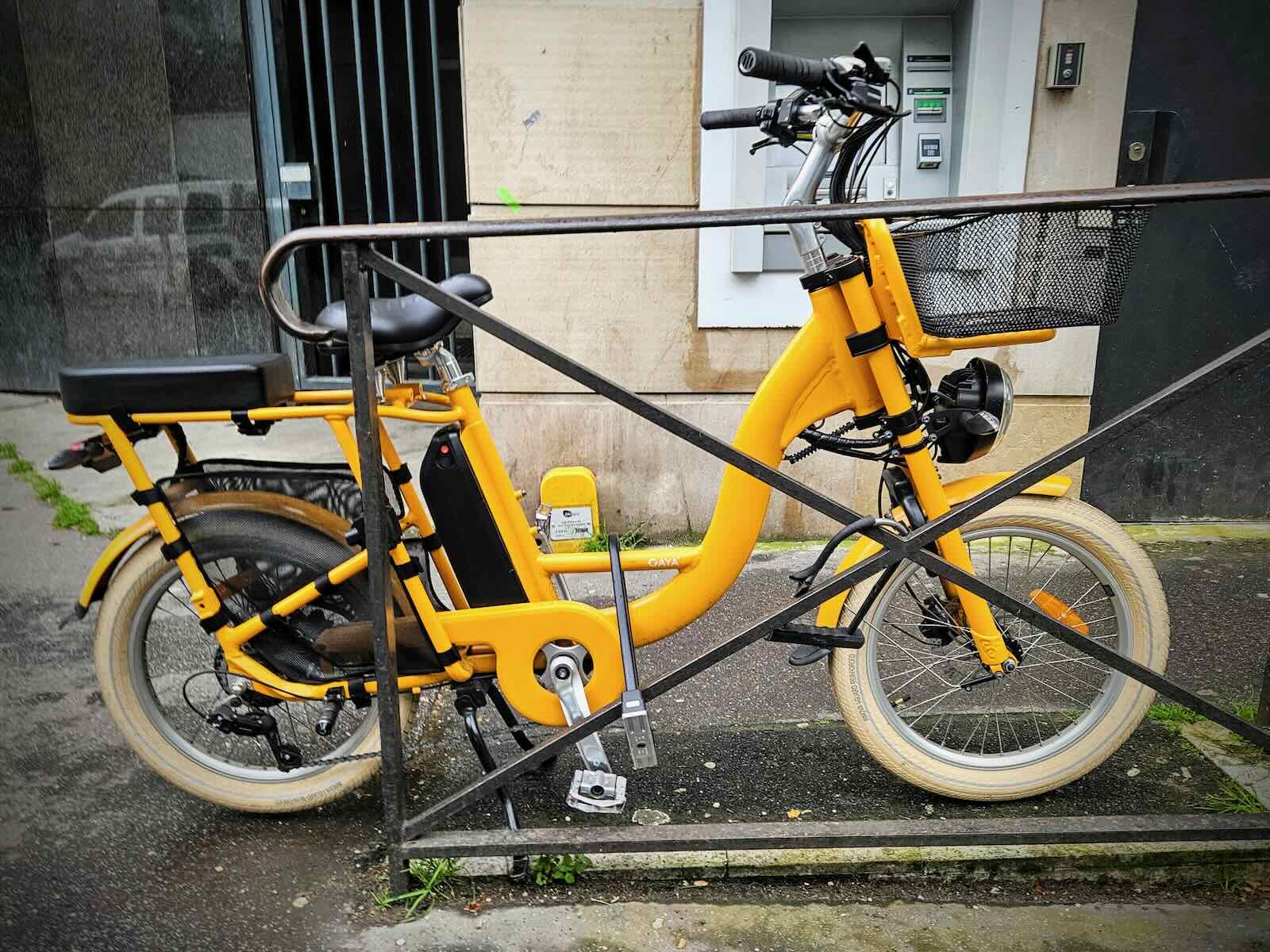
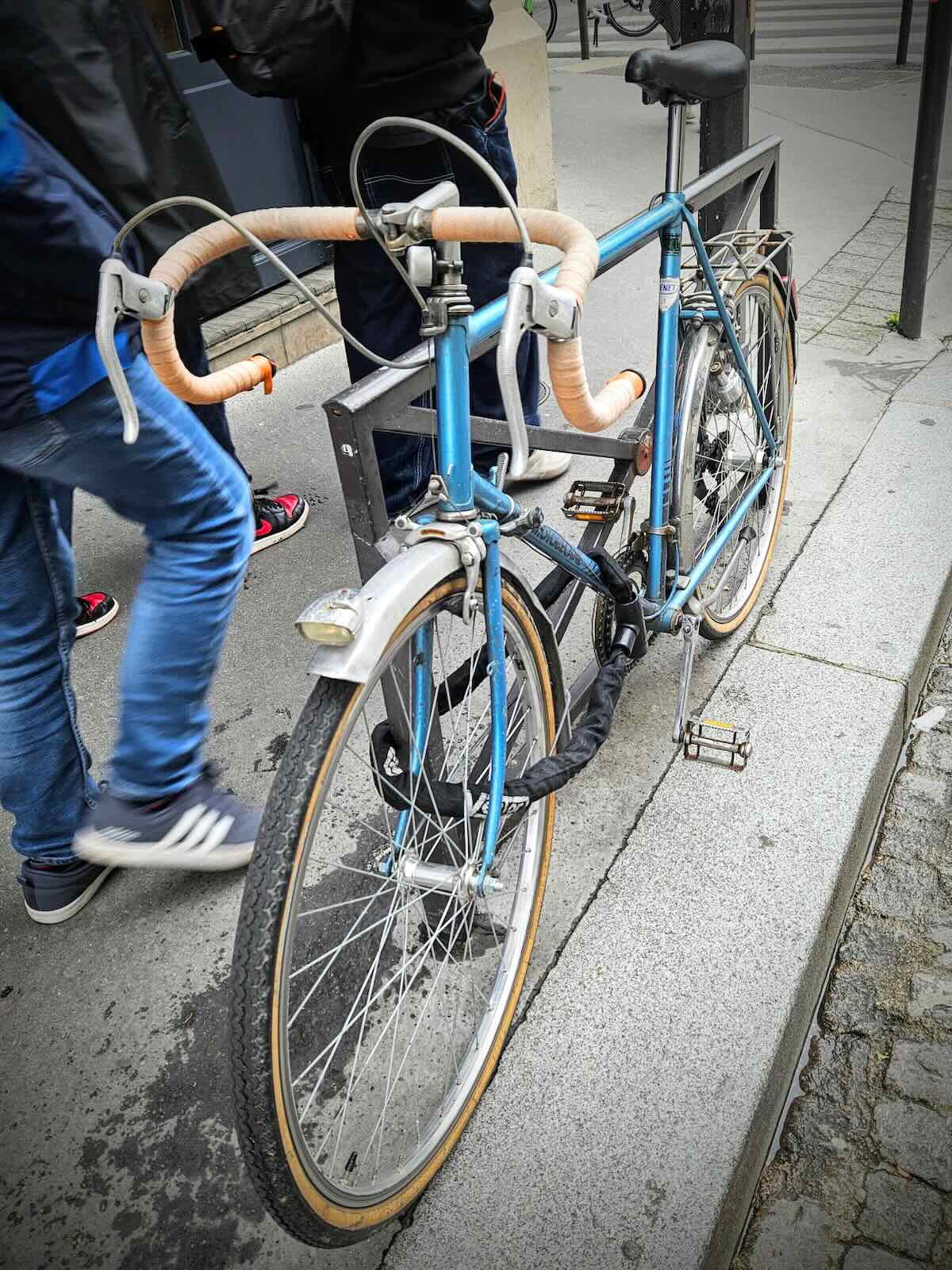
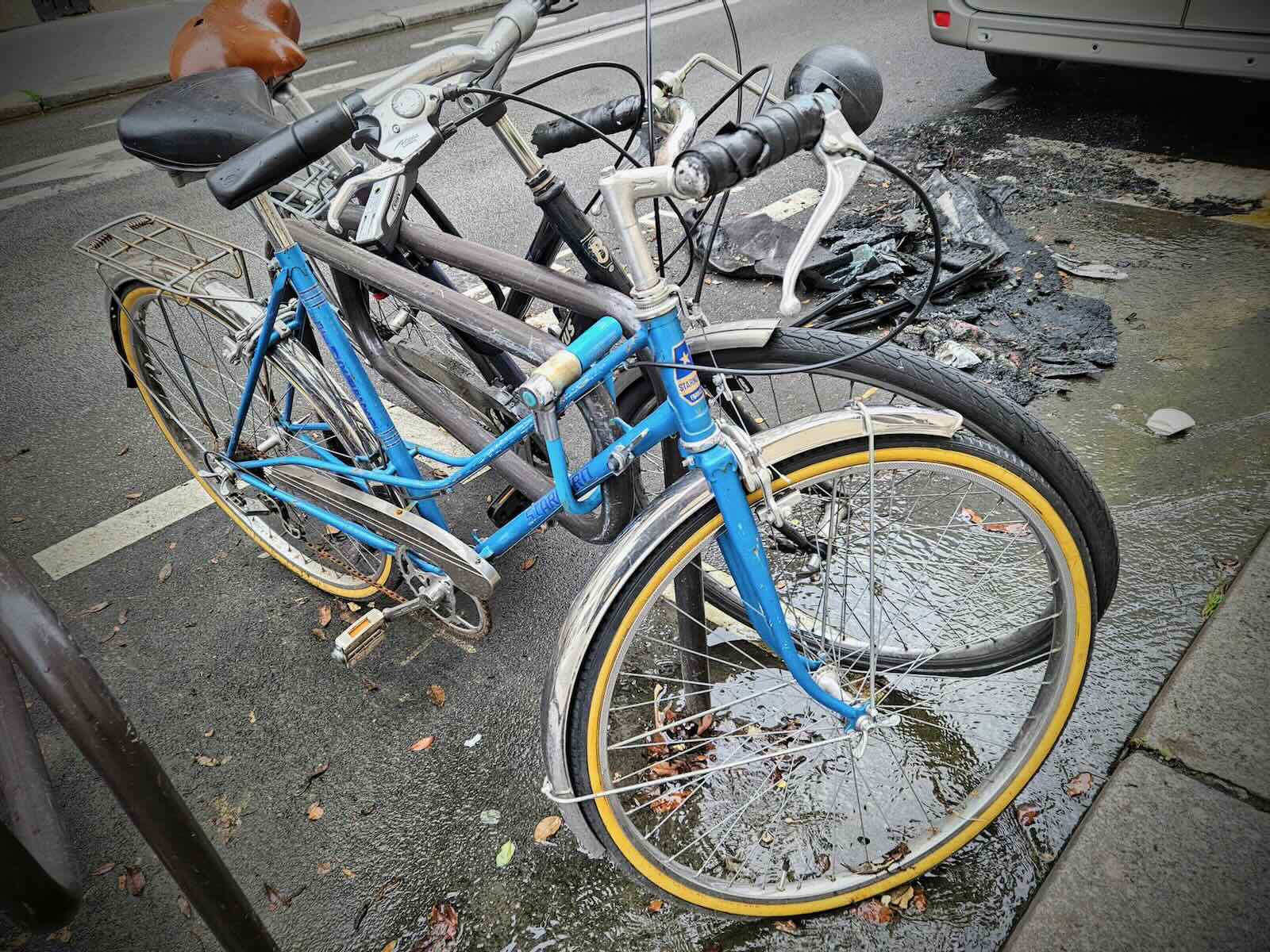
Being something of a bike nerd, I did enjoy while wandering round Paris, spotting the many and varied bikes on display on the streets.
In addition to lots of modern cargo bikes, there were plenty of vintage French bikes, especially Peugeots, but also brands such as Starnord and Mercier.
Somewhat unsurprisingly, there were lots of mixte style bikes, which are a popular type of bike in France. These are unisex, step-through bikes with double tubes, instead of a single top tube. I do love these, but I’ve never owned one.
















This is the first in the Paris 24 series, so expect more posts soon as I cover our Paris trip in detail, with plenty of cycling. Come back soon.
 Dom Cycling