
While for most of our Helsinki trip, I was getting about using City Bike bike share, I did get opportunity to sample most of the city’s other modes of transport while we were there.
Helsinki is relatively small for a capital city, with a population of just 600,000 (metro 1.5m), but it puts many larger cities to shame when it comes to public transport. With an extensive tram network, commuter and intercity rail, ferries, a metro system and lots of buses, it puts many bigger cities to shame.
As you’ll see in the fantastic following video from the always informative RMTransit, it’s really impressive how a city the size of Helsinki has combined so many forms of public transport to create a truly joined up, integrated network.
Each transport mode is there to suit a particular use case, buses for short local trips, trams provide more capacity for where there’s higher demand. For longer distances to the suburbs, the Metro with its higher speeds and capacity is a better fit, especially when combined with local bus services, to extend the reach of the Metro.
There’s also the recently introduced light rail style line 15 tram, which has dedicated space, has higher capacity and can travel at higher speeds than street-running trams. Beyond the Metro and light rail, there’s modern, frequent commuter rail services, going both inland and west along the coast. This also includes trains to and from the airport, which unusually run on a loop.
Trams
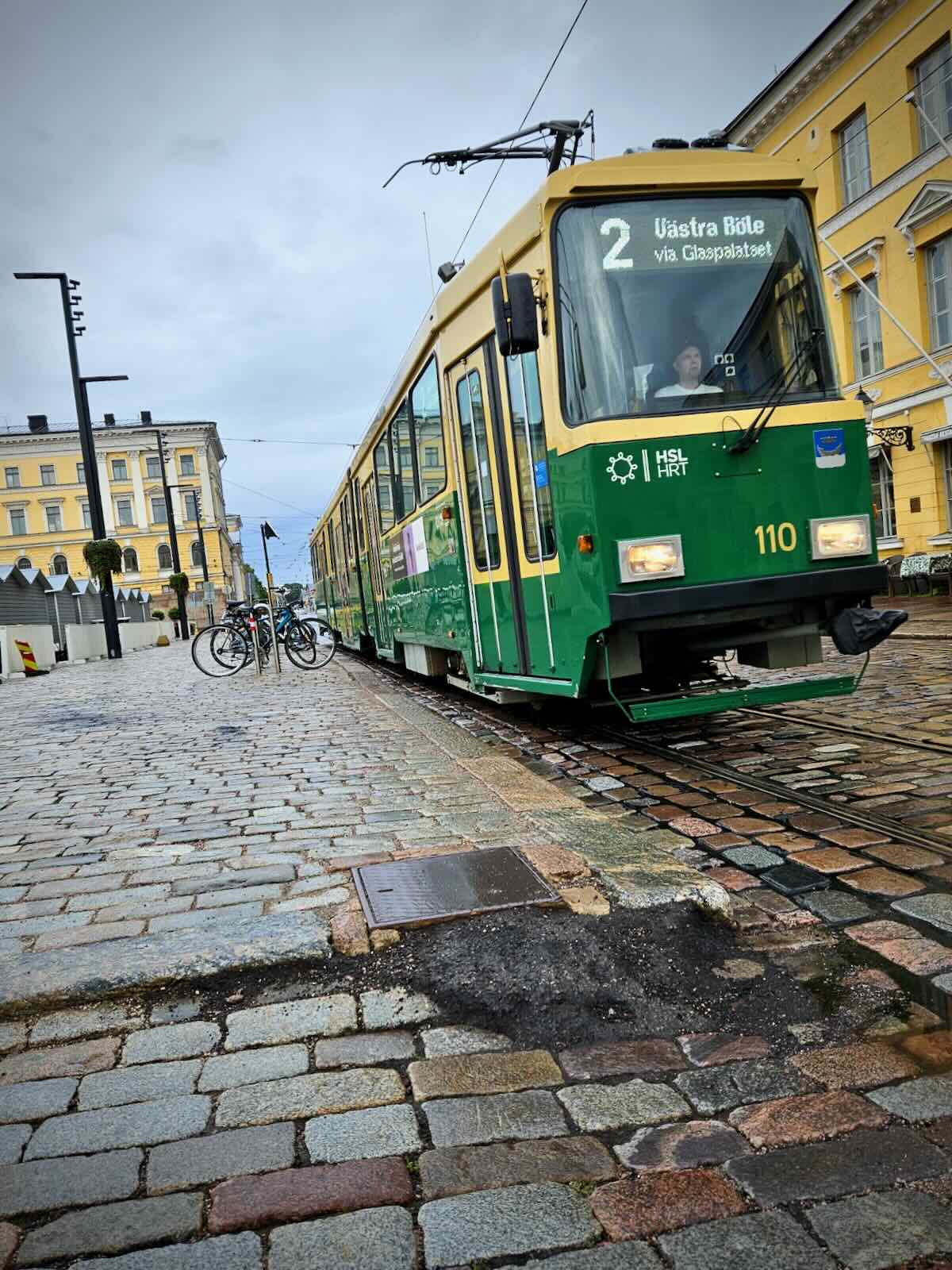
Helsinki’s trams are probably the most visible and dare I say iconic form of public transport in the city, as well as being the main means of transport in the city centre. In their distinctive green and yellow livery, they’re definitely a big part of the city’s character.
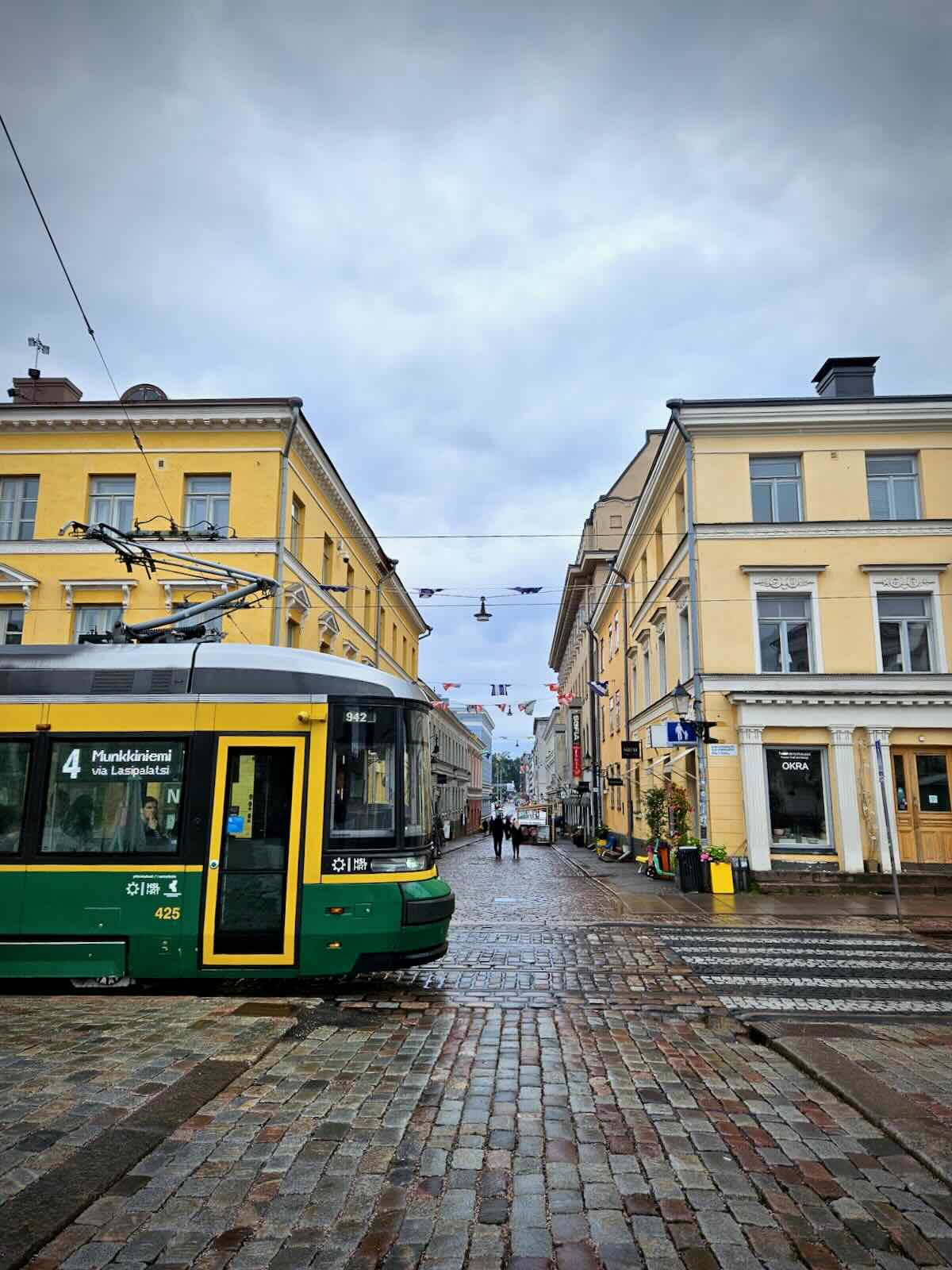
Trams have been a feature on the streets of Helsinki since 1891, when the first horse-drawn trams were introduced, which were then electrified in 1900. The network consists of 14 routes, which run almost exclusively on the streets, making it more of a traditional tram system rather than light rail.
In addition, line 15 was added in 2023 and runs as a modern light rail system, outside of the existing tram network. Line 15 more replaces what was a busy bus route, supplementing the Metro system in the suburbs. It goes west to east through the suburban metropolitan area of Helsinki, to the north of the centre.
While we were too early to make use of the new line 15, we did get a fair few trams during the week, the other more than me. The service is all you want to from a tram system, certainly the modern trams that are accessible with level boarding.
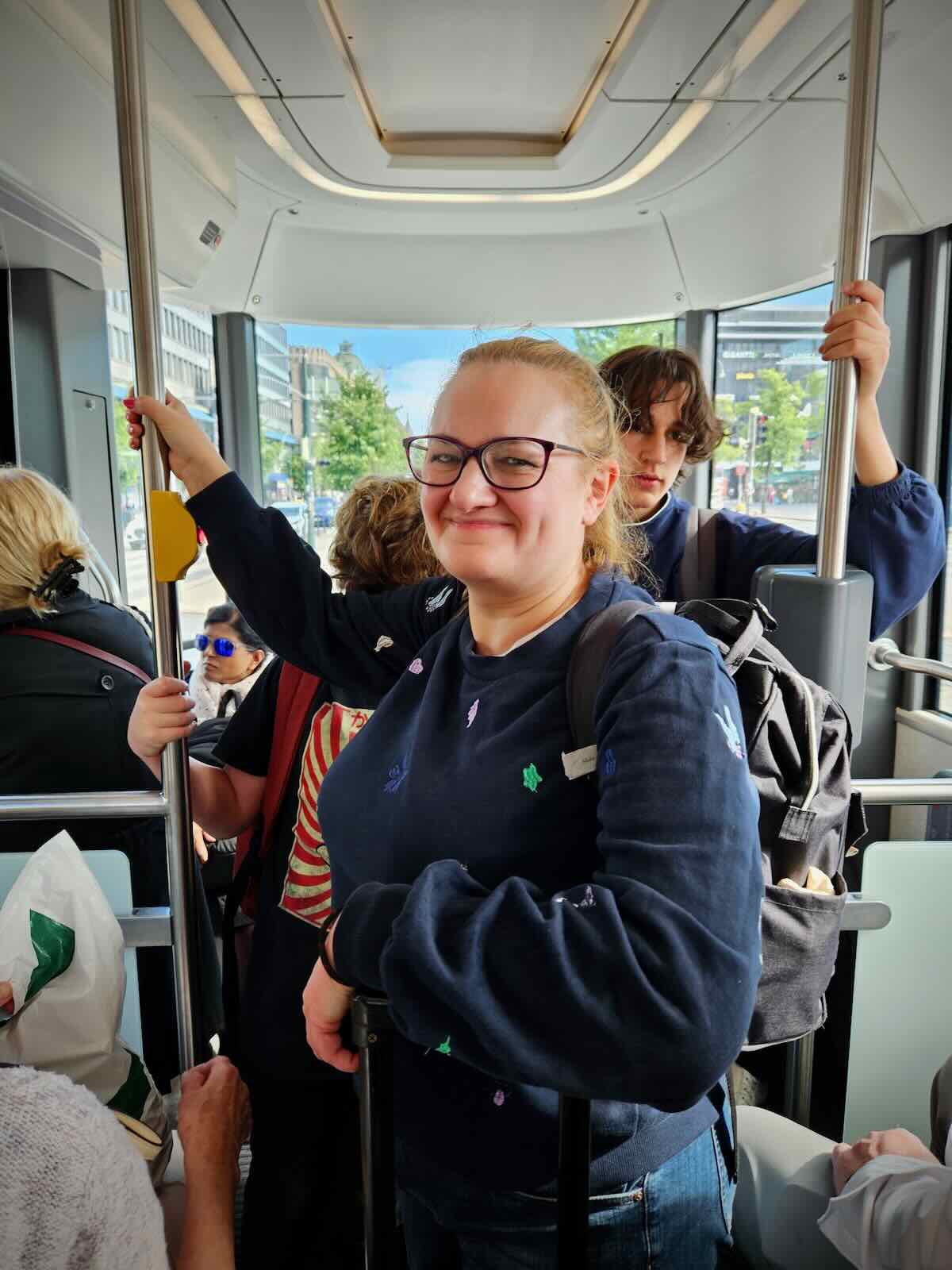
Like with the rest of Helsinki’s public transport, you can combine multiple tram rides into a single journey or trams and other forms of transport.
As we were staying pretty centrally and not straying too far out, the tram made the most sense for us for getting about. Well, usually for the others to get about, while I hopped on a City Bike.
Trains
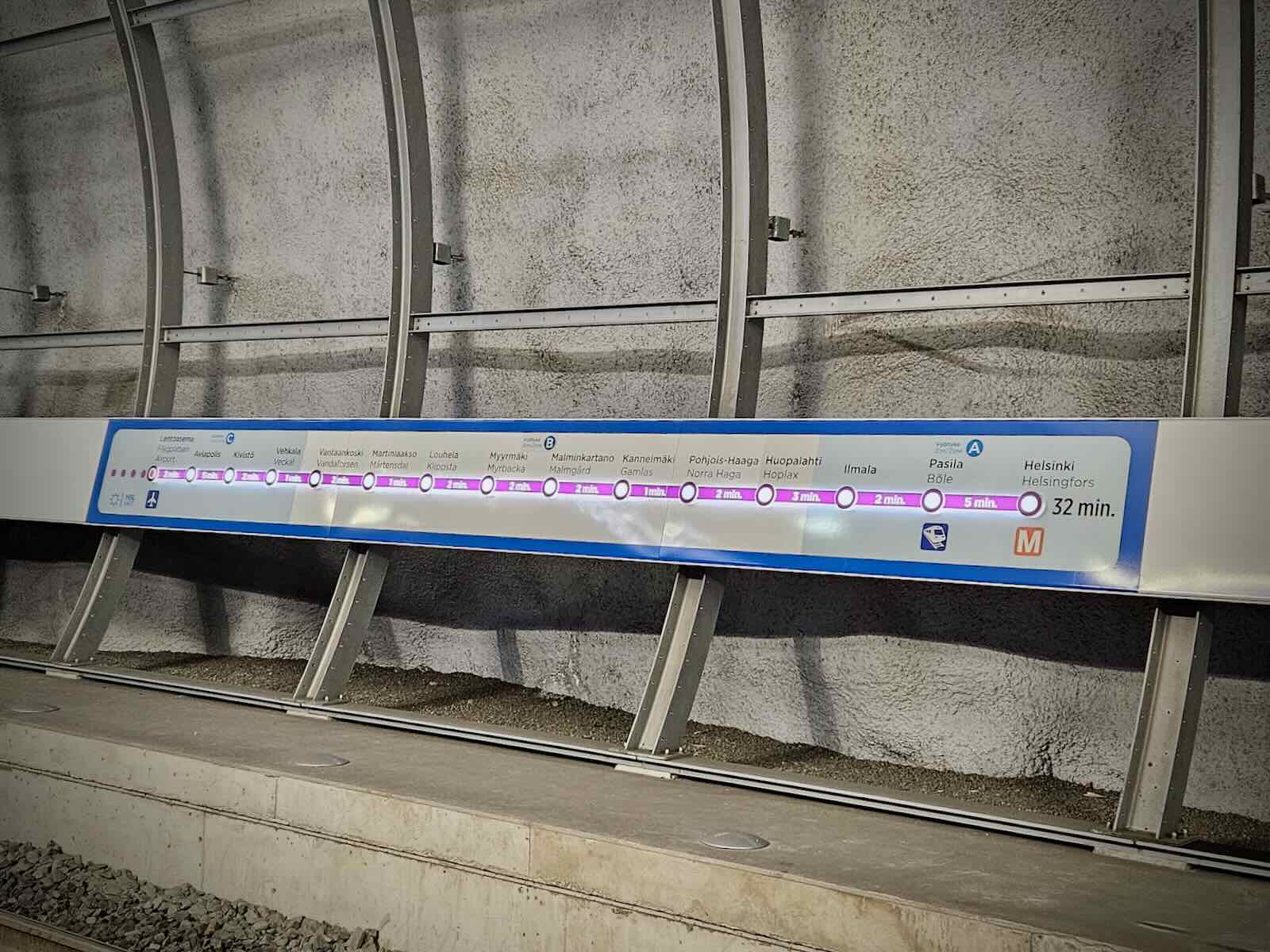
Our first experience of using public transport in Helsinki was getting the train from Helsinki-Vantaa Airport to the city centre. The airport train takes around 30 minutes to get to the centre, and runs every 10 to 30 minutes, depending on the day and time.
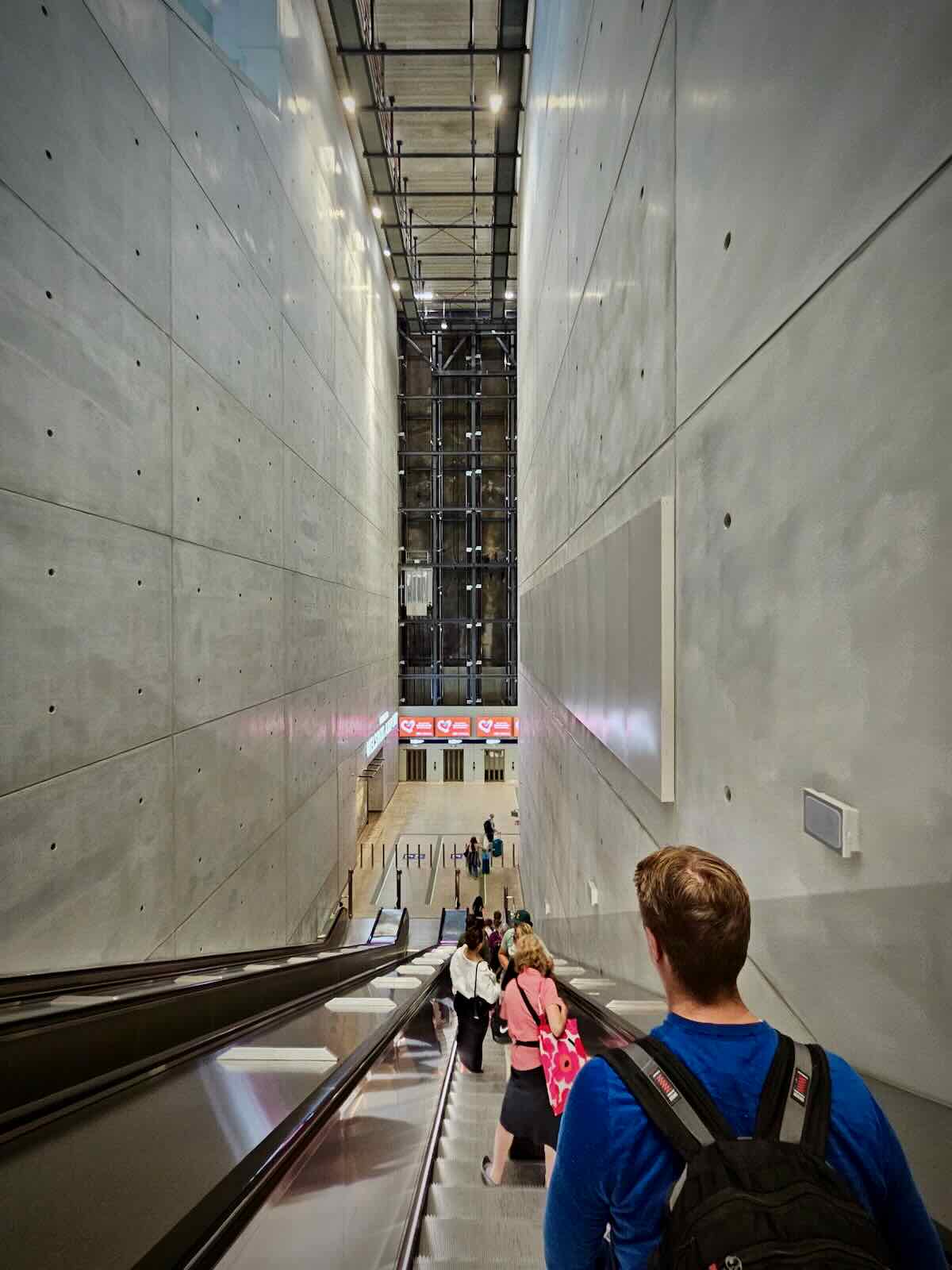
What’s particularly impressive with the airport train is that you can travel to and from the airport using a standard Helsinki ABC public transport ticket, for just €4.10. This ticket enables you to use multiple transport modes on a single ticket within a 80-110 minute timeframe, so you can combine the train with other modes, to reach your destination.
As we were staying in the Töölö neighbourhood, about a mile away from Helsinki Central Station, we combined the airport train with a tram, rather than lugging our bags through the streets. So the single public transport ticket was very useful.
Compared to other airports we’ve been to, the experience of travelling to and from Helsinki Airport was super easy and straightforward. As a newcomer to the city, getting to the correct platform, buying a ticket and getting on the correct train was really easy.
Contrast that with our experiences at Berlin Brandenburg Airport, which has really good rail connections, but can be confusing to someone arriving for the first time. Also our recent experience at Paris Beauvais Airport, which doesn’t have a rail link and relies on coaches, which at the time we went, didn’t even reach the centre of Paris, due to the Olympics.
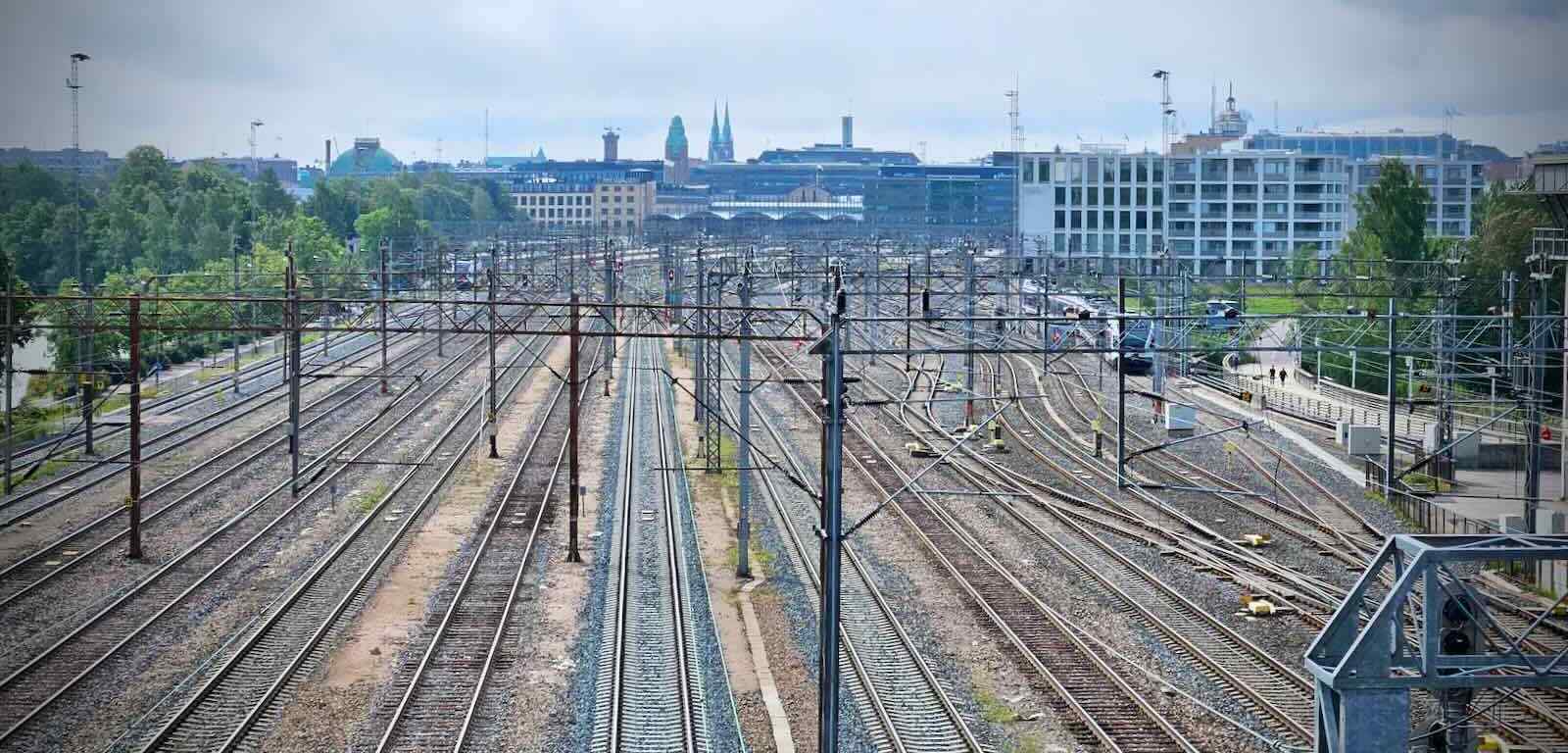
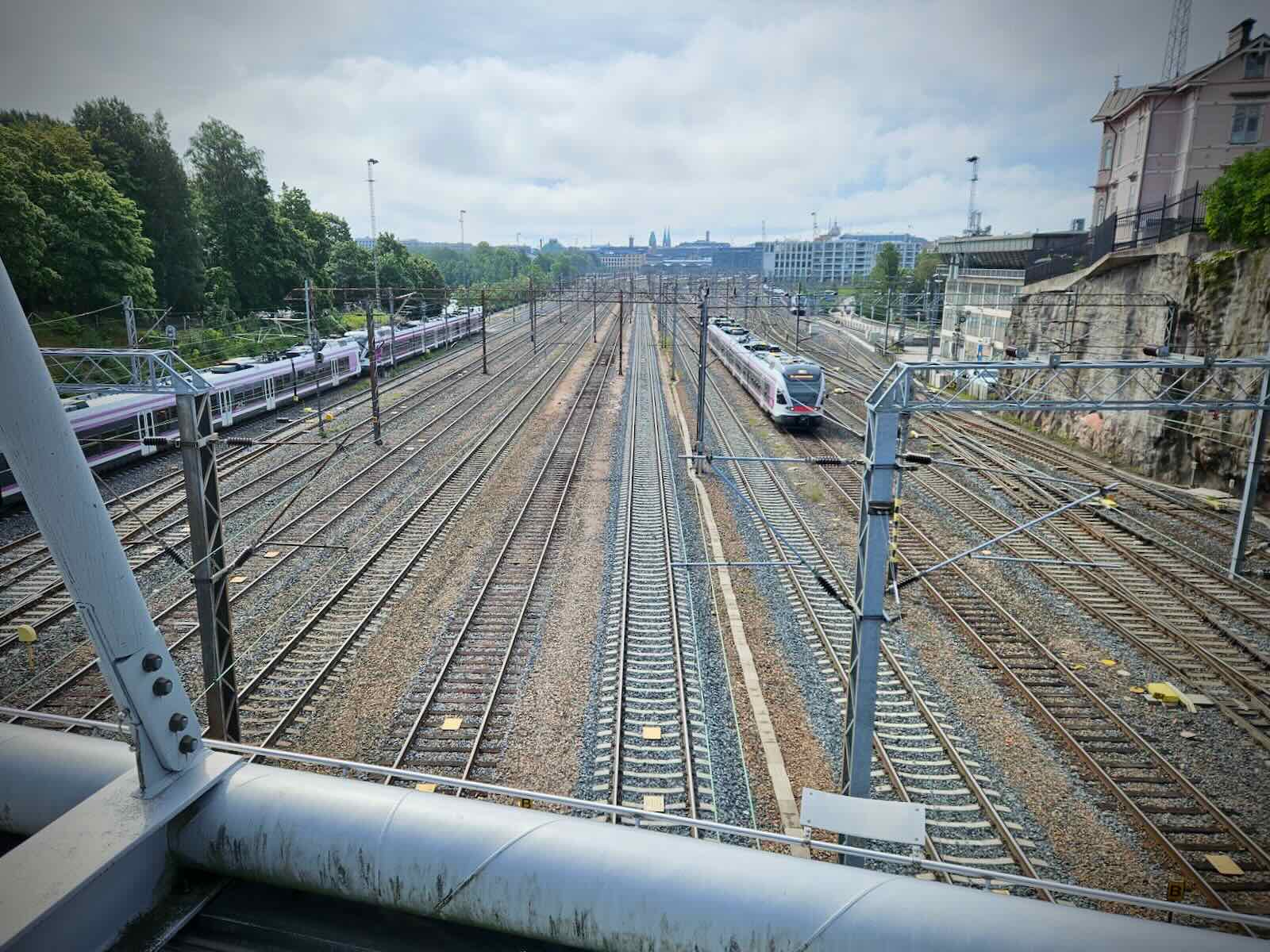
Helsinki Central Station isn’t just the terminus of the airport train, it’s also the main station for commuter rail and long distance lines. The striking Art Nouveau frontage of the station contrasts with the rather utilitarian sprawl of lines at the rear, both of which are impressive.
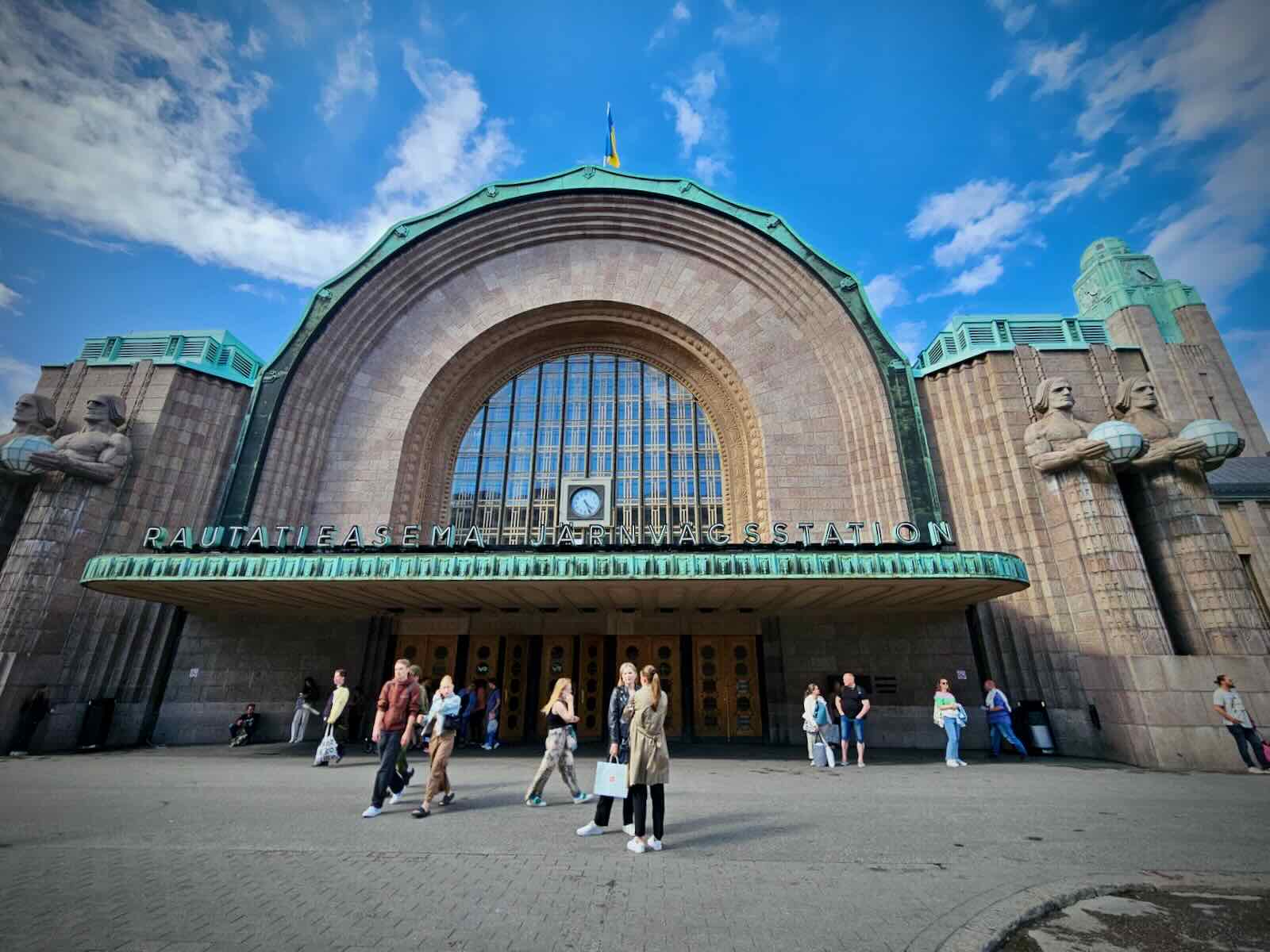
The railway lines into Helsinki Central Station tend to dissect the city in two, so travelling east to west through the city, you’ll probably pass them at some point. In addition to various underpasses under the lines, there was a walking and cycling bridge with impressive views, that I went across on my way to the Linnanmäki theme park.
Metro
Staying so close to the centre and not straying too far, there wasn’t much call for us to use the Helsinki Metro. But on our penultimate day after visiting the Hakaniemi Market Hall and wanting to go to Teurastamo, I saw an opportunity for a quick metro ride.
In metro terms, Helsinki’s is a relative newcomer, having only opened in 1982, though it does have the claim of being the world’s northernmost metro system. It’s made up of 30 stations and technically has two lines, but for most of its length, it’s effectively a single line. The lines start in Kivenlahti in the west, it then travel through the centre of Helsinki and under Helsinki Central Station and out to the two termini of Mellunmäki and Vuosaari in the east.
The Metro wasn’t that popular with everyone when it first opened, especially with those in the suburbs, who had their bus services to the centre of Helsinki replaced with feeder bus services to metro stations. As you can find out in the following video from Urban Mobility Explained, changes to the bus services eventually led to what is now a very successful multimodal suburban transport system.
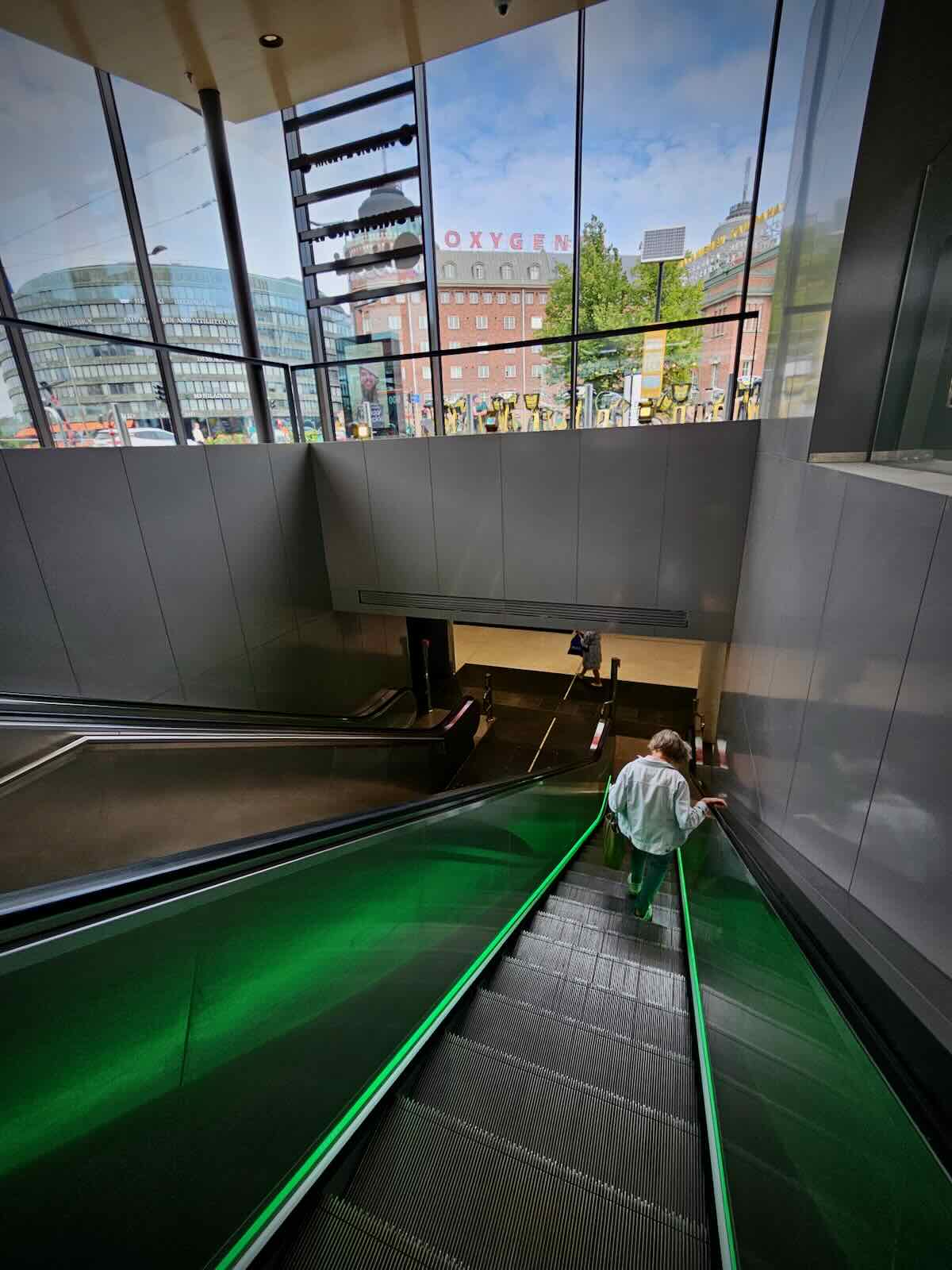
We joined the Metro at Hakaniemi Station, which is located in the market square. As we descended, my first impression was that it felt quite modern and open. I don’t know how accessible the other stations are, but this one appeared to do quite well from an accessibility point of view, including having a funicular lift, which I had to have a go of.
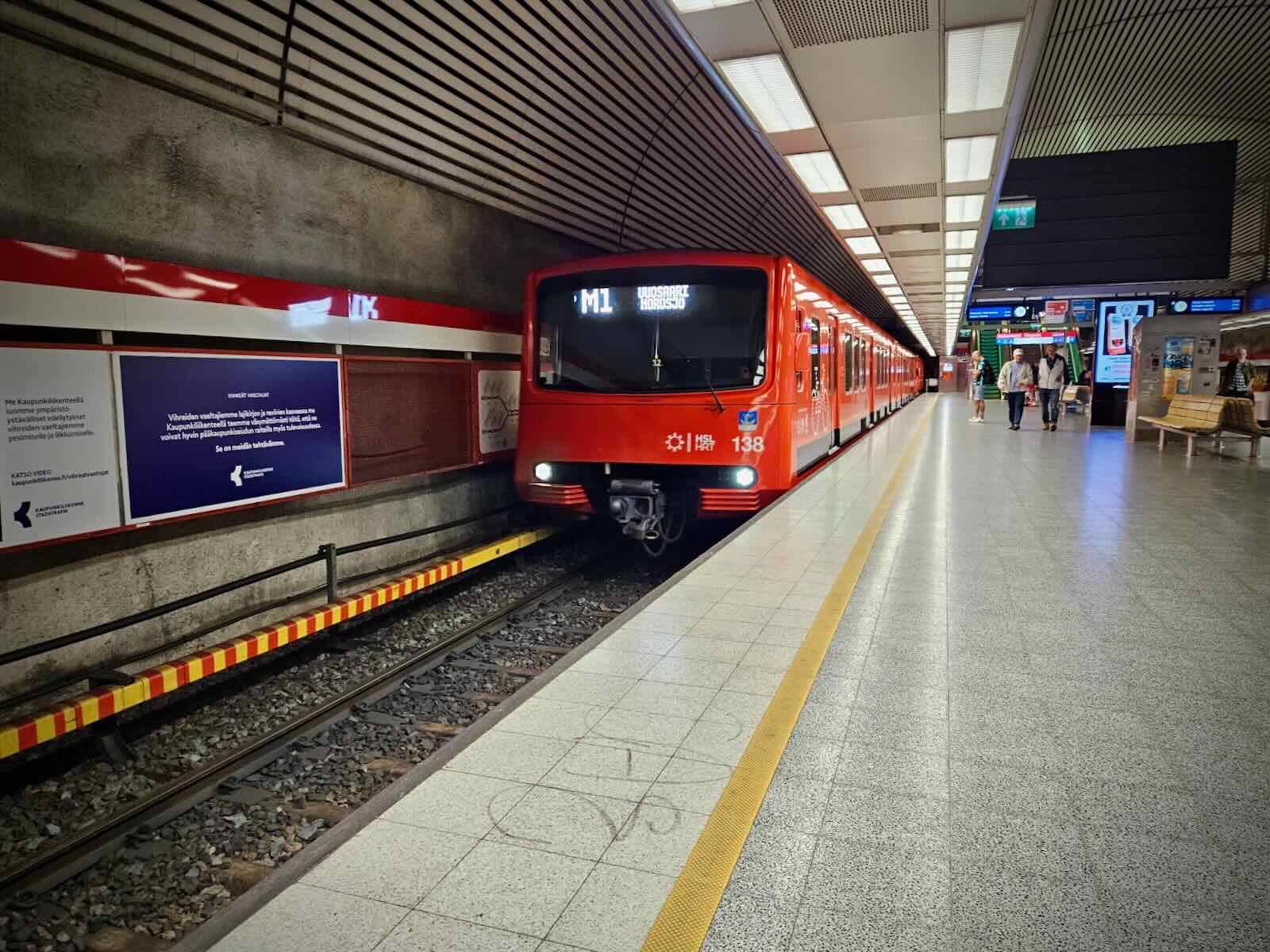
The trains appeared quite modern and spacious too, certainly compared to the likes of the London Underground and Paris Metro. They also allow cycles to be taken on board at any time of day, and have specific locations along the carriages to do so, which is pretty fantastic.

Like with the trams and trains, we were able to use standard HSL tickets, meaning it’s easy to combine the Metro with other forms of public transport as part of a single journey, which goes a long way to making them popular for suburban trips to the centre.
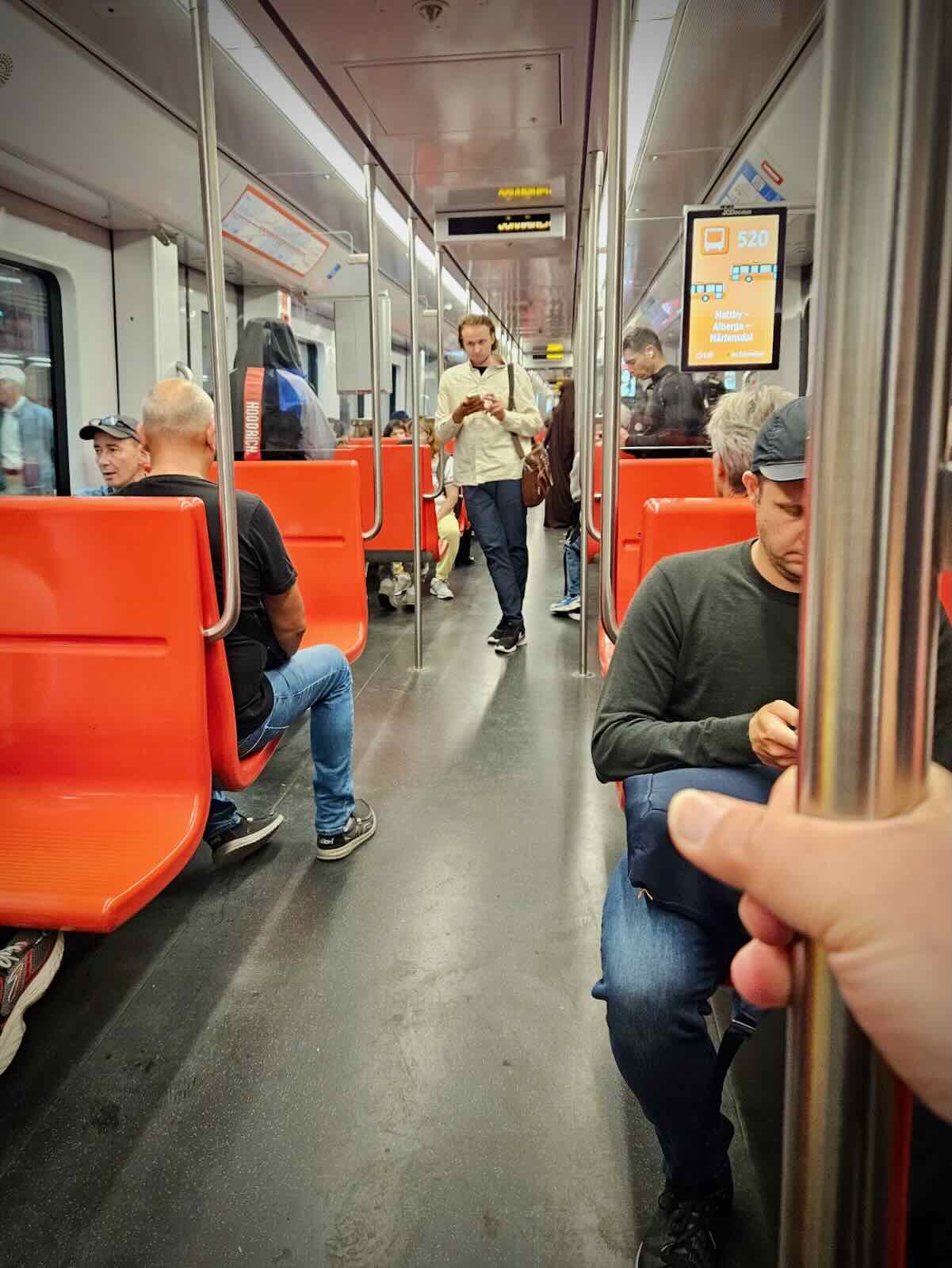
We were only on the Metro for a short time, but were impressed with what we experienced. I suspect it would benefit from further lines adding and there is talk of a new line heading north, so maybe it will expand at some point.
Ferries
With around 300 islands and a shoreline that stretches 130 kilometres, Helsinki has several ferry routes serving a lot of those islands, with many accepting standard HSL public transport tickets.
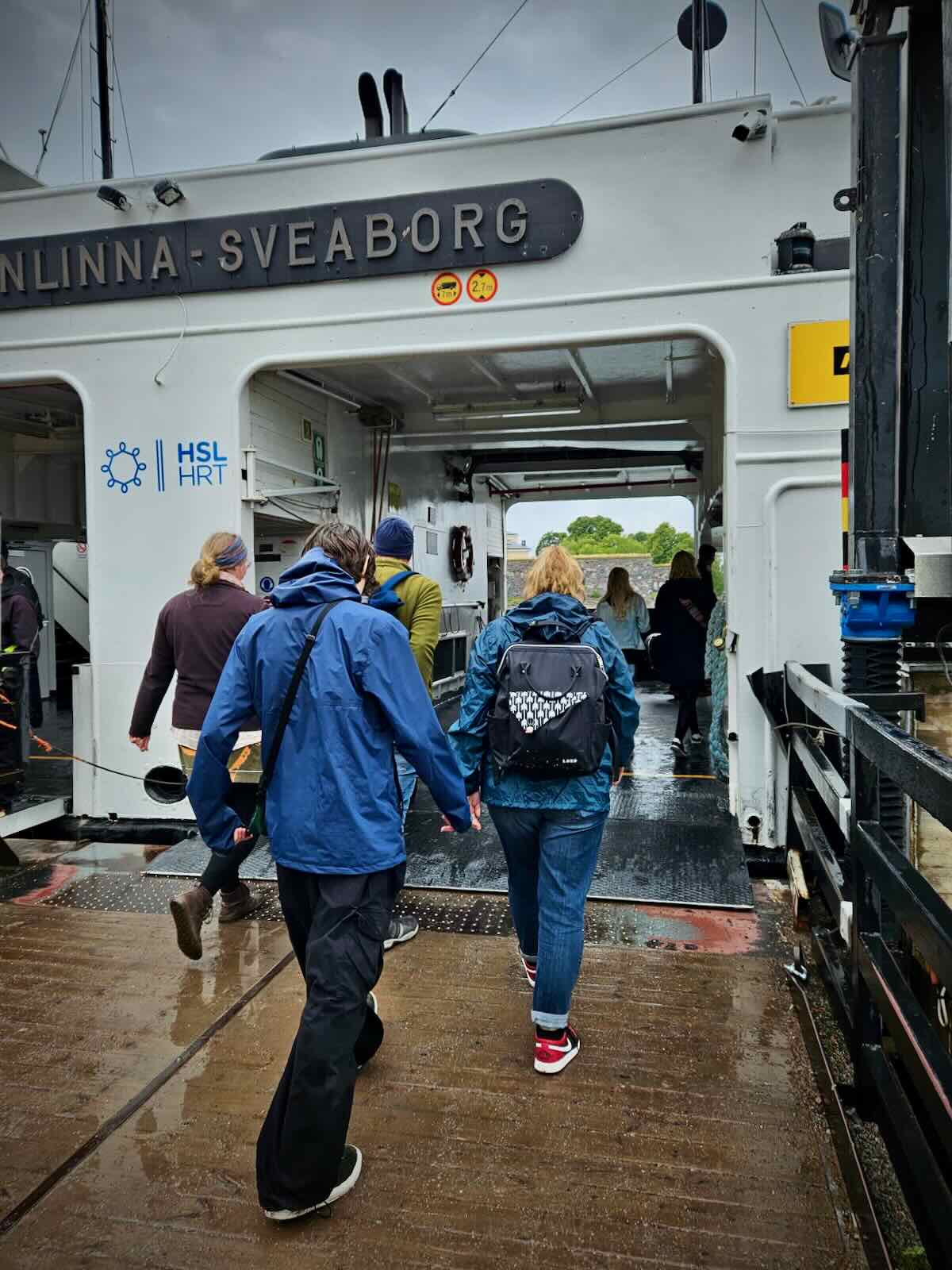
We only did the one of those ferry routes during our visit, the most well known one that goes to the fortress island of Suomenlinna. The ferry ride to Suomenlinna takes 15 minutes, runs from one to four times an hour and one of the ferries that accepts HSL public transport tickets, so it’s really convenient.
I expect the convenience of the ferry service has a massive impact on the number of tourists visiting Suomenlinna. It certainly convinced us to visit there, knowing how straightforward it would be to get there.
That’s the end of Helsinki 23 series of posts. We left Helsinki on the Friday and made our way to Berlin for the second leg of our holiday. The contrast of the rather sleepy and very clean Helsinki and the bustling and often scruffy Berlin couldn’t have been greater.
While I covered my trip to Berlin the Germany 22 series, there was plenty more to see and do and write about. So at some point soon, I’ll get round to starting on that. So see you soon!
 Dom Cycling