
In something of a change from the usual Netherlands, in 2023 we arranged a two leg trip to to the Finnish and German capitals, Helsinki and Berlin for our summer holiday. We chose Helsinki as we have friends who moved there a couple of years ago and we were keen to visit them.
Berlin was picked for the second leg, as I’d done such a good job of selling the city to the rest of the family, following my trip there in 2022. I had fancied Copenhagen myself, though was outvoted! Another time then.
So at the end of July, we embarked on our first ever visit to Finland, flying into Helsinki-Vantaa Airport and making our way by train and tram, to our accommodation at Töölö Towers, not far from the city centre.
Cycling culture
My friend promised me Helsinki is definitely a cycling city, and that I’d be suitably impressed with how bike friendly it is. Indeed, the city currently sits at number 10 on the Copenhagenize index and boasts over 1,500 kilometres of well-maintained cycling paths, which is pretty impressive.

With a cycling modal share of 11% of all trips, Helsinki isn’t going to be troubling the likes of Utrecht any time soon, but it’s still way ahead of most of the UK. Plus, according to Bicycle Account 2021 (PDF), 58% of Helsinki residents say travel by bike at least once a week, which sounds more impressive.
I didn’t see huge numbers of people cycling while I was there, but Helsinki is a relatively quiet city, certainly compared to other European capitals. I didn’t see many cars either, which is always a good thing!
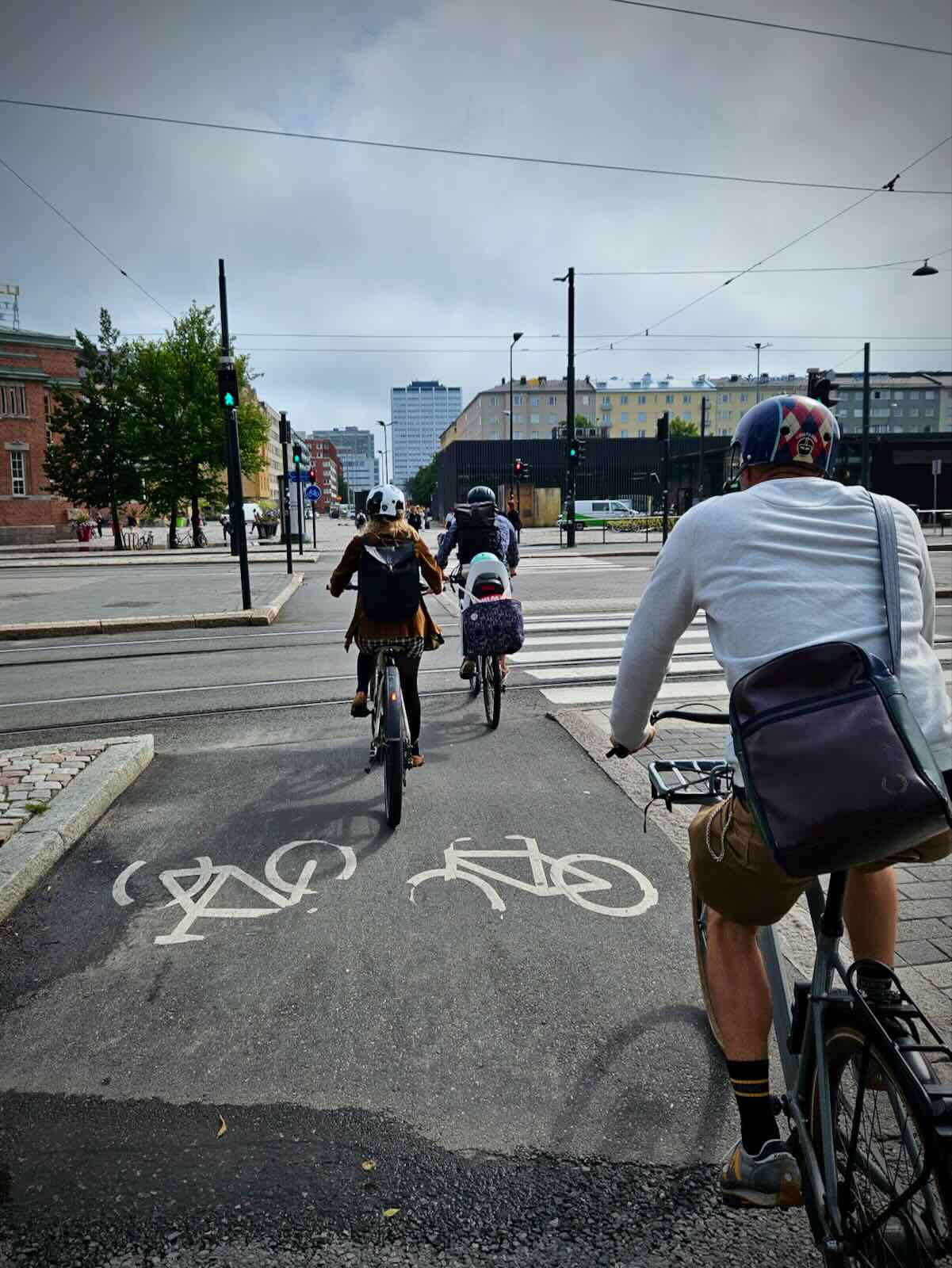
It’s evident from the people you see cycling in Helsinki, that it’s more than just recreational cycling. People are out riding in normal clothes, not Lycra and there’s a significant number of women cycling, which is a good sign.

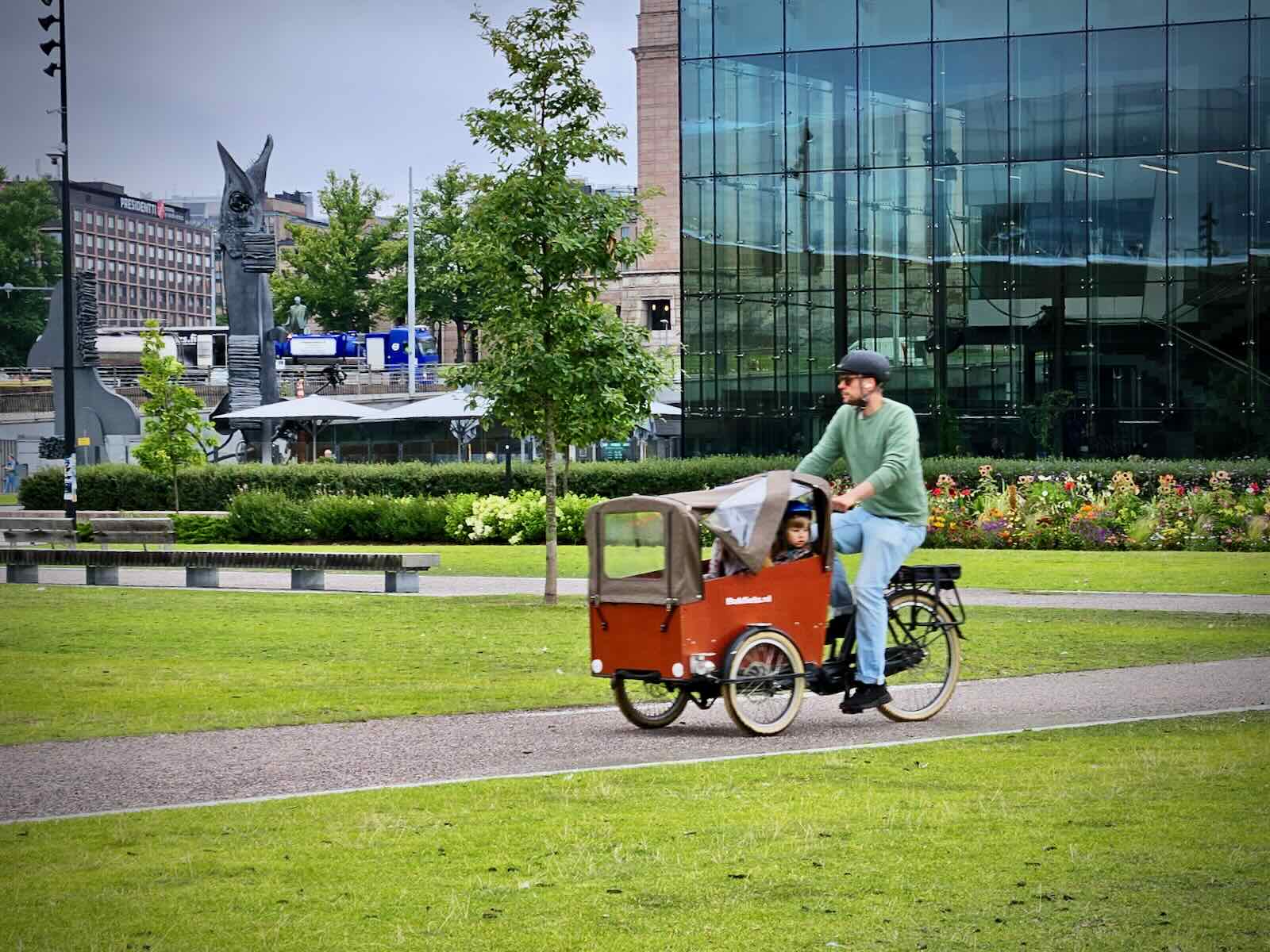
It’s also clear from the type of cycles people are riding, lots of upright, practical city bikes, intended for transport cycling. There a lot of cargo bikes as well, mostly of the bakfiets child-carrying variety, which again indicates that people feel safe and comfortable enough to ride with their children.
You do see quite a few people wearing helmets though, compared to The Netherlands. Likely a sign that cycling isn’t completely normalised in Helsinki, I guess similar to what you see in a lot of Germany.

City Bikes bike share
Now, I’d left it a little too late to arrange bike hire for our trip, which meant if I wanted to do any cycling while in Helsinki, it would mean using the city’s bike share, the rather generically named City Bikes.

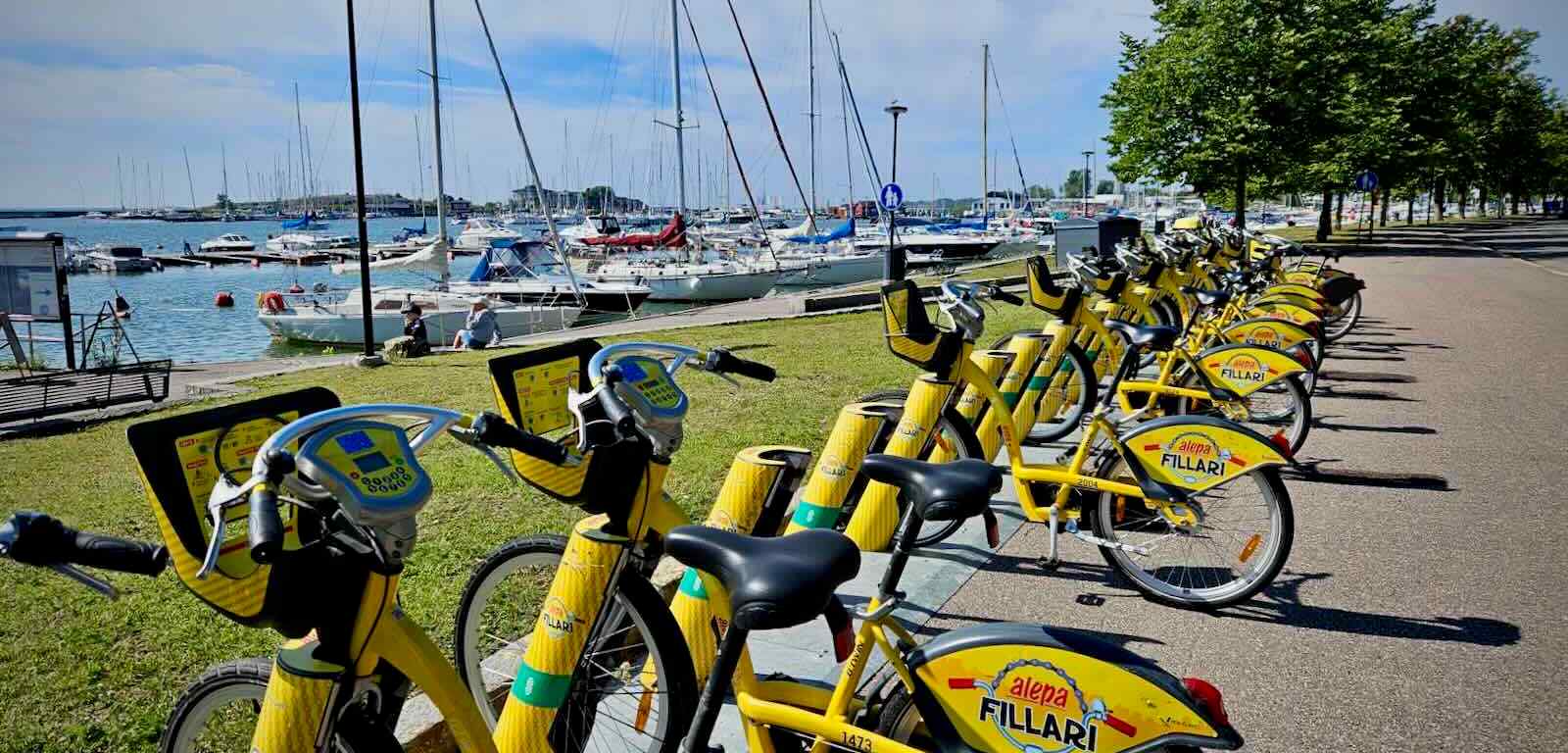
City Bikes is a reasonably extensive bike share, with 4,600 bikes across 460 stations that can be used by residents and visitors alike, with one caveat that I’ll come on to later. Though with the cold, snowy winters in Helsinki, City Bikes are only available seasonably between 1 April and 31 October.
With the popularity of winter cycling in the city of Oulu further north. The lack of availability of City Bikes during the winter months appears to be less about demand and more to do with the city not wanting to maintain facilities during the colder months.
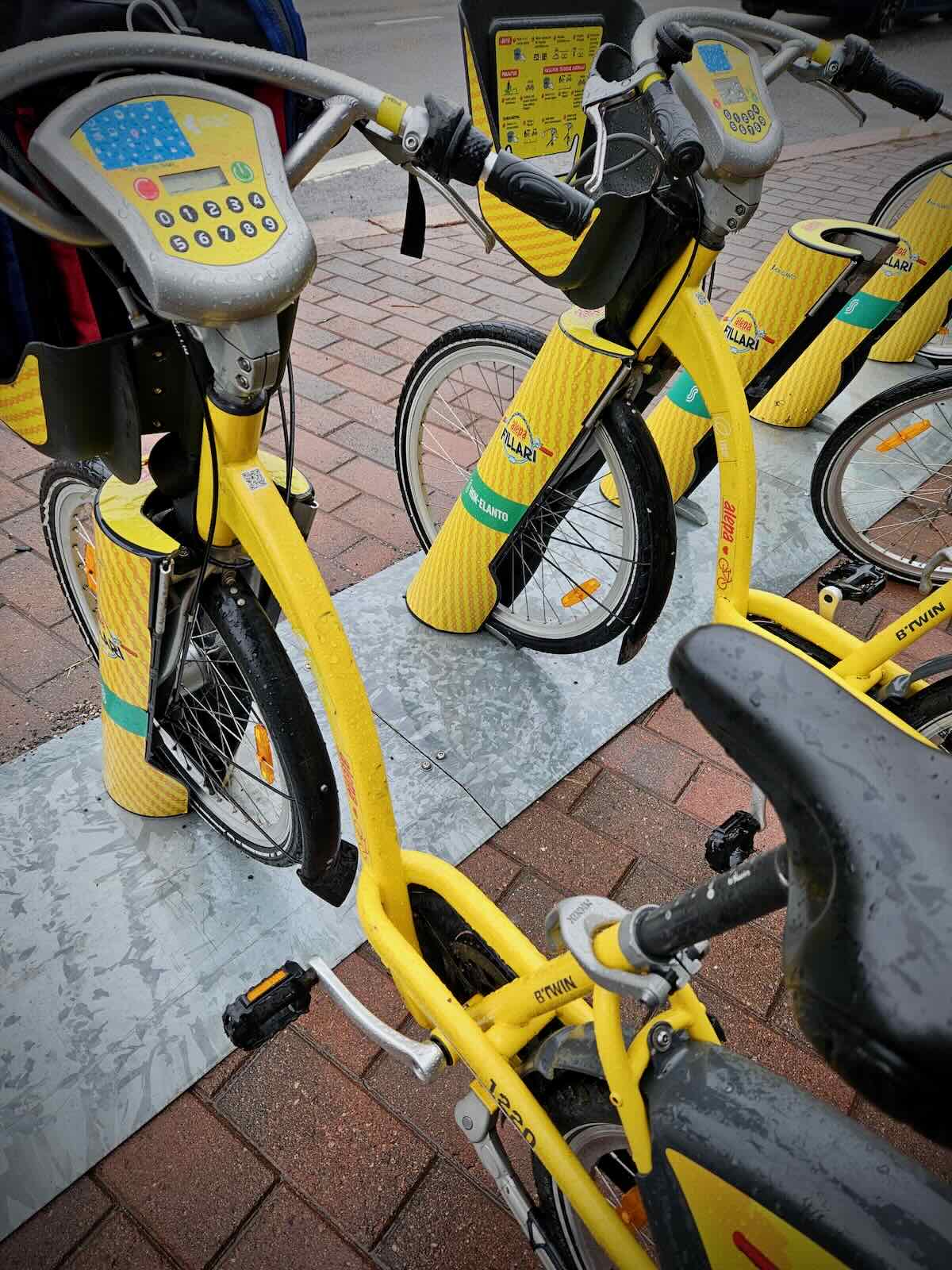
As a visitor, getting started with the City Bikes should be as simple as following the instructions. Though I ran into a common problem that many tourists have. First thing you have to do is register on the HSL website or app, then verify your account via SMS. Unfortunately, this wasn’t possible if you have a foreign phone number, as the SMS never arrives. Without a verified account, there’s no way of buying a pass, so you’re stuck.
To get round this, I picked up a local DNA SIM for €4.90 from one of the kiosks, which I was able to use to receive a SMS to confirm my account. With my account verified, I could sign up for a weekly pass for €10. Once you have a pass, you can use unlimited City Bikes for up to 30 minutes at a time, which will be a familiar setup to anyone who’s used London’s Santander Cycles or similar.
Using the bikes is relatively straightforward, if you understand the menus on the display. These are in Finnish, so I ended up resorting to Google Translate to figure out what it said. Though once I knew what I was doing, it was a case of entering my ID and pin each time.
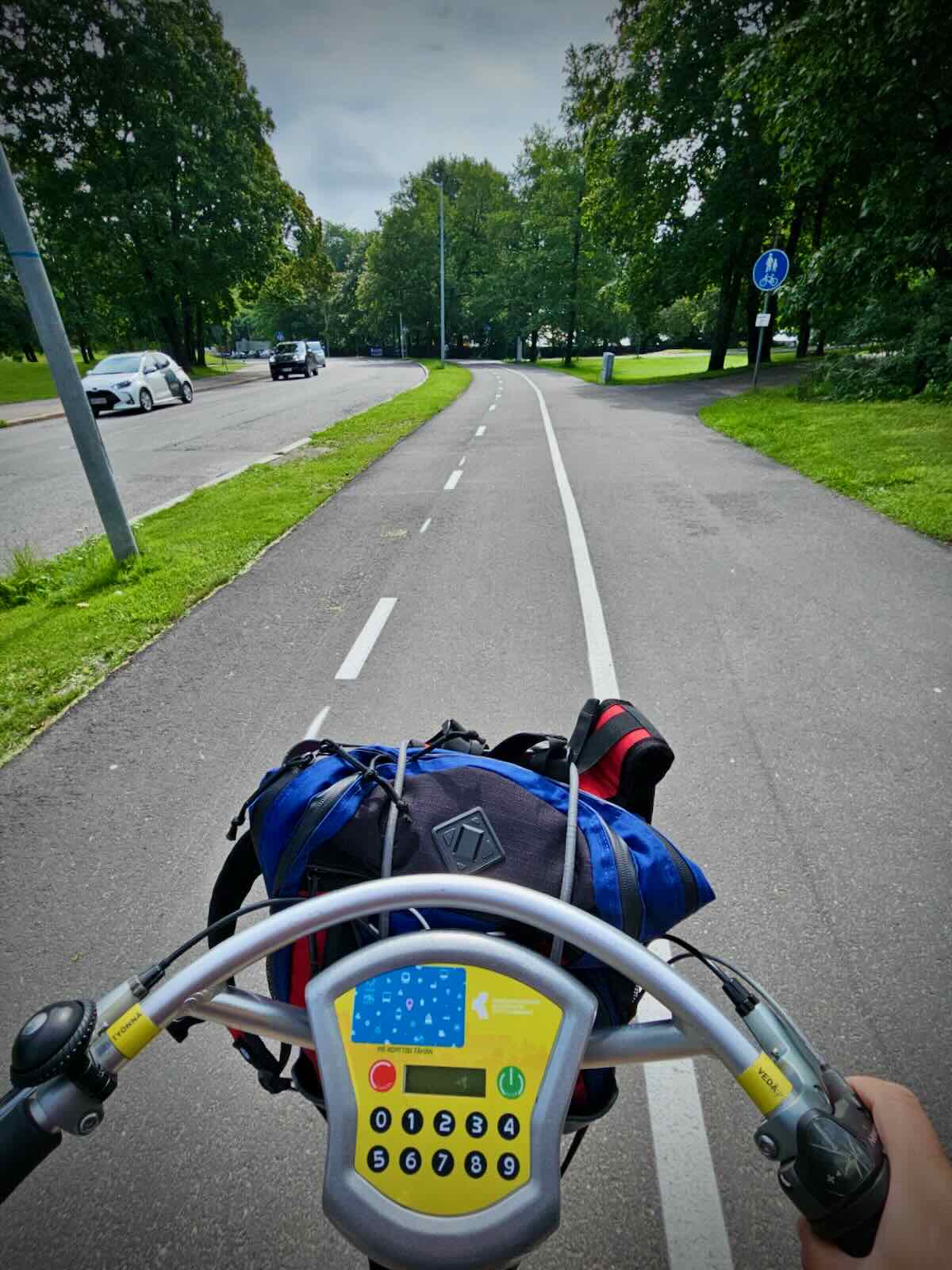
Once undocked, the bikes were pretty decent, and of a similar standard to other bike share bikes. They’re pretty heavy as you’d imagine and have 3 gears and a front rack. All pretty standard and all you’d expect from a bike share bike.
There’s no e-bike option, unlike many bike shares have now, though Helsinki is mostly flat, so probably not a big deal for most people, though it would be good if they did have it.
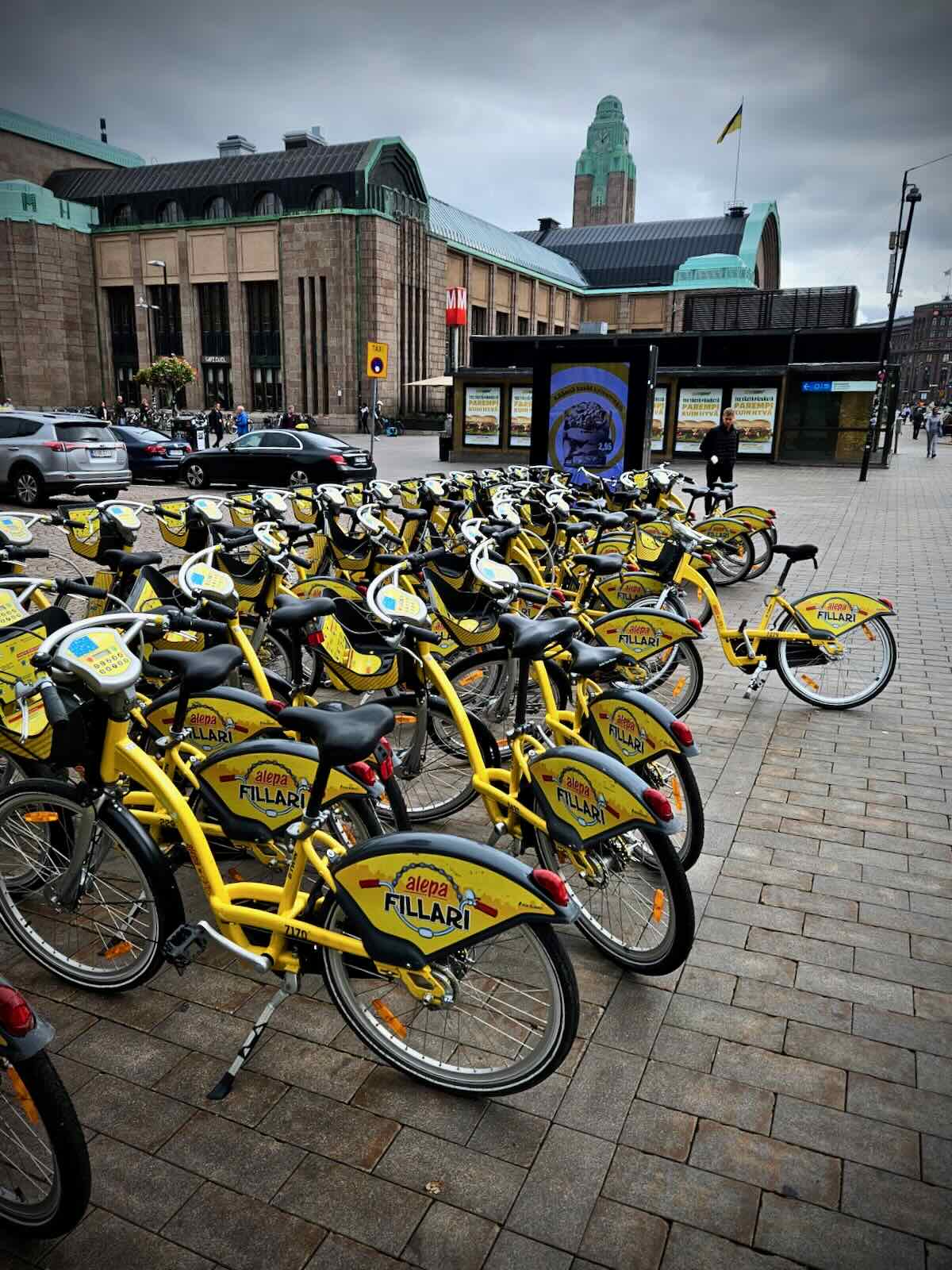
I didn’t have too many issues finding docking stations with available bikes. In a lot of cases, there were too many bikes for the spaces at the docking stations. Fortunately, in such circumstances, the bikes have an inbuilt lock you can lock them with and park them with the docked bikes.
In addition to the City Bikes, there’s also lots of e-scooters available to hire, from multiple operators. They’re all over the place, though thankfully mostly contained in designated parking bays (something every city should have).
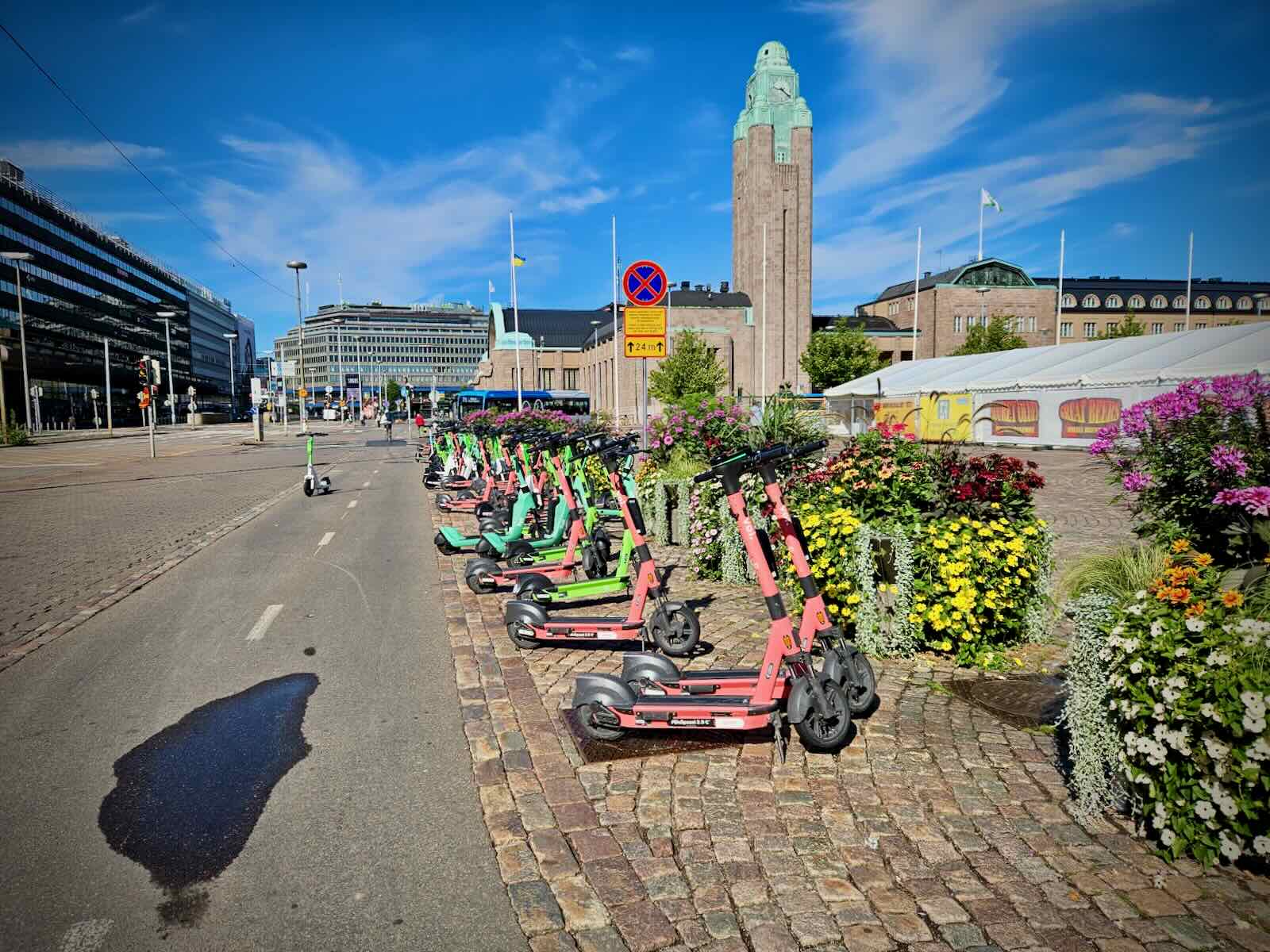
We did have a go of the TIER e-scooters a couple of times, once when we were coming back from the wonderful Café Regatta in torrential rain. They’re pretty good, but I do prefer being on a bike.

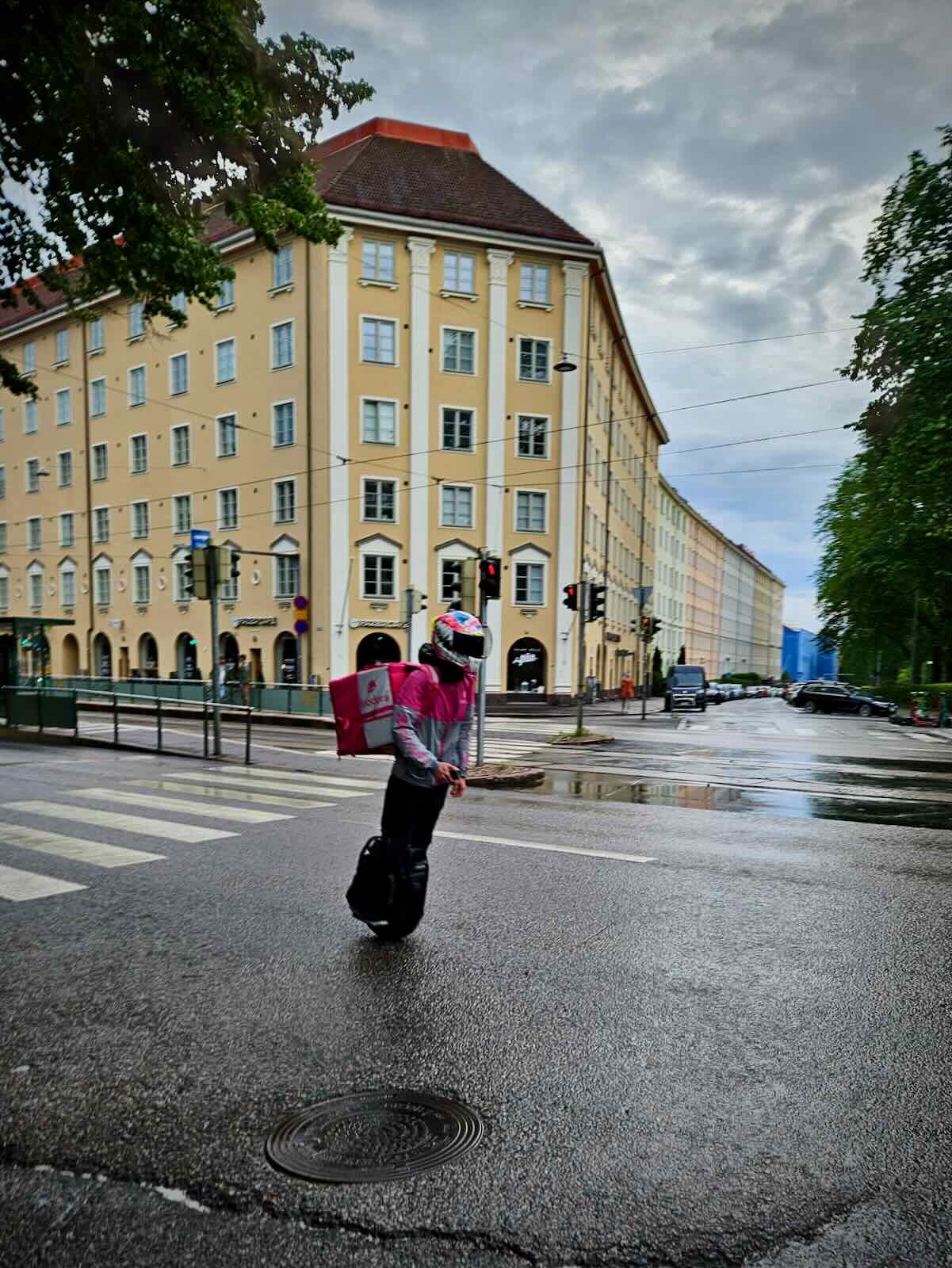
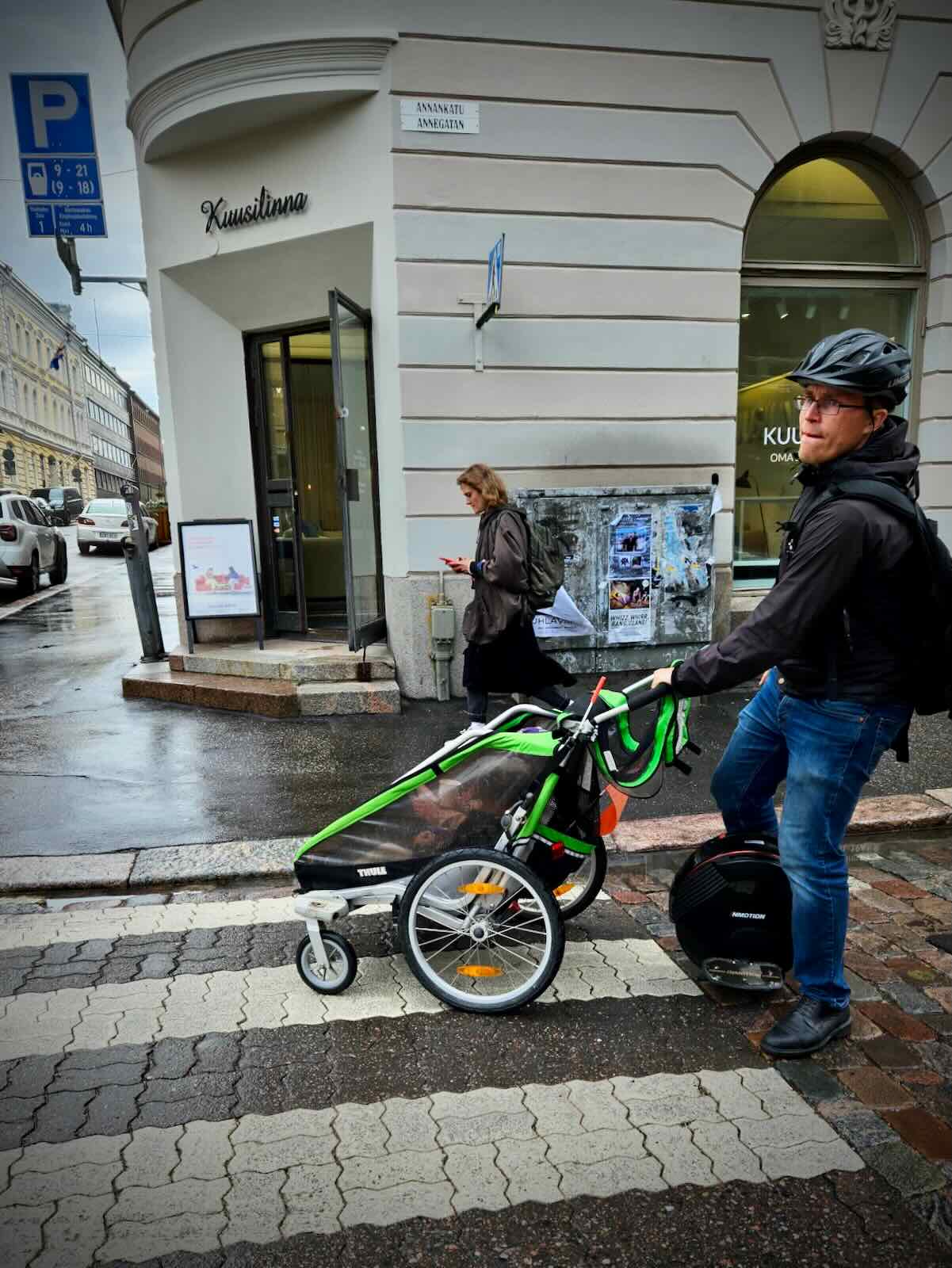
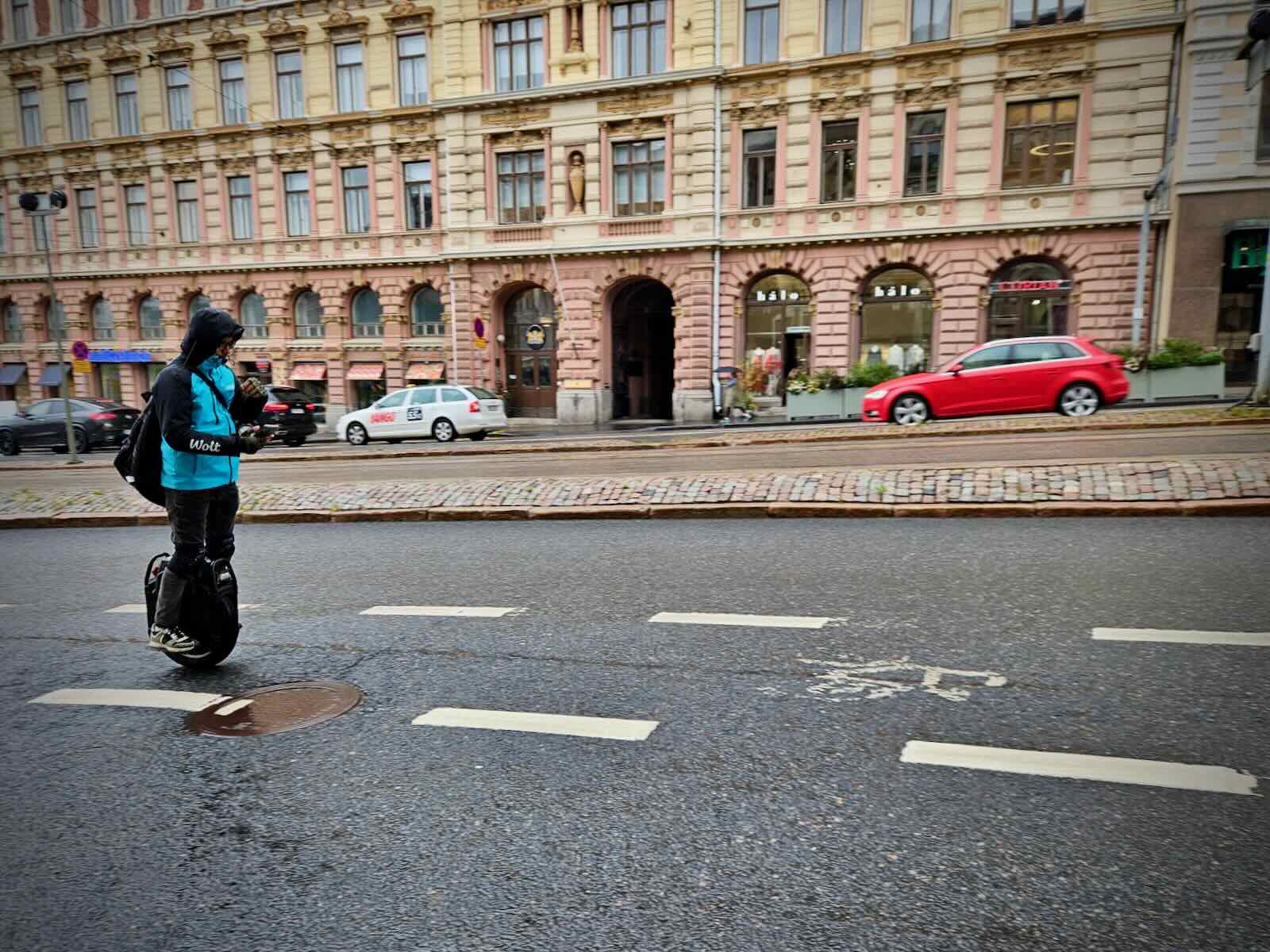
Somewhat related, I did notice electric unicycles seem quite popular in Helsinki. Particularly with delivery riders, but I also saw a dad with his kids, doing the buggy/unicycle combo. I’d imagine that’d be front page of the Daily Mail material if it was the UK, with calls for the kids to be taken off him!
I ended up putting my City Bikes pass to quite a lot of use during that week. While the others were happy to ride the trams, I would hire a City Bike and meet up with them at wherever we were going. This worked pretty well, and usually meant I beat them to wherever we were going, even with Helsinki’s excellent public transport!
Infrastructure
As I mentioned, my friend had sold me on how bike friendly Helsinki is, including having lots of protected cycling infrastructure to ride on. I did a bit of research before going and I was hopeful, though being realistic, I wasn’t expecting anything up to Dutch standards.
I was pleasantly surprised with what I found as there’s actually a pretty large set of cycleways, that actually connect up to each other to form a network. These are generally conveniently located and on the whole, well maintained. This meant it was possible to cycle to places, while on largely protected routes.
As you might expect, it isn’t up to Dutch standards. There are plenty of gaps in the network, meaning you’d often need to take detours to stay on a protected route, rather than go the shortest distance. But what I would say, is the streets without infrastructure were on the whole pretty quiet. Helsinki isn’t London or Berlin, traffic levels are way lower.
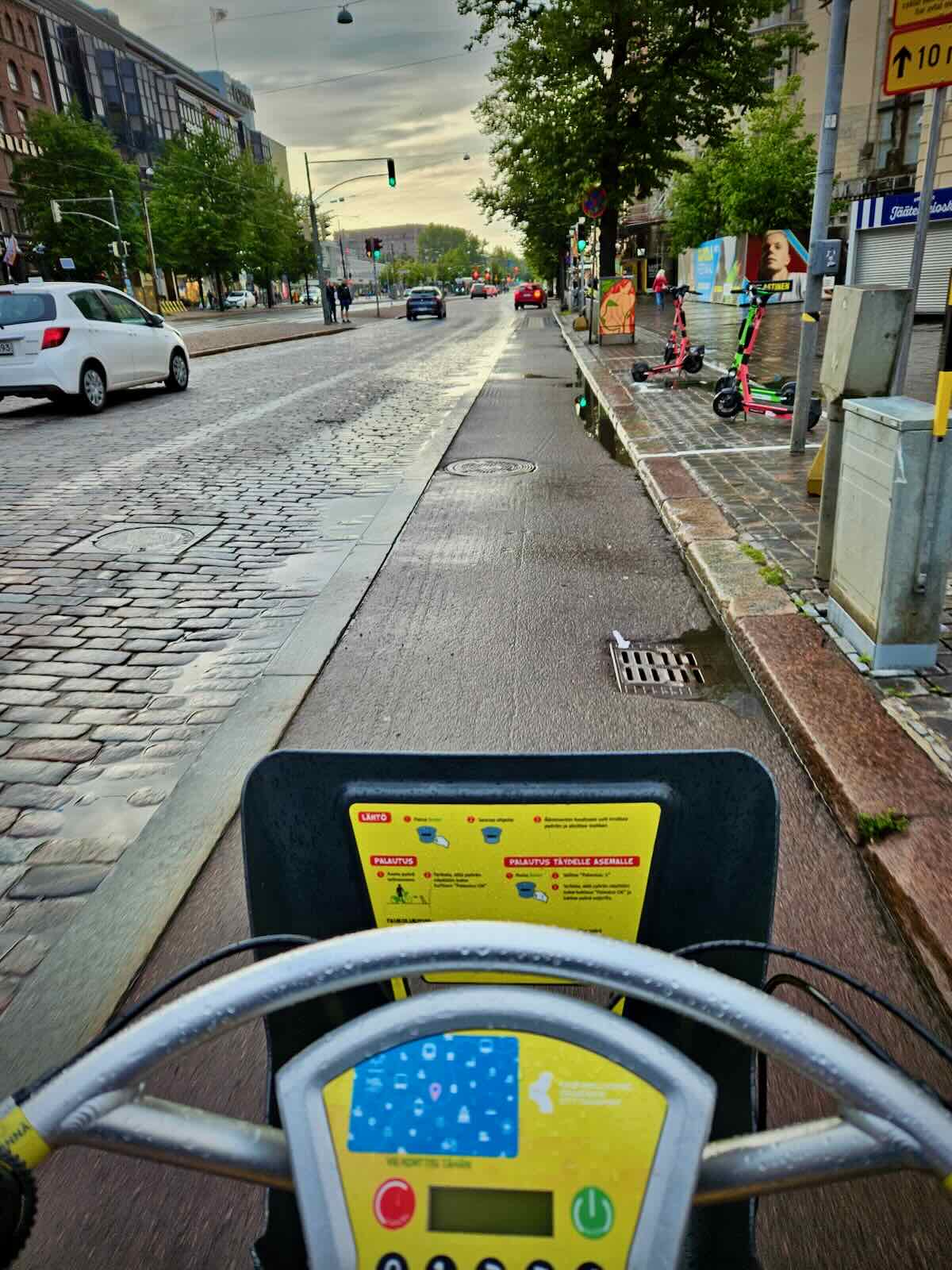
In terms of the types of cycling infrastructure you see, the most popular is probably one-way stepped cycle tracks on streets. On the whole, these are generally pretty decent, but can be a little narrow at times.
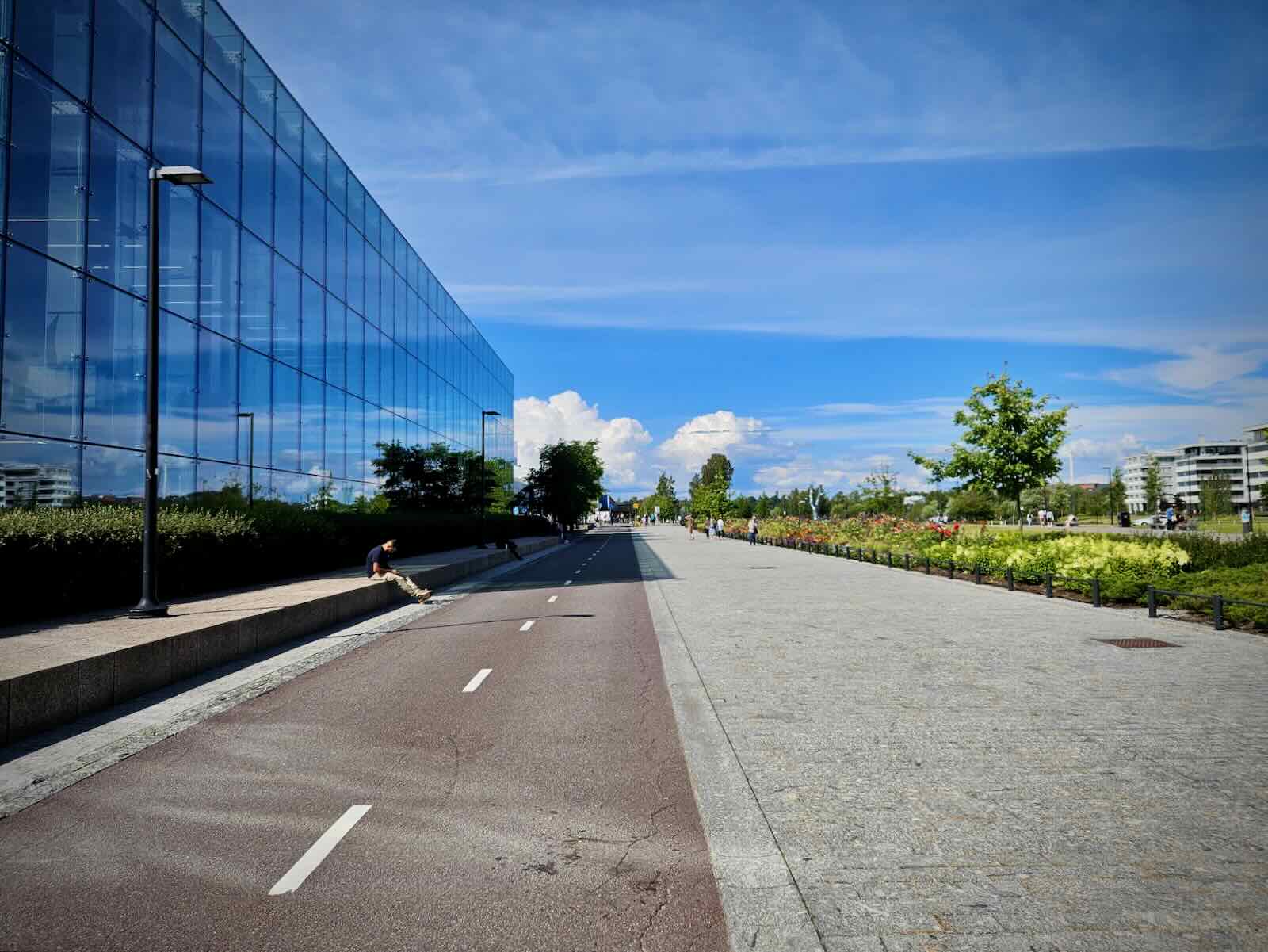
After that, there’s lots of two-way cycle paths either on streets or on traffic-free routes. These are mostly a decent width, but you do get a few narrow examples. Though they’ve not been busy enough to cause an issue.
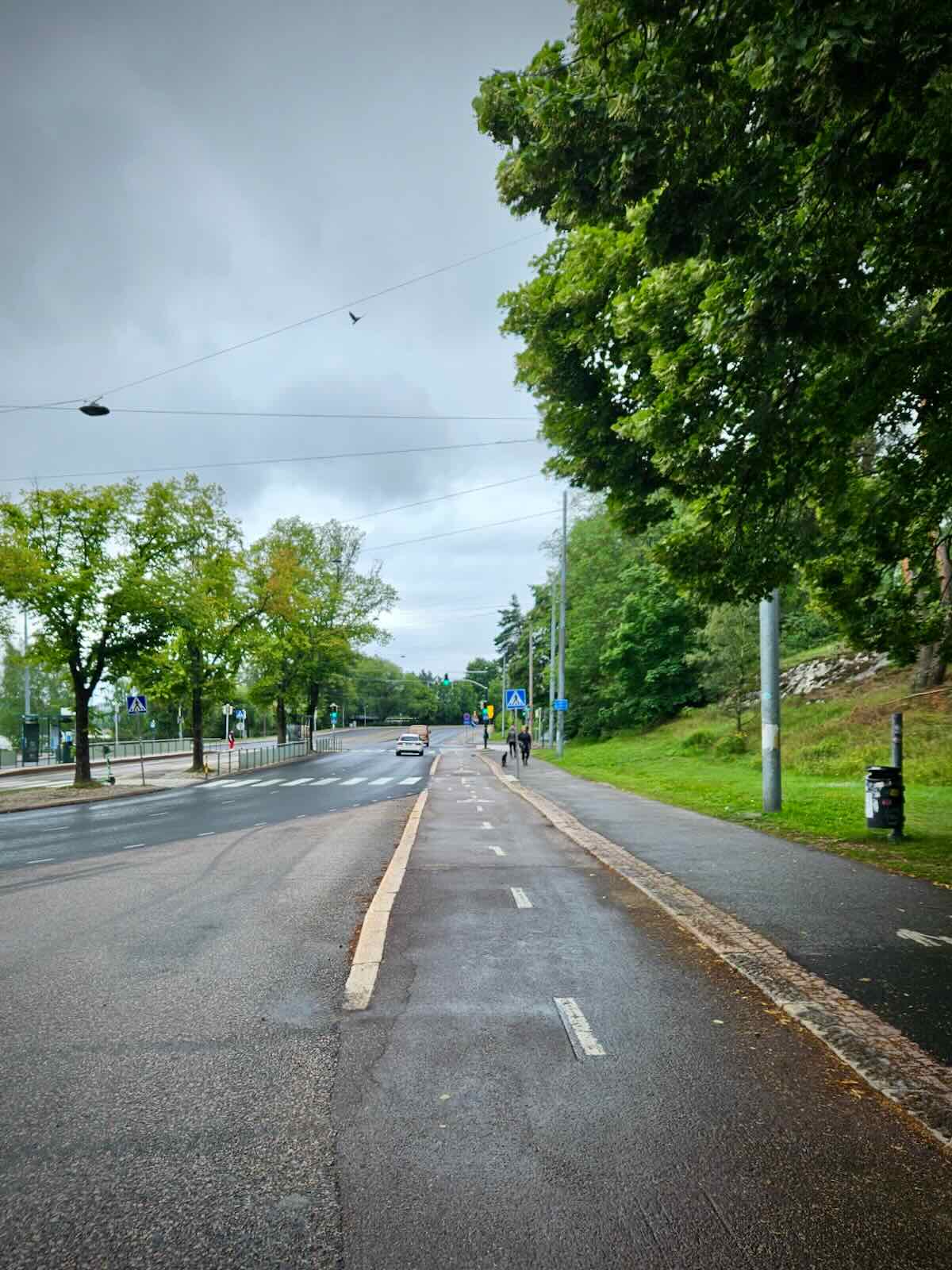
While much of the cycle network is on streets, a significant amount is augmented by traffic-free routes. Examples of this include the cycle path running around Töölö bay and fabulous Baana, which is built from an old railway cutting and was in the process of getting extended under Helsinki Central Station at the time of our visit.
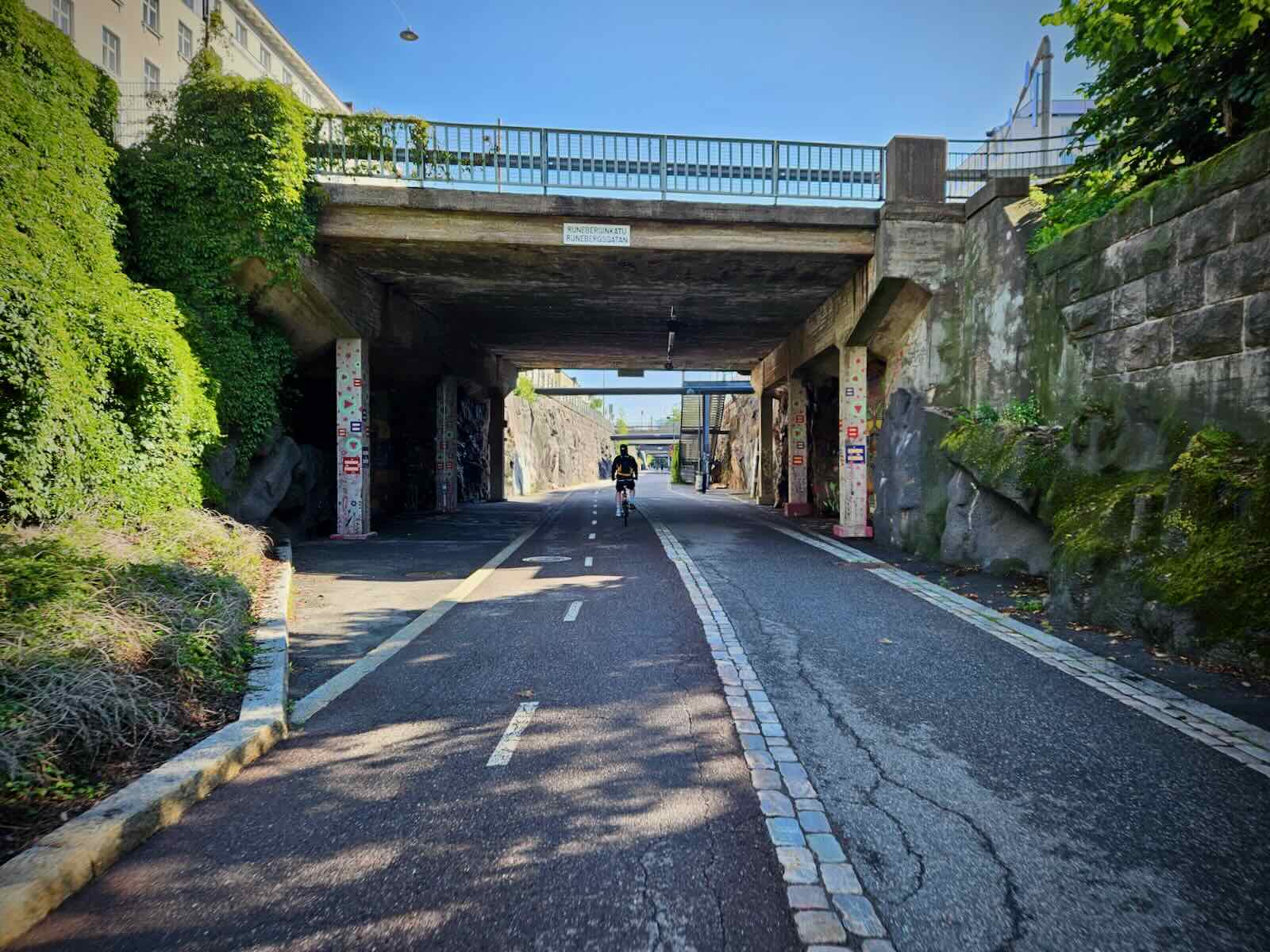
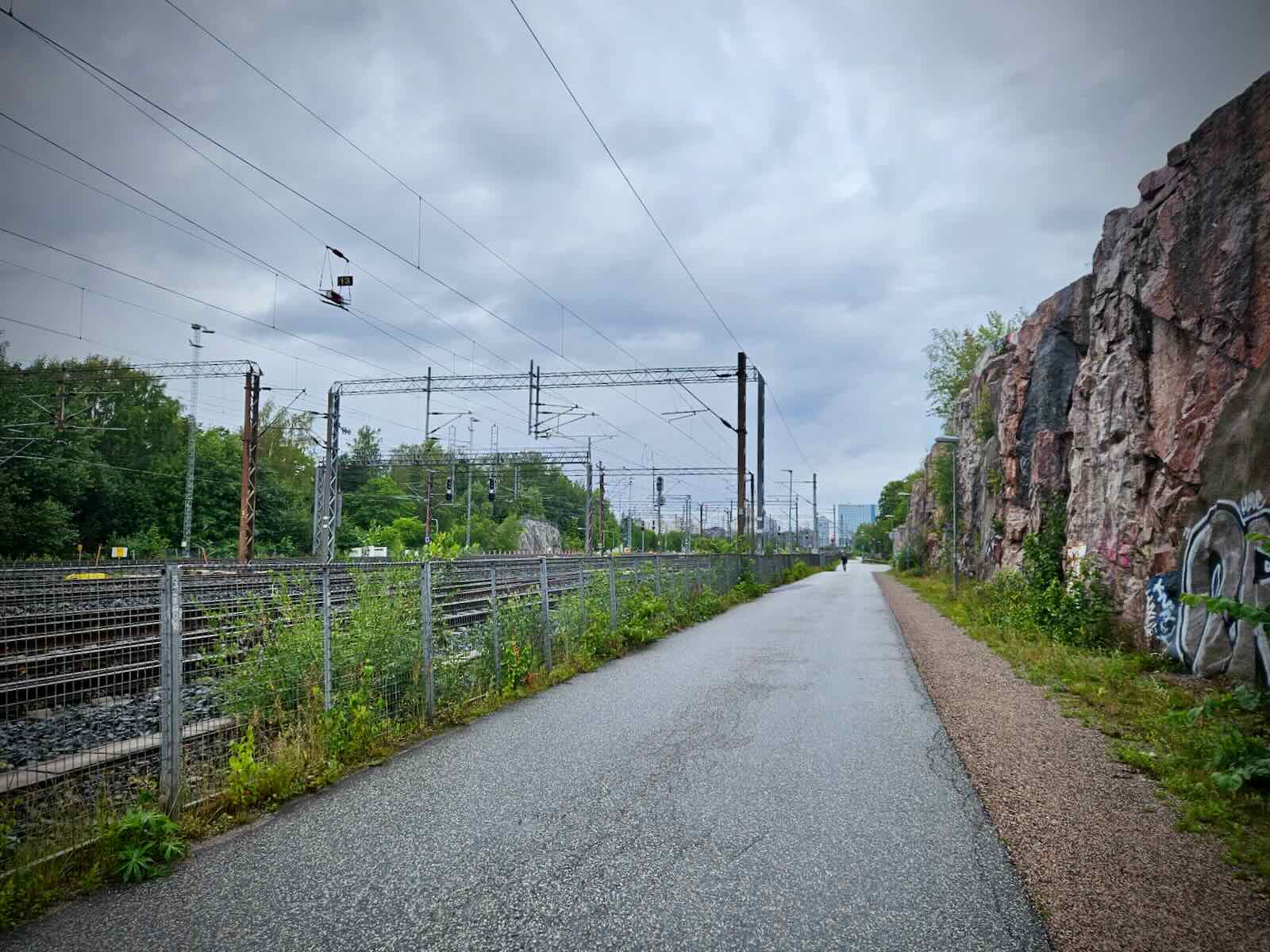
Like with a lot of traffic-free routes, they’re often not as attractive to use as on-street cycling, due to the lack of social safety, meaning people can often be reluctant to use these routes, especially in the dark.
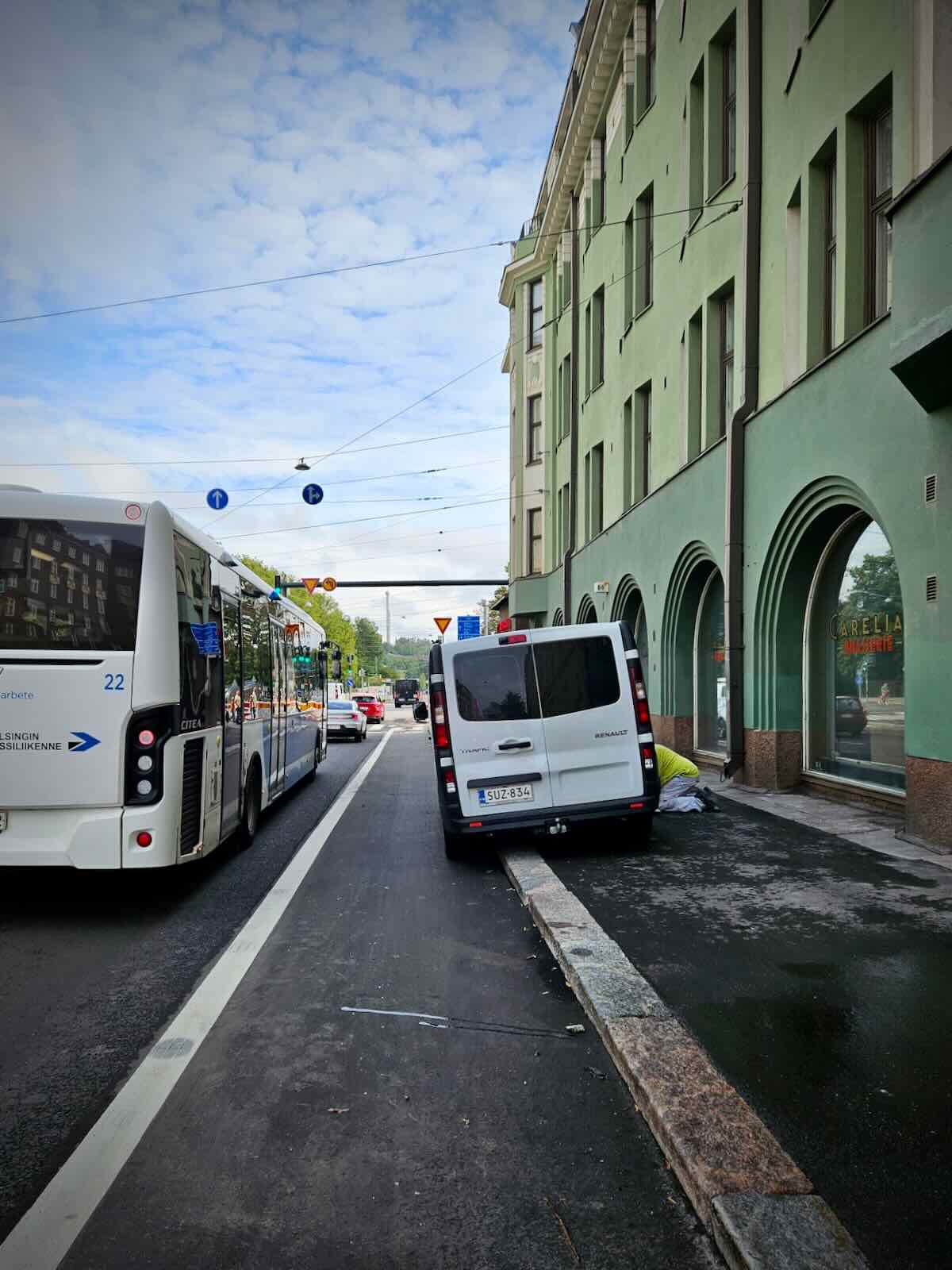
You do see a fair few painted bike lanes in Helsinki as well, including ones in the door zone. Like painted lanes the world over, these are at best useless and at worst dangerous. They also attract pavement parking, which thankfully was nowhere near as common as in the UK, but still annoying.
Probably the weakest aspect of the cycle network in Helsinki is the general lack of safe infrastructure at junctions. It’s common to see junctions with little or no projection, maybe with some cycle specific traffic lights, but nothing else and certainly nothing to help you turn left.
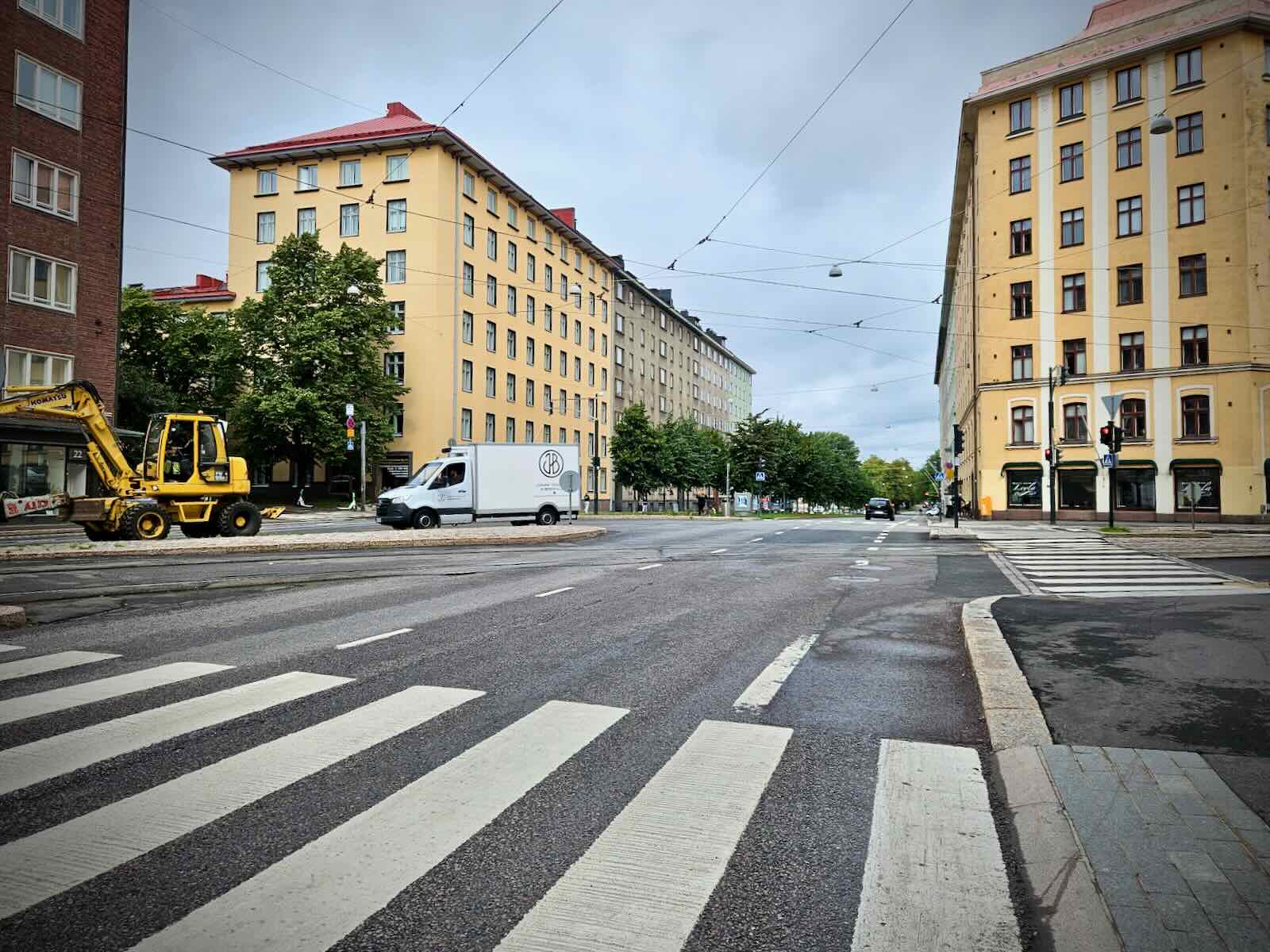
You also often see protected cycle paths switch to painted lanes on the approach to junctions, which isn’t great. It’s probably fortunate that traffic levels never felt that busy, so it wasn’t a major problem, but for anyone less confident, this could easily put them off riding.
On the whole, while there’s definitely room for improvement, my experiences of cycling in Helsinki were largely positive. It would be great to return again sometime and explore further, maybe on a proper hire bike. I’ll probably stick to summer though!
I’ll be back with more posts in the Finland 23 series, looking at Baana in more detail, public transport in the city and maybe architecture and public spaces. So check back soon.
 Dom Cycling