
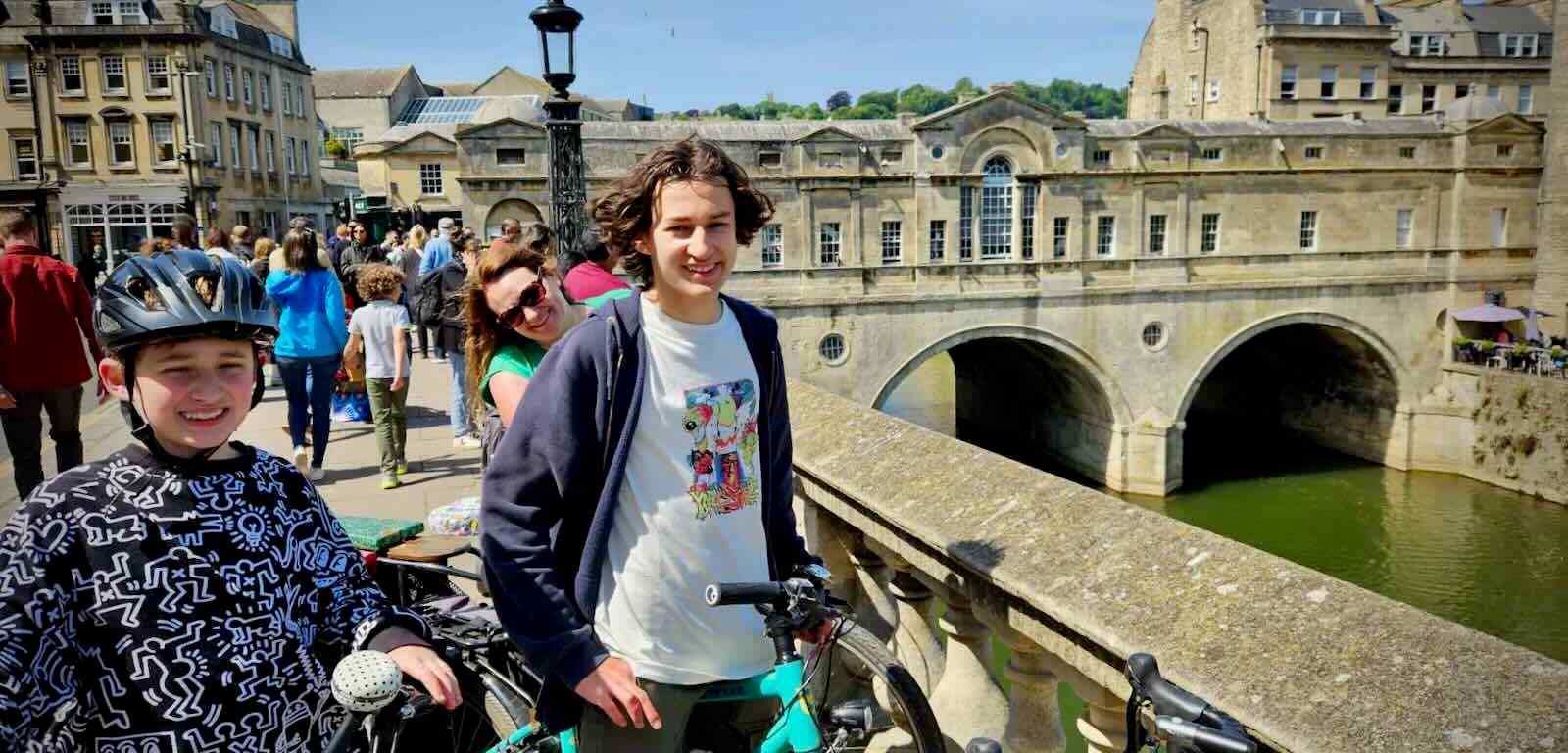
At the end of May 2023, we travelled down to Somerset, to spend a week in a lodge on the outskirts of Bath at the Bath Mill Lodge Retreat. We had been due to stay in Bristol at the same time of year in 2022, but ended up cancelling, after I somewhat foolishly broke my foot skateboarding 🤦
By the time we went to go in 2023, we couldn’t find suitable accommodation in Bristol, so decided on Bath instead. We’ve only been to Bath once before, that was on a day trip on a cold wintery day many years ago, before we had the boys. On that occasion, we only saw a fraction of the city, largely from an open-top bus tour, with ice on the seats!
Cycling into Bath
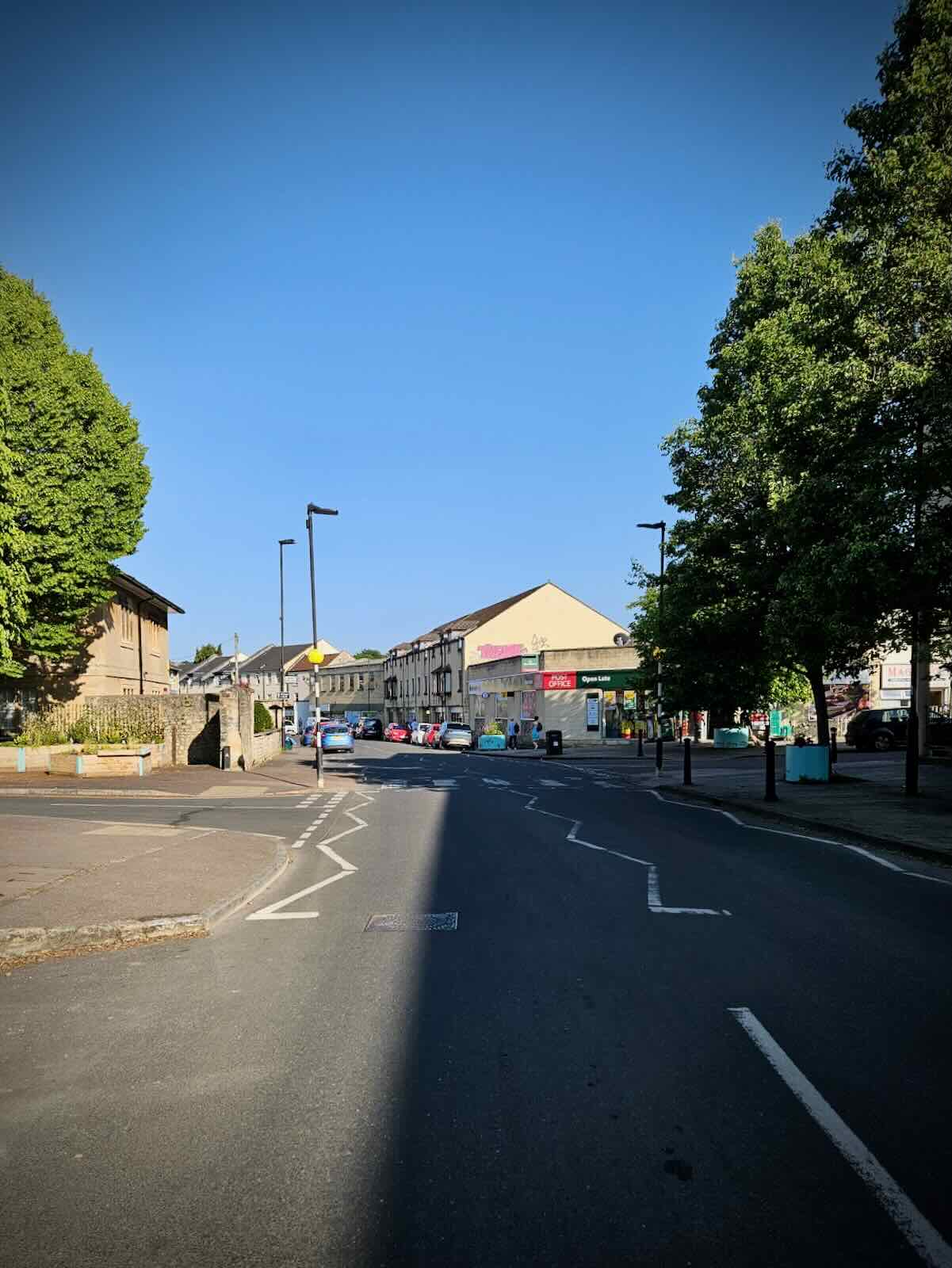
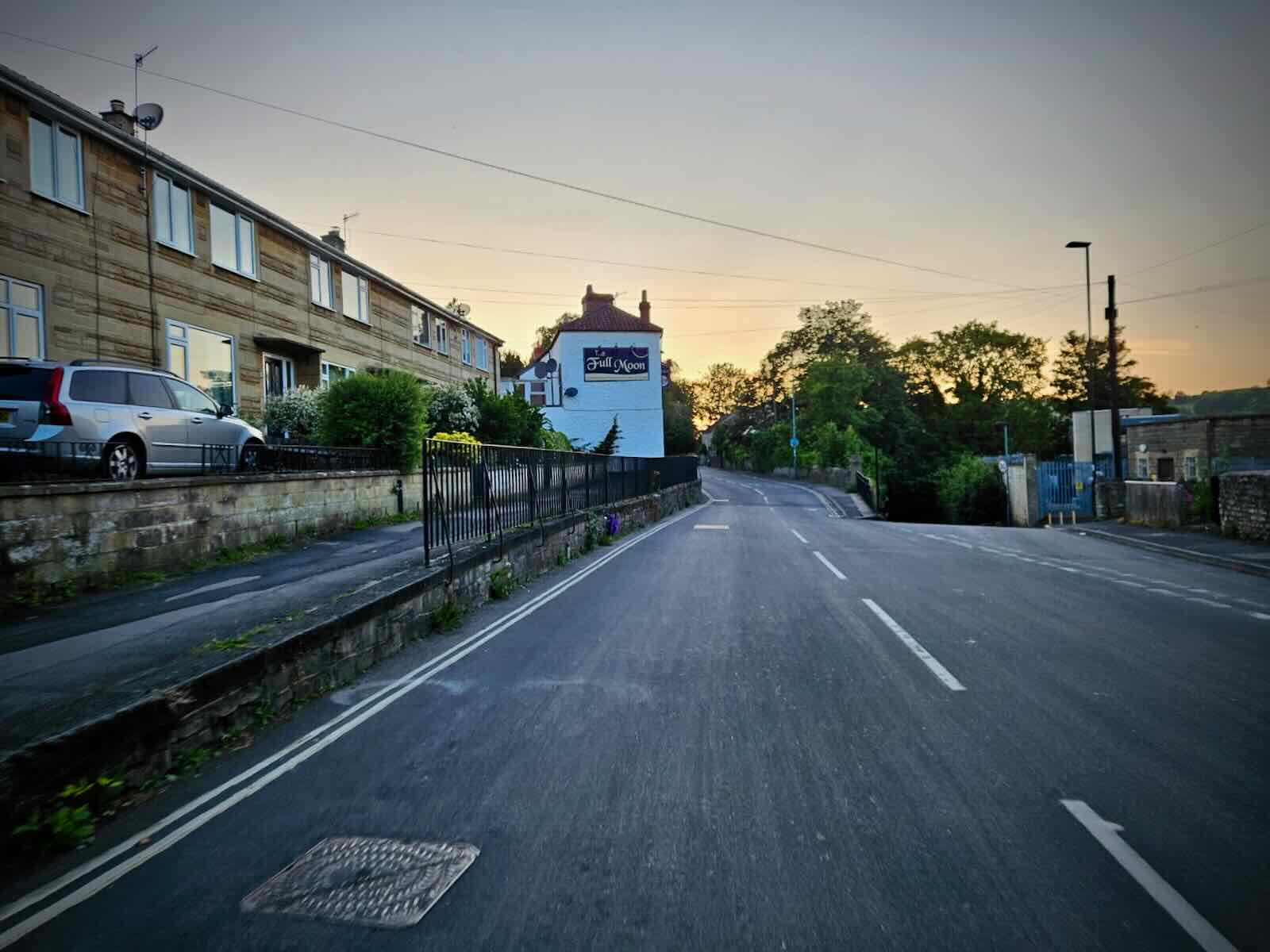
Our accommodation was located to 3 miles to the west of Bath, on the way to Newton St Loe, at the point where the city gives way to countryside. This meant it was easily doable on bike for all of us, though there was a question of what the roads were like. The second half of the route into Bath was along the Avon River path, which we were confident would be fine. Though first half meant negotiating some A roads and country lanes.
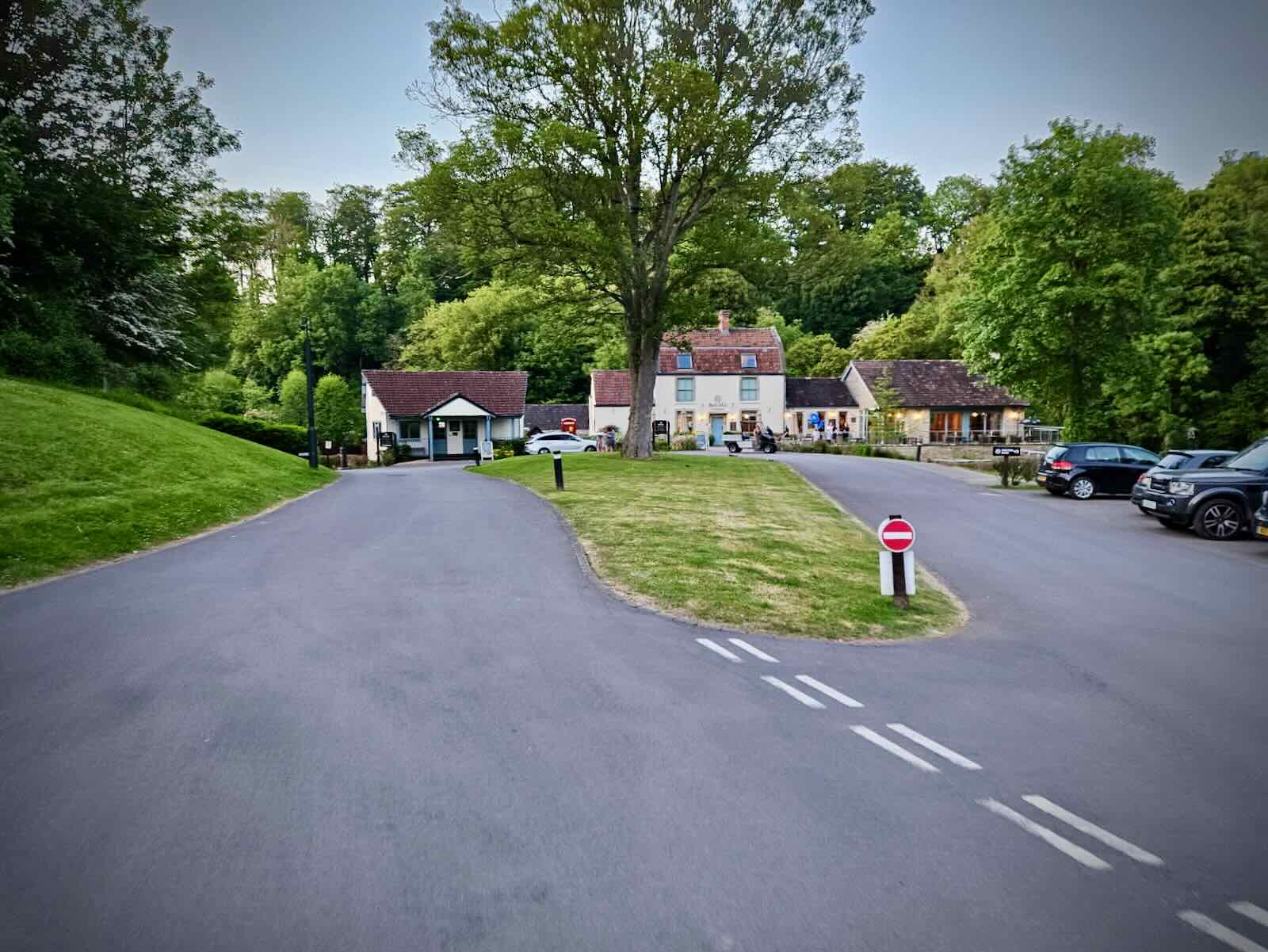
Even viewing the route on Google Maps and Street View, it’s hard to get a true impression of what it’ll be like cycling. Particularly in terms of the amount and speed of traffic. We also didn’t quite realise how hilly it was, something we’re not used to, coming from the flat side of Manchester.
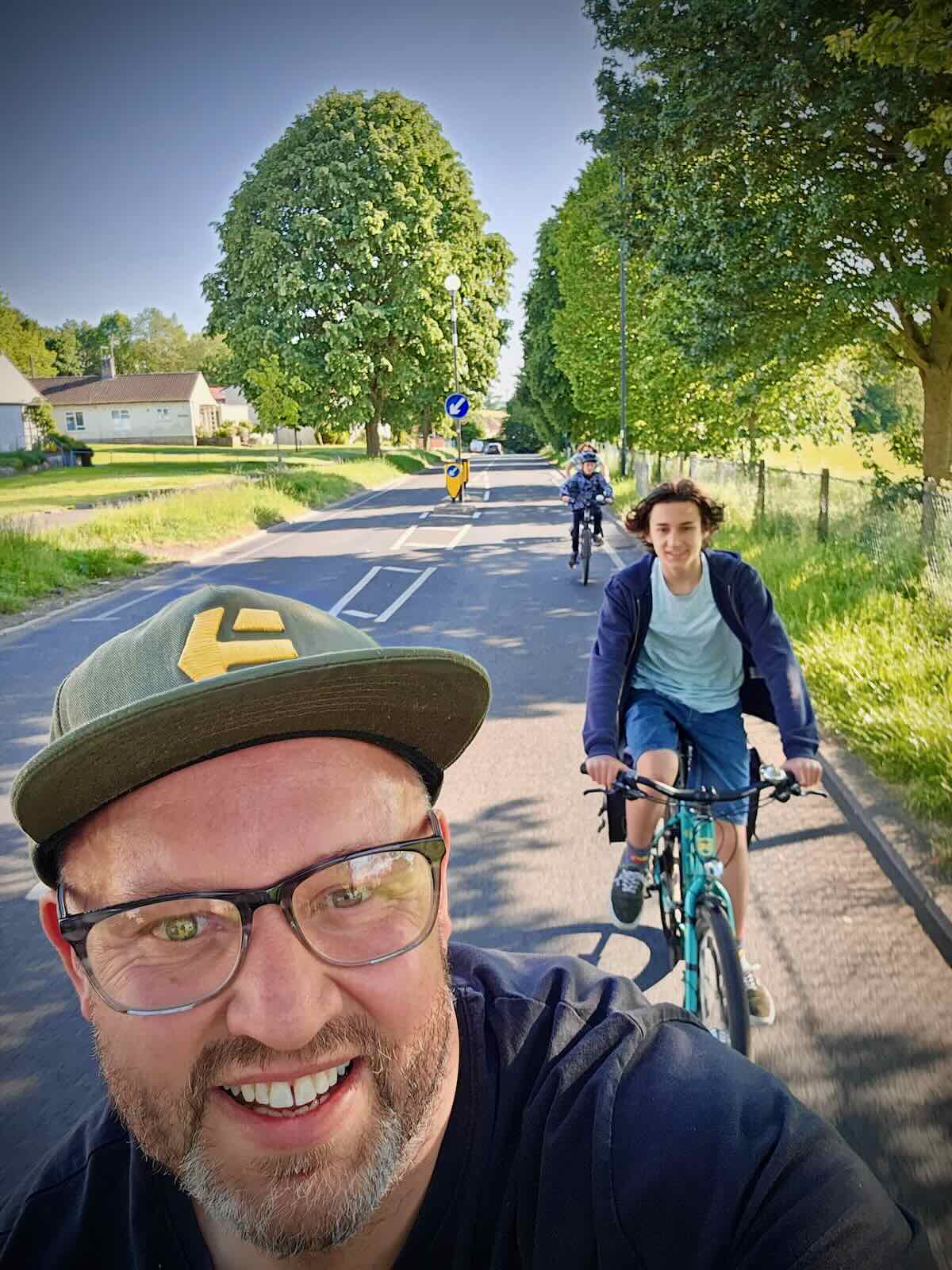
The route into Bath turned out to be alright actually. The first section along Newton Road and High Street was generally quiet and traffic speeds not too bad, which was thankful as there was a bit of a hill to start. Along the route, there was a small section along the A36, which was quite busy and not that great, but it didn’t last for long.

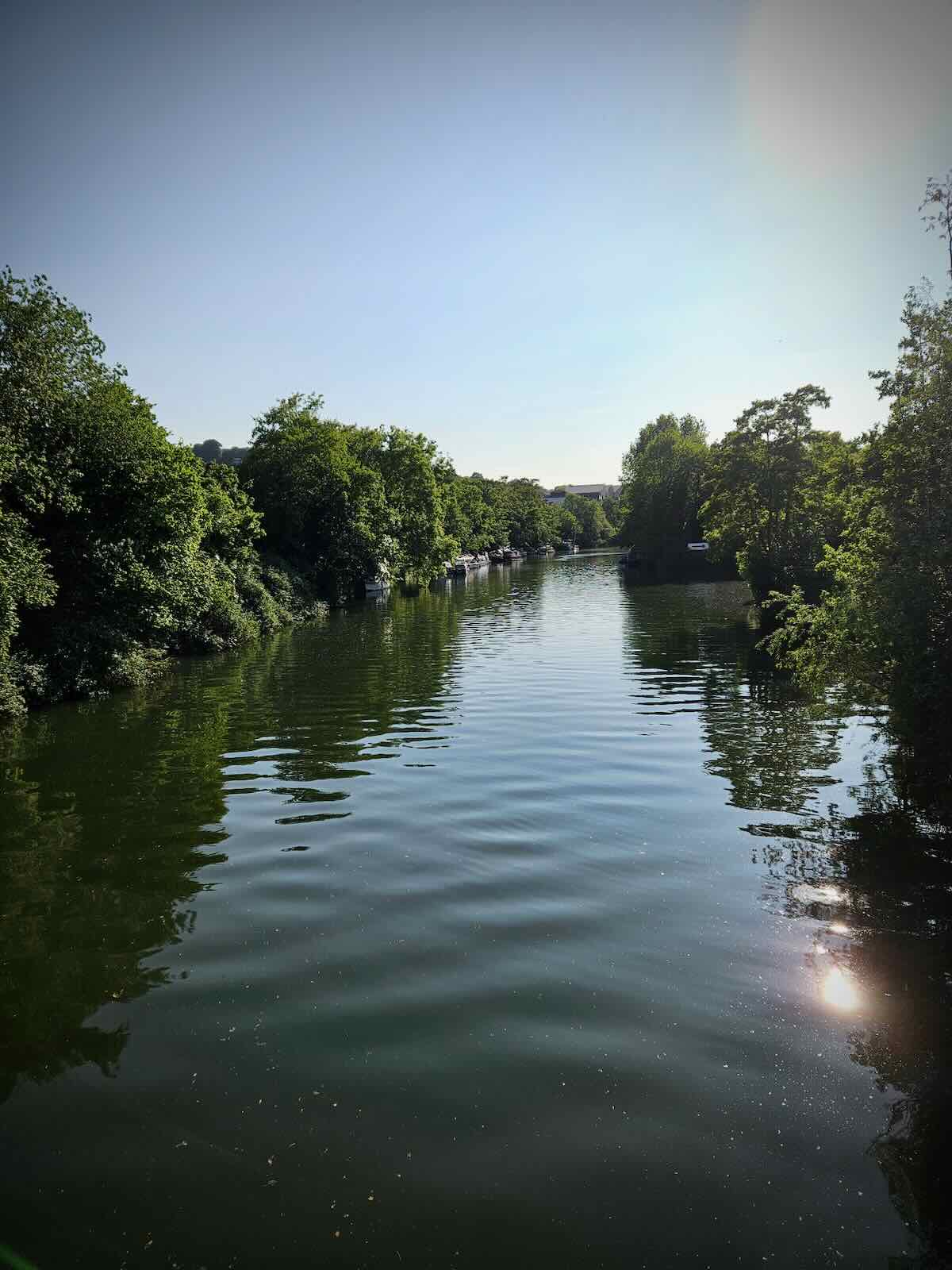
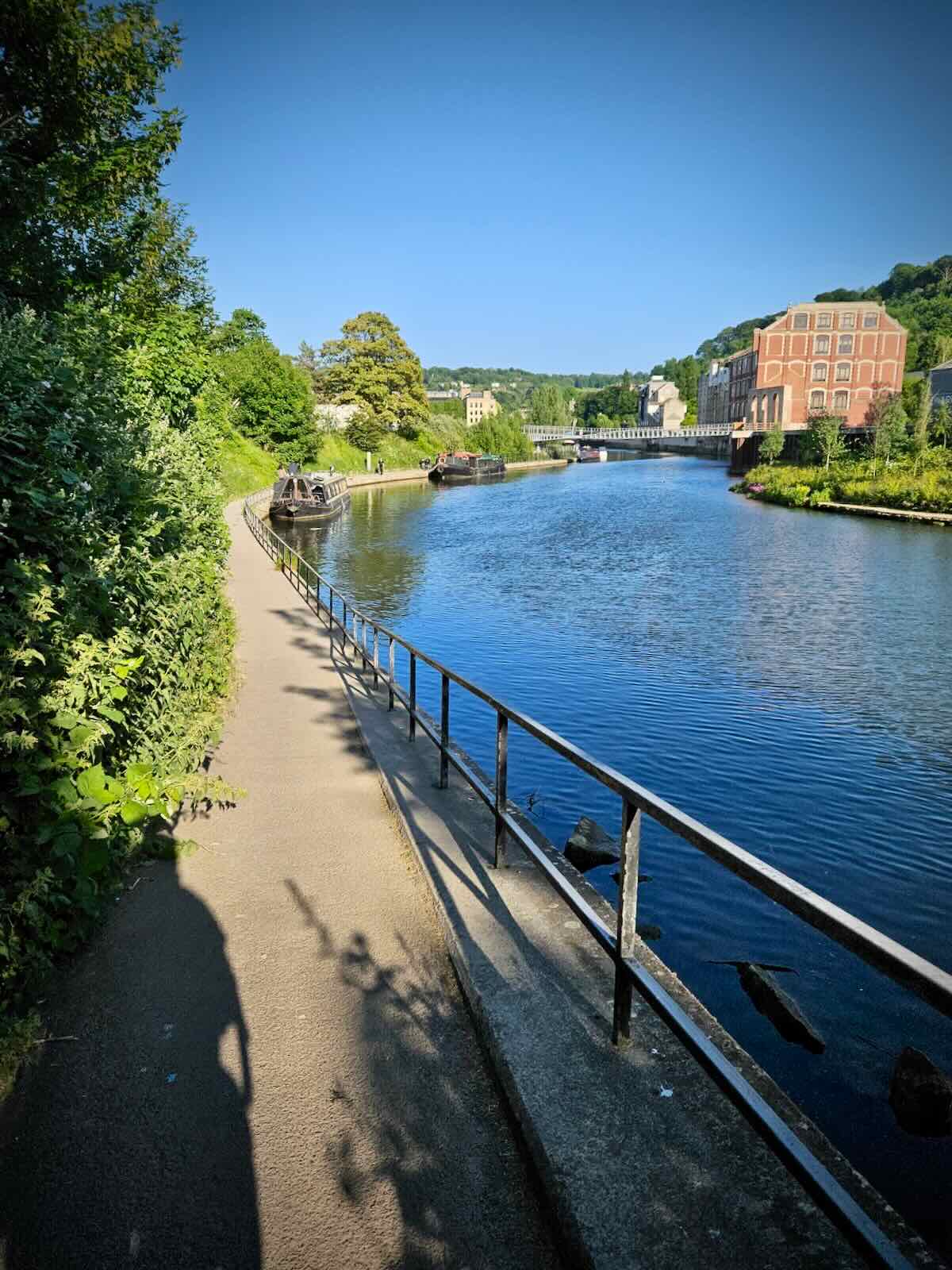
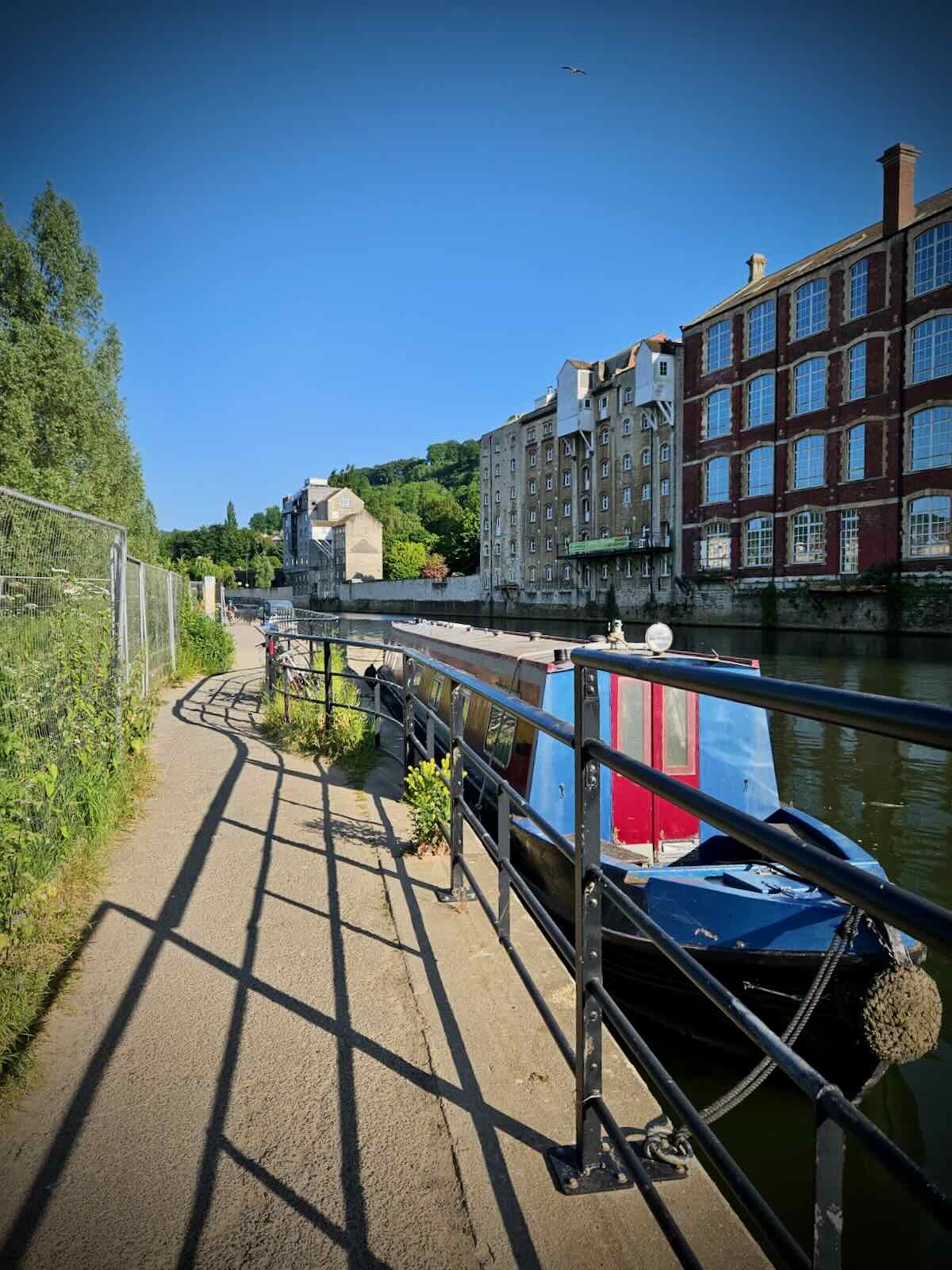
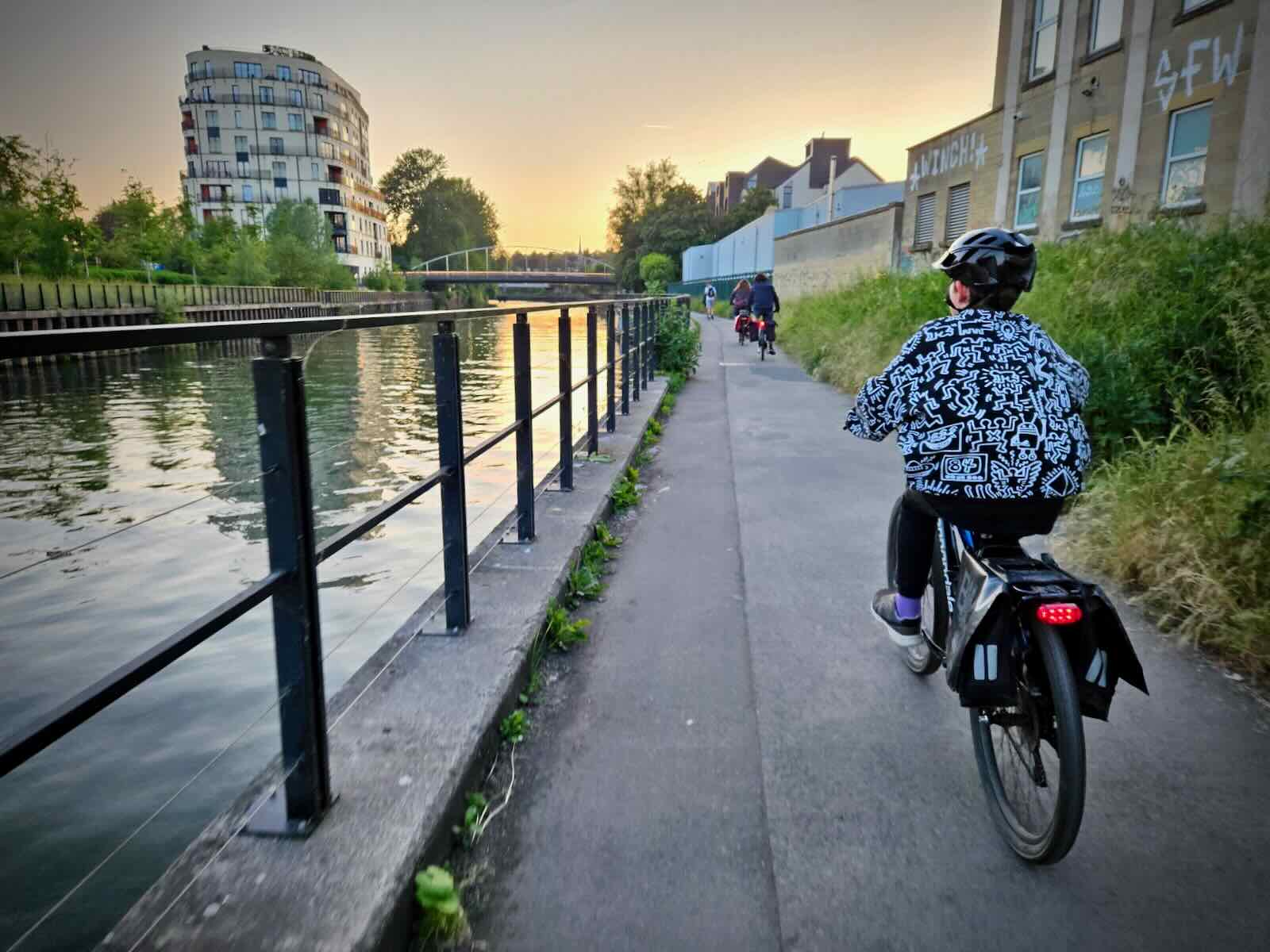
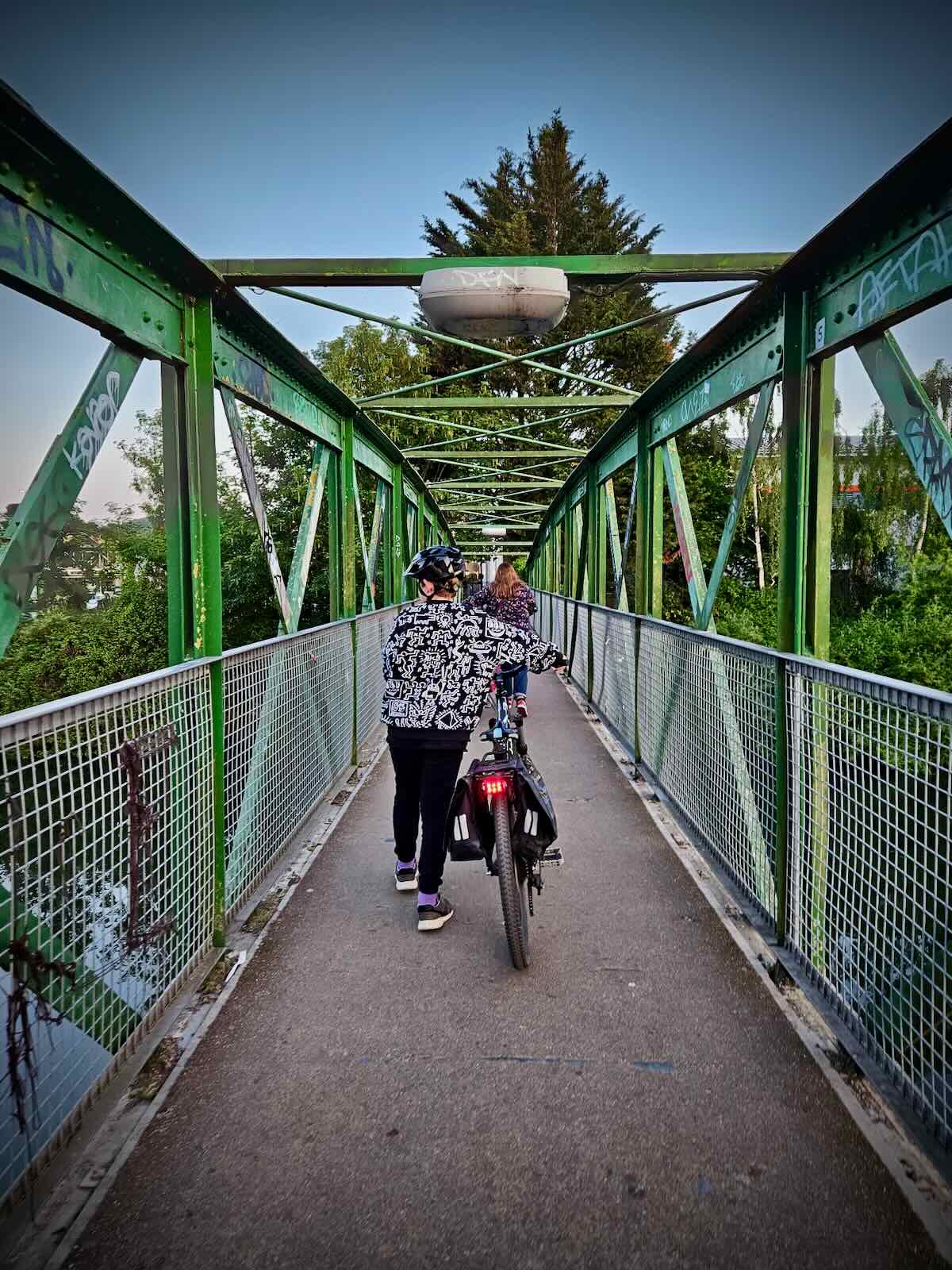
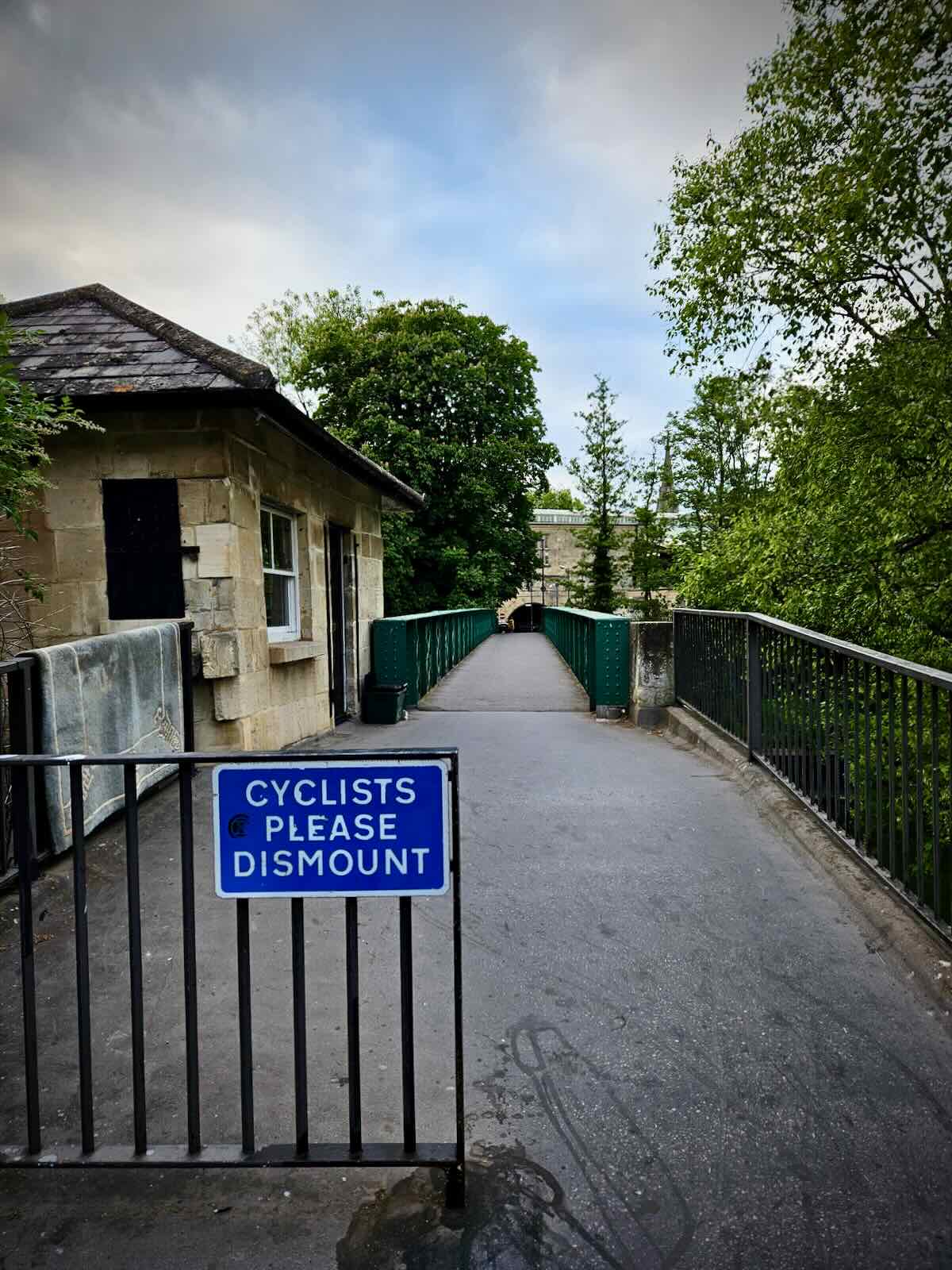
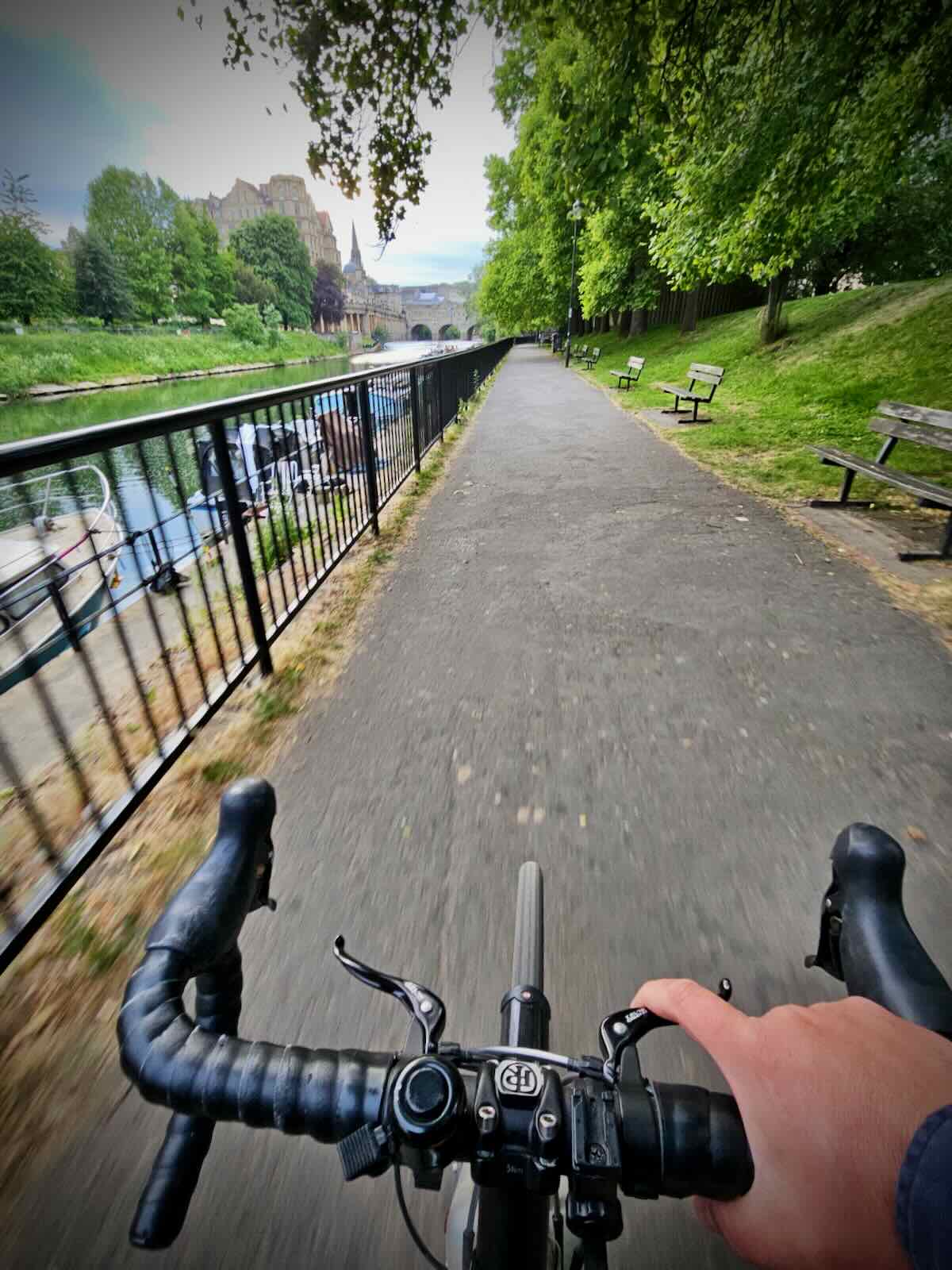
By far the best bit was after crossing the Avon on the Fieldings Road Footbridge, located next to the Lidl car park. Once on the north side of the river, we would ride along the River Avon Trail, a very pleasant traffic-free route into the centre of Bath.
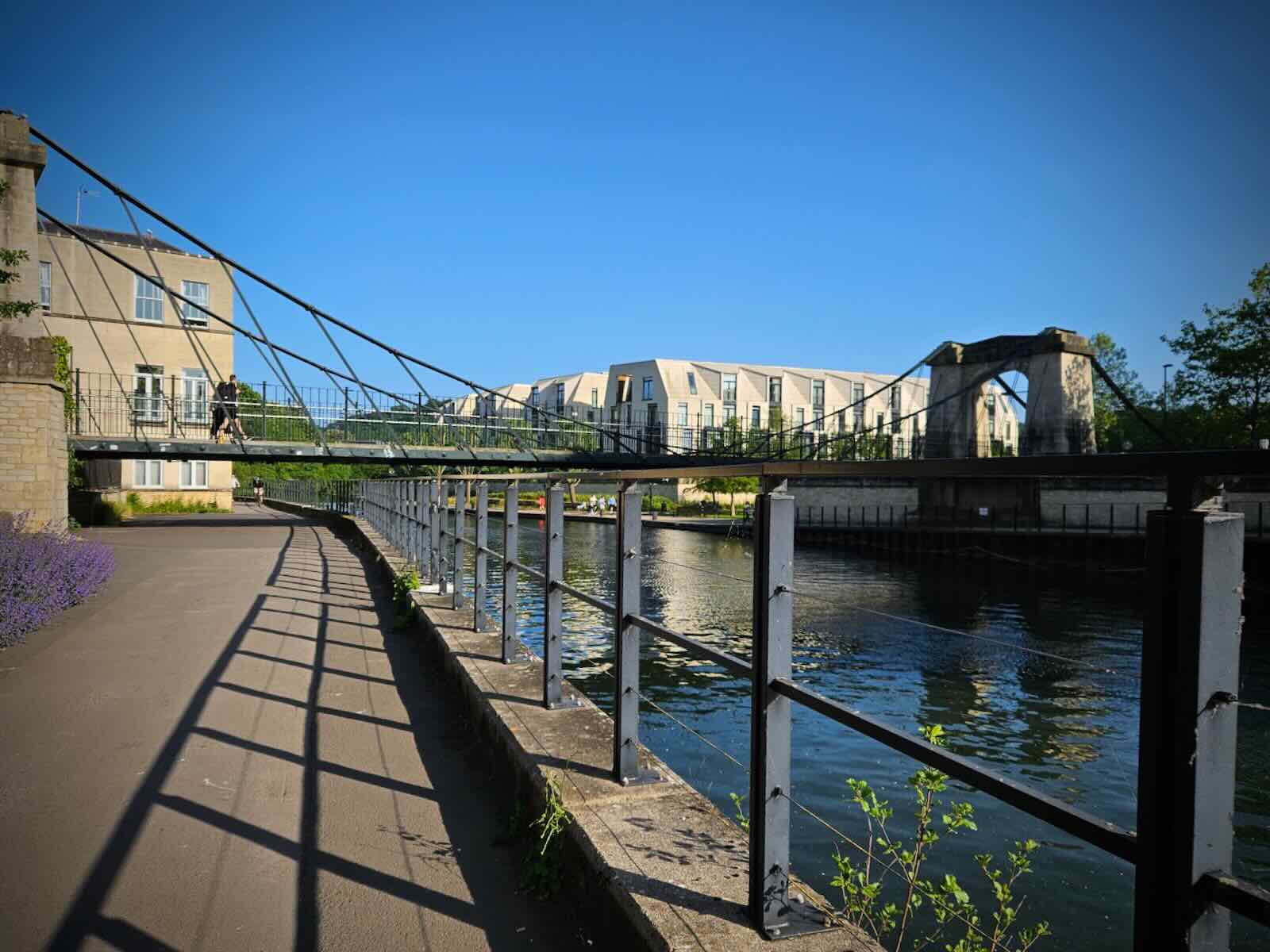
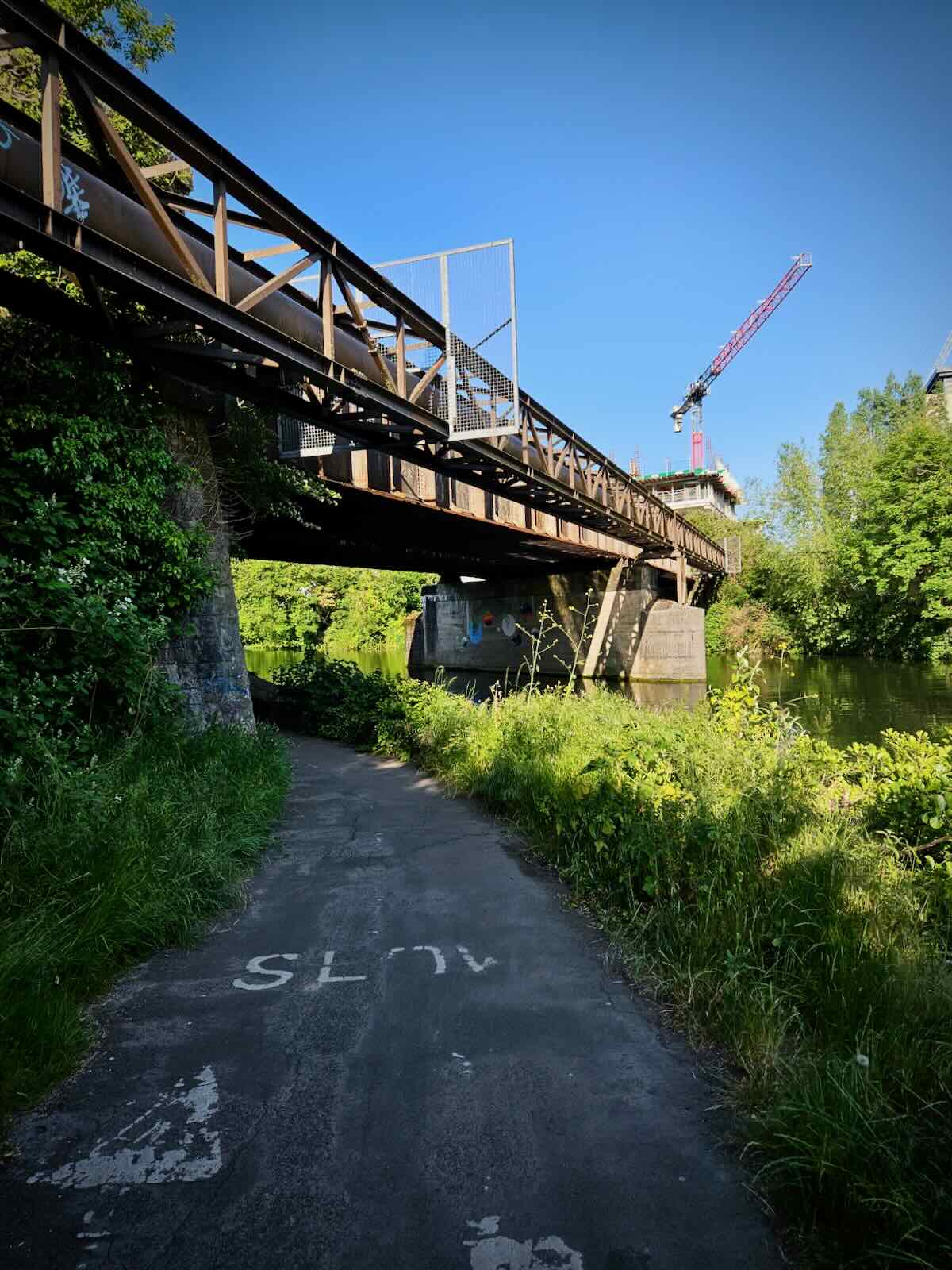
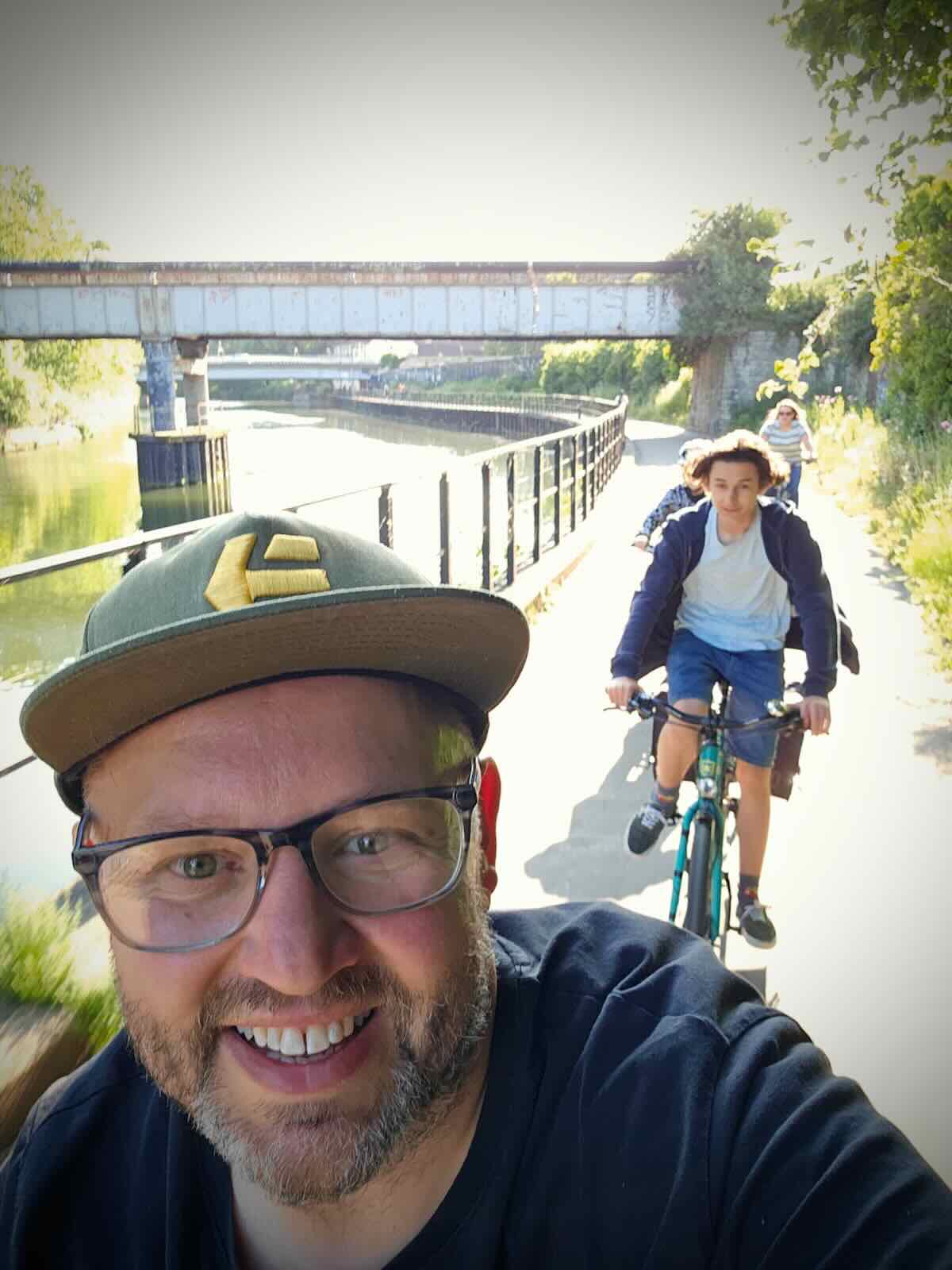
As river paths go, the River Avon Trail is a decent one. It has a sealed surface, that was on the whole smooth and well maintained. Most of the time, the path was a good width, with the odd narrow section. On the whole, that meant there wasn’t much conflict with people walking and cycling, despite the path getting quite busy at times.

This became quite a regular route during our stay in Bath, with us returning on our bikes a few times. I also came along here on a few solo rides, where I tried some variations on the route, but nothing significantly better.





Continuing along the River Avon
The River Avon Trail comes to a brief pause a you arrive in Bath at Churchill Bridge. At this point, you can head north into the city centre along the streets, or you can cross the bridge and ride next to the busy A36 for a short section, before returning to the river path. If you’re walking, you can continue next to the river, but there’s some steps to negotiate, so probably not an option for cycling.
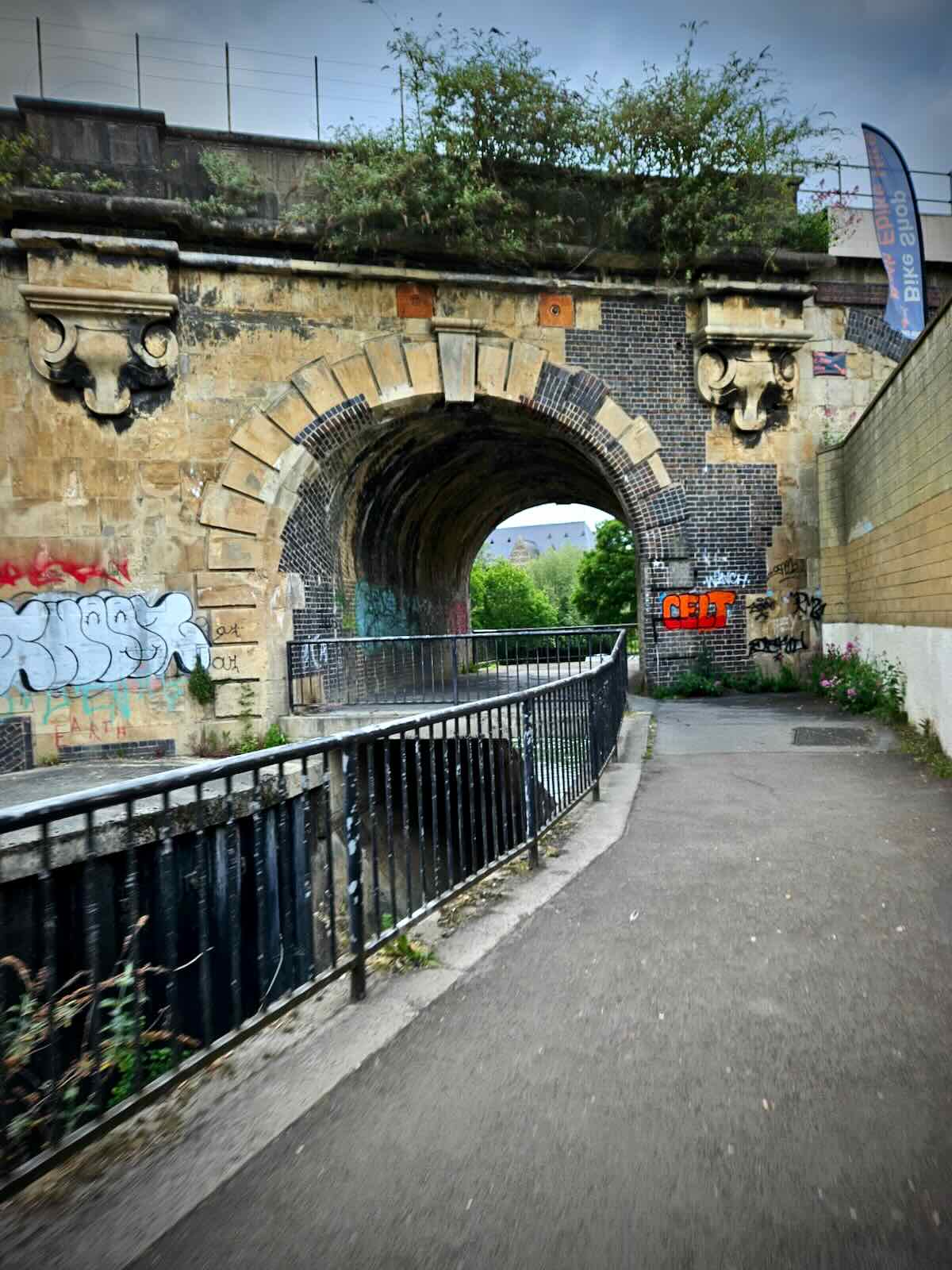
Once away from the A36, you pass some pleasant architectural features, starting with lock 7 of the Kennet & Avon Canal, then under a bridge of the Great Western Railway, possibly one of Brunel’s I’m guessing?
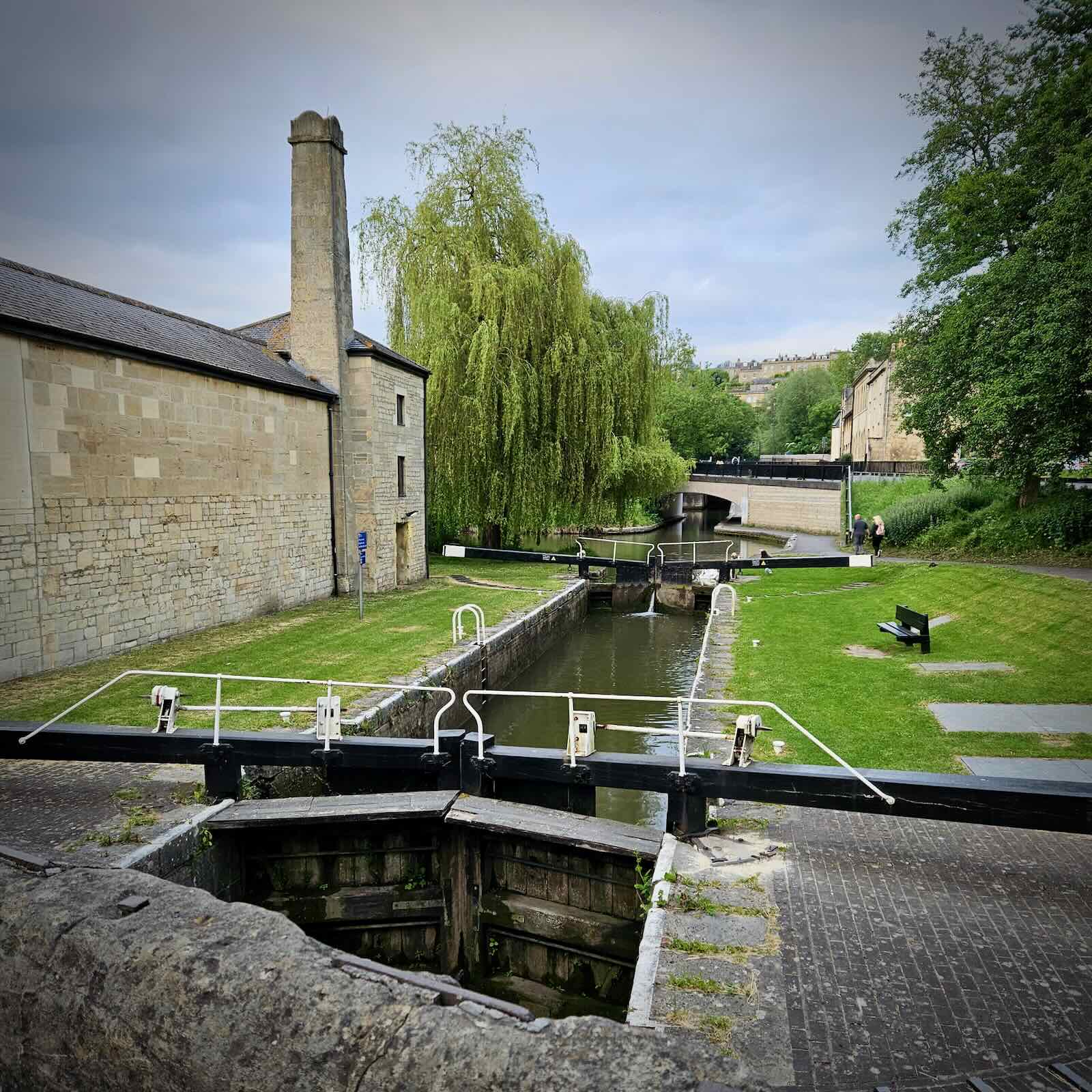
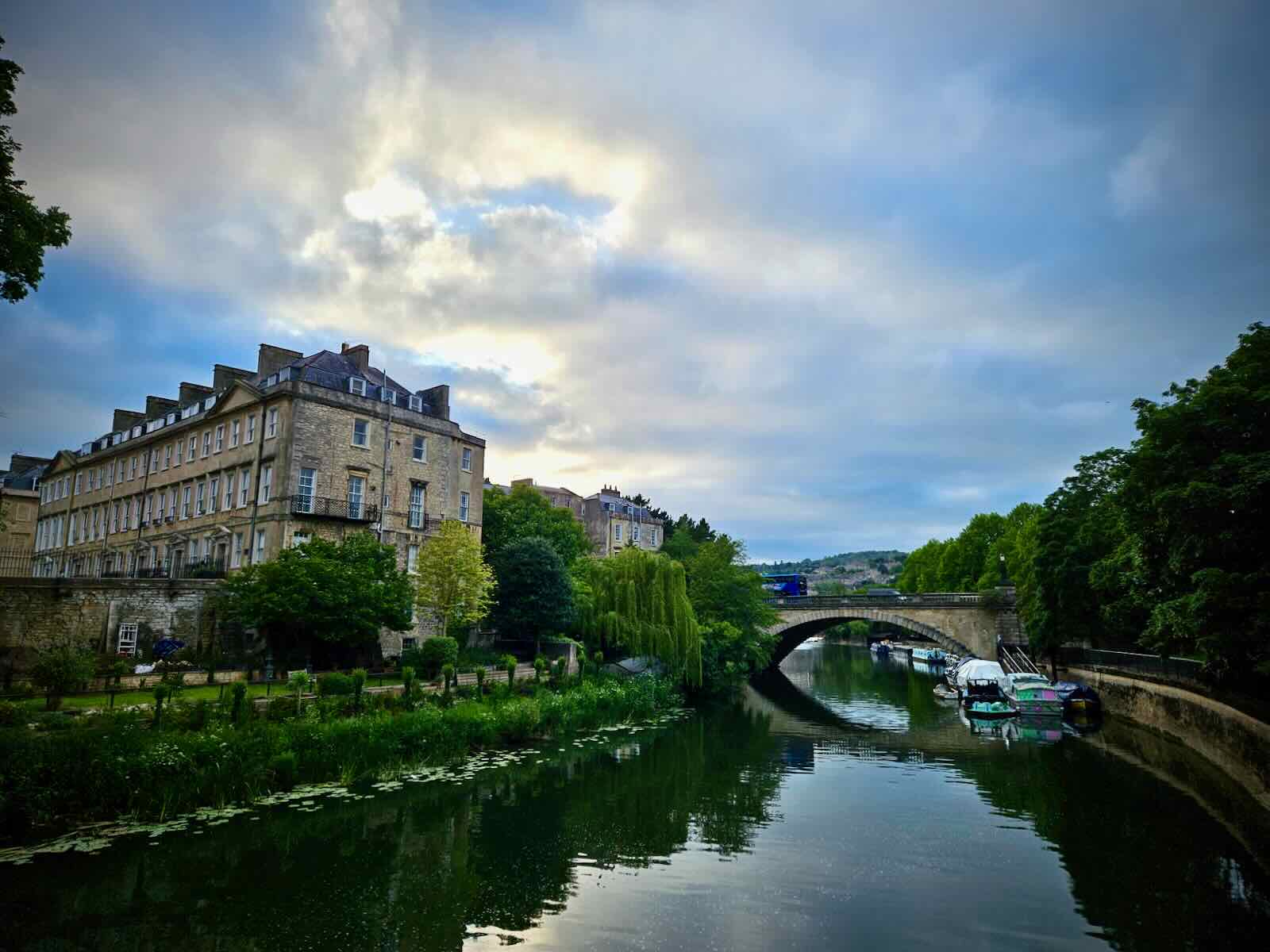
Back next to the river, there’s some stunning views across the Avon and to the buildings beyond as you ride along. It’s also not unusual to see people making the most of the river, in canoes and kayaks for instance.

As you arrive at the Pulteney Bridge and Weir, the River Avon Trail comes to an end, next to the Beazer Garden Maze. With the Royal Crescent and Roman Baths, this is understandably one of the top tourist destinations in the city, so expect it to be busy in the day, especially in the summer. But come down in the evening and it’s a lot more chilled.

From here, you can continue along Spring Gardens Road, which takes you under Argyle Street and out onto the city streets. Unfortunately, the riverfront is largely private and hidden behind buildings beyond this point.


Cycling in the centre of Bath
The overriding impression, cycling around the centre of Bath, is there isn’t much in the way of dedicated cycling infrastructure. Indeed, all we saw while we were there, was some light segregation on Upper Bristol Road. This was fine, if a little narrow, though it did at least include bus stop bypasses.

Beyond that, we were largely mixing with other traffic as we rode around. On the quieter roads and filtered streets (more on those below), this was generally fine. On some of the bigger, busier roads, it wasn’t so good. Though these can mostly be avoided if you stay away from the main A roads.

Bath is on a very different scale to the likes of Manchester, not just in the overall size of the city, but also the size and scale of its streets. Even the busiest road in Bath isn’t a patch on what you’d find in a typical Manchester suburb.


Walking round Bath
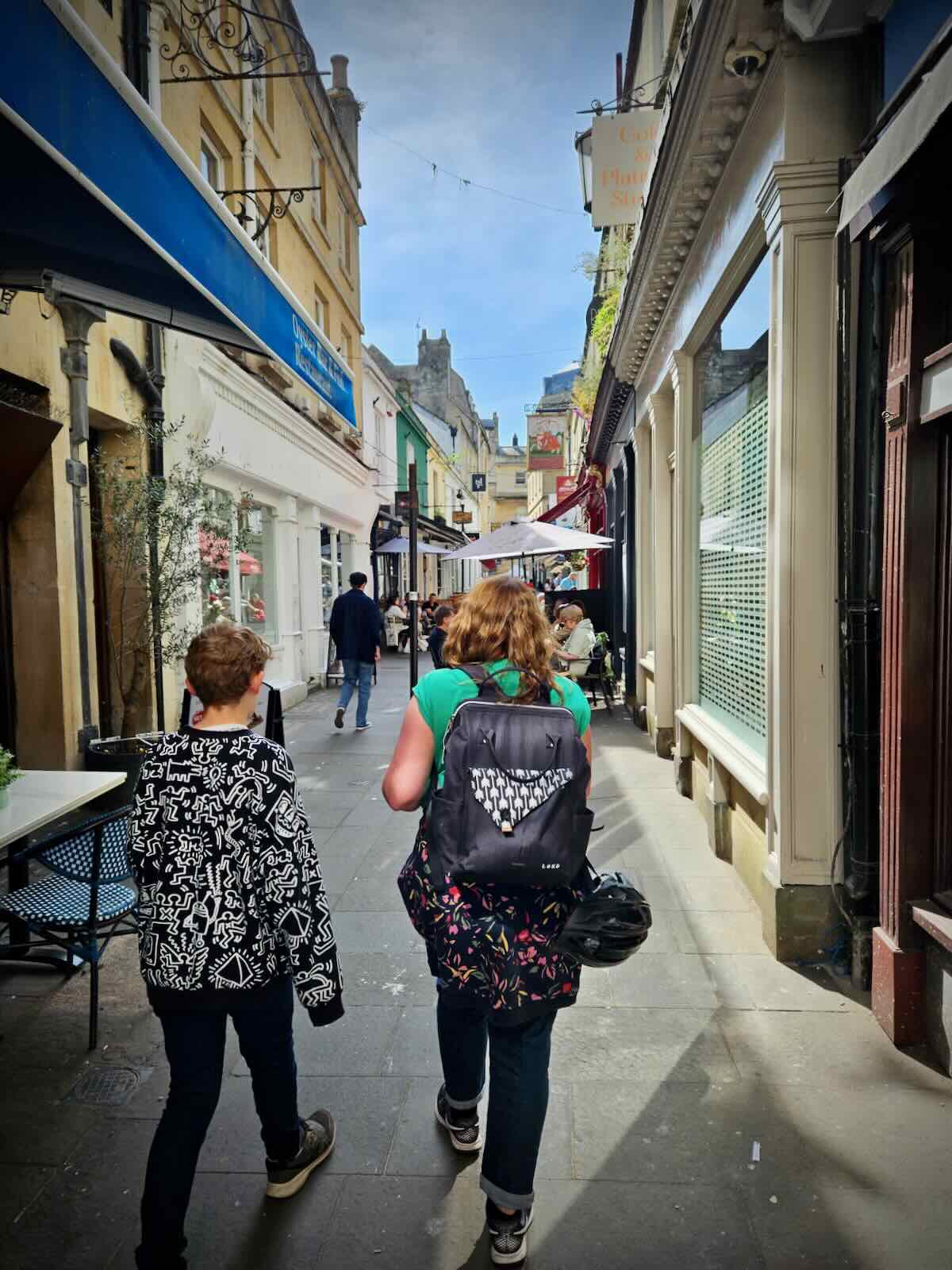
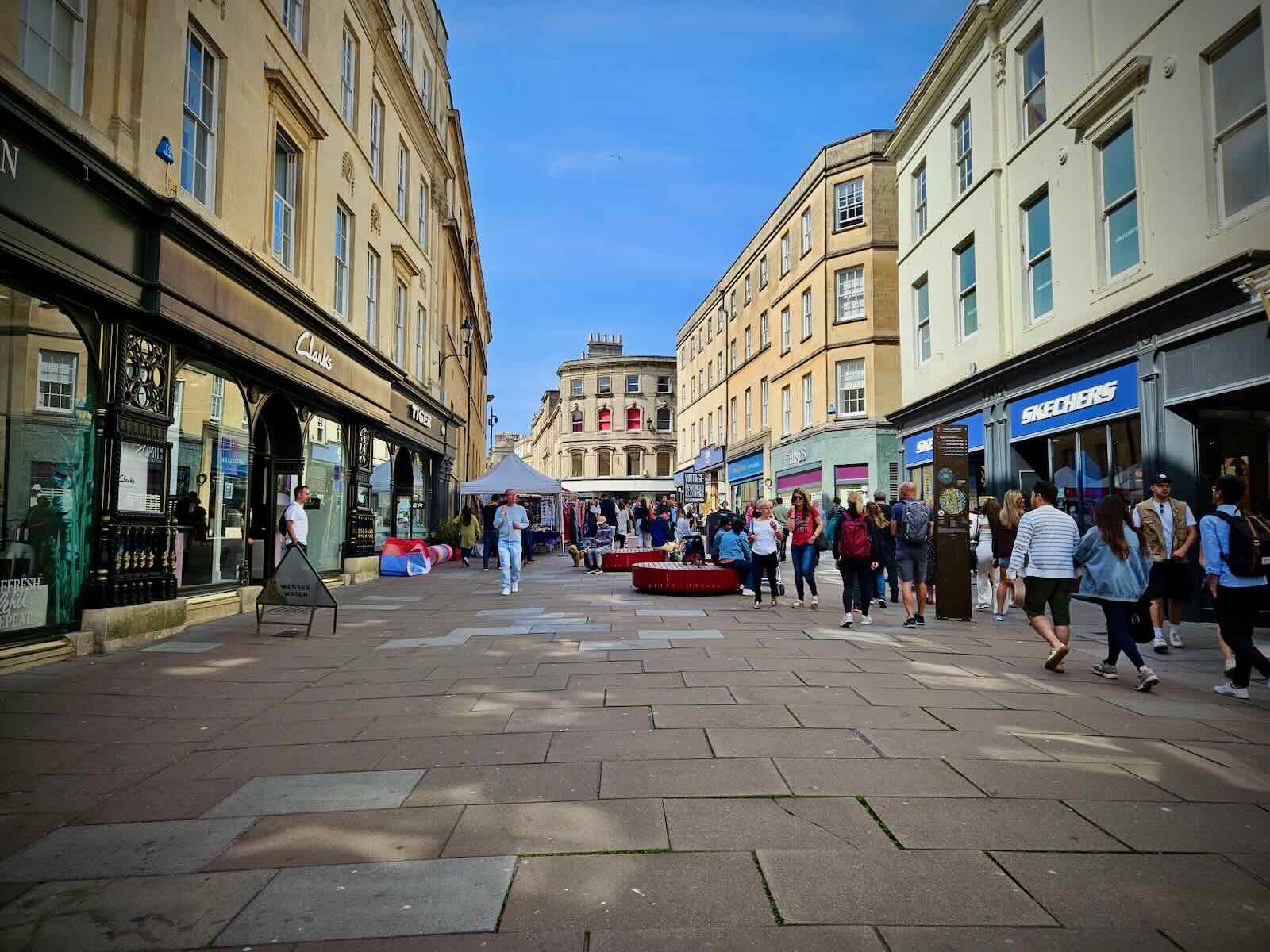
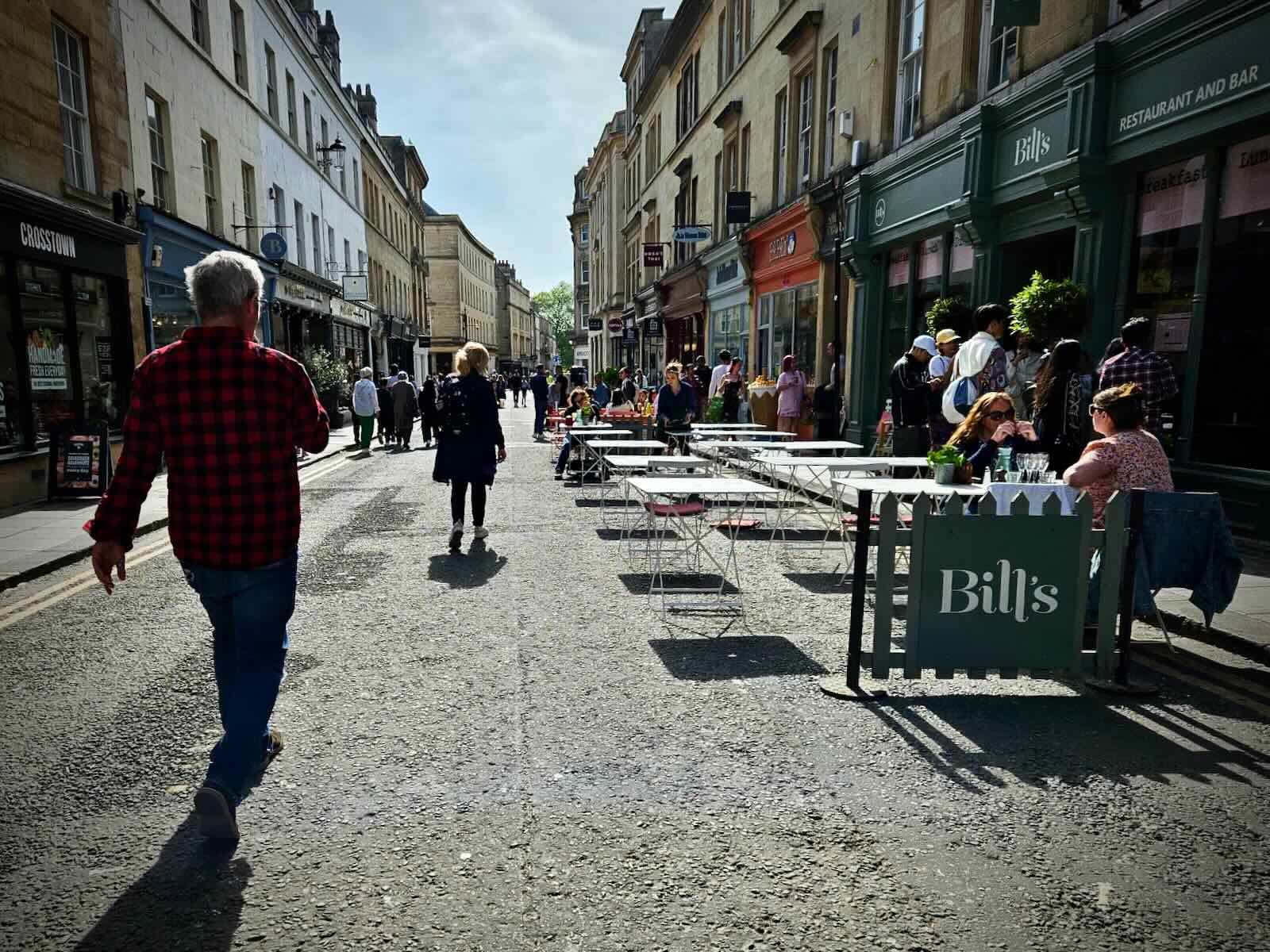
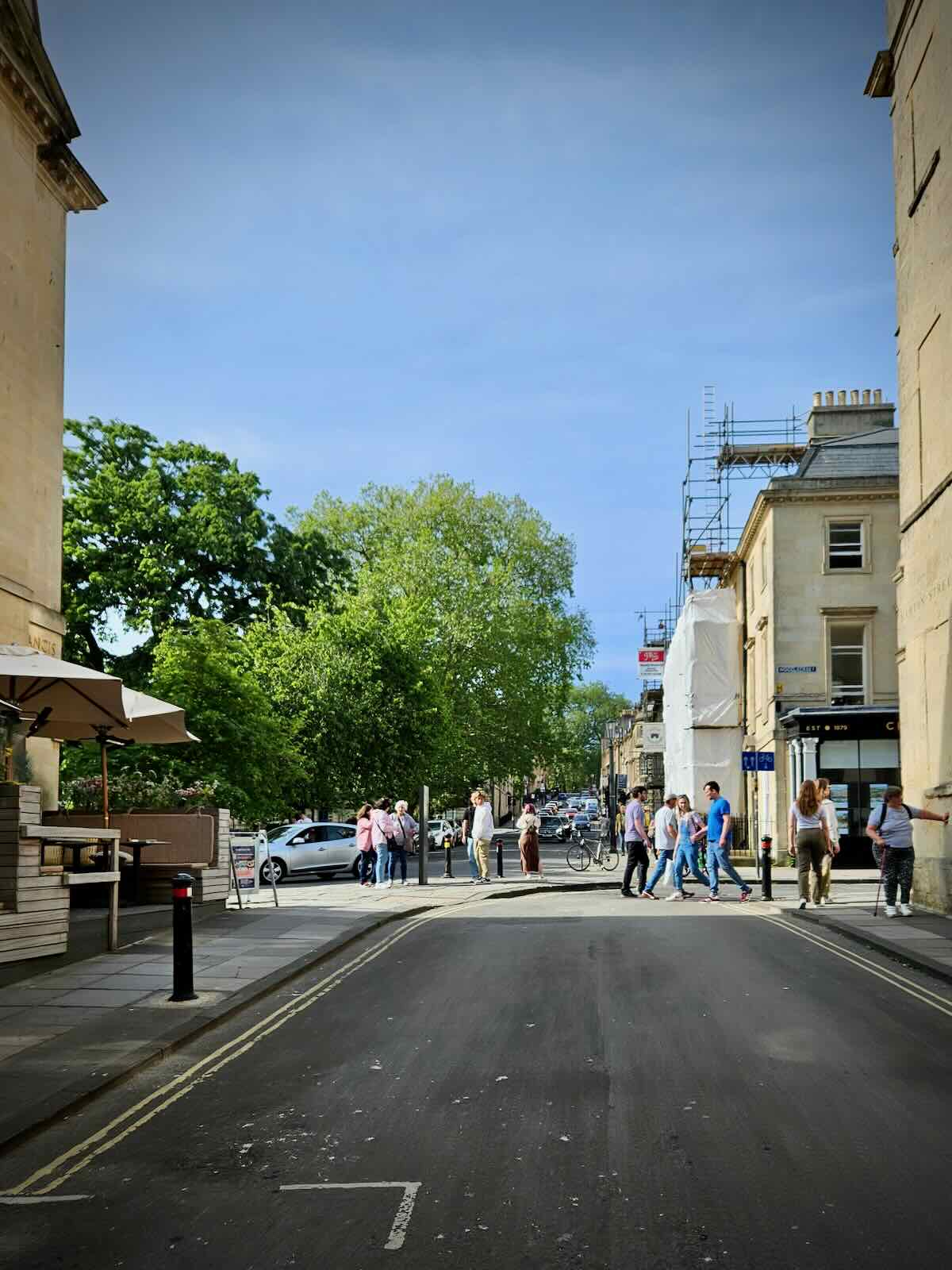
While cycling around the centre of Bath was a little bit of mixed bag, walking around there was generally a pretty pleasant experience, largely due to the number of pedestrianised and filtered streets.
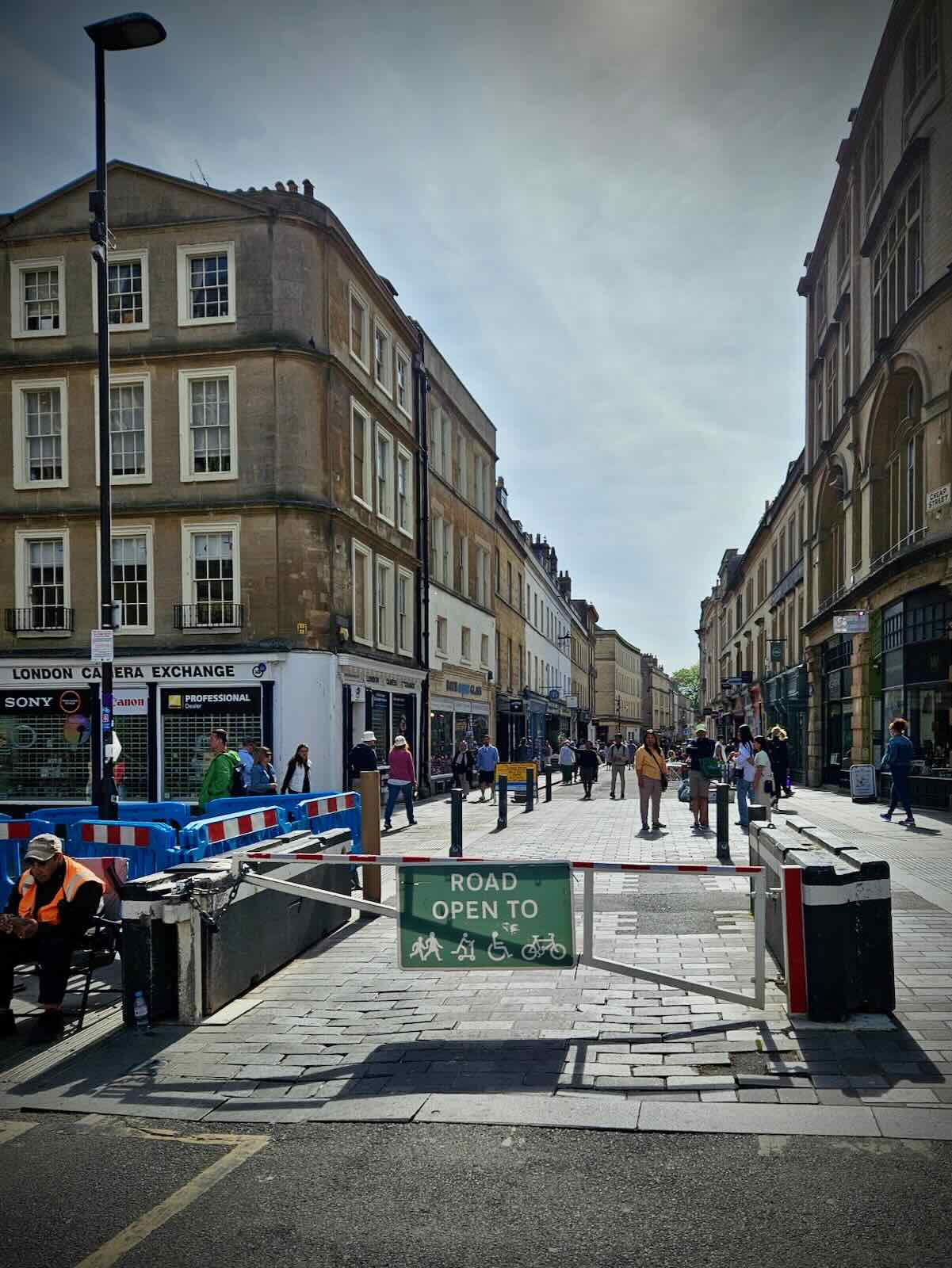
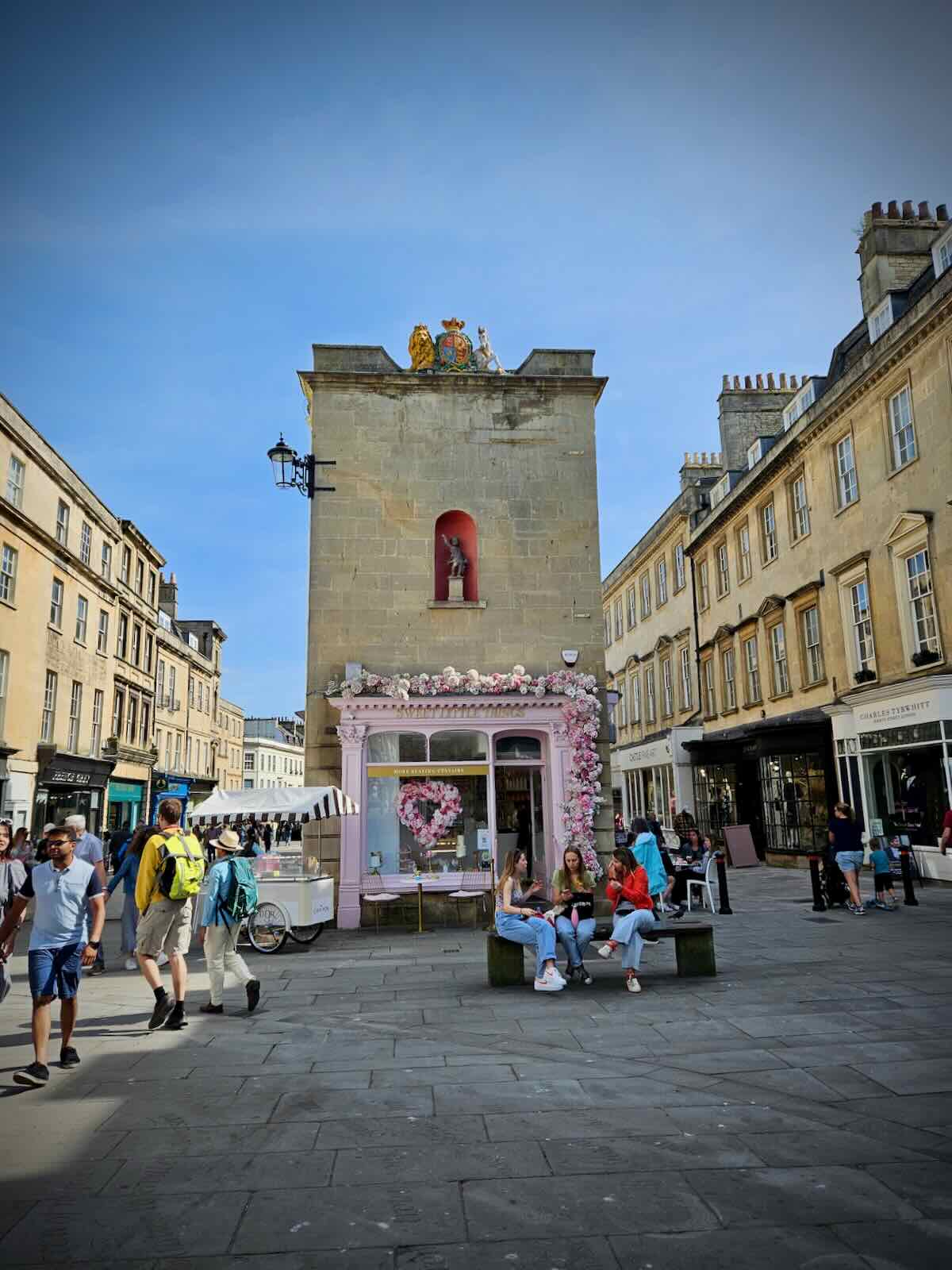
With the late May sunshine shining down on us, it was a pleasure to wander the traffic-free streets of Bath, taking in the atmosphere and architecture. And clearly, there were plenty of other people who thought the same.

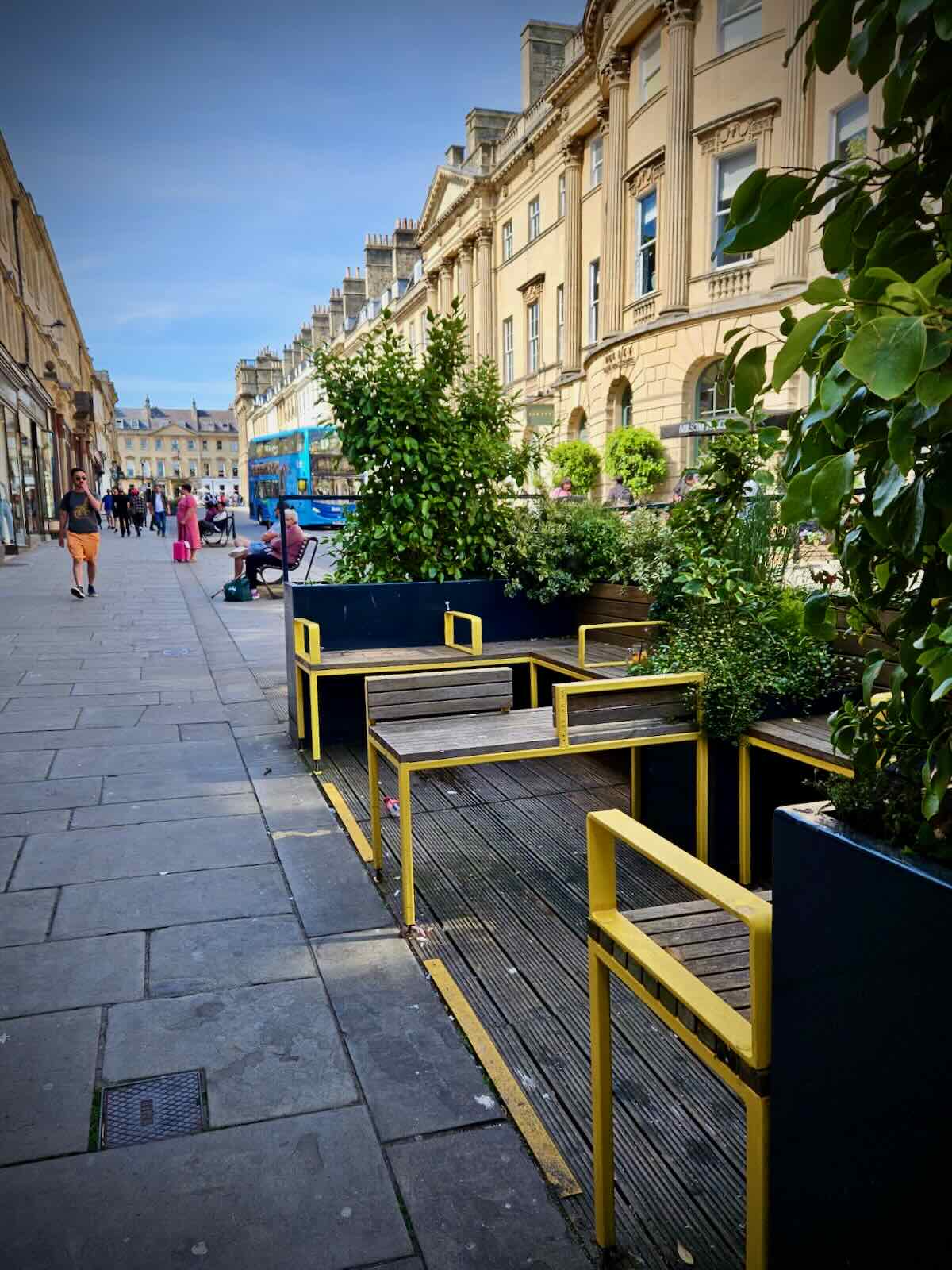
In addition to space for walking and cycling, the filtering of streets has created space for pocket parks and outdoor dining. We saw quite a few examples of pleasant outdoor dining spots and enjoyed an ice cream in the street at The Real Italian Ice Cream Co on York Street.
It was a pleasure wandering the sunny streets of Bath, particularly as the evening approaches and it quietens down.







Cycling in Bath gave us a taste for cycling in Somerset. During our week there, we’d end up venturing further afield, including riding the Bristol And Bath Railway Path and the Bath Two Tunnels Circuit, which I’ll cover in future posts. But that’s about it for the first post.
 Dom Cycling